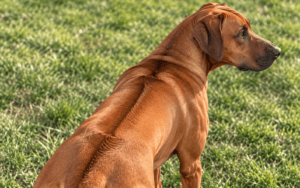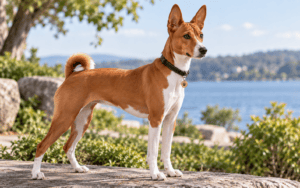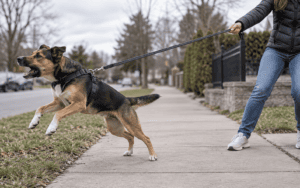
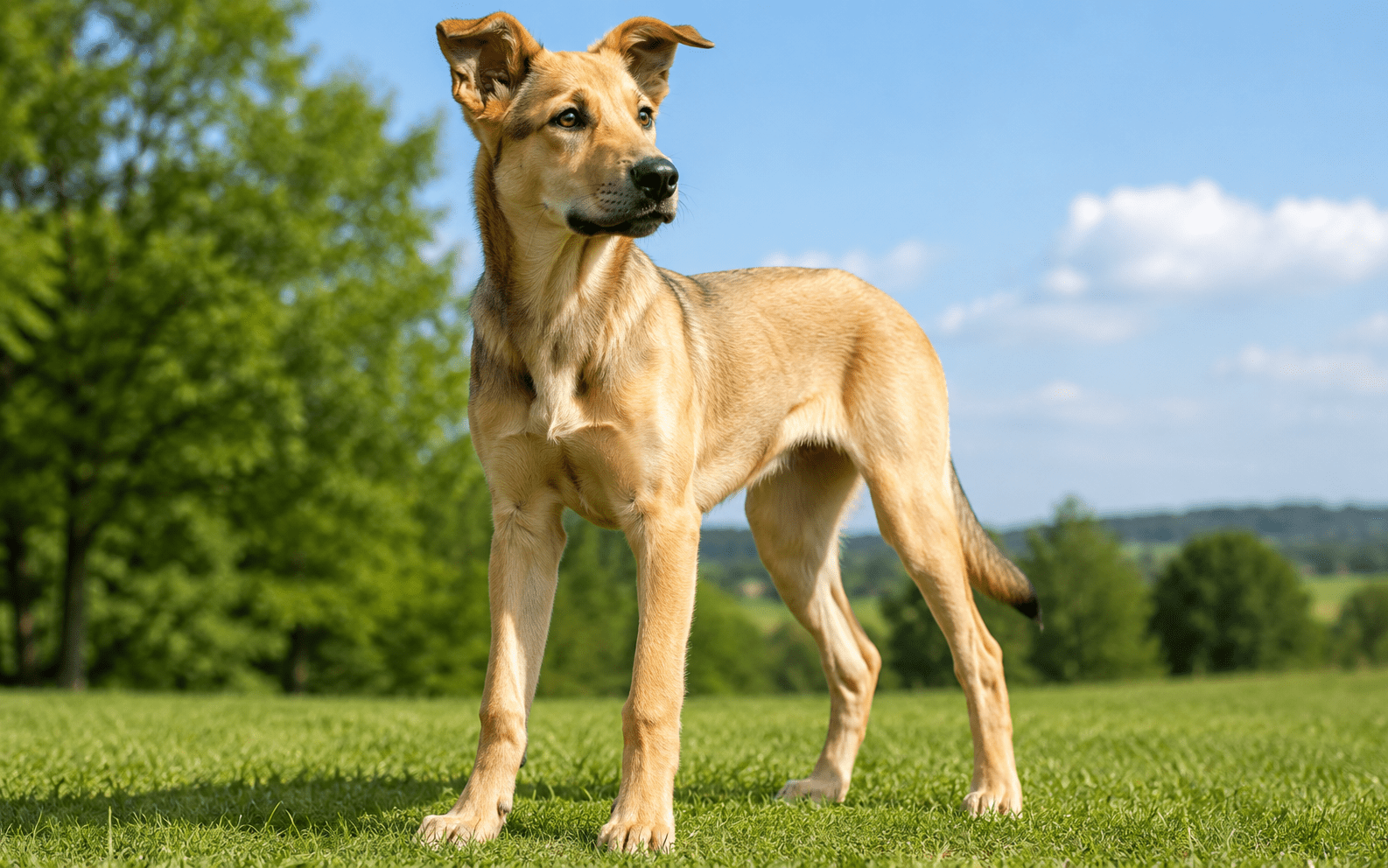
Adolescent dog behavior refers to the temporary shift in obedience, focus, and emotional control that happens as a dog matures, usually between 6 and 24 months of age. During this teenage stage dogs often test boundaries, ignore familiar cues, and react more strongly to the world around them, yet calm and consistent handling carries them through it.
This phase surprises many owners. A puppy that once followed every command suddenly acts like it has forgotten its name, pulls harder on the leash, and seems wired one minute and exhausted the next. None of this means your dog is broken or that your training failed. It means the brain and body are changing fast.
At K9 Mania Dog Training, we work with these “teenage” dogs every week across Long Island, and the pattern is almost always the same: normal developmental changes get mistaken for stubbornness or aggression. With the right structure, most of these issues settle. If your dog has hit this stage and you want hands-on help, our board and train Long Island program is built for exactly this kind of turning point.
Things To Know Before You Start
Use this quick overview as your starting point before reading the full breakdown.
- Adolescence usually runs from about 6 months to 18-24 months, depending on breed and size
- Boundary testing, selective hearing, and bigger reactions are normal, not defiance
- Hormones and an unfinished brain drive most of the change
- A second fear period often appears during this stage
- Consistency, exercise, and continued training matter more now than at any other age
- Most dogs come out the other side calmer and more reliable
What Is The Adolescent Stage In Dogs
Adolescence is the bridge between puppyhood and adulthood. It begins as a dog reaches sexual maturity and ends once the brain finishes developing impulse control and emotional regulation.
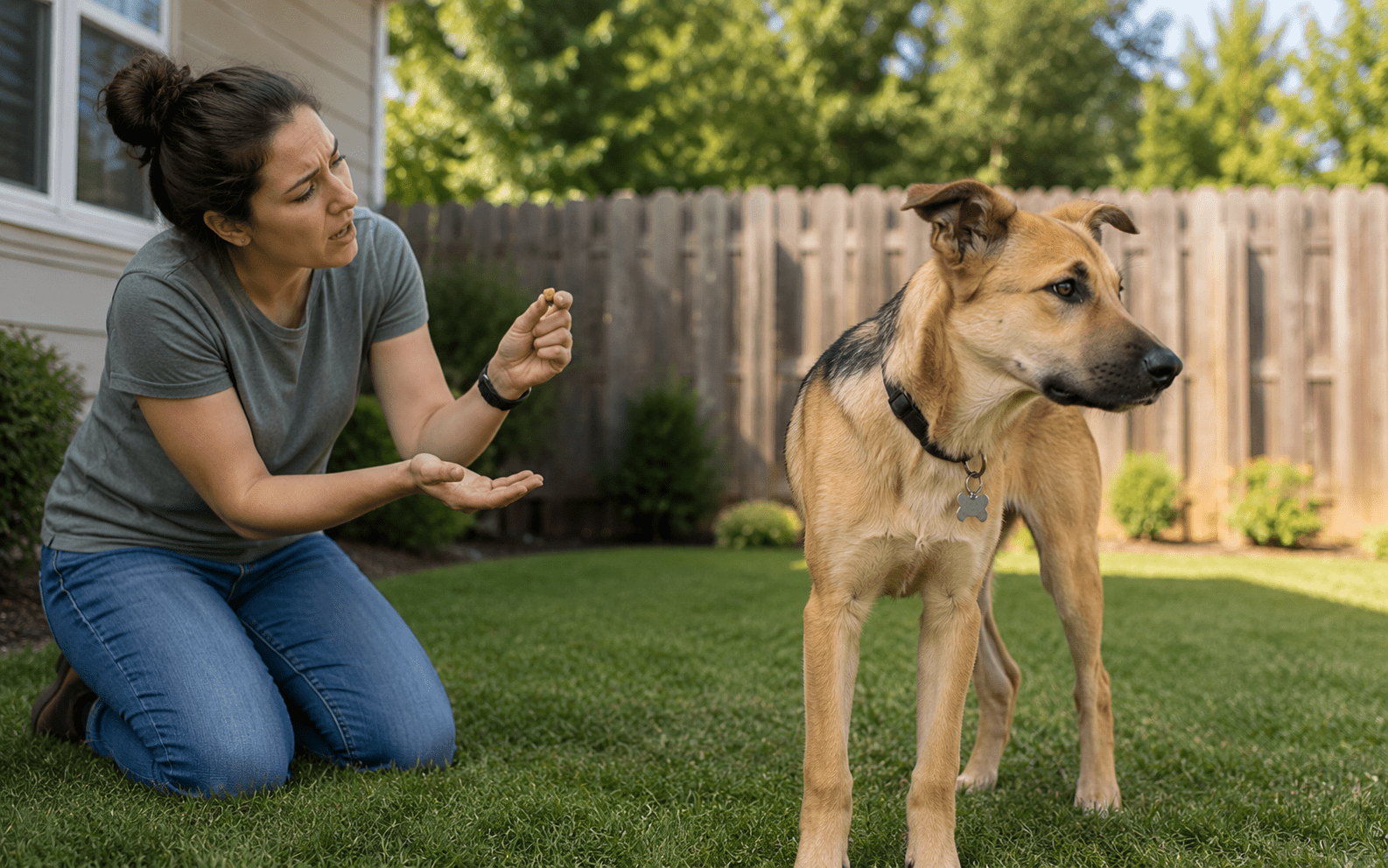
Timing depends on size. Small breeds may move through it quickly, sometimes settling by 12-14 months, while large and giant breeds can stay “teenagers” until two years or older. If you want to see where this fits in the bigger picture, our guide to puppy developmental stages maps each phase from newborn to adult.
The key idea is that this is a stage, not a personality. The dog you are living with right now is not the dog you will have at three years old. Knowing that frees you to respond to the behavior in front of you instead of worrying it will last forever.
Why Adolescence Changes Your Dog
Understanding the cause makes the behavior far easier to accept and manage. Three things are happening at once.
Hormones surge. As dogs reach maturity, rising hormone levels increase interest in other dogs, scent marking, roaming, and sometimes reactivity. This is the biological side of the change.
The brain is still building. The emotional part of the brain races ahead while the part responsible for self-control lags behind. The result is a dog that feels everything strongly but struggles to pause and think, much like a human teenager.
A second fear period appears. Many dogs go through a fear stage somewhere between 6 and 14 months, where things they once ignored suddenly seem frightening. A calm, patient response matters here. Our advice on how to help a fearful dog gain confidence applies directly to this window.
None of these changes follow a fixed schedule. Some dogs drift through the whole stage quietly, while others swing through every phase at full volume. The behavior can also come and go, with good weeks followed by a sudden return of old habits. That back and forth is normal and does not mean your dog is slipping backward for good.
Common Signs Of The Teenage Stage
Adolescent dogs do not all act the same, but a few behaviors show up again and again.
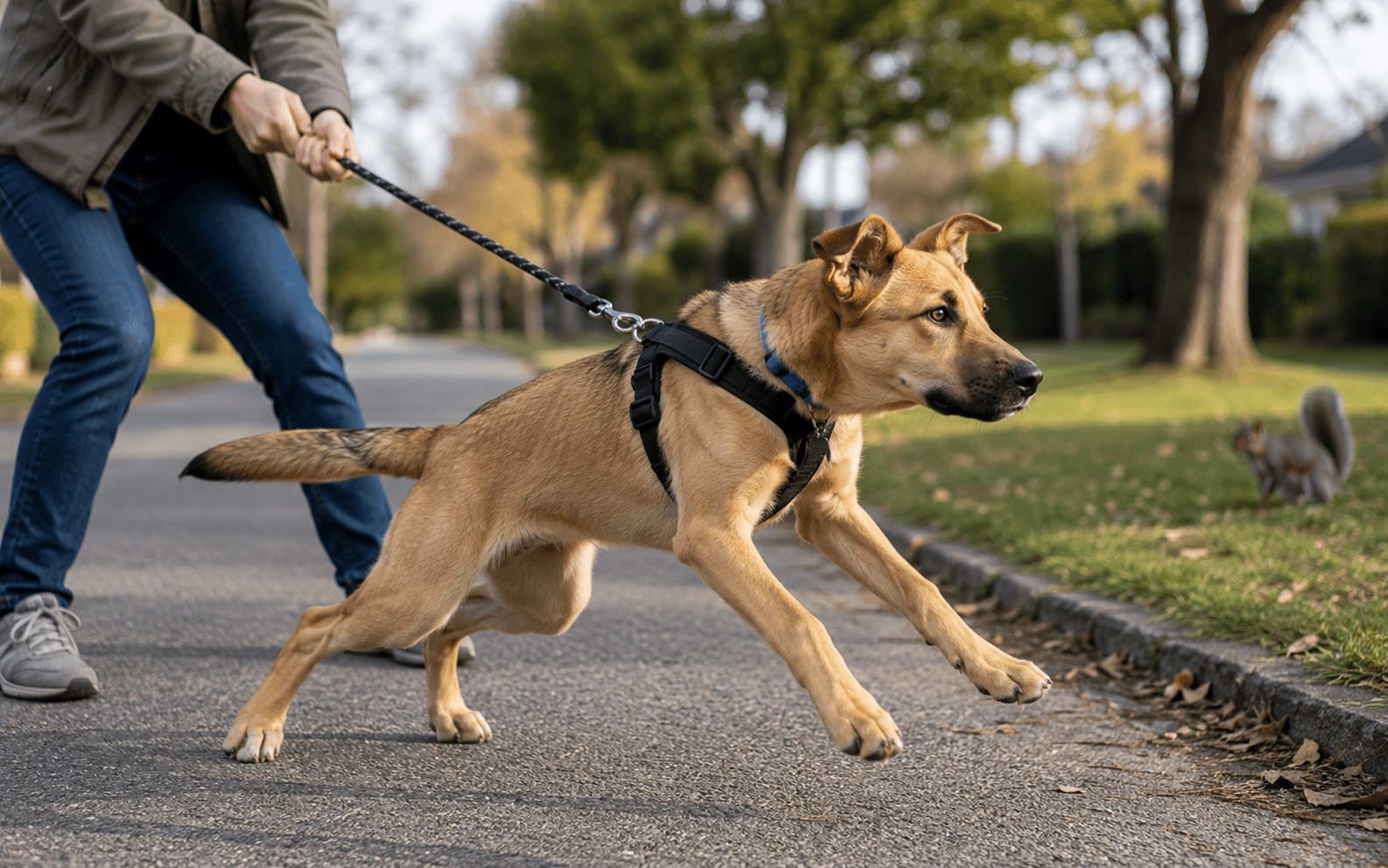
- Ignoring commands they clearly know, especially recall
- Pulling on the leash and lunging toward distractions
- Increased energy, zoomies, and trouble switching off
- Renewed chewing, mouthing, or destructive habits
- Jumping on people and over-the-top greetings
- Marking, mounting, or more interest in other dogs
- Sudden wariness of objects, people, or places
If several of these appeared around the same time, you are very likely looking at normal adolescent dog behavior rather than a training breakdown. The intensity usually rises through the middle of the stage and then tapers off, so what feels unmanageable at ten months often looks very different by eighteen.
Is This The Hardest Age For A Dog
For many owners, yes. Adolescence is the stage when most dogs are surrendered to shelters, usually between 6 and 18 months, because the behavior feels overwhelming and people assume it will not improve.\
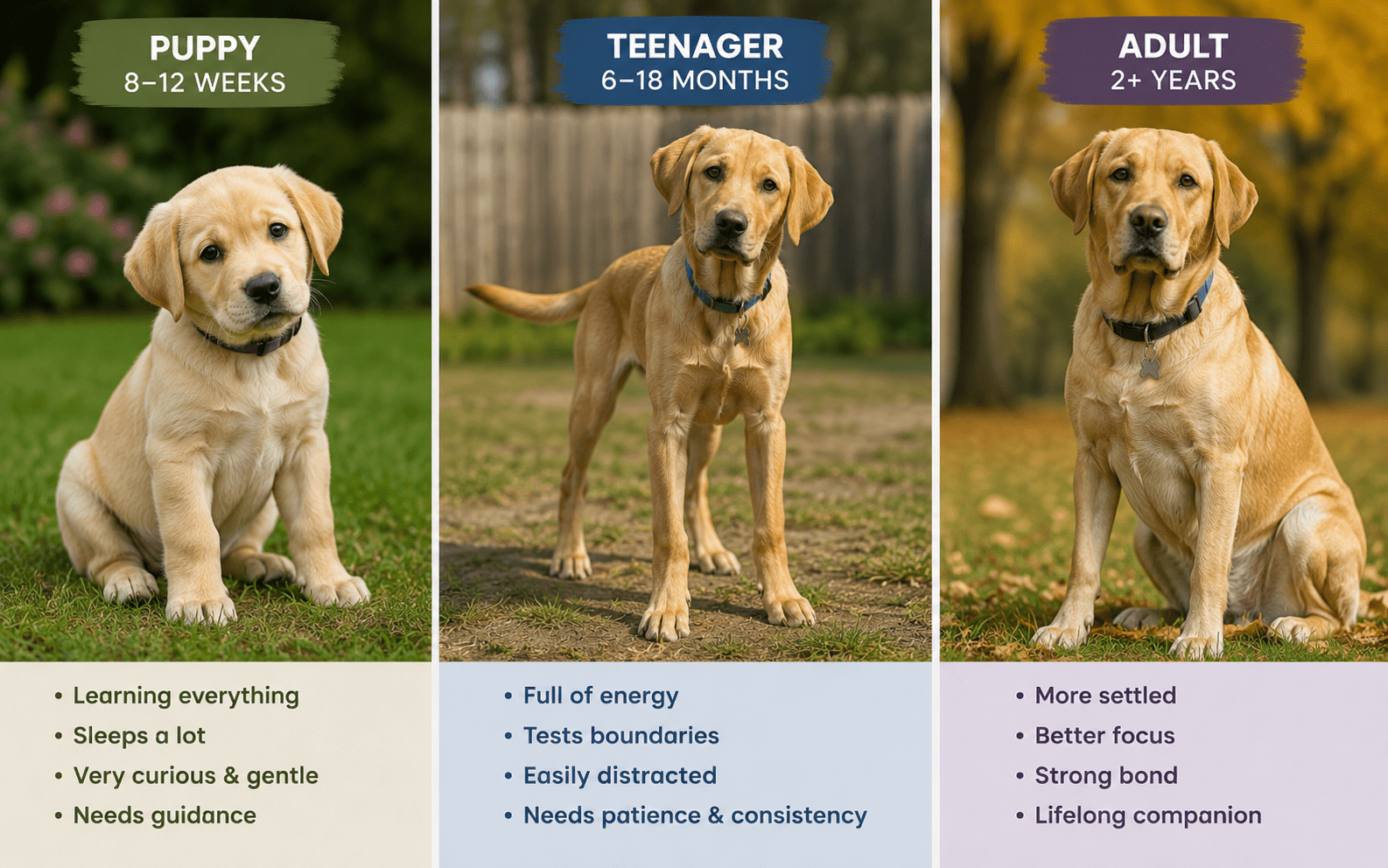
The table below shows how this stage compares to the ones around it.
| Stage | Typical Age | What You See | What It Needs |
| Puppy | 8 weeks to 6 months | Soft, impressionable, learning basics, frequent accidents | Socialization, gentle routine, foundation training |
| Adolescent | 6 to 24 months | Boundary testing, selective hearing, high energy, fear spikes | Consistency, exercise, continued training, patience |
| Adult | 2 years and up | Settled temperament, reliable cues, steady energy | Maintenance training and regular activity |
The takeaway is that the hardest part is temporary, and the effort you put in now shapes the adult dog you end up with.
How To Manage Your Dog Through Adolescence
Managing adolescent dog behavior comes down to structure, outlets, and follow-through. You are not trying to stop the stage; you are guiding your dog through it.
Keep training going. This is the worst time to stop. Short, frequent sessions remind your dog that cues still apply even when the world is exciting. Reward the behavior you want and stay calm when your dog tests you.
Drain energy the right way. Physical exercise helps, but mental work tires a dog faster and lasts longer. Sniff walks, training games, and puzzle feeders all help an over-amped adolescent settle.
Stay consistent across everyone. If one person allows jumping and another does not, the dog stays confused. Everyone in the home should follow the same rules every time.
Keep socializing. Positive, controlled exposure protects the progress you made as a puppy. The early dog socialization benefits you built do not maintain themselves, and this stage is where many owners accidentally let them slip.
Manage the environment. Use leashes, gates, and crates to stop your dog from rehearsing bad habits. Every successful escape or pulled-toward greeting teaches the dog to do it again.
Be patient with setbacks. Progress in this stage is rarely a straight line. Expect off days, reward every small win, and keep your own frustration out of the picture, because a stressed handler makes a stressed dog much harder to reach.
Which Training Option Works Best
The right help depends on your dog, your schedule, and how severe the behavior is. There is no single best answer for every dog, and the strongest results often combine approaches.
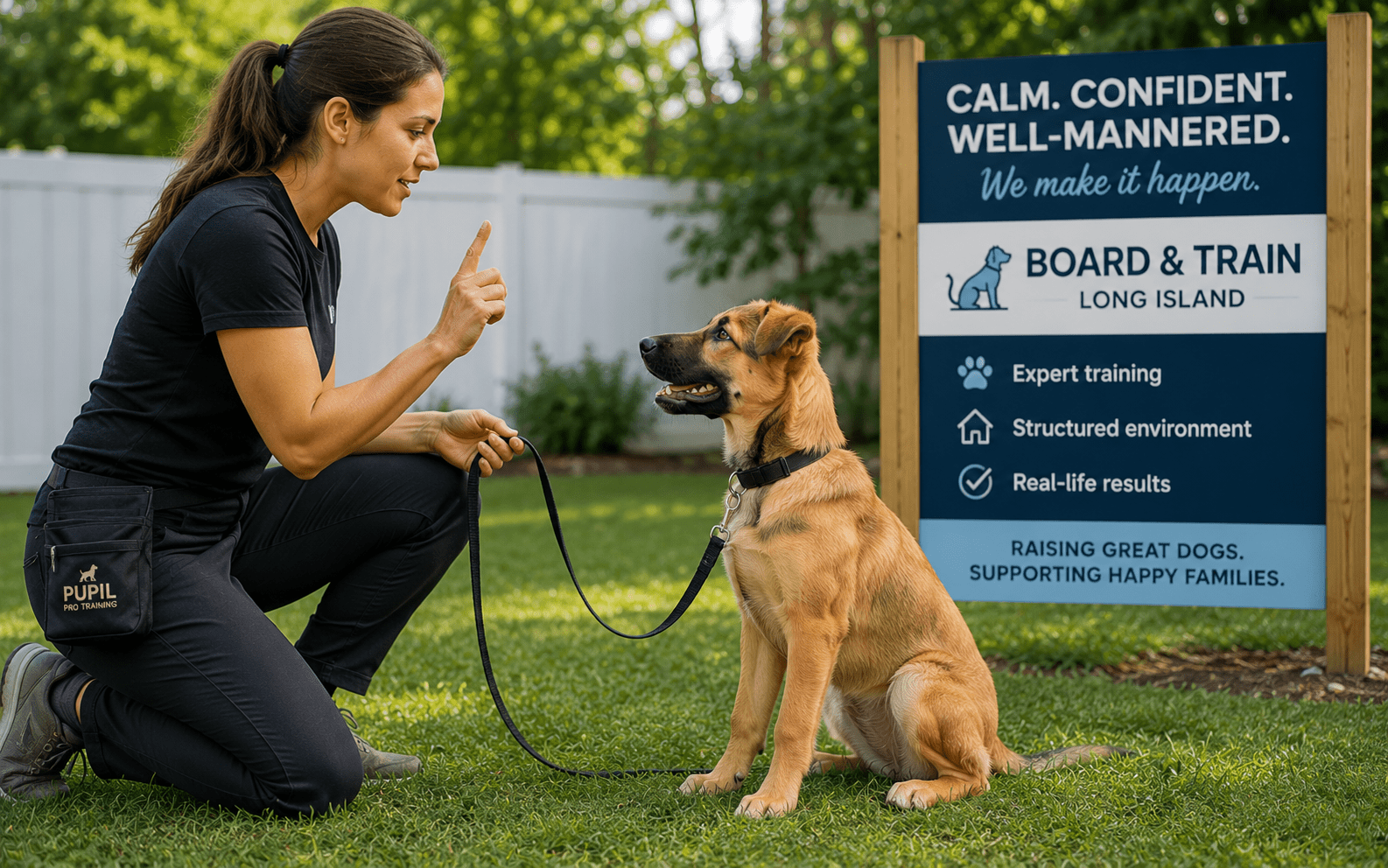
What matters most is matching the level of support to how much the behavior is interfering with daily life and how much time you can give to practice. Here is how the main options compare.
| Training Option | Best For | How It Helps |
| Private dog training | Owners who want to learn hands-on, mild to moderate issues | Coaches you and your dog together at your own pace |
| In-home training | Problems that happen at home, settling, door manners | Teaches the dog where the behavior actually occurs |
| Board and train | Severe issues or busy owners needing fast results | Intensive trainer-led work, then habits sent home |
Private dog training suits owners who want to learn alongside their dog and tackle mild to moderate issues steadily. Our private dog training Long Island sessions focus on coaching you as much as the dog.
In-home training works best when the behavior happens at home, such as jumping, door manners, or settling, because the dog learns in the exact place the problem occurs. Our in home dog training Long Island option brings the lesson to your living room.
Board and train fits dogs that need intensive, consistent work fast, or owners without the time to run daily sessions. The dog lives and learns with a trainer, then comes home with new habits you maintain.
For most serious teenage issues, board and train gives the fastest, most reliable reset, while private and in-home training reinforce it for the long term.
Sleep, Settling, And The Night-Time Struggle
A surprising amount of “bad” teenage behavior is simply an overtired dog. Adolescent dogs still need roughly 14 to 16 hours of sleep a day, and when they miss it they get wired, mouthy, and unable to relax, much like an overtired toddler.
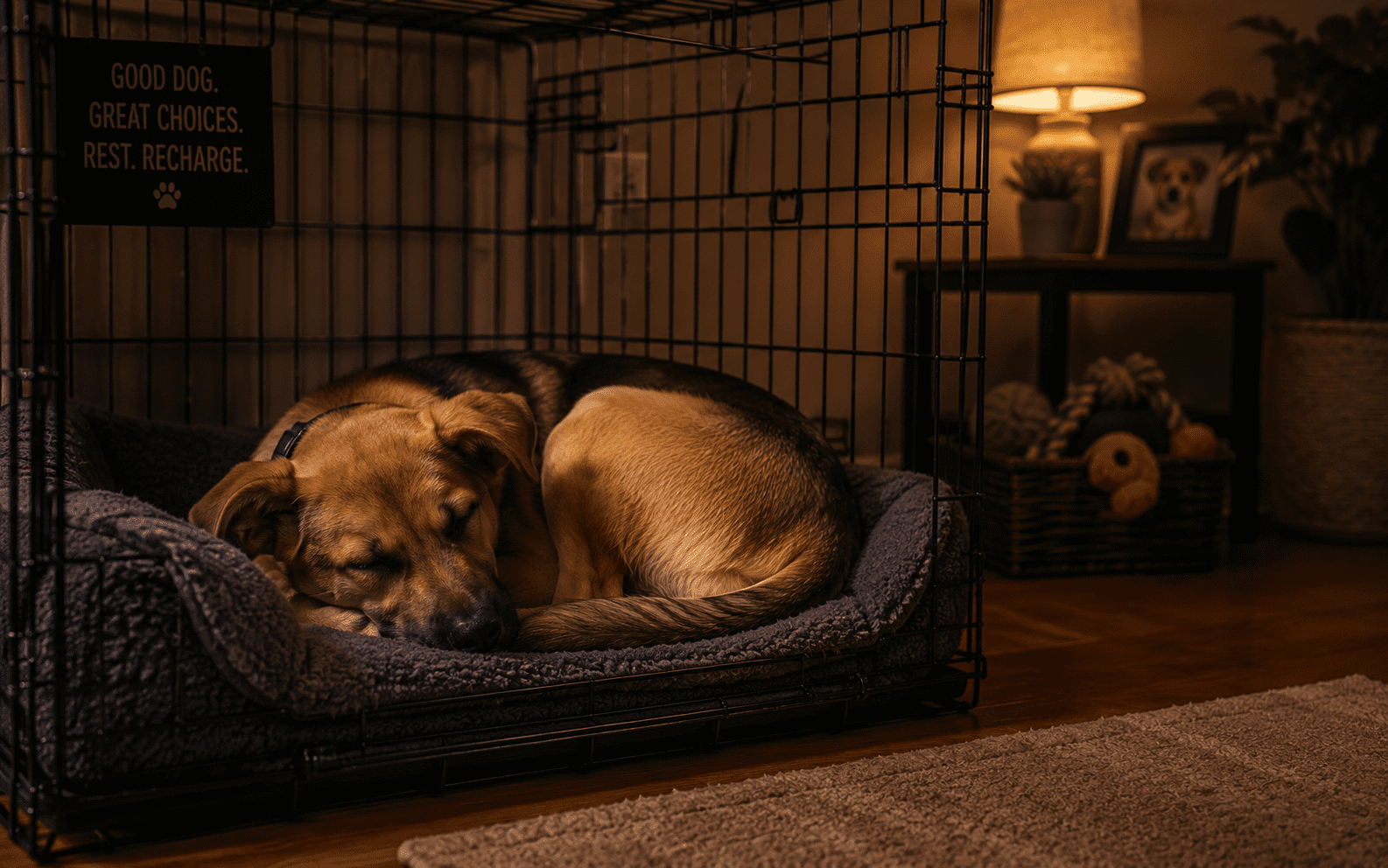
If your dog will not settle at night, look at the hours before bed. Too much late excitement, not enough mental work during the day, or an irregular routine all keep an adolescent brain switched on. Calmer evenings, a predictable wind-down, and a quiet crate or bed usually fix it.
A simple rule helps. When an adolescent gets cranky, destructive, or frantic, ask whether the dog needs more activity or actually needs a nap. More often than owners expect, the answer is rest. Building set quiet times into the day prevents the over-arousal that drives the worst evening behavior.
You May Also Want to Read
What Is Compulsive Behavior in Dogs
Frequently Asked Questions
What are the behaviors of dogs in adolescence?
Common adolescent behaviors include ignoring known commands, pulling on the leash, high energy and zoomies, renewed chewing, jumping, marking, mounting, more interest in other dogs, and sudden wariness during a fear period. These usually peak in the middle of the stage and ease as the dog matures.
What is the most difficult age for a dog?
For most owners the hardest stretch falls between about 8 and 18 months, when hormones peak and self-control is still developing. This is also when many dogs are surrendered to shelters, simply because the behavior feels harder than it really is. Knowing the phase is normal, and temporary, makes it far easier to push through rather than give up.
How long does the adolescent phase last in dogs?
Adolescence generally lasts from around 6 months to 18-24 months. Smaller breeds often finish sooner, while large and giant breeds can stay in the teenage stage past their second birthday.
Why won’t my adolescent dog settle at night?
Most often the dog is overtired or under-stimulated mentally. Too much excitement late in the day, not enough calm activity, or an unpredictable routine keeps the brain switched on. Quieter evenings and a consistent wind-down usually help.
How much sleep does an adolescent dog need?
Adolescent dogs need roughly 14 to 16 hours of sleep each day, more than a fully grown adult. Without enough rest they often become hyperactive and harder to manage rather than sleepy.
Will my dog grow out of this behavior?
Yes. Adolescence is a stage, not a permanent personality. With consistent training and patience, the vast majority of dogs settle into calmer, more reliable adults once the brain finishes maturing. The dogs that struggle long term are usually the ones whose owners stopped training during this window, not the ones who simply had a hard teenage phase.
Helping Your Dog Through The Teenage Stage
The teenage months pass, and the work you put in now decides what kind of adult dog you live with for the next decade. Patience, structure, and steady training turn a chaotic adolescent into a calm, dependable companion.
If adolescent dog behavior has you stuck, K9 Mania Dog Training can help. We are the leading board and train Long Island, with the area’s best animal behaviorist for dogs, and we have guided countless families through this exact stage. Whatever behavior issue you are facing, we have the experience and the methods to fix it. Trust our team to give your dog the structure it needs, and book your spot with us today.