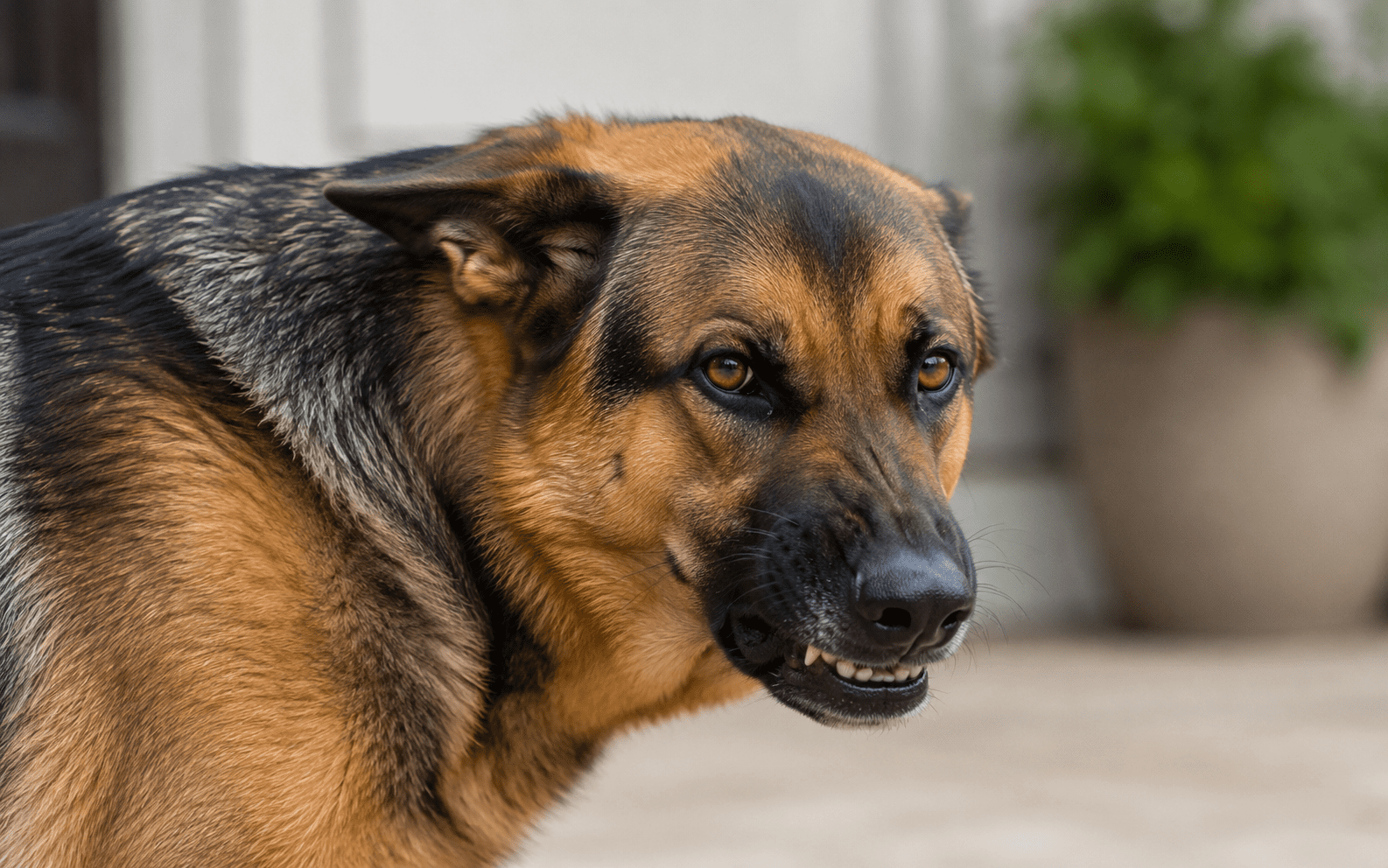
The most common warning signs of aggression in dogs are a stiff body, hard staring, growling, lip lifting, raised hackles, and air snapping. These signals almost always appear before a bite, which means you have a real chance to step in early if you know what to look for.
Most dogs do not “bite out of nowhere.” They climb a ladder of stress signals, and each rung is a message. When owners miss the quiet signals at the bottom, the dog learns that only the loud ones work.
In this guide, you will learn what each signal means, why dogs give them, how to respond in the moment, and which training option fits your dog best.
Key Takeaways
- Dogs almost always warn before they bite, usually in a predictable sequence.
- Stiffness, staring, growling, and freezing are the signals owners miss most often.
- Never punish a growl. It is information, not disobedience.
- The right training approach depends on the type of aggression your dog shows.
Worried your dog only acts up behind a fence, window, or crate? Read our guide on barrier aggression in dogs to understand why confinement changes behavior.
Why Dogs Show Warning Signs Before They Bite
Aggression is communication, not random bad behavior. A dog growls or stiffens because it wants distance from something that scares it, threatens its food, or hurts its body. Biting is expensive for a dog. It risks injury and conflict, so most dogs try everything else first.
Trainers often call this the “ladder of aggression.” It starts with subtle signals like lip licking, yawning, and turning the head away. If those fail, the dog moves up to freezing, staring, and growling. Snapping and biting sit at the very top.
Here is the part many owners get wrong. When you scold a dog for growling, you do not fix the emotion behind it. You only remove the warning. A dog punished for growling often becomes the dog that “bit without warning.” The growl was never the problem. It was the smoke alarm.
This is why reading the early rungs matters so much. The earlier you catch the signal, the easier and safer the fix.
The Most Common Warning Signs To Watch For
You can group the signals into three buckets: body language, vocal warnings, and behavior changes. Most dogs show signs from all three.
Body Language Signals
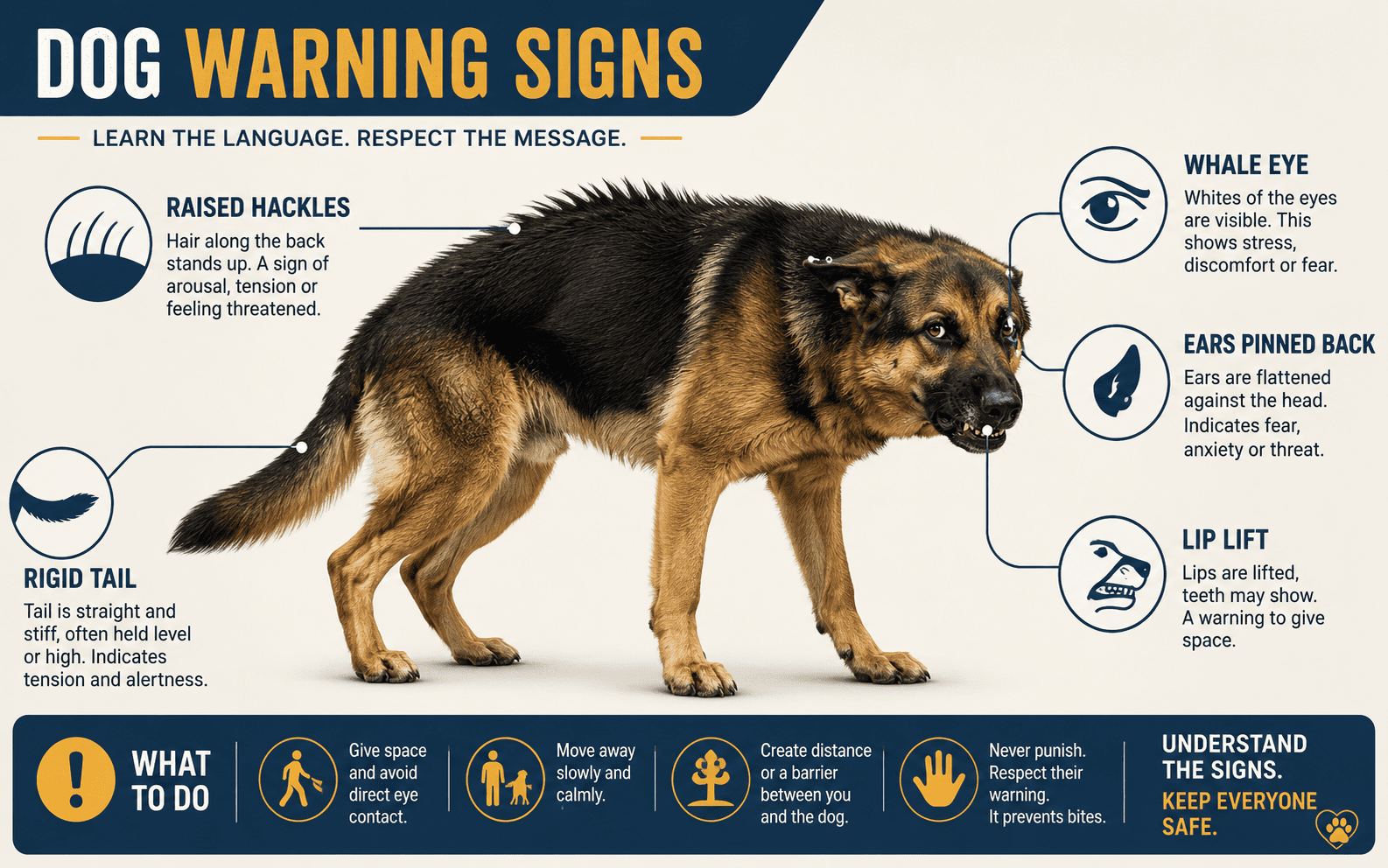
Body language comes first, and it is the easiest to miss. A practical tip: record a short video of your dog during meals, play, or visits, then watch it in slow motion. Owners are often shocked by how many signals they never noticed in real time.
| Signal | What It Means | What You Should Do |
| Stiff, frozen body | The dog is deciding between fight or flight | Stop, give space, do not reach in |
| Hard stare or “whale eye” (whites showing) | The dog feels cornered or guarding something | Break eye contact, back away calmly |
| Raised hackles | High arousal, not always aggression, but rising stress | Remove the trigger or move the dog away |
| Tail high and rigid, slow wag | Tension, not happiness | Do not approach, a wag is not always friendly |
| Lip lifting or showing teeth | Clear distance request | Respect it immediately and create space |
Vocal Warnings
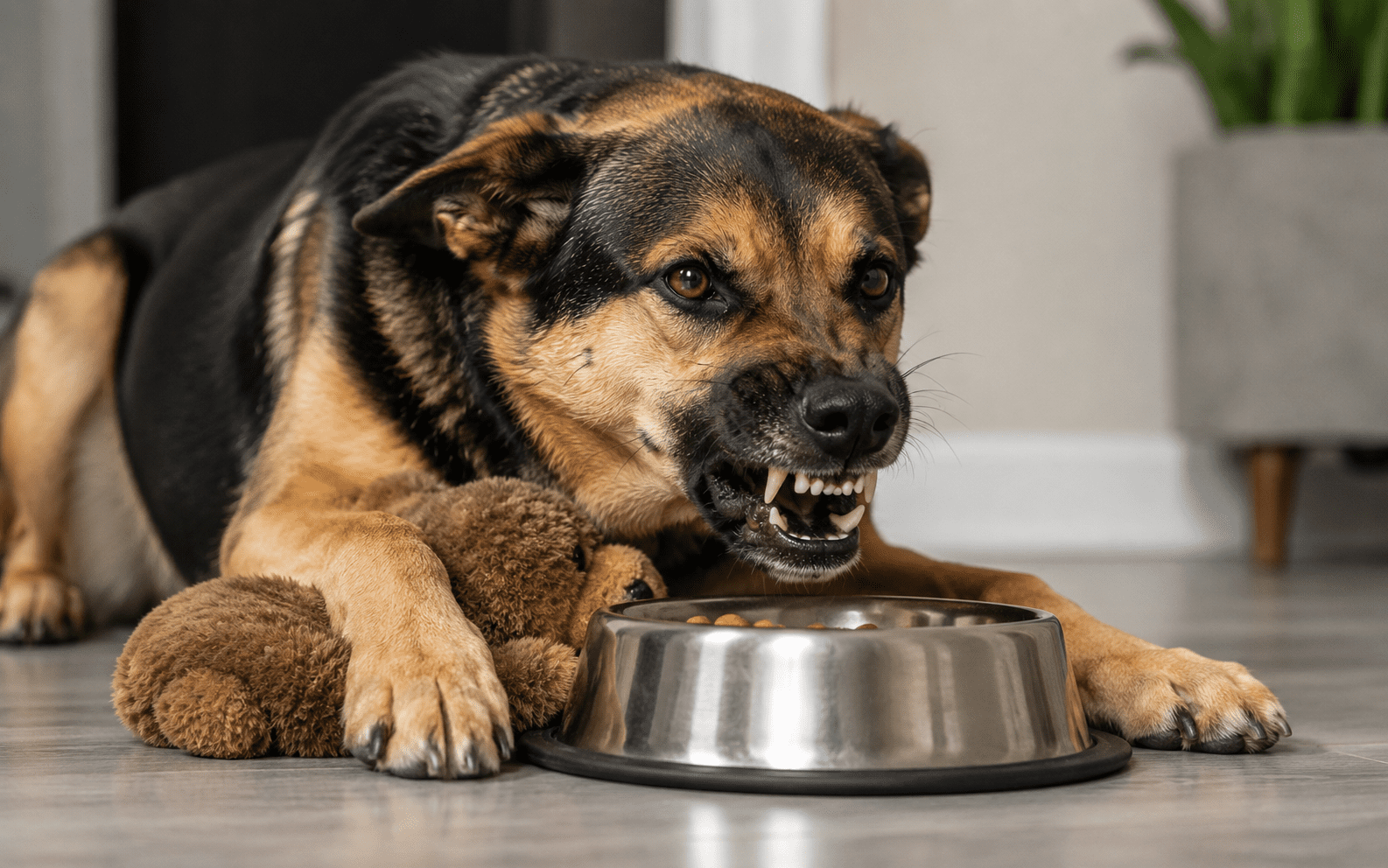
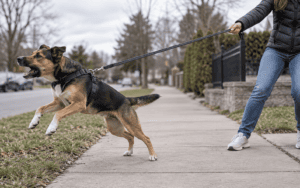
Growling is the most honest sound a dog makes. Low rumbles over food or toys point to resource guarding. Sharp, explosive barking with lunging usually points to fear or frustration. Snarling, which pairs a growl with bared teeth, means the dog is one step from snapping.
Behavior Changes
Watch for freezing over a food bowl, blocking doorways, snapping at the air, or suddenly avoiding touch. A dog that used to love being petted but now ducks away or stiffens may be in pain. Veterinary studies have found that a large share of sudden aggression cases trace back to hidden discomfort like dental disease, ear infections, or arthritis. A vet check is always step one when behavior changes fast.
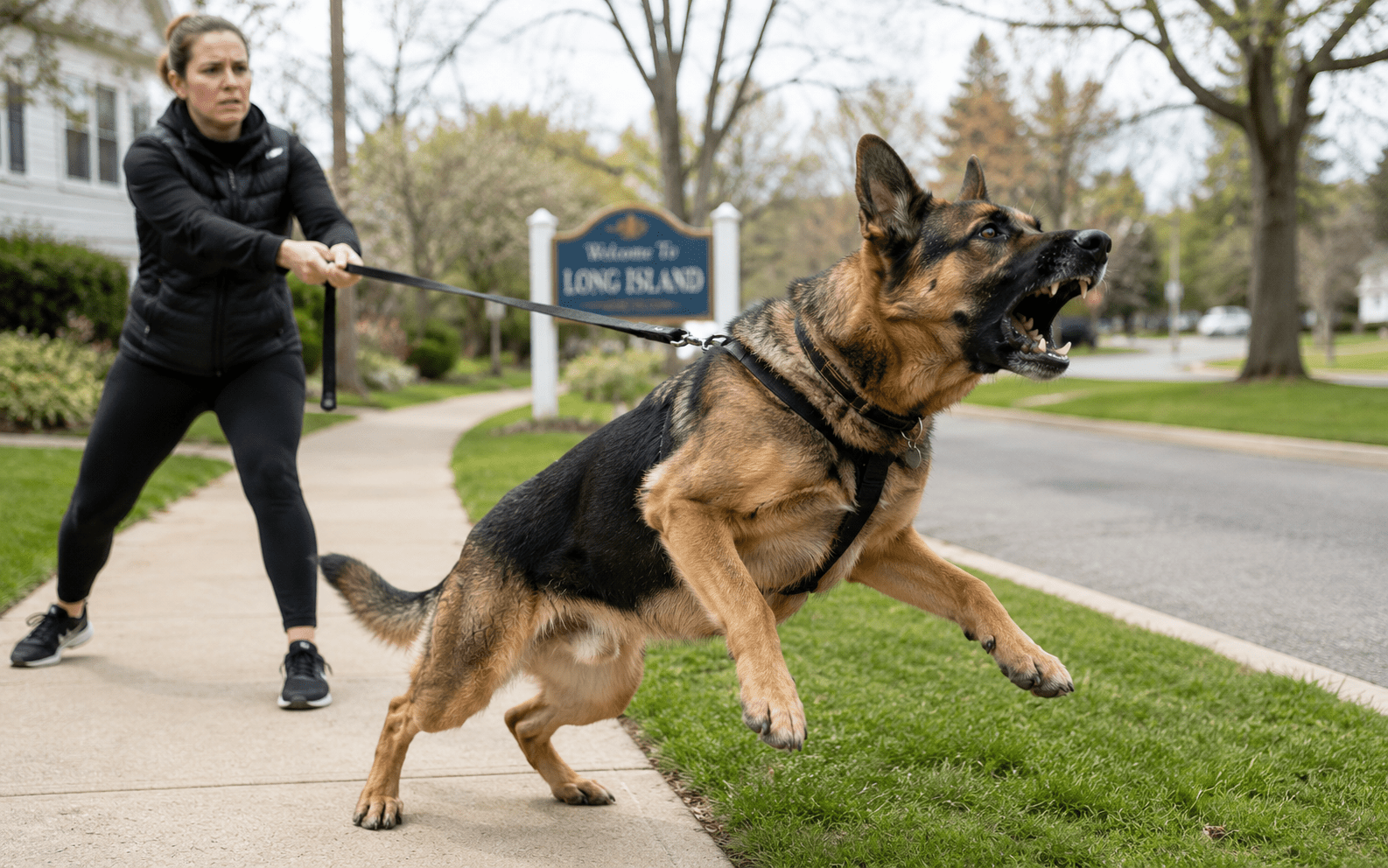
Does your dog explode on walks but stay calm at home? Our guide on how to train a reactive dog on leash breaks down why leashes raise frustration and how to fix it.
Types of Aggression and How To Tell Them Apart
Not all aggression is the same, and the type determines the fix. A fearful dog needs confidence building. A guarding dog needs trade-based training. Using the wrong method on the wrong type can make things worse.
| Type of Aggression | Common Triggers | Best Training Approach |
| Fear aggression | Strangers, sudden touch, new places | Slow desensitization with a professional |
| Resource guarding | Food, toys, beds, sometimes a favorite person | Trade games, never grabbing items by force |
| Territorial or barrier | Fences, windows, doorbells, crates | Managed exposure plus impulse control work |
| Leash reactivity | Other dogs or people while on leash | Structured leash training and distance work |
| Pain-based aggression | Touch near a sore spot, grooming, lifting | Vet exam first, then gentle handling work |
Fear is the most common driver on this list. Roughly 7 out of 10 aggression cases that trainers see have fear underneath, even when the dog looks bold and loud on the surface.
Think your dog falls into that first category? Read our full breakdown of fear aggression in dogs to learn where it starts and how to rebuild trust.
Related Blogs:
- Managing Puppy Aggression: A Quick Guide
- How To Manage Territorial Aggression In Dogs
- Possessive Aggression In Dogs: What It Is And How To Fix It
How To Respond When You See the Signs
What you do in the first five seconds matters more than anything else.
Do this:
- Stop moving and avoid direct eye contact.
- Turn your body slightly sideways, which reads as non-threatening to dogs.
- Create distance calmly. Step away or call the dog away with a happy voice.
- Toss treats away from you if you need to redirect a guarding dog.
- Write down the trigger, time, and location. Patterns appear fast when you track them.
Avoid this:
- Do not punish growling, yell, or use alpha rolls. These suppress warnings and increase bites.
- Do not reach over a stiff dog’s head or grab its collar.
- Do not let kids “tough it out” near a tense dog. Children receive the majority of household dog bites, usually to the face.
Here is a simple real-world example. Your dog freezes over a chew, and you reach for it. The dog growls. The right move is to back off, grab a handful of treats, scatter them a few feet away, and pick up the chew while the dog eats. The dog learns that hands near its stuff predict good things, not theft. That one habit prevents a huge share of guarding bites.
Which Training Option Is Best for an Aggressive Dog?
The honest answer is that it depends on severity, your schedule, and where the behavior happens. Here is how to choose.
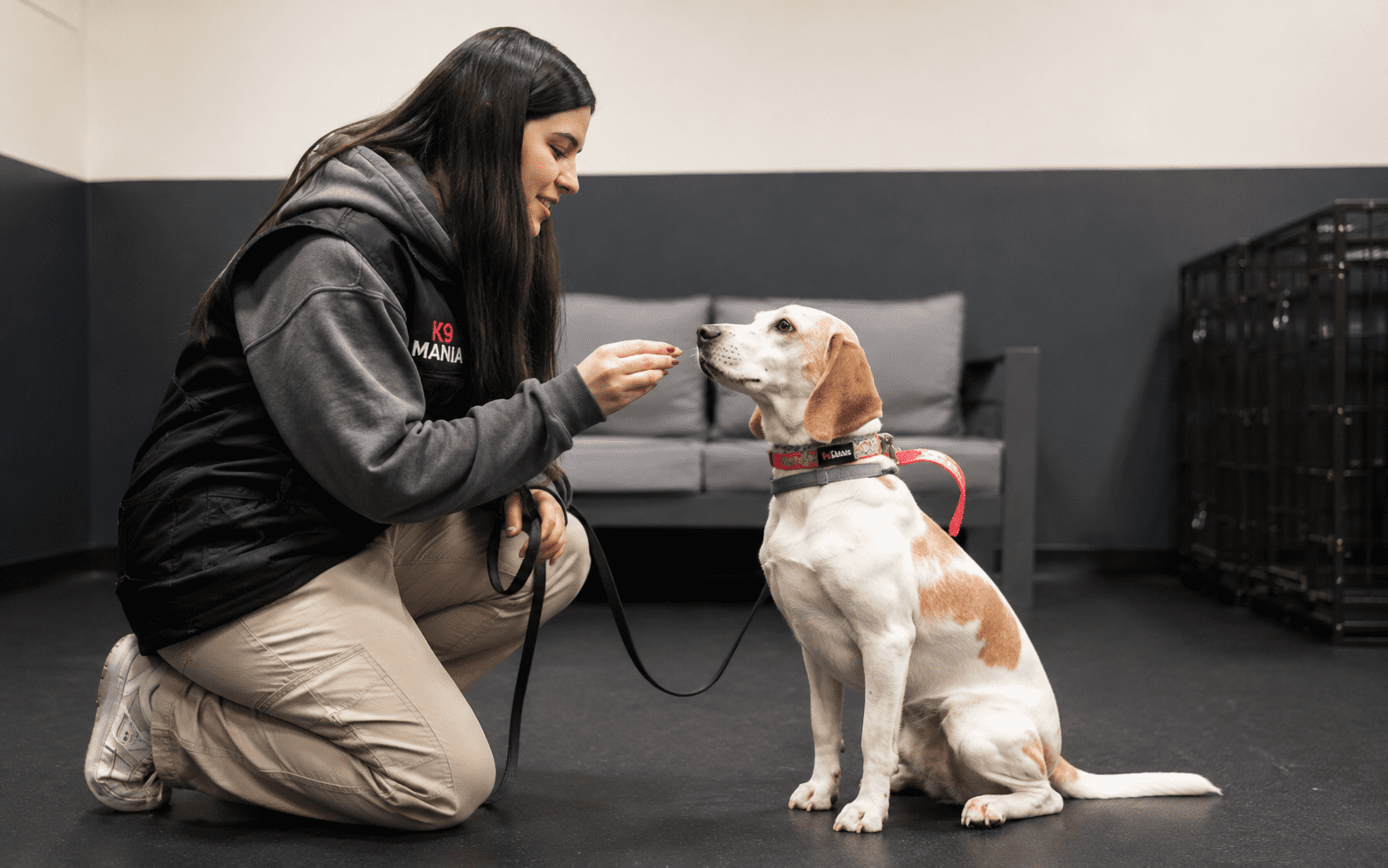
In-home training is best when the aggression is tied to your house, like guarding the couch, barking at the door, or tension with family members. The trainer sees the real triggers in the real environment. If that sounds like your dog, in home dog training Long Island sessions let a professional work the problem exactly where it lives.
Private training is best for owners who want hands-on coaching and a custom plan, especially for leash reactivity or fear of strangers. One-on-one private dog training Long Island programs move at your dog’s pace without the chaos of group classes.
Board and train is the strongest option for serious or long-standing aggression. Your dog lives with professionals who can apply consistent structure every single hour, something most busy owners simply cannot do. For moderate to severe cases, a board and train Long Island program usually produces the fastest, most reliable turnaround.
A good rule of thumb: mild and situational, start in-home. Specific skill gaps, go private. Severe, multi-trigger, or bite history, choose board and train.
Things To Know
Before you act on the warning signs of aggression in dogs, keep these facts in your back pocket:
- A wagging tail does not mean a friendly dog. Speed and height matter. A slow, high, stiff wag signals tension.
- Most bites happen at home. Familiar dogs, not strays, cause the majority of reported bites, which is why reading your own dog matters.
- Aggression peaks between 1 and 3 years of age. This is social maturity, when dogs test boundaries and fears solidify.
- Spaying or neutering is not a cure. It can reduce some hormone-driven behavior but does not fix fear or guarding.
- Muzzle training is a kindness, not a punishment. A dog conditioned to love a basket muzzle can safely visit vets and groomers during training.
- Progress is rarely a straight line. Expect good weeks and setbacks. Track incidents so you can see the real trend.
Spot the Warning Signs of Aggression in Dogs Before They Escalate
Catching the warning signs of aggression in dogs early is the difference between a quick fix and a serious incident. Stiffness, staring, growling, and freezing are not bad behavior. They are your dog asking for help before things go wrong.
If you are seeing these signals, do not wait for a bite to force the decision. K9 Mania Dog Training is the leading board and train program on Long Island, backed by the best animal behaviorists for dogs in the region. Whatever behavior issue your dog is facing, from mild reactivity to serious aggression, our team has seen it and solved it. Visit K9 Mania Dog Training today. Choose us, trust us, and let us help you get your good dog back.
You May Also Want to Read
- Leash Aggression in Dogs: Why It Happens and How to Fix It
- What Is Compulsive Behavior in Dogs
- How to Calm a Dog During Thunderstorms
Frequently Asked Questions
What is the most common cause of aggression in dogs?
Fear is the most common cause of aggression in dogs. Most dogs lunge, growl, or snap because they want distance from something scary, not because they want to fight. Pain and resource guarding are the next most common causes.
At what age do dogs start to show aggression?
Aggression most often appears between 1 and 3 years of age. This is when dogs reach social maturity and fears or guarding habits become fixed. Early puppy signs like stiffening over food can show up as young as 8 weeks.
What breeds are prone to aggression?
No breed is born aggressive, but genetics influence tendencies. Studies show breed predicts behavior far less than socialization, training, and environment do. Any breed, from Chihuahuas to Rottweilers, can develop aggression without proper guidance.
What are the types of aggression?
The main types are fear, resource guarding, territorial, leash reactivity, and pain-based aggression. Some dogs also show redirected or maternal aggression. Identifying the type correctly is the first step to fixing it.
How to calm an aggressive dog?
Stay calm, avoid eye contact, and create distance from the trigger. Never yell or grab the dog, since this raises arousal. Once the dog is below threshold, redirect with treats or a known command.
Do dogs get more aggressive as they age?
Aggression can increase in senior dogs, usually because of pain or declining senses. Arthritis, dental disease, and vision loss make older dogs more defensive. A vet exam should always come before training for sudden senior aggression.
What are the first signs of aggression in dogs?
The first signs are subtle: lip licking, yawning, turning away, stiffening, and hard staring. Growling and snapping come later. Catching the early signals gives you the best chance to prevent escalation.
Why is my dog suddenly showing aggression?
Sudden aggression usually points to pain or a frightening recent experience. Hidden issues like ear infections, dental pain, or arthritis are common culprits. See your vet first, then a professional trainer.
Can aggression in dogs be cured?
Aggression can be managed and dramatically improved, though triggers may never fully disappear. With professional training, most dogs become safe, reliable companions. The earlier you start, the better the outcome.
When should I see a vet or behaviorist about dog aggression?
See a professional immediately if your dog has snapped, bitten, or growls regularly. A vet rules out pain, and a behaviorist or trainer builds the fix. Waiting almost always makes aggression harder to resolve.