How to train a beagle puppy works best when you start early, keep sessions short, and use positive reinforcement that competes with their powerful nose. Beagles are scent-driven, curious, and slightly independent, which means training requires patience, high-value rewards, and a consistent routine to get results.
Beagles are one of the most popular breeds in the United States, and for good reason. They are affectionate, energetic, and great with families. But that same nose that makes them excellent hunters can turn a training session into a battle of wills the moment a squirrel runs by.
The good news is that Beagles are genuinely food-motivated and eager to connect with their people. With the right approach in place, you can raise a confident, obedient companion who listens even when distractions are everywhere.
This guide breaks down the exact steps, what to avoid, and which methods deliver the best long-term results for your Beagle.
Things to Know:
- Beagles are scent hounds, meaning smells will distract them more than most breeds
- Positive reinforcement with high-value treats outperforms correction-based methods
- Training sessions for puppies should stay between 5 and 10 minutes
- Crate training and house training should begin on the first day home
- Beagles are prone to barking and howling, which needs early management
- The socialization window between 3 and 14 weeks shapes lifelong behavior
Not getting the results you want at home? Our private dog training Long Island program is built around your dog’s breed, personality, and specific behavior challenges.
Why Is Training a Beagle Puppy Different From Other Breeds?
Beagles were originally developed as scent hounds for tracking rabbits and small game. That breeding history is still very much active in your puppy today. Their nose contains roughly 225 million scent receptors compared to a human’s 5 million, which means the moment an interesting smell drifts by, your voice can become background noise.
This does not mean Beagles are untrainable. It means training has to work with their instincts rather than fight them.
Unlike breeds developed to closely follow human direction, such as Border Collies or Golden Retrievers, Beagles were bred to make independent decisions in the field. This creates a dog that is confident in its own judgment, which often reads as stubbornness during obedience work.
Understanding this difference helps you set realistic expectations and build a plan that actually fits your dog’s nature. For more strategies that apply to independent-minded dogs, our guide on how to train a stubborn dog covers proven methods that work across difficult breed types.
How Do You Start Training a Beagle Puppy the Right Way?
The foundation of all Beagle training comes down to three things: timing, reward value, and consistency. Puppies learn through association, meaning the reward has to land within seconds of the behavior for the connection to stick.
Start on Day One
Bring your Beagle puppy home and begin setting expectations immediately. Where they sleep, when they eat, and how you respond to behaviors all create patterns that will last. Delaying training because the puppy seems too young is one of the most common mistakes new owners make. Puppies as young as 8 weeks old can begin learning sit, stay, and come.
Choose the Right Rewards
Beagles are highly food-motivated, which is actually a training advantage. High-value treats like small pieces of chicken, cheese, or soft commercial training treats will outcompete most distractions. Standard dry kibble often does not cut it when a squirrel is nearby. Using part of your puppy’s daily meal as training rewards helps keep calorie intake balanced.
Build a Consistent Routine
Beagles thrive on predictability. Feeding, walks, potty breaks, and training sessions at the same times each day reduce anxiety and help your puppy understand what is expected of them.
5 Training Steps That Work for Beagle Puppies
1. Crate Training: Why a Safe Space Builds Confidence
Crate training is not punishment. When introduced correctly, the crate becomes your Beagle’s personal space where they feel secure. This matters especially for a breed prone to separation anxiety.
Start by making the crate inviting with a soft blanket and a hidden treat. Let your puppy explore it without forcing them inside. Gradually build up time spent inside until they rest calmly for a few hours. A crate also supports house training by using your puppy’s natural instinct to avoid soiling their sleeping area.
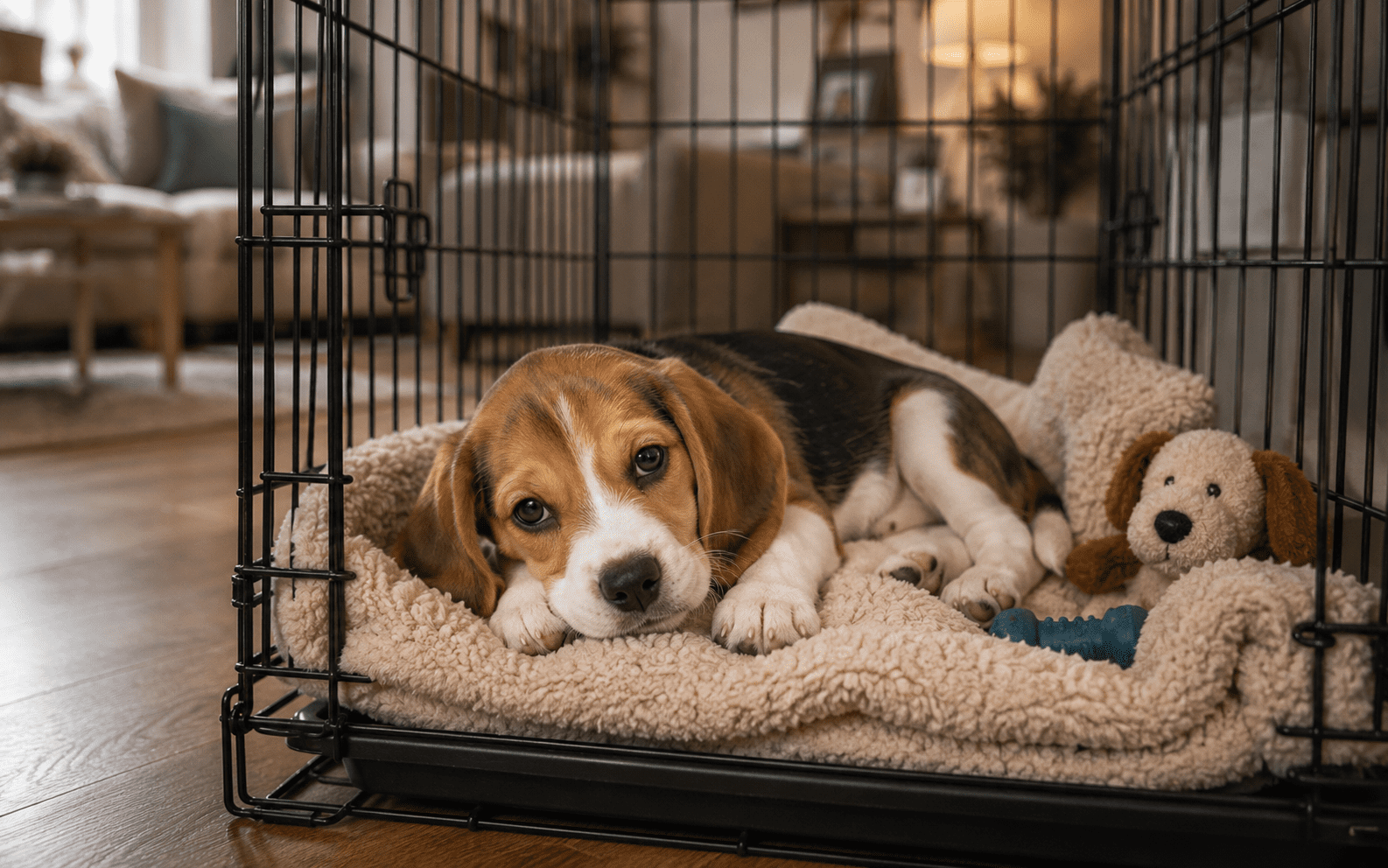
How to crate train effectively:
- Never use the crate as punishment
- Place it in a social area like the living room, not an isolated space
- Ignore whining unless a potty break is needed
- Increase time inside gradually over several days
2. House Training: How Consistency Prevents Accidents
Beagle puppies have small bladders and need to go outside frequently, roughly every 1 to 2 hours during the day and after every meal, nap, or play session.
Take your puppy to the same outdoor spot each time and use a consistent phrase like “go potty.” Reward immediately when they go in the right place. Clean any indoor accidents with an enzymatic cleaner to eliminate the scent and discourage repeat marking in the same spot.
3. Teaching Basic Commands: Which Commands to Prioritize First
Start with the commands that have the most practical impact on daily safety and life:
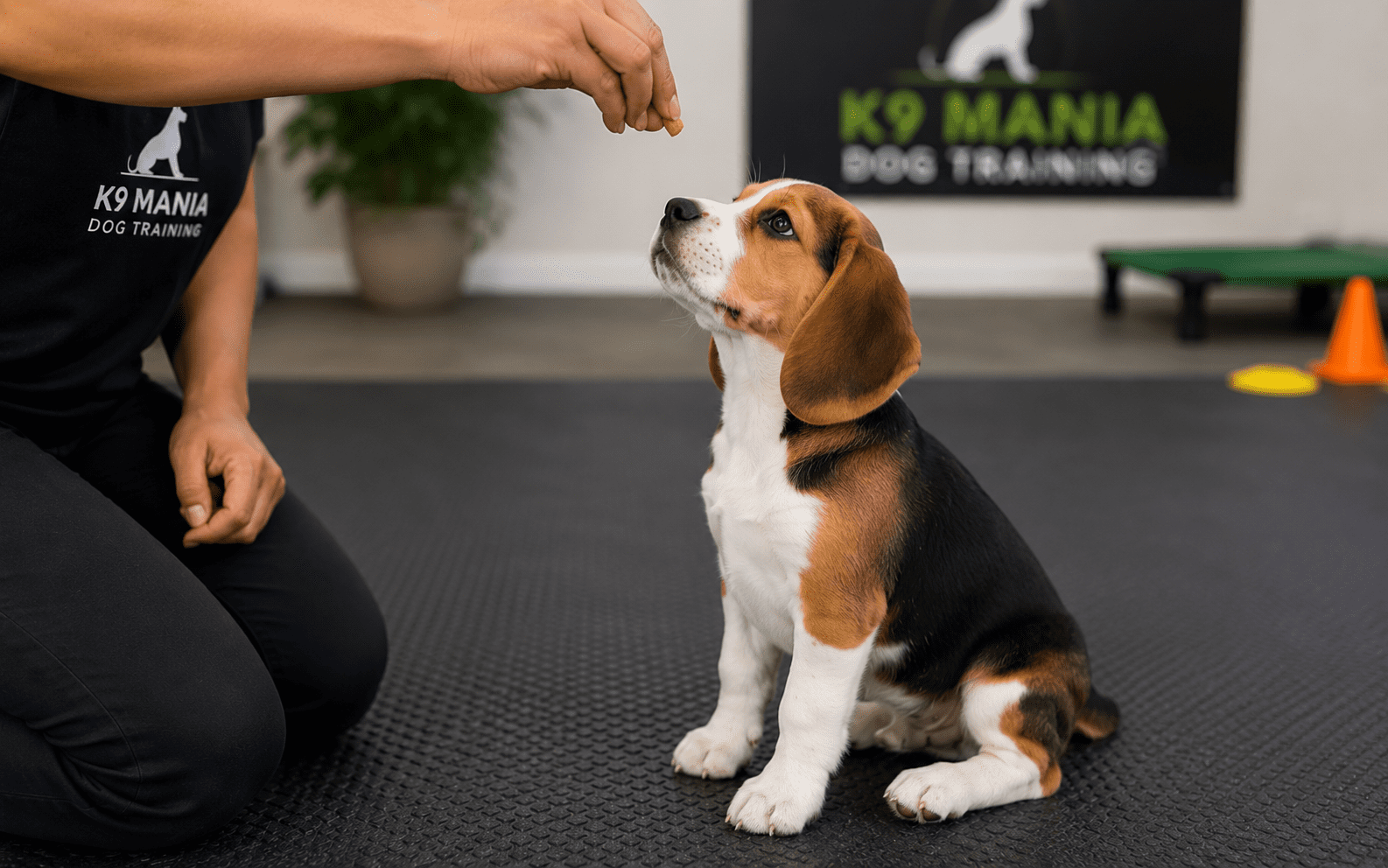
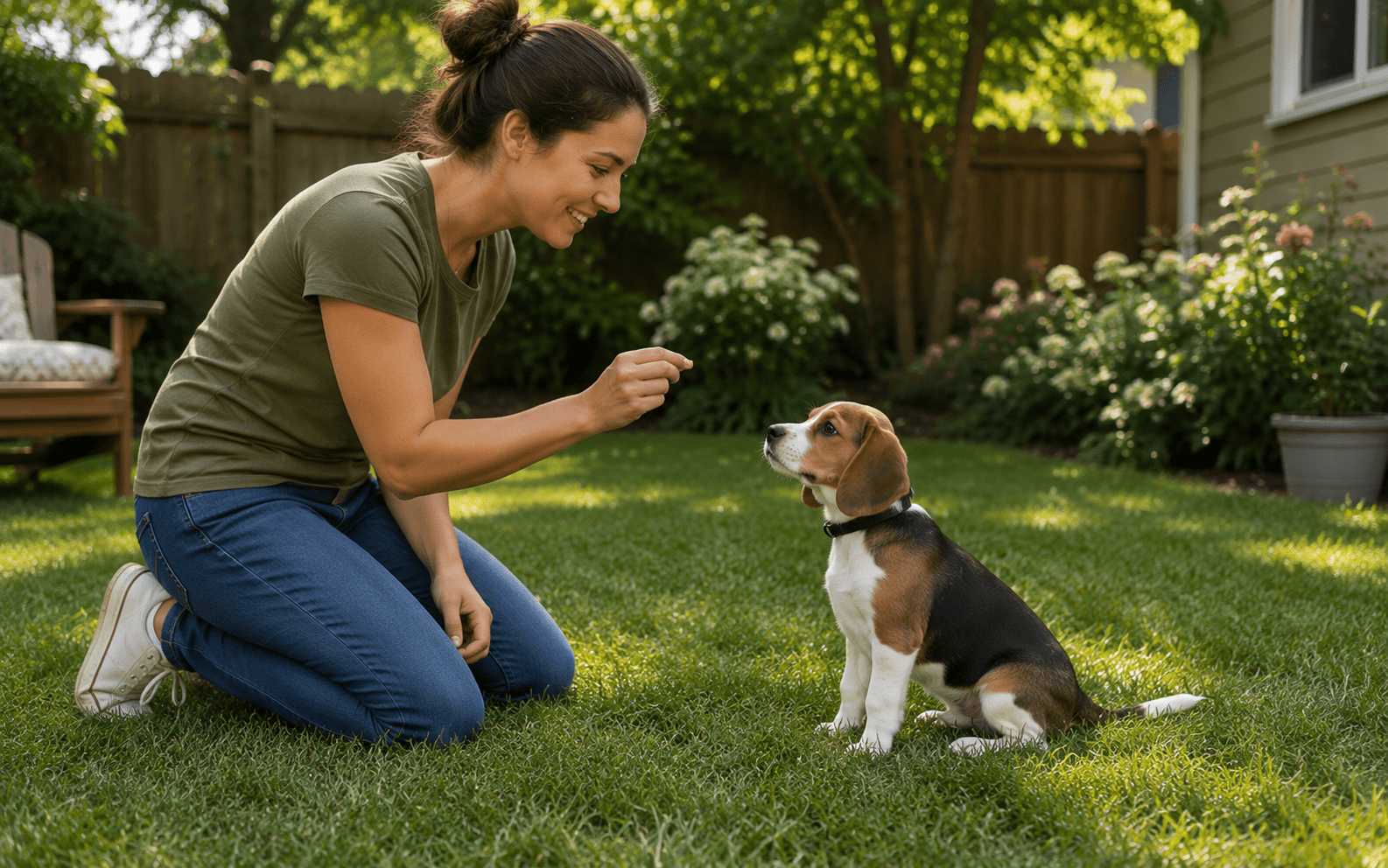
- Sit: The foundation for all other obedience. Hold a treat above your puppy’s nose, move it back toward their tail, and reward the moment their bottom touches the floor.
- Stay: Build duration slowly, starting from 2 seconds before adding distance.
- Come: The most critical command for a scent-driven breed that can bolt fast. Always reward this generously and never call your puppy for something unpleasant.
- Leave it: Prevents your Beagle from eating something dangerous or chasing wildlife on a walk.
4. Managing Barking and Howling: Why Early Intervention Matters
Beagles are vocal dogs. They bay, bark, and howl as part of their natural communication, and you cannot eliminate this entirely. What you can do is manage when and how much it happens.
Teach a “quiet” command by waiting for a brief pause in barking, then saying “quiet” and immediately rewarding the silence. Never yell at a barking Beagle because they often interpret it as you joining in with them.
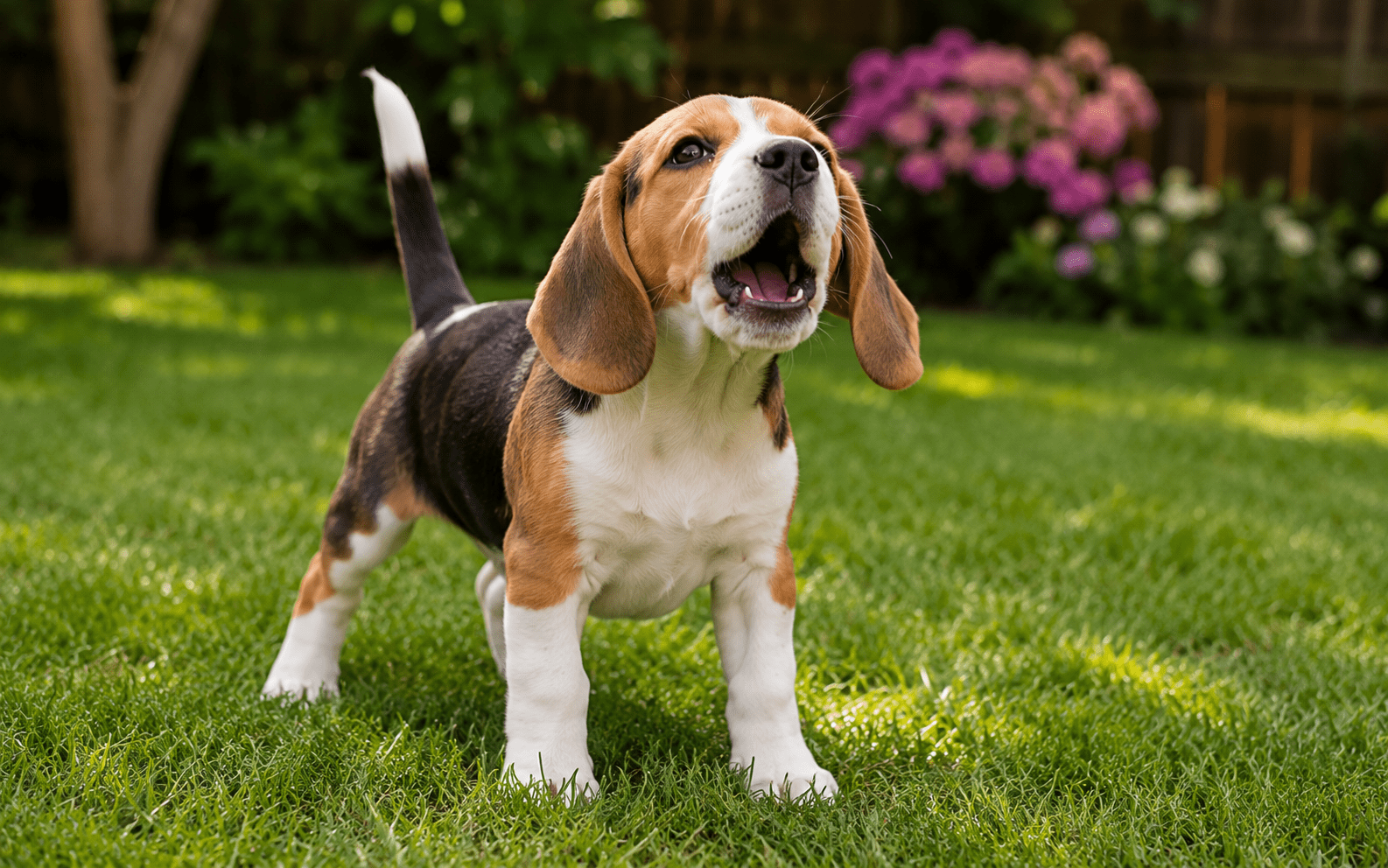
Identifying the trigger is as important as the command itself. If your Beagle barks at the front window, limit access to that area during training. For detailed strategies, our guide on how to train a dog to stop barking walks through step-by-step methods for different barking patterns.
5. Socialization: Which Experiences Shape a Confident Adult Dog
The window between 3 and 14 weeks is the most critical period for socialization. What your Beagle puppy experiences during this time directly shapes how they respond to the world as an adult.
Expose your puppy to different people, sounds, surfaces, animals, and environments in a positive and controlled way. Keep early experiences short and pleasant. Overwhelming a puppy creates fear rather than confidence.
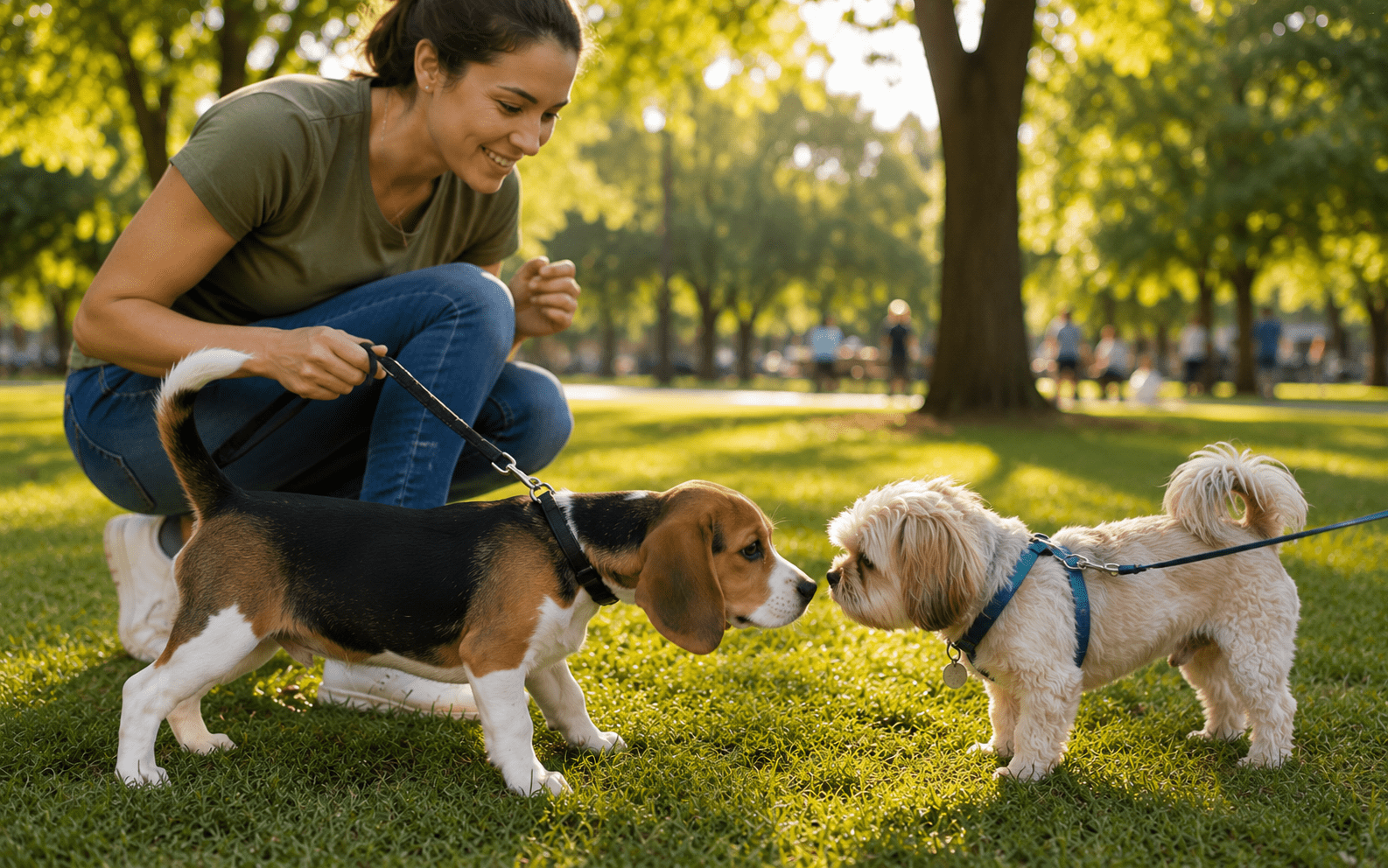
Beagles that miss this window often become anxious, reactive, or overly timid with new things. If your puppy is past this stage, structured professional help can still make a significant difference. Our board and train Long Island program includes structured socialization as part of every training plan.
Beagle Puppy Training Timeline: What to Expect at Each Stage
| Age | Training Focus | Key Milestones |
| 8 to 10 weeks | Crate training, house training, name recognition | Sleeping through the night, basic potty routine established |
| 10 to 16 weeks | Sit, stay, come, leash introduction | Responds reliably to name, walks without pulling constantly |
| 4 to 6 months | Leave it, quiet command, socialization | Fewer indoor accidents, reduced nipping, basic command compliance |
| 6 to 12 months | Distraction training, off-leash recall | Consistent obedience in low to moderate distraction environments |
| 12 months and up | Advanced commands, scent work activities | Reliable recall, manageable barking, strong leash manners |
Common Mistakes Beagle Owners Make
Even experienced dog owners can fall into habits that slow a Beagle’s progress. Here are the mistakes that derail training most often:
- Repeating commands: Saying “sit, sit, SIT” teaches your puppy to wait for the third cue. Say the command once, wait, then redirect.
- Inconsistent rules: If jumping on the sofa is sometimes allowed, your Beagle will always test the boundary. Decide on the rules and stick to them across every family member.
- Training sessions that run too long: Five to ten minutes is more productive than a thirty-minute session where attention fades. End while your puppy still wants more.
- Delayed corrections: Scolding a Beagle for something they did ten minutes ago does not work. They cannot connect consequences to past behavior.
- Skipping leash training early: Beagles will follow their nose anywhere. Solid leash manners and recall must be non-negotiable from the start.
- Ignoring their scent drive: This instinct needs a healthy outlet. If you do not provide one, it finds expression through digging, obsessive sniffing, or escaping. Our guide on how to scent train a dog shows you how to channel this drive productively.
Beagle Training Methods Compared
| Training Method | Effectiveness for Beagles | Best Used For | Risk If Misused |
| Positive Reinforcement | Very High | All commands and new behaviors | Overfeeding treats if portion not managed |
| Clicker Training | High | Precision behaviors and shaping | Requires consistent timing to be effective |
| Lure and Reward | High | Teaching new commands quickly | Puppy may become dependent on seeing the lure |
| Correction-Based | Low | Not recommended for Beagles | Increases fear, shuts down engagement, worsens stubbornness |
| Scent-Based Games | High | Focus, mental stimulation, recall practice | None when used appropriately as a structured activity |
Your Beagle Deserves the Right Start
How to train a beagle puppy is one of the most rewarding investments you will make as a dog owner. At K9 Mania Dog Training, we are Long Island’s leading board and train program with the best animal behaviorist for dogs on our team. Whether your Beagle is struggling with barking, house training, recall, or general obedience, we have the experience and the methods to help. Trust K9 Mania to guide you and your puppy toward a confident, well-behaved life together. Whatever the behavior issue, we can help.
Read Related Articles
FAQs: How to Train a Beagle Puppy
Are Beagles easy to train?
Beagles are intelligent and food-motivated, which works in your favor during training. However, their scent-driven nature and independent instincts mean they require more patience and higher-value rewards than many other breeds. They are not the easiest breed to train, but with consistency and the right methods, they respond very well to positive reinforcement. Most owners see solid progress within a few weeks of starting a structured routine.
What not to do with a Beagle?
Avoid using harsh corrections, yelling, or punishment-based methods. Beagles become fearful and shut down under negative pressure rather than improving. Never allow off-leash time in unfenced areas before recall is fully trained, as they will follow a scent without hesitation. Also avoid skipping socialization during puppyhood, ignoring their vocal behavior, and letting rules slide. Inconsistency is one of the fastest ways to create a difficult Beagle.
How do you discipline a Beagle?
Discipline for a Beagle should always mean redirecting unwanted behavior rather than punishing it. When your Beagle does something you want to stop, interrupt calmly, redirect to a desired behavior, and reward that instead. Withholding a reward or removing attention for a few seconds is more effective than physical or verbal punishment. The goal is to make the right choice more rewarding than the wrong one. This approach builds trust and produces lasting results.
What is Beagle syndrome?
Beagle syndrome is not a formal medical diagnosis but a commonly used term that refers to selective hearing and distraction in Beagles, particularly when they are following a scent. In some veterinary contexts, it may also reference a neurological condition called steroid-responsive meningitis arteritis, which is seen at higher rates in Beagles and causes neck pain, fever, and stiffness in young dogs. If your Beagle shows sudden pain or unusual movement, consult your veterinarian promptly rather than assuming it is a training or behavior issue.
What is the downside of a Beagle?
Beagles are prone to excessive barking and howling, which can create challenges in apartments or neighborhoods with noise restrictions. Their powerful nose means they are easily distracted and can escape a yard to follow a scent trail. They also have higher rates of obesity because of their food motivation, so treat portions during training need to be managed carefully. Separation anxiety is common in the breed, and without proper crate training and independence building, they can become destructive when left alone.
Do Beagles like to be picked up?
Most Beagles tolerate being picked up but prefer having all four paws on the ground. They are social and affectionate dogs, but they tend to show affection through proximity and play rather than being held. Puppies that are handled gently and frequently from an early age are more comfortable being picked up as adults. If a Beagle squirms, tenses, or shows discomfort when held, respect that signal and allow them to engage on their own terms. Forced holding can create anxiety around human contact.