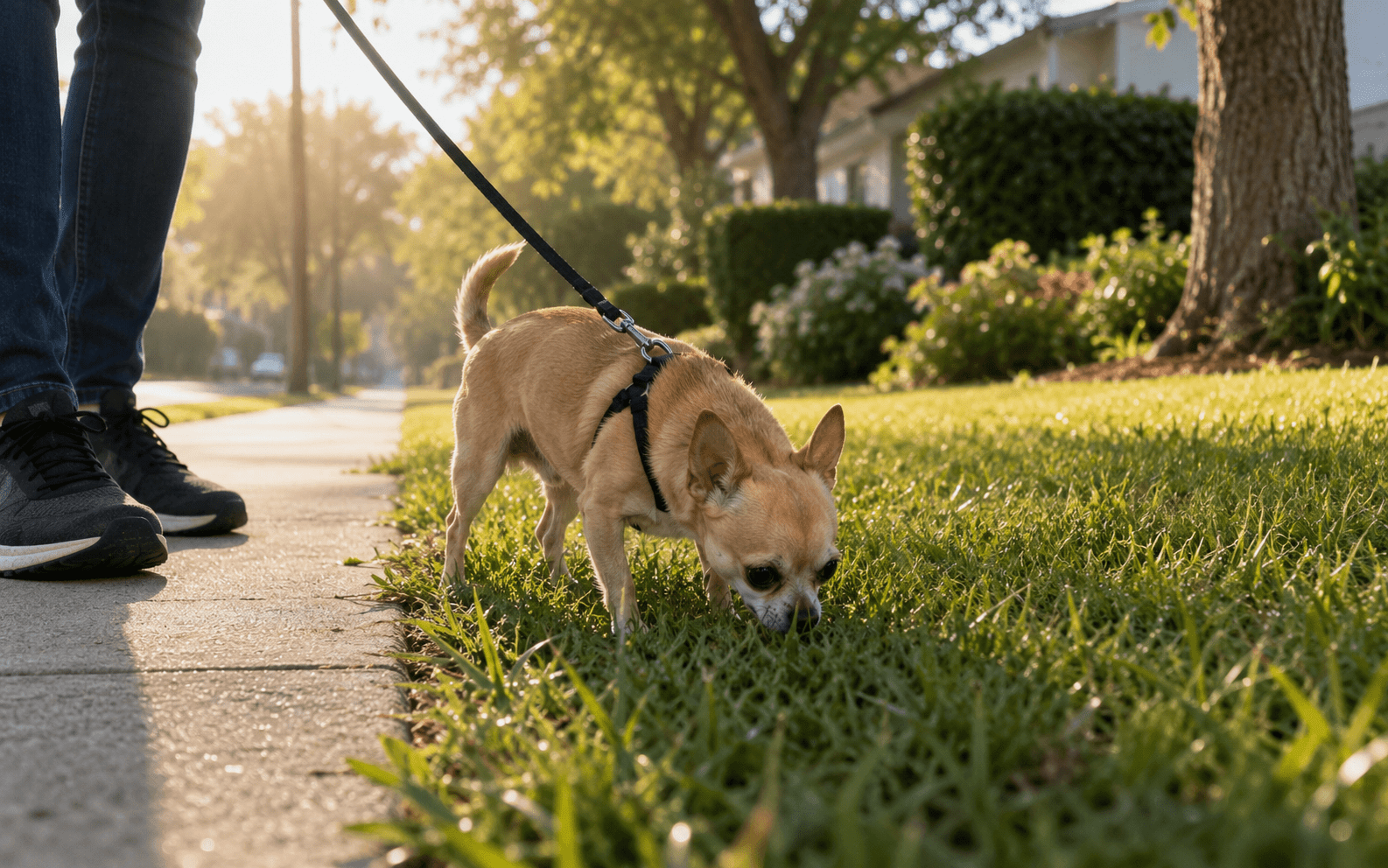
Can you train a Chihuahua? Yes, Chihuahuas are fully trainable dogs that respond exceptionally well to positive reinforcement, consistency, and short structured sessions despite their bold and stubborn reputation.
Their small size leads many owners to skip structure and rules, which creates the classic “small dog syndrome” behavior that gives the breed an unfair name. With the right technique, a Chihuahua can master basic obedience, walk politely on a leash, and become a well-mannered member of your household.
In this guide, we cover exactly how to train your Chihuahua, the mistakes that hold owners back, and when to call in a professional.
Quick Insights:
- Chihuahuas are intelligent and capable of learning a wide range of commands
- Positive reinforcement is the only method that delivers lasting results
- Skipping rules because of small size is the leading cause of behavior problems
- Socialization between 3 and 14 weeks shapes adult temperament permanently
- Short daily training sessions produce faster, more consistent results
Struggling with a Chihuahua that refuses to listen? Our private dog training Long Island program is built to tackle even the most stubborn small dog behaviors.
Why Do Chihuahuas Have a Reputation for Being Hard to Train?
Chihuahuas are one of the most misunderstood breeds when it comes to trainability. Many owners assume the stubbornness is hardwired into the breed, but the reality is that most Chihuahua behavior problems come from inconsistent handling, not the dog’s genetics.
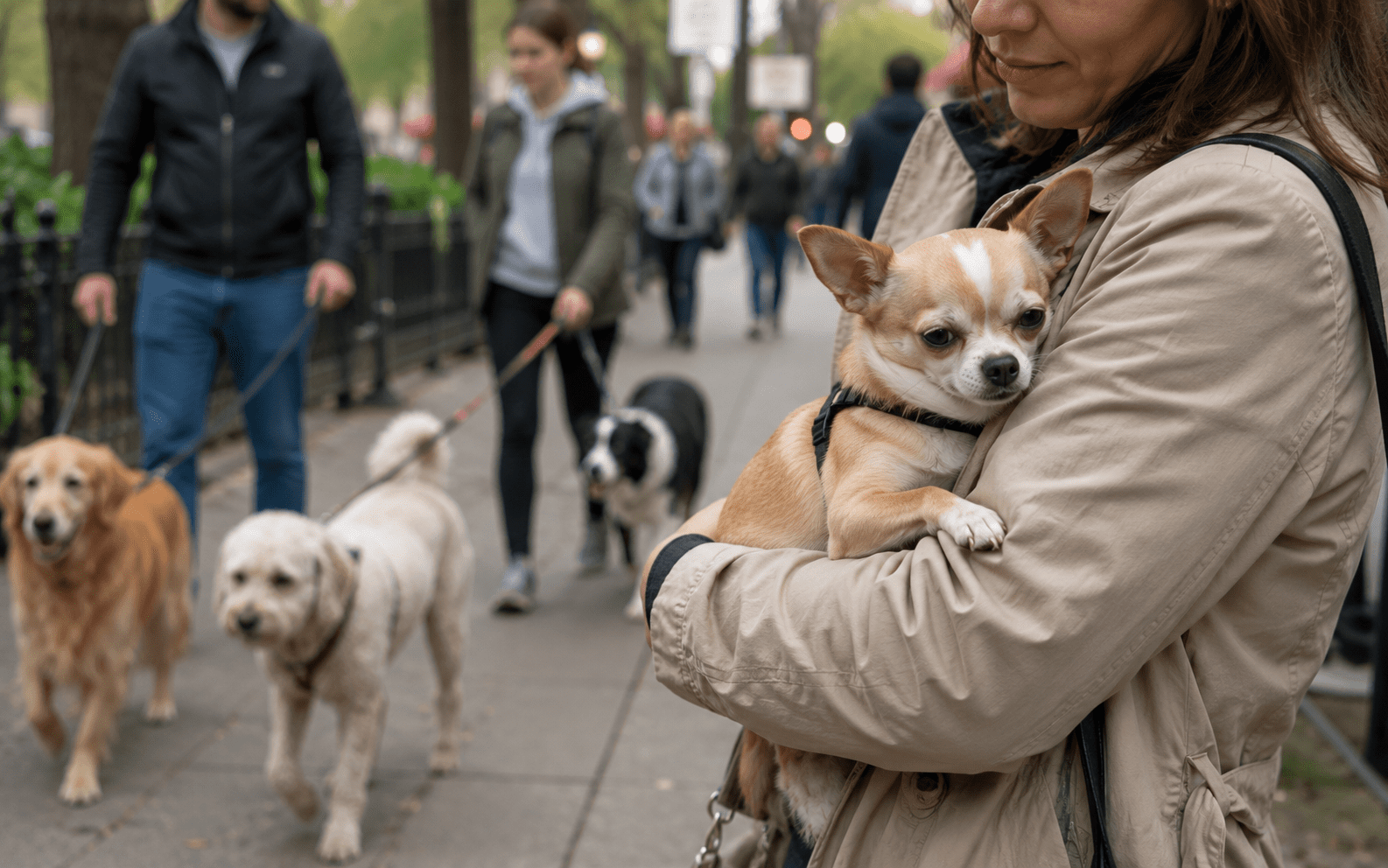
Chihuahuas were bred as companion dogs, and like most companion breeds, they are highly attuned to their owner’s behavior. When owners excuse bad behavior, carry the dog everywhere, or skip enforcing rules because of their small size, the dog never learns where the boundaries are.
What Makes a Chihuahua Stubborn and Why It Works in Your Favor
Chihuahuas are confident, independent thinkers. The same trait that makes them ignore your commands also makes them quick learners when you engage their intelligence the right way.
Their confidence means they do not naturally submit to harsh corrections or forced compliance. They do respond strongly to food rewards, play, and praise. When training is consistent and rewarding, the stubbornness fades faster than most owners expect.
Position yourself as the source of everything the dog wants, and cooperation becomes the obvious choice.
Which Behaviors in Chihuahuas Are Breed Traits vs. Training Failures?
Barking, snapping, and aggression toward strangers are often dismissed as “just how Chihuahuas are.” That is not accurate.
Protective instincts are a natural part of the breed’s character, but the intensity of those instincts is shaped almost entirely by early socialization and training history. A well-socialized Chihuahua can be calm around strangers, friendly with other dogs, and composed in new environments.
| Behavior | Natural Breed Trait | Training Problem |
| Alert barking | Yes, natural watchdog instinct | Excessive barking beyond one or two alerts |
| Boldness and confidence | Yes, core temperament | Snapping or unprovoked aggression |
| Loyalty to one person | Yes, typical of the breed | Fear aggression toward everyone else |
| Slow to warm to strangers | Yes, normal for the breed | Biting, lunging, or resource guarding |
Understanding this distinction helps you set realistic expectations. The goal is not to change your Chihuahua’s personality. It is to teach appropriate behavior within that personality.
How Do You Train a Chihuahua Step by Step?
Training a Chihuahua is about working with the breed’s natural tendencies rather than fighting them. These five steps give you a proven framework for building an obedient, well-adjusted dog.
Step 1: Start Obedience Training as Early as Possible
Why it matters: The critical learning window closes around 14 weeks. What your puppy is exposed to and learns during this phase shapes adult temperament more than any training that comes later.
How to do it: Begin teaching sit, stay, come, and leave it as early as 8 weeks. Keep sessions between 3 and 5 minutes and run them two to three times a day. Chihuahuas are sensitive to owner energy, so stay calm and confident during every session.
Which commands to start with: Sit and stay come first. These two commands develop impulse control, which is the foundation every other skill builds on.
Step 2: Use Positive Reinforcement Without Exception
Why it matters: Harsh corrections backfire with Chihuahuas. Punishment creates fear, defensiveness, or total disengagement. Positive reinforcement builds cooperation without breaking trust.
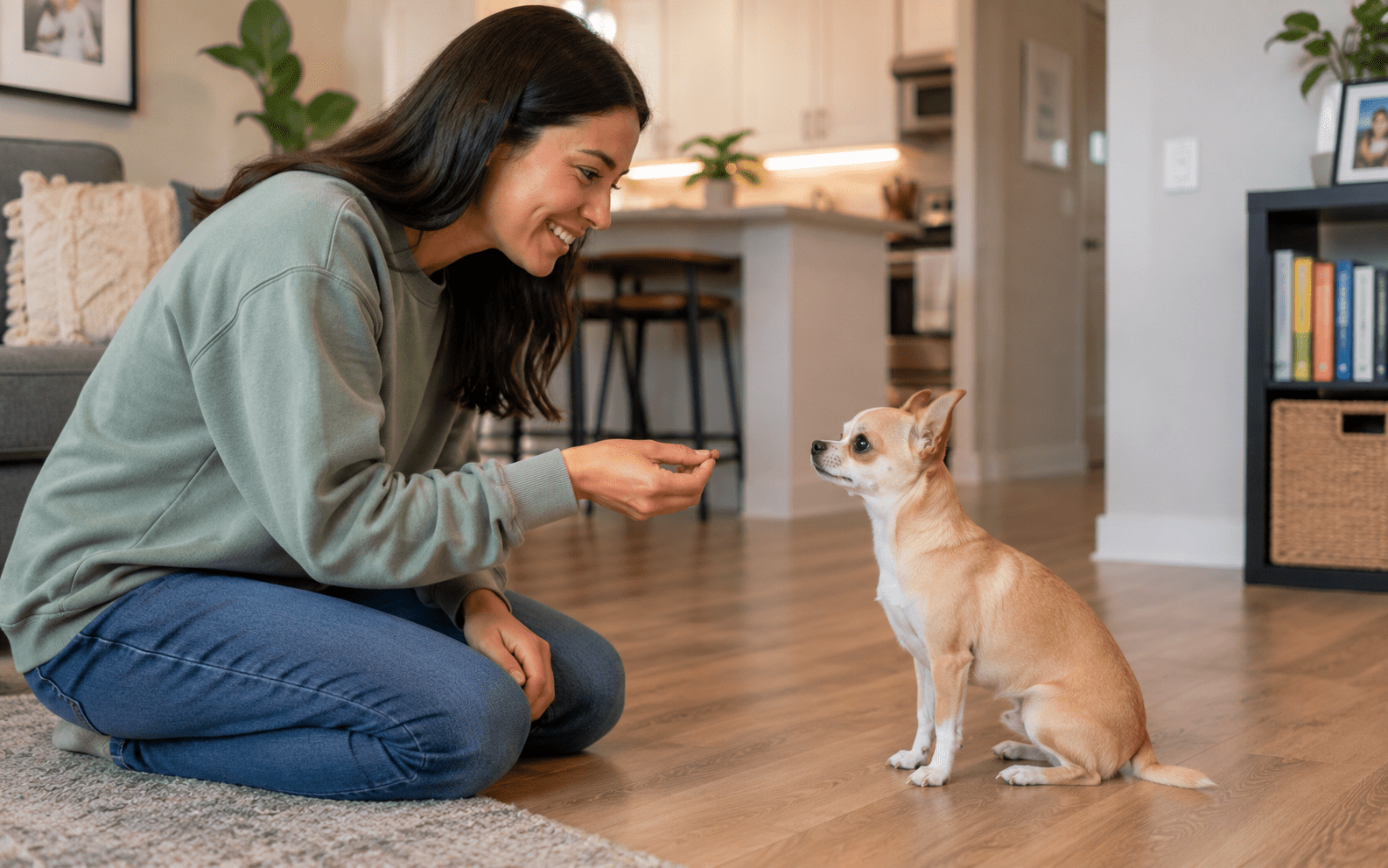
How to do it: Deliver a small, high-value treat within two seconds of every correct behavior. The faster the reward arrives, the clearer the connection the dog makes between the action and the outcome. Gradually replace treats with praise and life rewards like going outside or getting a toy.
Which rewards work best: Small pieces of chicken, cheese, or soft training treats outperform kibble for most Chihuahuas. Reserve high-value rewards exclusively for training to keep them effective.
Step 3: Socialize Thoroughly During the Puppy Window
Why it matters: Chihuahuas that miss early socialization develop fear-based behaviors that present as aggression. This is the most preventable behavioral issue in the breed and the most common reason owners eventually seek professional help.
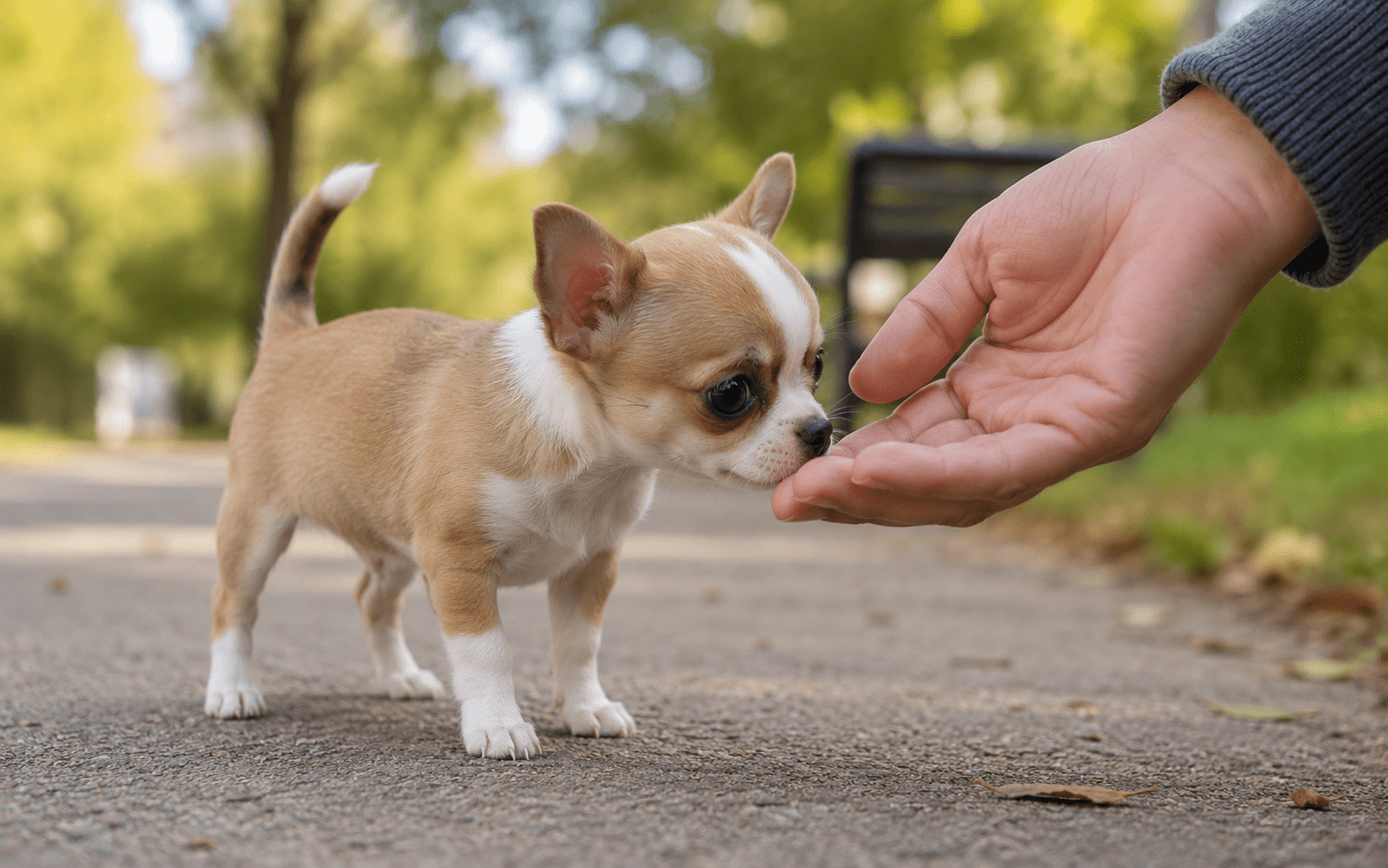
How to do it: Introduce your Chihuahua to diverse people, environments, sounds, and dogs during the puppy phase. Carry treats on every outing and reward calm, curious responses. Never force your dog into situations that cause visible panic.
If your Chihuahua is already showing fear aggression in dogs patterns, address those before continuing with advanced obedience work.
Which experiences to prioritize: Men with hats or beards, children, other dogs of varying sizes, car rides, and loud urban environments are the most common adult triggers for Chihuahuas that missed proper socialization as puppies.
Step 4: Build a Strict Potty Training Routine
Why it matters: Chihuahuas have small bladders and can be among the harder small breeds to fully house train. Consistency solves the problem quickly. Inconsistency drags it out for months.
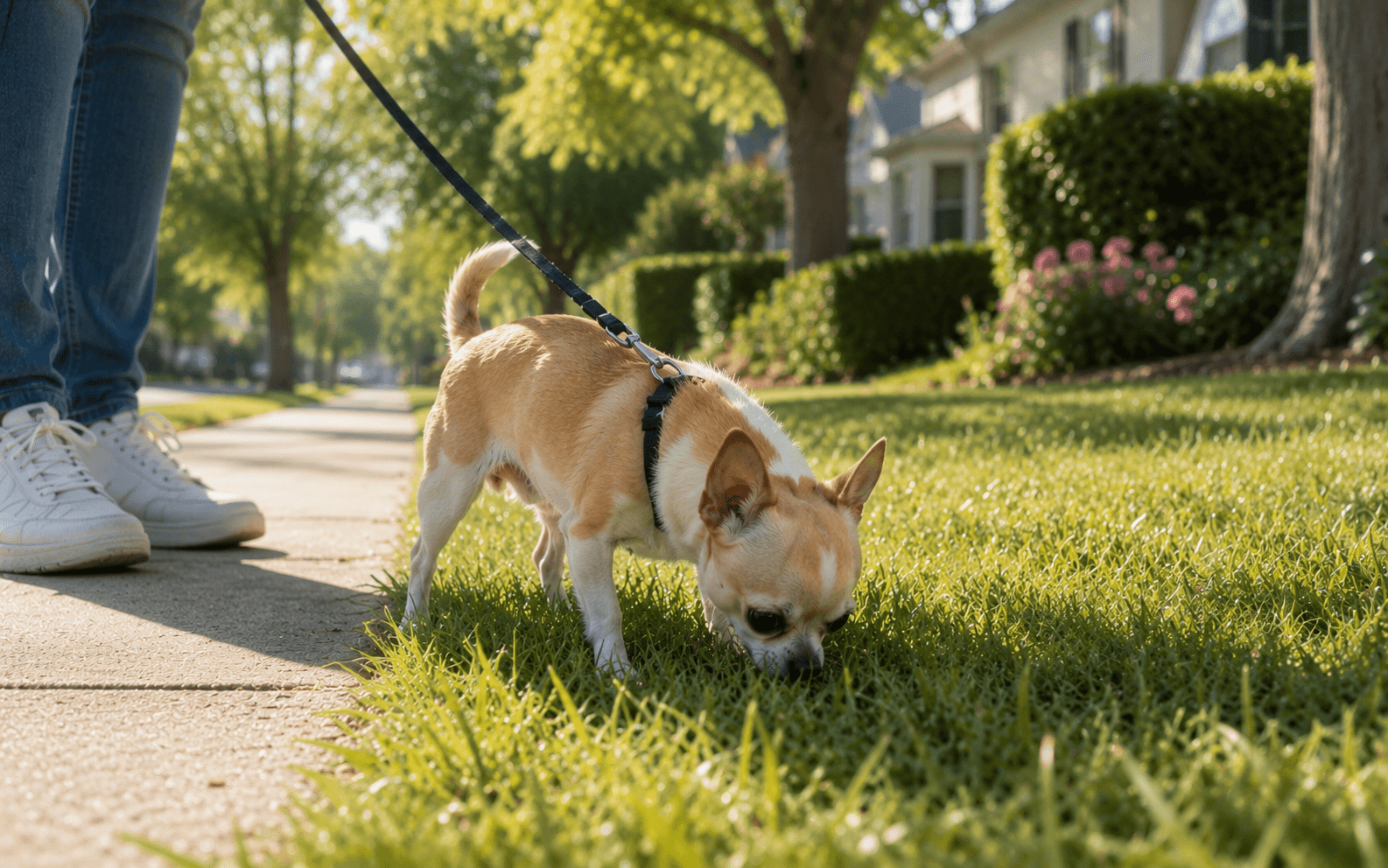
How to do it: Take your Chihuahua outside first thing in the morning, after every meal, after every nap, and right before bed. Use one designated outdoor spot and a consistent cue word. Reward the moment they eliminate outdoors.
Which mistakes to avoid: Scolding indoor accidents teaches the dog to hide where they go, not to stop going indoors. Clean every accident with an enzyme cleaner to fully remove scent and prevent the dog from returning to the same spot.
For a complete breakdown of the process, read our full guide on how to potty train your dog.
Step 5: Correct Problem Behaviors Before They Become Habits
Why it matters: Small dogs are frequently allowed to get away with jumping, barking, and snapping because the physical risk feels low. Over time, these behaviors become deeply ingrained and significantly harder to reverse.
How to do it: Apply the same behavioral standards you would apply to any size dog. Jumping is ignored and redirected every single time. Barking on demand is never rewarded. Consistency across every family member is non-negotiable.
If your Chihuahua already has deep-set resistance, our guide on how to train a stubborn dog covers specific techniques for breaking established patterns.
Which behaviors need professional help: Biting, resource guarding with lunging, and unprovoked aggression toward family members are signs to seek expert support immediately before the behavior becomes a safety issue.
Common Mistakes Chihuahua Owners Make
| Common Mistake | Why It Backfires | Better Approach |
| Carrying the dog everywhere | Prevents socialization and builds dependency | Let the dog walk and explore on leash daily |
| Excusing bad behavior due to size | Reinforces unwanted behavior over time | Apply the same rules as you would for any dog |
| Using yelling or physical punishment | Creates fear-based aggression and distrust | Use positive reinforcement exclusively |
| Skipping early socialization | Results in fear responses and adult reactivity | Begin positive exposure during the puppy window |
| Different rules from each family member | Confuses the dog and stalls training progress | Establish one household rule set everyone follows |
| Training sessions that run too long | Leads to frustration and disengagement | Keep every session under five minutes |
When Should You Call a Professional Dog Trainer?
Most basic Chihuahua training can be managed at home with consistent positive reinforcement and the steps above. Some situations, however, require professional experience to resolve safely.
Reach out to a professional trainer if you notice:
- Snapping or biting when the dog is touched, groomed, or approached
- Aggression toward other dogs that goes beyond occasional alert barking
- Severe anxiety that prevents the dog from eating, settling, or functioning normally
- No visible progress after several consistent weeks of training effort
- Behaviors that are escalating rather than improving
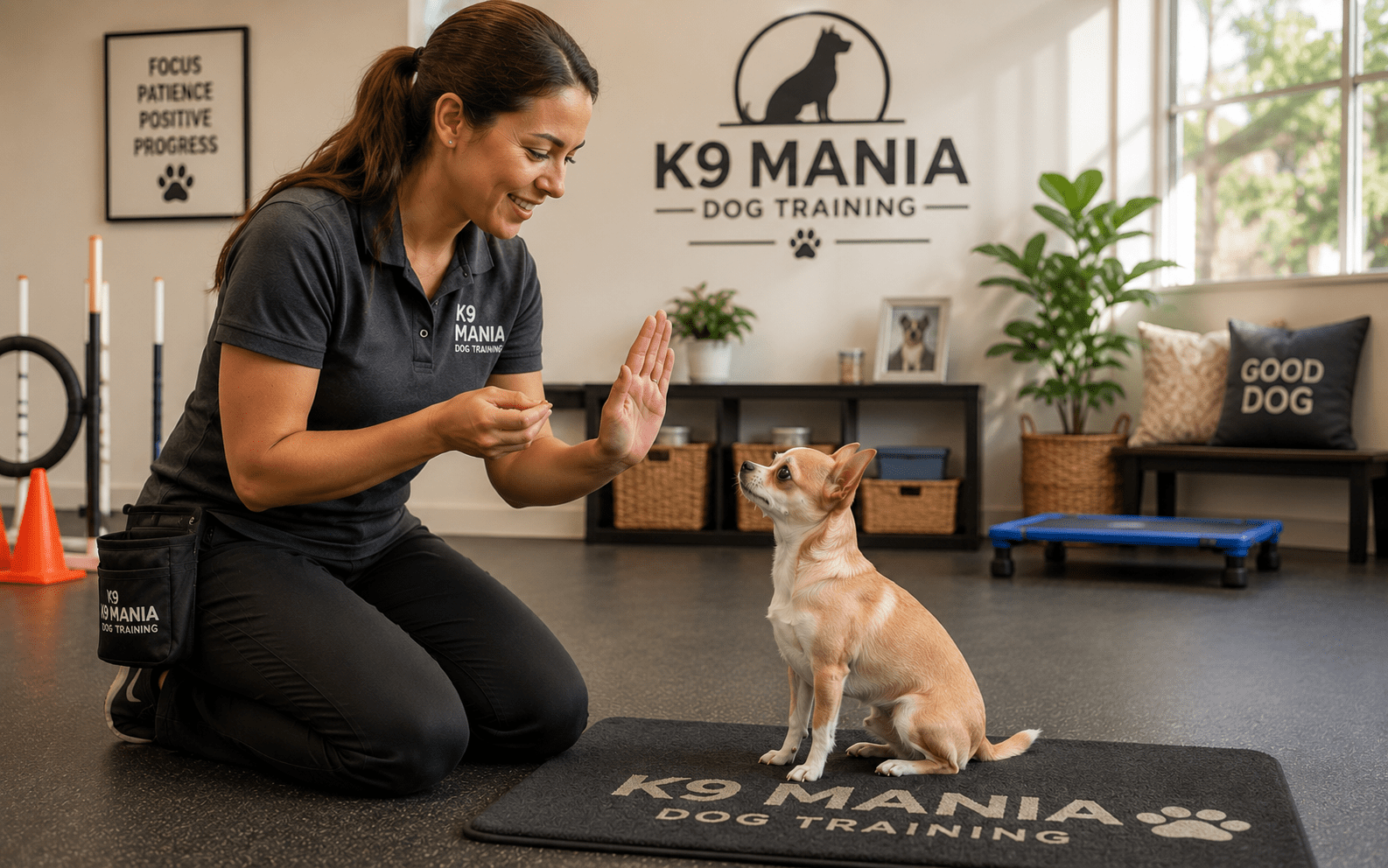
Our in home dog training Long Island program works directly in your environment, which is ideal for Chihuahuas whose problem behaviors are strongest at home. For dogs that need intensive, structured work, our board and train Long Island program provides daily training with experienced handlers who specialize in behavior modification.
Can You Train a Chihuahua and Get Real Results? Yes.
Can you train a Chihuahua and see lasting, meaningful change? Absolutely. At K9 Mania Dog Training, we make it happen every day. As Long Island’s leading board and train program with the best animal behaviorist for dogs, we specialize in transforming small dogs with big behavioral challenges into confident, obedient companions. Whether your Chihuahua struggles with aggression, stubbornness, or anxiety, we have a program built for you. Trust K9 Mania Dog Training to guide you and your dog toward a relationship built on respect and confidence. Contact us today.
Read Related Articles
Frequently Asked Questions: Can You Train a Chihuahua?
Are Chihuahuas hard to train?
Chihuahuas are not inherently hard to train, but they require a patient and consistent approach. Their independent nature can make them appear stubborn, but they are highly intelligent dogs that respond quickly to positive reinforcement and structured short sessions. Most training challenges come from inconsistent handling rather than the breed’s actual capabilities.
Are Chihuahuas good dogs for beginners?
Chihuahuas can work for first-time owners who commit to consistency and early socialization, but they are not the most forgiving breed for beginners. Without clear rules enforced from day one, they quickly develop problem behaviors. New owners willing to follow a structured training plan and invest in professional guidance early tend to do well with the breed.
How do you discipline a Chihuahua?
Discipline a Chihuahua through redirection and the removal of attention, not punishment. When your dog does something unwanted, remove your attention, ignore the behavior, and immediately redirect to the correct response. Reward that right response with a treat or praise. Yelling or physical corrections increase fear and aggression in this breed and are counterproductive.
What not to do with a Chihuahua puppy?
Do not skip early socialization, excuse bad behavior because of the dog’s size, or allow habits you would not want to see in an adult dog. Avoid long training sessions, harsh corrections, and isolating the puppy from new experiences. These early mistakes create the behavioral issues most Chihuahua owners struggle with later in the dog’s life.
What is the downside of Chihuahuas?
Chihuahuas can develop a strong attachment to one person, which sometimes leads to possessiveness or anxiety around others. They are prone to excessive barking, can be reactive toward other dogs, and are vulnerable to cold temperatures due to their small body size. Without proper training and socialization, they can be surprisingly difficult to manage despite their compact size.
Do Chihuahuas need daily walks?
Yes, Chihuahuas benefit from daily walks even though their exercise needs are lower than larger breeds. Daily walks provide physical activity, mental stimulation, and important exposure to the outside world that supports socialization and reduces anxiety at home. A 20 to 30 minute walk each day is typically sufficient for most adult Chihuahuas.