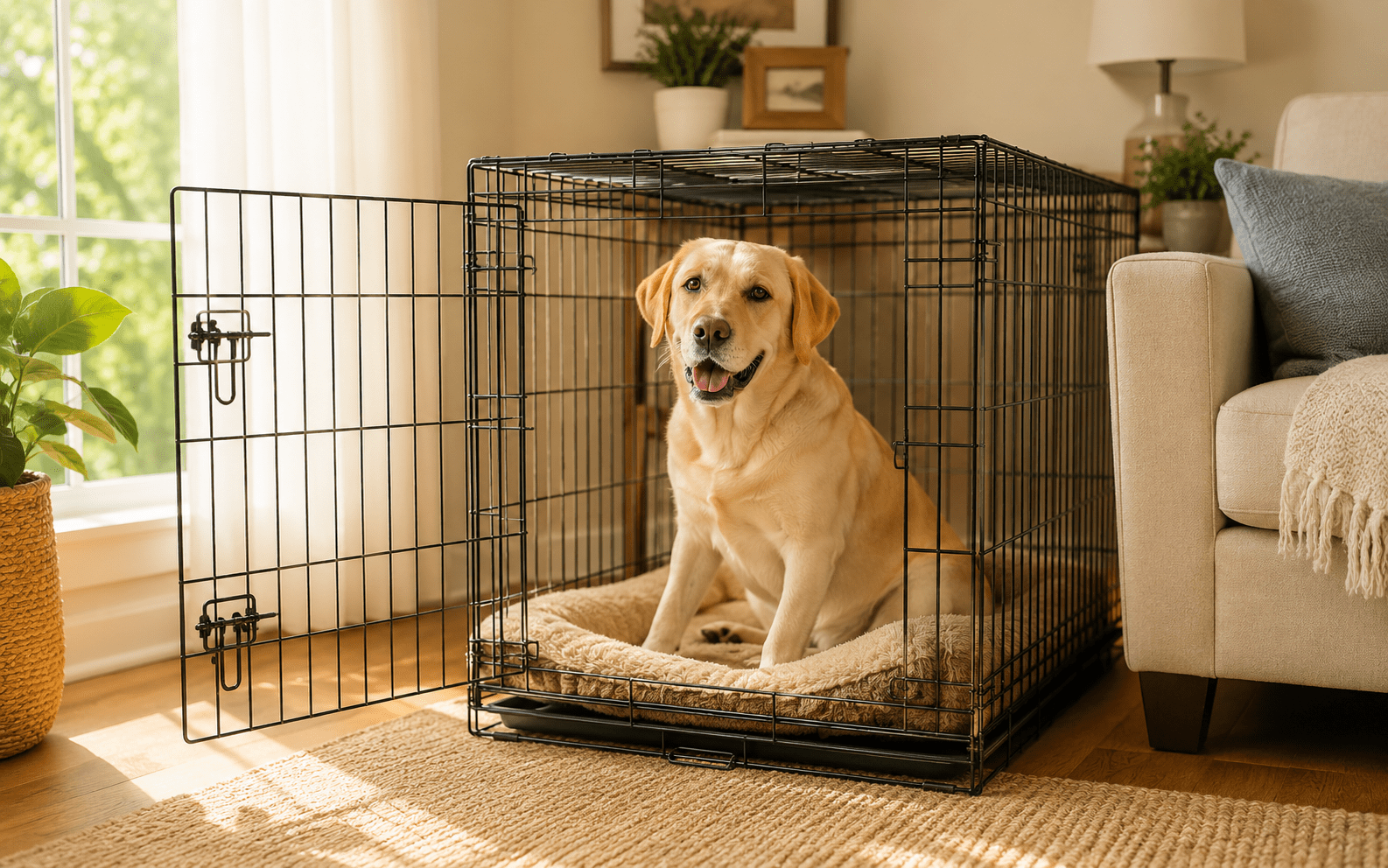
You can absolutely crate train an adult dog, and it works faster than most owners expect when done right. Adult dogs can learn to see their crate as a safe, comfortable space with consistent positive reinforcement and a structured introduction.
Whether you just adopted an older dog or never got around to crate training earlier, starting now still makes a real difference. This guide walks you through exactly how to do it, what to avoid, and when to call in professional help.
Things to Know Before You Start
Before diving into the steps, a few key facts will shape how you approach this process.
Adult dogs are not puppies. They have longer attention spans, stronger habits, and sometimes more emotional baggage, especially if they came from a stressful background. That is not a disadvantage. It just means your approach needs to be slower, more intentional, and built on trust rather than repetition alone.
Here is what matters most going in:
- Crates are not punishment. If the crate ever gets used as a timeout corner, your dog will resist it. It needs to feel like their own space.
- Previous experience matters. A dog that was confined in a crate under stressful conditions will take longer to warm up. Go slower with these dogs.
- Deaf or anxious dogs need adjusted methods. If your dog startles easily or has separation anxiety, read up on crate training separation anxiety before you begin.
- Size matters more than people think. The crate should be large enough for your dog to stand, turn around, and lie down comfortably. Too large and it loses the den-like feeling. Too small and it becomes a source of stress.
Choosing the Right Crate
Not all crates work the same way for adult dogs. Wire crates offer good ventilation and visibility. Plastic crates feel more enclosed and tend to suit anxious dogs better. Heavy-duty steel crates are built for escape-prone or destructive dogs.
| Crate Type | Best For | Downside |
| Wire | Easy visibility, adjustable dividers | Can feel too open for anxious dogs |
| Plastic | Den-like feel, calmer environment | Less airflow in warm climates |
| Heavy-Duty Steel | Strong chewers, escape artists | Expensive, heavier |
| Soft-Sided | Travel, calm and already trained dogs | Not suitable for untrained dogs |
Pick based on your dog’s temperament, not just what is on sale. A dog with separation anxiety often does better in a covered plastic crate placed in a low-traffic area of your home.
Step-by-Step: How to Crate Train an Adult Dog
The process works in stages. Rushing any one of them tends to set you back further than if you had just taken your time.
Step 1: Introduce the Crate Without Pressure
Place the crate in a common area where your dog already spends time. Leave the door open. Toss a few treats near it, then just inside the entrance, without asking your dog to go in.
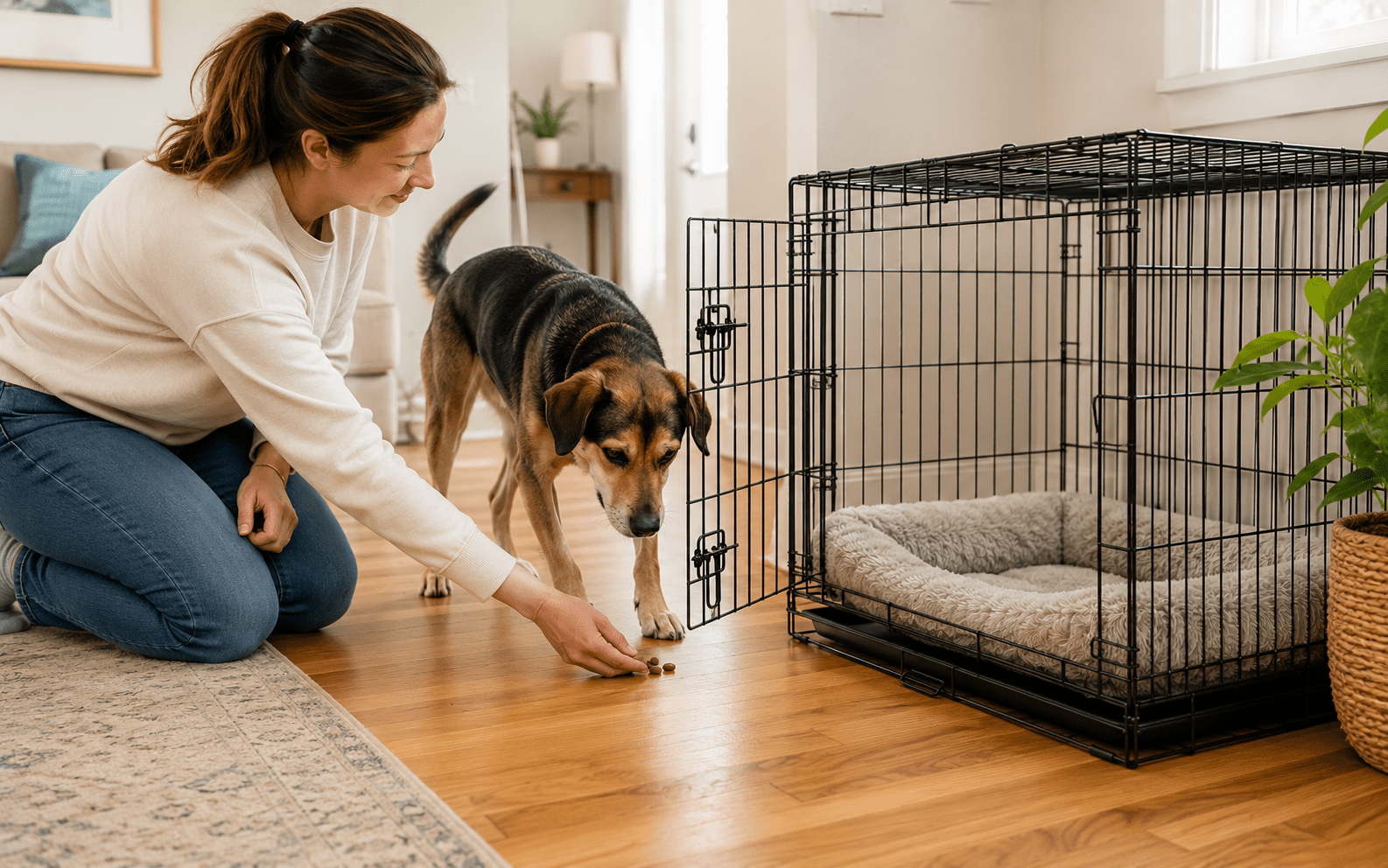
Let them sniff, investigate, and walk away. Repeat this a few times a day for the first two to three days. The goal here is simple: the crate becomes part of the furniture, not a threat.
If your dog is treat-motivated, a private dog training Long Island session can help you figure out the right rewards to make this phase move faster.
Step 2: Feed Meals Near and Inside the Crate
Once your dog is comfortable approaching the crate, start placing their food bowl just inside the entrance. Over a few days, gradually move it further back until they are eating comfortably with all four paws inside and the door still open.
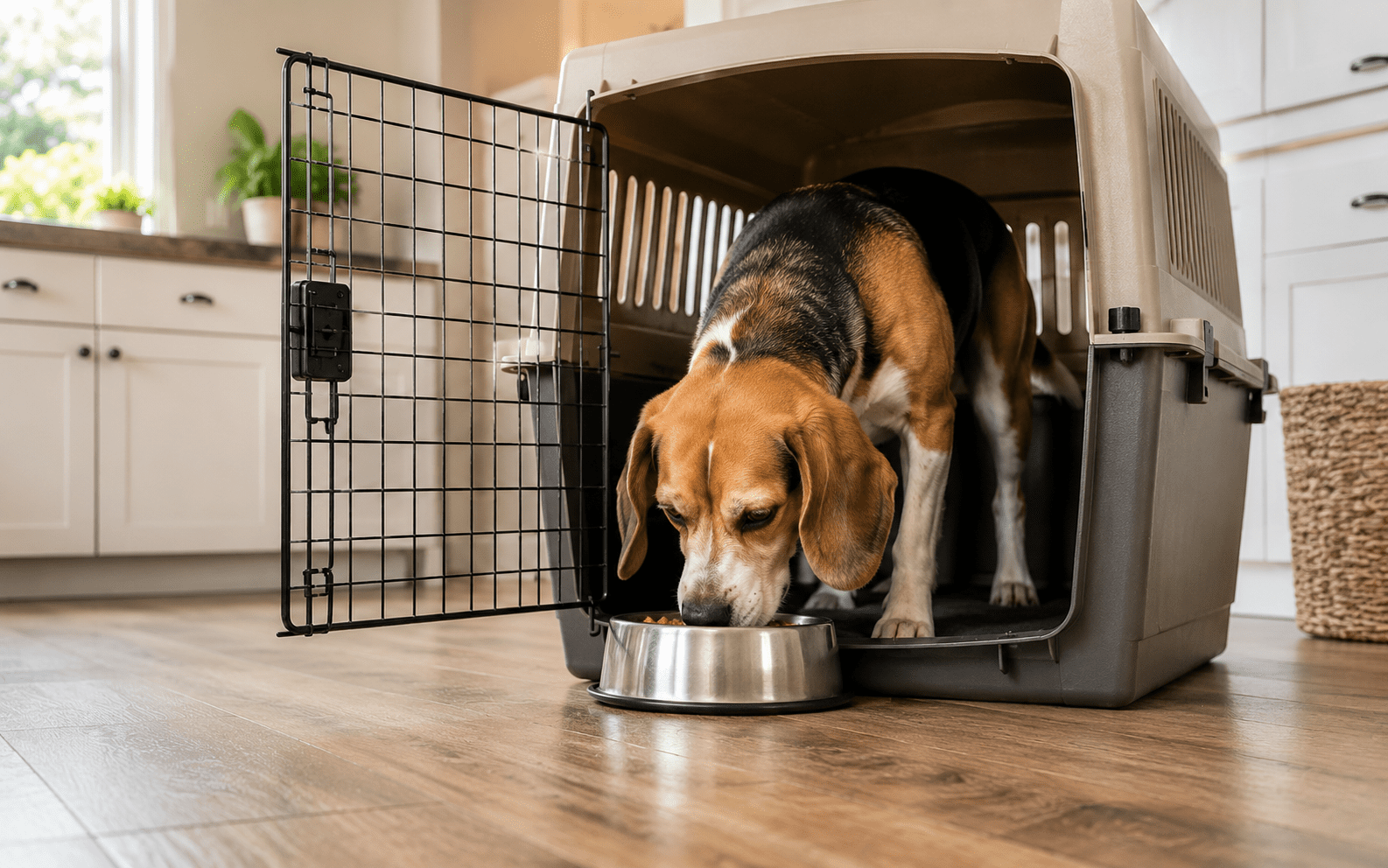
This step builds a strong positive association without forcing anything. Eating is one of the most natural calming activities for dogs, and pairing it with the crate consistently rewires how they feel about the space.
Step 3: Close the Door for Short Stretches
After your dog is eating meals fully inside the crate, start closing the door while they finish eating, then open it immediately when they are done. No delay, no drama.
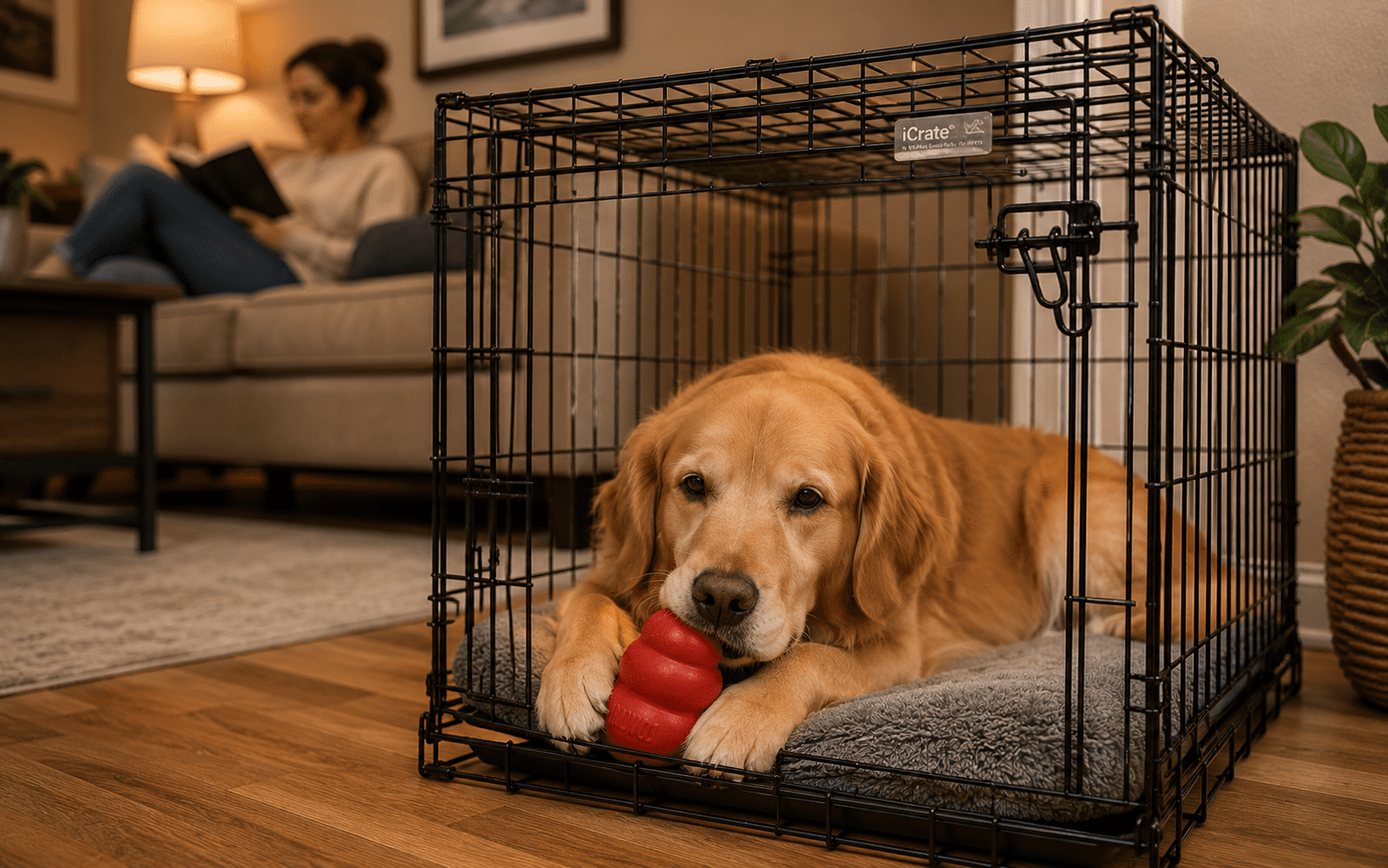
Over the next few days, gradually extend the time the door stays closed by just a few minutes at a stretch. Stay nearby. Do not sneak away. Your presence during this phase keeps anxiety from building.
📌 For more on why this gradual approach matters, check out the benefits of crate training and what the research says about den behavior in dogs.
Step 4: Build Up to Longer Stays
Once your dog tolerates 10 to 15 minutes with the door closed and you nearby, start leaving the room briefly. Build up the time you are out of sight over several sessions across multiple days.
Use a stuffed Kong, chew treat, or puzzle toy inside the crate during this phase. Giving your dog something to do replaces anxiety with engagement.
By the time your dog can settle calmly for 30 minutes with you out of sight, you are ready to move toward crating them while you leave the house for short trips.
Step 5: Practice Short Absences
Leave the house for 10 to 20 minutes. Keep your departures and arrivals completely calm and low-energy. No long goodbyes, no excited greetings when you return. Both of those behaviors signal to your dog that your leaving is a big deal.
Build up to longer absences gradually. Most adult dogs, once comfortable, can stay crated for three to four hours without distress during the day.
📌 If your dog was recently adopted, crate train a rescue dog covers additional steps specific to dogs with unknown histories.
How Long Adult Dogs Can Stay in a Crate
This is one of the most common questions, and the answer depends on age and conditioning.
| Dog Age | Maximum Daytime Crate Time | Overnight |
| Adult (1-5 years) | 4-5 hours | 7-8 hours |
| Senior (6+ years) | 3-4 hours | 6-7 hours |
| Recently crate trained | Start at 30-60 minutes | Depends on comfort level |
Never use the crate as storage for your dog while you are at work for eight or more hours straight. Dogs need bathroom breaks, movement, and mental stimulation throughout the day.
Common Mistakes That Slow Down Progress
Most crate training problems come down to a handful of avoidable errors.
Moving too fast is the biggest one. Owners often try to close the door on day one or leave the house within the first week. Adult dogs with no prior crate experience need more runway than that.
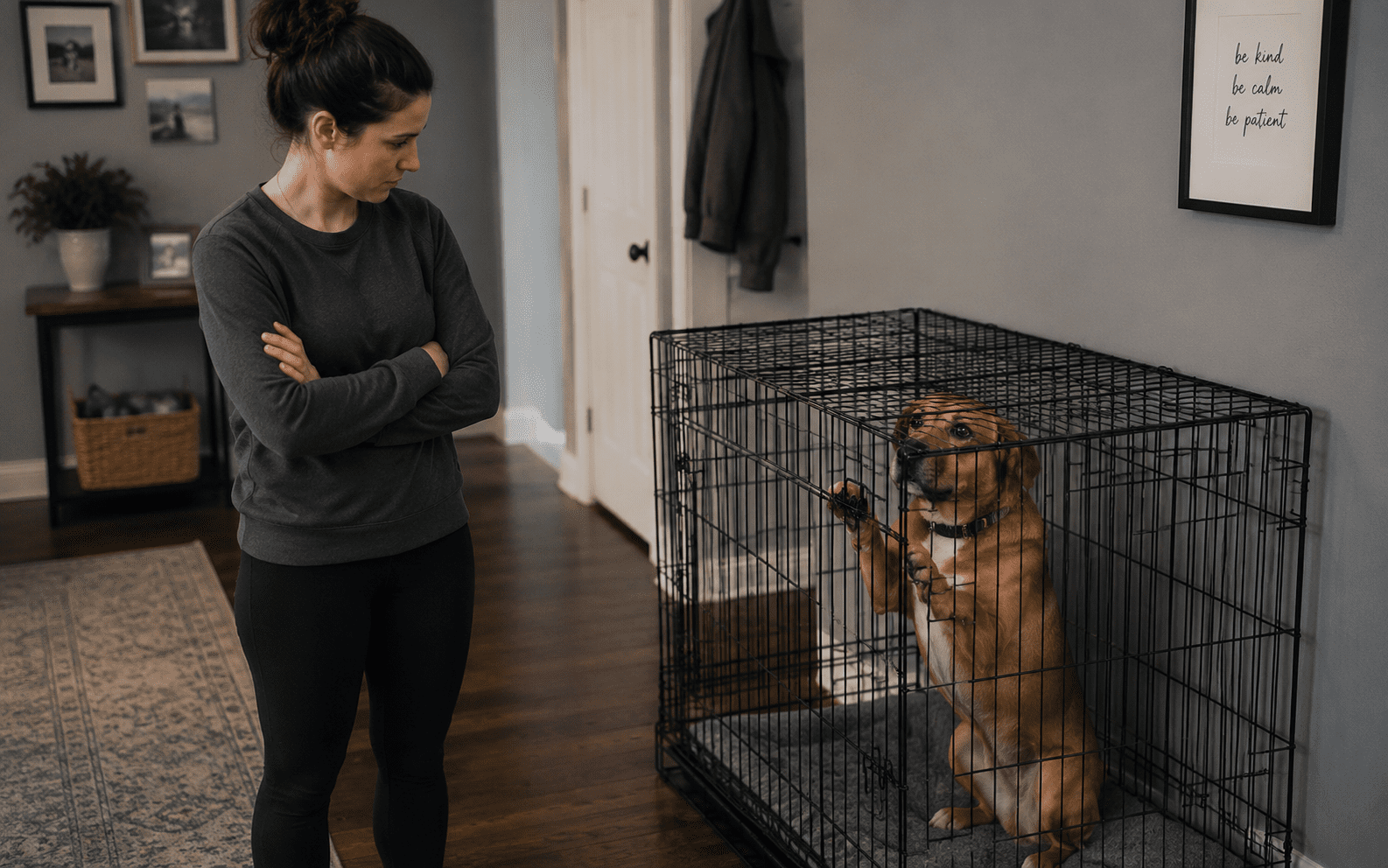
Using the crate as punishment immediately destroys the association you are trying to build. Once your dog learns that the crate follows bad behavior, they will resist it every time.
Responding to whining reinforces it. If you let your dog out every time they cry, they learn that crying works. Wait for even a brief pause before opening the door.
Skipping exercise beforehand makes everything harder. A dog that goes into a crate with two hours of pent-up energy will not settle. Tire them out first.
Effective dog training methods follow a consistent pattern: set your dog up to succeed by managing the environment before asking for the behavior.
When to Get Professional Help
Some adult dogs come with behavioral history that makes solo crate training genuinely difficult. If your dog is showing any of these signs, bring in a professional before things escalate:
- Intense panic, drooling, or self-injury attempts when crated
- Destructive behavior that escalates rather than decreases over time
- Aggression around the crate or during confinement
- History of trauma or abuse that is affecting progress
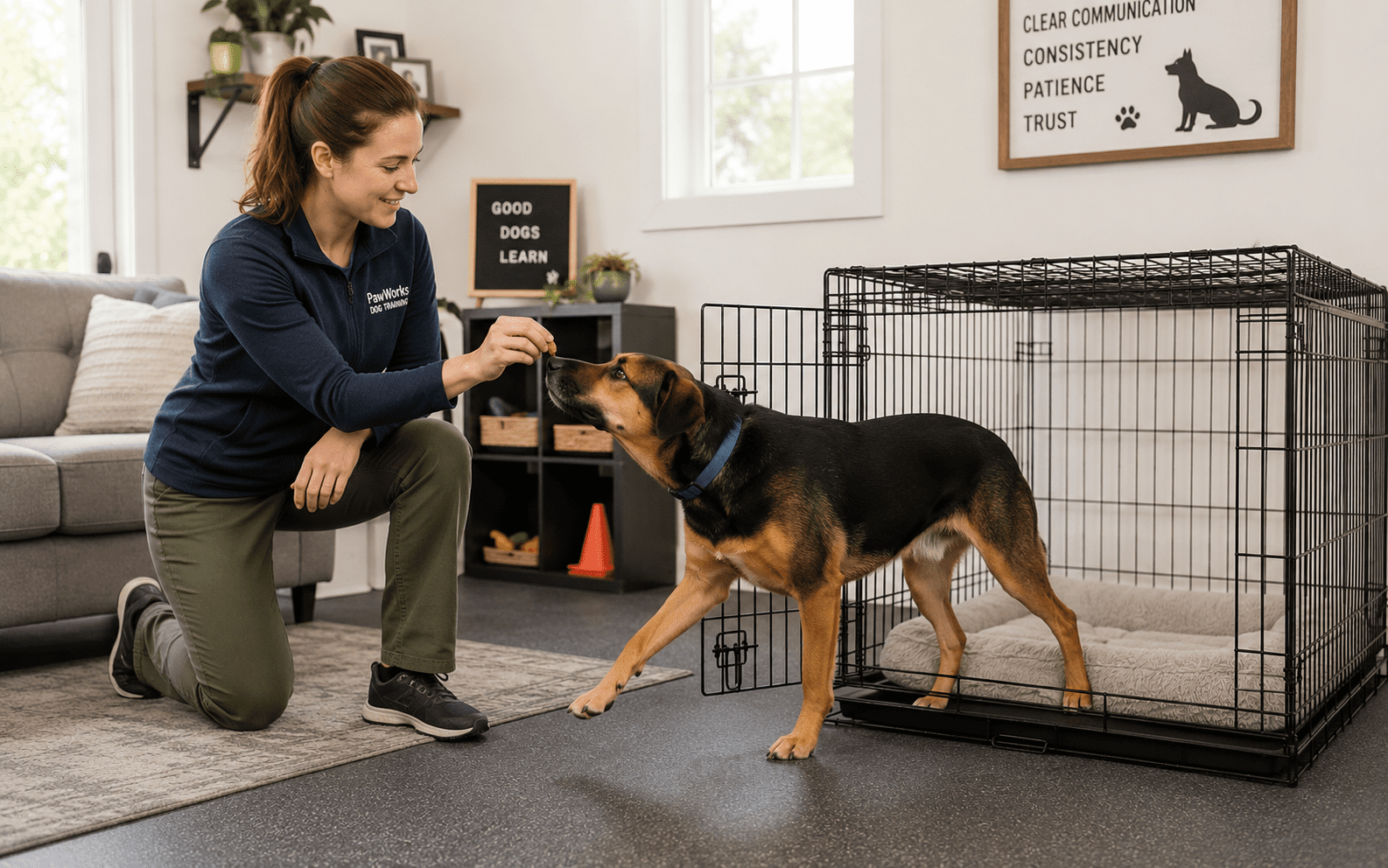
In home dog training Long Island is a practical option for dogs that do better learning in their own environment. For more severe cases, board and train Long Island gives your dog intensive, daily work with experienced trainers in a structured setting.
When Crate Training Is Working
Progress does not always look linear. Here are signs you are on the right track:
- Your dog walks into the crate voluntarily
- They settle within a few minutes of the door closing
- Whining or panting decreases session by session
- They are relaxed when you return, not frantic
If you are seeing these signs consistently, you have successfully learned how to crate train an adult dog in a way that actually sticks.
What Works and What Does Not: A Quick Reference
| Approach | Works | Does Not Work |
| Gradual door introduction | Yes | Forcing entry immediately |
| Feeding meals inside crate | Yes | Putting food in and locking door day one |
| Calm departures and arrivals | Yes | Emotional goodbyes and excited returns |
| Exercising before crating | Yes | Crating a high-energy dog cold |
| Covering the crate | Often helps anxious dogs | Covering without testing first |
Loyal, Settled, and Ready: Wrapping Up Crate Training
Knowing how to crate train an adult dog is the first step. Applying it consistently, patiently, and without shortcuts is what actually builds results.
At K9 Mania Dog Training, we are the leading board and train provider on Long Island, with experienced animal behaviorists who handle everything from mild crate resistance to serious behavioral challenges. Whether you need in-home support or a full board and train program, we are here to help. Trust K9 Mania for whatever behavior issue your dog is facing. Visit us today.
You May Also Want to Read
What Are Good Guard Dog Breeds
Frequently Asked Questions About How to Crate Train an Adult Dog
How long does it take to crate train an adult dog?
Most adult dogs adjust to a crate within two to four weeks with consistent daily practice. Dogs with prior negative experiences or anxiety may take longer. The speed depends on how gradually you introduce each step and how positive the associations are.
Can you crate train a full grown dog?
Yes, full grown dogs can absolutely be crate trained. Age does not prevent learning. Adult dogs often adapt well because they have better impulse control than puppies and can hold their bladder longer, which actually makes the process more manageable in some ways.
Should I let an adult dog cry it out in a crate?
No, ignoring prolonged distress is not the right approach. If your dog is truly panicking, that level of stress is counterproductive to training. Instead, go back a step in the process. Wait for a brief calm pause before opening the door, but do not push your dog past their threshold.
What are common mistakes in crate training?
The most common mistakes are moving too fast, using the crate as punishment, and rewarding whining by letting the dog out mid-cry. Skipping the exercise step before crating and leaving the dog for too long too soon also set back progress significantly.
How do I know if my dog is ready to stay longer in the crate?
Watch for calm settling within a few minutes of the door closing and no signs of distress when you leave the room. Build duration slowly, adding only 10 to 15 minutes at a time once your dog is reliably relaxed at the current length.
What should I put in the crate to help my dog feel comfortable?
A worn t-shirt with your scent, a durable chew, or a stuffed Kong works well. Avoid putting in anything your dog might destroy and ingest. Keep bedding simple until you know how your dog handles confinement.