

Learning how to crate train a rescue dog starts with understanding that rescue dogs need extra patience, positive reinforcement, and gradual introduction to make the crate a safe haven rather than a source of stress. The key is moving at your dog’s pace while building positive associations through treats, comfort items, and never using the crate as punishment.
Rescue dogs often come with unknown histories that can make crate training more challenging than training a puppy from scratch. They might have experienced confinement in negative ways, or they may have never seen a crate before. Whatever their background, you can successfully teach them to love their crate with the right approach.
In this guide, we’ll walk through proven methods to help your rescue dog embrace crate training, overcome common challenges, and create a peaceful routine that works for both of you.
Looking for professional help with your rescue dog’s training? Explore our board and train Long Island program for comprehensive behavior solutions.
Understanding Your Rescue Dog’s Background
Before starting crate training, you need to recognize that rescue dogs carry experiences you might not fully know. Some were strays who never lived indoors. Others came from homes where they had free roam. A few might have been confined in ways that created fear or anxiety.
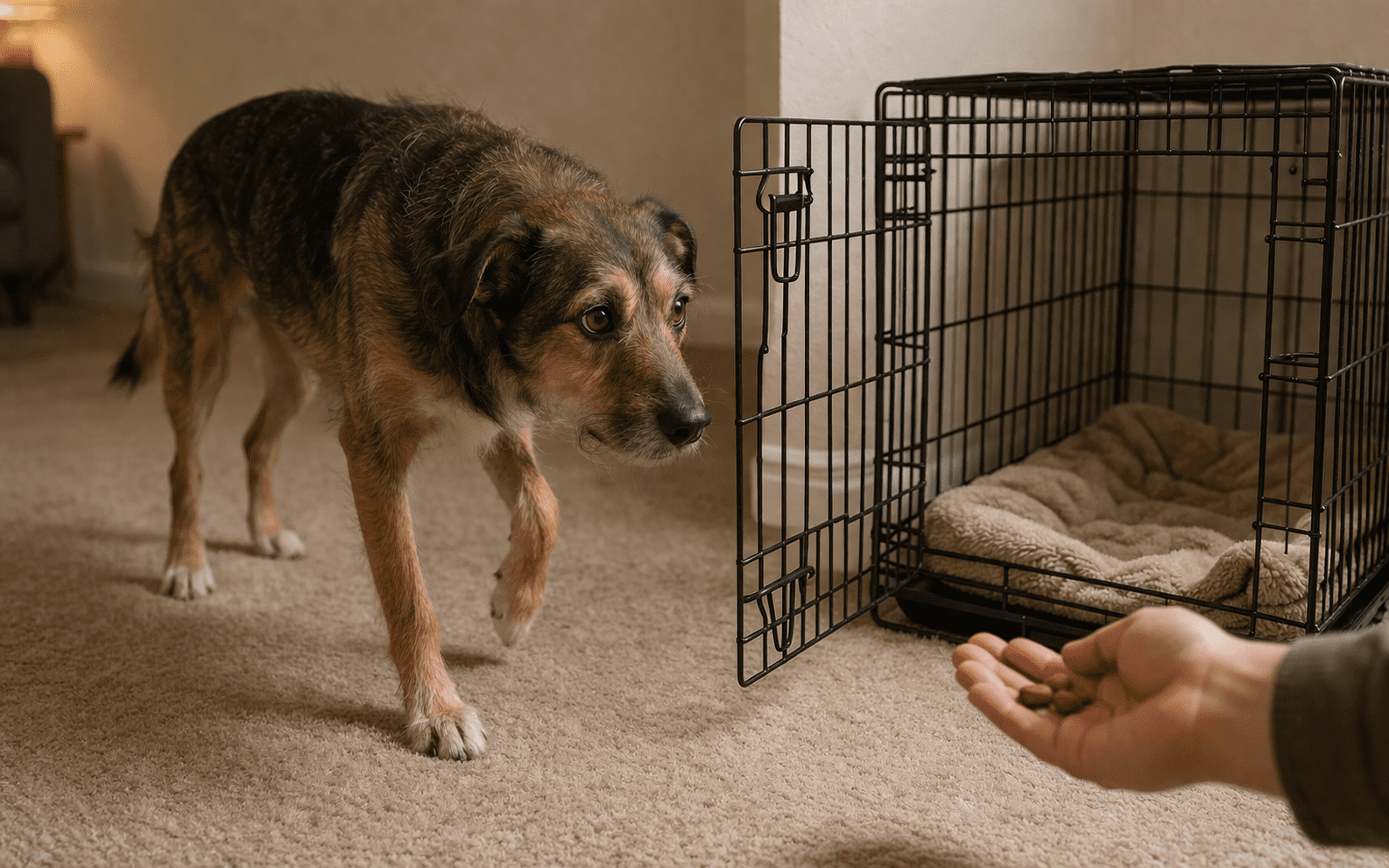
Watch your dog’s body language around the crate. Signs of stress include tucked tails, pinned ears, excessive panting, or backing away. If your rescue shows these signals, you’ll need to move even slower than usual.
Why Rescue Dogs React Differently to Crates
Rescue dogs don’t always see crates the way puppies do. A puppy learns from a blank slate, but your rescue might associate enclosed spaces with shelters, transport kennels, or worse situations.
Some rescues spent time in crowded kennels where they had no choice about confinement. Others lived in homes where crates were used for punishment or excessive isolation. These experiences shape how they respond to crate training now.
The good news is that most rescue dogs can learn to enjoy their crates once they understand it’s a safe, comfortable space that belongs to them. It just takes longer and requires more careful observation of their comfort level.
Common Fears and Anxieties
Many rescue dogs struggle with separation anxiety, which can make crate training harder. They might panic when left alone because they fear abandonment again. Understanding crate training separation anxiety helps you address both issues together.
Noise sensitivity is another common challenge. Rescue dogs who lived in chaotic environments might find the sound of a closing crate door triggering. They may also have touch sensitivities that make them uncomfortable with blankets or bedding inside the crate.
Trust issues run deep in some rescue dogs. They need time to believe you won’t hurt them or leave them trapped. Building this trust happens through consistency, patience, and never forcing them into situations that terrify them.
Step-by-Step Guide: How to Crate Train a Rescue Dog
Success with crate training comes from breaking the process into small, manageable steps. Rushing leads to setbacks, while taking your time builds confidence and positive associations.
Choosing the Right Crate Size and Type
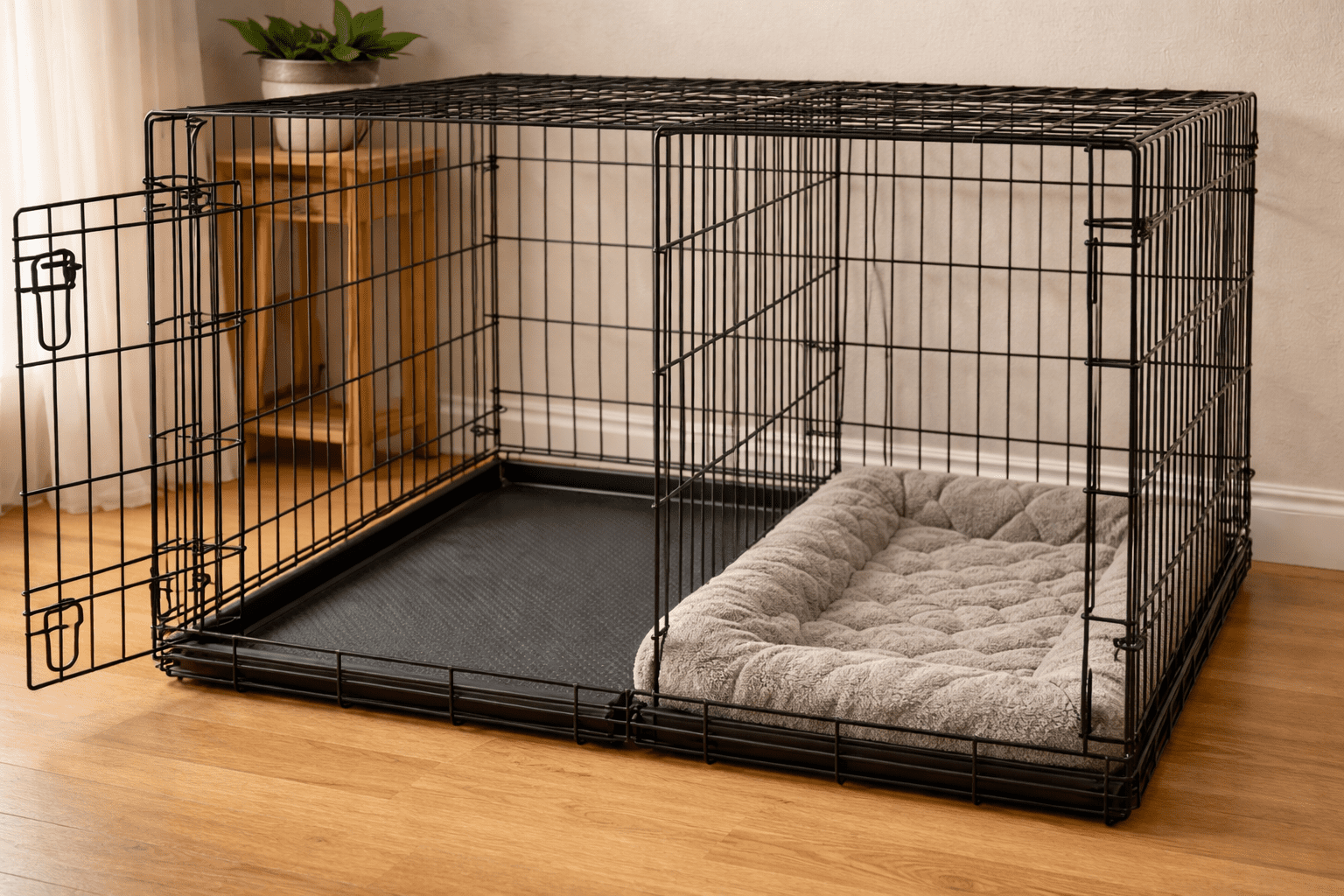
Your rescue needs a crate big enough to stand, turn around, and lie down comfortably. Too small creates discomfort, while too large encourages bathroom accidents. For dogs learning house training, use a crate with a divider panel to adjust space as needed.
Wire crates offer ventilation and visibility, while plastic crates feel den-like and cozy. Soft-sided crates work for calm dogs but anxious chewers will destroy them. Place the crate where your family spends time, avoiding isolated rooms.
Creating Positive First Impressions
Never force your rescue into the crate on day one. Leave the door open and toss treats nearby, letting your dog investigate without pressure. Place a soft blanket, treats, and a worn t-shirt with your scent inside to help anxious dogs feel connected.
Gradually move meals closer to and eventually inside the crate. Praise any interaction, even just sniffing. The goal is building curiosity and positive feelings before asking for actual time inside.
Gradual Introduction Timeline
Here’s a realistic timeline for how to crate train a rescue dog, though some dogs need more or less time at each stage:
| Week | Goal | Duration |
| Week 1 | Door stays open, treats and meals near crate | All day access |
| Week 2 | Dog enters willingly for treats, door still open | 5-10 minutes |
| Week 3 | Door closes briefly while you’re present | 10-15 minutes |
| Week 4 | Extend time with door closed, still in sight | 20-30 minutes |
Don’t move to the next step until your dog shows relaxed body language at the current level. Signs of readiness include voluntarily entering the crate, lying down calmly inside, and showing no stress when the door closes briefly.
If your rescue panics at any stage, go back to the previous step. Progress isn’t always linear with rescue dogs, and that’s completely normal.
Building Trust and Positive Associations
Trust forms the foundation of successful crate training with rescue dogs. Without it, the crate becomes just another scary thing in a world that’s already overwhelming.

Using High-Value Treats and Rewards
Regular kibble won’t work for rescue dogs learning to love their crate. Use irresistible treats like chicken, cheese, hot dogs, or freeze-dried liver. Save these exclusively for crate time, making the crate predict something amazing.
Timing matters with rewards. Give treats instantly when your dog steps near the crate, puts a paw inside, or stays calm with the door closed. This clear communication shows exactly what earns rewards. Pair treats with verbal praise in a happy tone, as some rescues respond more to voice encouragement than food.
Making the Crate a Safe Haven
Never use the crate for punishment. It should only mean good things. Feed meals inside once your dog enters willingly, creating powerful positive associations. Start with the bowl near the door, then move it deeper.
Give special toys or chews only in the crate. Kong toys stuffed with peanut butter keep dogs occupied and happy. Consider covering the crate with a light blanket for a den-like atmosphere, though watch your rescue’s preference.
Common Challenges and Solutions
Even with perfect technique, you’ll likely hit some bumps along the way. Knowing how to handle common issues keeps you from giving up too soon.
Whining, Barking, and Crying
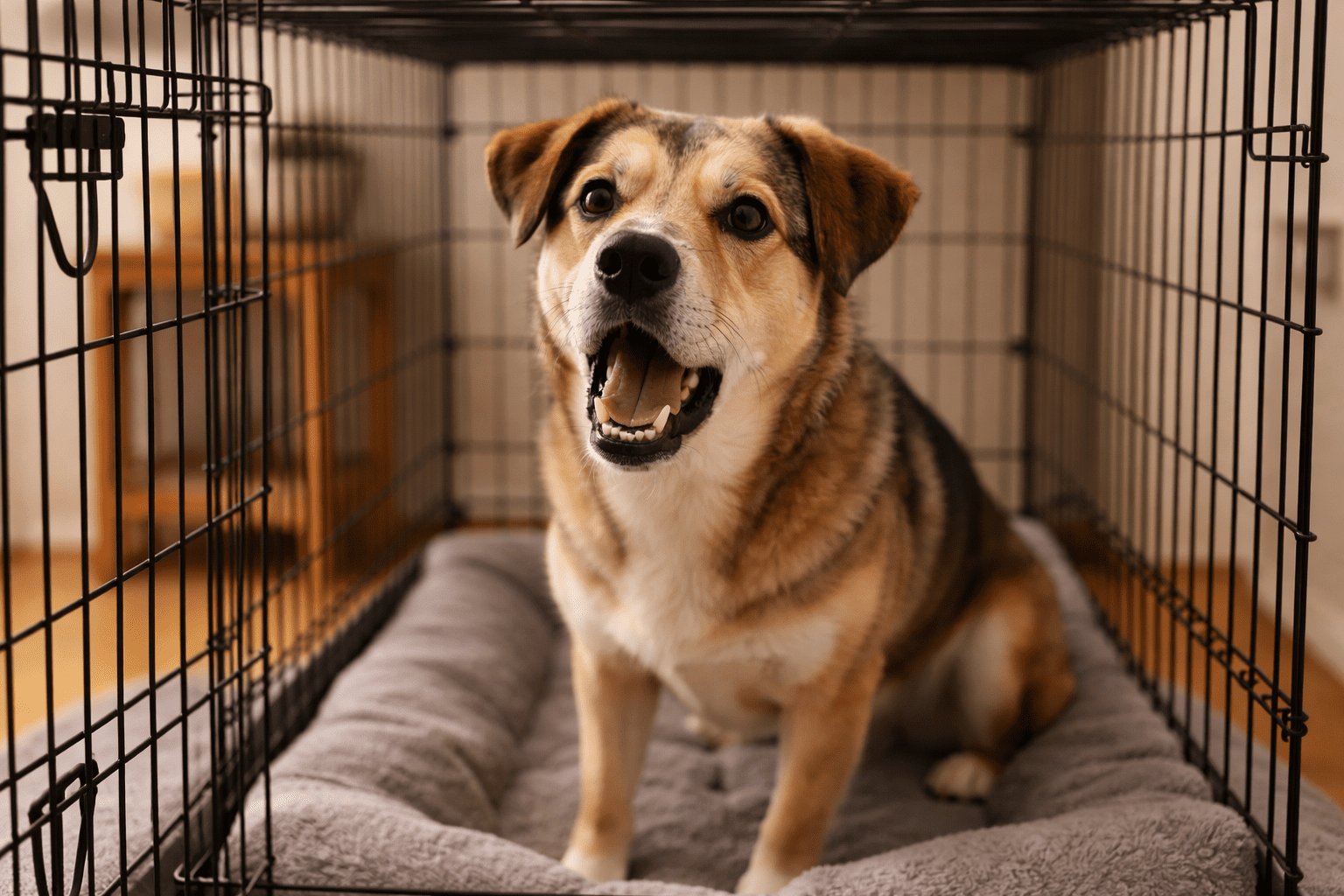
Rescue dogs often vocalize when first learning crate training. The hard part is figuring out whether they need something or are just protesting the new routine. Listen for patterns—desperate crying versus complaining whines sound different.
Don’t let your dog out while they’re making noise, or you’ll teach them that crying gets them what they want. Wait for even a brief pause, then open the door. This rewards quiet behavior instead of the noise.
Make sure your rescue has emptied their bladder before crate time. Puppies and some adult dogs can’t hold it for long periods, so accidents create negative associations with the crate.
If crying continues for more than 15-20 minutes despite proper bathroom breaks, your dog might not be ready for that length of time. Go back to shorter sessions and rebuild gradually.
Escape Attempts and Destructive Behavior
Some rescue dogs panic in crates and try to break free. This is serious and requires immediate attention to prevent injury. Dogs have broken teeth, torn nails, and hurt themselves trying to escape.
If your rescue shows extreme panic—drooling excessively, injuring themselves, or destroying the crate—stop crate training immediately. Talk to your vet about anxiety medication or consider working with our dog obedience training experts who specialize in anxious rescues.
For mild chewing or pawing at the crate, ensure your dog has appropriate chew toys inside. A frozen Kong or durable bone gives them something acceptable to work on instead of the crate bars.
Never leave an anxious dog crated for long periods. Some rescues need weeks of gradual conditioning before they can handle being crated while you’re gone. Professional help through a dog boarding camp Long Island can accelerate this training with expert supervision.
Accidents in the Crate
Most dogs instinctively avoid soiling their sleeping area, but rescue dogs sometimes have accidents for various reasons. They might not be fully house-trained, or anxiety might override their natural instincts.
Make sure the crate isn’t too large. Extra space lets dogs sleep in one area and eliminate in another. Use a divider to limit space to just enough for lying down and turning around.
Take your rescue out for bathroom breaks right before crating and immediately after releasing them. Puppies and small dogs need breaks every 2-3 hours, while adult dogs can usually manage 4-6 hours during the day.
Clean any accidents thoroughly with an enzyme cleaner that eliminates odors completely. Lingering smells encourage repeat accidents in the same spot.
Crate Training Schedule and Duration Guidelines
Creating a consistent schedule helps your rescue dog understand when to expect crate time and builds routine into their day.
Age and Bladder Control Considerations
Adult rescue dogs can typically hold their bladder for 6-8 hours overnight, though individual dogs vary. During the day, aim for bathroom breaks every 4-6 hours when crated.
Senior dogs might need more frequent breaks due to weaker bladder control. Watch for signs your older rescue needs to go out more often and adjust your schedule accordingly.
Dogs with previous house training failures might need extra patience. They haven’t learned proper elimination habits, so you’re essentially starting from scratch with house training alongside crate training.
| Dog Age/Type | Maximum Daytime Crate Duration | Overnight Duration |
| Adult rescue (1-7 years) | 4-6 hours | 7-8 hours |
| Senior rescue (8+ years) | 3-4 hours | 6-7 hours |
| Anxious rescue | 2-3 hours initially | 6-7 hours after conditioning |
| House training in progress | 2-3 hours | 5-6 hours |
Nighttime vs. Daytime Crating
Nighttime crating often feels easier for rescue dogs because the house is quiet and you’re nearby. Place the crate in your bedroom initially so your dog doesn’t feel abandoned. This proximity helps anxious rescues settle faster.
Some dogs sleep through the night immediately, while others need a middle-of-the-night bathroom break for the first week or two. Set an alarm and take them out quietly without much interaction, then return them to the crate.
Daytime crating presents different challenges because there’s more activity and excitement. Your rescue might struggle with FOMO (fear of missing out) when they hear family members moving around. Understanding the benefits of crate training helps you stay consistent even when your dog protests.
Start with short daytime sessions while you’re home doing chores. Gradually extend the time and eventually practice leaving the house briefly. This progression prevents separation anxiety from worsening.
Advanced Tips for Rescue Dog Success
Once you’ve mastered the basics of how to crate train a rescue dog, these advanced strategies can smooth out remaining rough spots.

Combining Crate Training With Other Behavior Work
Crate training doesn’t exist in isolation. It works best when combined with general obedience, house training, and confidence-building exercises. A rescue dog who learns basic commands often feels more secure and responds better to crate training.
Practice “place” or “bed” commands outside the crate first. This teaches your dog to settle on command anywhere, making crate time feel like a natural extension of what they already know.
Work on separation anxiety separately if it’s severe. Some rescue dogs need specific desensitization work before crate training will succeed. Professional programs like our board and train preparation guide address multiple behavior issues simultaneously.
Exercise and Mental Stimulation Before Crate Time
A tired dog settles better than a restless one. Give your rescue a good walk or play session before asking them to spend time in the crate. Physical exercise burns energy that might otherwise fuel anxiety or frustration.
Mental stimulation matters too. Puzzle feeders, training sessions, or sniff walks tire dogs’ brains as much as their bodies. A mentally satisfied dog is more likely to relax in their crate for a nap.
Avoid over-excitement right before crating. High-energy play gets dogs amped up, making it harder to settle down. Allow 15-20 minutes of calm activity between exercise and crate time.
When to Seek Professional Help
Some rescue dogs need more support than DIY training can provide. If your dog shows extreme panic, injures themselves trying to escape, or makes zero progress after several weeks of consistent effort, professional help makes sense.
Signs you need expert intervention include excessive drooling, self-harm, complete refusal to approach the crate even with high-value treats, or regression after initial progress. These suggest deeper anxiety that requires specialized techniques.
Trainers experienced with rescue dogs understand trauma responses and can modify approaches accordingly. They spot subtle signs of stress you might miss and adjust training before problems escalate.
Your Rescue Deserves Patient, Professional Support
Teaching how to crate train a rescue dog requires understanding, consistency, and lots of patience. Every rescue dog is different, and some need more time than others to feel safe in their crate. The techniques in this guide give you a solid foundation, but remember that setbacks are normal and progress isn’t always linear.
If you stay patient and keep sessions positive, most rescue dogs eventually see their crate as a sanctuary rather than a prison. The investment you make now pays off in a calmer, happier dog who feels secure in their own space.
At K9 Mania Dog Training, we’re the leading board and train provider on Long Island, and we understand the unique challenges rescue dogs face. Whether your rescue struggles with crate training, separation anxiety, or other behavior issues, our expert trainers can help. We’ve successfully worked with countless rescue dogs, building their confidence and teaching them essential skills. Trust K9 Mania Dog Training to guide you and your rescue toward a better life together.
You May Also Want to Read
- Muzzle Training for Dogs: A Complete Guide for Safety and Success
- Possessive Aggression in Dogs: What It Is and How to Fix It
- Fear Aggression in Dogs: What It Is and How to Help Your Anxious Dog
- Barrier Aggression in Dogs: Causes, Triggers, and How to Fix It
Frequently Asked Questions
Should I put my rescue dog in a crate at night?
Yes, nighttime crating can benefit rescue dogs once they’re properly conditioned to accept the crate. Most dogs naturally sleep through the night, making it easier than daytime crating. Place the crate in your bedroom initially so your rescue doesn’t feel isolated, and ensure they’ve had a bathroom break right before bed. Start with short periods and gradually extend to full nights as your dog shows comfort and relaxation.
Should rescue dogs be crate trained?
Crate training offers rescue dogs a safe space and helps with house training, separation anxiety, and safety during transport or emergencies. However, dogs with severe confinement trauma might need alternative solutions or very gradual conditioning. Most rescues benefit from crate training when done correctly with patience and positive reinforcement. It gives them a den-like retreat where they can relax without demands.
How long to let rescue dog cry in crate?
Brief whining or protest crying is normal and should be ignored to avoid rewarding the behavior. However, if crying continues beyond 15-20 minutes or sounds panicked rather than annoyed, your dog isn’t ready for that duration. Let them out during a quiet moment, then reduce the time for the next session. Crying that includes drooling, destructive behavior, or self-harm indicates serious anxiety requiring professional help immediately.
Are dogs happier sleeping in a crate?
Many dogs find crates comforting once properly trained because it mimics a den environment where they feel protected. However, happiness depends on proper introduction and positive associations. A dog forced into a crate or left too long will not be happy. When crate training is done right, dogs often choose to sleep in their crate even with other options available, showing genuine preference for their secure space.
What are common mistakes in crate training?
Using the crate as punishment destroys positive associations and creates fear. Moving too fast through training stages before your dog is ready causes anxiety and setbacks. Leaving dogs crated too long leads to accidents, stress, and negative feelings about the crate. Other mistakes include choosing the wrong crate size, not providing adequate exercise before crate time, and giving up too quickly when facing normal challenges during the training process.
Can older rescue dogs learn crate training?
Absolutely. While puppies might learn faster, adult and senior rescue dogs can successfully learn to love their crates with patient, positive training. Older dogs often settle more easily than puppies once they understand the routine. The key is respecting their individual pace and any physical limitations like arthritis that might affect comfort in the crate. Some senior rescues become the most enthusiastic crate users because they appreciate having a quiet retreat.