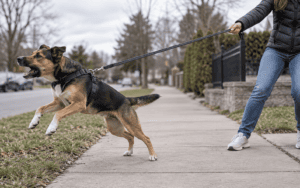
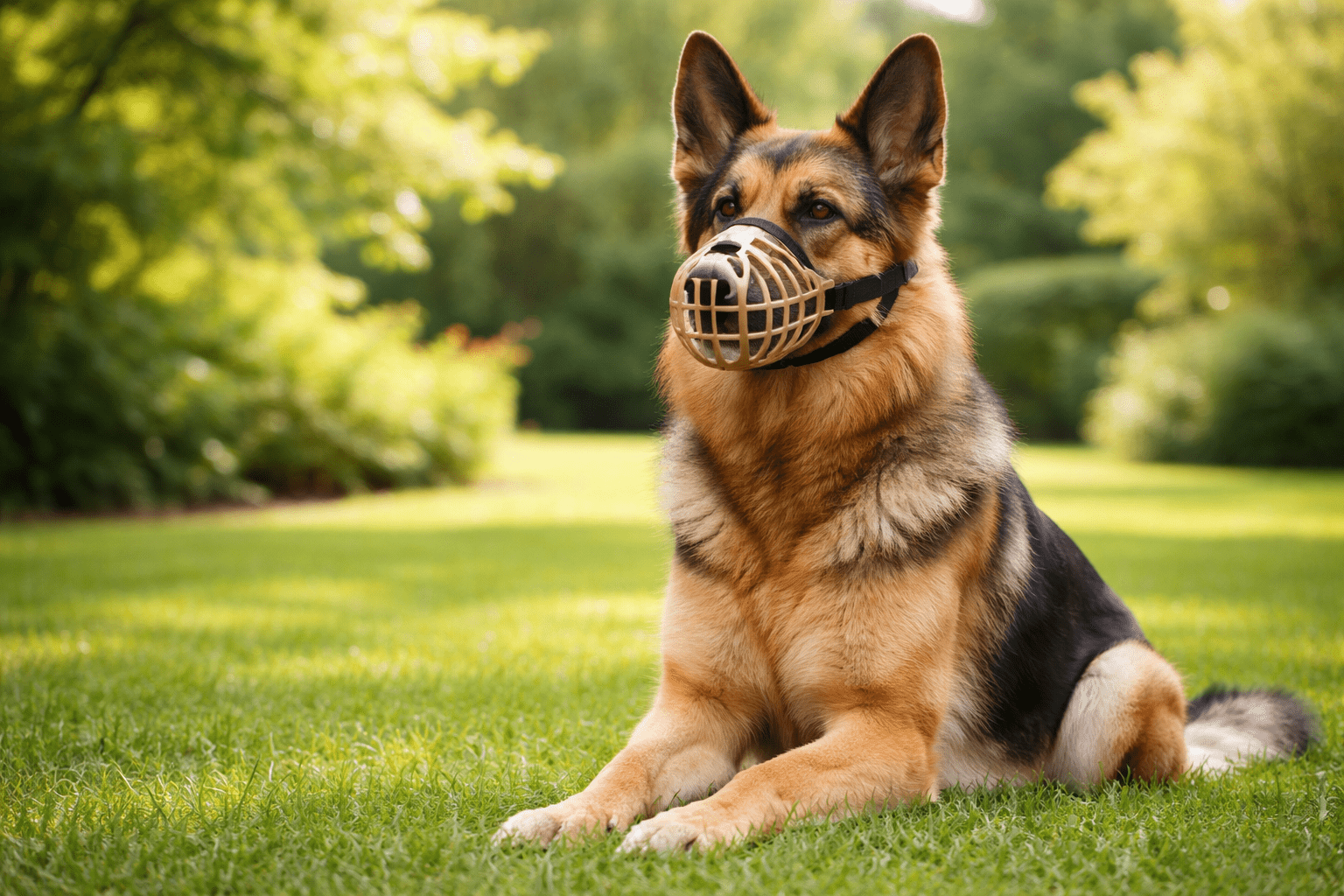
Muzzle training for dogs is a positive, gradual process that teaches your dog to accept wearing a muzzle without fear or stress. When done correctly, it takes just a few weeks of consistent practice using treats, patience, and the right muzzle fit to create a safe tool for vet visits, grooming, or managing reactive behaviors.
Despite outdated beliefs, muzzles aren’t punishment devices or signs of a “bad dog.” They’re practical safety tools that protect both your dog and the people around them in specific situations. Whether you’re preparing for a medical procedure, working through reactivity issues, or simply being proactive, teaching your dog to wear a muzzle comfortably is one of the most responsible steps you can take as a dog owner.
In this guide, we’ll walk you through why muzzle training matters, how to choose the right muzzle, step-by-step training methods, and common mistakes that can slow your progress or make your dog uncomfortable.
Need expert help with behavioral challenges? Our board and train Long Island program gives your dog the foundation they need for real-world safety and confidence.
Why Muzzle Training for Dogs Matters
Muzzle training isn’t just for aggressive dogs or emergency situations. It’s a practical skill that every responsible dog owner should consider, especially if your dog shows signs of fear, stress, or unpredictable behavior in certain settings.
Safety Benefits for Dogs and People
A properly trained dog who accepts a muzzle can visit the vet without stress, get groomed safely, or navigate crowded spaces without risk of biting. This protects veterinary staff, groomers, and strangers who might accidentally trigger a fear response.
Muzzles also protect your dog from eating dangerous items during walks, like poisoned bait, trash, or harmful plants. Dogs with a history of scavenging benefit greatly from this added layer of safety.
If your dog has ever shown food aggression or resource guarding, a muzzle provides peace of mind while you work on training. It gives you control during situations where emotions run high and reactions happen fast.
Common Situations Where Muzzles Help
Vet visits top the list of times when dogs feel vulnerable and defensive. Even the friendliest dog might snap when in pain or scared. A muzzle lets the vet work efficiently without risking injury.
Grooming appointments, especially nail trims or ear cleaning, can trigger similar defensive behaviors. Groomers appreciate working with muzzle-trained dogs because it keeps everyone safe and speeds up the process.
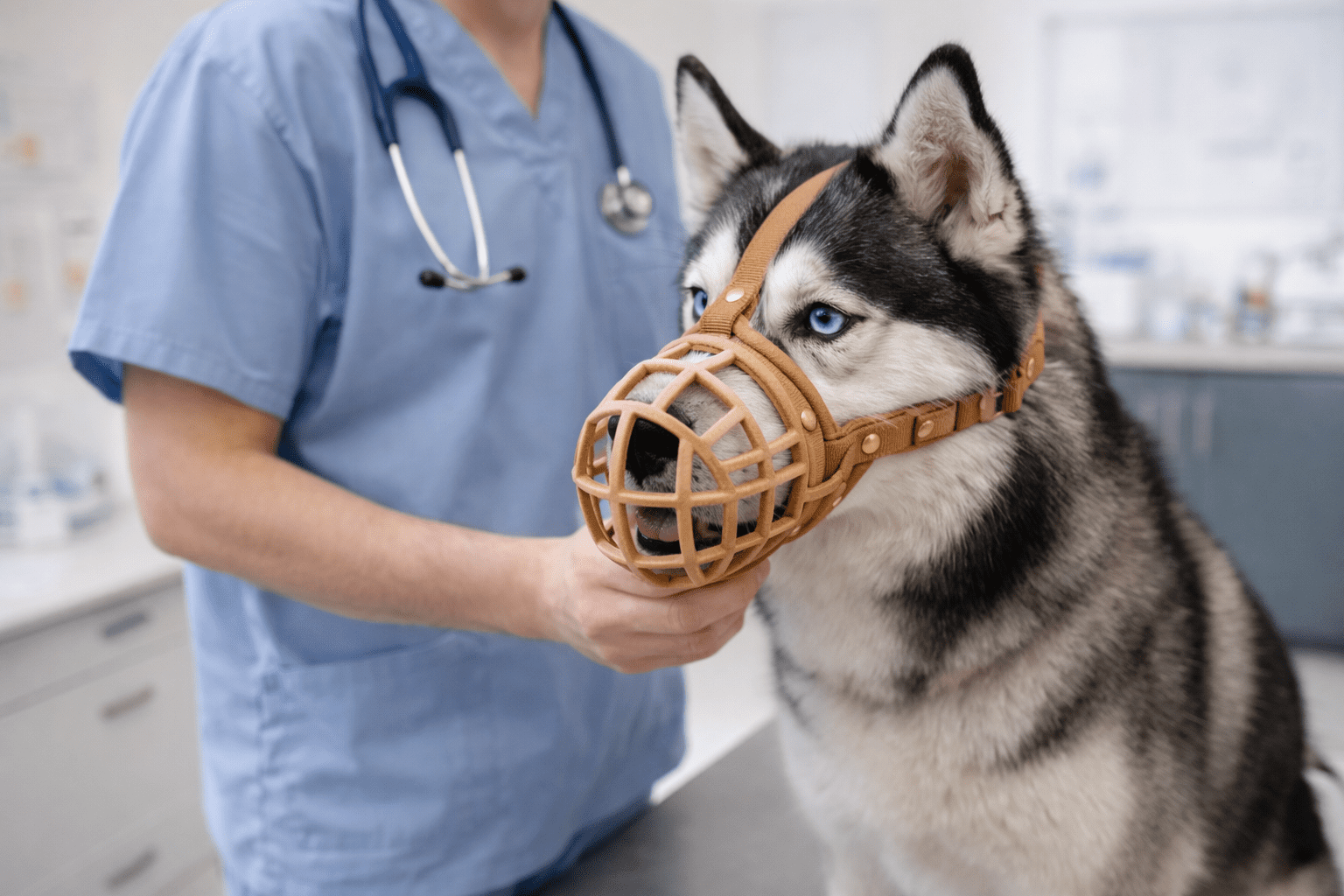
If you’re managing issues like territorial aggression in dogs , a muzzle acts as a safety net while you implement behavior modification. It doesn’t fix the problem, but it prevents incidents while training progresses.
Public transportation, crowded events, and emergency situations all become more manageable when your dog can wear a muzzle comfortably without panic.
Breaking the Stigma Around Muzzles
Many dog owners resist muzzle training because they worry about judgment or feel like it labels their dog as dangerous. The truth is that muzzles are tools, just like leashes or crates.
Responsible owners use muzzles proactively, not reactively. Training your dog to accept a muzzle before you need it shows foresight and care, not failure.
Dogs don’t see muzzles as punishment. When introduced correctly with positive associations, most dogs accept them as calmly as they accept collars or harnesses. The emotional reaction comes from how we train, not from the muzzle itself.
Choosing the Right Muzzle for Training
Not all muzzles work well for training, and picking the wrong type can make the process harder or even dangerous. The right muzzle fits properly, allows natural behaviors, and suits your specific training goals.
Types of Muzzles and Their Uses
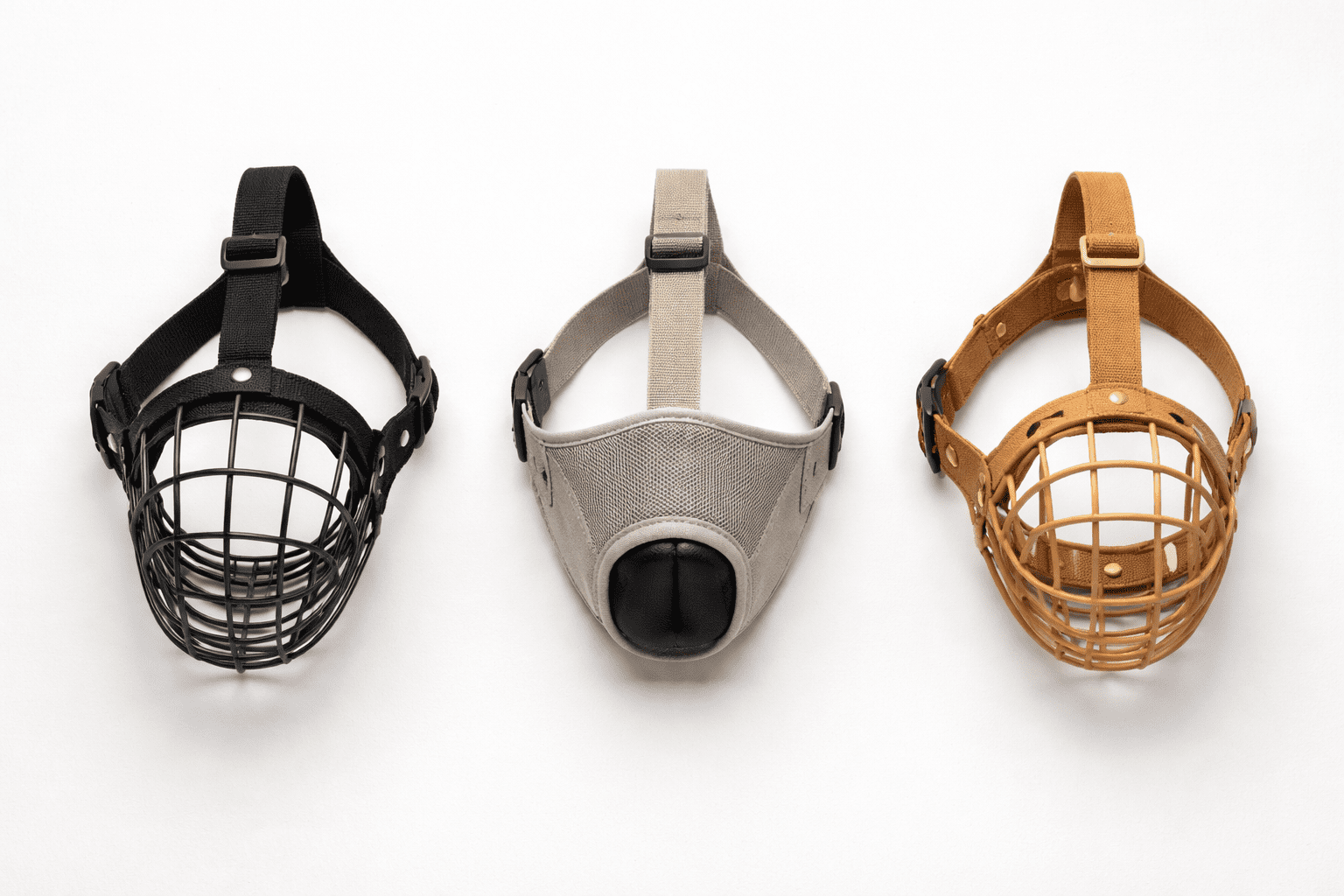
| Muzzle Type | Best For | Allows Panting/Drinking | Training Suitability |
| Basket Muzzle | Long-term wear, training, vet visits | Yes | Excellent |
| Soft/Fabric Muzzle | Short vet exams, emergencies only | No | Poor for training |
| Biothane Muzzle | Active dogs, outdoor training | Yes | Very good |
| Wire Basket | High-energy dogs, hot weather | Yes | Good |
Basket muzzles are the gold standard for training because they allow your dog to pant, drink water, and take treats through the openings. This makes positive reinforcement possible and keeps your dog comfortable during longer wear times.
Soft or fabric muzzles look gentler but actually restrict panting and drinking, which can be dangerous. These should only be used for very short periods under supervision, never for training sessions.
Biothane muzzles combine durability with comfort and work well for active dogs who need secure, weather-resistant gear. They’re easier to clean than fabric and lighter than metal.
Getting the Perfect Fit
Measure your dog’s snout length from the tip of the nose to just below the eyes. Then measure the circumference around the widest part of the snout with the mouth closed. Add about half an inch to both measurements for comfort.
The muzzle should sit snugly but not tight. Your dog should be able to open their mouth to pant and drink. You should be able to fit one or two fingers between the muzzle and your dog’s face.

Check that the muzzle doesn’t press on the eyes or block vision. Your dog’s whiskers shouldn’t be crushed or restricted. The straps should secure behind the ears without rubbing or pinching.
If you’re unsure about sizing, bring your dog to a professional trainer or pet supply store that specializes in muzzle fitting. A poor fit will make training harder and create negative associations.
Looking for personalized guidance on safety tools and training techniques? Our private dog training Long Island sessions address your dog’s specific needs with expert support.
Step-by-Step Muzzle Training Process
Training your dog to accept a muzzle takes patience and consistency, but most dogs learn within two to four weeks of regular practice when you break the process into manageable steps.

Building Positive Associations (Days 1-3)
Start by letting your dog see and smell the muzzle without pressure. Place it near their favorite spot and reward any interest with high-value treats. Hold the muzzle and give treats whenever your dog looks at it. Keep sessions short—three to five minutes, several times daily. Next, deliver treats through the front opening so your dog associates the muzzle with good things, not scary experiences.
Introduction to Wearing (Days 4-10)
Once your dog willingly puts their nose in for treats, hold the muzzle in place for one to two seconds before removing and rewarding. Gradually increase duration over several sessions. Start fastening the straps briefly, then immediately unfasten and reward. Build up to 10-15 seconds fully secured. Practice in different home locations to help your dog generalize. If your dog paws at the muzzle, redirect with treats—this discomfort means you moved too fast.
Extending Duration and Adding Distractions (Days 11-20)
Increase wearing time from one minute to three, then five. Add gentle movement—walk a few steps or practice basic commands. Introduce mild distractions like family members entering or toys rolling past. Reward calm behavior. By week three, most dogs wear muzzles for 10-15 minutes without stress.
Real-World Practice (Days 21+)
Take short walks with the muzzle, building distance gradually. Practice realistic scenarios like car rides or mock vet exams. Always end positively—remove the muzzle after calm moments and follow with games or treats.
Common Mistakes and How to Avoid Them
Even well-meaning owners make errors that slow muzzle training or create negative associations. Knowing what to avoid saves time and reduces stress for both you and your dog.
Rushing the Process
| Common Mistake | Why It’s a Problem | Better Approach |
| Forcing the muzzle on immediately | Creates fear and resistance | Spend days on positive exposure first |
| Skipping gradual duration increases | Dog becomes overwhelmed | Add 5-10 seconds at a time |
| Using muzzle only in stressful situations | Links muzzle with bad experiences | Practice regularly in calm settings |
| Not using high-value treats | Dog lacks motivation | Use special treats reserved for muzzle work |
The biggest mistake is trying to rush through steps because you need the muzzle for an upcoming vet visit or event. This backfires by creating negative associations that take much longer to fix.
Give your dog time to adjust at each stage. If you planned to fasten the straps but your dog seems unsure about putting their nose in, spend another day or two on that step.
Using the Wrong Type of Muzzle
Soft muzzles that prevent panting might seem easier for training because they’re less intimidating, but they’re actually dangerous for anything beyond a quick emergency. Your dog can overheat and develop fear responses.
Choosing a muzzle that doesn’t fit properly leads to rubbing, discomfort, and negative associations. Invest in a quality basket muzzle sized correctly for your dog’s breed and snout shape.
Cheap muzzles with rough edges or poor ventilation make training harder and can injure your dog. This isn’t an area to cut costs if you want successful long-term results.
Inconsistent Training Sessions
Training three days in a row, then skipping a week, confuses your dog and slows progress. Consistency matters more than long sessions. Five minutes daily beats one 30-minute session weekly.
Multiple family members should use the same methods and cues. If one person forces the muzzle while another uses treats and patience, your dog gets mixed messages.
Need help addressing behaviors that make muzzle training necessary? Learn proven methods to stop food aggression in dogs with our expert guidance.
Managing Specific Challenges During Training
Some dogs face unique obstacles during muzzle training that require adjusted approaches. Recognizing these challenges early helps you modify your methods for better success.
Working With Fearful or Reactive Dogs
Dogs with fear-based behaviors need extra patience and smaller training steps. Use counter-conditioning by pairing the muzzle with their absolute favorite things, specific treats, playtime, or beloved toys. If your dog has a bite history or shows signs of being one of the top aggressive dog breeds, work with a professional trainer from the start. Create distance if direct interaction causes panic—place the muzzle across the room and reward calm observation before moving closer.
Dealing With Pawing and Rubbing
Pawing or rubbing is normal and usually means you moved too fast or the fit isn’t right. Check the fit first, adjust straps and positioning before assuming it’s a training issue. Redirect pawing with treats or commands like “sit” or “watch me.” Don’t punish this behavior since it communicates discomfort. If rubbing continues, shorten wear time and increase treat frequency.
Adapting for Senior Dogs or Special Needs
Older dogs or those with physical limitations need gentler introductions. Senior dogs respond well to softer basket muzzles with padded edges that don’t press on sensitive areas. Dogs with anxiety or past trauma might need professional support, consult a veterinary behaviorist if your dog shows extreme fear responses.
Maintaining Muzzle Skills Long-Term
Once your dog accepts the muzzle, ongoing practice keeps those skills sharp and prevents regression. Even well-trained dogs can forget or develop new concerns if the muzzle only appears during stressful events.
Regular Practice Sessions
Put the muzzle on once or twice a week during positive activities, not just when you need it for safety. A quick five-minute session during a backyard game or before a treat-stuffed toy keeps the association positive.
Rotate between different scenarios so your dog doesn’t link the muzzle to one specific context. Practice indoors, outdoors, in the car, and in various rooms of your house.
If months pass without muzzle use, run through the basic steps again before the next vet visit or grooming appointment. A quick refresher prevents surprises and stress.
Recognizing When Professional Help is Needed
If your dog never progresses past the initial fear stage despite weeks of patient training, consult a certified professional dog trainer or veterinary behaviorist. Some dogs have deeper anxiety that needs expert intervention.
Warning signs that you need professional support include extreme panic, aggression toward the muzzle, complete refusal to take treats near it, or regressing after initial progress.
Professional trainers can assess whether your technique needs adjustment, if the muzzle fits incorrectly, or if underlying behavioral issues require separate treatment before muzzle training can succeed.
Build a solid foundation for all types of training with our comprehensive dog obedience training course , designed to create confident, well-mannered dogs.
Your Path to Safe, Stress-Free Muzzle Training
Muzzle training for dogs helps turn what may seem like a scary tool into a normal, positive part of your dog’s routine. The key is patience, positive reinforcement, and choosing a muzzle that fits your dog properly. By introducing it slowly and pairing it with treats, play, and praise, your dog begins to associate the muzzle with good experiences rather than stress.
Consistency is essential. Most dogs need about two to three weeks of short, daily training sessions before they feel comfortable wearing a muzzle. For fearful or reactive dogs, the process may take longer. Taking the time to train properly helps make vet visits, grooming appointments, and busy public environments much safer and less stressful.
It’s important to remember that a muzzle is only a management tool, not a solution by itself. It works best when combined with proper obedience training, socialization, and addressing the root causes of behavioral issues.
At K9 Mania Dog Training, our expert trainers help dog owners build safer, more confident dogs through proven training methods and behavior guidance.
You May Also Want to Read
- How to Stop Dog from Counter Surfing: Effective Training Solutions
- Signs Your Dog Trusts You: How to Read Your Dog’s Trust Signals
- How to Introduce Dogs to Each Other: Complete Safety Guide
- How to Teach a Dog to Swim: Complete Training Guide
Frequently Asked Questions
Is muzzle training good for dogs?
Yes, muzzle training is beneficial for dogs when done correctly using positive reinforcement. It prepares your dog for situations where a muzzle might be necessary for safety, like vet visits, grooming, or managing reactive behaviors. A properly trained dog experiences no stress from wearing a muzzle and may even associate it with positive experiences like treats and activities. The training process itself builds trust between you and your dog while creating a valuable safety tool for unexpected situations.
What is the hardest command to teach a dog?
The hardest command varies by dog, but many trainers consider “stay” with distance and duration one of the most challenging. Other difficult commands include reliable recall in distracting environments, “leave it” when faced with strong temptations, and impulse control behaviors like waiting at doorways. These commands require self-control and often conflict with natural dog instincts. Muzzle training, while not a command, requires similar patience and gradual progression to overcome natural wariness of having something on the face.
How do I muzzle train my dog?
Start by creating positive associations through treats and patience. Let your dog explore the muzzle without pressure, then reward them for putting their nose inside for treats. Gradually increase duration, fasten straps for brief moments, and build up wearing time over two to four weeks. Practice in different settings and add mild distractions as your dog becomes comfortable. Always use high-value treats, keep sessions short and positive, and never force the muzzle on. The key is making the muzzle predict good things through consistent, gradual training.
How many hours a day can a dog wear a muzzle?
A properly fitted basket muzzle can be worn for several hours with breaks, but this depends on the situation and your dog’s comfort level. During training, keep sessions short—starting with seconds and building to 15-20 minutes. For necessary situations like vet visits or grooming, dogs can wear muzzles for one to two hours if they can pant, drink, and remain comfortable. Never leave a muzzled dog unattended, and always remove the muzzle regularly to check for rubbing or discomfort. Soft muzzles should only be worn for very brief periods since they restrict panting.
How do I know if my dog needs a muzzle?
Your dog may benefit from a muzzle if they have a history of biting, show aggression toward people or other dogs, or become defensive at the vet or groomer. Dogs who scavenge dangerous items on walks or have unpredictable fear responses in certain situations are also good candidates. Additionally, some breeds or dogs recovering from injuries might need temporary muzzle use during healing. Even if your dog is friendly now, proactive muzzle training prepares you for unexpected situations like injuries that make handling painful. Consult with a professional trainer if you’re unsure whether your dog needs muzzle training.