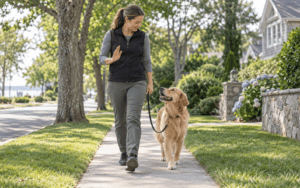

Bernese Mountain Dogs are intelligent, eager-to-please working dogs that respond exceptionally well to positive reinforcement and consistent structure. Knowing how to train a Bernese Mountain Dog correctly from puppyhood sets the foundation for a calm, confident, and well-mannered companion throughout their life.
Key Takeaways
- Bernese Mountain Dogs thrive with positive reinforcement and consistent daily training sessions of 10-15 minutes.
- Early socialization between 8 and 16 weeks old is critical for preventing fear-based behaviors later in life.
- Their size (often 70-115 lbs) makes leash manners and basic obedience non-negotiable, not optional extras.
- Harsh correction methods backfire with Berners, causing them to shut down or become anxious.
- Professional training support, whether private sessions or a board and train long island program, can dramatically accelerate results.
- This breed is sensitive, loyal, and deeply bonded to family, which you can use as a powerful motivational tool in training.
Why Bernese Mountain Dogs Require a Breed-Specific Approach
Not all training methods translate equally across every breed. Berners are built differently, not just physically, but emotionally. They are sensitive, deeply social animals that bond intensely with their families. This sensitivity means that training approaches effective for, say, a German Shepherd or a Malinois can completely derail a Berner’s progress.
At the same time, Berners are working dogs at their core. Historically bred in the Swiss Alps to pull carts, herd cattle, and serve as farm guardians, they carry genuine intelligence and a natural desire to work alongside humans. That instinct is your greatest asset in training. The challenge is that their size grows faster than their maturity. By six months, a Berner can already weigh 60 lbs or more, and if leash manners and basic commands haven’t been established, that 100-lb adult dog becomes genuinely difficult to manage.
Comparing Berners to other popular breeds illustrates the point clearly:
| Breed | Trainability | Sensitivity Level | Typical Adult Weight | Key Training Challenge |
| Bernese Mountain Dog | High | Very High | 70-115 lbs | Emotional sensitivity; slow maturity |
| Golden Retriever | Very High | High | 55-75 lbs | Excitability and distraction |
| German Shepherd | Very High | Moderate | 50-90 lbs | Drive; needs structured outlets |
| Labrador Retriever | Very High | Moderate | 55-80 lbs | Pulling; food obsession |
| Great Pyrenees | Moderate | Moderate | 85-115 lbs | Independence; stubborn streaks |
Because Berners rank among the most trainable dog breeds when handled correctly, your methods and timing matter far more than repetition volume. Quality over quantity is the operating rule.

Building Blocks: What to Teach and When
The Puppy Window (8-16 Weeks)
This period is arguably the most important stretch of your Berner’s entire life. Their brain is wired to absorb new experiences, sights, sounds, and social interactions without the defensive filters that develop later. Missing this window doesn’t doom your dog, but recovering from gaps in early exposure takes far longer than simply filling them in the first place.

The early dog socialization benefits your key to well behaved dogs framework is clear: dogs exposed to diverse environments, people, sounds, and other animals before 16 weeks develop measurably stronger resilience and lower reactivity in adulthood. For Berners specifically, this includes:
- Exposure to strangers of different ages, including children and seniors
- Gentle handling of paws, ears, and mouth (essential for vet visits later)
- Riding in cars without anxiety
- Walking on different surfaces: grass, gravel, tile, and pavement
- Hearing loud sounds like traffic, lawnmowers, and appliances at a distance
Keep each socialization session short and positive. Five minutes of confident exploration is worth more than 30 minutes of overwhelming stimulation.
Core Obedience Skills (3-6 Months)
Once your Berner puppy is home and settling in, structured obedience training should begin within the first week. The foundational commands to prioritize are:

- Sit: The easiest starting point for most Berners; use treats held above the nose to naturally lure the rear down.
- Stay: Build duration slowly, starting at 3 seconds and working toward 30 seconds before adding distance.
- Come (recall): The single most important safety command. Practice this inside before taking it outdoors.
- Loose-leash walking: Begin with short 5-minute walks in low-distraction areas before graduating to busier environments.
- Leave it: Essential for a large dog that can easily grab food off countertops or snatch items from children.
Keep sessions to 10-15 minutes maximum. Berners can fatigue mentally faster than they fatigue physically, and a tired brain produces sloppy work and frustration on both sides.
Positive Reinforcement: The Method That Actually Works for Berners
Bernese Mountain Dogs respond poorly to punishment-based training. If you raise your voice, use leash corrections aggressively, or resort to intimidation, a Berner will often shut down, becoming avoidant and increasingly anxious around the training context. This is not stubbornness. It is an emotional response wired into the breed.

Positive reinforcement, specifically marking desired behaviors with a reward immediately after they occur, is the standard that professional trainers consistently recommend for this breed. The mechanics are simple:
- Ask for the behavior.
- The dog performs correctly.
- Mark the moment with a clicker or a verbal marker like “Yes!”
- Deliver the reward within 1-2 seconds.
Rewards do not need to be food exclusively. Many Berners are equally motivated by brief play sessions, verbal praise, or physical affection from their owner. Learning what your individual dog values most gives you flexible tools across different environments and situations.
One practical note: avoid free-feeding your Berner. When your dog is slightly hungry, food rewards become dramatically more effective. Withholding a portion of their daily kibble for training sessions is a common strategy among experienced Berner owners.
Managing the Adolescent Phase (6-18 Months)
The adolescent period is where many Bernese Mountain Dog owners hit their biggest wall. Around 6-8 months, a Berner that seemed to be progressing beautifully may suddenly appear to forget every command they ever learned. They become easily distracted, selectively deaf to recall commands, and occasionally pushy about what they want.
This phase is neurologically normal. The adolescent brain is being rewired, and impulse control temporarily degrades. Your job during this period is to maintain structure without becoming adversarial about it.
Strategies that work during the adolescent phase:
- Increase exercise before training sessions to reduce excess energy
- Return to basics in high-distraction environments instead of pushing new skills
- Use longer leashes (20-30 feet) for recall practice outdoors rather than off-leash freedom
- Keep sessions short and end on success, even if that means asking for something simple like a sit
If you are working with a Berner in a suburban area and finding the training challenges genuinely difficult to manage on your own, exploring in home dog training long island style professional sessions gives you direct, personalized coaching that group classes cannot replicate.
Professional Training Options: Knowing When to Ask for Help
Understanding how to train a Bernese Mountain Dog at home is valuable, but recognizing when outside expertise accelerates your progress is equally important. Professional trainers bring pattern recognition that comes from working with hundreds of dogs, and they can identify subtle handler mistakes that owners rarely notice themselves.

The most common professional training formats include:
Private Sessions: A trainer works with you and your dog together, coaching your handling mechanics in real time. This is ideal if your schedule is flexible and you want to be deeply involved in the training process. Options like private dog training long island bring expert instruction directly to your needs, which is especially useful for addressing behavior problems in structured settings.
Board and Train Programs: Your dog lives with a professional trainer for a set period, typically 2-4 weeks, receiving intensive daily training that focuses on obedience dog training principles. The results can be impressive when paired with solid owner follow-through after the program ends.
Group Classes: Lower-cost and useful for socialization practice in a controlled environment. Less individualized than private work but still beneficial for distraction training.
Regardless of format, any program rooted in solid principles will emphasize consistency, clear communication, and building the dog’s confidence rather than breaking it down.
Things to Know
- Berners are “slow to mature” both physically and mentally; full emotional maturity often isn’t reached until age 2-3.
- Their thick double coat makes them heat-sensitive, so training outdoors in summer should happen in the early morning or evening, ideally when temperatures are below 75°F.
- Berners have a lifespan of only 7-10 years, making every stage of training feel more urgent and precious.
- Counter-surfing is a common problem at 6-12 months because of their height; preventing access is easier than correcting after the habit forms.
- Berners can develop separation anxiety if not trained to be comfortable alone from an early age; crate training done correctly prevents most of this.
- Understanding how to stop leash pulling in dogs is essential, as pulling on the leash is the number one complaint from Berner owners, and it is almost always preventable when loose-leash walking is prioritized from the first week home.
Ready to Stop Struggling and Start Progressing?
If you’ve been working with your Berner for weeks or months and feel like you’re spinning your wheels, the most effective next step you can take right now is booking a single professional consultation. Even one session with an experienced trainer can pinpoint exactly where the communication between you and your dog is breaking down — and give you a clear, actionable plan to fix it. You don’t need to hand over control of the process; you just need an expert eye to course-correct your approach.
Schedule a consultation with Dog Training Long Island today and finally start making the progress your Berner is fully capable of.
Read Related Articles
How to Train an Australian Shepherd
Are English Mastiffs Easy to Train?
Are Papillon Dogs Easy to Train
Frequently Asked Questions
At what age should I start training my Bernese Mountain Dog?
Training should begin the moment your Berner puppy arrives home, typically around 8 weeks old.
Basic commands, crate training, and socialization can all begin in the first week. The earlier you establish structure, the easier every stage that follows becomes, because habits formed at 8 weeks are far more powerful than habits formed at 8 months.
Are Bernese Mountain Dogs hard to train compared to other breeds?
Berners are not hard to train; they are sensitive to training approach, which requires you to be thoughtful rather than forceful.
Their willingness to please makes them highly responsive to positive reinforcement. The biggest mistakes owners make are using corrections the dog finds threatening or waiting too long to start formal training.
How long does it take to fully train a Bernese Mountain Dog?
Basic obedience is achievable within 3-6 months of consistent work, but full reliability across all environments typically takes 12-18 months.
Adolescence (6-18 months) often creates setbacks that require patience and a return to foundational work. Progress is rarely linear with any dog, and Berners are no exception.
How do I stop my Bernese Mountain Dog from pulling on the leash?
Start loose-leash training in low-distraction environments during puppyhood before the behavior becomes a deeply ingrained habit.
Use directional changes, stopping completely when tension appears on the leash, and reward generously for a slack leash. A front-clip harness can reduce pulling mechanically while you build the trained behavior over time.
Can Bernese Mountain Dogs be left alone during the day?
Adult Berners can manage 4-6 hours alone when properly crate-trained and given adequate exercise, but they are not suited for long daily isolation.
This breed forms extremely strong bonds with family members. Dogs left alone for 8-10 hours regularly often develop destructive behaviors or vocalization issues. If your schedule requires long absences, a doggy daycare or midday dog walker is worth the investment.
The Bottom Line on How to Train a Bernese Mountain Dog
Knowing how to train a Bernese Mountain Dog comes down to three consistent principles: start early, stay positive, and never underestimate the breed’s emotional depth. These dogs are not just large pets. They are working animals with real intelligence and a genuine need for mental engagement, structure, and belonging. When you give them all three, the result is one of the most rewarding companion dogs you can share your life with.
If you are just starting out or feeling stuck mid-process, take action this week by identifying one specific behavior you want to address and committing to five 10-minute daily training sessions focused exclusively on that skill. Progress happens through repetition and patience, not intensity and pressure.