Learning how to train a Golden Retriever is one of the most rewarding experiences a dog owner can have. Golden Retrievers are intelligent, eager-to-please dogs that respond exceptionally well to positive reinforcement, making them one of the most trainable dog breeds in the world.
From basic commands to advanced obedience, their natural drive to work alongside humans makes the training process smoother than most breeds. However, without structure and consistency, even Goldens can develop bad habits that become harder to fix over time.
In this guide, you will get a clear, step-by-step breakdown of how to train a Golden Retriever at every stage, what mistakes to avoid, and when to call in a professional.
Key Takeaway:
- Golden Retrievers thrive on positive reinforcement and consistency
- Training should begin as early as 8 weeks old
- Socialization during the first 16 weeks shapes behavior for life
- Common issues include jumping, mouthing, and leash pulling
- Professional programs accelerate results significantly
Why Is Training a Golden Retriever Different From Other Breeds?
Golden Retrievers were originally bred as hunting companions, retrieving waterfowl for hours without complaint. That working history means they carry a strong desire to please, high energy levels, and an attention span that responds beautifully to reward-based training.
Unlike guarding breeds that require dominance-based handling, Goldens genuinely want to cooperate. Harsh corrections or punishment-based methods can damage their confidence and create anxiety, which works against you.
What sets them apart from other breeds:
- They have a soft temperament that requires gentle, reward-focused methods
- Their retriever instincts make playing fetch with your dog a natural training tool for recall and focus
- They mature slowly, meaning puppyhood behaviors can linger until age two or three
- They are highly food motivated, which makes luring and shaping commands straightforward
Understanding these traits helps you train smarter, not harder. A Golden does not need to be dominated. It needs leadership, clear boundaries, and a consistent reward system.
How Do You Train a Golden Retriever Step by Step?
Step 1: Start With Foundation Commands
Why it matters: Foundation commands like sit, stay, come, and down establish the communication framework everything else builds on. Without these, advanced training has no base.
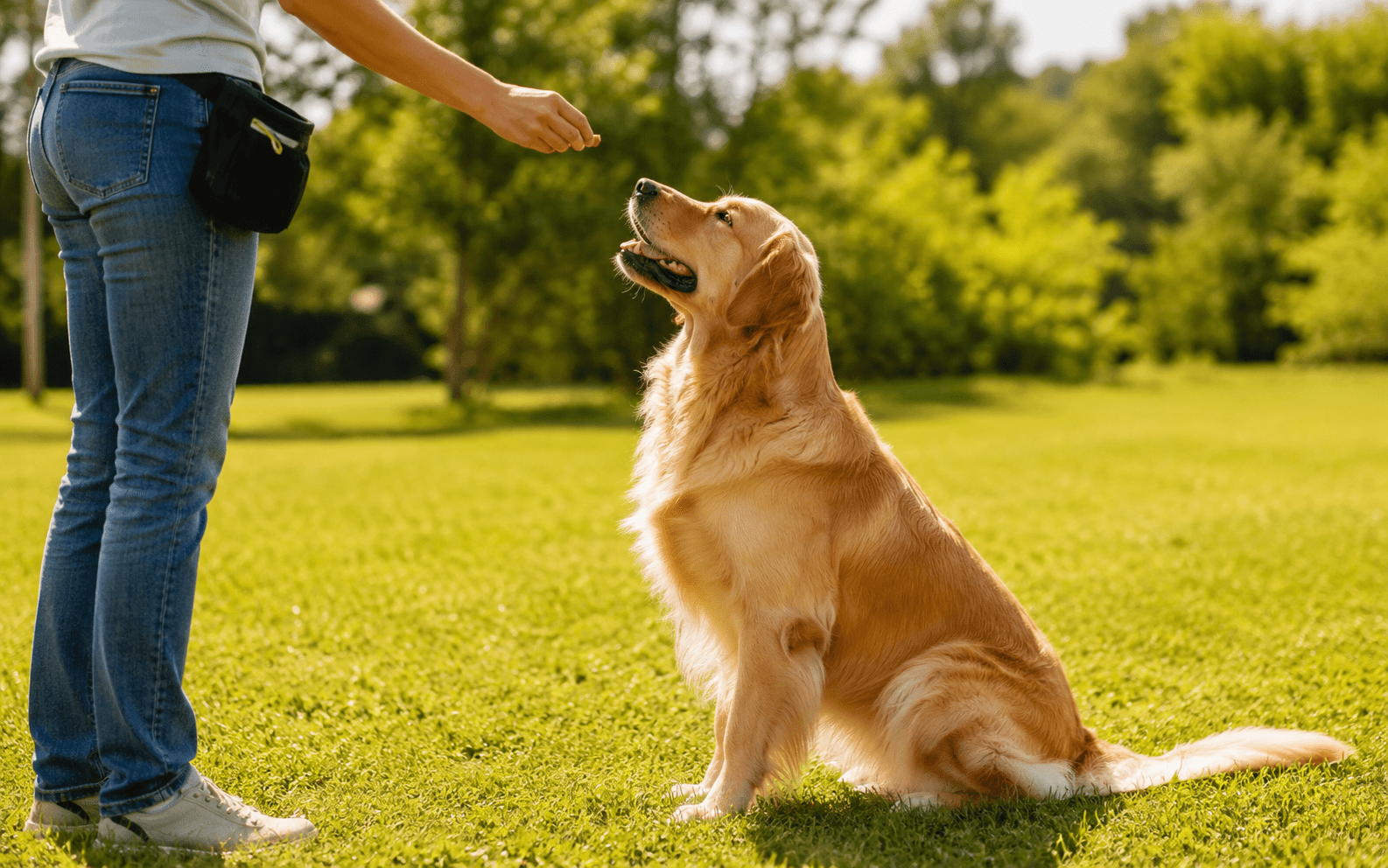
How to do it: Use a high-value treat held at your dog’s nose level. Lure the position, mark it with a “yes” or click, and reward immediately. Keep sessions to five to ten minutes to maintain focus.
Which option works best: Short, frequent sessions twice a day outperform one long training block. Goldens retain information better when it is practiced in small doses across different environments.
Step 2: Socialize Early and Consistently
Why it matters: The socialization window closes around 16 weeks. Dogs not exposed to diverse people, environments, and animals during this period often develop fear-based reactions later in life.
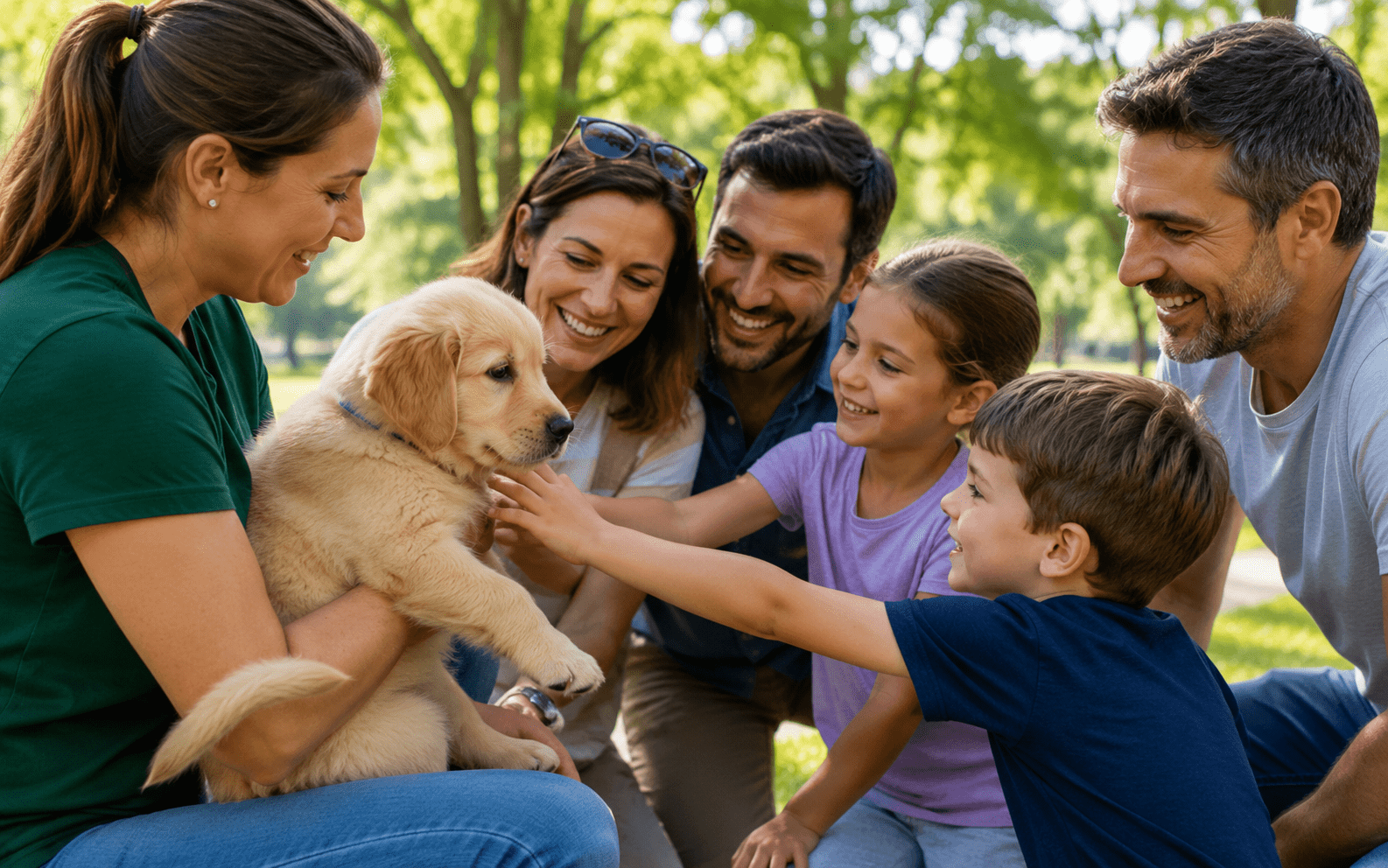
How to do it: Introduce your Golden to different surfaces, sounds, strangers, children, and other animals in calm, controlled settings. Pair each new experience with treats and praise to build positive associations.
Which option works best: Puppy socialization classes offer structured exposure alongside basic obedience, making them a high-value investment in your dog’s long-term behavior.
Step 3: Address Jumping and Mouthing Early
Why it matters: Goldens are naturally exuberant greeters. A puppy jumping up feels harmless, but a 70-pound adult doing the same is a safety concern, especially around children or elderly family members.
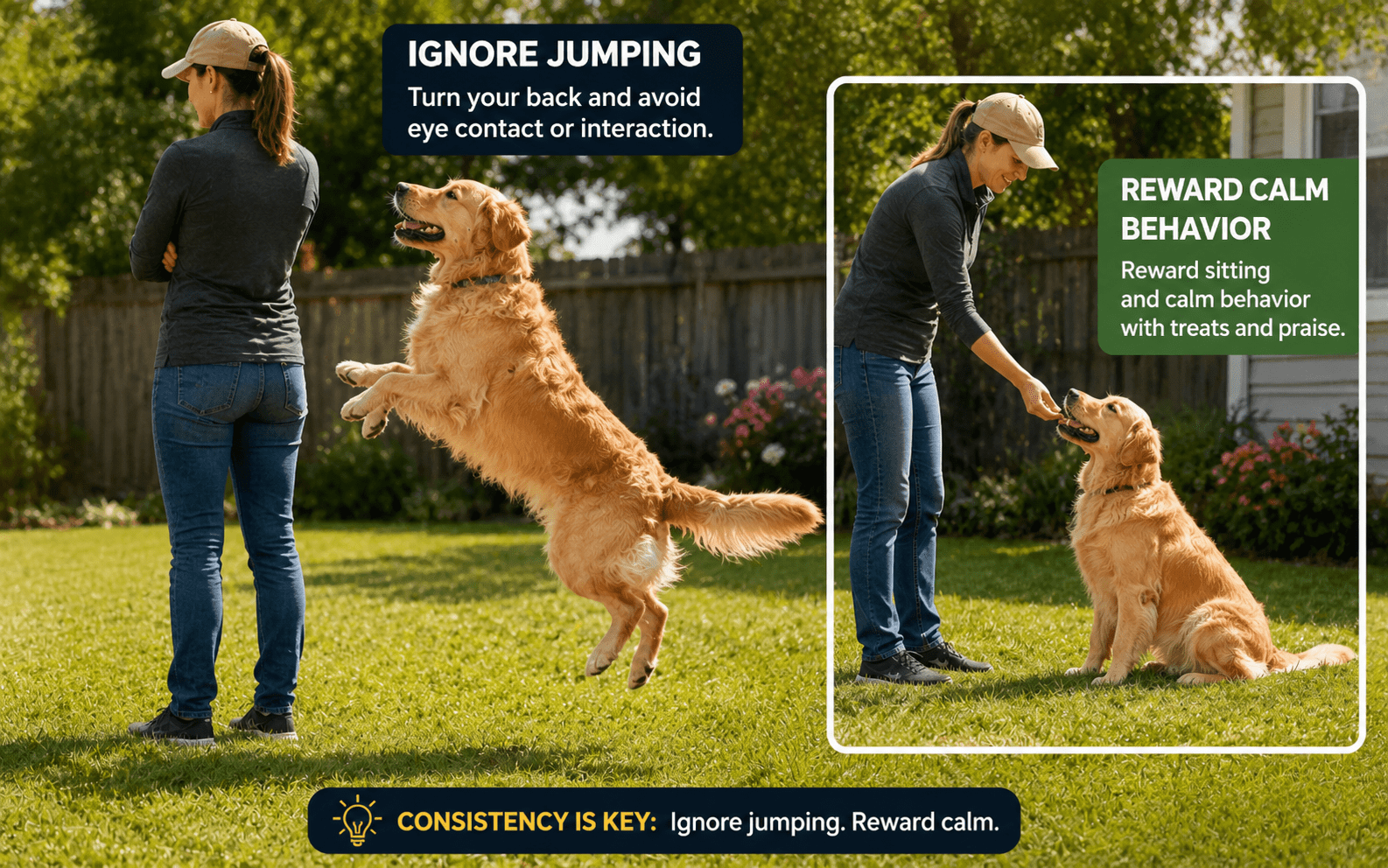
How to do it: Turn your back the moment all four paws leave the ground. Reward only when your dog is calm with four paws on the floor. For mouthing, redirect to a toy immediately and end play if biting continues.
Which option works best: Consistency across every family member matters here. If one person allows jumping while another corrects it, the dog never learns a clear rule.
Step 4: Train Loose Leash Walking
Why it matters: Leash pulling is one of the most common complaints from Golden owners. Because they are strong and enthusiastic walkers, an untrained Golden on leash can injure owners or develop reactivity habits.
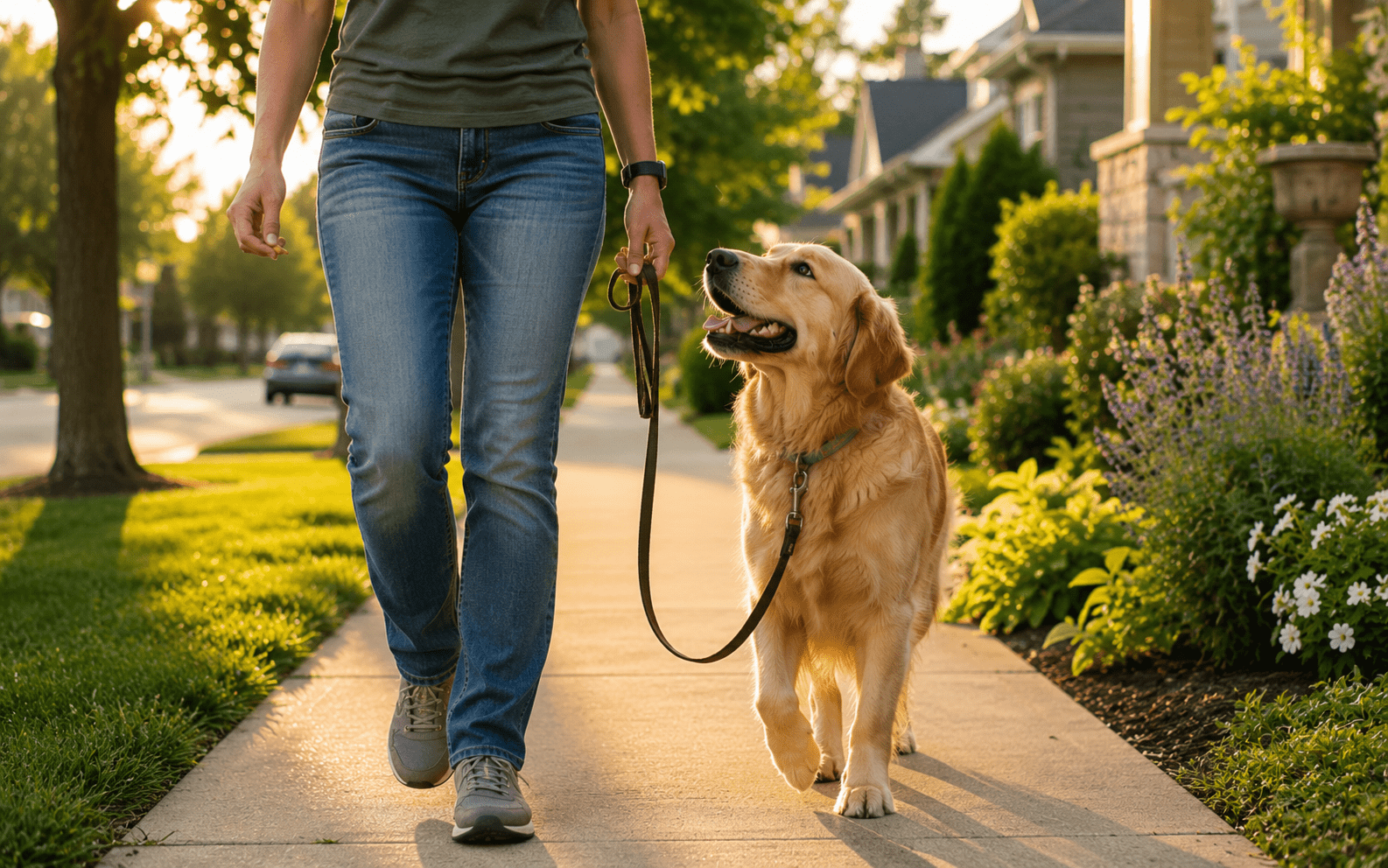
How to do it: Stop completely the moment the leash goes tight. Wait for your dog to return to your side, reward, and continue walking. Repeat without frustration. Change direction frequently to keep your dog focused on you.
Which option works best: Front-clip harnesses reduce pulling mechanically while you reinforce the behavior. Avoid retractable leashes entirely during the training phase.
Step 5: Build a Reliable Recall
Why it matters: A solid recall can save your dog’s life. Goldens are curious and can follow their nose into dangerous situations quickly.
How to do it: Start indoors with zero distractions. Call your dog’s name, say “come,” and back away while crouching. When they reach you, reward generously. Never call your dog to you for something negative, like a bath or nail trim, during the training phase.
Which option works best: Long-line training in a large outdoor space builds recall reliability before you attempt off-leash freedom in open areas.
Step 6: Introduce Crate Training and Independence
Why it matters: Goldens are prone to separation anxiety due to their social nature. Teaching them to be comfortable alone prevents destructive behavior and distress.

How to do it: Introduce the crate gradually with treats and meals inside before ever closing the door. Build duration slowly, starting with just a few seconds and working up over days and weeks.
Which option works best: Pair crate time with a frozen Kong or chew to create a positive association. Dogs that see the crate as a reward stay calmer when confined.
Common Training Mistakes Golden Retriever Owners Make
| Mistake | Why It Backfires | Better Approach |
| Using punishment or harsh corrections | Damages trust and creates anxiety in soft-temperament dogs | Redirect and reward the correct behavior instead |
| Inconsistent rules across family members | Creates confusion about what is allowed | Set household rules everyone follows equally |
| Training only in one location | Dogs learn context-specifically and may not obey elsewhere | Practice in multiple environments daily |
| Skipping socialization during puppyhood | Leads to fear-based reactions and reactivity as an adult | Prioritize exposure in the first 16 weeks |
| Giving up after one bad session | Training progress is not linear and has natural plateaus | Keep sessions short and end on a positive note |
Golden Retriever Training Timeline
| Age | Focus Areas | Realistic Goals |
| 8 to 12 weeks | Sit, name recognition, crate intro, socialization | Responds to name, tolerates crate for short periods |
| 3 to 6 months | Stay, come, leash manners, mouthing | Loose leash inside the home, basic commands in low distraction |
| 6 to 12 months | Proofing commands, down, place command | Reliable sit and stay in moderate distraction environments |
| 1 to 2 years | Advanced obedience, impulse control, off-leash work | Consistent recall, walks calmly on leash in public |
When Should You Get Professional Help?
Some behaviors require more than at-home training sessions can deliver. If your Golden is showing signs of resource guarding, fear aggression, reactivity on leash, or separation anxiety that disrupts daily life, a structured program makes a measurable difference.
Private dog training Long Island gives your dog one-on-one attention with a trainer who can identify the root cause of problem behaviors and build a customized plan.
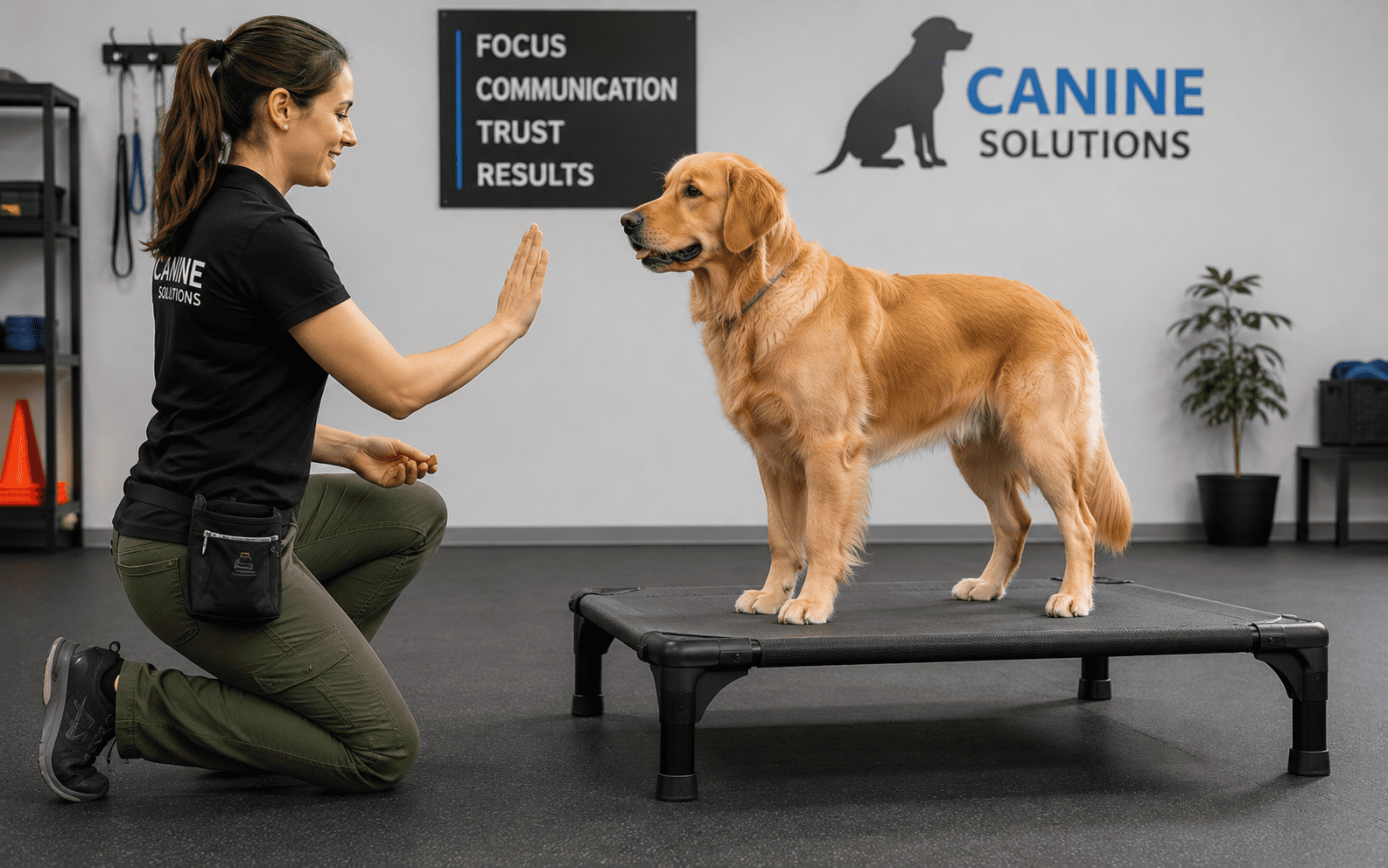
For owners with busy schedules or dogs that need more intensive work, board and train Long Island puts your dog in a structured learning environment full time, producing faster and more durable results.
If you prefer guidance in your own home with your family present, in home dog training Long Island allows a trainer to observe your dog in the environment where most behavior issues actually occur.
Golden Retrievers trained with professional support also have the temperament and trainability to pursue roles beyond companionship. Their reliability and eagerness to work make them strong candidates if you ever consider how to make your dog a service dog.
How to Train a Golden Retriever: What the Best Owners Do Differently
The owners who get the best results with their Goldens share a few habits. They train every single day, even if only for five minutes. They end sessions before the dog loses focus, not after. They reward generously in the beginning and fade treats gradually as behaviors become reliable. And they never ask their dog to perform a command it has not yet mastered in a given environment.
Consistency is not about being strict. It is about being predictable. A Golden Retriever that knows exactly what to expect from its owner becomes a confident, well-adjusted dog.
How to Train a Golden Retriever: Your Path to a Well-Behaved Companion
How to train a Golden Retriever comes down to one thing: building a relationship based on trust, clear communication, and consistent positive reinforcement. At K9 Mania Dog Training, we are Long Island’s leading board and train program with the best animal behaviorist for dogs on staff. Whether your Golden needs basic obedience, behavior modification, or advanced training, we have the expertise to help. Trust K9 Mania to guide you and your dog every step of the way. Contact us today and let’s get started.
You May Also Want to Read
Effective Ways To Train Your Dog
How to Train a Puppy: Step-by-Step Guide for New Dog Owners
Frequently Asked Questions About How to Train a Golden Retriever
Is a Golden Retriever easy to train?
Yes, Golden Retrievers are among the easiest breeds to train. Their eagerness to please, high food motivation, and natural intelligence make them highly responsive to positive reinforcement. Most Goldens pick up basic commands within a few sessions. Consistency and short daily practice sessions accelerate results significantly.
What is the hardest part of owning a Golden Retriever?
The most challenging aspect of owning a Golden Retriever is managing their high energy levels, especially in the first two years. They require significant daily exercise, mental stimulation, and social interaction. Without enough activity and structure, they can develop destructive behaviors like chewing, excessive barking, or jumping that become ingrained habits.
What is the hardest age for a Golden Retriever puppy?
Most owners find the six to twelve month period the most difficult. Goldens at this stage have adult energy levels but puppy impulse control. They test boundaries, pull harder on leash, and may regress on commands they previously knew well. Staying consistent through this phase pays off once they mature past it.
Can Golden Retrievers be left alone for 8 hours?
Adult Golden Retrievers can tolerate being alone for up to four to six hours with proper exercise and enrichment beforehand. Eight hours consistently is too long and can lead to separation anxiety, destructive behavior, and house training accidents. If your schedule requires extended absences, a dog walker or doggy daycare helps bridge the gap.
Do Golden Retrievers bark a lot?
Golden Retrievers are not excessive barkers compared to many other breeds. They may bark to alert you to strangers, during play, or when bored and under-stimulated. A Golden that barks frequently is usually communicating unmet needs like exercise, attention, or mental stimulation rather than displaying a breed-specific problem.
Are Golden Retrievers hard to potty train?
Golden Retrievers are generally straightforward to potty train thanks to their intelligence and desire to please. Consistency is the key factor. Taking puppies outside every one to two hours, immediately after meals, and after naps speeds up the process dramatically. Most Goldens are reliably house trained by four to six months with a structured routine.