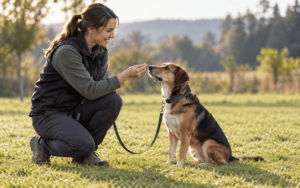
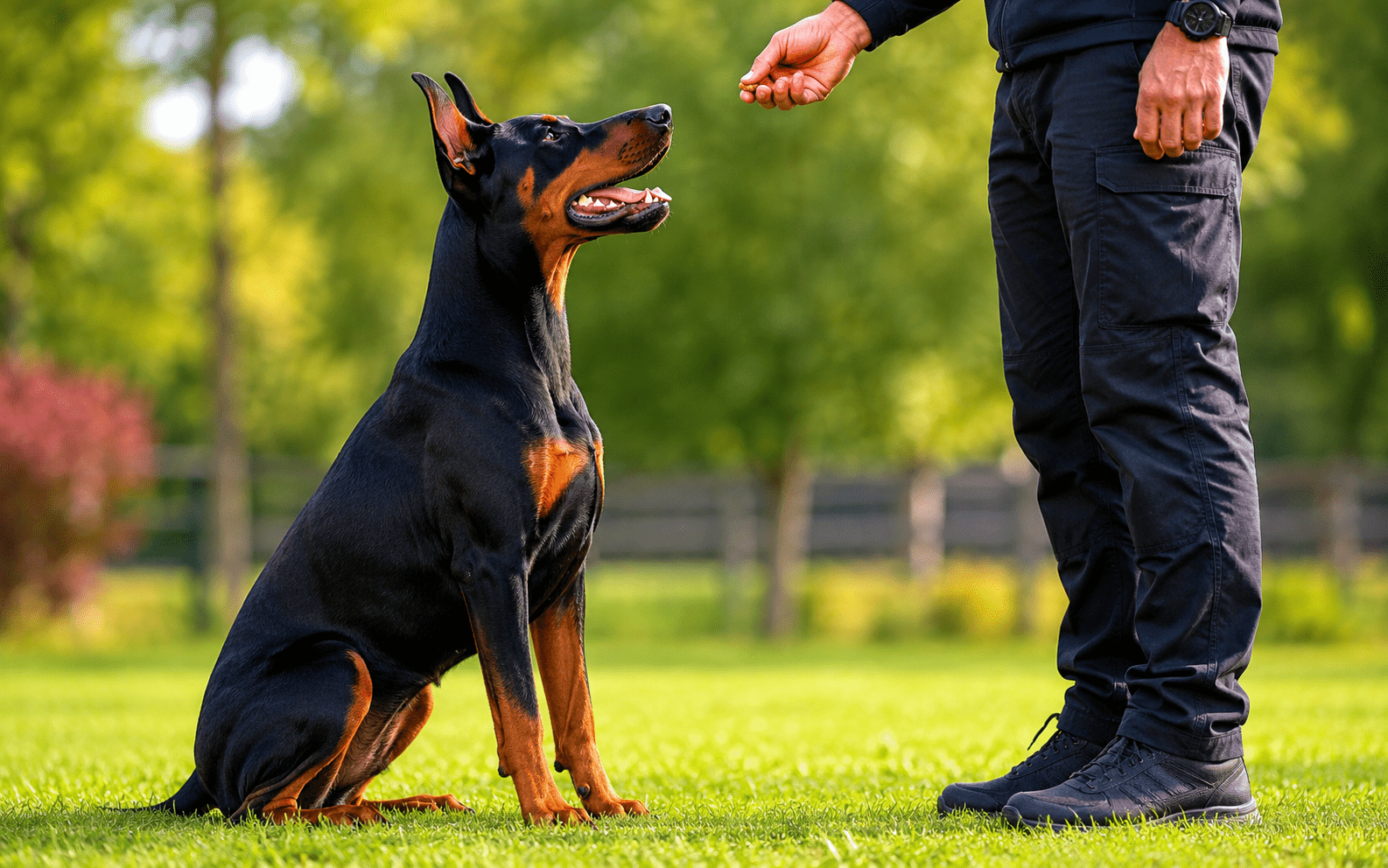
How to train a Doberman starts with positive reinforcement, early socialization, and consistent obedience work beginning as early as 8 weeks old. Dobermans are one of the most intelligent working breeds, ranked fifth in Stanley Coren’s dog intelligence research, and they respond exceptionally well to structured, reward-based training.
Without proper training, their natural drive, alertness, and protective instincts can become difficult to manage at home or in public. Whether you have a young puppy or an adult Doberman with existing habits, this guide walks you through every stage, from the first sit command to advanced impulse control.
Things to Know
- Dobermans rank among the top five most intelligent dog breeds based on working and obedience tests.
- The critical socialization window is between 8 and 16 weeks. Missing it creates behavioral gaps that are harder to close later.
- Positive reinforcement consistently outperforms punishment for this emotionally sensitive breed.
- Adult Dobermans still train well. Patience and structure produce strong results at any age.
- Without daily mental and physical stimulation, Dobermans develop destructive habits quickly.
Ready to fast-track your Doberman’s training? Our private dog training Long Island program specializes in high-drive breeds that need real structure and clear leadership.
What Makes the Doberman Unique to Train
Before diving into techniques, understanding why Dobermans behave the way they do makes a direct difference in your results.
Dobermans were developed in Germany during the 1890s by tax collector Karl Friedrich Louis Dobermann, who wanted a medium-to-large dog capable of protecting him during his rounds. That origin explains their alertness, loyalty, and territorial nature. These traits are not flaws. They are deeply wired instincts that need to be channeled, not suppressed.
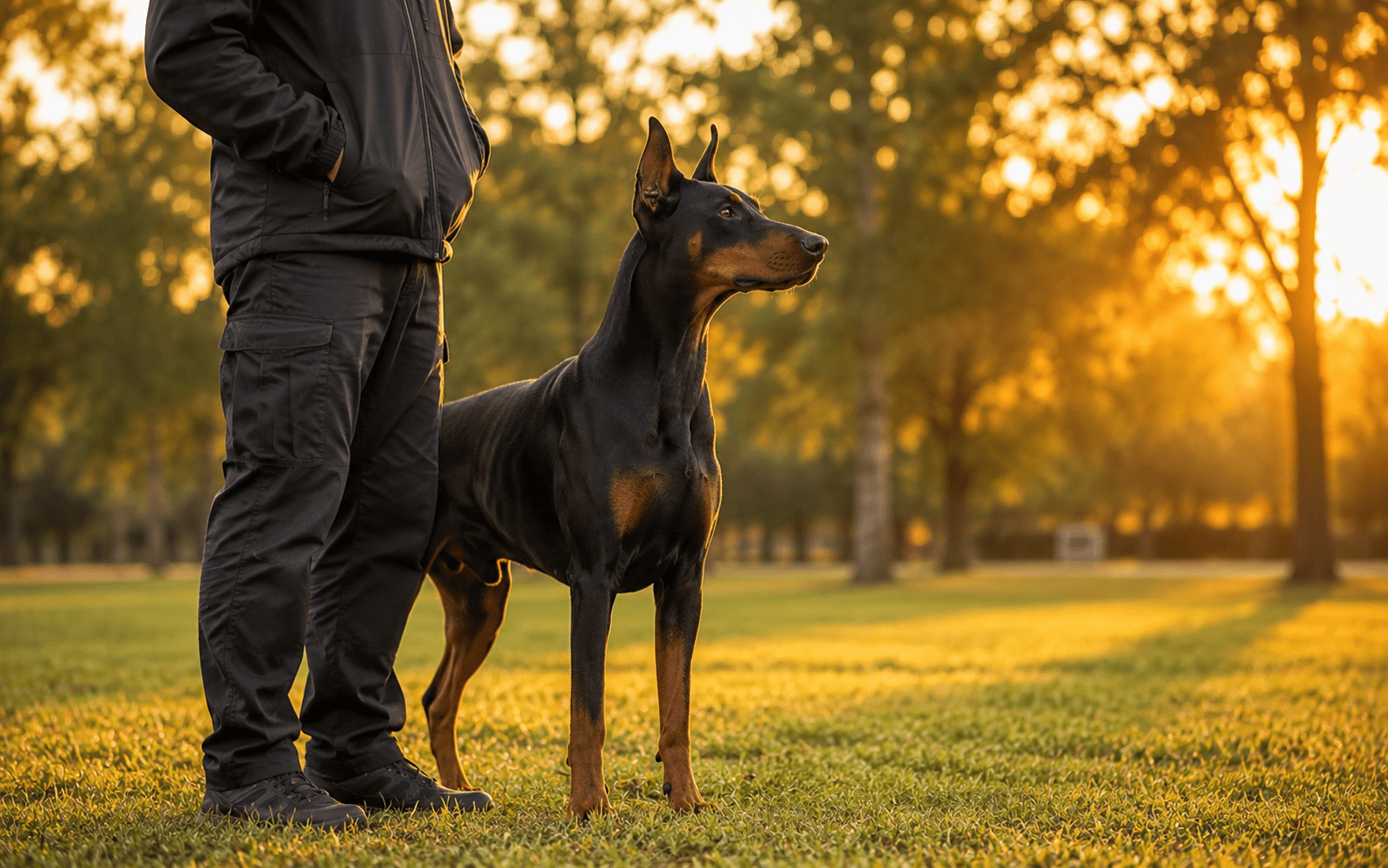
Key temperament traits that shape training:
- High intelligence: Dobermans learn commands within three to five repetitions. This is a major advantage, but it also means they get bored fast and will test your consistency.
- Emotional sensitivity: Despite their intimidating appearance, Dobermans respond poorly to harsh corrections. Punishment-heavy training creates anxiety, shutdown behavior, or redirected aggression.
- Loyalty and velcro behavior: Dobermans stay close to their person. This strong bond means they are eager to please, which works in your favor during every training session.
- Protective drive: Without consistent training and socialization, their guarding instinct can shift into territorial aggression in dogs that becomes much harder to manage over time.
How to Train a Doberman Step by Step
1. Begin Basic Obedience as Early as Possible
The ideal training window opens at 8 weeks old. At this age, Doberman puppies absorb information rapidly and have not yet developed stubborn patterns.
Start with four foundational commands: sit, stay, come, and down. Keep sessions to 5 to 10 minutes and always end on a success. High-value treats like cooked chicken or small pieces of cheese work well for motivation.
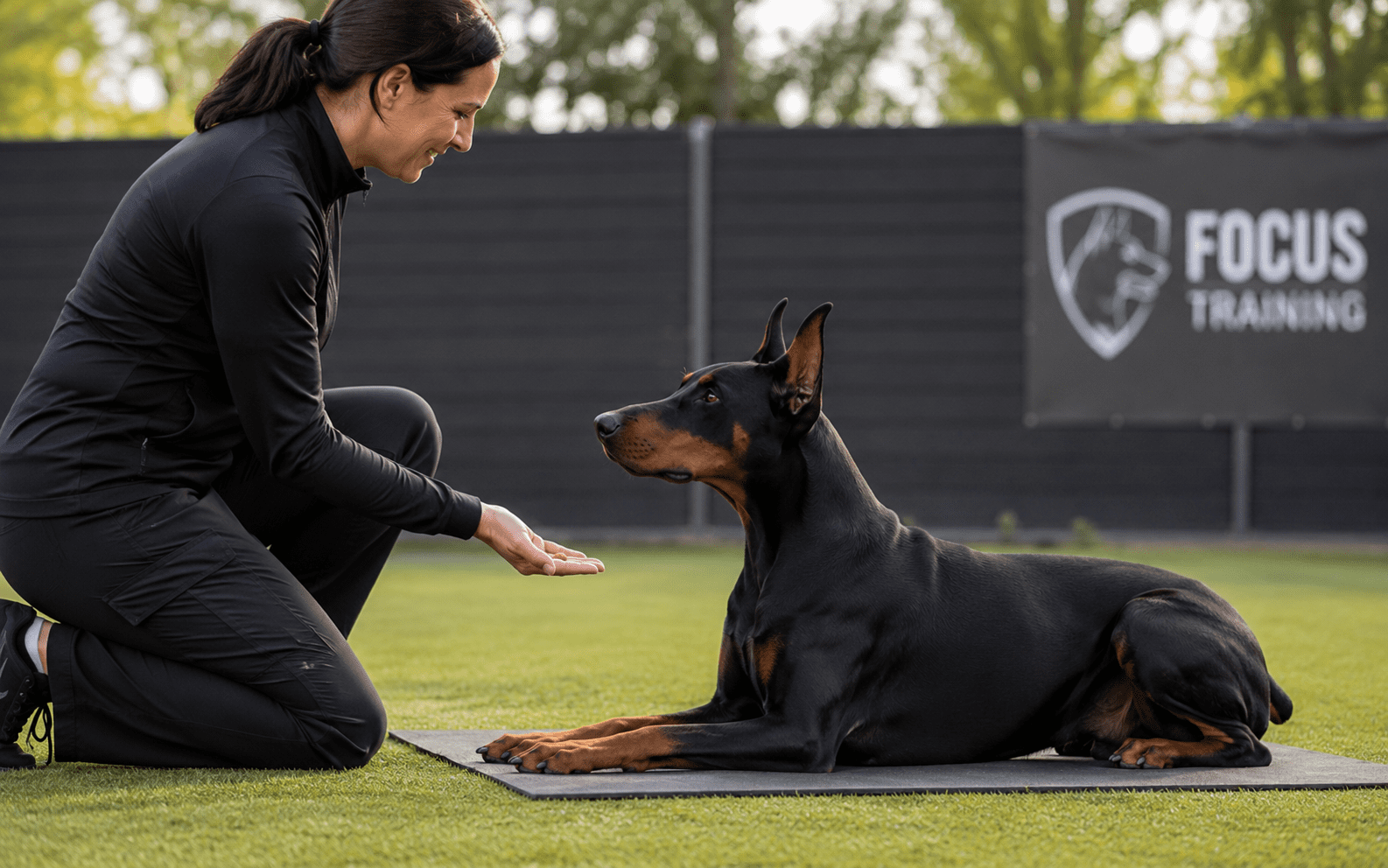
For adult Dobermans, training still produces strong results. It simply requires more repetition and patience to override existing habits.
Practical Tip: During your first month, practice every command in at least three different locations. A Doberman that only obeys at home is not fully trained. Changing the environment teaches generalization, which produces reliable behavior everywhere.
2. Use Positive Reinforcement, Not Punishment
Why positive reinforcement works: Dobermans are emotionally sensitive dogs. A 2021 study published in PLOS ONE found that dogs trained with aversive methods showed significantly higher stress indicators compared to those trained with reward-based approaches, including more yawning, lip licking, and lowered body posture during sessions.
How to apply it: The moment your Doberman performs the desired behavior, mark it with a short word like “yes” and follow immediately with a treat or praise. The reward must come within two seconds for your dog to connect it with the correct action.
Which method is best? Positive reinforcement paired with calm, consistent corrections for boundary-setting produces the most balanced Doberman. You are not spoiling the dog. You are communicating clearly in terms they understand and trust.
3. Socialize Early and on Purpose
Socialization is not optional for a Doberman. A dog of this size and drive that grows up without proper exposure is genuinely risky in public settings.
Between 8 and 16 weeks, intentionally introduce your puppy to:
- Men, women, children, and the elderly
- Other dogs of different sizes and temperaments
- Busy environments like parks, streets, and pet-friendly stores
- Loud and unpredictable sounds like traffic, music, and construction
For adult Dobermans with gaps in socialization, controlled desensitization works. Start at a comfortable distance from the trigger and slowly close the gap as the dog stays calm. Progress is slower than with puppies, but it is absolutely achievable.
4. Master Leash Manners and Impulse Control
A Doberman pulling on the leash is not just annoying. At 60 to 100 pounds of lean muscle, it is dangerous and difficult to manage safely.
Start by rewarding your Doberman for walking beside you without tension on the leash. The moment they pull, stop walking completely. Resume only when the leash relaxes. This simple, consistent approach teaches your dog that pulling goes nowhere.
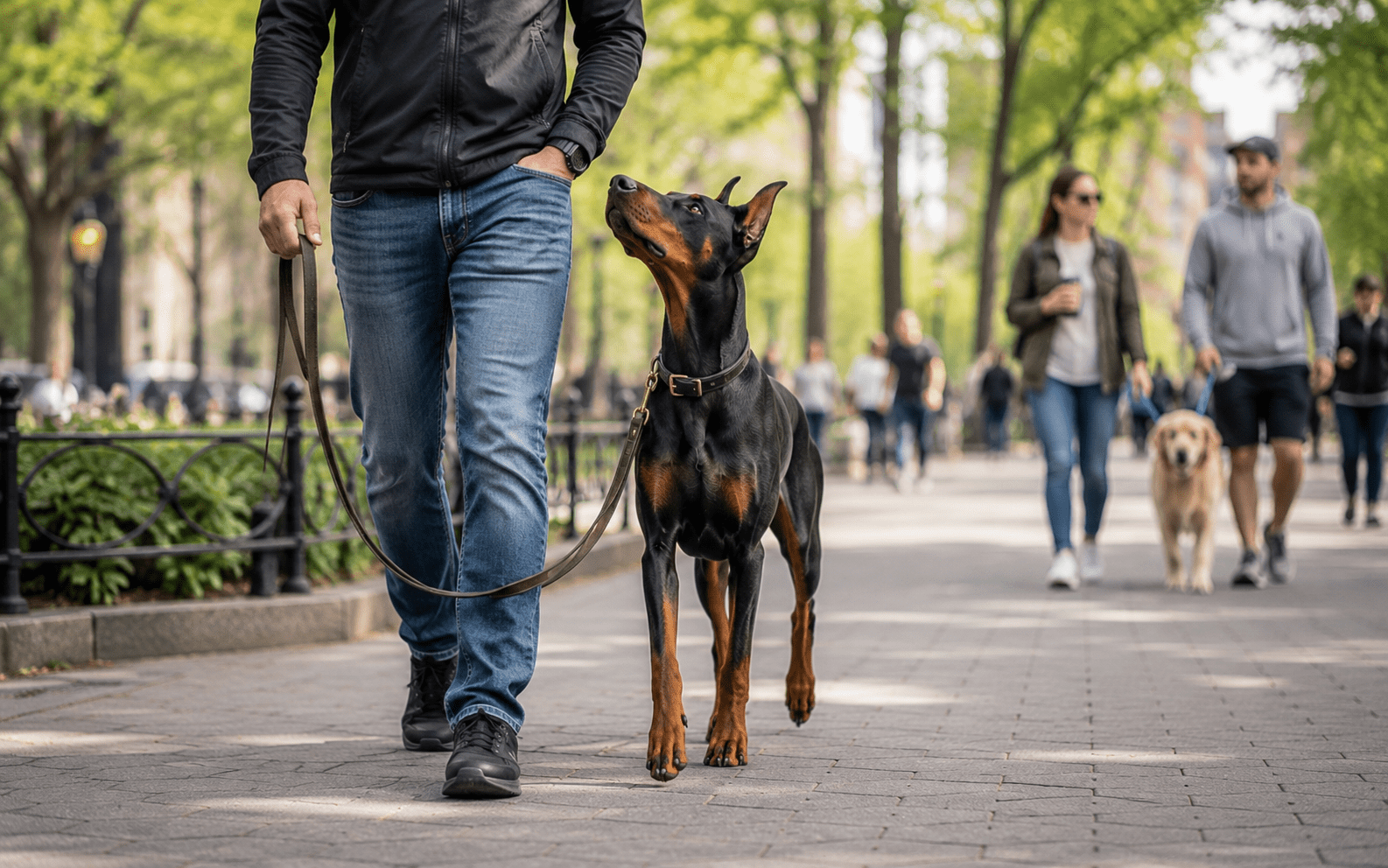
For impulse control, practice “wait” and “leave it” daily. These two commands prevent reactive behavior at doors, during meal time, and when passing other dogs on walks.
Practical Tip: Run a 10-minute training session before every meal. A Doberman that works for food develops faster obedience and naturally accepts your leadership role without resistance.
5. Progress to Advanced Commands and Enrichment
Once basic obedience is reliable, advancing to more complex tasks keeps your Doberman mentally engaged and deepens their respect for your leadership.
Advanced options include:
- Off-leash recall in open areas
- Place and boundary training
- Structured heel with automatic sits at every stop
- Canine sports like Schutzhund, agility, or nose work
Dobermans rank among the most trainable dog breeds in the world, and structured activities tap into that capability. Keeping a working dog engaged prevents the boredom-driven behaviors that most owners mistake for aggression or stubbornness.
Training Methods Compared
| Training Method | How It Works | Best For | Watch Out For |
| Positive Reinforcement | Rewards desired behavior with treats, praise, or toys | All ages, especially puppies and sensitive dogs | Inconsistency weakens results over time |
| Clicker Training | A click marks the exact moment of correct behavior | Precision commands and shaping complex behaviors | Requires practice to use the clicker correctly |
| Leash Correction | Mild physical cue redirects unwanted behavior | Adult dogs with a basic training background | Overuse creates anxiety in emotionally sensitive dogs |
| Board and Train | Dog lives with a trainer for intensive daily sessions | Dogs needing a full behavior overhaul fast | Choose only trainers who use science-based methods |
What Research Says About Training Dobermans
According to The Intelligence of Dogs by Stanley Coren, Doberman Pinschers rank fifth among all dog breeds in working and obedience intelligence. This means they understand new commands in fewer than five repetitions and obey known commands on the first attempt 95% of the time or better.
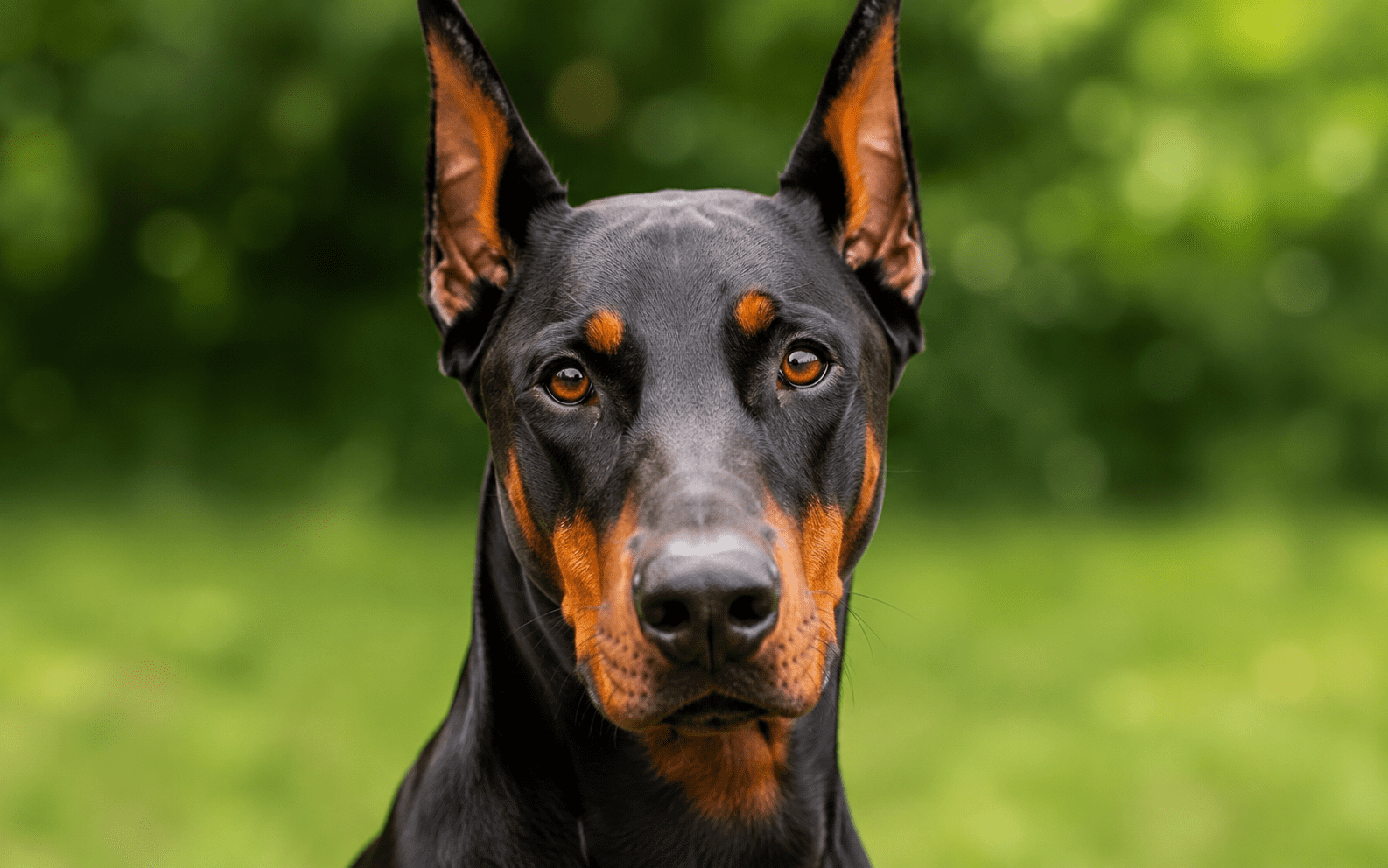
That ranking comes with a practical implication. A dog this intelligent will quickly identify gaps in your routine and exploit them. Dobermans trained with clear, fair, and predictable rules tend to become the most reliable companions of any breed in the right hands.
Doberman Training Timeline by Age
| Age | Training Priority | Realistic Goal by End of Stage |
| 8 to 12 weeks | Name recognition, sit, stay, come, crate introduction | Responds reliably in calm, low-distraction areas |
| 3 to 6 months | Leash manners, socialization, impulse control | Walks without pulling in most familiar settings |
| 6 to 12 months | Advanced commands, off-leash recall, boundary work | Reliable obedience in moderate-distraction environments |
| 1 year and older | Maintenance, canine sports, refined real-world behavior | Stable, consistent performance across all settings |
Common Mistakes That Slow Down Doberman Training
Even experienced dog owners make these errors with this breed:
- Inconsistent rules: If jumping is not allowed, it should never be allowed. Not when guests visit, not when you are in a good mood.
- Skipping socialization: A single bad experience during puppyhood can undo weeks of careful progress.
- Training only at home: A Doberman that obeys only in one location is not fully trained.
- Using punishment as the main tool: Repeated corrections without clear positive guidance create resentment and erode trust.
- Underestimating exercise needs: A Doberman that has not burned physical energy cannot focus. Training after a 30-minute walk always produces better results than training a dog that has been sitting still all day.
Similar to what we explore in how to train a German Shepherd, working breeds require training that addresses both mental stimulation and physical exercise together, not one without the other.
When Professional Training Is the Right Call
Some situations go beyond what most owners can manage alone:
- Your Doberman is showing aggression toward family members or strangers
- Leash reactivity has made daily walks stressful or unsafe
- Previous training efforts have not produced lasting results
- You adopted an adult Doberman with an unknown history
Professional help is not a sign of failure. It is the most efficient and safest path to real, lasting results.
Our board and train Long Island program places your Doberman with experienced trainers for intensive daily work that produces results in weeks instead of months. For owners who want to stay involved, our in home dog training Long Island service brings expert coaching directly to your environment, which is where most behavior problems actually occur.
Your Next Step Toward a Well-Trained Doberman
How to train a Doberman the right way takes consistency, patience, and expert guidance from day one. At K9 Mania Dog Training, we are Long Island’s leading board and train program with proven results for high-drive breeds like the Doberman. Our certified animal behaviorists and professional trainers understand exactly how to channel a Doberman’s intelligence, energy, and protective instincts into reliable, balanced behavior.
Whether your dog needs basic obedience, behavior modification, or advanced work, we have a program built for it. Do not wait until problems grow. Contact K9 Mania Dog Training to help you raise a confident, obedient companion.
You May Also Want to Read
How to Train a Belgian Malinois Dog
How to Train a Jack Russell Dog
FAQs: How to Train Doberman
Are Dobermans easy to train?
Training a Doberman is not particularly hard when you are consistent and start early. Their high intelligence means they pick up commands quickly, often after just a few repetitions. The real challenge is maintaining structure over time. Without clear rules and daily engagement, Dobermans find their own activities, and those are rarely what owners want.
Are Doberman Pinschers easy to train?
Yes, Dobermans are among the easiest large breeds to train. Their eagerness to please and exceptional working intelligence make them natural learners. Keeping sessions focused, rewarding the right behavior immediately, and staying consistent are the three things that make the biggest difference.
What is the best way to discipline a Doberman?
The most effective discipline is redirection combined with removing rewards, not physical punishment. When your Doberman does something unwanted, remove your attention, redirect them to the correct behavior, and reward that behavior immediately. Consistent, calm boundaries enforced without anger produce far better results than harsh corrections.
What should you avoid doing with a Doberman?
Avoid harsh physical punishment, inconsistent rules, and long periods of isolation. Dobermans are deeply social dogs that bond tightly with their people. Isolation without enrichment leads to anxiety and destructive behavior. Never encourage biting or jumping in play, as this breed’s size and strength make those habits genuinely risky once the dog is fully grown.
What are the disadvantages of owning a Doberman?
Dobermans require significant time, exercise, and mental stimulation. They are not a good match for owners who travel frequently or work very long hours without arranging care. Their protective instincts require ongoing socialization and training to stay properly managed. Separation anxiety is also common in the breed and needs to be addressed early through gradual independence training.
Can you leave a Doberman alone for 8 hours?
Leaving a Doberman alone for 8 hours is generally not recommended, especially for puppies or dogs prone to anxiety. Most well-trained adult Dobermans can handle 4 to 6 hours when given proper exercise beforehand and enrichment like puzzle toys or a frozen Kong. For longer absences, a dog walker, daycare, or structured boarding program helps prevent destructive behavior and emotional stress.