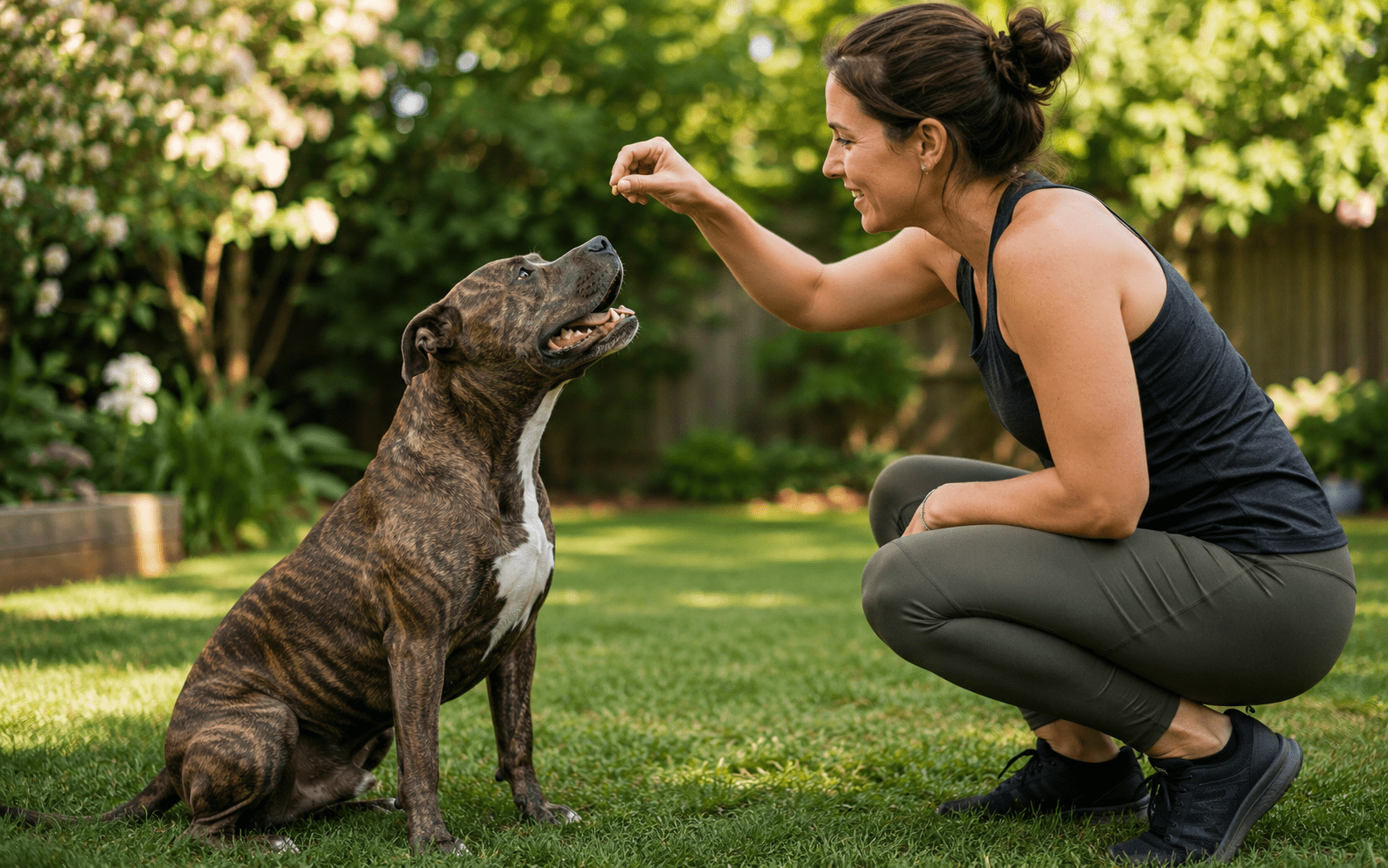
Knowing how to train pitbull dog correctly starts with one truth: this breed is not naturally aggressive, and it responds very well to consistent, reward-based training. With the right approach, patience, and proper socialization, a pitbull can become one of the most loyal and well-behaved dogs you’ll ever own.
Despite what a lot of media coverage suggests, pitbulls score around 87% on American Temperament Test Society evaluations, outperforming many popular breeds. What they need is clear structure, daily exercise, and someone who understands how driven and sensitive they really are.
Why Pitbull Training Matters More Than Most People Realize
Pitbulls are strong, energetic dogs bred historically for bull-baiting and later for dog fighting. That history does not make them dangerous, but it does mean they carry a lot of physical drive that needs to be directed properly.
When that energy has no outlet and no clear rules are in place, frustration builds fast. That frustration shows up as pulling on the leash, jumping on guests, resource guarding, or reactive behavior toward other dogs.
The Real Temperament Behind the Breed
Pitbulls are affectionate, people-oriented dogs. They bond strongly with their families and genuinely crave interaction. Unlike breeds that are naturally aloof or independent, pitbulls want to work with you, which actually makes training far more effective when done right.
They’re also sensitive. Harsh corrections, yelling, or punishment-based methods don’t work well with this breed. Instead of stopping a bad behavior, those approaches often create anxiety and make things worse over time.
What Happens Without Consistent Training
A pitbull without consistent training and enough exercise tends to push limits. You’ll notice:
- Jumping on people during greetings
- Hard pulling on walks
- Destructive chewing when left alone
- Barking and lunging at other dogs
These are not signs of a bad dog. They’re signs of a high-energy breed that hasn’t been taught what’s expected. Starting training early changes that picture completely.
📌 Things to Know Before You Train Your Pitbull
- Keep training sessions short, around 10 to 15 minutes, and practice every single day.
- The socialization window between 3 and 16 weeks shapes temperament more than almost anything else.
- Tire your pitbull out with exercise before each training session so they can actually focus.
- Consistency from every person in the household matters just as much as the method you choose.
Read effective ways to train dogs for a practical breakdown of what works across different breeds and temperaments.
Also see positive reinforcement dog training to understand why reward-based methods get faster results without creating fear or defensive behavior.
How to Train a Pitbull Dog: Core Methods That Work
The foundation of learning how to train pitbull dog comes down to three things: clear commands, consistent rewards, and enough socialization to build a calm and confident dog.
Start With Basic Obedience Commands
Before anything else, your pitbull needs to master sit, stay, come, leave it, and down. These aren’t just tricks. They’re the building blocks for managing every situation you’ll face as an owner.
Start each command in a quiet space with minimal distraction. Once your dog responds reliably at home, practice the same commands outside, near other dogs, and in busier areas. Pitbulls generalize well when you build up gradually.
Use high-value treats at the start. Chicken, cheese, or hot dogs tend to work well for this breed. Keep sessions to 10 to 15 minutes and always end on a successful rep.
Use Positive Reinforcement Every Single Time
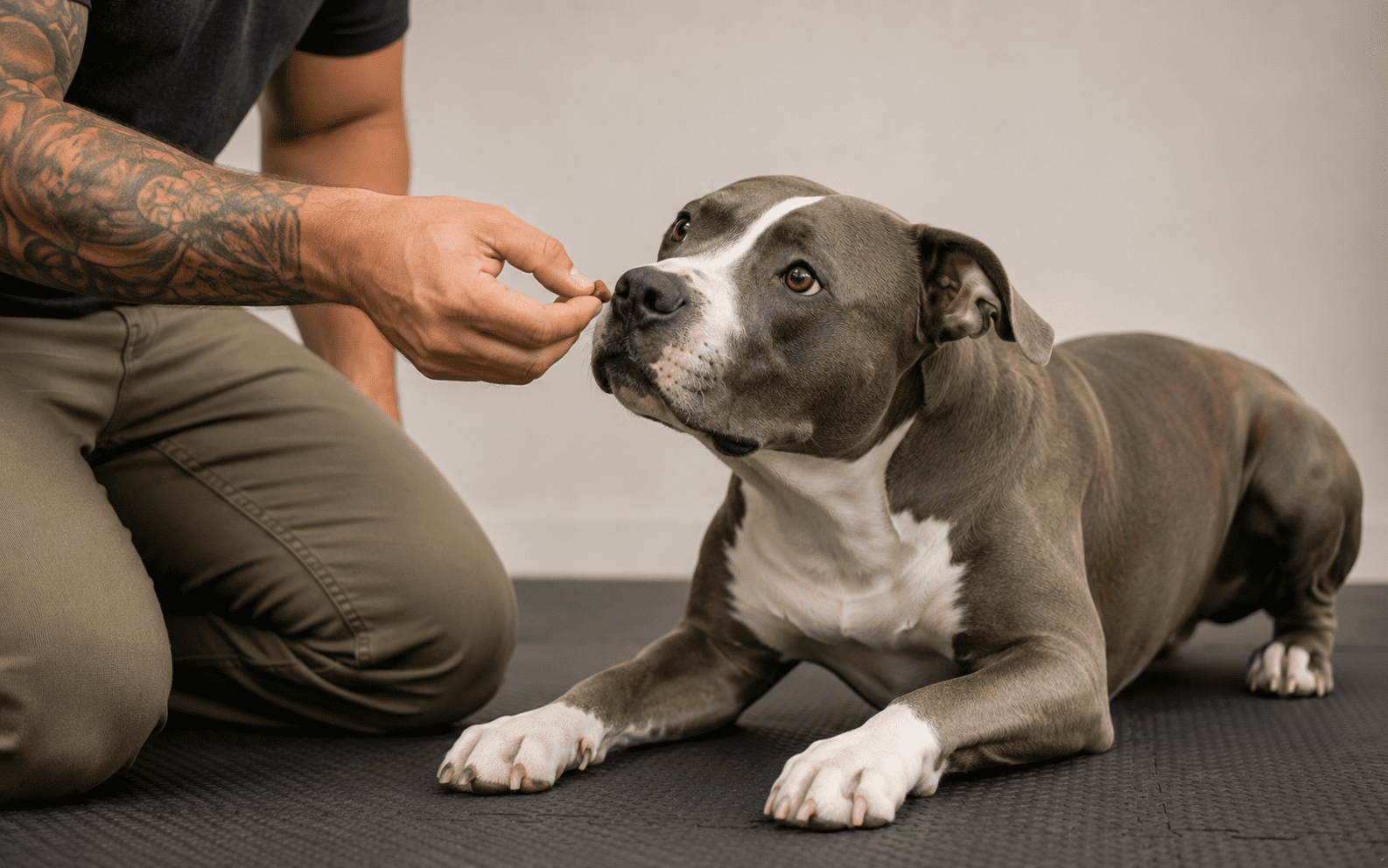
Pitbulls respond best to positive reinforcement. That means rewarding the behaviors you want to see more of and redirecting the ones you want to stop.
When your dog sits on command, reward immediately. Timing matters more than almost anything in the early stages. A treat that arrives three seconds late is much harder for your dog to connect to the right behavior.
Avoid punishment-based corrections like leash jerks, yelling, or physical pressure. These methods trigger defensive responses in high-drive breeds and often increase reactive behavior rather than reducing it.
Socialize Consistently and Often
Socialization is not optional for pitbulls. It’s one of the most important investments you can make in the first year of your dog’s life.
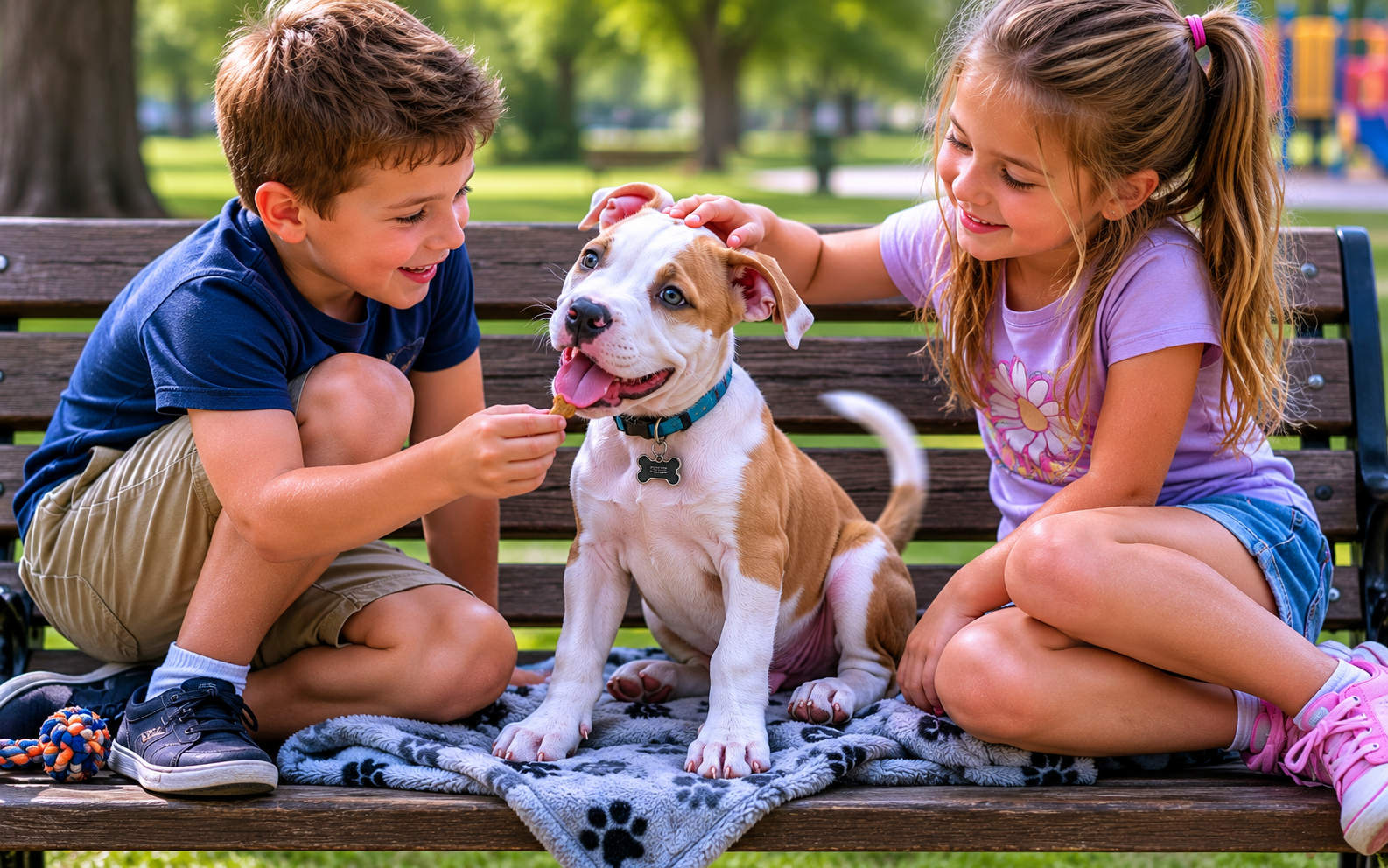
Expose your puppy to different types of people, environments, sounds, and other animals in a controlled and positive way. The goal is not to overwhelm your dog but to build calm, positive associations with the world around them.
For adult pitbulls who missed early socialization, the process takes more patience but still works. Gradual exposure paired with high-value rewards reshapes how a dog responds to triggers over time.
Training Method Breakdown
Different approaches suit different dogs. Here’s how the main training methods compare for pitbulls specifically:
| Method | Best For | Pitbull Suitability |
| Positive Reinforcement | Building commands, trust, and calm behavior | Excellent. Works with this breed’s people-pleasing drive |
| Clicker Training | Precise timing for marking correct behaviors | Very effective for fast learners like pitbulls |
| Balanced Training | Existing aggression or reactivity with professional guidance | Can work, but only with an experienced handler |
| Punishment-Based | Not recommended for any breed | Poor. Increases anxiety and reactivity in pitbulls |
The best starting point for most pitbull owners is positive reinforcement, then adjusting based on what behavioral issues are present.
Which Training Option Is Right for Your Pitbull
Picking the right training format is a critical part of how to train pitbull dog in a way that actually sticks. Even the best methods fail if the environment doesn’t match your dog’s needs and your schedule.
Private Training Sessions
Private training gives your pitbull one-on-one attention with direct focus on specific behaviors, whether that’s leash reactivity, jumping, or building a solid obedience foundation.
This format also trains you as the owner, which matters enormously. A dog can learn 30 commands in a program but lose them all if the owner doesn’t know how to reinforce them at home. Private dog training Long Island is a strong fit for mild to moderate issues where the owner is ready to follow through every day.
Board and Train Programs
Board and train is ideal when a pitbull has more serious behavior challenges, when your schedule makes daily training difficult, or when you want faster progress through intensive work.
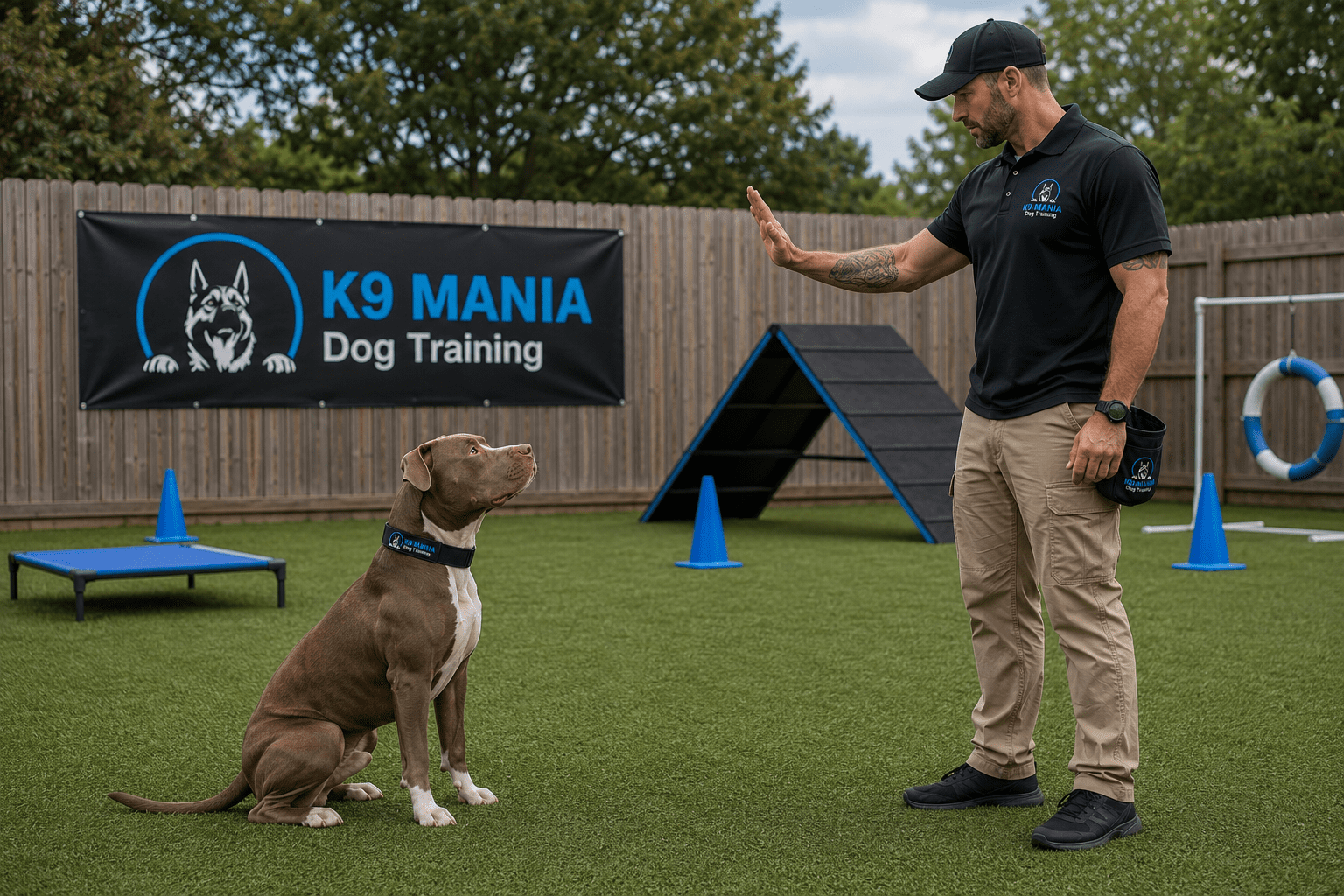
Your dog stays with a professional trainer and receives structured training throughout the day. The best programs include owner education so you know how to maintain results after your dog comes home.
Before choosing this option, it helps to understand what’s involved. Check out board and train program cost so you know what to expect and can plan accordingly.
Board and train Long Island works especially well for pitbulls dealing with leash reactivity, dog-directed aggression, or behaviors that need more correction than weekly sessions can realistically provide.
In-Home Training
In-home training brings the trainer directly to your space. This is useful because many problem behaviors happen specifically at home. Door rushing, territorial barking, jumping on visitors, and furniture boundaries are all much easier to address in the environment where they actually occur.
In home dog training Long Island is a practical choice for families who want hands-on guidance without travel logistics, and it helps get every household member on the same page with rules and reinforcement.
Training Formats Side by Side
| Training Format | Best Situation | Time Commitment | Cost Level | Speed of Results |
| Private Lessons | Mild issues, owner wants active involvement | High (daily practice required) | Moderate | Gradual |
| Board and Train | Serious aggression, reactivity, busy schedules | Low during the program | Higher upfront | Faster initial progress |
| In-Home Training | Home-specific behaviors, multi-person households | Moderate | Moderate | Moderate |
| Group Classes | Basic socialization, mild obedience needs | Moderate | Low | Slower |
Common Pitbull Behavior Challenges and What Actually Helps
Even well-raised pitbulls develop habits that need to be worked through. Here are the most common ones:
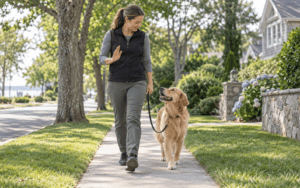
Leash Pulling: Pitbulls are powerful dogs that pull toward whatever excites them. Use a no-pull harness and stop every time the leash goes tight. Reward your dog for walking beside you, and change direction often to keep their attention on you.
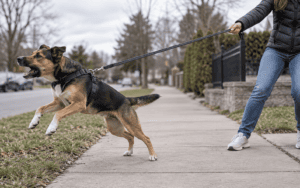
Dog Reactivity: Many pitbulls become reactive toward other dogs, especially without early socialization. Work on the “look at me” command to redirect attention before the reaction builds. Start at a distance where your dog stays calm, then close that gap slowly over time.
Jumping on People: Turn away, cross your arms, and give zero attention until four paws are on the floor. Then reward right away. Consistency from every person in the home is what makes this stick.
Resource Guarding: Teach “leave it” and “drop it” early. Practice trading, offering something better in exchange for what they have. Never punish guarding directly, as this tends to escalate the behavior rather than stop it.
When Professional Help Is the Right Call
Some behavior challenges are safe to work through at home. Others aren’t. If your pitbull has snapped at family members, bitten someone, or shows unpredictable aggression, professional help is not optional.
Warning signs that need expert attention:
- Snapping or biting without clear warning signals beforehand
- Severe resource guarding that escalates quickly
- Aggression toward children or other pets in the home
- Reactivity that keeps getting worse despite consistent effort
An experienced trainer who understands pitbull drives and instincts can assess the situation clearly and create a structured plan. Waiting almost always makes these situations harder to correct, not easier.
Worth Every Effort: How to Train Pitbull Dog for a Lifetime of Trust
Training your pitbull is about far more than sit and stay. It’s about building a relationship based on mutual trust, setting clear expectations your dog can actually understand, and giving them enough physical and mental engagement to feel secure. Pitbulls that are well-trained are not only safer but genuinely happier, because they know what’s expected of them.
At K9 Mania Dog Training, we’re Long Island’s leading board and train facility, home to the best animal behaviorists for dogs on the island. Whether your pitbull is showing early signs of reactivity or more serious behavioral challenges, we’re here to help. Trust us to guide you and your dog toward real, lasting results. Contact K9 Mania Dog Training today.
You May Also Want to Read
How to Crate Train an Adult Dog
How to Train a Belgian Malinois Dog
Frequently Asked Questions About How to Train Pitbull Dog
Are Pitbull dogs hard to train?
No, pitbulls are not especially hard to train. They’re eager to please and respond quickly to reward-based methods. Their high energy and drive can make training more demanding in terms of consistency, but owners who stay patient and structured will find this breed picks up commands faster than many others.
Do pit bulls choose a favorite person?
Yes, pitbulls often bond most strongly with one person in the household. This is usually the person who spends the most time training, feeding, and exercising them. That bond actually works in your favor during training, because the dog is highly motivated to earn approval from that person, making reward-based methods more effective.
How long does it take to train a Pitbull?
Basic obedience typically takes four to eight weeks with daily practice, while more serious behavioral issues can take several months of consistent work. Progress depends heavily on the dog’s age, past experiences, and how consistent every person in the household is with reinforcement and rules throughout the process.
What triggers pit bull attacks?
Most pitbull attacks are triggered by fear, pain, resource guarding, or a lack of early socialization rather than random aggression. Dogs that were not properly socialized during puppyhood, that experienced abuse or neglect, or that are pushed past their stress threshold in a situation are most at risk. Learning to read canine body language early is one of the most effective prevention tools.
Is it better to get a boy or girl pitbull?
Both males and females can be equally trainable and affectionate companions. Males tend to be larger and higher energy, while females are sometimes described as slightly more independent. The individual dog’s temperament, upbringing, and training history matter far more than sex when predicting how well-behaved or manageable a pitbull will be.
How do you discipline a pitbull?
Discipline a pitbull by redirecting unwanted behavior and immediately rewarding what you want to see instead. Avoid yelling, physical corrections, or harsh punishment, as these methods create anxiety and tend to make problem behaviors worse over time. When your dog does something wrong, interrupt it calmly, show them the correct behavior, then reward that response right away.