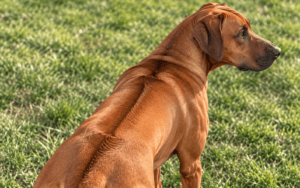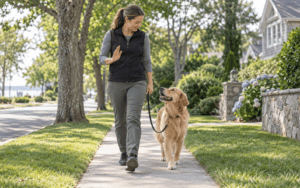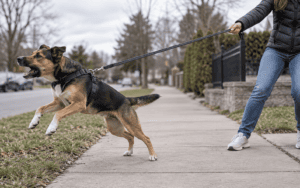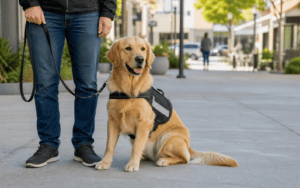
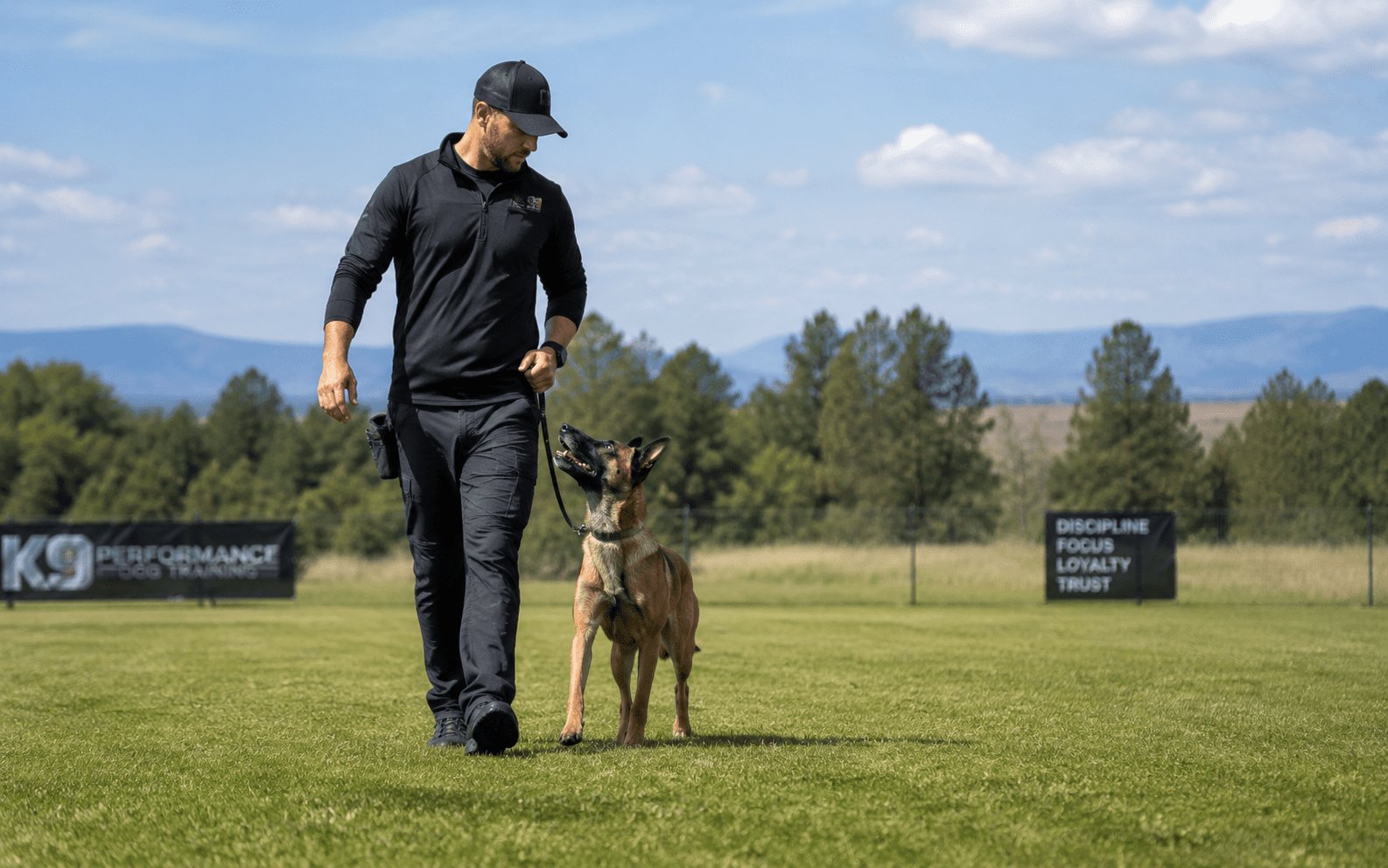
Training a Belgian Malinois requires consistency, structure, and a clear understanding of the breed’s intense drive and intelligence. When you approach this process correctly, you’ll develop one of the most capable and loyal dogs you’ve ever worked with.
The Belgian Malinois is not a breed for passive owners. Originally bred for herding and police work in Belgium, these dogs carry a work ethic that rivals any working breed on the planet. They thrive when they have a job to do, boundaries to follow, and a handler they genuinely respect. Before you bring one home or start a training program, it’s worth understanding exactly what you’re committing to. This article breaks down the methods, milestones, and mindset shifts that will determine whether your Malinois becomes a well-rounded companion or a constant management challenge.
Why the Belgian Malinois Is One of the Most Demanding Breeds to Train
Before jumping into commands and schedules, you need to respect what makes this breed unique. The Malinois is often compared to a German Shepherd, and while there are similarities in structure and purpose, Malinois owners consistently describe their dogs as more intense, more reactive, and more energetically demanding.
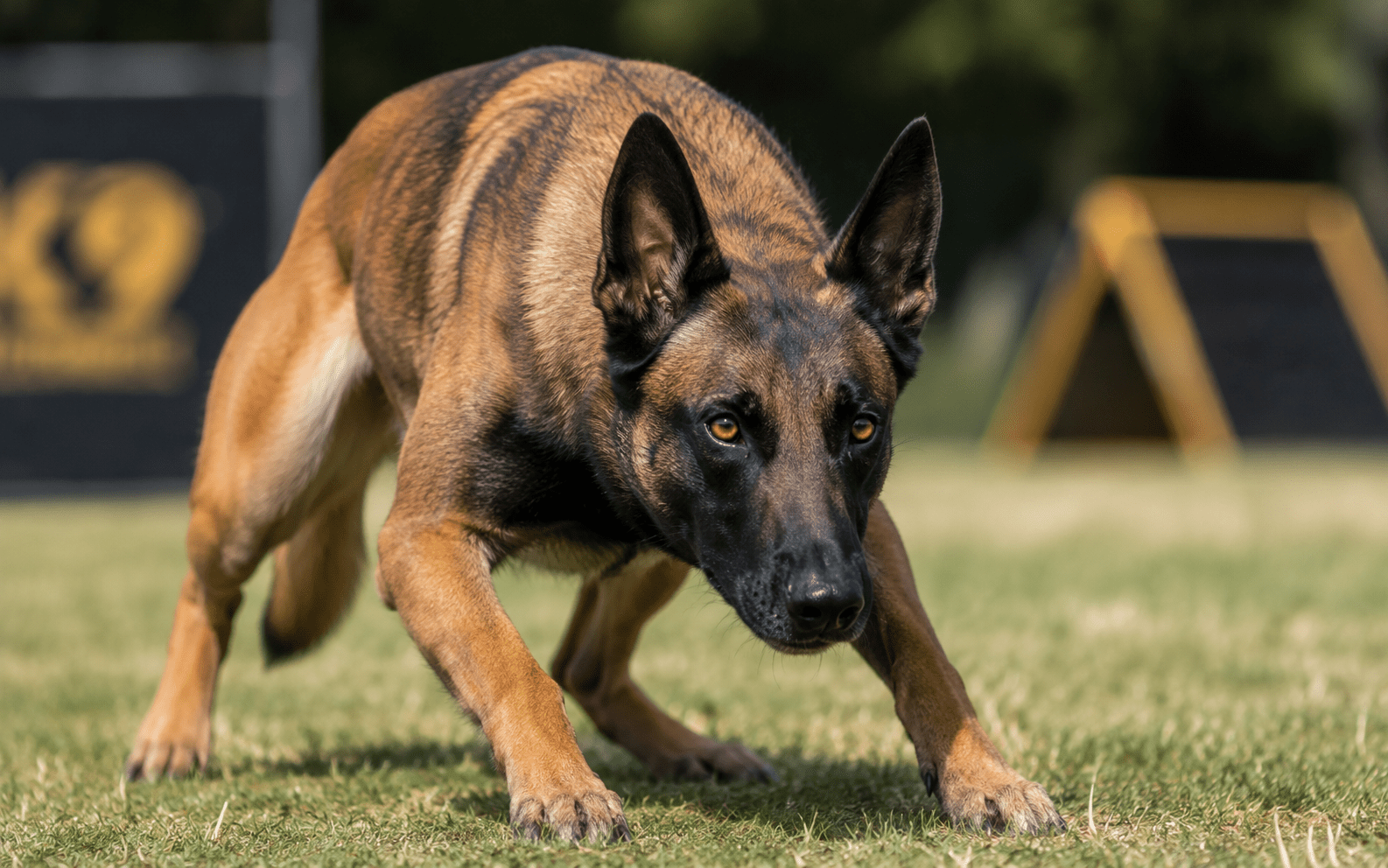
If you want a useful comparison, reading about how to train a german shepherd gives you a solid baseline, but expect to add several layers of complexity when working with a Malinois.
Key traits that shape how you must approach training:
- High prey drive: Malinois are hardwired to chase, bite, and hold. This is excellent for protection and sport work, but it becomes a serious liability without proper management. Understanding what is prey drive in dogs will help you channel this instinct productively rather than suppressing it.
- Exceptional intelligence: These dogs learn fast. The problem is they learn your bad habits just as quickly as your good ones.
- High energy output: Without structured physical and mental outlets, a bored Malinois will find its own entertainment. That usually means destruction, excessive barking, or redirected aggression.
- Sensitivity to leadership: Malinois read handlers closely. Inconsistency, hesitation, or unclear communication creates anxiety and unpredictable behavior.
You can learn more about how exercise feeds into mental stability by reviewing the importance of regular exercise for your dogs physical and mental health. For a Malinois, this isn’t optional reading. It’s foundational.
The Core Framework: How to Train Belgian Malinois Dog from Day One
Knowing how to train Belgian Malinois dog properly starts with establishing yourself as a clear, calm, and consistent authority figure. This breed does not respond well to harsh punishment or erratic leadership. They respond to clarity.
Start with Structure Before Commands
Many owners make the mistake of jumping straight to obedience commands without first establishing daily structure. Structure means:
- Consistent feeding times
- Defined sleeping areas
- Clear rules about furniture, thresholds, and greetings
- Scheduled exercise and training blocks
When your Malinois knows what to expect from the environment and from you, their anxiety decreases and their capacity to learn increases. Think of it as laying the foundation before building the walls.
Obedience Milestones by Age
| Age Range | Focus Areas | Expected Milestones |
| 8-12 weeks | Socialization, name recognition, crate training | Responds to name, tolerates crate, basic leash exposure |
| 3-6 months | Sit, down, stay, recall, leash manners | Reliable recall in low-distraction environments |
| 6-12 months | Duration, distance, distraction proofing | Stays for 60+ seconds, heels on leash in public |
| 1-2 years | Advanced obedience, drive channeling | Off-leash reliability, sport or protection foundation work |
| 2+ years | Specialization | Protection titles, competition obedience, service work |
Positive Reinforcement with Consequence
The Malinois responds well to marker-based training, whether you use a clicker or a verbal marker like “yes.” The sequence is simple: cue, behavior, mark, reward. Use high-value rewards like real meat, a tug toy, or play to reinforce desired behavior.
However, you also need to communicate when the dog makes a wrong choice. That doesn’t mean punishment in the traditional sense. It means removing the reward and resetting. Over time, you can introduce mild leash pressure corrections once the dog understands the command, but only after the behavior is established through positive repetition.
Socialization: The Training Phase Most Owners Rush or Skip
Socialization is not the same as exposure. Many owners think taking their Malinois to a busy park or a pet store counts as socialization. It doesn’t. True socialization means creating positive associations with:
- Unfamiliar people of different ages, sizes, and appearances
- Other dogs, cats, and smaller animals
- Urban environments (traffic, crowds, elevators, stairs)
- Handling (ears, paws, mouth, body restraint)
- Sudden sounds and unexpected stimuli
The critical socialization window runs from approximately 3 to 14 weeks. After that, new experiences can still be processed, but the dog’s baseline reactions become more fixed. For a Malinois, a poor socialization history combined with high drive and natural suspicion of strangers is a dangerous combination.
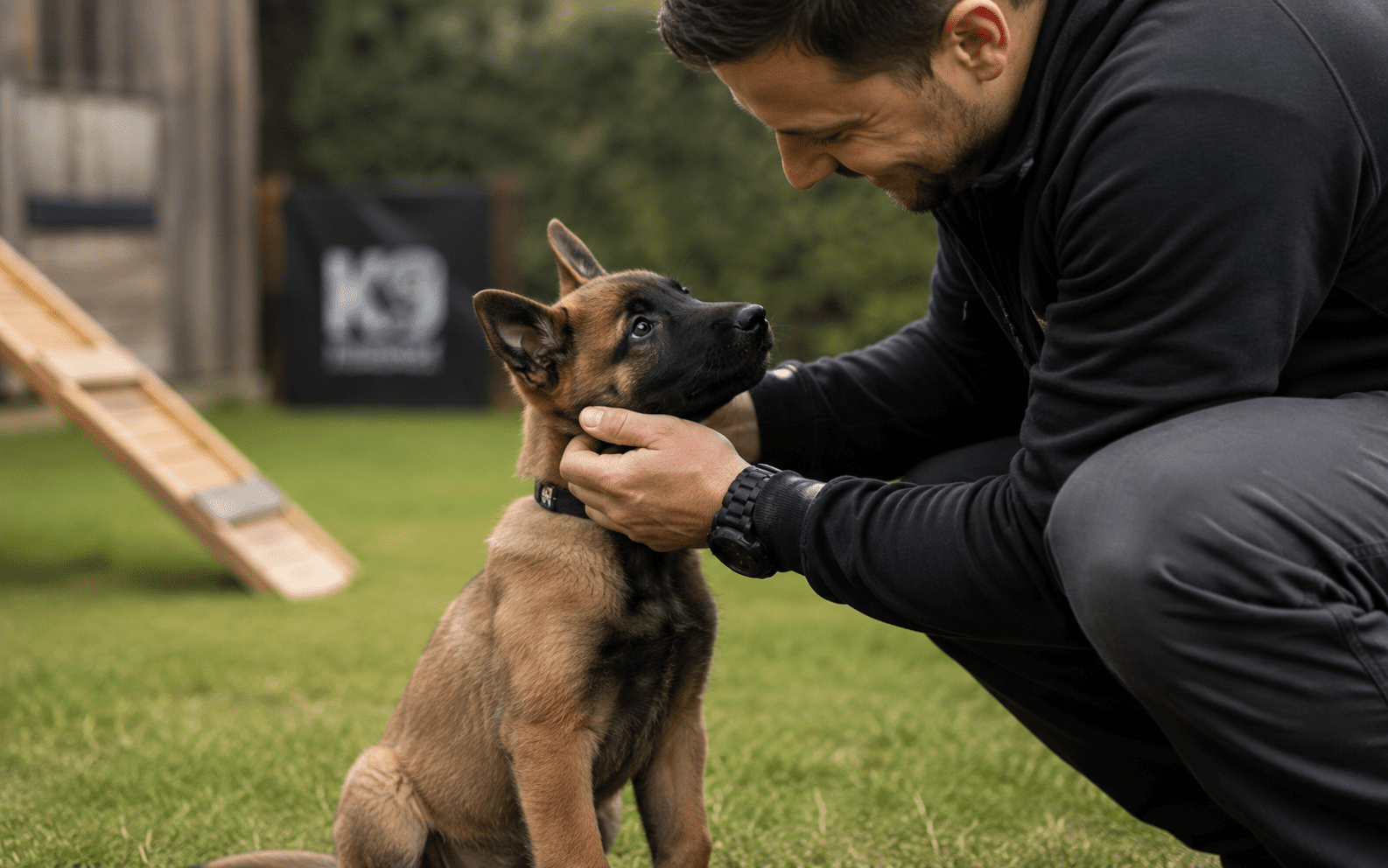
If you adopt an older Malinois with socialization gaps, go slow. Force nothing. Use counter-conditioning to build new emotional responses over time.
Drive Channeling: Turning the Malinois’s Intensity Into an Asset
The Malinois’s intensity is not a flaw. It’s the feature. Police departments, military units, and protection sport organizations specifically seek out dogs with high drive because that energy, when properly directed, produces exceptional performance. If you’re considering this breed for protection work, exploring what a trained belgian malinois protection dog looks like at a professional level will help you set realistic goals.
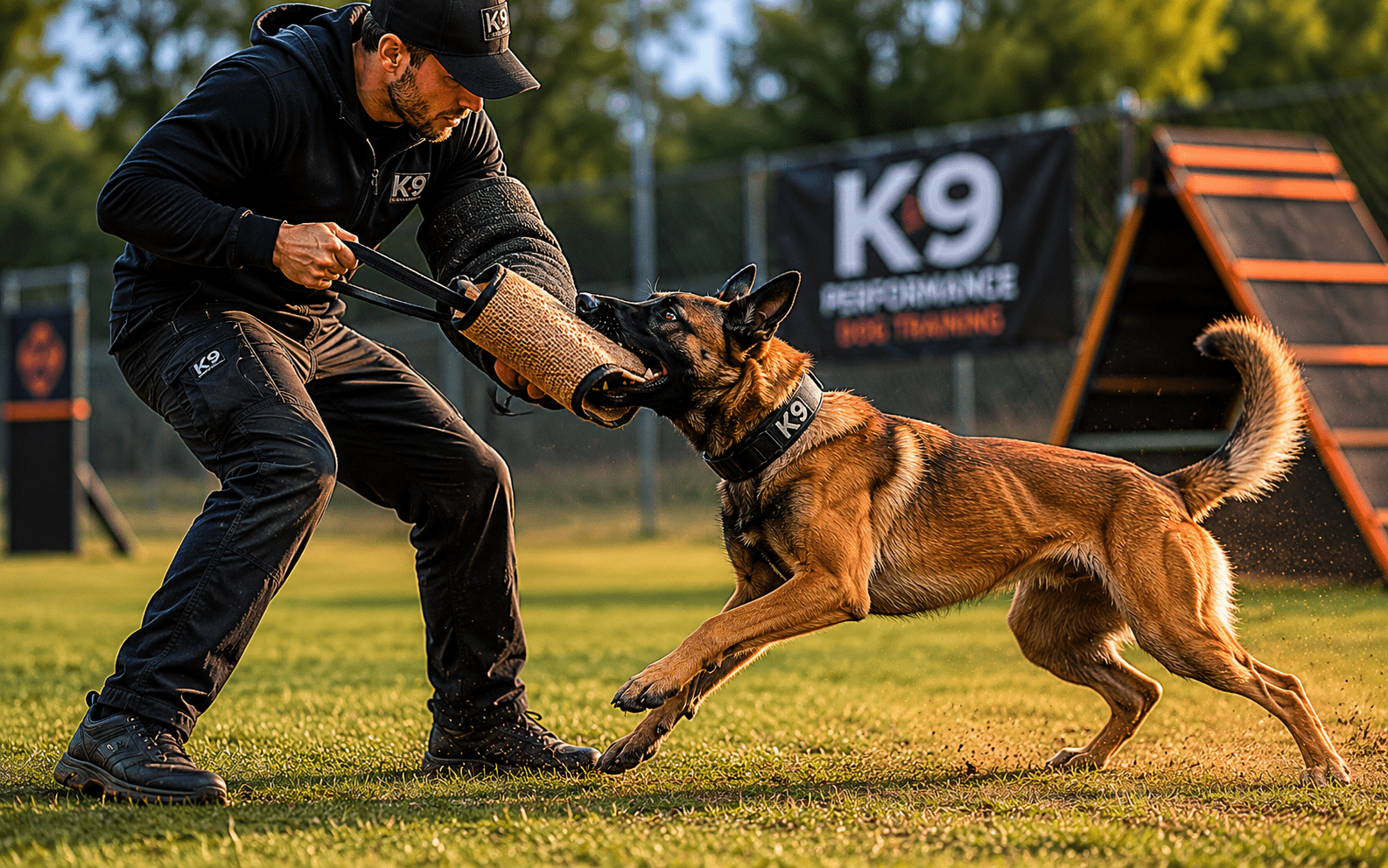
Drive channeling means giving the dog sanctioned outlets for their natural instincts:
- Tug games teach bite inhibition, on/off switches, and reinforce the handler’s value as a play partner
- Tracking and nosework engage the dog’s scent drive and provide mental exhaustion
- Agility and obstacle work build focus, body awareness, and cooperation
- Bite work or protection sport (for dogs with appropriate temperament and handlers with proper guidance) channels predatory behavior constructively
Without outlets, the drive doesn’t disappear. It redirects to whatever the dog can find, which is rarely something you’ll appreciate.
Common Training Mistakes with Belgian Malinois Dogs
Even experienced dog owners make predictable errors with this breed. Here are the ones that cause the most setbacks:
Inconsistency across family members: If one person enforces rules and another doesn’t, the dog learns to ignore the soft handler and tests everyone else.
Training only in one environment: A Malinois that sits perfectly in your living room and ignores you in a parking lot has not learned the command. They’ve learned the context. Train everywhere.
Skipping foundational work to get to exciting skills: Owners want to do protection work, agility, or off-leash trails before the dog has solid basic obedience. The foundation comes first, always.
Underestimating their energy needs: Two walks a day is not enough. Malinois need vigorous physical activity plus cognitive engagement daily.
Waiting too long to get professional help: Pride costs you months of progress. If you’re struggling, bring in an expert before bad patterns become permanent.
Professional Training Options Worth Considering
Some Malinois owners benefit enormously from structured professional support. This is especially true if you’re a first-time working dog owner, dealing with behavioral issues, or simply want to build skills faster with expert guidance.
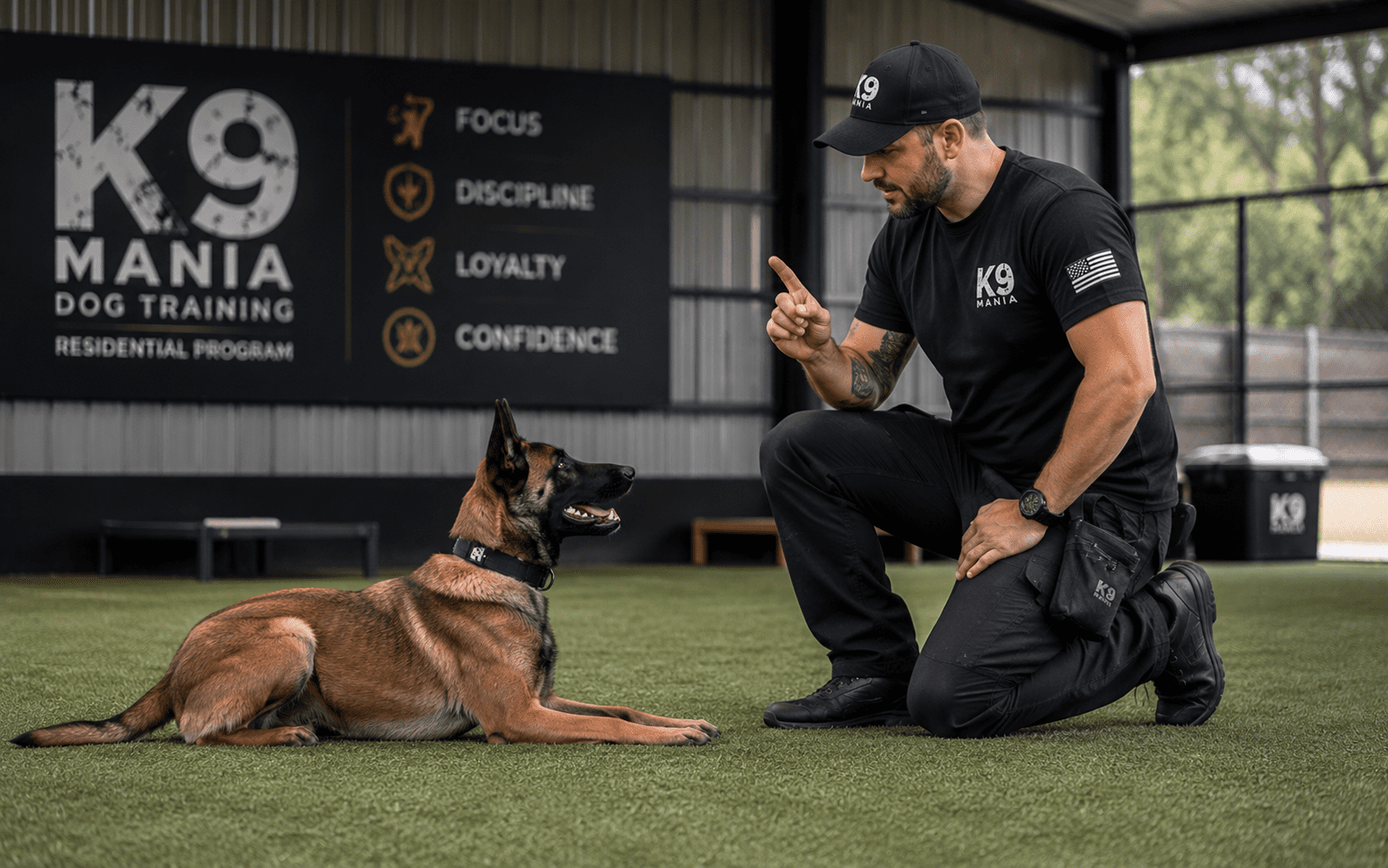
Here are the main formats to consider:
Board and Train Programs: Your dog lives with a professional trainer for several weeks. This is highly effective for foundational obedience and behavioral rehabilitation. If you’re in New York, board and train long island is a resource worth exploring for structured residential programs.
In-Home Training: A trainer comes to your environment, which is ideal for addressing context-specific issues like door manners, household rules, and multi-dog dynamics. In home dog training long island offers this format if you’re located in the area.
Private Lessons: One-on-one sessions where you train your dog with direct coaching. This builds your skills as a handler alongside the dog’s skills. Private dog training long island is a practical option for focused, customized instruction.
Each format has trade-offs. Board and train accelerates progress but requires a strong transition plan so skills transfer to you as the handler. In-home training is context-specific but depends on your consistency between sessions. Private lessons are highly effective when the owner commits to homework.
The Bottom Line on How to Train Belgian Malinois Dog
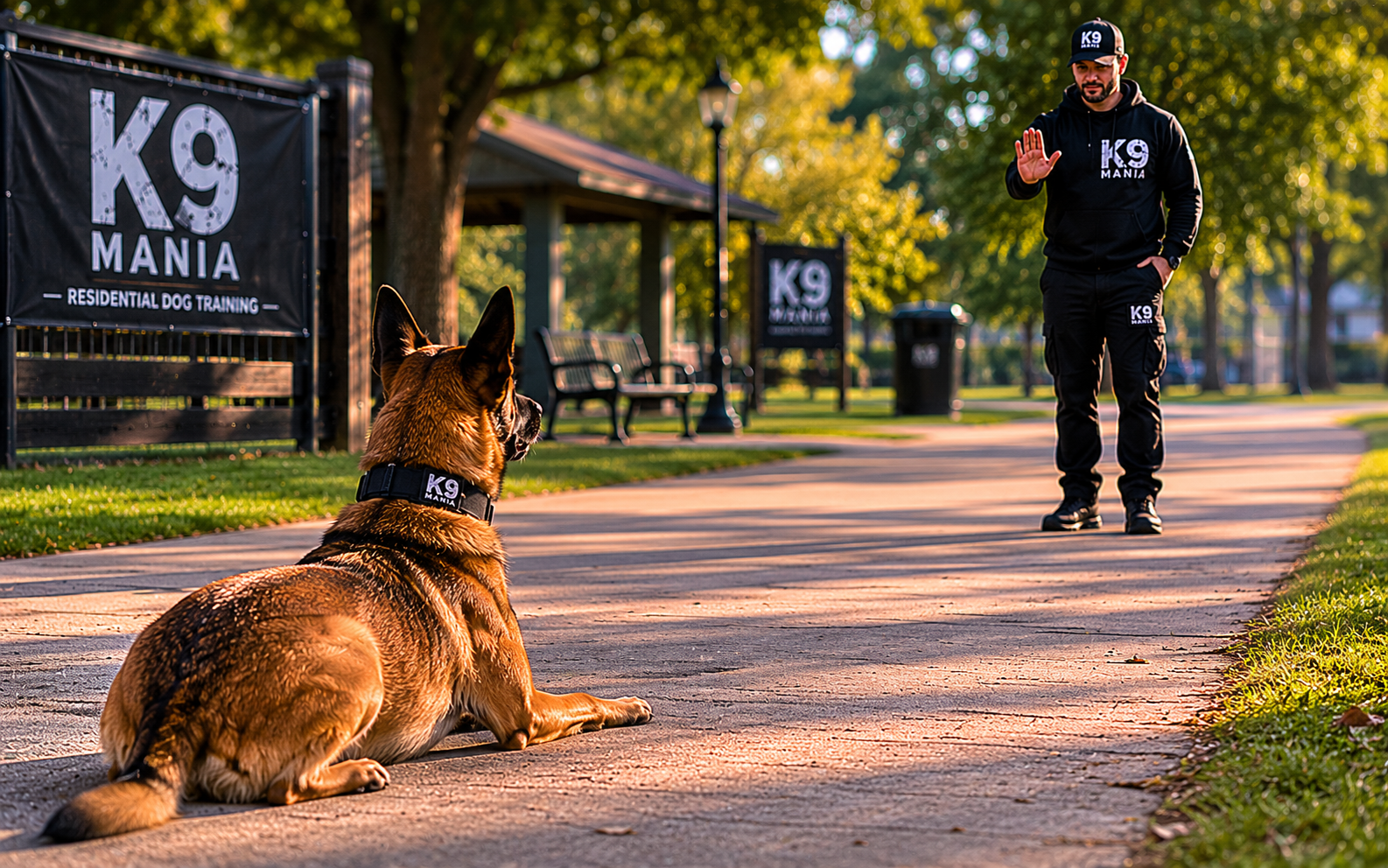
Knowing how to train Belgian Malinois dog is really about knowing yourself as a handler as much as it is about knowing the breed. These dogs offer extraordinary capability, loyalty, and responsiveness when the relationship is built on clarity, consistency, and genuine engagement. They expose every gap in your leadership, and they reward every investment you make in their development.
Start with structure. Prioritize socialization. Channel drive before it becomes destruction. And don’t hesitate to bring in professional support when you hit a wall. The Malinois will meet you exactly where you are as a handler. Your job is to rise to their level.
If you’re ready to rise, K9 Mania Dog Training is here to help. As Long Island’s leading board and train program, our expert animal behaviorists have worked with Malinois and high-drive breeds of every temperament and background. Whether you’re dealing with reactivity, aggression, obedience gaps, or simply don’t know where to start — we can help. Visit K9 Mania Dog Training and let’s build the dog you always knew was possible.
You May Also Want to Read
How to Crate Train an Adult Dog
Frequently Asked Questions
At what age should you start training a Belgian Malinois?
Training should begin the moment the puppy comes home, typically at 8 weeks old.
Early training doesn’t mean teaching advanced commands. It means establishing routines, introducing the crate, beginning leash exposure, and starting socialization immediately. The earlier you establish structure, the easier every subsequent phase becomes.
Are Belgian Malinois suitable for first-time dog owners?
Most experienced trainers do not recommend Malinois for first-time owners without professional support.
The breed’s drive, energy, and sensitivity to handler consistency make them challenging even for experienced dog owners. If you’re committed to the breed as a first-timer, investing in professional guidance from day one is not optional, it’s necessary.
How long does it take to fully train a Belgian Malinois?
Basic obedience can be established in 3 to 6 months, but true reliability across all environments and distractions takes 1 to 2 years.
Advanced work such as protection training, competition obedience, or specialized service functions can add another year or more on top of foundational training. This is a long-term commitment.
Can Belgian Malinois be trained to get along with children and other pets?
Yes, but it requires deliberate socialization from a young age and ongoing supervision.
The breed’s prey drive can be triggered by fast-moving children or small animals. Early exposure with controlled, positive experiences significantly reduces risk, but a Malinois should never be left unsupervised with young children or smaller pets until trust has been genuinely established.
What is the best way to handle a Malinois that shows aggression?
Aggression in a Malinois should be evaluated by a professional trainer immediately, as mishandling can escalate the behavior significantly.
Self-guided approaches to aggression in high-drive dogs frequently make the situation worse. Identify whether the aggression is fear-based, territorial, prey-driven, or redirected, and build a behavior modification plan with qualified guidance specific to that root cause.