
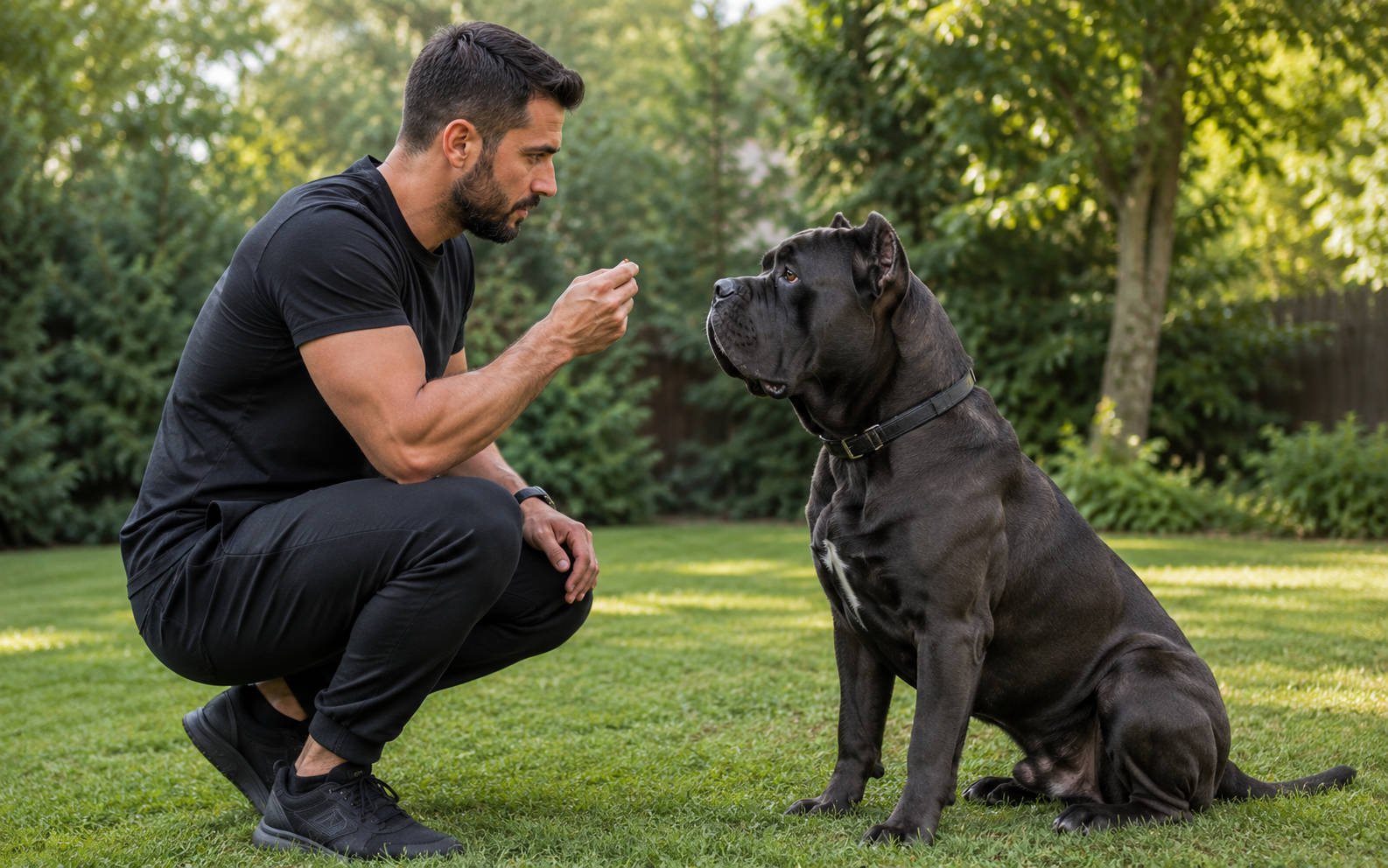
How to train a Cane Corso starts with firm, consistent leadership and early socialization during puppyhood. This breed responds best to positive reinforcement, clear boundaries, and a handler who understands how to work with its natural protective instincts.
Cane Corsos are powerful, intelligent, and fiercely loyal dogs. Without the right structure, their dominant nature can become difficult to manage. Whether you are raising a puppy or working through challenges with an adult dog, the right training methods make the difference between a confident companion and a serious liability.
In this guide, we break down the step-by-step training process, the most common mistakes to avoid, and which approach delivers the best results for this breed.
Quick Insights:
- Cane Corsos need socialization between 8 and 16 weeks of age
- Positive reinforcement builds trust and produces lasting results
- Consistency in household rules is non-negotiable for this breed
- Dominant and territorial behaviors must be addressed early
- Professional training is strongly recommended for first-time large breed owners
Need hands-on support training your Cane Corso? Our in-home dog training Long Island program brings certified expert guidance directly to your home environment.
What Makes the Cane Corso Different to Train
Understanding the breed is the first step in any successful training plan. The Cane Corso originated in Italy as a working guard dog and large game hunting companion. Centuries of selective breeding produced a dog that is assertive, territorial, and deeply bonded to its family.
This is not a breed that responds to passive handling. If a Cane Corso senses a lack of leadership, it will often attempt to fill that role itself. This can show up as stubbornness during commands, resource guarding, blocking behavior in doorways, or territorial aggression toward unfamiliar people.
At the same time, Cane Corsos are remarkably perceptive and genuinely eager to work when the relationship is built on trust and clear communication. The challenge is not their intelligence; it is channeling it correctly from the very beginning.
For a broader look at how protective instincts affect training, read our guide on territorial aggression in dogs to understand the behavioral patterns before they become serious problems.
How to Train a Cane Corso: Step-by-Step
1. Begin Obedience Training From Day One
The earlier you start, the better. Puppies as young as 8 weeks can begin learning basic commands like sit, stay, down, come, and leave it. Early obedience training sets clear expectations and gives your Cane Corso a framework for how to behave in every situation.
Keep sessions short, around 5 to 10 minutes, and always end before the dog loses focus. Cane Corsos are intelligent enough to get bored with repetitive drills, so vary the exercises to keep engagement high. Reward each correct response immediately with a high-value treat or enthusiastic verbal praise.
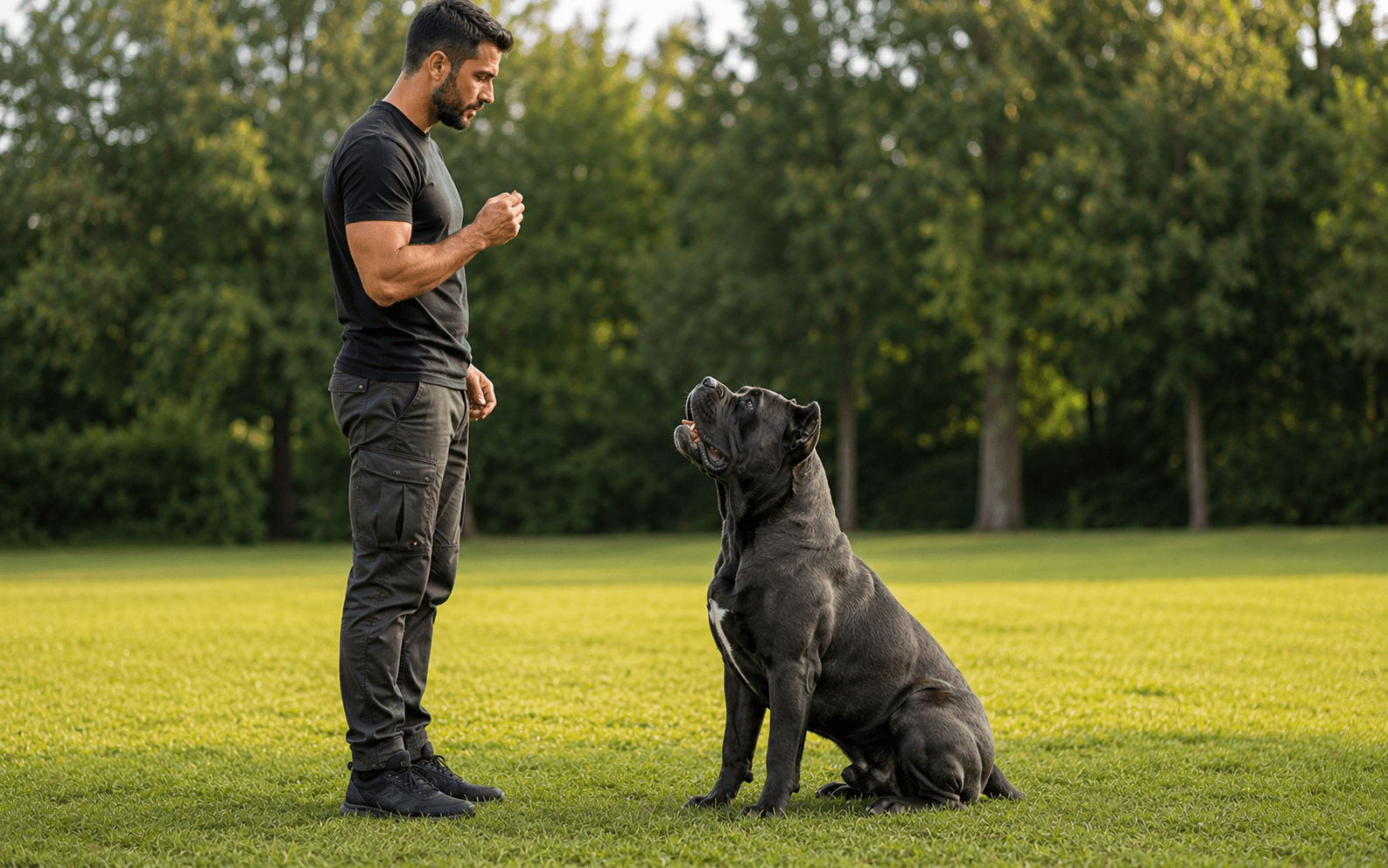
As your dog progresses, raise the difficulty gradually. Practice commands in new locations, around distractions, and with unfamiliar people nearby. A Cane Corso that only obeys indoors is not fully trained.
Training Tip: Use a calm, steady voice. This breed responds well to confident energy. Nervousness or inconsistency in your tone creates uncertainty and reduces your dog’s responsiveness.
2. Socialize Early and Without Hesitation
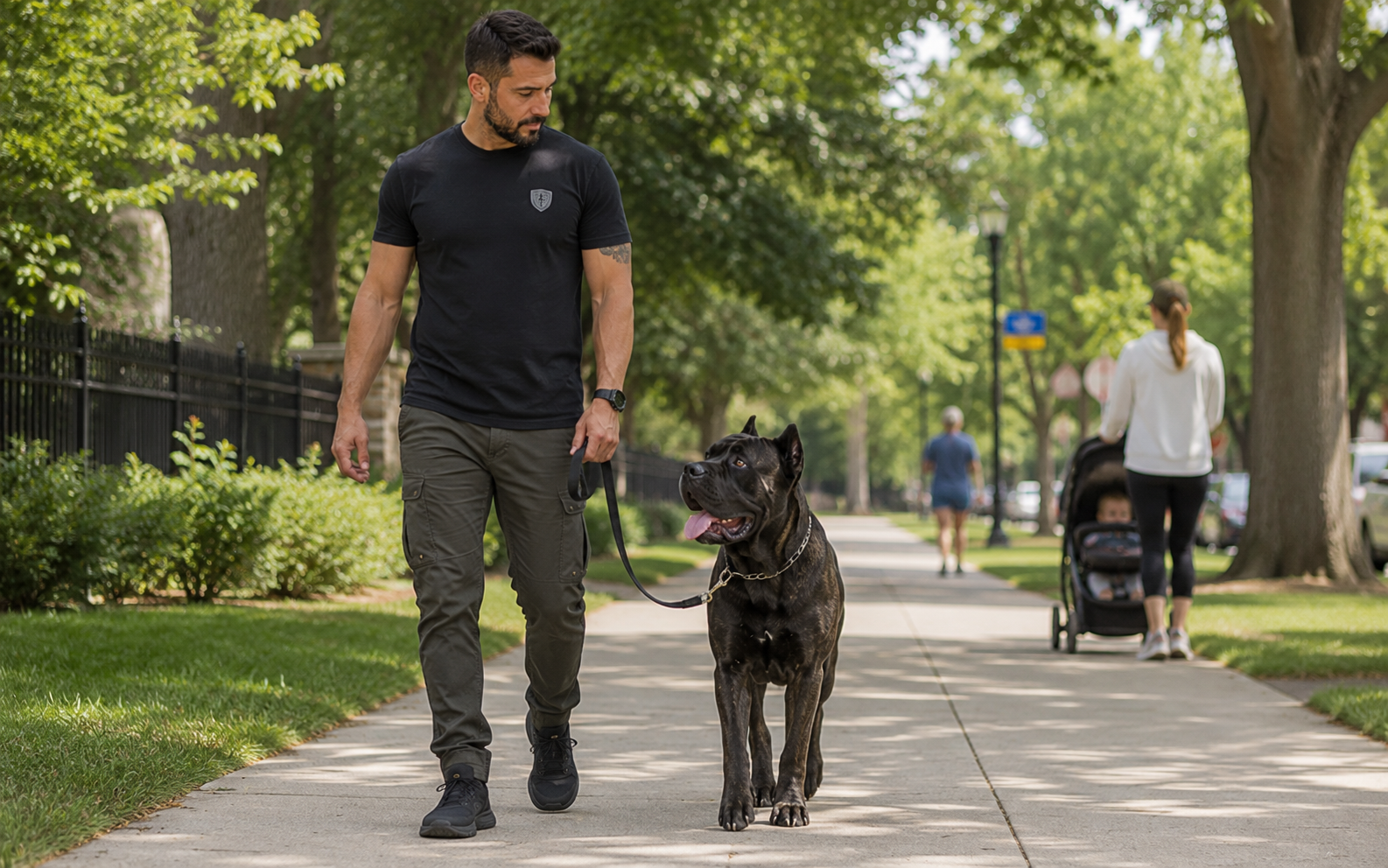
Socialization is arguably the single most important step in raising a well-adjusted Cane Corso. The critical socialization window runs from 8 to 16 weeks of age. During this period, your puppy’s brain is forming its understanding of what is normal and safe in the world.

Expose your puppy to as many different people, environments, sounds, and animals as safely possible during this window. The goal is not just exposure but positive association. Bring treats and keep all interactions upbeat and controlled.
For adult Cane Corsos that missed early socialization, the process is slower but still very achievable. Gradual, controlled exposure combined with consistent positive reinforcement can reshape how an older dog responds to new experiences over time.
Read more about why early dog socialization benefits make such a lasting difference in working and protective breeds like the Cane Corso.
3. Reward Good Behavior, Redirect Bad Behavior
Positive reinforcement means rewarding the behaviors you want to see repeated. When your Cane Corso sits on command, reward it. When it stays calm around a new guest, reward it. When it chooses not to react to a passing dog, reward it. This approach builds cooperation and makes training feel like a worthwhile activity for the dog.
Punishment-based training frequently backfires with this breed. Physical corrections or harsh verbal reactions can cause a Cane Corso to become resentful, shut down emotionally, or in some cases, escalate its behavior. The goal is a dog that genuinely wants to comply, not one that only complies out of fear.
When unwanted behavior occurs, calmly interrupt it, redirect your dog toward an acceptable alternative behavior, and reward that response instead. Stay neutral throughout. Emotional reactions from the handler often make the situation worse.
4. Establish Rules That Every Person in the Household Follows
Inconsistency is one of the fastest ways to undermine training with a Cane Corso. This breed pays close attention to patterns. If the rules change depending on who is home or how tired everyone feels, the dog will quickly learn that rules are optional.
From the moment your Cane Corso arrives, decide on the household rules and make sure every person applies them equally. Is the dog allowed on furniture? Where does it sleep? Is jumping on people acceptable? Answer these questions before they become habits and stick to the answers.
Structure gives a Cane Corso a sense of security. A dog that knows exactly what is expected of it is calmer, more confident, and far more enjoyable to live with day to day.
5. Handle Dominant Behavior Before It Escalates
Cane Corsos are natural leaders by instinct. Small dominant behaviors such as blocking doorways, ignoring recall commands, or guarding resources can grow into serious problems if they go unchallenged.
Address these patterns as soon as they appear. Practice wait commands at doorways so your dog learns to yield to you. Work on food bowl handling exercises so your dog stays calm and trusting around its resources. Practice recall daily in low-distraction settings before testing it in busier environments.
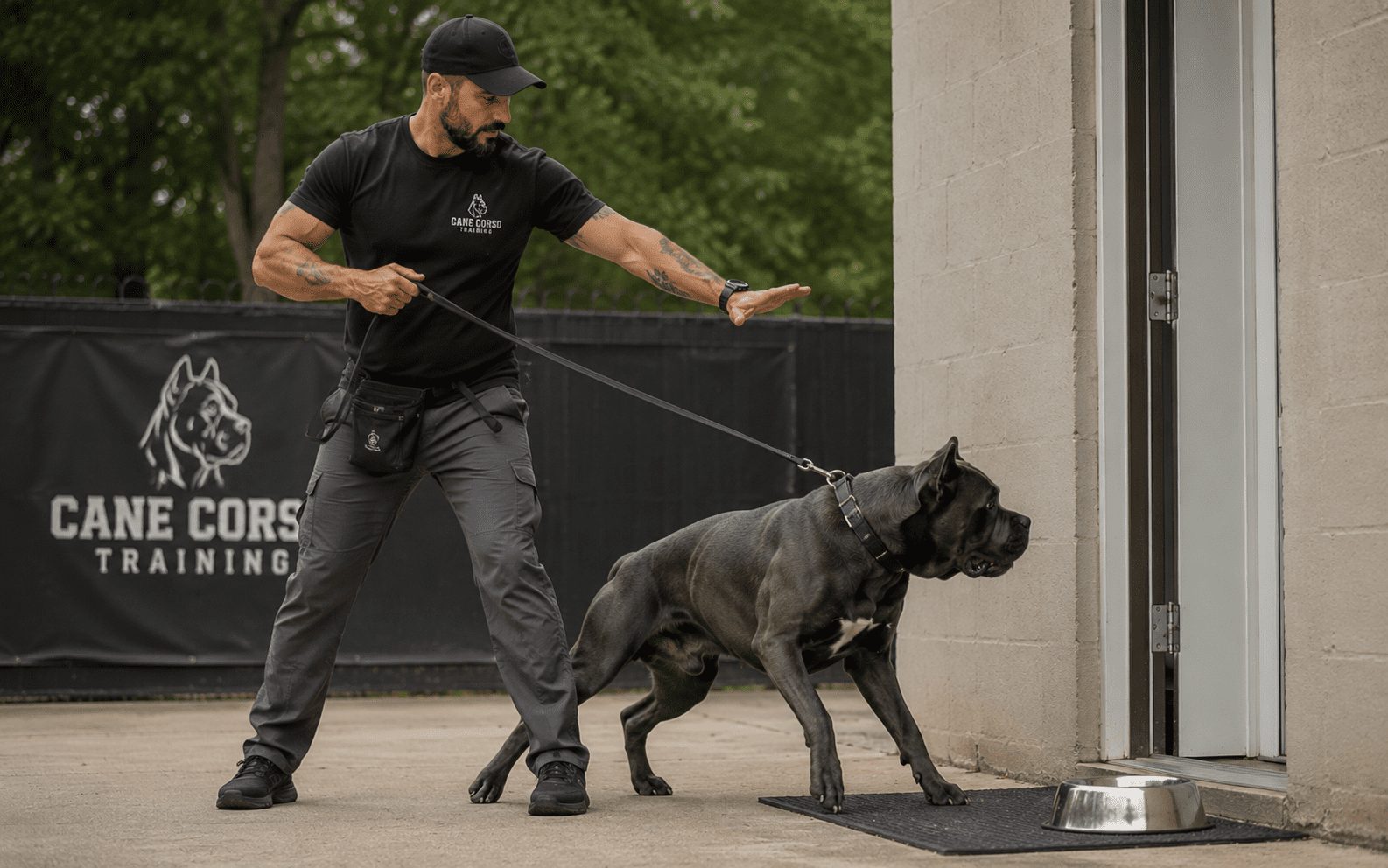
If dominant or protective behaviors have already become a challenge, professional support is the right next step. Our private dog training Long Island program works directly with both owners and dogs to resolve these issues safely and effectively.
Training Mistakes That Set Cane Corso Owners Back
Knowing what not to do saves significant time and prevents avoidable setbacks. The following mistakes are the most common among owners of this breed and the ones that cause the most damage to the training relationship.
| Mistake | Why It Backfires | What to Do Instead |
|---|---|---|
| Skipping early socialization | Creates fear-based and territorial aggression | Expose consistently from 8 to 16 weeks of age |
| Using physical punishment | Increases resentment and risk of aggression | Use calm redirection and positive reinforcement rewards |
| Allowing rule inconsistency | Teaches the dog that rules are optional | Align all household members on the same expectations |
| Ignoring small dominant behaviors | They escalate into serious control and safety issues | Address boundary-testing behavior immediately |
| Training only at home | Dog may not obey commands in new environments | Practice regularly in parks, streets, and public spaces |
| Stopping training after puppyhood | This breed requires lifelong structure and reinforcement | Continue daily obedience and boundary reinforcement |
Which Training Option Works Best for a Cane Corso?
With several training approaches available, it helps to know which ones are actually suited to the Cane Corso’s personality, drives, and level of challenge. Not every method that works for a Labrador will be effective or even safe with this breed.
| Training Approach | Effectiveness | Best For |
|---|---|---|
| Positive reinforcement at home | High | Daily obedience and building a trusting relationship |
| Private one-on-one training | High | Targeted behavior issues with personalized expert guidance |
| Board and train program | Very High | Fast, structured results for dogs with serious challenges |
| Group obedience classes | Moderate | Basic socialization exposure; less suited to breed-specific drives |
| Dominance-based methods | Low | Not recommended; often worsens issues in this breed |
| In-home professional training | High | Addressing real-life behavior in the dog’s actual environment |
For most Cane Corso owners, the most effective route combines daily positive reinforcement at home with professional guidance from the start. If your dog has behavior challenges that feel beyond your control, our board and train Long Island program provides intensive, structured training in a professional setting with measurable, lasting results.
When to Bring in a Professional Trainer
Some behavior patterns go beyond what owners can safely manage without expert support. Recognizing when to seek help is one of the most responsible decisions a Cane Corso owner can make. The longer serious behavioral issues are left unaddressed, the harder they become to resolve.
Reach out to a professional trainer if you notice:
- Growling, snapping, or biting during handling or routine grooming
- Aggression toward family members or frequent household guests
- Severe leash reactivity that you cannot safely control in public
- Resource guarding that escalates despite consistent corrections
- Any bite incident, regardless of how minor it appeared at the time
If you want expert support in your own space, in-home dog training Long Island places a certified trainer directly in the environment where problem behaviors actually occur. This approach is particularly effective for dogs that behave well in new settings but act out at home.
For perspective on how similar working breeds respond to the same training principles, our article on how to train a German Shepherd covers parallel techniques and useful comparisons that apply directly to powerful, drive-oriented dogs.
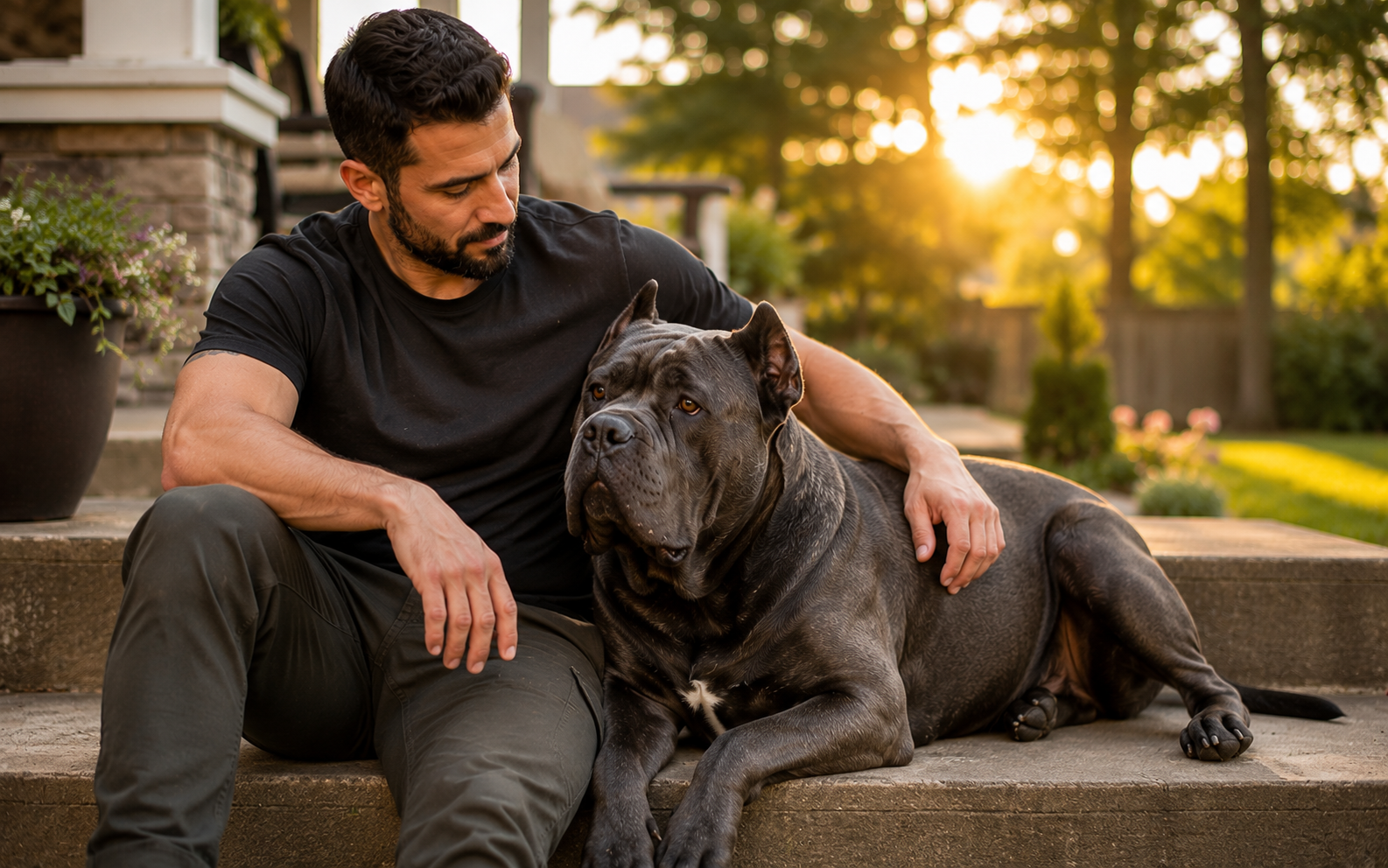
Final Word on How to Train a Cane Corso
Training a Cane Corso takes dedication, patience, and a genuine respect for what this breed needs. The owners who get the best results are those who start early, stay consistent, and never stop reinforcing the behaviors they want to see every day.
At K9 Mania Dog Training, we are Long Island’s leading board and train program and home to certified animal behaviorists who specialize in powerful, working breeds. Whether your Cane Corso needs foundational obedience or serious behavior modification, we have the experience and the methods to help. Do not wait for small issues to become dangerous ones. Trust K9 Mania Dog Training to guide you and your dog every step of the way. Contact us today and give your dog the training it deserves.
You May Also Want to Read
How to Train a Jack Russell Dog
Frequently Asked Questions: How to Train a Cane Corso
Are Cane Corsos easy to train?
Cane Corsos are intelligent enough to learn commands quickly, but they are not considered easy to train, especially for owners without experience handling dominant breeds. Their assertive nature means they require a confident, consistent handler who sets clear boundaries from the beginning. With the right methods and structure in place, they become highly responsive and obedient dogs. First-time large breed owners often benefit most from professional support at the start.
How do you discipline a Cane Corso?
Discipline a Cane Corso through calm redirection and the removal of rewards, never through physical punishment or harsh corrections. When your dog does something unwanted, interrupt the behavior calmly, guide it toward the correct response, and reward that response instead. Harsh or emotional discipline often increases resistance or aggression in this breed. Consistent, fair boundaries applied with patience are far more effective than any forceful approach.
What not to do with a Cane Corso?
Avoid skipping early socialization, using punishment-based training methods, allowing dominant behaviors to go unchallenged, and being inconsistent with household rules. You should also avoid placing a Cane Corso in unsupervised situations with small children or unfamiliar animals before proper training and controlled introductions are already in place. This breed’s size and strength demand careful management at all times.
Are boy or girl Cane Corsos better?
Both male and female Cane Corsos are capable of becoming well-trained, loyal companions with the right handling. Males tend to be noticeably larger and can be somewhat more assertive, while females are often slightly more manageable for owners new to the breed. However, individual temperament, early socialization history, and training consistency matter far more than gender when predicting how a Cane Corso will develop.
Do Cane Corsos pick one person?
Yes, Cane Corsos commonly form a particularly strong bond with one primary person in the household, though they remain loyal to the entire family unit. They tend to follow their chosen person closely and may be noticeably more responsive to commands from that individual. Consistent training and positive interactions with all household members help ensure the dog is well-behaved and responsive to everyone, not just its preferred person.
Can Cane Corsos turn on their owners?
Any dog can display aggression if it has been mistreated, improperly trained, or repeatedly pushed past its behavioral threshold. Cane Corsos that receive proper socialization, consistent training, and respectful daily handling rarely direct aggression toward the people they live with. However, because of this breed’s size and physical strength, even early warning signs of aggression should never be dismissed. Seek professional support immediately if you notice any concerning behavior, before it escalates.