

Key Takeaways
- Bed digging is almost always normal, it’s a leftover denning instinct from your dog’s wild ancestors.
- Dogs dig to regulate temperature, mark territory with scent glands in their paws, and create a comfortable “nest.”
- Pregnant females, high-energy breeds, and terriers dig more than average.
- Digging becomes a problem when it’s frantic, destructive, or paired with other anxiety symptoms.
- Most cases need no fix, but excessive digging responds well to more exercise, a better bed, and structured training.
What Does It Mean When a Dog Digs in His Bed?
If you’ve ever asked yourself, “why does my dog dig in his bed every single night before lying down?”, here’s the short answer: he’s nesting. Bed digging, also called scratching or nesting behavior, is an instinctive pre-sleep ritual inherited from wild canids who dug shallow pits in dirt, leaves, or snow to sleep in.
Your dog doesn’t know his orthopedic memory-foam bed is already comfortable. His brain is running a 15,000-year-old program that says: scratch the surface, circle a few times, then settle. In the vast majority of dogs, it’s completely harmless.
That said, the intensity of the digging matters. A few scratches and three circles before flopping down is normal. Twenty minutes of frantic pawing that shreds the bed cover is a signal worth investigating, and I’ll show you how to tell the difference below.
Why This Behavior Matters Right Now
Two reasons owners search this question: money and worry.
The money part is obvious, quality dog beds run $80 to $300+, and a determined digger can tear through one in weeks. The worry part is more important. Bed digging sits on a spectrum. On one end, it’s a charming quirk. On the other end, it can be an early symptom of anxiety, discomfort, or a compulsive behavior pattern.
Catching the difference early matters because anxiety-driven behaviors tend to escalate. A dog who frantically digs at his bed when you grab your keys may be showing the same distress pattern seen in dogs with separation issues, and those dogs often go on to develop destructive chewing, barking, or house soiling. If that sounds familiar, review these signs your dog has separation anxiety to see whether the digging is part of a bigger picture.
The 7 Most Common Reasons Dogs Dig in Their Beds
1. Denning Instinct (The Big One)
Wolves and wild dogs dig dens to sleep, give birth, and hide from predators. Domestic dogs retained the motor pattern even though the survival need disappeared. Behaviorists call this a fixed action pattern, a hardwired sequence the dog performs whether or not it accomplishes anything.
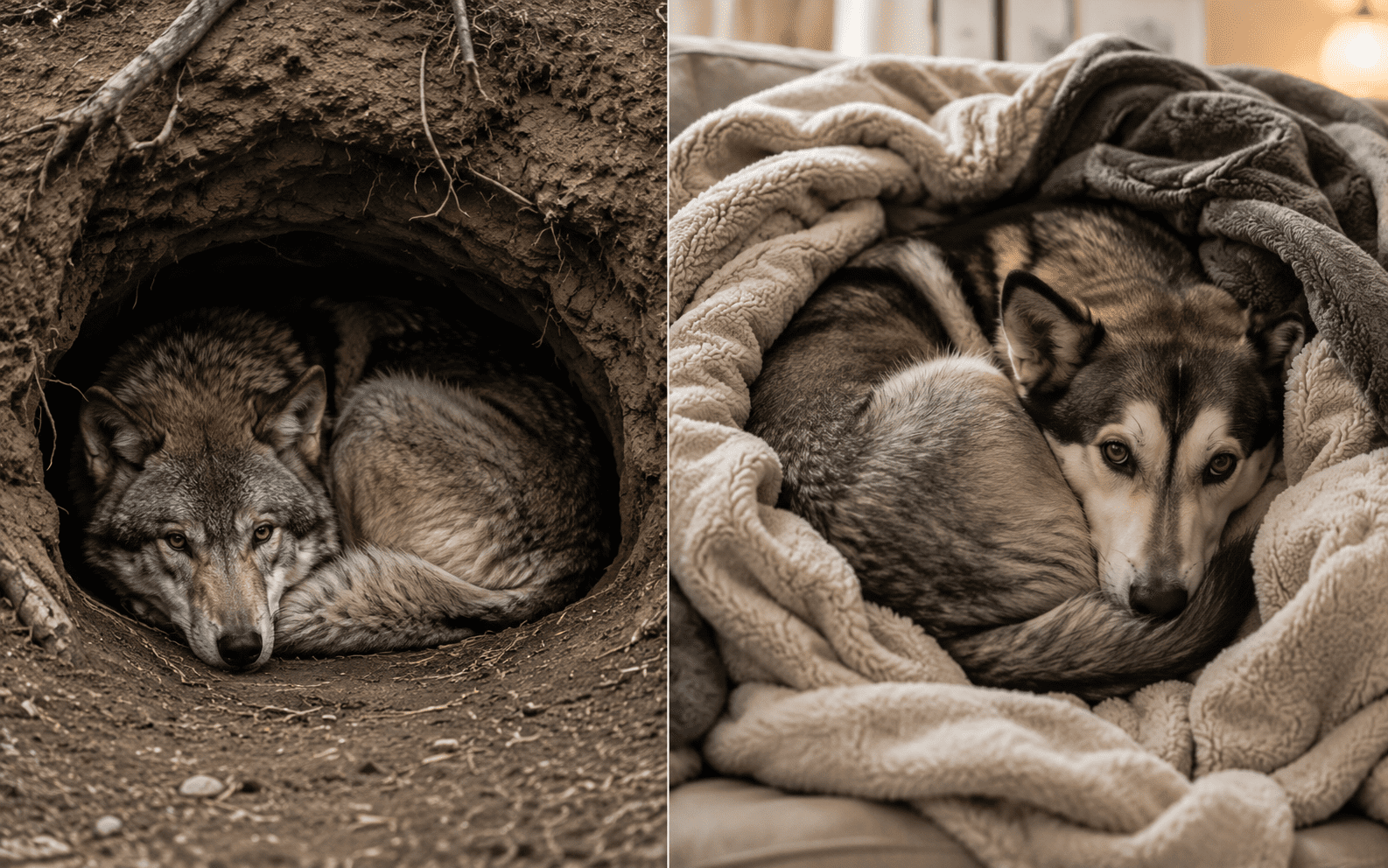
This is the same category of inherited behavior as circling before lying down or dogs eating grass for reasons owners can’t quite figure out. (Curious about that one too? Here’s why dogs eat grass.)
2. Temperature Regulation
In nature, digging a few inches down exposes cooler earth in summer and creates a wind-sheltered pit in winter. Your dog may dig more on hot days because his instincts say cooler ground is just below the surface of that bed.
Watch for: seasonal patterns. If your dog digs heavily in July but barely in January, temperature is likely the driver. A cooling mat or elevated mesh bed often reduces summer digging noticeably.
3. Scent Marking and Territory
Dogs have scent glands in their paw pads. Every scratch deposits their personal scent on the bed. In multi-dog households, this is often a quiet way of saying “this spot is mine.” If you notice your dog digs more right after another pet has lounged on his bed, this is almost certainly the reason.
4. Nesting Before Rest, Especially in Females
Intact females, and especially pregnant females, show dramatically increased nesting behavior. A pregnant dog may dig, shred, and rearrange bedding obsessively in the days before whelping. Spayed females experiencing a false pregnancy (pseudopregnancy) can show the same surge in digging 4–9 weeks after a heat cycle. If this fits your dog’s timeline, mention it to your vet.
5. Breed-Driven Digging
Some breeds were literally built to dig:
- Terriers (Jack Russells, Westies, Rat Terriers), bred to dig prey out of burrows
- Dachshunds, bred to tunnel after badgers
- Huskies and Malamutes, dig snow nests instinctively
- Beagles and other scent hounds, dig when a scent trail “ends” at the ground
If you own one of these breeds, expect more digging everywhere, bed, couch, yard, and plan outlets for it rather than trying to eliminate it.

6. Boredom and Excess Energy
A dog who hasn’t had enough physical or mental exercise will manufacture his own entertainment, and digging is self-rewarding, it feels good and produces visible results. In my experience working with client dogs, under-exercised adolescent dogs (8–18 months) are the most common “bed destroyers.” The digging usually isn’t anxious at all; it’s recreational.
The fix is rarely about the bed. It’s about the schedule. Dogs in this category typically need 45–90 minutes of genuine activity daily, plus mental work like training sessions or food puzzles. These effective ways to train your dog double as energy-burning mental exercise.
7. Anxiety, Stress, or Compulsion
This is the reason that warrants attention. Anxiety-driven digging looks different from instinctive digging:

- It’s frantic rather than rhythmic
- It happens during trigger events, thunderstorms, fireworks, you leaving the house
- It’s paired with panting, whining, pacing, or drooling
- The dog often doesn’t settle afterward, normal nesting ends with the dog lying down; anxious digging just continues
Compulsive digging is rarer but real: the dog digs repetitively with no trigger, sometimes until his paws are raw. That’s a case for your veterinarian and a professional behavior consultant, not a DIY fix.
Normal Digging vs. Problem Digging: A Quick Comparison
| Normal Nesting | Problem Digging |
| Lasts under a minute | Goes on for many minutes |
| Ends with the dog settling down | Dog stays agitated |
| Happens at predictable rest times | Triggered by stress events or random |
| Bed stays mostly intact | Bedding shredded, paws raw |
| Relaxed body language | Panting, pacing, whining |

Common Mistakes Owners Make With Bed Digging
Mistake #1: Punishing the digging. You can’t punish away an instinct. Scolding a nesting dog just teaches him to dig when you’re not watching, or adds anxiety to a behavior that wasn’t anxious before.
Mistake #2: Buying a tougher bed and calling it solved. A “chew-proof” bed protects your wallet, but if the digging is driven by boredom or stress, the underlying need is still unmet and usually pops out somewhere else, often as destructive chewing. If your digger has also started gnawing furniture, these strategies to stop destructive chewing address the shared root cause.
Mistake #3: Assuming it’s “just a quirk” when other symptoms are present. Digging plus pacing, plus whining at departures, plus accidents in the house is not a quirk, it’s a pattern.
Mistake #4: Ignoring sudden changes. A 6-year-old dog who never dug and suddenly starts may be responding to pain (arthritis makes dogs rearrange bedding to find comfortable positions), cognitive decline, or a new stressor. Sudden behavior changes in adult dogs deserve a vet visit first.
What to Do About It: A 5-Step Framework
If the digging is mild and your dog settles afterward, you genuinely don’t need to do anything. If it’s destructive or seems anxious, work through this sequence:

- Rule out medical causes. Sudden-onset digging, raw paws, or digging paired with restlessness at night warrants a vet check before any training plan. Pain and skin allergies are common hidden drivers.
- Upgrade the sleep setup. Give the instinct a legal outlet: a bed with a loose blanket on top lets your dog “dig” and bunch fabric satisfyingly without destroying anything. Many diggers do best with a cave-style or hooded bed that mimics a den.
- Increase daily exercise and mental work. Aim for at least two real exercise sessions daily plus 10–15 minutes of training. A tired dog nests briefly and sleeps; a bored dog excavates.
- Train a reliable “place” and “settle” cue. Teaching your dog to go to his bed and relax on command channels bedtime behavior into something calm and structured. Structured obedience dog training builds exactly these skills, and the impulse control carries over to the rest of his day.
- Address anxiety at the root if it’s present. If the digging spikes when you leave, manage the departures, not the bed. For dogs whose digging is tangled up with stress or destructive habits, working with a professional through in-home dog training on Long Island lets a trainer see the behavior in the exact environment where it happens, which matters, because context drives this behavior more than almost any other.
For young dogs, prevention is even easier than correction. Puppies who learn settling skills early rarely become destructive diggers, which is one reason early puppy training on Long Island pays off for years.
Conclusion
So, why does my dog dig in his bed? Nine times out of ten: instinct, comfort, and a little inherited theater before sleep. Let him have his ritual. The time to act is when digging turns frantic, destructive, or pairs with other stress signals, because at that point, the bed isn’t the problem, and a stronger bed isn’t the solution.
If your dog’s digging has crossed from quirky into destructive, or it’s one piece of a bigger behavior puzzle, we can help. K9 Mania Dog Training offers personalized private dog training on Long Island that gets to the root of nesting, anxiety, and destructive habits, in your home, with your dog, on your schedule. Contact us today for a free evaluation.
Frequently Asked Questions
Why does my dog dig in his bed before lying down every night?
It’s an inherited denning instinct. Wild canids dug pits to sleep in for warmth, cooling, and safety, and domestic dogs kept the behavior. A few scratches and circles before settling is completely normal dog bedtime behavior.
Why does my dog dig at his bed and then not lie down?
Digging without settling usually means the dog can’t get comfortable (check for pain or temperature issues) or is anxious. If it happens around triggers like storms or your departures, stress is the likely cause and worth addressing.
Should I stop my dog from digging in his bed?
Not if it’s brief and the dog relaxes afterward, it’s harmless. Intervene only if the digging destroys bedding, injures his paws, or comes with anxiety signs like panting and pacing.
Why does my female dog dig in her bed more than usual?
Hormones. Pregnant females nest intensively before whelping, and spayed or intact females can experience false pregnancies that trigger the same digging surge weeks after a heat cycle. Check with your vet if the change is dramatic.
Do dogs grow out of bed digging?
Recreational, energy-driven digging often fades as adolescent dogs mature, especially with adequate exercise. Instinctive nesting never fully disappears, and it doesn’t need to.