Indoor entertainment keeps your dog mentally sharp and physically satisfied even when outdoor time is limited. A bored dog often develops unwanted behaviors like excessive barking, chewing furniture, or pacing, so engaging activities at home help prevent frustration and build a stronger bond with you.
Rainy days, extreme weather, or busy schedules don’t mean your dog has to miss out on fun and exercise. The right indoor games and mental challenges can tire your dog just as much as a long walk while keeping their mind active and focused.
Keep reading to discover practical ways to keep your dog happy, healthy, and entertained without stepping outside.
Why Indoor Entertainment Matters for Your Dog
Dogs need both physical activity and mental stimulation to stay balanced. When they don’t get enough of either, boredom sets in quickly, often leading to destructive habits or anxious behavior.
Indoor activities help your dog burn energy while keeping their brain engaged. Mental work tires dogs faster than many people expect, making it just as important as physical exercise.
Regular indoor play also strengthens your relationship. Dogs learn to look to you for fun and guidance, which builds trust and improves overall behavior. This carries over into training and daily routines.
Understanding how to entertain your dog indoors gives you tools for bad weather days, recovery periods after injury, or times when outdoor access is limited. It also helps high energy dogs settle more easily at home.
📌 If your dog struggles with focus or impulse control during indoor play, structured dog obedience training can build better listening skills and make activities more rewarding for both of you.
Quick Indoor Games That Keep Dogs Engaged
Simple games using items you already have can keep your dog busy and happy. These activities work well for short breaks or when you need to redirect restless energy.
Hide and Seek
Hide treats or favorite toys around the house while your dog waits in another room. Start with easy hiding spots, then increase difficulty as they get better at finding them.
This game taps into your dog’s natural hunting instincts and gives them a rewarding challenge. It works for dogs of all ages and energy levels.
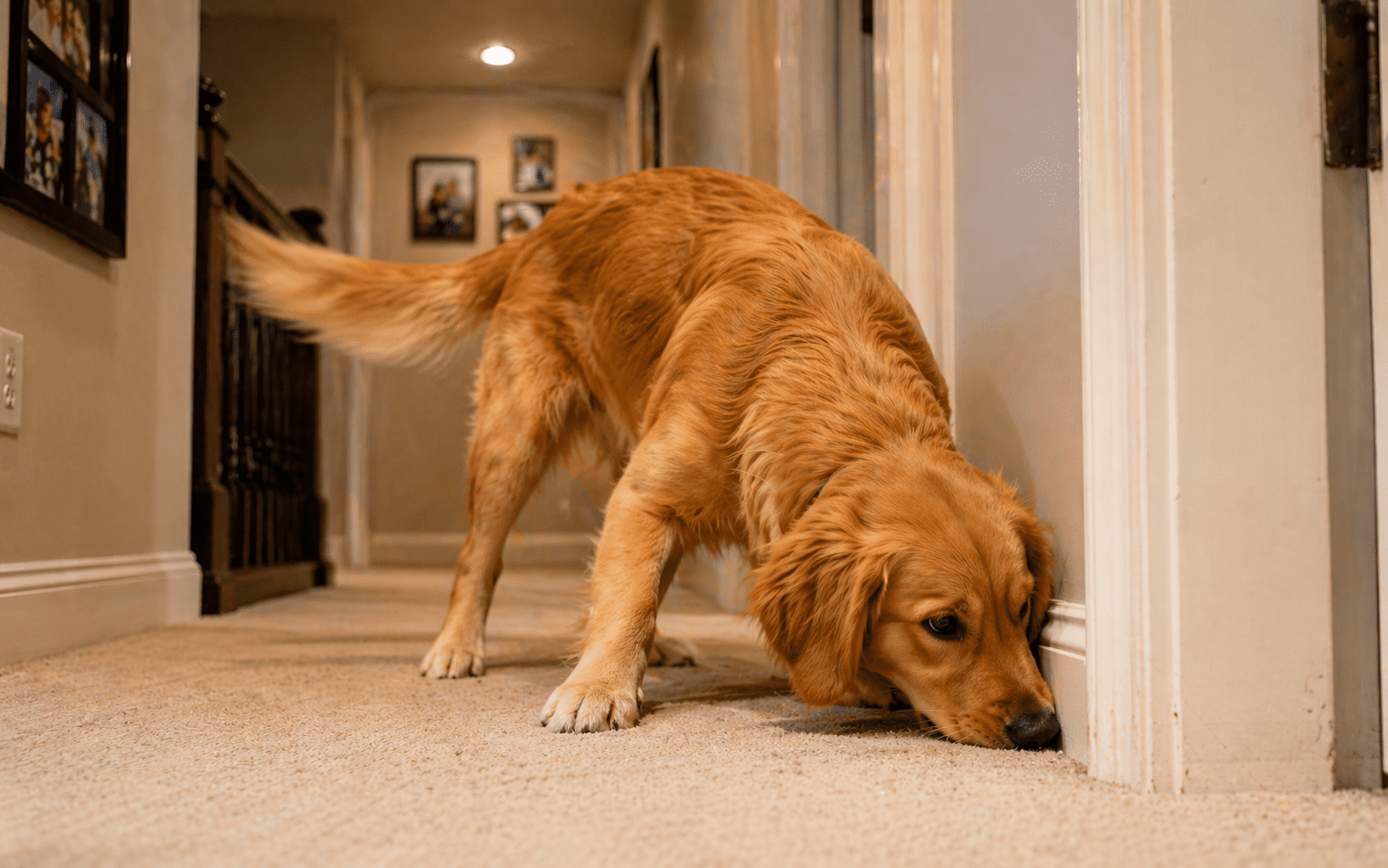
You can also hide yourself and call your dog to find you. This reinforces recall training while keeping things fun and interactive.
Tug of War
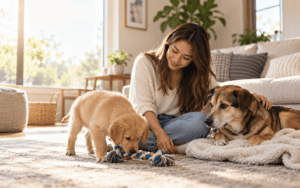
A good tug toy and clear rules make this a great indoor game. Let your dog pull and shake the toy, then practice dropping it on cue.
Tug builds strength and lets your dog release energy in a controlled way. It also teaches impulse control when you set boundaries around starting and stopping the game.
Choose a sturdy rope toy or rubber tug designed for your dog’s size. Avoid old towels or socks, which can teach your dog to grab household items.
Indoor Fetch
If you have a hallway or open room, short fetch sessions work well indoors. Use soft toys or lightweight balls that won’t damage furniture or walls.
Keep throws low and controlled to avoid wild running that could lead to slipping or crashing into furniture. This is a great option for dogs who love to retrieve but need a calmer version of outdoor fetch.
📌 Want more ideas to keep your dog active and happy? Check out these fun activities for dogs that work both inside and outside.
Mental Stimulation Activities for Indoor Days
Mental challenges tire dogs faster than many physical activities. These exercises engage your dog’s brain and help them feel satisfied even without long outdoor sessions.
Puzzle Toys and Food Dispensers
Interactive puzzle toys require your dog to solve problems to get treats or kibble. Start with easier puzzles and work up to more complex ones as your dog learns.
These toys slow down eating and keep your dog occupied for 10 to 30 minutes at a time. They’re especially helpful for dogs who need solo entertainment while you work or handle other tasks.

Look for toys with sliding panels, hidden compartments, or treat mazes. Rotate different puzzles to keep the challenge fresh.
DIY Snuffle Mats
Hide kibble or treats in a snuffle mat or make one using a rubber mat and strips of fleece. Your dog uses their nose to search through the fabric and find food.
This mimics natural foraging behavior and provides calming mental work. It’s a good option for anxious dogs or those recovering from injury who need low impact activity.
You can also scatter food in a folded towel or cardboard box filled with crumpled paper for a quick homemade version.
Training New Tricks
Teaching tricks like spin, shake, or roll over gives your dog mental exercise and strengthens your communication. Short 5 to 10 minute sessions work best to keep your dog focused and motivated.
Use positive reinforcement with treats or praise. Break each trick into small steps and reward progress along the way.
Training indoors helps your dog learn to focus even with household distractions. This carries over into better behavior in everyday situations.
Physical Exercise Options for Limited Space
Indoor spaces don’t offer the same room as a yard, but you can still provide physical activity that keeps your dog moving and healthy.
Stair Workouts
If you have stairs, use them for fetch or ask your dog to follow you up and down several times. This builds strength and burns energy quickly.
Always supervise stair exercise to prevent slipping or overexertion. Avoid this option for puppies, senior dogs, or dogs with joint issues.
Hallway Sprints
Clear a hallway and toss a toy back and forth to encourage short bursts of running. This gives your dog a chance to sprint without needing a large open area.
Keep sessions brief to avoid overstimulation or accidents. Use a soft toy to reduce noise and protect your floors.
Indoor Obstacle Course
Set up simple obstacles using cushions, boxes, or blankets. Guide your dog through the course with treats or toys, asking them to jump over, crawl under, or weave around objects.
This combines physical movement with mental problem solving. It’s also a great way to practice basic commands like sit, stay, and come in a fun setting.
Change the course layout regularly to keep your dog interested and challenged.
Interactive Toys and Puzzle Games
The right toys turn solo playtime into productive entertainment. These options keep your dog busy while building problem solving skills.
Treat Dispensing Balls
Fill a rubber ball or treat dispenser with kibble or small treats. Your dog rolls and manipulates the toy to release food slowly.
This keeps them engaged longer than a bowl of food and provides mental stimulation. It’s useful for dogs who eat too quickly or need activity while you’re away.
Tug Toys for Solo Play
Some tug toys attach to door frames or sturdy furniture, letting your dog pull and shake on their own. This gives them an outlet for natural play behaviors without needing a partner.
Choose toys designed for your dog’s size and chewing strength. Regularly check for wear and replace damaged toys to avoid choking hazards.
📌 High energy dogs often need extra stimulation to stay calm indoors. Explore dog toys for hyperactive dogs that help channel energy into productive play.
Frozen Treats in Kongs
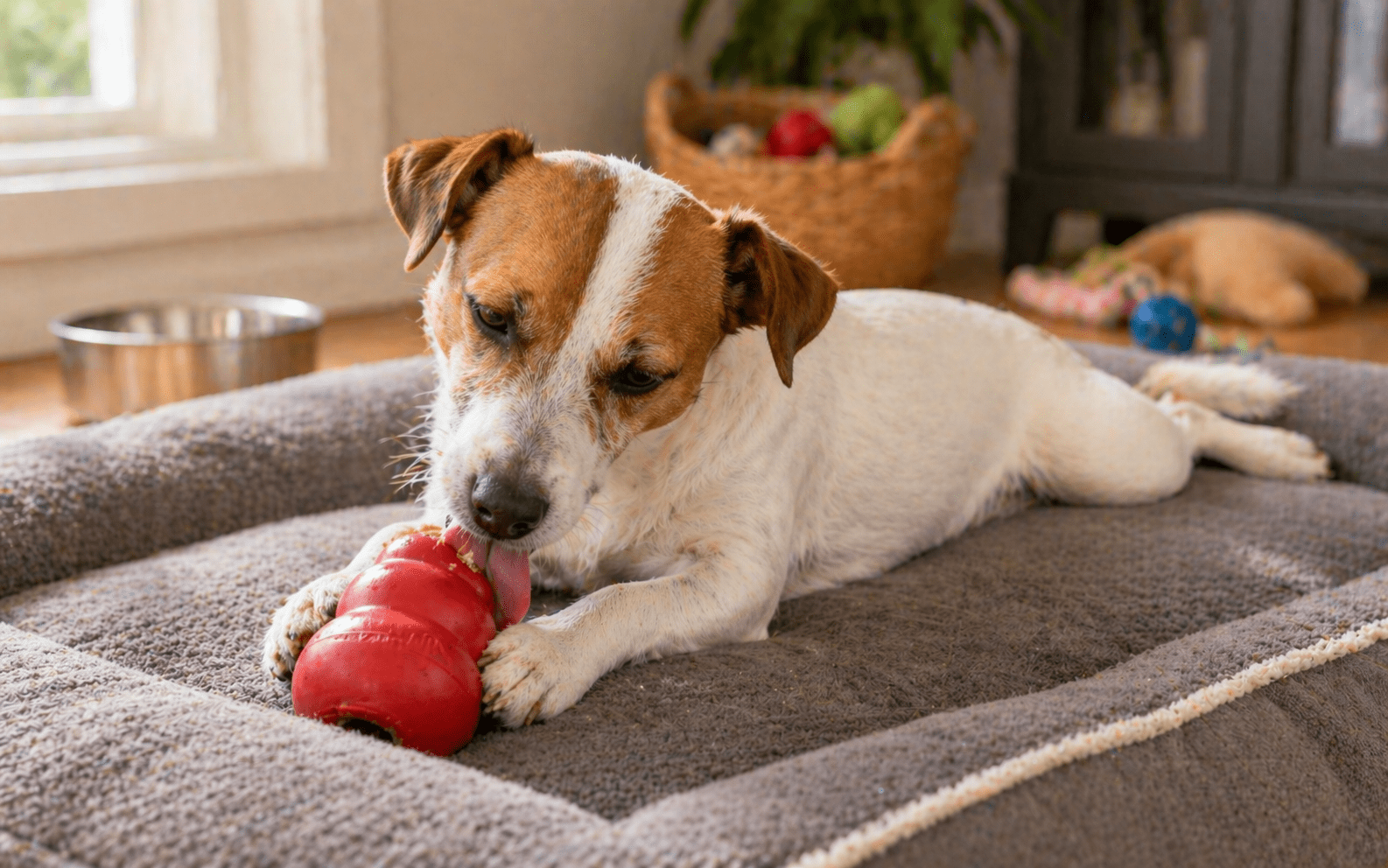
Stuff a Kong or similar toy with wet food, peanut butter, or yogurt, then freeze it. Your dog will spend 20 to 40 minutes licking and chewing to get the treat out.
This provides long lasting entertainment and keeps your dog calm during quiet times. It’s especially helpful for crate training or when you need your dog to settle.

How to Create an Indoor Obstacle Course
An obstacle course offers physical exercise and mental challenge in one activity. You can build one using everyday household items without spending extra money.
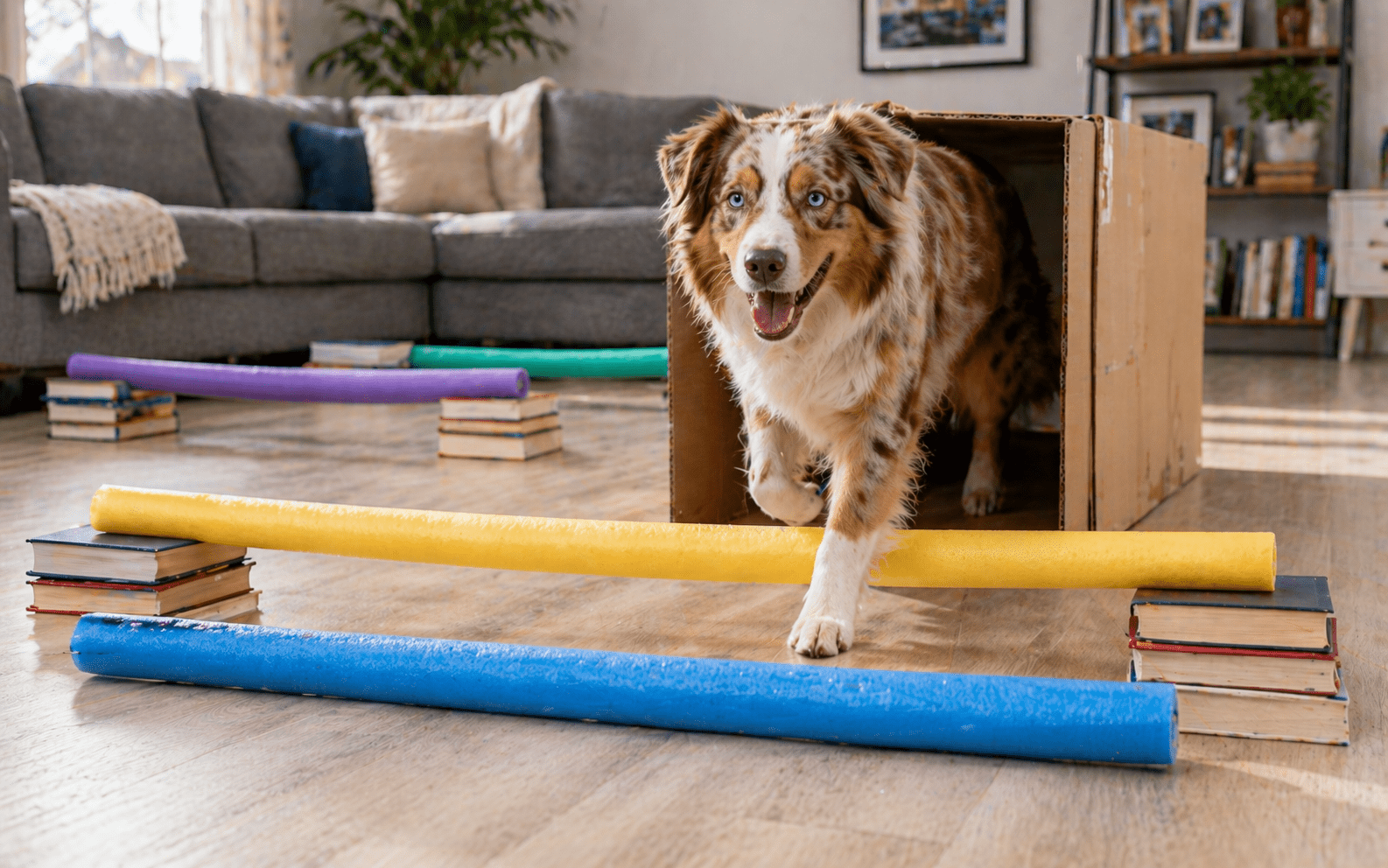
Start with low jumps using broomsticks balanced on stacks of books. Add tunnels made from opened cardboard boxes or blankets draped over chairs.
Include weaving poles using water bottles or paper towel rolls spaced in a line. Guide your dog through with treats or toys, rewarding each completed section.
| Obstacle Type | Household Items You Can Use | Skill It Builds |
| Jump | Broomstick, pool noodle, pillow | Coordination, confidence |
| Tunnel | Cardboard boxes, blankets, chairs | Problem solving, bravery |
| Weave | Water bottles, cones, books | Focus, agility |
| Balance Beam | Wooden board, pool noodle on floor | Balance, body awareness |
Change the course layout each time to keep it interesting. This prevents your dog from memorizing the pattern and keeps them thinking.
Obstacle courses work well for dogs of all ages. Adjust height and difficulty based on your dog’s size, fitness level, and experience.
Scent Work and Nose Games at Home
Dogs have an incredible sense of smell, and scent based games tap into natural instincts while providing deep mental satisfaction.
Basic Scent Search
Hide treats or a favorite toy while your dog waits in another room. Release them to search using their nose to locate the hidden items.
Start with visible spots, then progress to harder hiding places like under furniture or inside containers. This builds confidence and keeps your dog engaged for long periods.
Scent work tires dogs mentally faster than many physical activities. A 15 minute search session can leave your dog ready to relax.
Muffin Tin Game
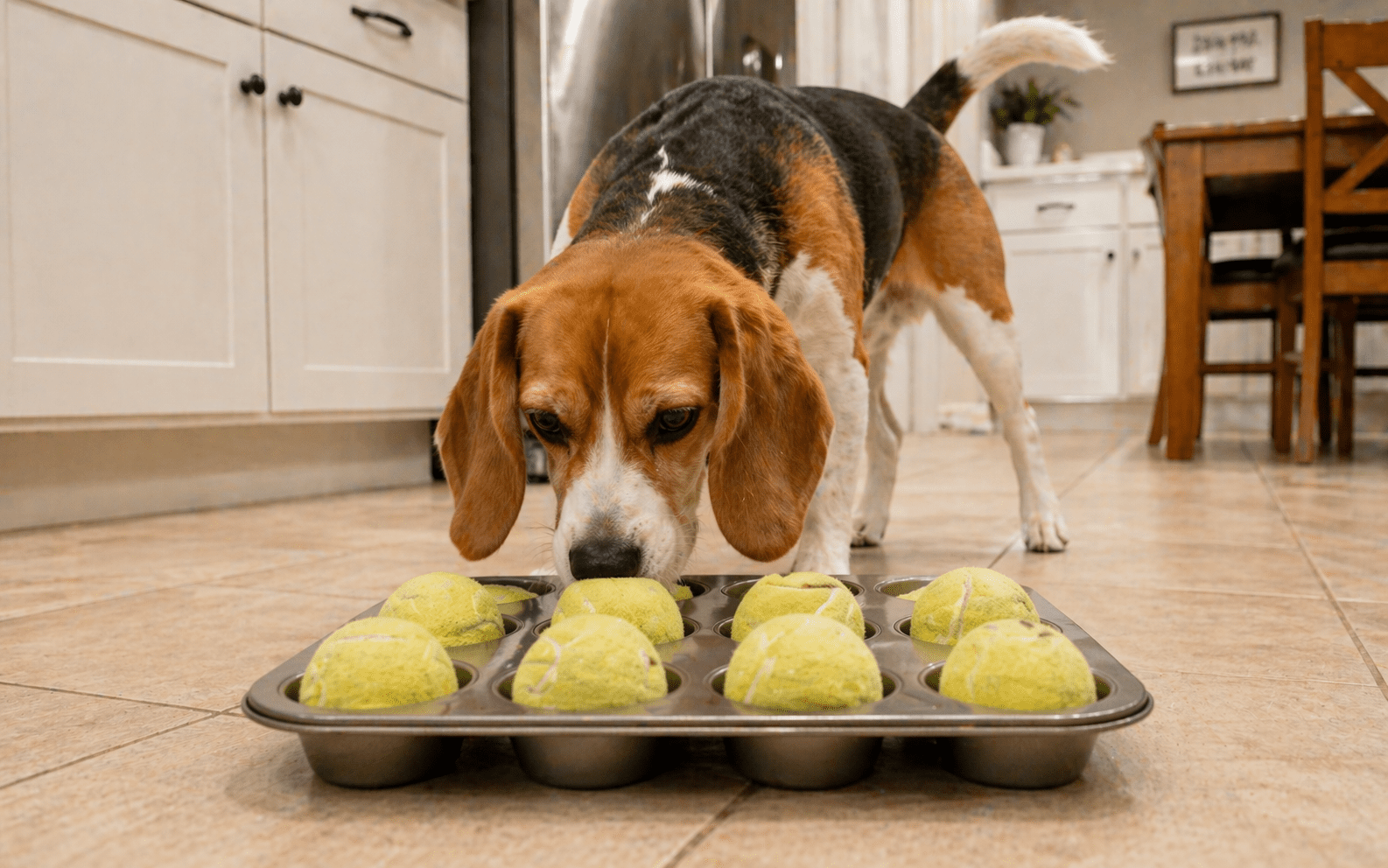
Place treats in a muffin tin and cover each cup with a tennis ball. Your dog uses their nose and paws to remove the balls and find the treats.
This simple game combines scent work with problem solving. It’s easy to set up and provides quick mental stimulation when you need it.
Find the Treat Hand Game
Hold treats in one or both closed fists. Let your dog sniff and choose which hand holds the reward. Open the correct hand and give them the treat.
This teaches impulse control and focus while keeping things fun. It also strengthens your bond through positive interaction.
Research shows that mental stimulation through scent work and problem-solving games can significantly reduce anxiety and destructive behaviors in dogs by giving them a productive outlet for their energy and natural instincts.
Training Sessions as Entertainment
Training doesn’t have to feel like work. Short, positive sessions keep your dog’s mind active while building skills that improve daily life.
Teach Practical Commands
Work on commands like leave it, drop it, or place. These help manage behavior while giving your dog mental exercise.
Use high value treats and keep sessions under 10 minutes. Dogs learn better in short bursts with breaks in between.
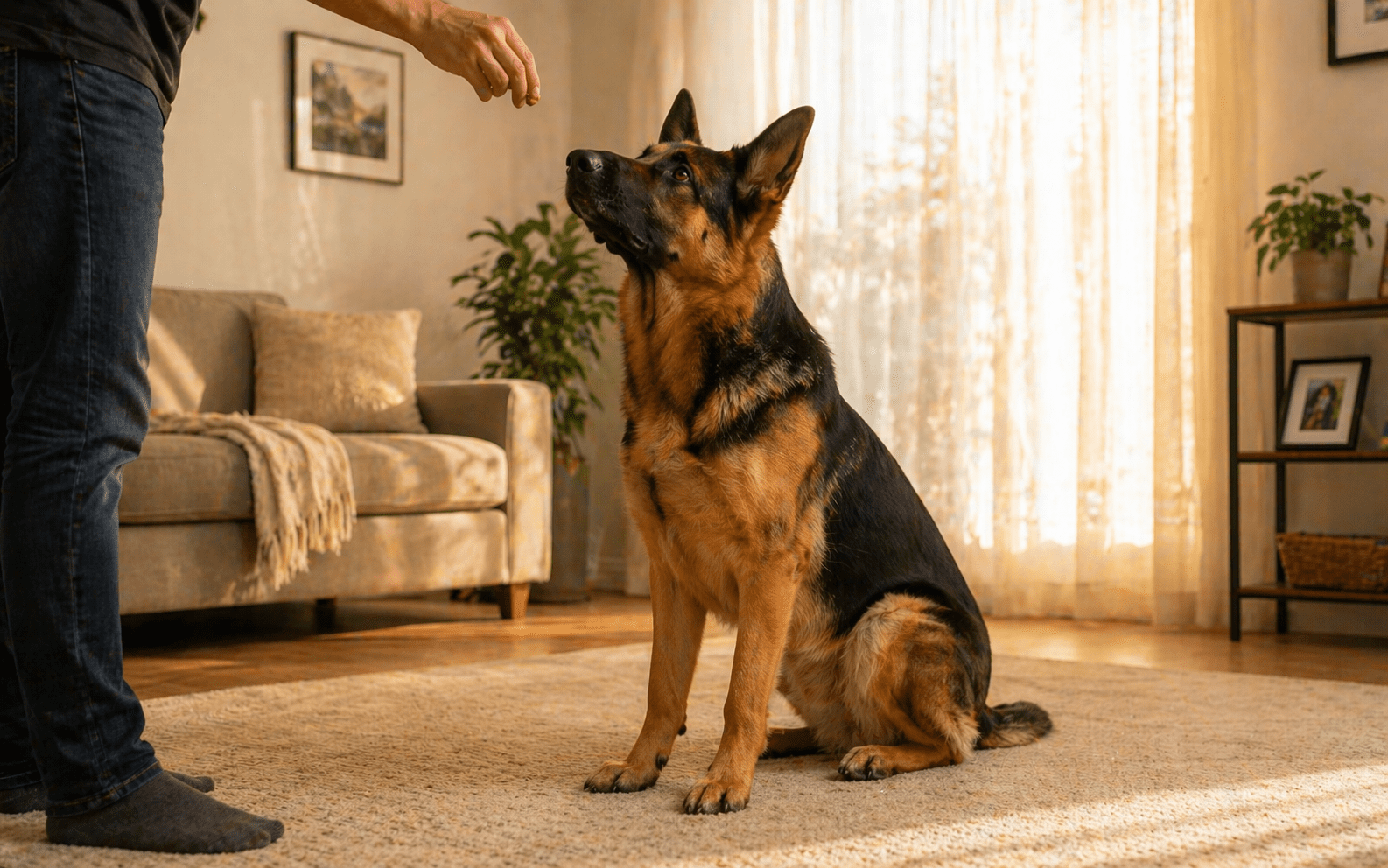
Practicing commands indoors prepares your dog to listen in distracting environments. This makes outings and everyday routines smoother.
Shape New Behaviors
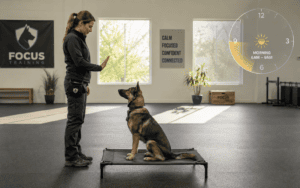
Shaping involves rewarding small steps toward a goal behavior. For example, reward your dog for looking at a mat, then stepping on it, then lying down on it.
This teaches your dog to think and problem solve. It also strengthens your communication and makes future training easier.
Practice Impulse Control Games
Games like waiting for food, sitting before going through doors, or staying while you toss a toy all build self control.
These exercises tire your dog mentally and improve behavior throughout the day. A dog with good impulse control settles faster and listens better in all situations.
📌 If your dog shows frustration, jumping, or difficulty focusing during indoor activities, professional dog behavior training can address the root cause and build calmer, more responsive habits.
Things to Know About Indoor Dog Entertainment
Keeping your dog entertained indoors requires understanding a few key principles that help you get better results and avoid common mistakes.
Mix mental and physical activities. Mental challenges tire dogs faster than physical exercise alone. Combine both types throughout the day for a well rounded routine.
Rotate toys and games. Dogs get bored with the same activities. Switch out toys every few days and change up games to keep interest high.
Watch for signs of frustration. If your dog seems stuck or overwhelmed during a game, make it easier or take a break. Entertainment should reduce stress, not add to it.
Adjust intensity to your dog’s age and health. Puppies and senior dogs need shorter, gentler activities. High energy adult dogs can handle longer, more challenging sessions.
Use meal time as play time. Instead of feeding from a bowl, use puzzle toys, snuffle mats, or scatter feeding to turn eating into an enriching activity.
Supervise new activities. Always watch your dog with new toys or games until you know they’re safe. Remove damaged items right away to prevent choking or injuries.
End on a positive note. Stop games while your dog is still interested, not exhausted or frustrated. This keeps them excited for next time.
When Professional Help Makes Sense
Some dogs need more structure than home games can provide. If your dog shows persistent boredom behaviors despite regular indoor entertainment, professional training often helps.
Signs you may need extra support include constant destructive chewing, excessive barking when left alone, inability to settle, or anxious behaviors like pacing and whining.
Behavioral issues often have deeper roots that require targeted training approaches. Professional trainers assess your dog’s specific needs and create a plan that addresses both entertainment and underlying problems.
If you’re in the New York area, board and train Long Island programs provide intensive training in a structured environment, giving your dog new skills and better focus that carry over into home life.
Professional training also teaches you how to maintain progress and keep your dog engaged long term. This sets you up for success even after the program ends.
Entertainment Ideas by Dog Type
Different dogs have different needs. Tailoring activities to your dog’s breed type, energy level, and personality leads to better results.
| Dog Type | Best Indoor Activities | Why It Works |
| High energy breeds | Fetch, tug, obstacle courses, training sessions | Burns physical energy and channels drive |
| Scent hounds | Nose work, hide and seek, snuffle mats | Satisfies strong sniffing instincts |
| Toy breeds | Puzzle toys, gentle fetch, trick training | Matches smaller size and stamina |
| Senior dogs | Scent games, gentle training, slow food puzzles | Low impact but mentally engaging |
| Anxious dogs | Calming chews, frozen Kongs, predictable routines | Reduces stress through focused activity |
Understanding your dog’s natural tendencies helps you choose activities they’ll enjoy and benefit from most. A tired, satisfied dog is a well behaved dog.
📌 Indoor play doesn’t replace outdoor time, but it keeps your dog balanced on days when going outside isn’t an option. For more ways to keep your dog active, read about playing fetch with dog both indoors and out.
Keeping Your Dog Happy and Engaged at Home
Learning how to entertain your dog indoors gives you practical tools for rainy days, busy schedules, or times when outdoor access is limited. The right mix of physical activity, mental challenges, and interactive games keeps your dog satisfied and well behaved at home.
From scent work and puzzle toys to training sessions and obstacle courses, these activities prevent boredom while strengthening your bond. When you make indoor time engaging and rewarding, your dog stays happy, calm, and ready to learn.
For dogs who need more structure or show persistent behavior issues despite regular entertainment, professional help makes a real difference. K9 Mania Dog Training is the leading board and train Long Island provider, offering expert training solutions for any dog behavior challenge. Whether your dog struggles with focus, impulse control, or anxiety, our proven methods build lasting change. Trust K9 Mania Dog Training to help you and your dog live better together.
You May Also Want to Read
How Do You Keep Your Dog Off the Couch
How to Train a Dog Not to Jump: A Complete Guide
Why Is My Dog Hiding? Common Causes and What to Do
Frequently Asked Questions
What are fun indoor games for dogs?
Hide and seek, tug of war, indoor fetch with soft toys, and puzzle games keep dogs entertained indoors. Scent work and trick training also provide mental stimulation. These activities work well for dogs of all ages and energy levels when adjusted to individual needs.
How do I entertain my dog all day?
Rotate activities throughout the day to keep your dog interested. Mix physical exercise like hallway fetch with mental challenges like puzzle toys and scent games. Use meal times for enrichment through slow feeders or snuffle mats. Short training sessions and interactive play prevent boredom while building good habits.
Do dogs need to play every day?
Yes, dogs benefit from daily play and mental stimulation. Regular activity prevents boredom behaviors and keeps them physically healthy. The amount and type of play should match your dog’s age, breed, and energy level. Even senior dogs need gentle daily engagement to stay sharp and content.
How to fight boredom in dogs?
Provide a mix of physical exercise, mental challenges, and interactive games. Rotate toys to keep them interesting and introduce new activities regularly. Puzzle feeders, scent work, and training sessions give dogs productive outlets for energy. Bored dogs often develop unwanted behaviors, so daily enrichment is important.
How to mentally stimulate your dog at home?
Teach new tricks, use puzzle toys, practice scent games, and try food dispensing toys. Training sessions and problem solving activities engage your dog’s brain and tire them mentally. Even simple games like finding hidden treats provide valuable mental work that keeps dogs satisfied and calm.
What games stimulate dogs’ brains?
Scent work, puzzle toys, trick training, and problem solving games stimulate a dog’s brain effectively. Hide and seek, the muffin tin game, and shaping exercises all require thinking and focus. These activities tire dogs mentally faster than physical exercise alone and improve overall behavior.