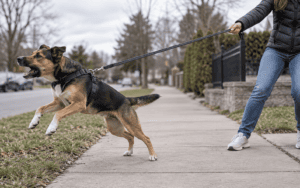
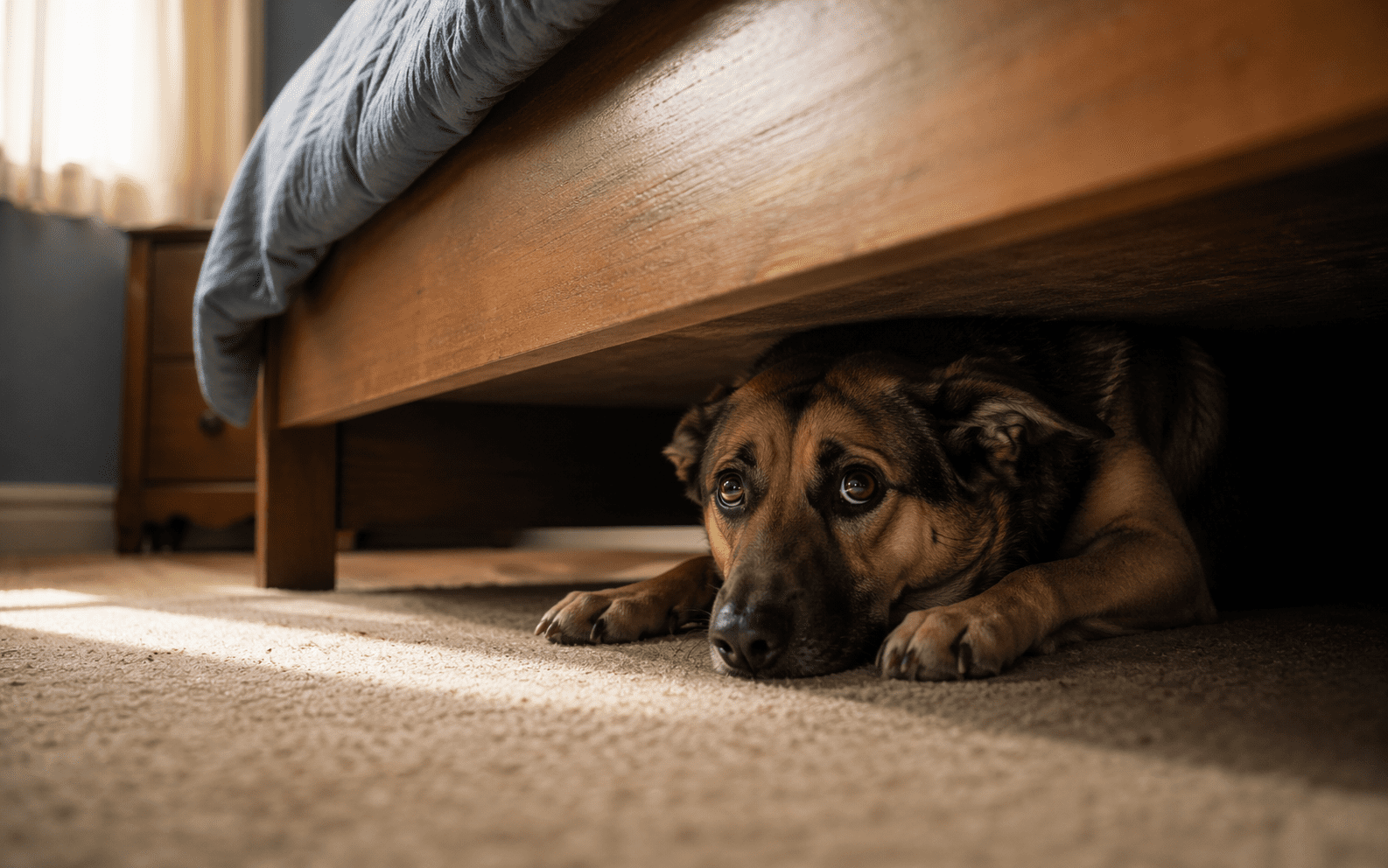
Why is my dog hiding under the bed or in quiet corners? Dogs hide when they feel scared, stressed, unwell, or overwhelmed by changes in their environment. Understanding the reason behind this behavior helps you respond correctly and give your dog the support they need.
Some hiding is normal, especially during storms or fireworks. But when a dog suddenly starts hiding all the time or refuses to come out, it often signals a deeper problem that needs your attention. Recognizing the difference between occasional retreat and a serious issue can protect your dog’s health and emotional wellbeing.
Keep reading to learn what drives hiding behavior, how to tell when it is serious, and what steps you can take to help your dog feel safe again.
What Does It Mean When Dogs Hide
Hiding is a natural behavior that dogs use to cope with stress, fear, or discomfort. In the wild, dogs and their ancestors would retreat to dens or sheltered spaces when they felt threatened or needed rest. Domestic dogs still carry this instinct.
When your dog hides, they are looking for a place where they feel protected. This could be under furniture, in a closet, behind a couch, or in a crate. The behavior itself is not always bad, but the reason behind it matters.
Dogs cannot tell you what is wrong, so hiding becomes their way of communicating that something does not feel right. Paying attention to when and how often your dog hides gives you clues about what they are experiencing.
📌 If your dog seems anxious or unsure in many situations, learning more about fear-based behavior can help. Check out why my dog is scared to understand the roots of canine anxiety.
Common Reasons Why Is My Dog Hiding
Dogs hide for many reasons, and each one requires a different response. Some causes are temporary and harmless, while others point to health or behavioral issues that need professional help.
Fear and Anxiety Trigger Hiding Behavior
Loud noises like thunderstorms, fireworks, or construction can send dogs into hiding. These sounds trigger a fear response, and your dog looks for a safe place to escape the perceived danger.
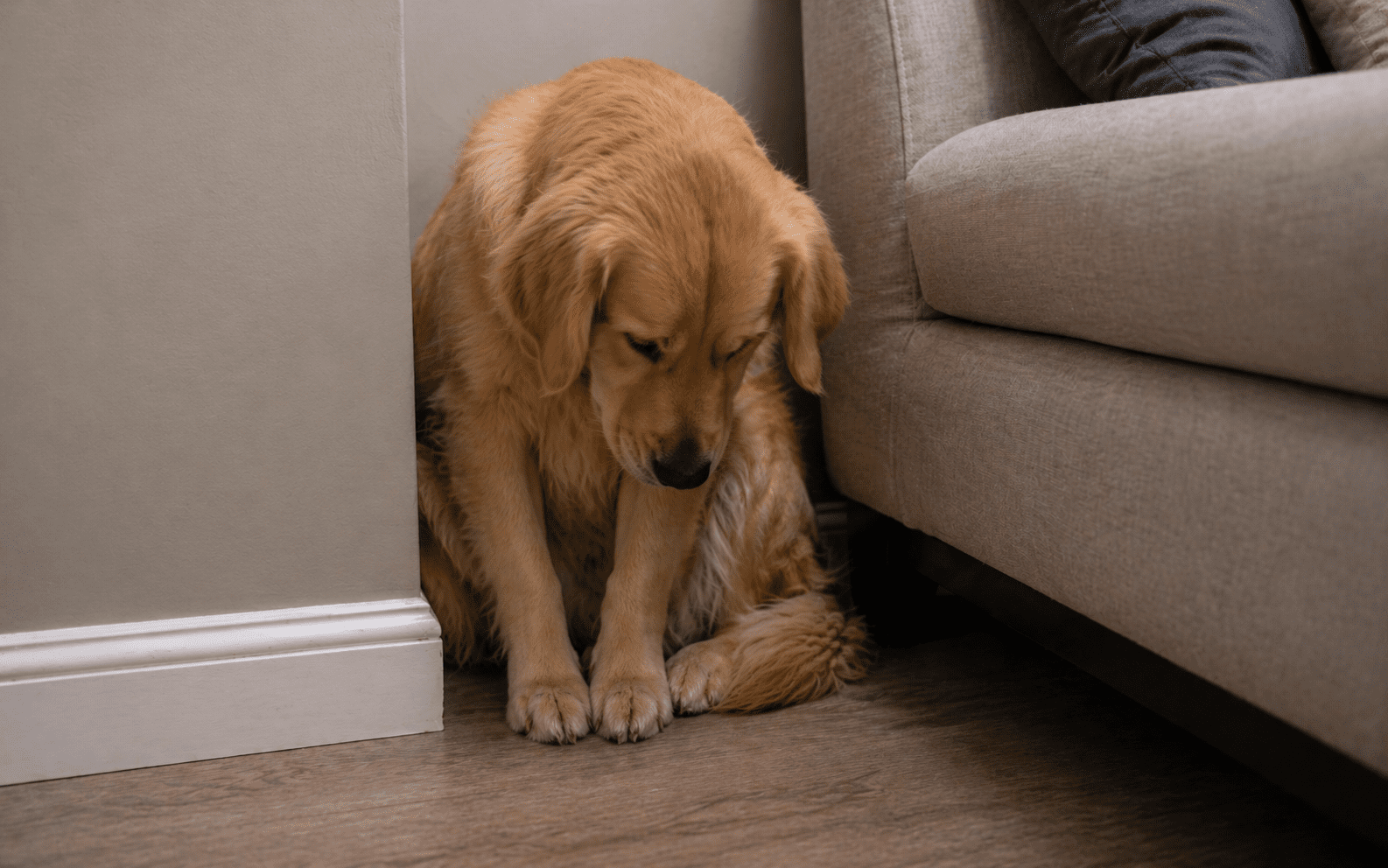
Other common fear triggers include:
- Vacuum cleaners or lawn mowers
- Strangers entering the home
- New pets or unfamiliar animals
- Sudden movements or raised voices
Some dogs are naturally more anxious than others. Rescue dogs or those with past trauma may hide more often because their nervous system is on high alert. Even well-adjusted dogs can develop new fears as they age or after a frightening experience.
If your dog hides during specific events but returns to normal afterward, the hiding is likely fear-based. Repeated or worsening anxiety, however, can signal a deeper issue that benefits from structured intervention.
Illness or Pain Causes Dogs to Isolate
A sick or injured dog often hides to protect themselves. In the wild, showing weakness makes an animal vulnerable to predators. Domestic dogs still follow this instinct, retreating when they do not feel well.
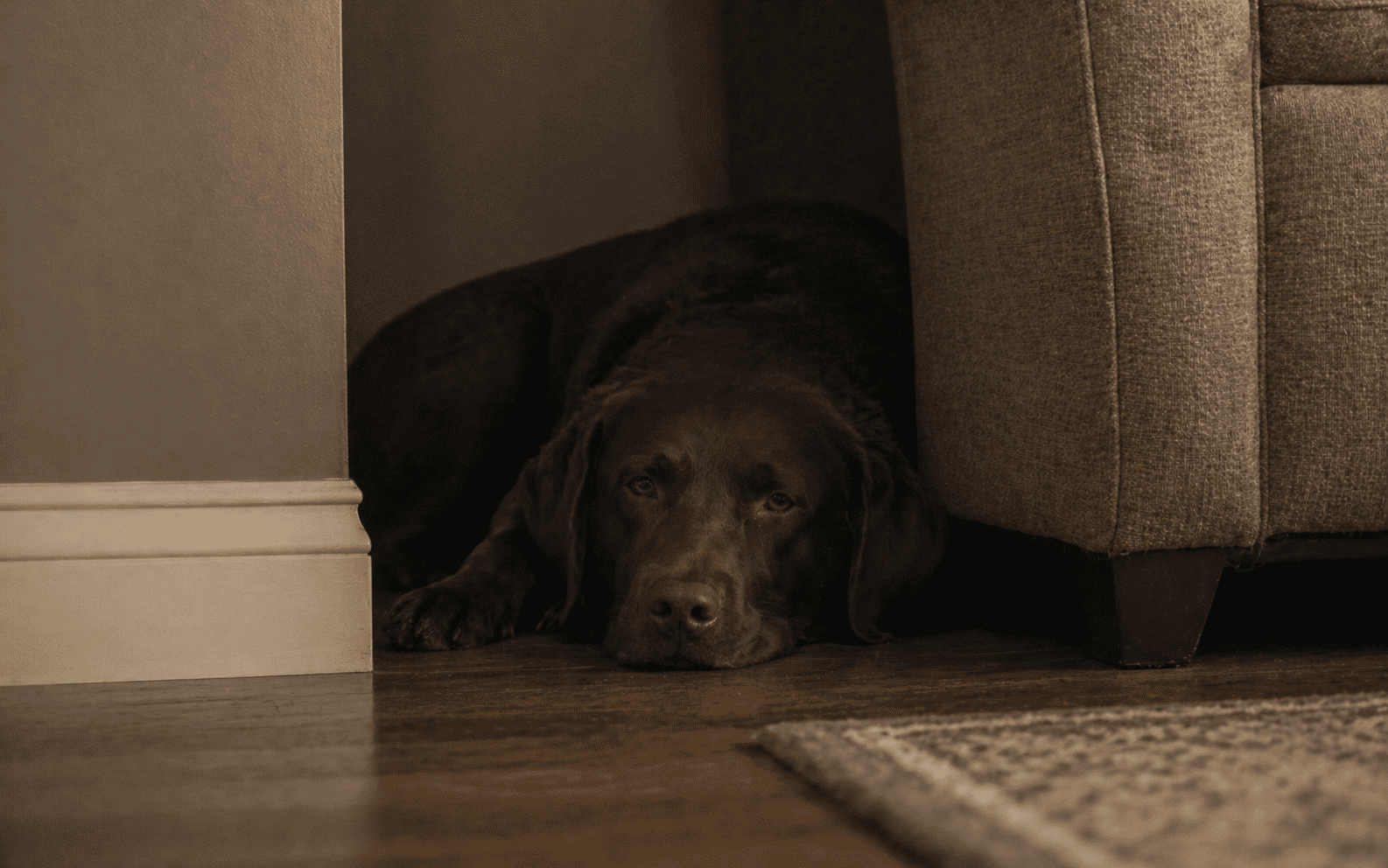
Signs your dog may be hiding due to illness include:
- Loss of appetite or thirst
- Lethargy or weakness
- Vomiting or diarrhea
- Limping or difficulty moving
- Changes in breathing or panting
Research shows that behavioral changes like hiding can be early indicators of serious health conditions in dogs. If your dog suddenly starts hiding and shows any physical symptoms, a veterinary exam is necessary.
Pain from arthritis, dental issues, or internal problems can make your dog want to be alone. They may avoid interaction because movement or touch hurts. Do not assume hiding is just a mood change if other symptoms appear.
Changes in Environment Upset Routine
Dogs thrive on predictability. When their environment changes suddenly, they may hide until they adjust. Moving to a new home, rearranging furniture, or introducing a new family member can all trigger this response.
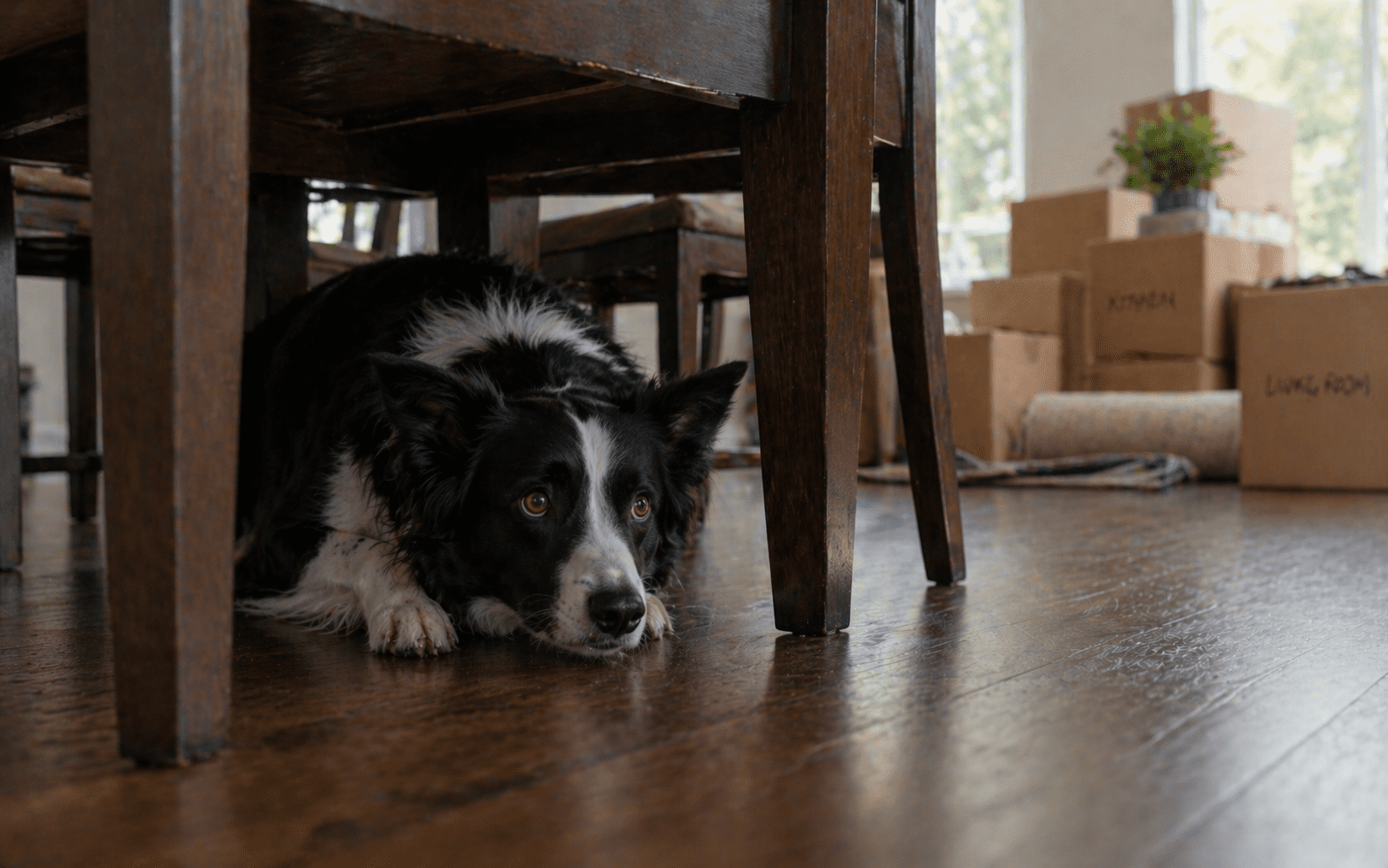
Other environmental changes include:
- New work schedules that alter your routine
- Construction or renovations in the home
- Visiting guests staying for extended periods
- Changes in household noise levels
Even small shifts can feel significant to a sensitive dog. They may hide while they figure out whether the change is safe. Most dogs adapt within a few days to a week, but some need more time and reassurance.
If the hiding continues beyond two weeks, the stress may be too much for your dog to handle alone. Structured support helps them build confidence in the new situation.
📌 Building confidence in anxious or fearful dogs takes patience and the right approach. Learn proven methods in help a fearful dog gain the courage they need.
Past Trauma and Abuse Leave Lasting Effects
Dogs with a history of neglect or abuse often hide as a survival strategy. They learned that staying out of sight kept them safer. Even after being placed in a loving home, these dogs may continue hiding because the behavior is deeply ingrained.
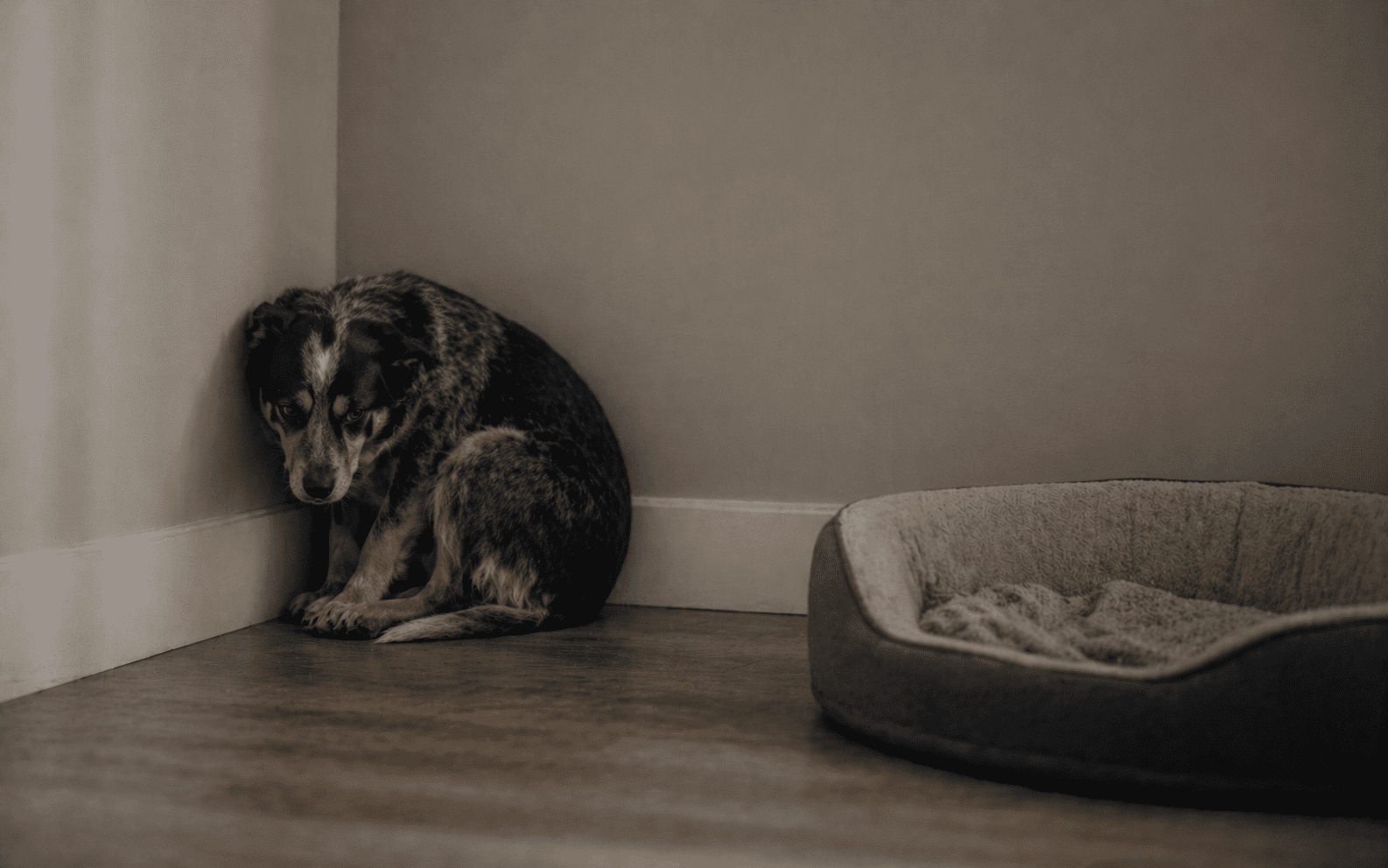
Trauma-related hiding looks different from fear-based hiding. These dogs may:
- Avoid eye contact or human interaction
- Flinch when approached or touched
- Hide for hours or days at a time
- Show extreme submission behaviors
Rebuilding trust with a traumatized dog takes time and consistency. Forcing them out of hiding or overwhelming them with attention usually makes things worse. Slow, patient work helps them learn that their new environment is safe.
Professional guidance often makes a significant difference for dogs with trauma histories. Structured programs teach them new patterns while respecting their need for safety.
Things to Know About Hiding Behavior in Dogs
Not all hiding requires intervention, but understanding the context helps you decide when to act. Here are key facts that guide your response.
Temporary Hiding vs. Chronic Hiding
Occasional hiding during storms or after a stressful event is normal. If your dog comes out within a few hours and returns to regular behavior, you do not need to worry.
Chronic hiding means your dog spends most of their time isolated, avoids family interaction, or refuses to come out even for food or walks. This pattern suggests a deeper problem.
Breed and Personality Differences
Some breeds are naturally more independent and may seek alone time more often. Breeds like Basenjis, Shiba Inus, and some hounds prefer quiet spaces and may hide simply to rest.
High-energy breeds like Border Collies or Labrador Retrievers that suddenly start hiding are showing a more unusual behavior change. Their normal pattern is engagement, so isolation stands out.
Age-Related Hiding
Senior dogs may hide more as they lose hearing or vision. A dog that cannot see or hear well feels more vulnerable and may retreat to familiar, enclosed spaces.
Puppies going through fear periods (around 8-11 weeks and again at 6-14 months) may also hide temporarily. These developmental stages are normal but require gentle handling.
When Hiding Becomes a Serious Concern
Some hiding situations require immediate attention. Knowing when to seek help protects your dog from worsening health or behavioral issues.
| Warning Sign | What It Means | Action Needed |
| Hiding with physical symptoms (vomiting, lethargy, limping) | Possible illness or injury | Veterinary exam within 24 hours |
| Hiding for days without eating or drinking | Severe stress or medical crisis | Immediate veterinary care |
| Hiding after a known traumatic event (attack, accident) | Emotional trauma response | Veterinary check, then behavioral support |
| Sudden hiding in a normally social dog | Pain, fear, or illness | Veterinary exam to rule out medical causes |
If your dog shows any of these patterns, do not wait. Early intervention prevents small problems from becoming major crises.
How to Help Your Dog Stop Hiding
The right approach depends on why your dog is hiding. Forcing them out before they are ready can increase fear and make the problem worse.
Create a Safe Space They Control
If your dog hides in a specific spot, make that area more comfortable. Add a soft bed, a blanket with your scent, and low lighting. Let them have control over this space without being disturbed.

Do not pull your dog out or block access to their hiding place. This increases anxiety and teaches them they have no safe zone in the home.
Address the Root Cause
If noise triggers the hiding, consider:
- White noise machines or calming music during storms
- Closing curtains to reduce visual stimulation
- Using a ThunderShirt or anxiety wrap
- Desensitization training with professional guidance
For illness-related hiding, veterinary treatment must come first. Once physical issues are resolved, behavioral support helps rebuild confidence.
For trauma or chronic anxiety, professional dog behavior training provides structured steps to change the pattern. These programs teach your dog new coping skills while addressing the underlying fear.
Use Positive Reinforcement, Not Force
When your dog voluntarily comes out of hiding, reward them with calm praise, treats, or gentle petting. Do not make a big deal out of it or overwhelm them with attention.
Avoid punishment or scolding. This increases fear and makes hiding more appealing as an escape strategy.
Gradual Exposure to Triggers
If your dog hides from specific triggers, slow exposure can help. Start at a distance or low intensity where your dog stays calm, then reward relaxed behavior. Gradually increase exposure over days or weeks.
This process, called desensitization, helps your dog build tolerance without flooding their nervous system. Rushing this step usually backfires.
Professional Help for Dogs Who Hide
Some hiding behaviors need more than basic management. Professional training provides structure and expertise that speeds up progress and prevents problems from worsening.
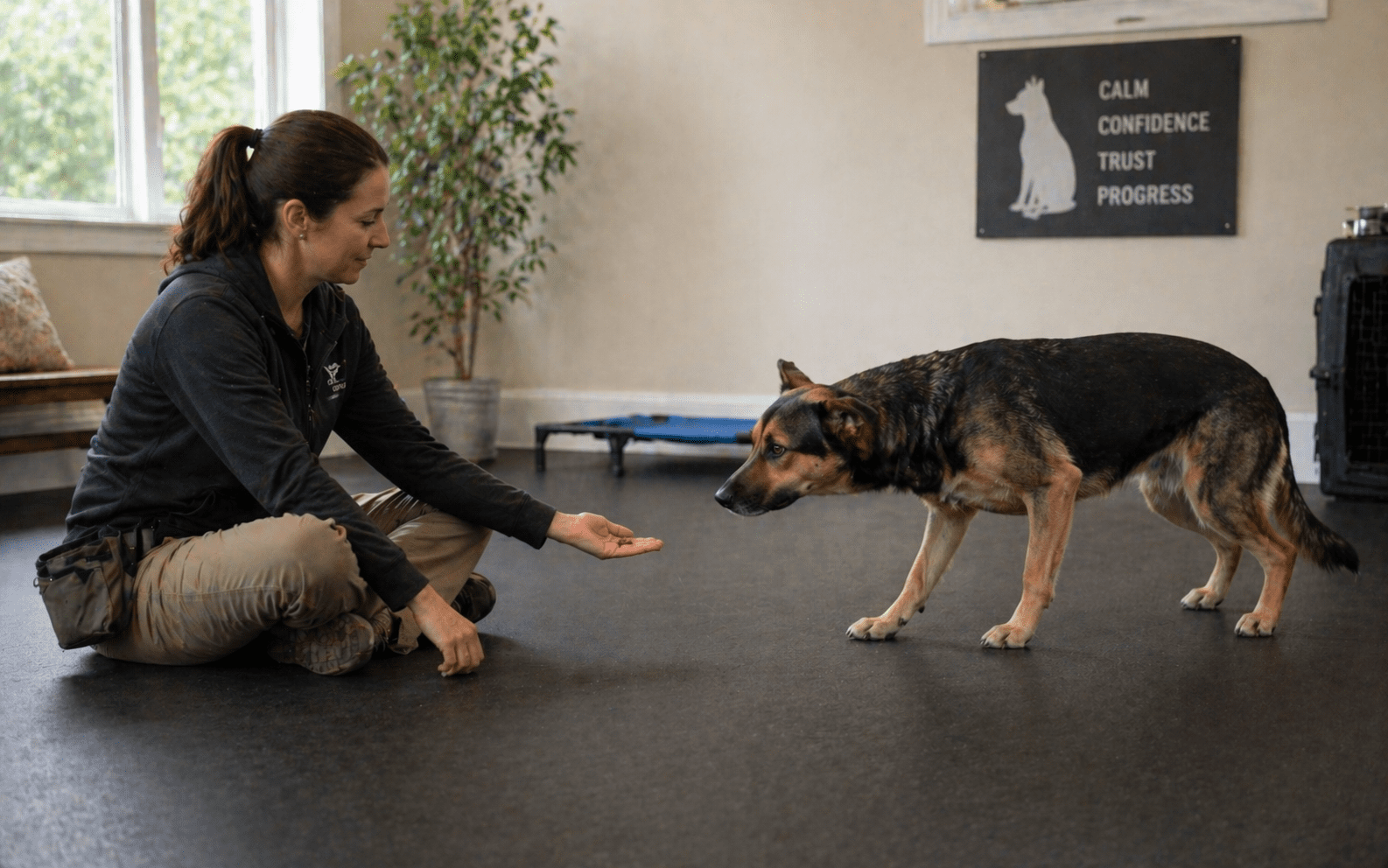
When to Choose Professional Training
Consider professional help if:
- Your dog hides for more than a week straight
- Hiding started after a traumatic event and is not improving
- Your dog shows aggression when approached while hiding
- Multiple interventions have not worked
- Your dog has a trauma history and needs specialized support
A structured program like board and train Long Island gives your dog intensive, focused work in a controlled environment. This approach works well for dogs with severe anxiety or fear-based behaviors that resist home-based training.
What Professional Training Addresses
Quality training programs assess the root cause of hiding and build a custom plan. This may include:
- Confidence-building exercises
- Desensitization to specific triggers
- Impulse control and emotional regulation
- Handler education for consistent follow-through at home
Professional trainers see patterns that owners miss and adjust strategies based on your dog’s responses. This targeted work often resolves issues faster than trial-and-error home methods.
📌 Structured obedience work builds confidence and gives anxious dogs clear expectations. Explore how dog obedience training creates a foundation for behavioral improvement.
Comparing Hiding Behavior Causes and Solutions
Understanding the differences between types of hiding helps you respond correctly.
| Cause | Typical Duration | Other Symptoms | Best Solution |
| Fear (storms, fireworks) | Hours to one day | Panting, pacing, trembling | Safe space, calming aids, desensitization |
| Illness or pain | Days or until treated | Lethargy, appetite loss, physical changes | Veterinary care immediately |
| Environmental change | Days to two weeks | Mild stress, gradual improvement | Patience, routine consistency, reassurance |
| Trauma or chronic anxiety | Weeks to months | Avoidance, extreme submission, no improvement | Professional behavioral training |
Each cause requires a different response. Mismatching the solution to the cause delays progress and can make things worse.
Signs Your Dog May Be Depressed
Hiding can sometimes overlap with depression, especially if your dog shows other changes. Depressed dogs often lose interest in activities they once enjoyed, sleep more than usual, and avoid interaction.
If your dog hides and also shows these signs, depression may be the underlying issue. Understanding the full picture helps you provide better support.
📌 Depression in dogs looks different from human depression but is just as serious. Learn the warning signs in signs your dog is depressed to catch problems early.
Understanding Why Your Dog Hides and Moving Forward
Why is my dog hiding is a question with many answers, and each one points to a specific need your dog has. Whether the cause is fear, illness, environmental stress, or past trauma, your response should match the root problem. Quick action prevents small issues from growing into serious behavioral or health crises.
With patience, observation, and the right support, most dogs can overcome hiding behavior and return to feeling safe and engaged in their home. When home strategies are not enough, professional guidance provides the structure and expertise needed for lasting change.
Trust K9 Mania Dog Training for Lasting Results
At K9 Mania Dog Training, we are the leading board and train provider on Long Island, specializing in dogs with fear, anxiety, and behavioral challenges. Whether your dog hides due to trauma, stress, or chronic anxiety, we create custom training plans that address the root cause and build real confidence. Trust us to help your dog overcome hiding behavior and thrive. Visit k9maniadogtraining.com to learn how we can support you and your dog.
You May Also Want to Read
How Do You Keep Your Dog Off the Couch
How to Train a Dog Not to Jump: A Complete Guide
Frequently Asked Questions About Dogs Hiding
Why is my dog suddenly hiding all the time?
Sudden, constant hiding usually signals a significant change in your dog’s physical or emotional state. Common causes include illness, pain, a traumatic event, or a major environmental shift like moving or losing a family member. Dogs that hide all the time need a veterinary exam to rule out medical issues first. If health checks come back clear, the problem is likely behavioral and may require professional intervention to resolve.
Do dogs hide away when they are sick?
Yes, dogs often hide when they feel sick or injured because their instinct tells them to protect themselves when vulnerable. Illness-related hiding usually comes with other symptoms like lethargy, loss of appetite, vomiting, diarrhea, or changes in breathing. If your dog hides and shows any physical symptoms, schedule a veterinary appointment right away. Early diagnosis and treatment prevent minor issues from becoming serious health crises.
Why is my dog suddenly isolating himself?
Sudden isolation in a normally social dog points to stress, fear, pain, or illness. Dogs isolate when they do not feel safe or when something hurts. Changes in routine, new people or pets in the home, or undiagnosed medical conditions can all trigger this behavior. Watch for other signs like reduced activity, appetite changes, or unusual posture. If isolation lasts more than a day or two, veterinary evaluation is the first step.
Why is my dog suddenly wanting to be alone?
A dog that suddenly wants to be alone may be overwhelmed by stress, experiencing pain, or entering a fear period if they are young. Senior dogs sometimes seek solitude as their senses decline and the world feels more unpredictable. Alone time is normal in small amounts, but a sudden shift from social to isolated suggests something has changed in your dog’s physical or emotional state that needs investigation and support.
How do I get my dog to stop hiding?
To stop hiding behavior, first identify and address the root cause. If illness or pain is present, veterinary care comes first. For fear-based hiding, create a safe space your dog controls, avoid forcing them out, and use positive reinforcement when they emerge voluntarily. Gradual desensitization to triggers helps reduce fear over time. Chronic hiding or trauma-related patterns often require professional training to change the behavior effectively.
How to get a dog to come out of hiding?
Never force a hiding dog out of their safe space, as this increases fear and worsens the problem. Instead, make the environment calm and inviting by lowering noise, dimming lights, and removing obvious triggers. Place high-value treats or their favorite toy near the hiding spot and give them space. Reward any movement toward coming out with quiet praise. Patience and consistency work better than pressure or commands when rebuilding a dog’s sense of safety.