Training a service dog is a structured, multi-stage process that typically takes one to two years of consistent, specialized work. Whether you pursue owner-training, hire a professional, or enroll your dog in a residential program, the foundation is the same: task-specific obedience built on rock-solid public access behavior.
Key Takeaways
- Service dog training covers two distinct categories: public access skills and disability-related task work.
- Most dogs require 18 to 24 months of training before they are reliably ready for full public access.
- Breed, temperament, and early socialization are the biggest predictors of whether a dog will complete training successfully.
- A board and train long island program compresses months of foundational work into weeks of intensive, professional-led sessions.
- Owner involvement does not stop when a dog enters a residential program; you will need to maintain skills daily after the dog returns home.
- Under the Americans with Disabilities Act (ADA), a service dog must be trained to perform a specific task related to a handler’s disability.
What Makes a Service Dog Different From a Pet
Before you can understand how to train a service dog, you need to understand what legally and practically separates a service dog from a well-behaved pet or an emotional support animal.
Under the ADA, a service dog is defined as a dog trained to perform at least one specific task that mitigates a handler’s disability. That task must be directly related to the disability. A dog that simply provides comfort or companionship does not qualify under ADA definitions, though emotional support animals carry their own legal protections in housing under the Fair Housing Act.
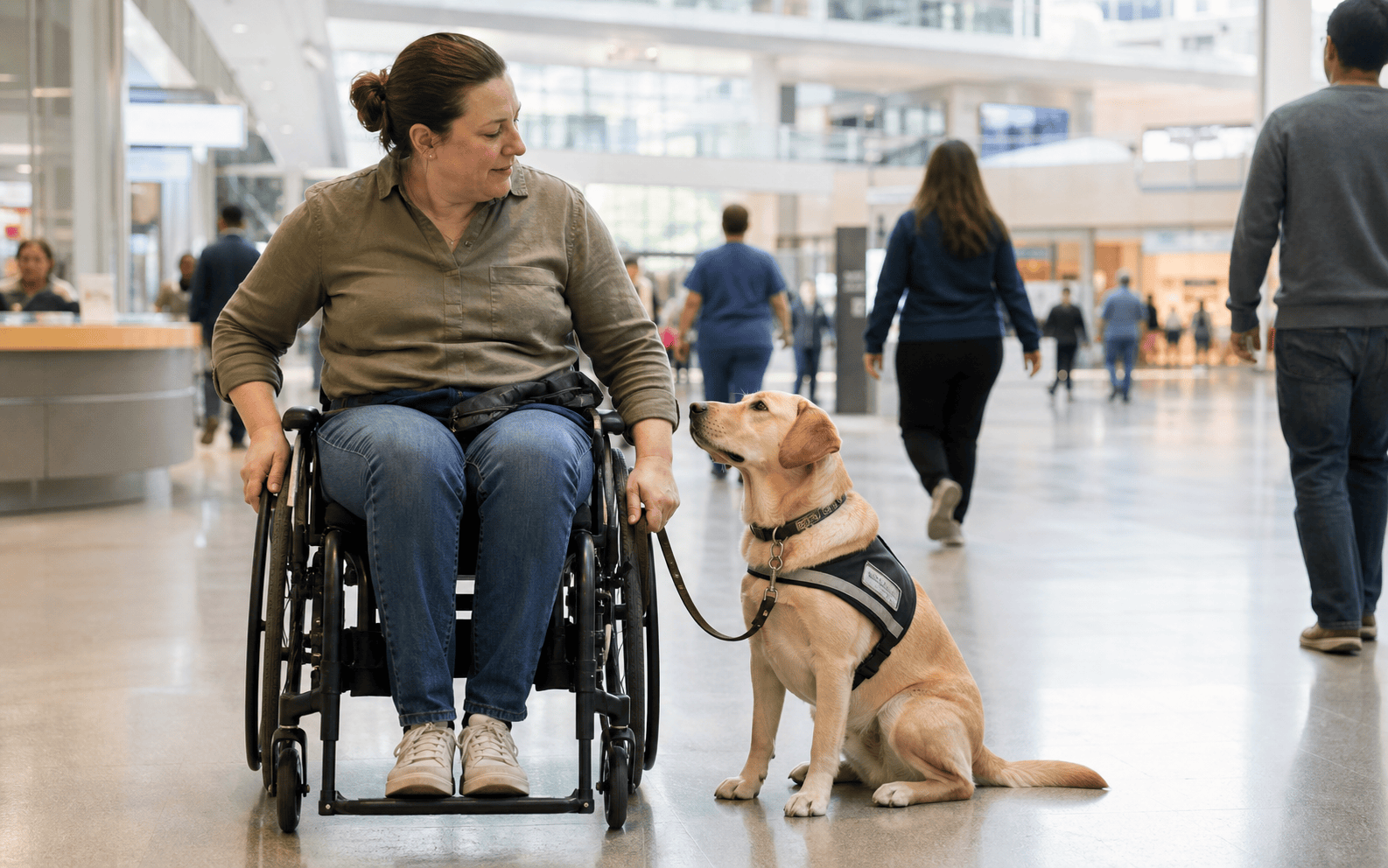
Practically speaking, service dogs must meet two distinct standards:
- Public Access Standards: The dog must behave calmly and reliably in any public environment, including crowded stores, hospitals, airports, and restaurants. No excessive barking, jumping, sniffing, or soliciting attention from strangers.
- Task Performance: The dog must perform a trained behavior that helps offset a specific disability. Examples include alerting to blood sugar changes for diabetics, retrieving dropped objects for wheelchair users, interrupting self-harm behavior for individuals with PTSD, and guiding visually impaired handlers around obstacles.
If you are working toward a comfort or emotional support role rather than a full ADA-recognized service animal, how to train a comfort dog covers the relevant distinctions and training steps for that path.
Choosing the Right Dog for Service Work
Selecting the right dog is arguably more important than any training method you choose. Most professional trainers will tell you that temperament testing before committing to a training program saves months of wasted effort and thousands of dollars.
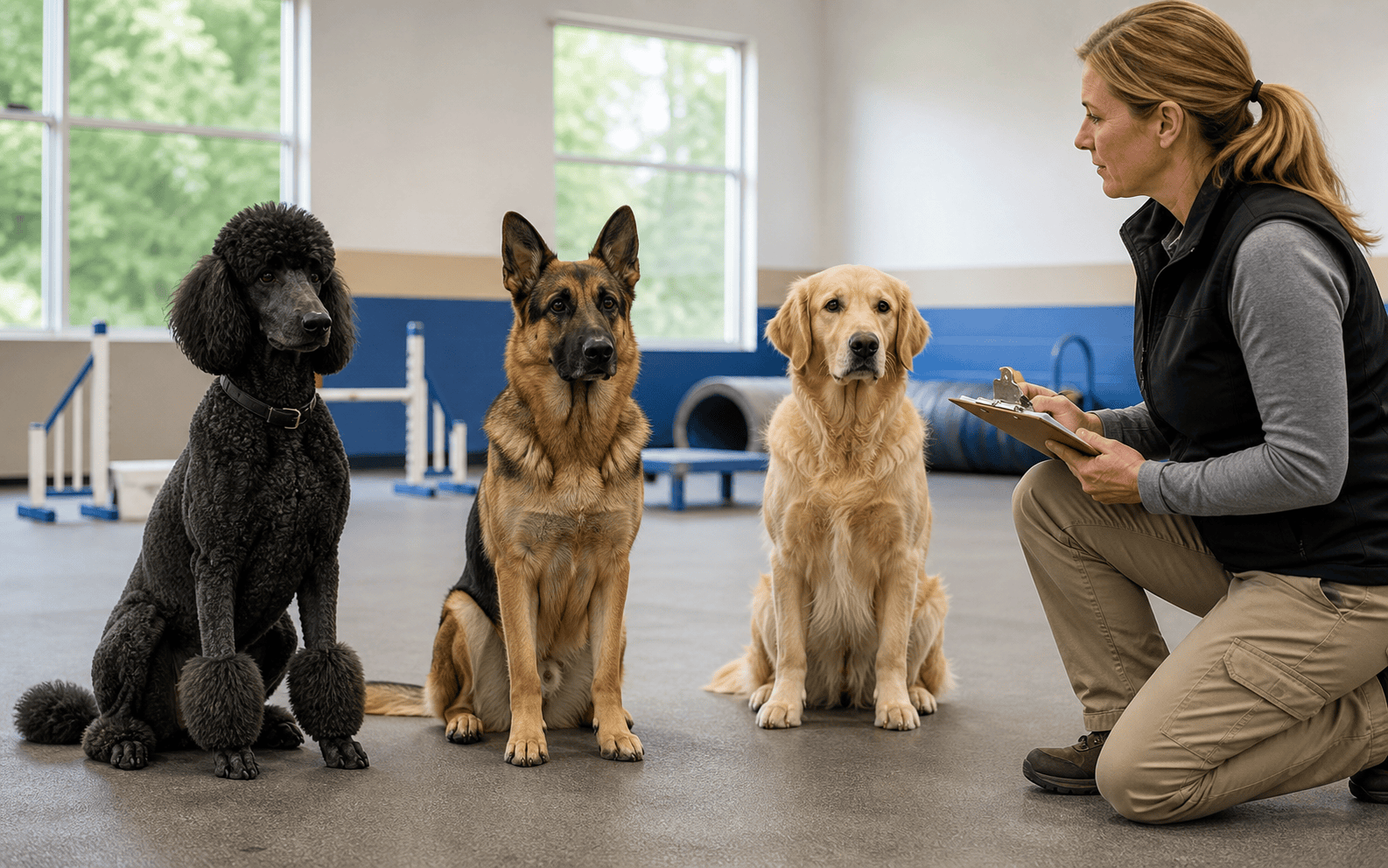
The qualities that predict success in service work include:
- Stable temperament: The dog should not startle easily, should recover quickly from unexpected sounds or environments, and should show no aggression toward people or other animals.
- High focus and trainability: A dog that is food or toy motivated and can maintain attention in distracting environments will progress faster.
- Physical suitability: Mobility assistance dogs need body size and structural soundness to perform physical tasks safely. A small dog cannot brace a full-grown adult.
- Age: Starting with a puppy gives you the most control over socialization windows, but adult dogs with the right temperament can also be trained. If you are starting young, read up on puppy training long island programs that build the early obedience foundation service work requires.
For a detailed breakdown of breeds that consistently perform well in service roles, the resource on best service dog breeds outlines the temperament traits, size considerations, and task suitability for each breed.
Common choices include Labrador Retrievers, Golden Retrievers, Standard Poodles, German Shepherds, and Bernese Mountain Dogs. Mixed breeds can also excel, provided they pass temperament assessment.
The Core Stages of Service Dog Training
Regardless of the training format you choose, the process follows a predictable progression.
Stage 1: Early Socialization (Weeks to 6 Months)
This stage is entirely about exposure. The dog needs to encounter as many environments, sounds, surfaces, people, and animals as possible in a positive, controlled way. Gaps in socialization during the critical development window (roughly 3 to 14 weeks for puppies) can create fear responses that are very difficult to retrain later.
Stage 2: Foundation Obedience (Months 2 to 8)
The dog learns core commands: sit, down, stay, come, heel, leave it, and place. Every command must be fluent at home, then generalized across dozens of different environments. A dog that sits reliably in your kitchen but not in a parking lot is not yet trained for service work.
Stage 3: Public Access Training (Months 6 to 18)
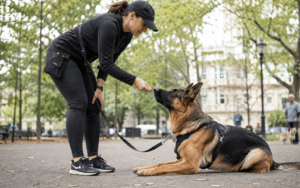
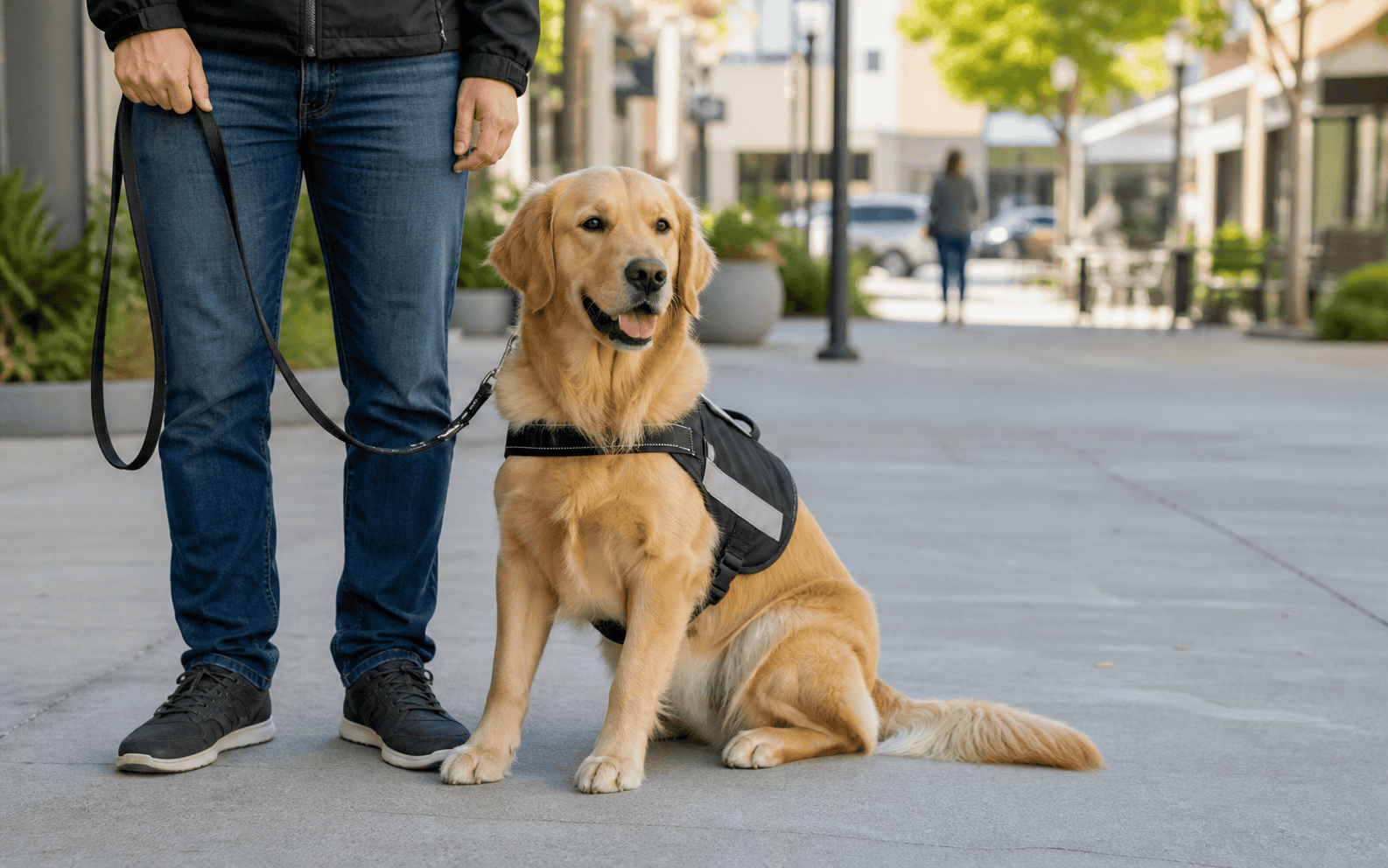
This is where most owner-trainers underestimate the workload. Public access training means taking the dog into real-world environments repeatedly: grocery stores, restaurants, transit systems, medical offices. The dog must remain calm under a service dog vest, ignore food on the floor, stay beside the handler without pulling, and not react to other dogs or unfamiliar people.
Stage 4: Task-Specific Training (Months 12 to 24)
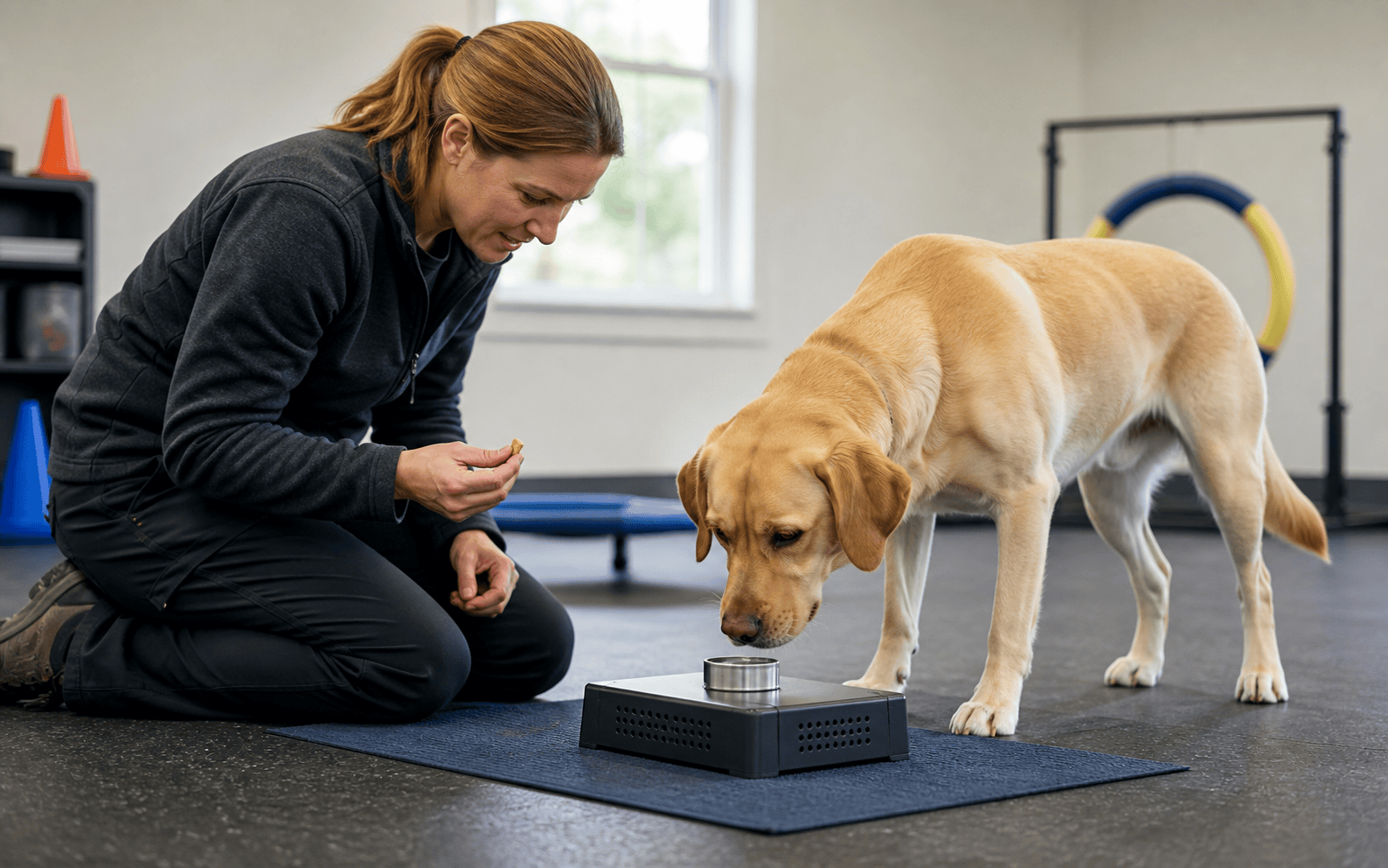
Once public access reliability is established, task training begins or intensifies. Tasks are broken into small steps using shaping and positive reinforcement. A diabetic alert dog, for example, learns to identify a specific odor sample associated with blood sugar changes, then learns to perform a specific alert behavior (touching the handler’s leg, retrieving a kit, or pressing an alert button) when they detect that odor.
Owner-Training vs. Professional Programs: What the Trade-offs Look Like
Many handlers choose to owner-train their service dog to save costs and maintain a direct bond with the animal throughout the process. Owner-training is legal under the ADA, and there is no federal requirement to use a professional program or obtain certification from a third party.
That said, owner-training comes with significant demands on your time, knowledge, and consistency. Missing training sessions, applying commands inconsistently, or skipping public access repetitions can set a dog back weeks. Many owner-trainers also struggle with the “third-party eye” problem: it is hard to objectively assess your own dog’s behavior when you are emotionally attached to them.
Professional training programs address this directly. A structured residential program compresses months of foundational work into intensive, daily training sessions led by experienced handlers who know exactly what service-level behavior looks like. For Long Island dog owners weighing this option, board and train long island programs offer a structured residential model where your dog lives with a trainer and works through obedience and public access skills at a pace that is simply not possible in once-a-week lessons.
The comparison table below summarizes the key differences:
| Factor | Owner-Training | Board & Train Program |
| Time commitment | High (daily, 1-2 years) | Lower during program; daily maintenance after |
| Cost | Lower upfront; variable over time | Higher upfront; faster skill acquisition |
| Consistency | Depends on handler | Professional, structured daily sessions |
| Feedback | Self-assessed; risk of missing gaps | Trainer identifies and addresses problems |
| Bond | Built throughout training | Maintained and reinforced after handoff |
| Best for | Experienced handlers with time | Busy owners; dogs with specific problem areas |
How a Board and Train Program Fits Into Service Dog Development
A board and train program is not a shortcut, but it is a significant accelerator. When a dog spends several weeks training daily with a professional, they accumulate hours of repetition that most owners cannot realistically replicate on a part-time schedule.
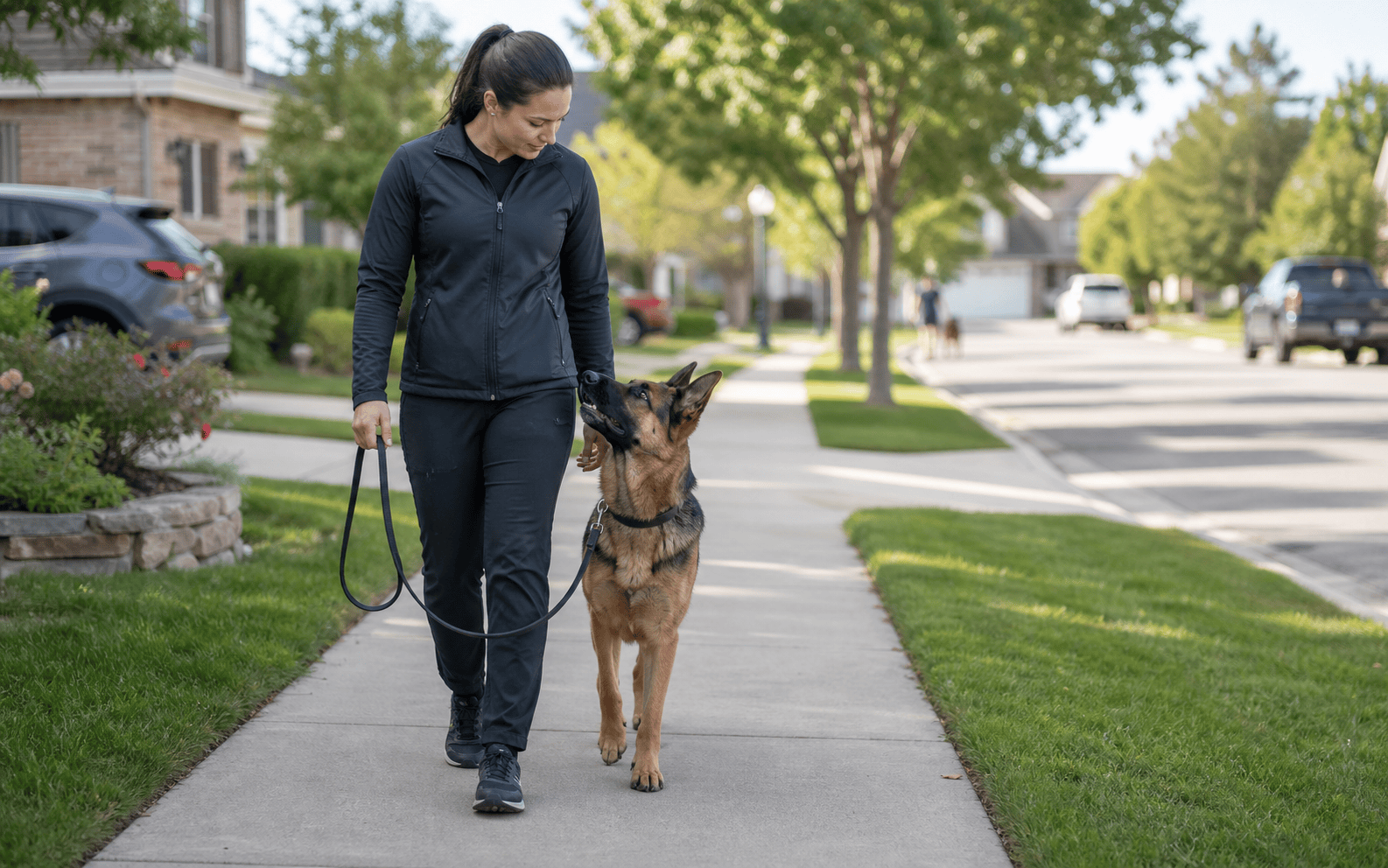
Specifically, a residential program is most valuable for:
- Building reliable foundation obedience before task training begins
- Addressing problem behaviors (leash reactivity, anxiety, jumping) that would otherwise delay public access training
- Generalizing commands across many environments in a short window
After the program ends, the handler takes over and must maintain those skills through daily practice. Trainers who offer private dog training long island sessions after a board and train program are particularly valuable here, as they can help you transition the dog’s obedience from the training environment to your specific home and daily routine.
What to Expect During the Handoff Process
One of the most under appreciated parts of a board and train experience is the handoff session. After your dog has completed a residential program, you will meet with the trainer to learn how to handle your dog correctly. This is not a formality.
If you have been using inconsistent commands, body language, or reward timing, those habits will confuse a dog that has been trained to respond to clean, precise cues. Good trainers spend significant time during the handoff teaching you how to:
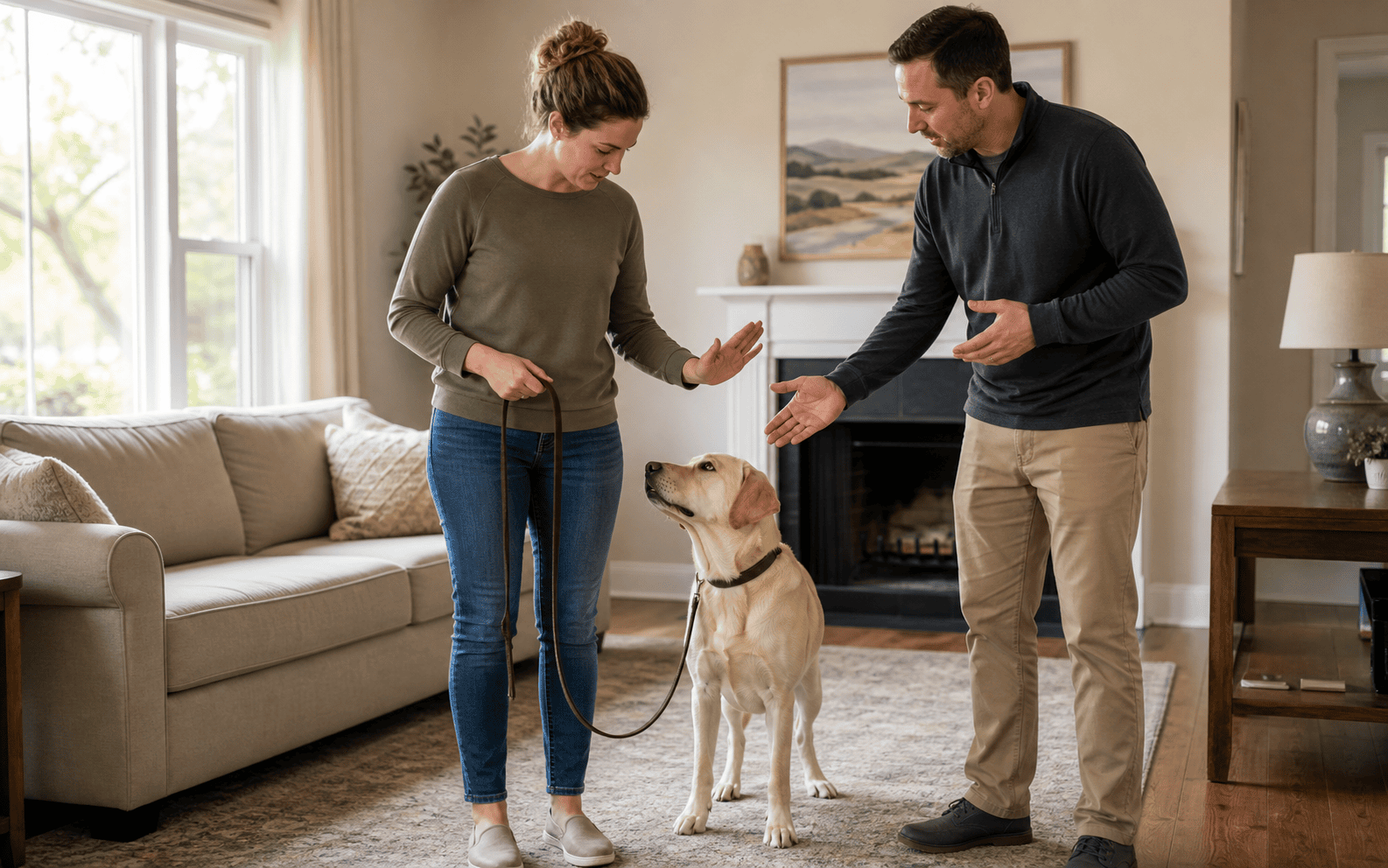
- Give commands at the correct moment
- Use the leash and any training tools properly
- Reinforce correct behavior without inadvertently rewarding mistakes
- Recognize early signs of stress or distraction and manage them proactively
Some Long Island owners find that combining a residential program with in home dog training long island sessions afterward creates the smoothest transition, because the trainer can see exactly how the dog behaves in your specific home environment and adjust your handling technique accordingly.
Legal Protections and Access Rights You Should Know
Once your dog reaches service-level reliability, you gain specific legal protections under federal law. Under the ADA, service dogs are permitted to accompany their handlers in virtually all areas open to the public, including restaurants, retail stores, hotels, and transportation. Businesses cannot require proof of certification, a vest, or documentation.
New York State mirrors ADA protections and adds additional provisions under the New York Human Rights Law. Landlords in New York must make reasonable accommodations for service dogs even in no-pet buildings, and housing providers cannot charge pet deposits for a certified service animal.
Airlines are governed separately under the Air Carrier Access Act, and policies vary by carrier. It is worth calling ahead before flying with your dog, especially during the first year when the dog’s public access reliability is still being refined.
Understanding your rights helps you advocate confidently in the field, but those rights only apply if your dog is genuinely trained to perform a specific task. A dog that has completed obedience training but does not yet perform a disability-related task does not qualify for ADA protections, regardless of the vest they are wearing.
Things to Know
- The ADA does not require service dogs to be professionally trained or certified by any organization. Owner-trained dogs have the same legal access rights as dogs trained by accredited programs, provided they perform a genuine disability-related task.
- Buying a vest online and placing it on an untrained dog is not legal service dog access. Misrepresenting a pet as a service animal is a misdemeanor in New York State under Section 218-b of the New York Agriculture and Markets Law.
- “In training” service dogs in New York State have limited public access rights compared to fully trained service animals. Check current state statutes before bringing a dog in training into restricted public spaces.
- Not every dog that begins service dog training will complete it. Wash-out rates are significant even among dogs selected by professional programs. Having a realistic exit plan for a dog that does not make the cut protects both you and the animal.
- Task training and obedience training are not the same thing. A dog can have flawless obedience and still fail to perform a reliable medical alert or mobility task. Both skill sets must be developed and maintained separately.
- Recertification is not federally required, but regular skill maintenance is essential. A service dog that goes months without structured practice will experience skill degradation, particularly in public access reliability.
Start Your Dog’s Service Training on the Right Foot
If you are serious about training a service dog, the single most important decision you will make is who guides the foundational work. Inconsistent early training creates habits that are expensive and time-consuming to correct later, and those habits will follow your dog into every public access situation for years to come.
K9 Mania Dog Training works with Long Island dog owners who need a structured, professional foundation built quickly and correctly. Whether your dog needs intensive residential training or targeted follow-up sessions after a program, the team is equipped to meet you where you are in the process.
Contact K9 Mania Dog Training today to schedule an evaluation and find out which program is the right fit for your dog’s service work goals.
You May Also want to Read
Is Board and Train Right for a Reactive Dog
How to Train Your Dog Not to Bark
Frequently Asked Questions
How long does it take to train a service dog?
Most service dogs require between 18 and 24 months of training before they are reliably ready for full public access and consistent task performance.
The exact timeline depends on the dog’s starting age, temperament, how many hours per week are dedicated to training, and the complexity of the tasks being taught. Dogs enrolled in intensive residential programs can build a strong foundation faster, but task-specific training and real-world generalization still require sustained effort after the program ends.
Can I train my own service dog without hiring a professional?
Yes, owner-training is fully legal under the ADA, and there is no federal requirement to use a professional trainer or obtain third-party certification.
However, owner-training demands a high level of consistency, knowledge, and honest self-assessment. Many owner-trainers benefit from working with a professional at key stages of the process, particularly during public access training and task shaping, to identify gaps they may not be able to see objectively on their own.
What is the difference between a service dog and an emotional support animal?
A service dog is trained to perform a specific task related to a handler’s disability, while an emotional support animal provides comfort through companionship but is not trained to perform any defined task.
Under the ADA, only service dogs have broad public access rights. Emotional support animals are protected primarily in housing situations under the Fair Housing Act. Airlines have also significantly restricted emotional support animal access since 2021 under updated Department of Transportation rules.
At what age should I start training a service dog?
Most professional trainers recommend beginning socialization and foundation obedience work between 8 and 16 weeks of age, during the dog’s critical developmental window.
Starting early gives you the most control over how the dog responds to new environments, people, and stimuli. That said, adult dogs with stable temperaments can still be trained for service work, particularly for tasks that do not require the dog to have been conditioned from puppyhood. A thorough temperament evaluation by a professional trainer should always precede a significant training investment in an adult dog.
How much does it cost to train a service dog?
The total cost of training a service dog varies widely depending on whether you owner-train, hire a professional for periodic lessons, or enroll in a full residential board and train program.
Owner-training with professional support at key milestones typically costs several thousand dollars over the full training period. Comprehensive professional programs, including residential board and train, can range from several thousand dollars to significantly more depending on the duration, the tasks being trained, and the organization. Fully trained service dogs purchased from accredited programs can cost considerably more because the organization has absorbed years of training costs before the dog is placed.
The Bottom Line on How to Train a Service Dog
Training a service dog is one of the most demanding and rewarding commitments a dog owner can take on. The process requires the right dog, a clear understanding of both public access and task requirements, and a training approach that builds skills systematically over months, not weeks. Cutting corners at any stage creates reliability problems that surface at exactly the wrong moment in real-world situations.
If you are based on Long Island and ready to take the next step, working with a local professional who understands both the training demands of service work and your specific daily environment makes a measurable difference in outcomes. Reach out to K9 Mania Dog Training to schedule an evaluation for your dog and get a clear picture of what the training path ahead looks like.