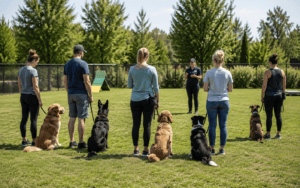
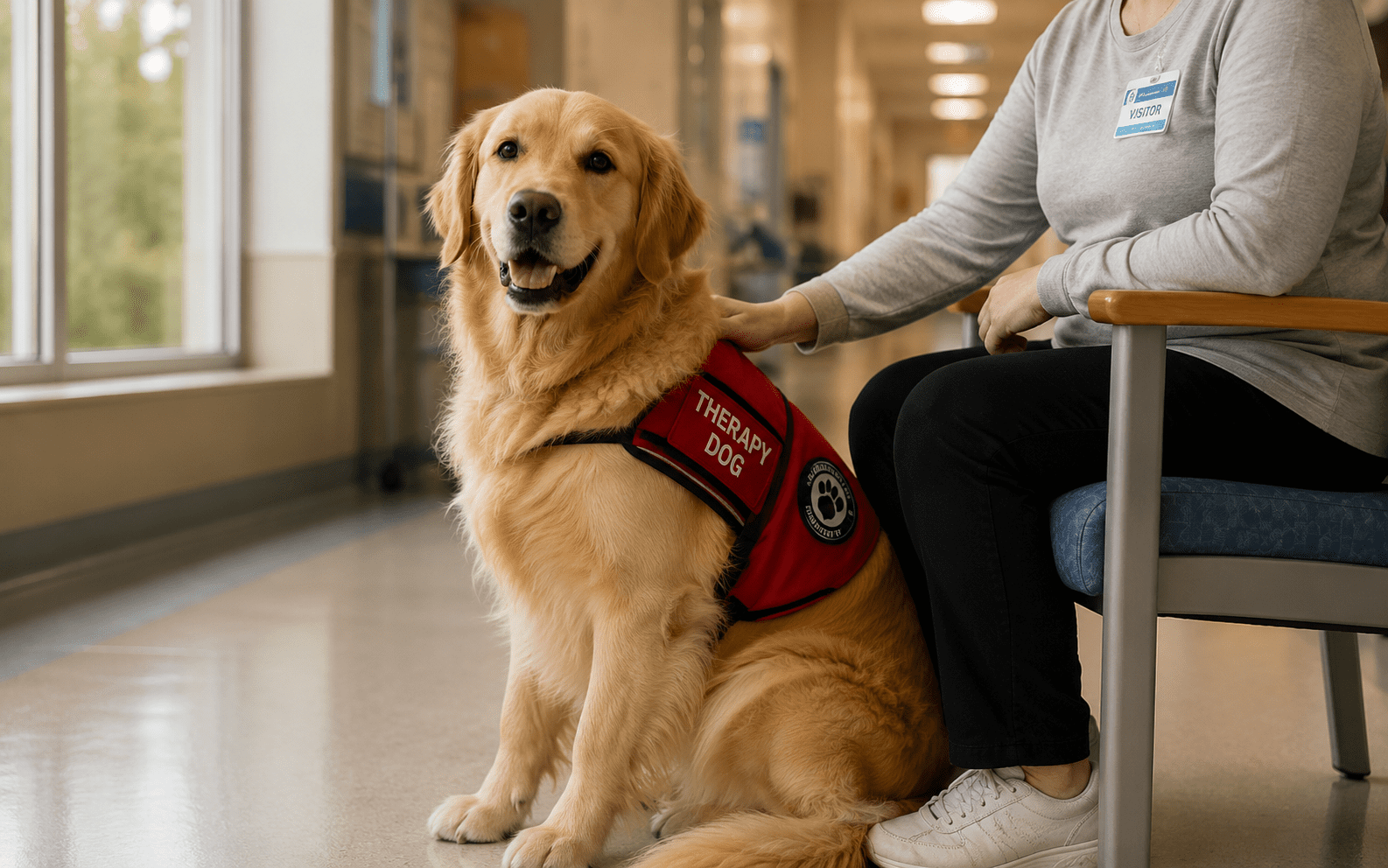
You can train your dog to be a comfort dog by building a calm temperament, teaching core obedience commands, and practicing consistent exposure to people and new environments. Most dogs can reach a therapy-ready level within six to twelve months with the right structure and daily repetition.
Whether your goal is hospital visits, classroom therapy work, or emotional support at home, the process is the same: start with the basics and build deliberately from there. This post covers every stage so you know exactly what to do and in what order.
Things to Know Before You Begin
Learning how to train your dog to be a comfort dog starts with understanding which type of support animal you’re actually working toward. Comfort dogs fall under a broader umbrella that includes therapy dogs and emotional support animals. Each one serves a different purpose, and training for the wrong category wastes time.
Here’s what matters most before you start:
- Comfort dogs don’t have federally protected public access rights the way service dogs do
- Most facilities require proof of training or formal certification before allowing visits
- Temperament matters more than breed when it comes to this kind of work
- Dogs with existing behavior issues need those addressed before comfort training can start
If your dog is reactive, anxious, or struggles with basic manners, fixing that foundation first will save you months of frustration.
What Makes a Dog a Good Candidate
Not every dog is built for comfort work, and that’s not a knock on the dog. What you’re looking for is a dog that stays relaxed and social in unfamiliar settings without needing constant reassurance from you.
Strong candidates typically:
- Approach strangers without jumping or lunging
- Accept being touched by people they’ve never met
- Recover quickly from startling sounds or sudden movement
- Hold obedience cues in low to moderate distraction environments
Breed does play a role. Golden Retrievers, Labrador Retrievers, and Cavalier King Charles Spaniels are popular choices because they tend to be naturally social and even-tempered. A well-socialized mixed breed with the right personality can do this job just as well.
If you’re unsure about your dog’s readiness, a professional assessment through private dog training Long Island gives you an honest starting point before investing time in advanced training.
How to Train a Comfort Dog?
This is a step-by-step breakdown of what the training actually looks like. Each stage builds directly on the one before it.
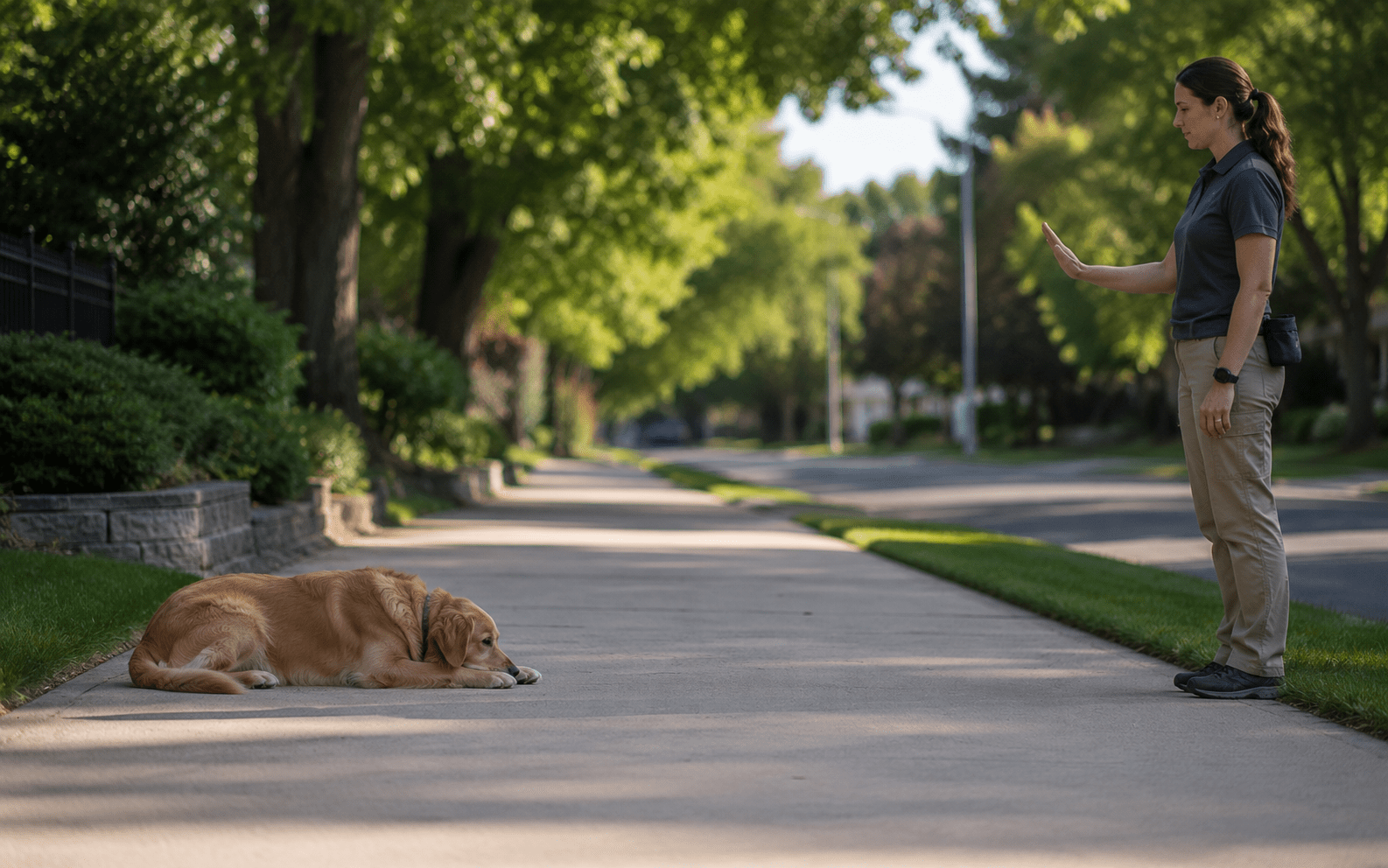
Step 1: Start with Obedience
Every comfort dog starts here. Before your dog can help anyone else, they need to be reliable and predictable for you.
Focus on essential dog training commands first:
- Sit with a hold until you release them
- Down without popping back up mid-session
- Stay even when you step away or turn your back
- Leave it to ignore food, people, or distractions on a single cue
- Heel for calm, controlled walking in any public setting
Practice in 10 to 15 minute daily sessions. Keep rewards high and sessions short. Inconsistency at this stage is the most common reason dogs plateau before they ever reach comfort-specific work.
Step 2: Socialize Intentionally
Early dog socialization benefits go far beyond basic puppy classes. For comfort dog work, socialization needs to be deliberate and targeted to the environments your dog will actually encounter on the job.
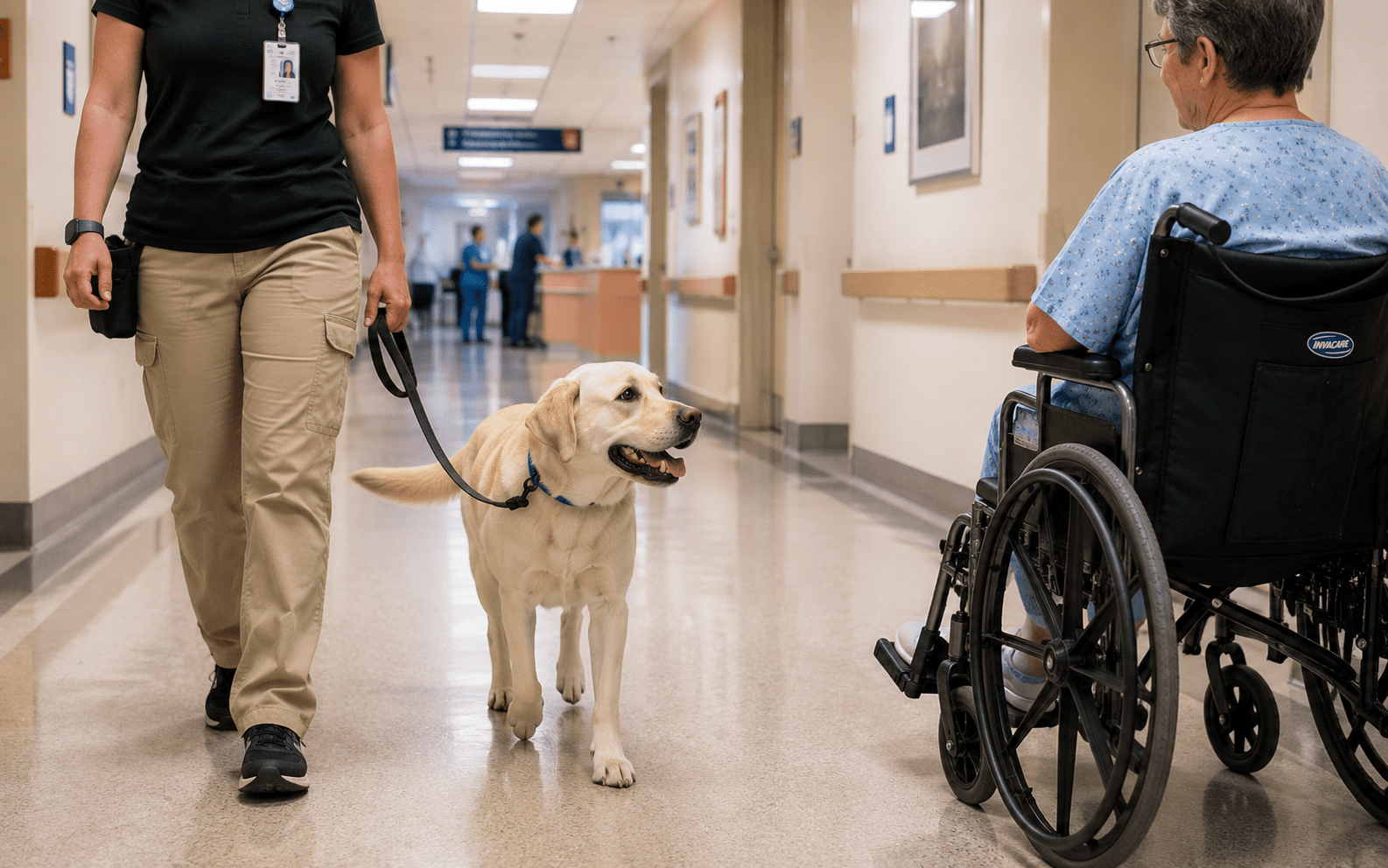
That means exposure to:
- People in wheelchairs, wearing hats, using walkers or crutches
- Hospital-style sounds like intercoms, beeping equipment, and crying
- Crowded hallways, small rooms, and elevator rides
- Children, elderly individuals, and people who move unpredictably
The goal isn’t just tolerance. A comfort dog should move through these environments with a relaxed body, tail loose, and genuine enthusiasm for whoever approaches. If you see stress signals like yawning, lip licking, or leaning away, slow down and give your dog more distance before reintroducing the situation.
Step 3: Teach Comfort-Specific Behaviors
Once obedience and socialization are solid, you can layer in behaviors specific to comfort work.
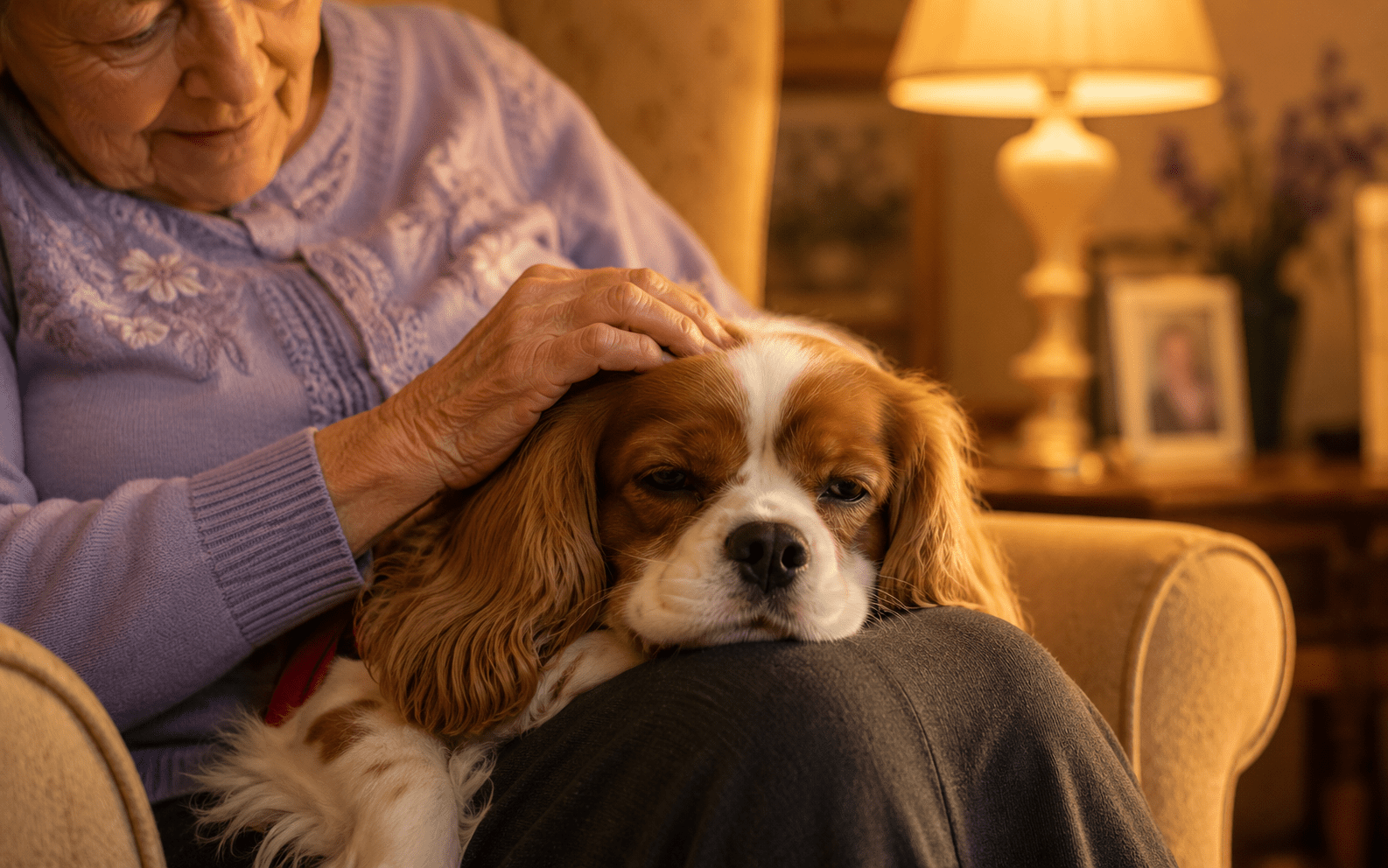
The core ones to train:
- Visit: Approach a seated person calmly and accept full-body petting on command
- Lap: Gently rest head or front paws on a person’s lap without jumping
- Settle: Lie quietly beside someone for extended periods without fidgeting
- Back: Move away from a person on command without any anxious response
Use positive reinforcement throughout. Mark the behavior the moment it happens, then reward. Short reps, calm energy, and consistent criteria from you will produce consistent behavior from your dog.
Step 4: Proof Behaviors in Real Settings
Training at home is a starting point, not a finish line. This is where most home-trained dogs fall apart.
Build through progressively harder environments:
- Pet-friendly stores and outdoor patios
- Libraries, community centers, or quiet offices
- Small social gatherings with people your dog hasn’t met before
Have a helper approach from different angles, speak loudly, or move unpredictably. Your dog should stay calm, check in with you, and follow commands without hesitation.
In home dog training Long Island places a trainer inside your actual living environment, which makes this proofing stage significantly more effective than practicing in a group class setting.
Step 5: Pursue Evaluation and Certification
Comfort dogs don’t require federal certification, but most therapy programs do require a formal evaluation. Organizations like Pet Partners and Alliance of Therapy Dogs (ATD) have their own standards.
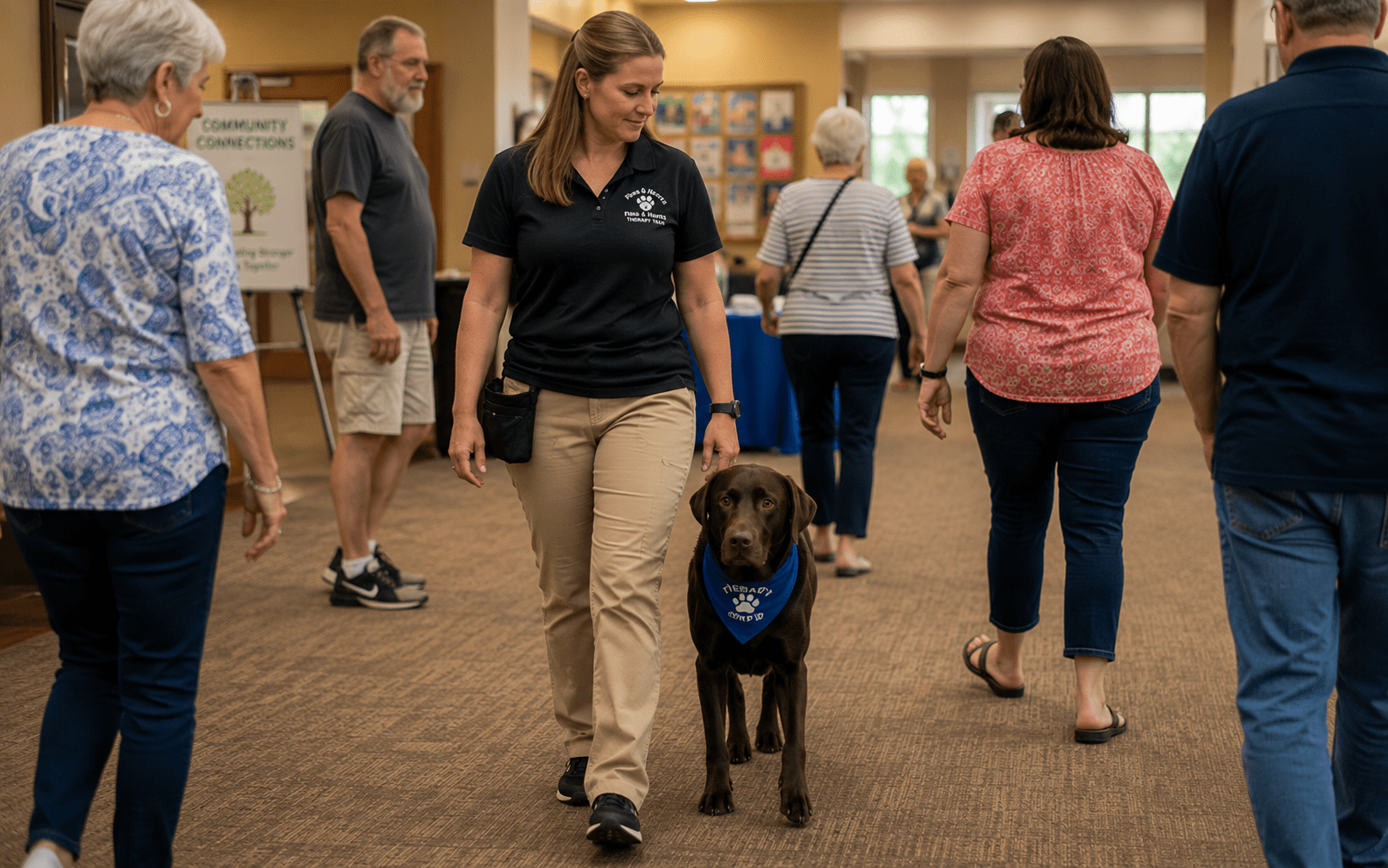
A typical therapy dog evaluation tests:
- Acceptance of a friendly stranger without jumping or pulling
- Sitting politely for petting from multiple unfamiliar people
- Walking calmly through a crowd
- Reaction to wheelchairs, crutches, and loud distractions
- Supervised separation from the handler
Most programs require dogs to be at least one year old and have a completed obedience foundation on record.
Comfort Dogs vs. Other Support Animals
A lot of people start training without knowing how these categories differ. Here’s a clear breakdown:
| Type | Legal Access | Training Level | Certification |
| Service Dog | Full public access (ADA protected) | Extensive, task-specific | No federal requirement |
| Therapy Dog | Facility permission only | Obedience plus temperament eval | Yes, through recognized program |
| Emotional Support Animal | Limited (housing and some travel) | Basic manners recommended | ESA letter from licensed provider |
| Comfort Dog (informal) | Facility permission only | Obedience plus socialization | Program dependent |
If your goal goes beyond comfort work and into disability-specific support, you’ll want to explore how to make your dog a service dog instead, since that path requires task-specific training well beyond this scope.
How Long Does It Actually Take?
Most dogs need six to twelve months before they’re ready for a formal therapy evaluation. That timeline shifts based on a few key factors.
| Factor | Speeds Up Progress | Slows Progress Down |
| Starting age | Under 2 years old | Older dog with existing habits |
| Prior socialization | Well-exposed from puppyhood | Limited early exposure |
| Training consistency | Daily structured practice | Occasional or unstructured sessions |
| Temperament baseline | Naturally calm and social | Anxious or reactive tendencies |
| Handler experience | Has trained dogs before | First-time owner |
Structured programs like board and train Long Island can compress this timeline considerably. When a dog works with a trainer daily in varied environments, skills solidify faster than weekend-only home practice.
Common Mistakes to Avoid
Skipping obedience and jumping to comfort behaviors. Without a reliable foundation, everything falls apart the moment real distractions appear.
Over-exposing a stressed dog. More exposure doesn’t fix anxiety. It reinforces it. Build gradually and always give your dog room to decompress.
Assuming breed guarantees temperament. A Golden Retriever without proper training can be just as reactive as any other dog. Train the individual in front of you.
Being inconsistent across handlers. If your dog gets mixed signals from different people in your household, their behavior becomes unpredictable at the exact moments consistency matters most.
The Right Way to Start Training Your Dog for Comfort Work
Knowing how to train your dog to be a comfort dog comes down to three things: the right temperament, consistent obedience, and deliberate exposure to the environments where they’ll actually work. There’s no shortcut around that foundation, but the result is a calm, confident dog that genuinely helps people, and that’s worth every training session.
At K9 Mania Dog Training, we’re the leading board and train provider on Long Island, with experienced animal behaviorists who specialize in real behavior change. Whether your dog needs obedience work, behavior modification, or full comfort dog preparation, we’re here to help. Trust K9 Mania to guide you and your dog through every step, no matter what challenges you’re facing. Contact us today.
You May Also Want to Read
How to Teach Loose Leash Walking
How to Train a Blue Heeler Dog
How to Train a Dog on an Invisible Fence
Frequently Asked Questions
What is a comfort dog called?
A comfort dog is most commonly called a therapy dog or emotional support animal (ESA), depending on its role. Therapy dogs visit facilities and provide comfort to many people, while ESAs are designated to support one specific person with a mental health condition. The terms are often used interchangeably but carry different legal meanings and training requirements.
How do I get my dog to be a comfort dog?
Start with obedience training, build intentional socialization, teach comfort-specific behaviors, and then pursue a formal evaluation through a recognized therapy dog organization. Your dog needs to be reliable in unfamiliar settings and comfortable with strangers before any facility will allow visits. Most programs also require dogs to be at least one year old and pass a temperament test.
What is the best comfort dog?
Golden Retrievers, Labrador Retrievers, and Cavalier King Charles Spaniels are among the top choices for comfort dog work because of their naturally calm and social personalities. Breed is only part of the picture, though. A well-trained, properly socialized dog of almost any breed can succeed in this role if their individual temperament is right and their training is consistent.
What is the best service dog for anxiety and depression?
Labrador Retrievers and Golden Retrievers are most commonly recommended for psychiatric support work because of their emotional sensitivity and trainability. Standard Poodles are also a strong option, especially for people with allergies. The best match always depends on the handler’s lifestyle and the specific tasks the dog needs to perform, since individual temperament matters more than breed alone.
What is the calmest low maintenance dog?
Cavalier King Charles Spaniels, Basset Hounds, and Shih Tzus are widely considered among the calmest and most adaptable breeds for lower-energy households. They tend to thrive in smaller living spaces, require moderate exercise, and enjoy close contact with their owners. Even naturally calm breeds benefit from basic obedience training to remain manageable and well-behaved long term.
How do I get a comfort dog?
You can get a comfort dog by adopting or purchasing a dog with the right temperament and training them yourself, or by working with a program that places pre-trained therapy animals. If you need an emotional support animal for a diagnosed condition, a licensed mental health professional can provide the required documentation. For therapy work specifically, you’ll go through a certification organization that evaluates both you and your dog as a team.