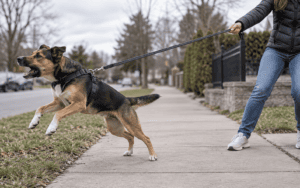

Idiopathic aggression is the term used when a dog suddenly acts aggressively with no clear reason behind it. It’s one of the more confusing and frightening things a dog owner can deal with, and getting a clear picture of what’s actually going on is the first step toward handling it the right way.
Key Takeaways
- Idiopathic aggression doesn’t have an obvious trigger, which sets it apart from fear-based aggression or resource guarding.
- A vet visit should always come first, before anyone puts a behavioral label on it.
- The goal is usually managing the behavior safely, not “fixing” it completely.
- Certain breeds come up more often in these conversations, but it can happen with any dog.
- A good trainer should be working alongside your vet, not instead of one.
- Households with young kids, older family members, or other pets need to take the risk especially seriously.
Why This Is Different From Typical Dog Aggression
Most aggression you’ll see in dogs makes sense once you know the backstory. A dog growls when someone reaches for its food bowl. A dog snaps because it feels trapped. A dog reacts on a leash because it’s frustrated or overstimulated. These are all real problems that need work, but there’s a reason behind them you can point to.

Idiopathic aggression doesn’t play by those rules. The dog seems to go from calm — even affectionate — to a full-on bite with no warning and no consistent pattern. There’s none of the usual buildup trainers look for.
The word “idiopathic” basically just means “we don’t know why.” That uncertainty is what makes it so hard to deal with. A lot of owners describe their dog’s eyes glazing over during an episode, almost like it isn’t fully “there,” and then the dog snaps back to normal like nothing happened.
Some researchers think there may be a neurological piece to this, possibly tied to brain activity similar to a seizure. It’s an area that’s still being studied, and there isn’t a tidy answer yet.
Start With the Vet, Not the Trainer
Before anyone calls this “idiopathic,” a vet needs to rule out anything else that could be causing it. This step matters a lot, and it’s worth being patient with it — it can take some time and a few appointments to get through.
Some of the more common things vets check for first:
| What They’re Checking | Why It Matters |
| Thyroid levels | Low thyroid function can affect mood and behavior |
| Pain (joints, teeth, etc.) | Dogs in pain often have a much shorter fuse |
| Brain or neurological issues | Can sometimes show up as sudden behavior changes |
| Age-related decline | Older dogs can develop confusion or irritability |
| Exposure to something toxic | Certain substances can affect behavior |
| Hormone imbalances | Can play a role in reactivity and aggression |
Only once these have been checked off the list should idiopathic aggression even be part of the conversation. If a vet or trainer skips straight to a behavioral diagnosis without ruling this stuff out first, that’s worth questioning.
Knowing the warning signs of aggression in dogs is useful here too, because what makes idiopathic cases so tricky is that those warning signs are often missing entirely. Normally you’d see a dog stiffen up, stare hard, growl, maybe snap — a clear escalation. With idiopathic aggression, dogs often skip straight to the bite.
Breeds You’ll Hear Mentioned More Often
Idiopathic aggression can technically show up in any dog, but a few breeds tend to come up more in conversations about it:
- English Cocker Spaniels
- Bernese Mountain Dogs
- Chesapeake Bay Retrievers
- Saint Bernards
- Springer Spaniels
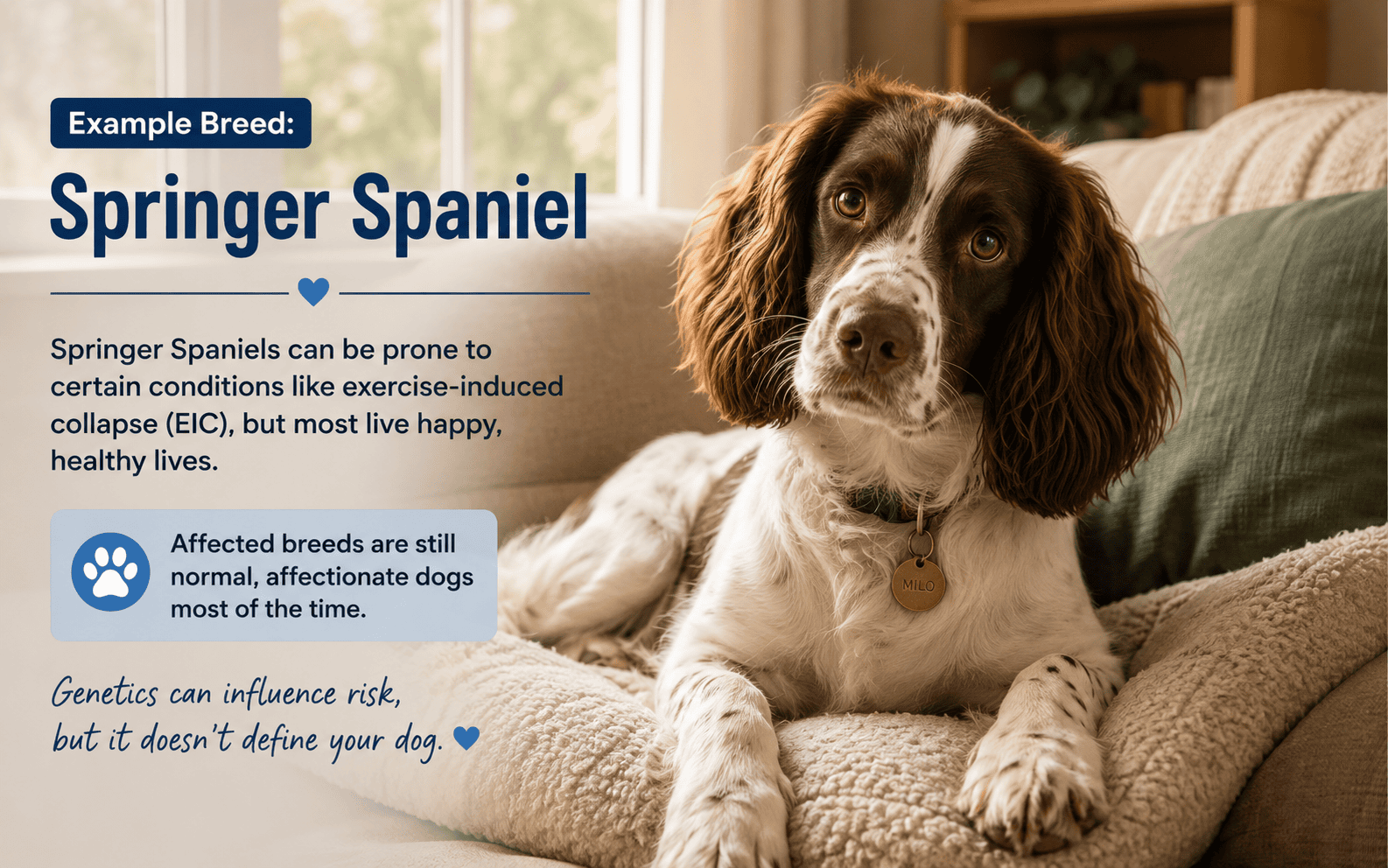
Don’t read too much into this list. It doesn’t mean these breeds are more dangerous, and it definitely doesn’t mean a dog from one of these breeds acting out has this condition. The overwhelming majority of aggression cases, in every breed, have a clear, workable cause. This list just reflects which breeds tend to come up more in case discussions.
What Managing This Actually Looks Like Day-to-Day
If your dog ends up with this diagnosis after a proper vet workup, the mindset shift is important: you’re not training away a bad habit, you’re managing risk. That’s a hard thing to accept, but it changes how you approach everyday life with your dog.
Setting up your home:
- Use a baby gate or a separate room when guests come over
- Keep your dog out of situations that tend to rev them up
- Stick to a predictable routine — consistency helps more than people expect
- Give your dog a quiet space they can retreat to on their own
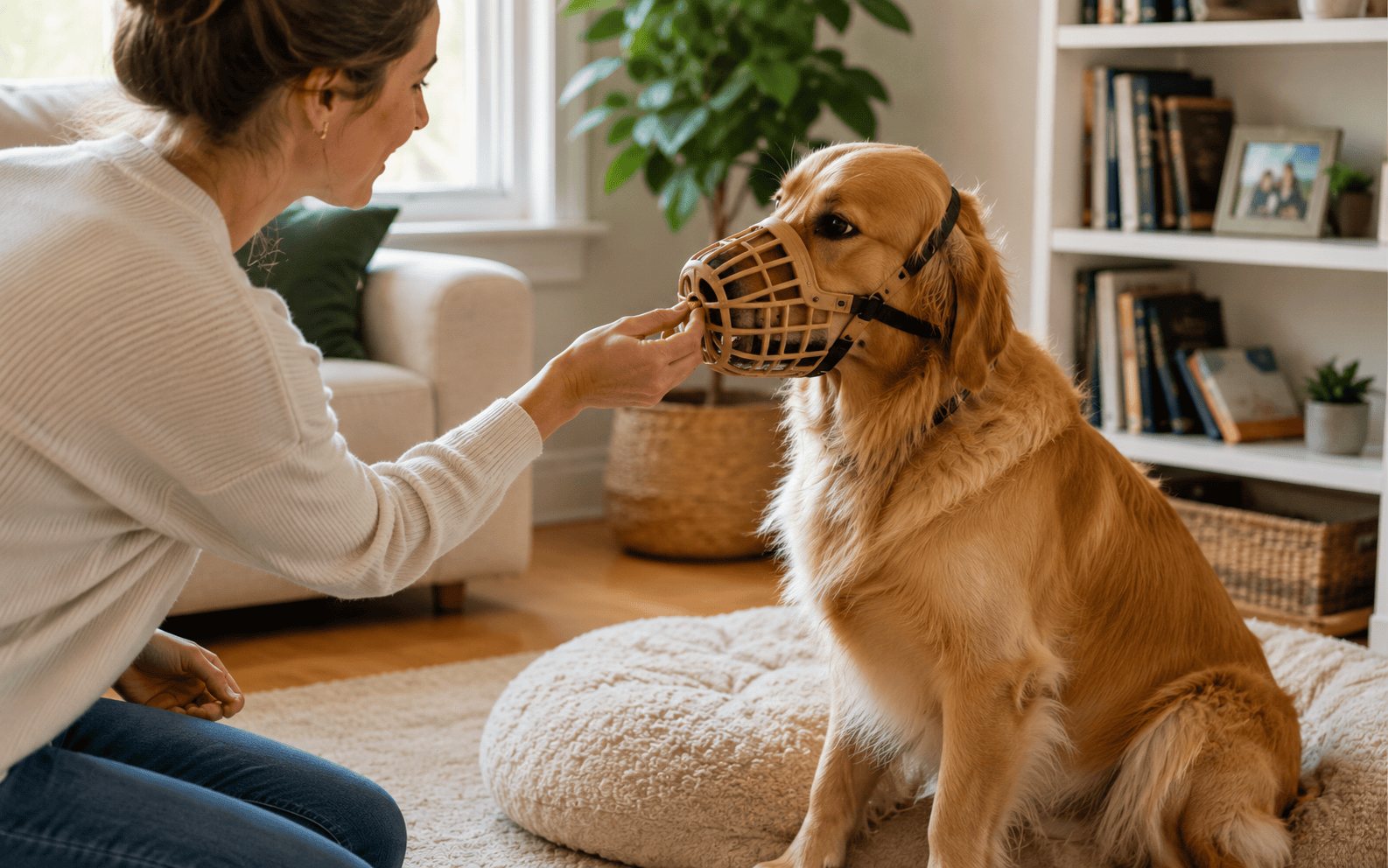
Gear that helps: Muzzle training for dogs is genuinely one of the best things you can do here. Done right, a muzzle isn’t stressful for the dog and it gives everyone an extra layer of safety during higher-risk moments. A lot of owners feel embarrassed about using one, but any good trainer will tell you it’s actually a sign you’re taking the situation seriously, not the opposite.
Medication, sometimes: Vets will sometimes prescribe medication that can help take the edge off or reduce how often episodes happen. It’s not a fix on its own, but it can make a real difference alongside everything else.
Basic obedience still matters: Even with a dog dealing with this, working on obedience dog training is worth it. A dog that reliably listens to “sit,” “stay,” or “come” is a dog you can redirect quickly if things start to feel off. That control adds up to real safety.
Finding the Right Help
If your dog has had even one sudden, unexplained aggressive episode, don’t wait around hoping it was a one-off. These situations tend to get worse, not better, without some kind of intervention.
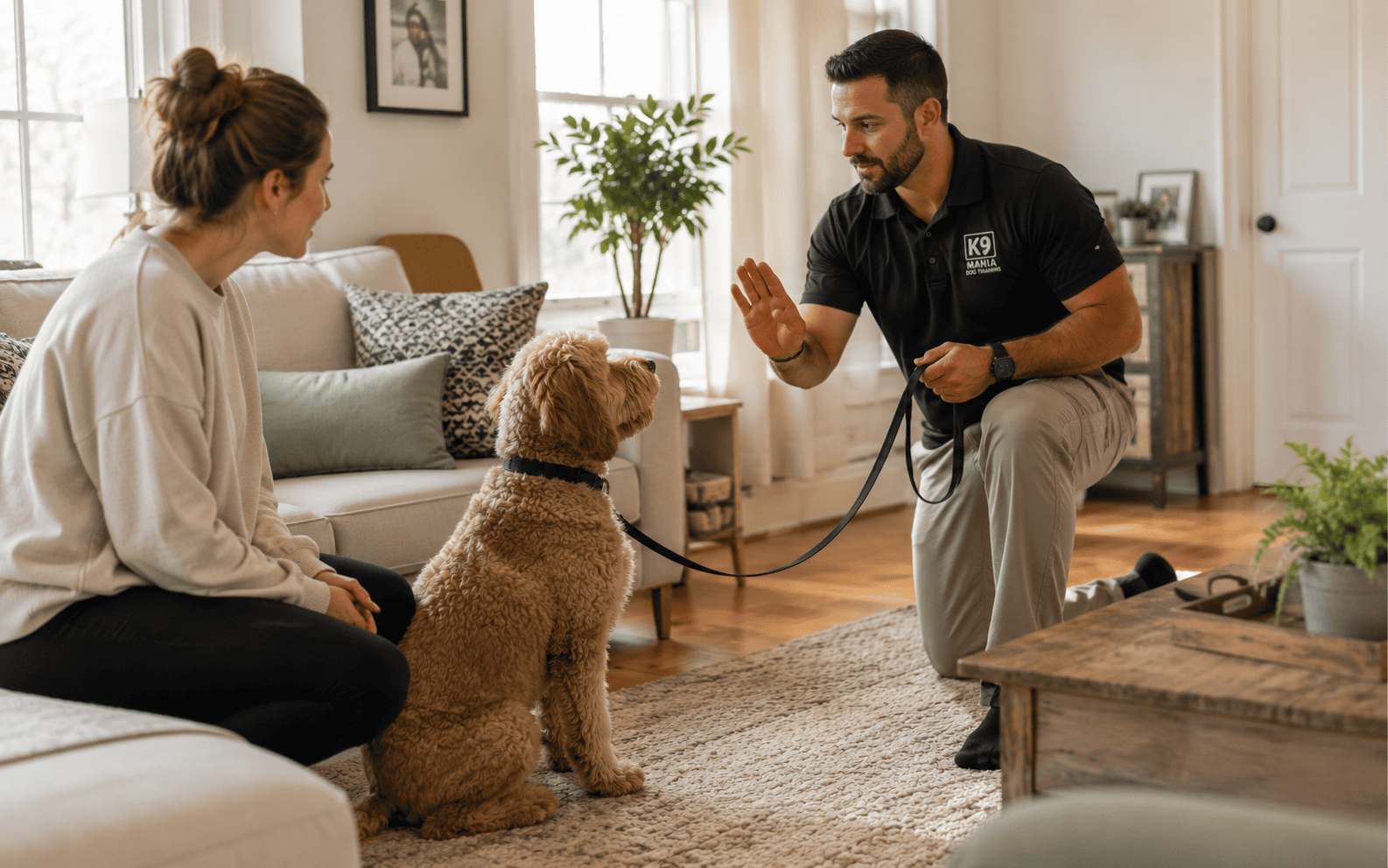
Look for professionals who:
- Work with, or can refer you to, a vet who specializes in behavior
- Have real, hands-on experience specifically with aggression cases
- Are willing to coordinate with your vet rather than work in isolation
If you’re on Long Island, private dog training long island is a solid option because it lets a trainer see your dog behave in real, everyday situations with your actual family, instead of in a generic group class.
If getting to sessions is tough, in home dog training long island is especially useful for aggression cases — the trainer can see your dog’s actual environment and work with everyone in the house directly.
For dogs that need more concentrated, daily attention, board and train long island can be a strong piece of a bigger plan, especially paired with follow-up sessions once your dog’s back home.
Things Worth Knowing
- There’s no single test for this. It’s a diagnosis of exclusion — meaning it’s only considered once everything else has been ruled out.
- It can start young. Most cases show up in adult dogs, but some owners notice signs before their dog even hits a year and a half old.
- Spaying or neutering isn’t a guaranteed fix. It can help with hormone-driven aggression, but the results are much less consistent here.
- Kids are at higher risk. Since there’s usually no warning before an episode, and kids often miss the subtle signals dogs normally give off anyway, extra caution matters.
- You can be held liable. In a lot of places, including New York, owners can be responsible for a bite regardless of the dog’s history. One incident is enough to matter legally.
- Euthanasia is sometimes the honest answer. It’s not an easy thing to say, but for dogs that have caused real injury and haven’t responded to any management, it can be the most compassionate choice. This is a conversation to have openly with your vet, not something to figure out alone.
What to Do Next
If your dog has had a sudden, unexplained aggressive episode, get them to the vet this week — don’t wait for it to happen again. At the same time, reach out to a trainer who’s actually dealt with aggression cases before. Getting both of these moving at once, rather than one after the other, gives you the best shot at keeping everyone safe.
You May Also Read
Off Leash Dog Training Tips for Long Island Dog Owners
Teaching a Dog to Settle on a Mat
Frequently Asked Questions
Can idiopathic aggression in dogs be cured?
There’s no guaranteed fix, and most professionals focus on managing it long-term rather than expecting it to fully go away.
Medication can sometimes reduce how often or how intense episodes are, but it won’t make the underlying issue disappear. Day-to-day management — safe setups at home, muzzle use, and consistent training — is really what carries the weight.
How do I know if it’s idiopathic or just fear-based aggression?
Only a qualified vet behavior specialist can really make that call after a proper evaluation.
Fear-based aggression usually has a clear trigger and a buildup — stiffening, growling, lip-curling — before anything happens. Idiopathic cases often skip all of that. Keeping notes on every episode (when, where, who was around, what happened right before) gives whoever’s helping you a lot more to work with.
At what age does this usually start?
Most cases show up somewhere between one and three years old, though it can start earlier or later.
That age range lines up with when a dog’s brain is still maturing. If aggression suddenly starts in a dog that’s seven or eight or older, it’s more likely tied to something age-related, which is exactly why a full check-up matters no matter how old your dog is.
Is it safe to have a dog like this around my kids?
It really depends on how serious past episodes were, how your dog responds to management, and whether your household can realistically stick to safety routines every single time.
No trainer or vet can promise it’s 100% safe once a dog has bitten unprovoked. If you have young kids, that needs to be front and center in any plan you put together. Some families can make it work with strict routines. Others honestly can’t, and that’s okay to admit.
Should I tell my home insurance company?
Yes — not disclosing it can mean a denied claim or a canceled policy if something happens down the line.
Dog bite claims cost home insurers roughly a billion dollars a year in the U.S., so this isn’t a small thing on their end either. Some companies will raise your premium, ask for proof of training, or drop bite coverage altogether. Better to know where you stand before something happens than after.
The Bottom Line
Idiopathic aggression isn’t something that happened because you did anything wrong, and it’s not something that’ll just work itself out with more patience. It’s a poorly understood condition that calls for a proper vet check, an honest look at the risks, and a solid plan built with the right people.
The next step is simple: get your dog to the vet for a full check-up this week, and reach out to a trainer with real aggression-case experience at the same time. The sooner you have both of those going, the better positioned you’ll be to make the right call for your family and your dog.