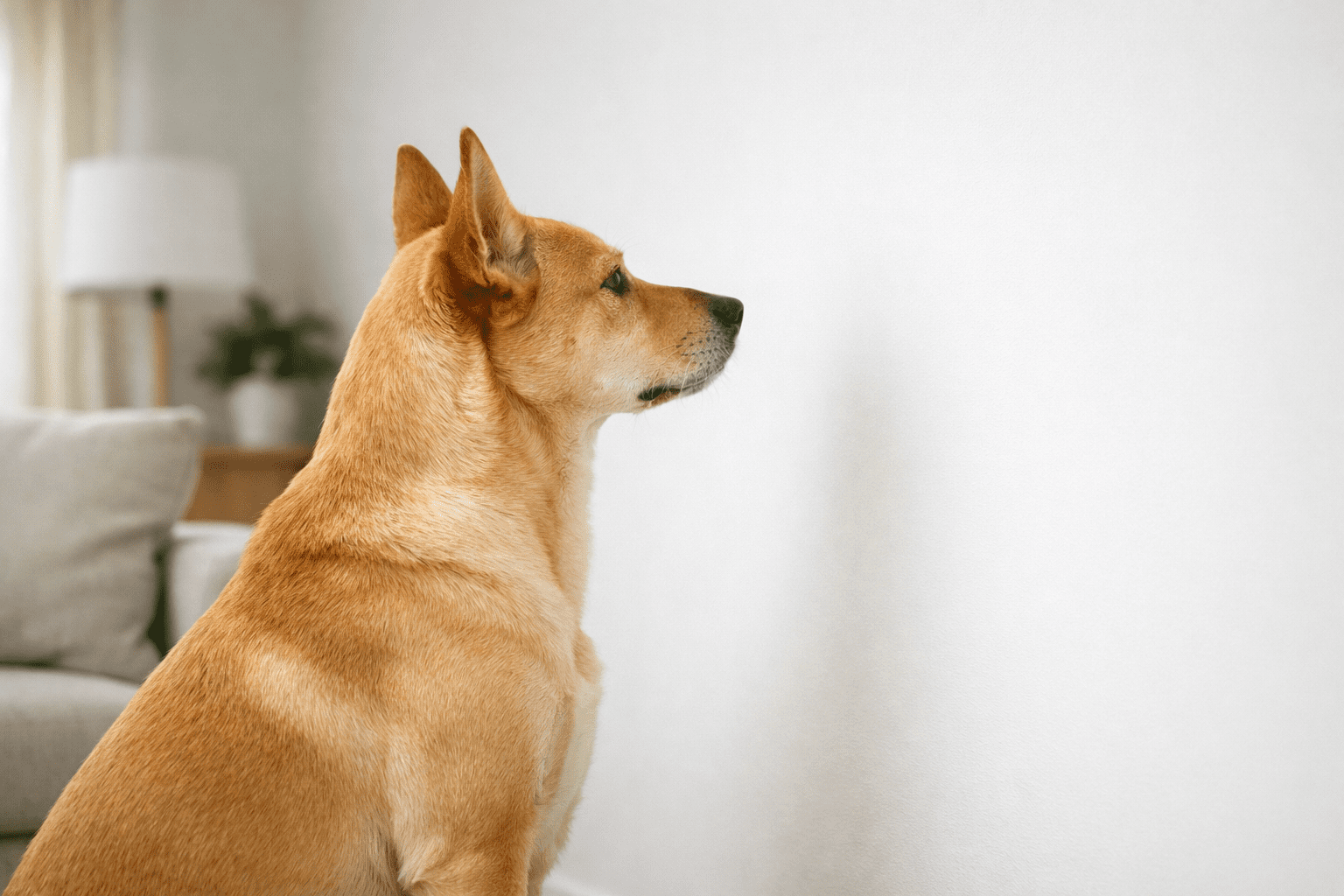
Why do dogs stare at walls? Dogs stare at walls primarily because they detect things humans cannot, such as insects, rodents, sounds, or scents behind the wall. This behavior is usually normal and stems from their superior senses, though persistent staring can sometimes indicate medical or behavioral issues.
If you’ve caught your dog fixated on a blank wall, you’re probably wondering what’s going on in that furry head. The truth is, your dog’s senses are much more powerful than yours, and what looks like an empty wall to you might be a fascinating world of sounds, smells, and movements to your pup.
Understanding why dogs stare at walls helps you know when it’s just curious behavior and when you should be concerned. Some reasons are completely harmless, while others might need your attention or even a trip to the vet.
Need expert guidance on unusual dog behaviors? Our obedience dog training program addresses behavioral issues with proven techniques.
Common Reasons Dogs Stare at Walls
Your dog isn’t just being weird when they fixate on the wall. There are several legitimate reasons why this behavior happens, and most of them are perfectly normal.
Detecting Pests and Insects
Dogs have incredibly sensitive hearing and smell. They can detect tiny creatures living inside your walls that you’ll never notice. Mice, rats, termites, and other pests make scratching sounds and leave scent trails that your dog picks up easily.
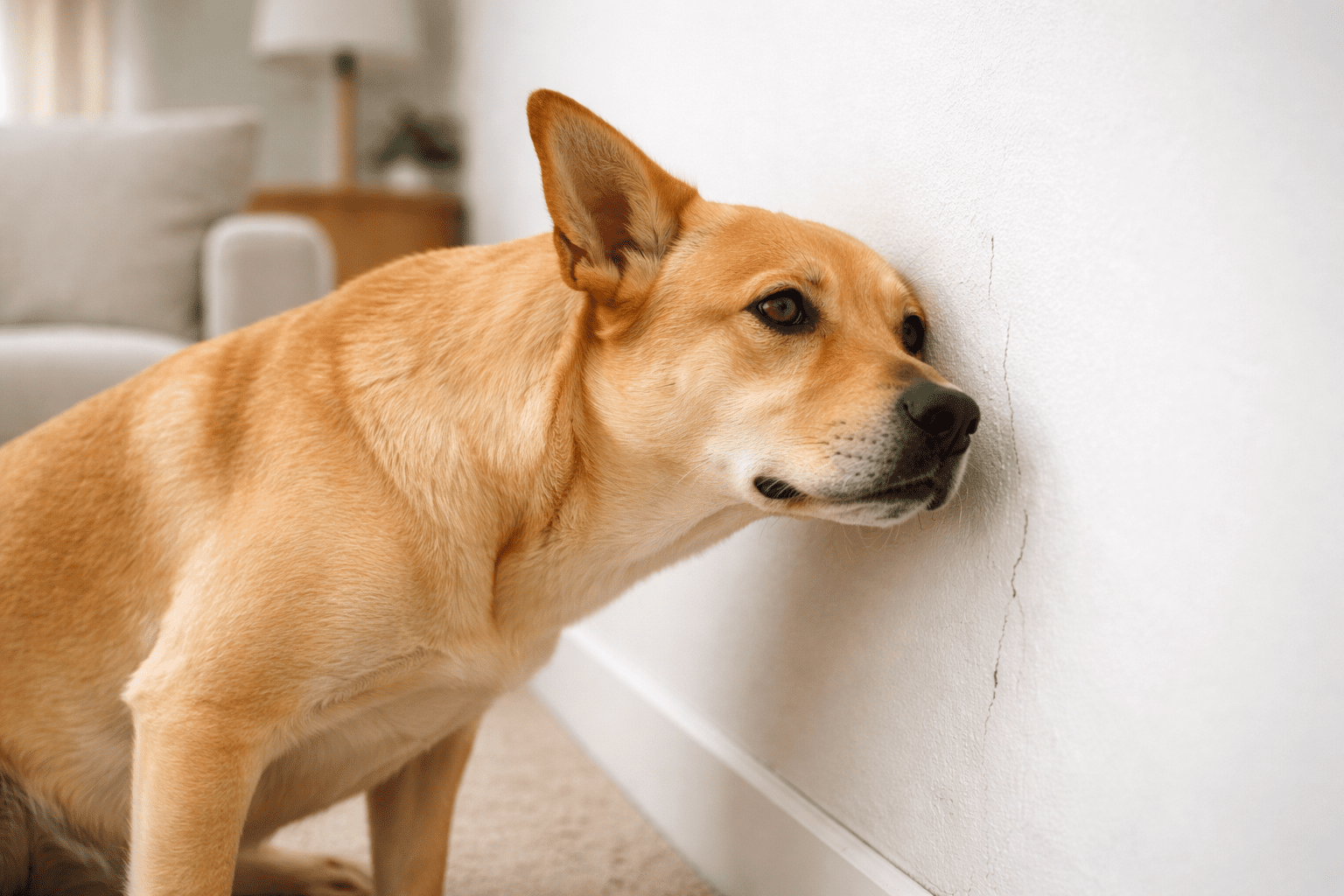
When your dog stares intensely at one spot, they might be tracking movement behind the drywall. Their ears might twitch as they follow the sound of something scurrying through the walls or ceiling. This is especially common in older homes where pest problems are more likely.
If you notice your dog repeatedly staring at the same wall section, it’s worth checking for pest activity. Look for droppings, strange smells, or small holes. Your dog might be giving you an early warning about an infestation before it becomes obvious to you.
Hearing Sounds You Cannot
Dogs hear frequencies up to 65,000 Hz, while humans only hear up to 20,000 Hz. This means your dog detects sounds that are completely silent to you. Electrical humming, water pipes, settling houses, and even outdoor noises filtered through walls can catch their attention.
Your dog might hear neighbors talking in the next apartment, animals outside, or the vibration of appliances. What seems like random wall-staring could be your dog listening to something specific that you’ll never be able to hear yourself.
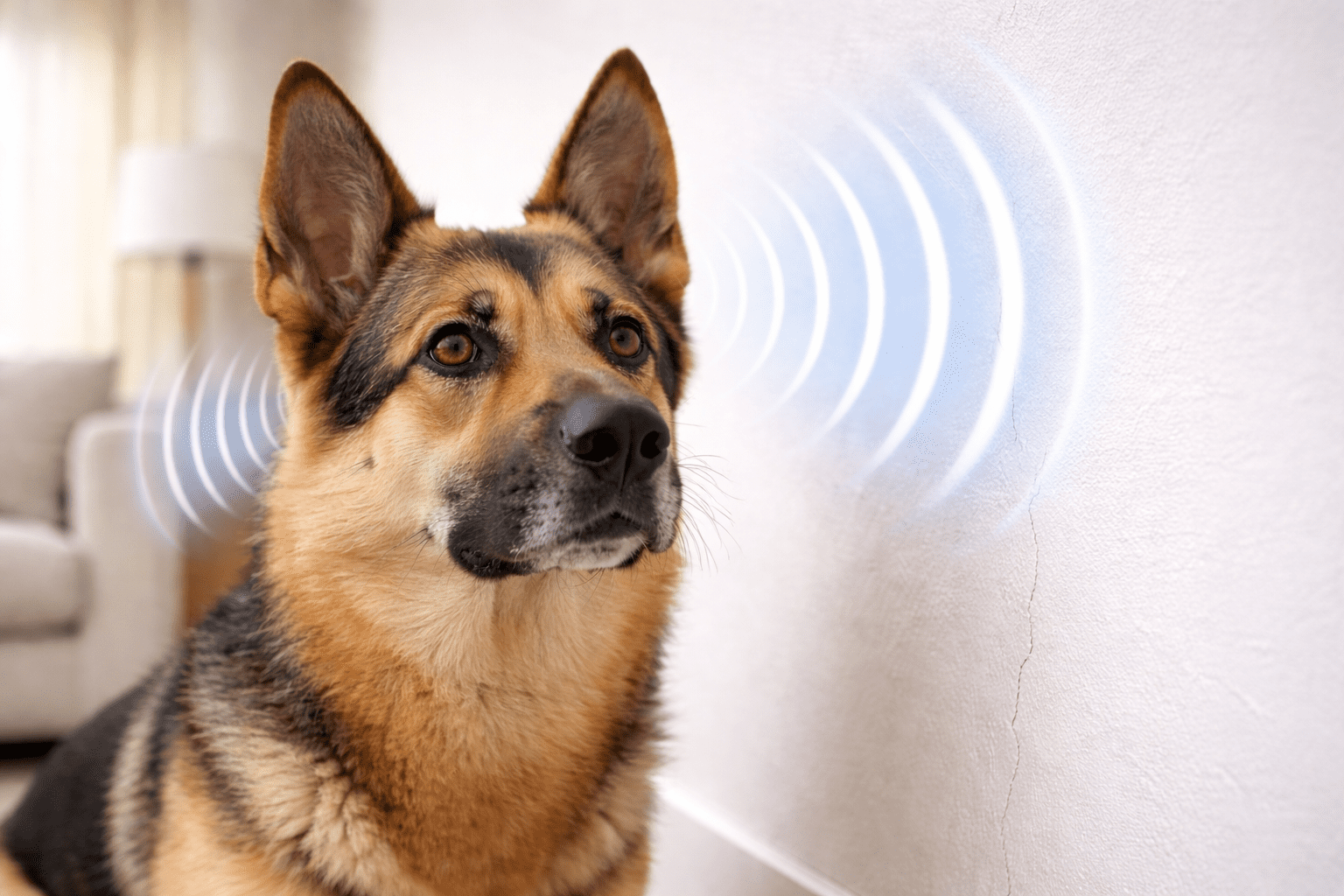
Pay attention to when the staring happens. If it’s always at the same time of day, there might be a regular sound trigger like a neighbor’s routine or delivery trucks passing by.
Following Scent Trails
A dog’s sense of smell is 10,000 to 100,000 times more sensitive than a human’s. They can smell things that happened hours or days ago. If someone cleaned with a strong chemical, if food was near that wall, or if another animal left a scent, your dog will pick it up.
Previous pet owners might have had dogs or cats that marked territory near walls. Even after cleaning, your dog can still smell traces. They might also detect moisture, mold, or food particles that fell behind furniture at some point.
Light and Shadow Play
Sometimes the simplest explanation is the right one. Dogs are drawn to moving lights and shadows. Sunlight reflecting off a car window outside, shadows from passing traffic, or light patterns from ceiling fans can create interesting visual effects on your walls.
If the wall staring happens during certain times of day, check for light sources. Your dog might just be entertained by the moving patterns. This is especially common with younger dogs who are more playful and curious.
When Wall Staring Becomes a Concern
While most wall staring is harmless, certain situations require closer attention. Understanding the difference between normal curiosity and potential problems helps you take action when needed.
Medical Issues That Cause Wall Staring
Some health problems can make dogs stare at walls in unusual ways. Cognitive dysfunction syndrome, similar to dementia in humans, affects older dogs and causes disorientation and repetitive behaviors. Dogs with this condition might stare at walls for extended periods without seeming to notice anything specific.
Vision problems can also lead to wall staring. Dogs losing their sight sometimes fixate on walls or corners as they try to understand their changing vision. Partial blindness, cataracts, or progressive retinal atrophy might cause this behavior.
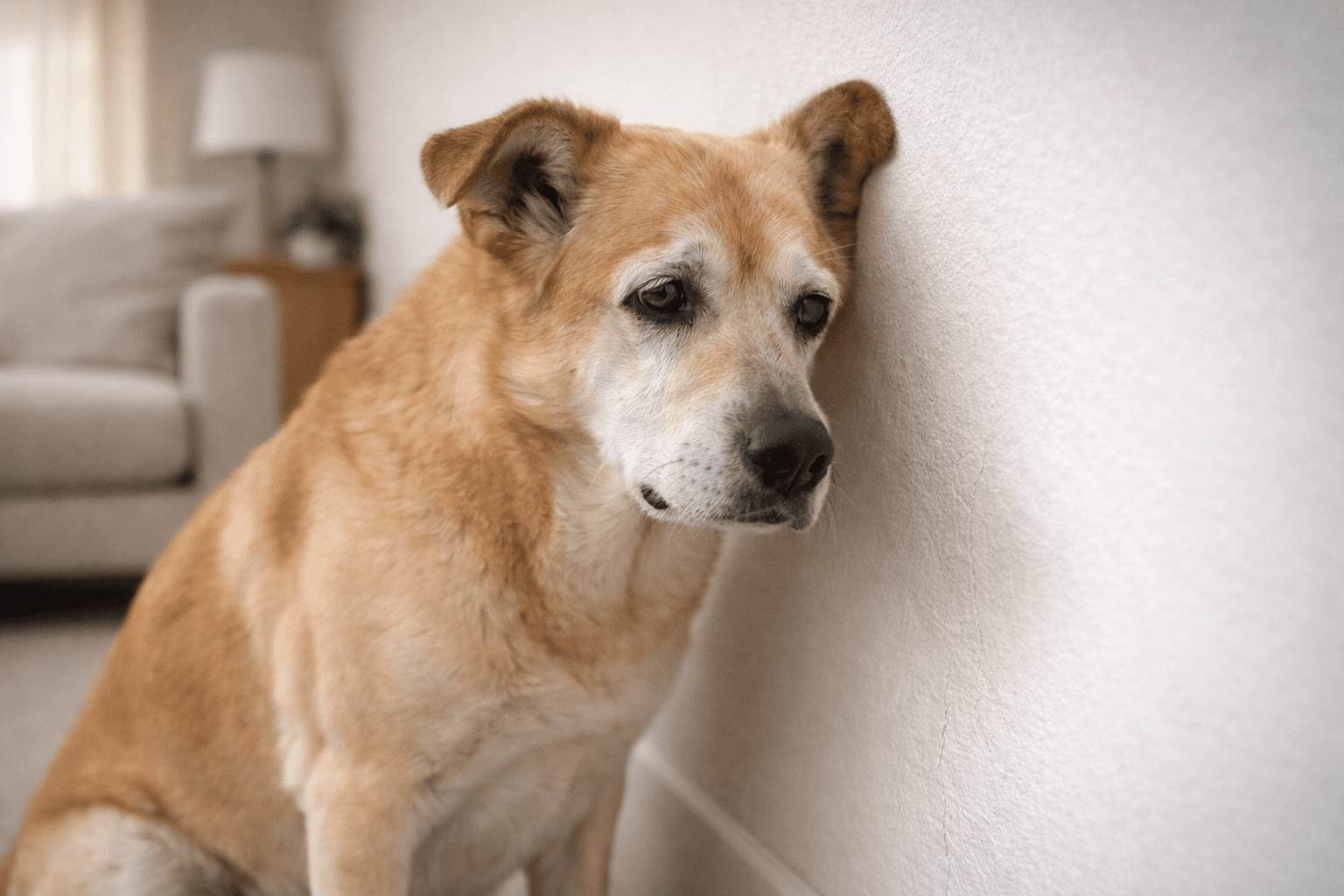
Seizure activity doesn’t always look dramatic. Focal seizures can cause staring, head pressing against walls, or seemingly zoning out. If your dog’s wall staring comes with drooling, disorientation after episodes, or loss of consciousness, contact your vet immediately.
Compulsive disorders in dogs work similarly to OCD in humans. Dogs might develop repetitive behaviors like wall staring as a stress response. This usually happens alongside other compulsive actions like excessive licking or tail chasing.
Behavioral and Anxiety Issues
Stress and anxiety manifest in different ways. Some dogs stare at walls when they feel overwhelmed, scared, or anxious. This might be a coping mechanism to avoid eye contact or to mentally check out from stressful situations.
If you’ve recently moved, changed your schedule, or introduced new family members or pets, your dog might show increased wall staring. This is their way of processing the changes. For help managing anxiety-related behaviors, check out our guide on how to calm a panting dog.
Boredom can also drive strange behaviors. Under-stimulated dogs sometimes develop odd habits to entertain themselves. If your dog isn’t getting enough exercise or mental stimulation, they might invent activities like wall watching.
Normal vs. Concerning Wall Staring Behaviors
Not all wall staring is created equal. Use this comparison to help identify when your dog’s behavior is typical and when you should investigate further.
| Normal Wall Staring | Concerning Wall Staring |
| Brief episodes lasting a few minutes | Prolonged sessions over 20-30 minutes |
| Dog responds when you call their name | Dog seems unresponsive or unaware of surroundings |
| Happens occasionally in response to sounds/smells | Occurs constantly throughout the day |
| Dog’s body language is relaxed and alert | Dog appears rigid, tense, or presses head against wall |
| Dog moves on to other activities easily | Dog becomes fixated and difficult to distract |
| Happens at specific times (like when neighbors are active) | Random timing with no clear trigger |
| No other behavioral changes | Accompanied by confusion, aggression, or personality changes |
| Dog still eats, plays, and acts normally | Loss of appetite, lethargy, or withdrawal |
What to Do When Your Dog Stares at Walls
Once you understand why do dogs stare at walls, you can take appropriate action based on what you observe. Here’s how to respond to different situations.
Step-by-Step Response Guide
| Step | Action | When to Use |
| 1. Observe | Watch without interrupting. Note duration, time of day, location, and body language | Every time you notice wall staring |
| 2. Test Response | Call your dog’s name, offer a treat, or make a familiar sound | To check if dog is aware and responsive |
| 3. Investigate | Check the wall area for pests, sounds, or visible triggers | If behavior happens at same spot repeatedly |
| 4. Document | Keep a log of when staring happens and what preceded it | If behavior is frequent or concerning |
| 5. Redirect | Engage your dog with play, training, or activity | For bored or anxious dogs |
| 6. Consult Professional | Schedule vet visit or trainer consultation | If staring is excessive, unresponsive, or includes other symptoms |
Investigating the Wall Area
Start by checking for practical causes. Look for cracks, holes, or gaps where pests could enter. Listen carefully at the wall yourself during quiet times. You might hear scratching, buzzing, or movement that explains your dog’s interest.
Check nearby windows for light sources creating shadows. Look at electrical outlets and appliances near the wall. Sometimes a subtle hum or vibration from electronics catches your dog’s attention.
If you suspect pests, contact a pest control professional. They can inspect areas your dog has been focusing on and determine if there’s an infestation. Taking action on pest problems benefits both your home and your dog’s peace of mind.
Enrichment and Mental Stimulation
Many behavioral issues improve with proper exercise and mental engagement. Make sure your dog gets adequate physical activity every day. The amount varies by breed, age, and size, but most dogs need at least 30 minutes to 2 hours of exercise daily.
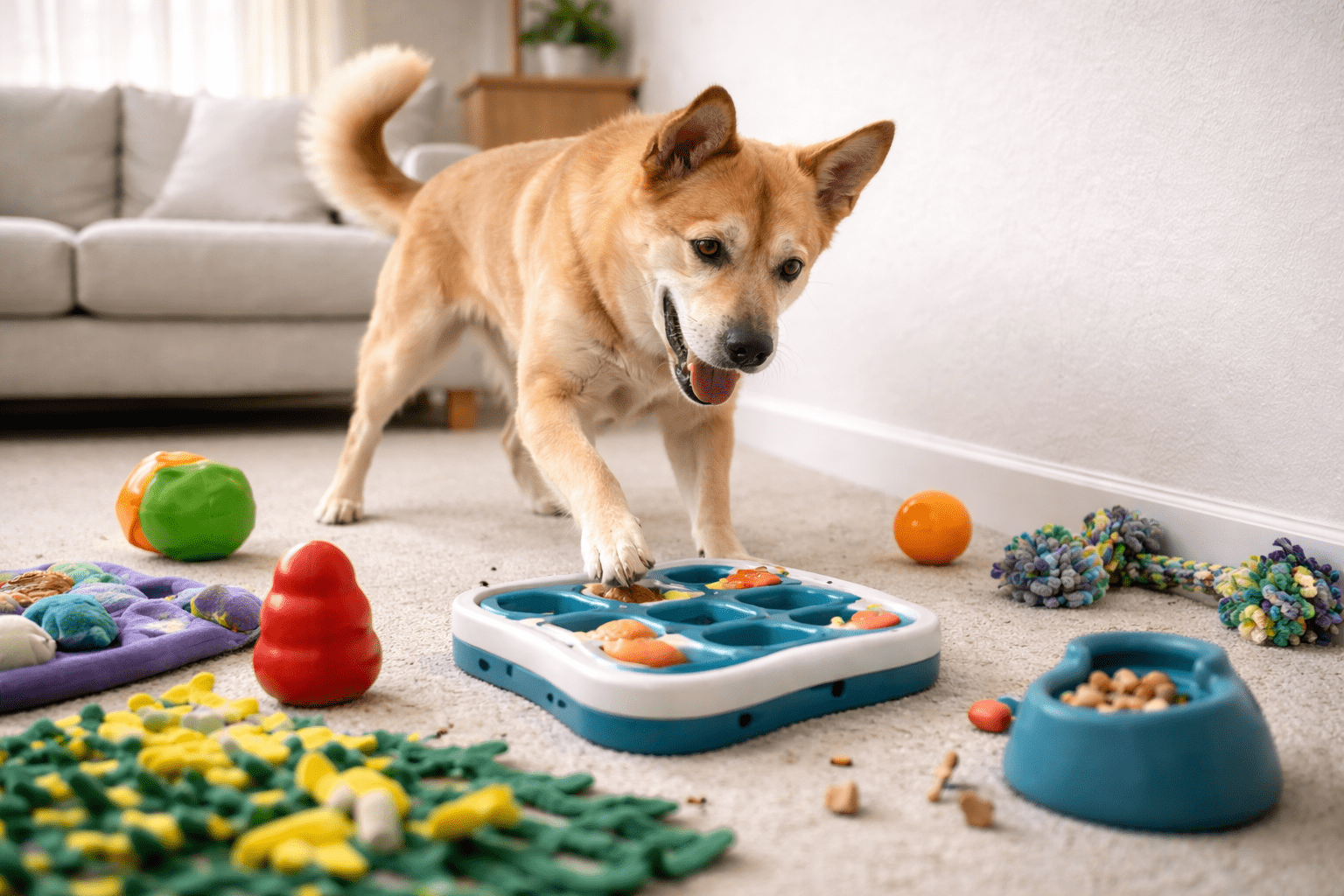
Mental stimulation is as important as physical exercise. Try puzzle toys, training sessions, sniff walks, and interactive games. A tired, mentally satisfied dog is less likely to develop strange habits out of boredom.
Our positive reinforcement dog training approach helps build healthy mental engagement while strengthening your bond with your dog.
When to Contact Your Vet
Schedule a veterinary appointment if your dog shows these warning signs:
- Head pressing (pushing head firmly against wall rather than just staring)
- Staring that lasts over 30 minutes or happens constantly
- Disorientation or seeming lost in familiar spaces
- Changes in eating, drinking, or bathroom habits
- Personality changes or sudden aggression
- Other neurological symptoms like seizures or loss of balance
- Decline in vision or bumping into objects
Your vet can run tests to rule out cognitive issues, vision problems, neurological conditions, or other health concerns. Early detection makes treatment more effective for most conditions.
Training Techniques to Redirect Wall Staring
If your dog’s wall staring is habitual but not medical, training can help modify the behavior. Focus on giving your dog better alternatives and rewarding desired behaviors.
Building Alternative Behaviors
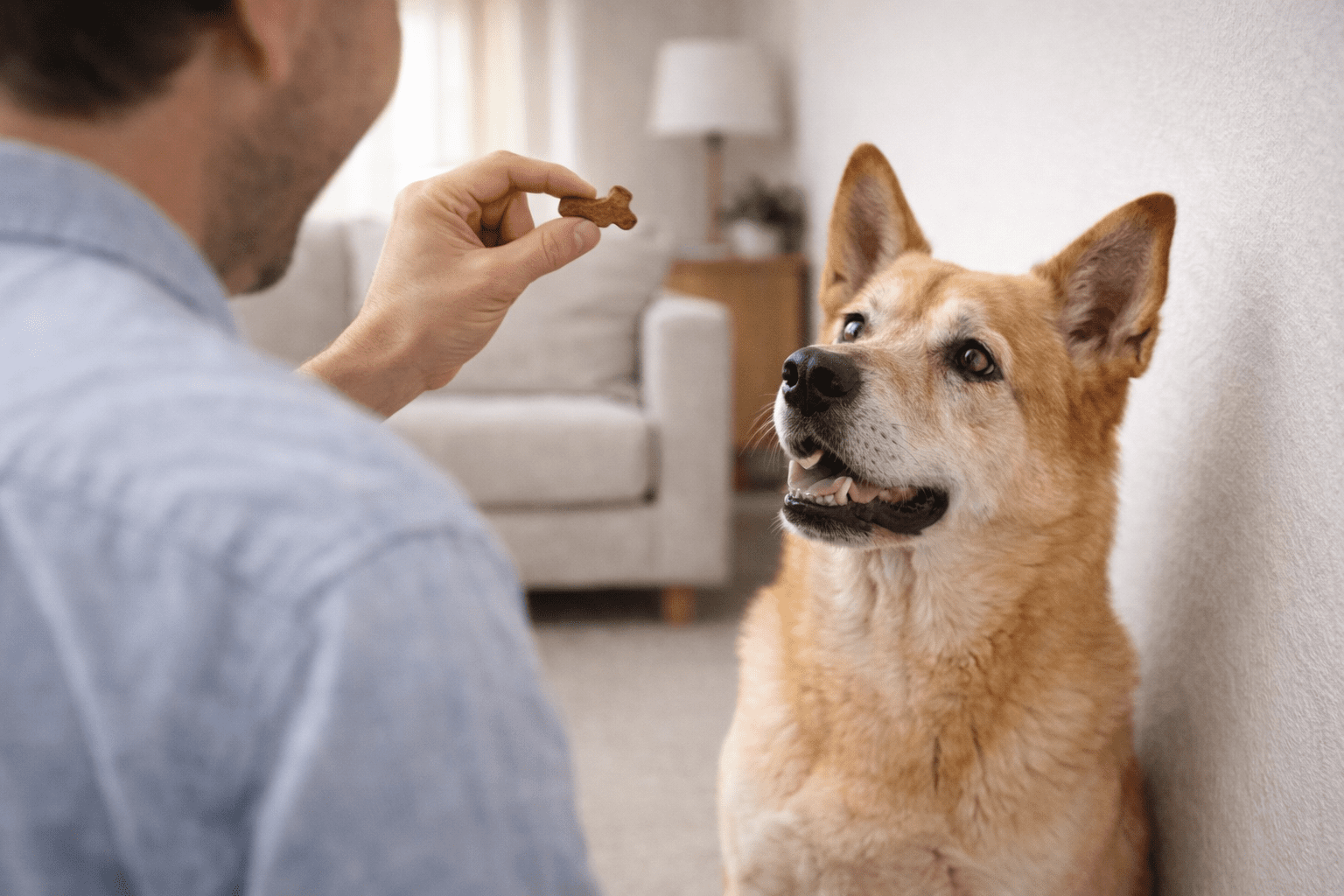
Teaching your dog what to do instead of staring is more effective than just trying to stop the behavior. Train a “look at me” command where your dog makes eye contact with you on cue. Practice this regularly with treats and praise.
Create a designated “place” behavior where your dog goes to a specific spot like a bed or mat. When you notice wall staring starting, redirect to the place command and reward compliance. Over time, this builds a new habit.
For dogs who need help with more complex behavioral issues, consider professional support. Our private dog training Long Island sessions provide personalized strategies for your dog’s specific needs.
Environmental Management
If light patterns cause the staring, adjust blinds or curtains to minimize moving shadows. If sounds are the trigger, try white noise machines to mask the frequencies your dog hears.
For pest-related staring, addressing the infestation removes the trigger. Until the problem is resolved, you can temporarily manage by redirecting your dog to another room when the behavior starts.
Create a more stimulating environment overall. Rotate toys to keep them interesting, provide different textures and materials to explore, and consider getting puzzle feeders for meals. An engaged dog has less need for finding entertainment in wall watching.
Understanding Your Dog’s Perspective
Remember that your dog experiences the world completely differently than you do. Their sensory input is much richer in many ways. What seems like an empty wall to you might be a complex landscape of information to your dog.
Most wall staring is your dog simply being a dog. They’re using their amazing senses to explore their environment. Unless the behavior becomes excessive or worrying, it’s usually not a problem that needs fixing.
Building a strong foundation of training and communication helps with all dog behaviors. If you’re looking for comprehensive support, our board and train dog training program provides intensive education for dogs with various behavioral challenges.
Final Thoughts on Why Dogs Stare at Walls
Understanding why do dogs stare at walls helps you respond appropriately and know when to seek help. In most cases, your dog is just using their superior senses to detect things beyond human perception. Pests, sounds, scents, and light patterns are common causes that don’t require concern.
Pay attention to the context and duration of the behavior. Brief, occasional wall staring with a relaxed body posture is normal canine behavior. Extended staring sessions, unresponsiveness, or accompanying symptoms warrant veterinary attention to rule out medical issues.
With proper exercise, mental stimulation, and environmental management, most wall staring behavior remains at normal levels. Trust your instincts as a pet owner. If something feels off about your dog’s behavior, it’s always worth getting professional input.
At K9 Mania Dog Training, we understand that unusual dog behaviors can be confusing and sometimes concerning. As the leading dog boarding camp Long Island provider, we’ve helped countless families address behavioral challenges. Whether your dog needs basic obedience, anxiety management, or specialized behavioral support, our expert trainers can help. Visit our website to learn how we can create a customized training plan that brings out the best in your dog.
You May Also Want to Read
- Overnight Dog Boarding Tips: Complete Guide
- Why Do Dogs Howl: Understanding Your Dog’s Vocal Behavior
- How to Stop Territorial Barking: Effective Training Methods That Work
- How to Calm a Panting Dog: Expert Techniques That Work
Frequently Asked Questions
Do dogs smell termites?
Yes, dogs can smell termites and other wood-destroying insects. Their sense of smell is powerful enough to detect the pheromones termites release and the scent of wood damage. Some pest control companies even use specially trained dogs to locate termite infestations in buildings. If your dog repeatedly stares at or sniffs the same wall area, it could indicate a termite problem worth investigating professionally.
What does a dog do when he senses death?
Dogs can sense illness and approaching death through their extraordinary sense of smell. They detect chemical changes in the body that occur before death, including changes in breathing patterns and body chemistry. Dogs often become clingy, stay close to the person or animal, show protective behavior, or act unusually quiet. Some dogs also display restless behavior or anxiety. This sensitivity is why some dogs are trained as hospice comfort animals.
Why is my dog sitting in the corner looking at the wall?
Dogs sitting in corners staring at walls could be responding to sounds or smells from multiple directions that converge in the corner. Corners can amplify sounds and trap scents, making them interesting focal points. However, if your dog seems disoriented, presses their head into the corner, or doesn’t respond when called, this could indicate a medical problem like cognitive dysfunction, especially in senior dogs. Contact your vet if the behavior seems compulsive or your dog appears confused.
What is the hardest pest to get rid of?
Bed bugs are often considered the hardest household pest to eliminate. They’re tiny, reproduce quickly, and hide in extremely small spaces. However, termites are also difficult because they live inside walls and structures, making detection and treatment challenging. If your dog is fixating on walls and you suspect pests, cockroaches, mice, and carpenter ants are other common wall-dwelling pests that dogs can detect but that are tough to fully eliminate without professional help.
Is a dog afraid of a mouse?
Most dogs are not afraid of mice. In fact, many dog breeds have strong prey drives and are naturally inclined to chase and catch small animals like mice. However, some small or timid dogs might be startled by a mouse’s sudden movement. If your dog stares at walls where mice are active, they’re usually focused on hunting, not fear. The staring is their way of tracking the mouse’s location through sound and smell before attempting to catch it.