
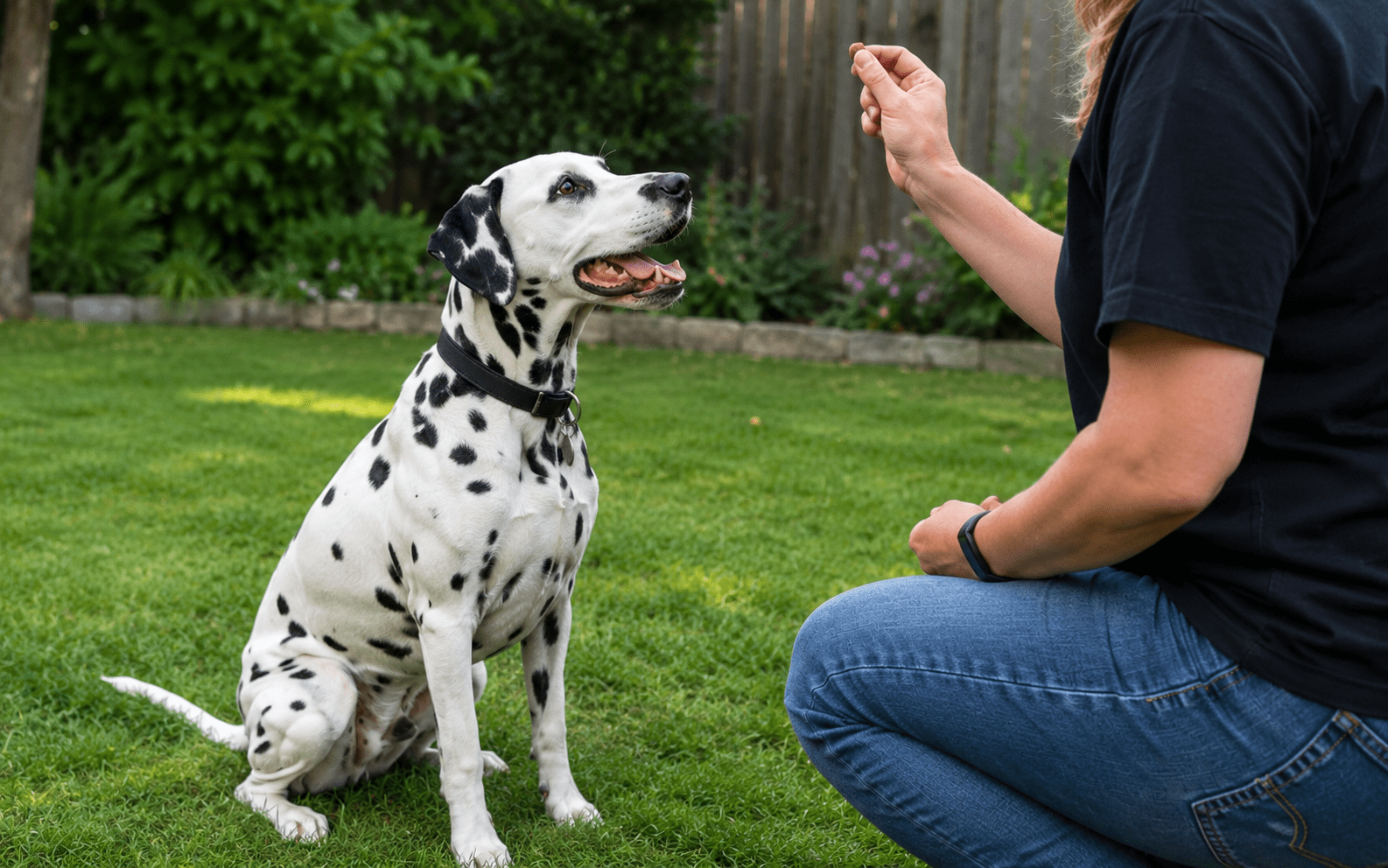
Dalmatians are intelligent, athletic dogs that respond well to consistent, positive training when you start early and stay patient. Knowing how to train a Dalmatian dog correctly means understanding their unique temperament, high energy levels, and sensitivity to harsh corrections before you even begin.
Key Takeaways
- Dalmatians need early socialization and structured obedience work to prevent behavioral problems down the road.
- Positive reinforcement is the most effective training method for this breed — punishment-based techniques often backfire.
- Daily physical and mental exercise is non-negotiable; a bored Dalmatian becomes a destructive Dalmatian.
- Consistency from every household member is critical — mixed signals confuse this breed quickly.
- Professional training support, whether in-home or board and train, can dramatically speed up your progress.
- Short, frequent training sessions (10-15 minutes) outperform long, infrequent ones with Dalmatians.
Why Dalmatians Are Uniquely Challenging to Train
Dalmatians are not beginner dogs. That is not an insult to the breed — it is a realistic assessment that helps you prepare properly. Originally bred as carriage dogs that ran alongside horses for miles, they carry an almost bottomless reserve of energy. That history has direct implications for how you structure training.
This breed is also known for being stubborn at times, particularly when they are bored or when training sessions stretch too long. Their intelligence cuts both ways: they learn commands quickly, but they also figure out how to avoid tasks they find tedious. If you have ever wondered are dalmatians aggressive dogs, the short answer is that they are not inherently aggressive, but they can develop reactive or dominant behaviors when under-stimulated or poorly socialized.
Their sensitivity is another layer to understand. Dalmatians do not respond well to yelling, physical corrections, or punishment-based training. These approaches often produce a fearful dog that shuts down rather than a cooperative one. The good news is that once you align your training approach with how this breed actually thinks, you will see fast and lasting results.
Key challenges you should expect:
- High distractibility, especially outdoors
- Selective hearing when something more interesting is nearby
- Pulling hard on the leash without proper leash training
- Testing boundaries repeatedly, especially with new commands
- Strong prey drive that can override commands near squirrels, birds, or other animals
The Foundation: Socialization Before Everything Else
Before you teach a single command, socialization is your first job. Dalmatians that miss the critical socialization window between 8 and 16 weeks are significantly more likely to develop fear-based reactions, excessive barking, or anxiety around strangers and other dogs.
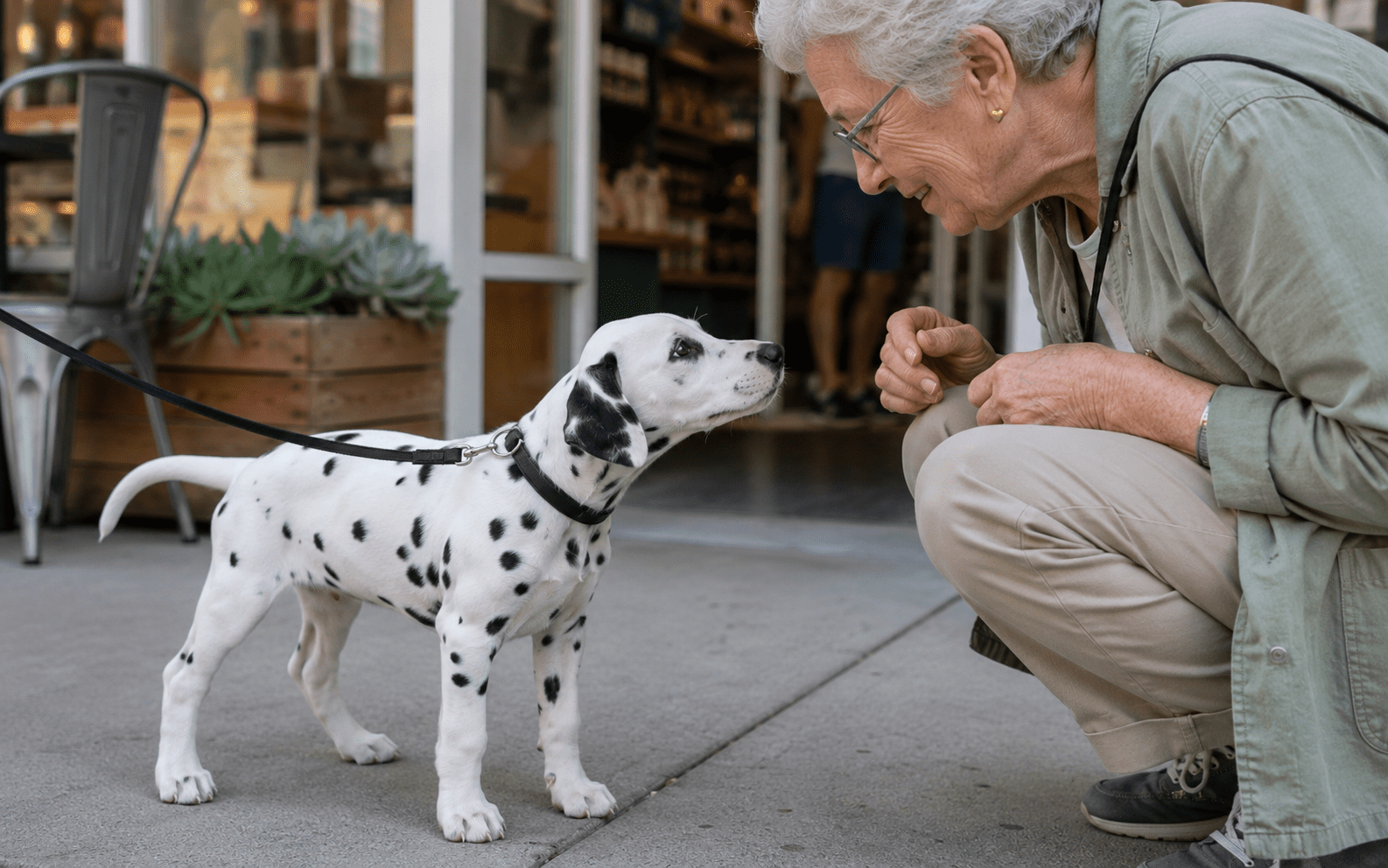
Socialization does not mean letting your dog run loose at a dog park. It means controlled, positive exposure to different people, environments, sounds, surfaces, and animals. Take your Dalmatian to pet-friendly stores, busy sidewalks, and quiet parks. Let them meet children, seniors, people wearing hats, and people carrying umbrellas. Each positive interaction builds the confidence this breed needs to become a stable, well-adjusted adult dog.
If your Dalmatian is already past puppyhood and shows signs of reactivity or anxiety, you are not out of options, as in home dog training long island professionals can observe your dog in real-world home environments where problem behaviors often first appear. Connecting with experienced trainers allows them to develop a more structured approach tailored to your specific situation.
Core Training Techniques That Actually Work for Dalmatians
Positive Reinforcement Is Non-Negotiable
Dalmatians thrive on praise, play, and high-value treats. Positive reinforcement means you reward the behavior you want immediately after it happens, which helps the dog connect the action to the reward. Timing matters enormously. A reward that comes three seconds too late teaches nothing useful.
Use treats your dog genuinely loves. Plain kibble rarely cuts it for a distracted Dalmatian outdoors. Small pieces of chicken, cheese, or commercial training treats with a strong smell tend to work much better. Once a behavior is reliable, you can phase treats out gradually and replace them with praise or play as the reward.
Clicker Training Adds Precision
Many Dalmatian owners find clicker training especially effective because it eliminates timing uncertainty. The click marks the exact moment the correct behavior happens, giving your dog a precise signal about what earned the reward.
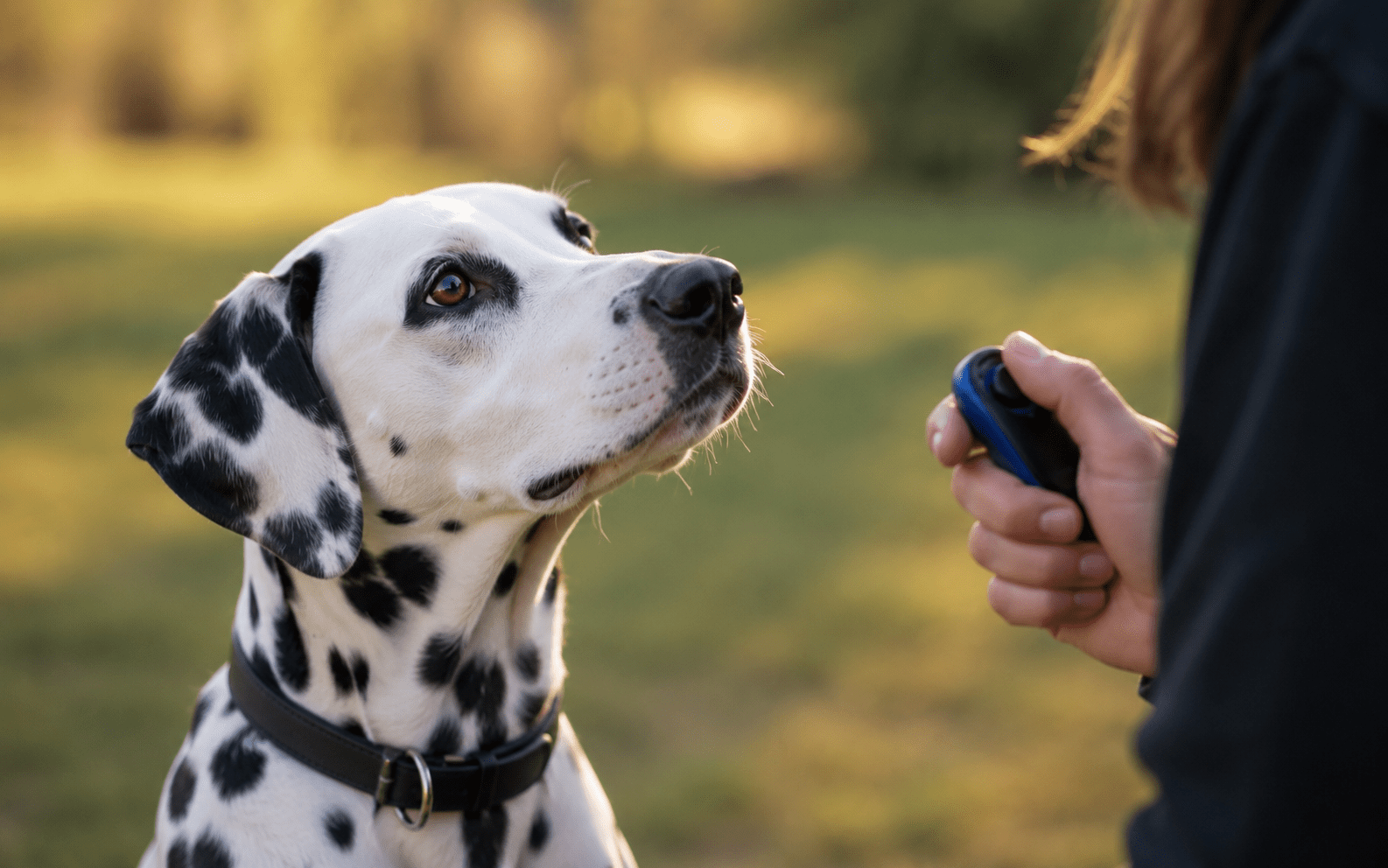
You pair the click with a treat during initial conditioning, and within a few sessions, the click itself becomes meaningful to the dog.
Short Sessions, High Repetition
Aim for two to three training sessions per day, each lasting 10 to 15 minutes. Dalmatians lose focus in longer sessions, and you want to stop each session on a successful note. Always end with something your dog does well so the session finishes positively.
Essential Commands to Teach in Order
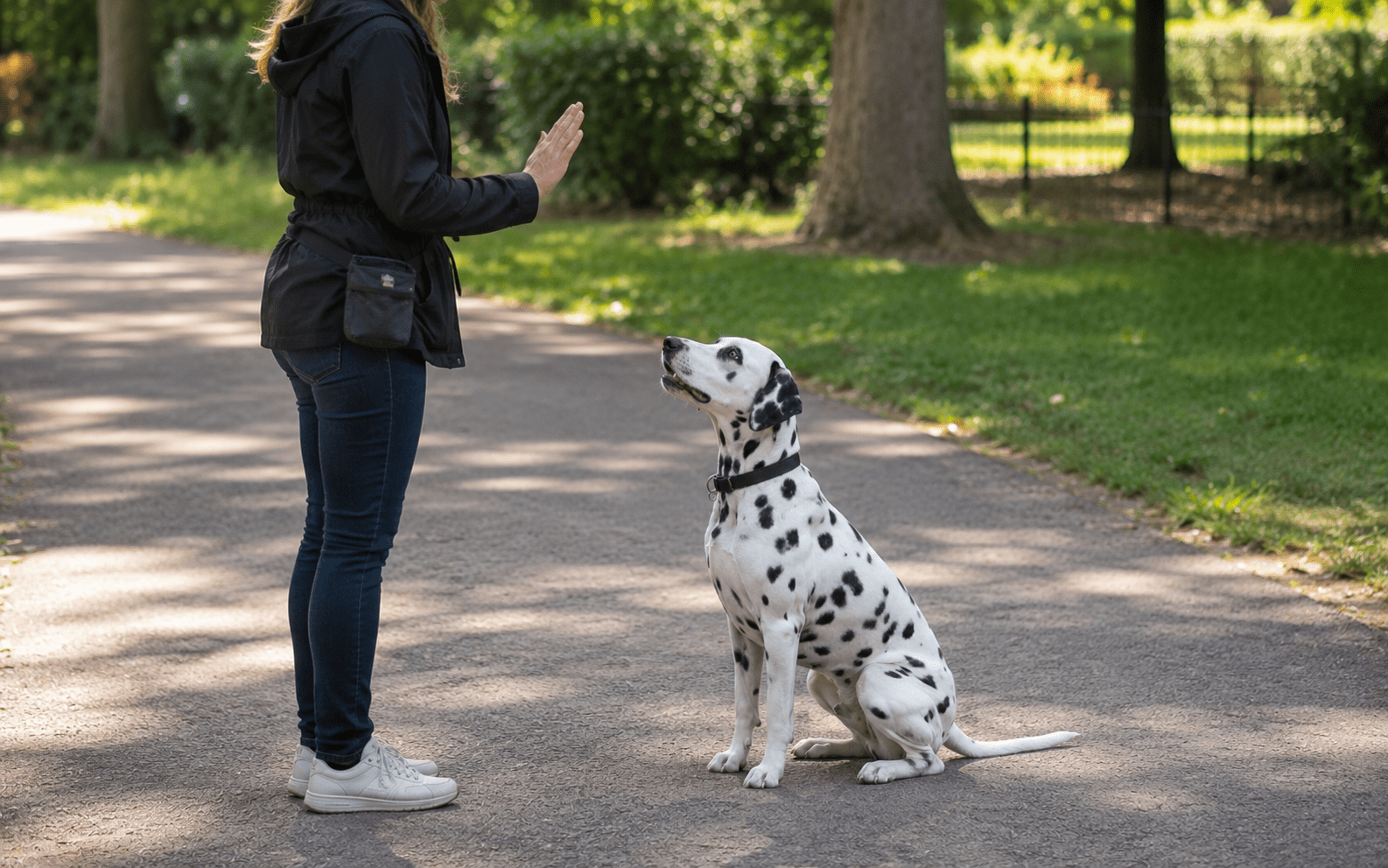
Building a solid command foundation gives your Dalmatian structure and gives you control in real-world situations. Teach these in the order listed below, as each one supports the next.
| Command | Why It Matters | Average Time to Reliable Response |
| Sit | Foundation for impulse control | 1-3 days |
| Stay | Prevents bolting and door dashing | 1-2 weeks |
| Come (Recall) | Safety critical, especially off-leash | 2-6 weeks |
| Leave It | Manages prey drive and scavenging | 1-2 weeks |
| Heel | Controls leash pulling on walks | 2-4 weeks |
| Down | Useful for calm settling in public | 3-7 days |
Do not rush through these. A command is only reliable when your dog performs it correctly in at least three different environments with three different levels of distraction, as structured obedience dog training covers exactly this progression, moving your dog from controlled environments toward real-world reliability. A sit in your kitchen does not mean a sit at the dog park.
Managing Energy: The Training Factor Most Owners Underestimate
Here is a rule that experienced Dalmatian owners know well: a tired dog is a trainable dog. If you try to run a training session with a Dalmatian that has been cooped up inside all day, you are setting yourself up for frustration. These dogs need significant physical exercise before they are mentally ready to focus.
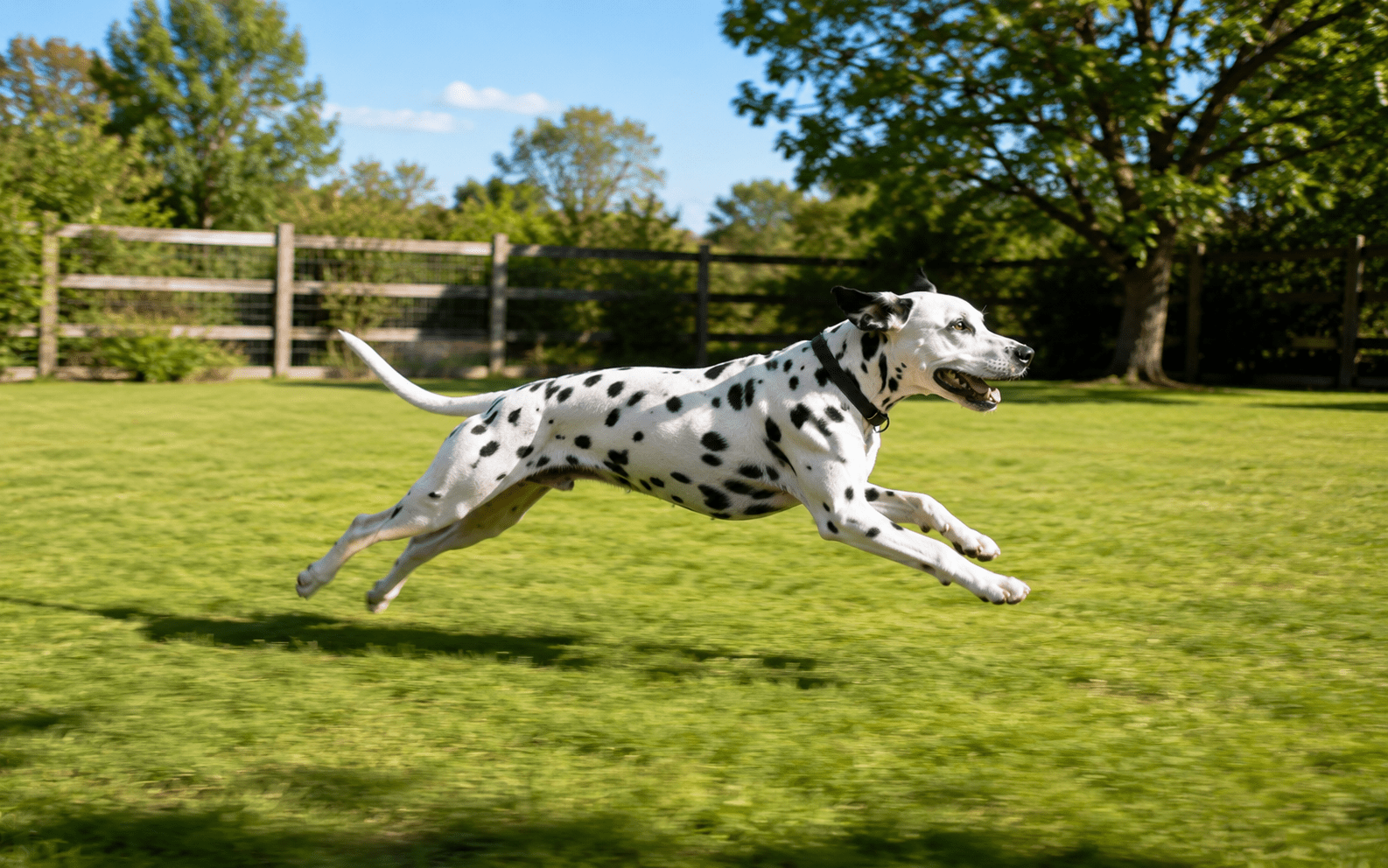
Aim for at least 60 to 90 minutes of vigorous exercise daily. That includes running, fetch, swimming, or structured off-leash play in a securely fenced area. Dalmatians also benefit from mental enrichment, including puzzle feeders, scent work, and training games that make them think.
If your Dalmatian is bouncing off the walls despite exercise, reading up on how to calm a hyperactive dog gives you concrete tools beyond just exercise, including decompression activities and calm reinforcement techniques that work specifically for high-drive breeds.
Common Mistakes Dalmatian Owners Make
Even well-intentioned owners run into the same pitfalls with this breed. Knowing what to avoid is as valuable as knowing what to do.
Inconsistency across household members: If one person allows jumping and another corrects it, your Dalmatian receives conflicting information and the behavior never goes away. Everyone in the house must follow the same rules, use the same commands, and reward the same behaviors.
Skipping the leash work: Dalmatians pull hard. Many owners simply tolerate it, which reinforces the behavior. Leash manners require dedicated training, not just hoping the dog eventually settles down.
Using punishment after the fact: Scolding a Dalmatian for something they did 10 minutes ago accomplishes nothing. Dogs live in the moment. The correction must happen within two seconds of the behavior to be connected to it in any meaningful way.
Moving too fast: Teaching a new command one day and expecting it to be reliable the next is unrealistic. Proof each command thoroughly before layering on distractions.
Neglecting training after puppyhood: Some owners invest heavily in puppy training and then stop entirely. Dalmatians need ongoing reinforcement and mental stimulation throughout their lives. Adolescence, which typically hits between 6 and 18 months, often brings a regression in previously reliable behaviors.
When to Bring In Professional Support
There is no shame in asking for help with a breed as demanding as the Dalmatian. In fact, getting professional support early often prevents problems from becoming deeply ingrained habits that take months to undo.
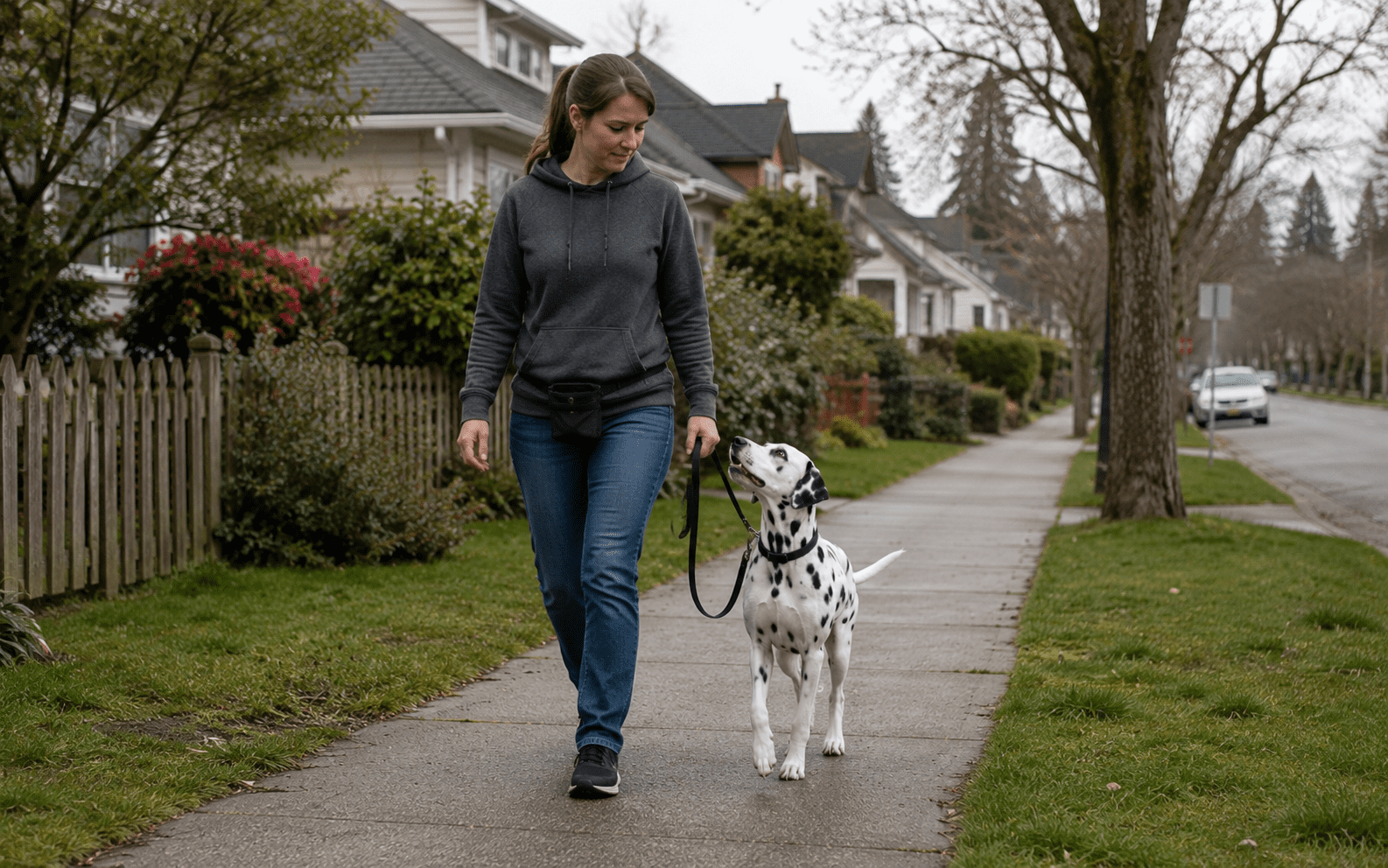
For owners who want personalized, one-on-one attention in the context where their dog actually lives and behaves, private dog training long island offers tailored programs that address your specific dog and household dynamics. A skilled trainer will spot patterns in your dog’s behavior that you might not notice because you are too close to the situation.
For dogs that need intensive, accelerated training, especially for more serious behavioral issues, board and train long island programs place your dog with professional trainers full-time. This format works well for Dalmatians that need deep behavioral restructuring or for owners who have limited time to commit to daily training sessions. The key to making board and train work long-term is follow-through at home, where you maintain everything the dog learned during the program.
Things to Know
- Dalmatians are born completely white. Their spots develop over the first few weeks of life, and their personality traits follow a similar slow reveal during adolescence.
- This breed has a genetic predisposition to deafness. Around 30% of Dalmatians have some degree of hearing loss, so always confirm your dog’s hearing status, as it affects training methods.
- Dalmatians form strong bonds with their families and can develop separation anxiety if left alone for long periods without adequate exercise and mental stimulation.
- Using your dog’s name repeatedly without reinforcement causes them to start ignoring it. Condition your dog to look at you every time you say their name before layering commands on top.
- Dalmatians have a unique urinary system that requires a low-purine diet. Stress from poor training environments can worsen health issues, so a calm, positive training approach benefits them physically as well as behaviorally.
- The adolescent phase in Dalmatians is often when owners give up. Knowing it is temporary and doubling down on consistency during this phase makes an enormous difference in long-term outcomes.
Ready to Build a Dalmatian You’re Proud to Take Anywhere?
Pick one command from the essential commands table above and commit to training it every single day for the next two weeks, two to three sessions per day, 10 to 15 minutes each. Document your dog’s progress using short videos so you can actually see improvement over time. If you hit a wall or notice concerning behaviors during that two-week period, that is your signal to reach out to a professional trainer who specializes in high-energy breeds before the behavior solidifies.
Read Related Articles
How Hard Are Bullmastiffs to Train
Frequently Asked Questions
At what age should you start training a Dalmatian?
Start training your Dalmatian as early as 8 weeks old, as soon as they come home, and following the best ways to train a puppy will set you up for success.
Puppies at this age are absorbing information rapidly and have not yet developed bad habits. Even basic commands like sit and name recognition during this phase lay a critical foundation. The earlier you start, the easier the entire process becomes.
How long does it take to fully train a Dalmatian?
Basic obedience reliability typically takes 3 to 6 months with consistent daily training.
Advanced commands, off-leash reliability, and solid behavior in high-distraction environments can take 12 to 18 months of ongoing work. Every dog is different, and prior experiences, socialization gaps, and the consistency of training all affect the timeline.
Are Dalmatians hard to train compared to other breeds?
Dalmatians are moderately difficult to train due to their high energy, stubbornness, and sensitivity to harsh methods.
They are not the most difficult breed, but they are far from the easiest. Owners who match their training approach to the breed’s needs, using positive reinforcement, short sessions, and plenty of exercise, generally see strong results within a few months.
Can Dalmatians be trained off-leash?
Yes, but reliable off-leash recall takes significant time and should only be practiced in safely enclosed areas until the behavior is rock-solid.
Dalmatians have a strong prey drive and will chase moving animals or vehicles without reliable recall in place. Always train recall in a fenced environment first, gradually introducing more distractions before attempting any off-leash work in open areas.
Do Dalmatians do well with group training classes?
Group classes can work for Dalmatians, but they are often too distracting for dogs that have not first built focus through private or in-home training.
Starting with one-on-one sessions helps establish the attentiveness and impulse control your dog needs to benefit from a group class setting. Once basic commands are reliable at home, group classes add valuable distraction-proofing.
The Bottom Line on How to Train a Dalmatian Dog
Understanding how to train a Dalmatian dog comes down to three things: respecting the breed’s energy, using methods that fit their sensitive and intelligent nature, and staying consistent longer than feels comfortable. These dogs will test your patience during adolescence, push boundaries when bored, and shut down completely under pressure. But when you meet them with patience, structure, and the right tools, Dalmatians become loyal, impressive, and genuinely joyful companions.
Take what you learned here and start today. Even one focused 10-minute session this evening puts you ahead of where you were this morning.