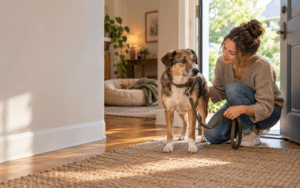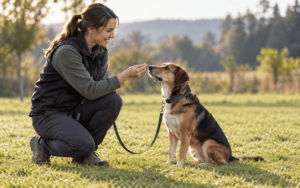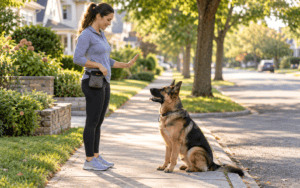
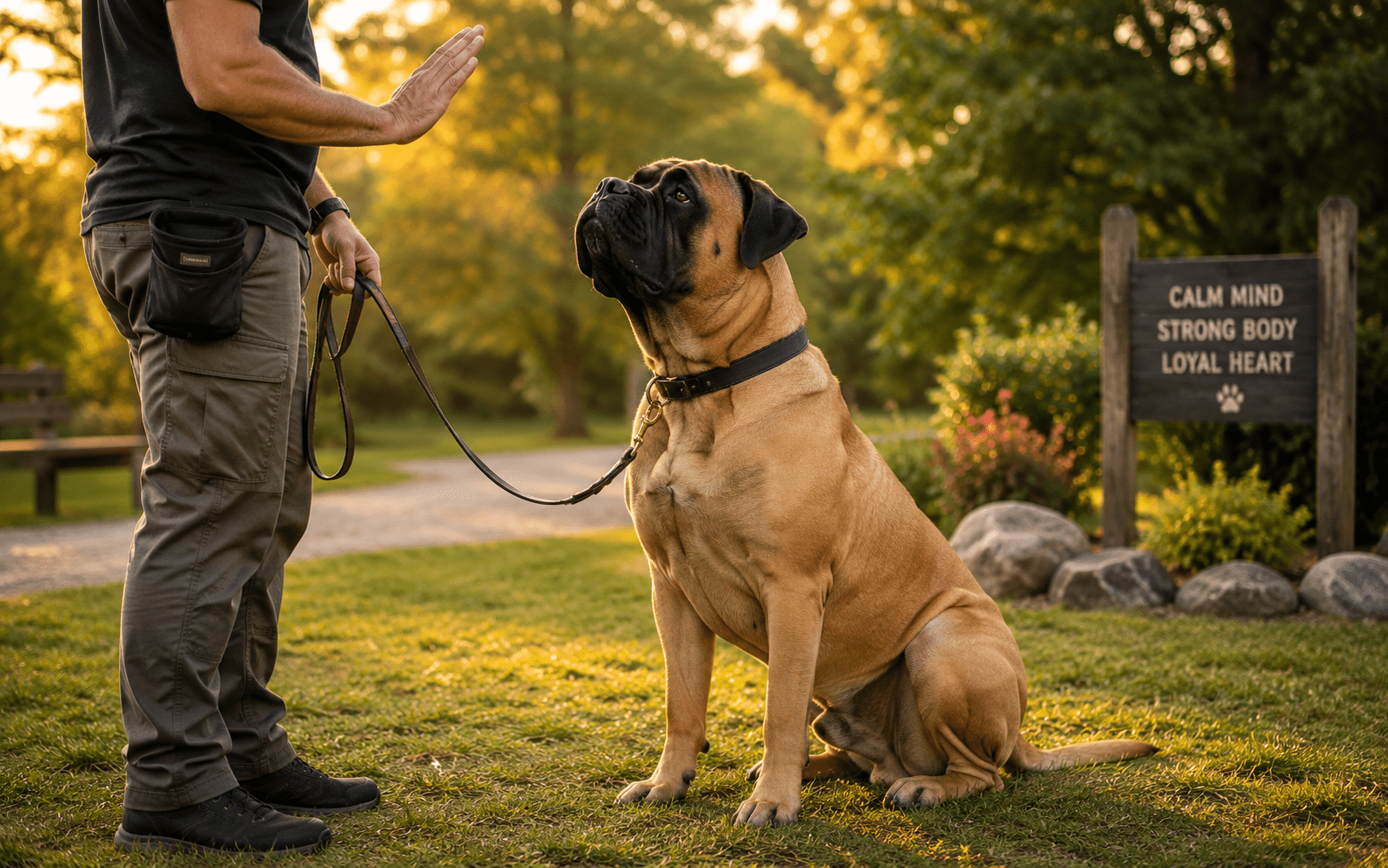
How hard are Bullmastiffs to train? Bullmastiffs rank as moderately to highly difficult to train because of their independent, protective instincts, massive size, and slow mental maturity. With early socialization, consistent positive reinforcement, and patience through their long adolescent phase, most Bullmastiffs grow into calm, obedient family guardians.
This guide breaks down exactly why Bullmastiffs challenge even experienced dog owners, what training approach actually works for this gentle giant, and which method fits your specific household and experience level.
Whether you are bringing home a Bullmastiff puppy for the first time or trying to settle down an adolescent dog that has started testing limits, the right framework makes a measurable difference in how quickly your dog responds and how confident you feel handling a dog of this size.
Quick Insights:
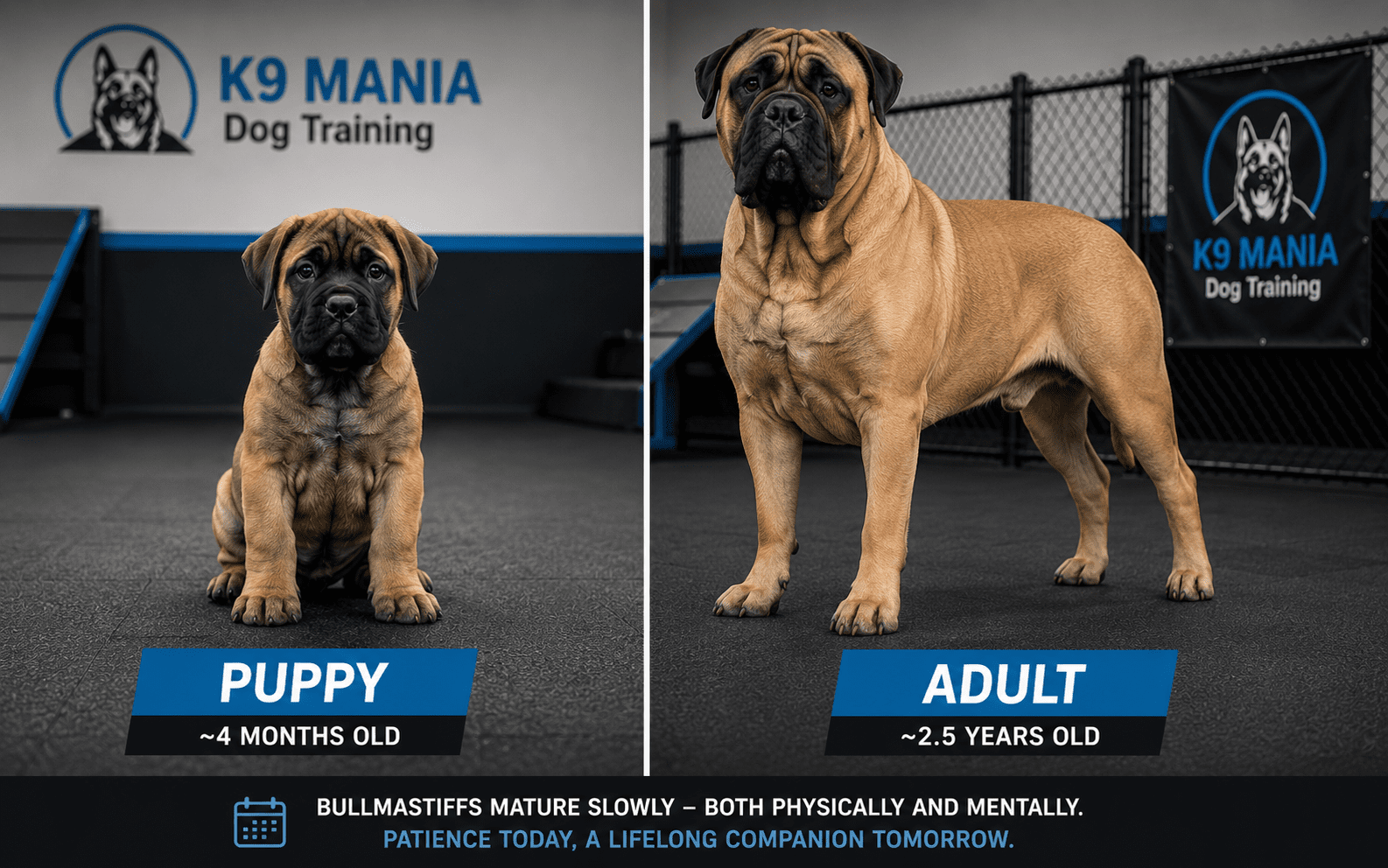
- Bullmastiffs mature slowly, both physically and mentally, often not settling until age two or three.
- Their independent, guarding instincts can look like stubbornness during basic obedience work.
- Early socialization between eight and sixteen weeks shapes lifelong temperament and confidence.
- Positive reinforcement consistently outperforms punishment based or dominance style methods with this breed.
- Size and strength make leash manners and impulse control non negotiable from puppyhood.
- Mental stimulation matters just as much as physical exercise for keeping this breed engaged.
“Raising a Bullmastiff that listens politely even at over a hundred pounds takes real structure. Our obedience training for dogs program builds reliable manners and impulse control from the very first session, giving owners a clear plan instead of guesswork.”
Why Are Bullmastiffs Hard to Train?
Bullmastiffs were originally bred to guard English estates against poachers, working independently and making their own decisions without constant direction from a handler. That same independent streak still shows up at home, where a Bullmastiff may seem to ignore a command it clearly understands simply because it is weighing whether the request is worth following in that moment.
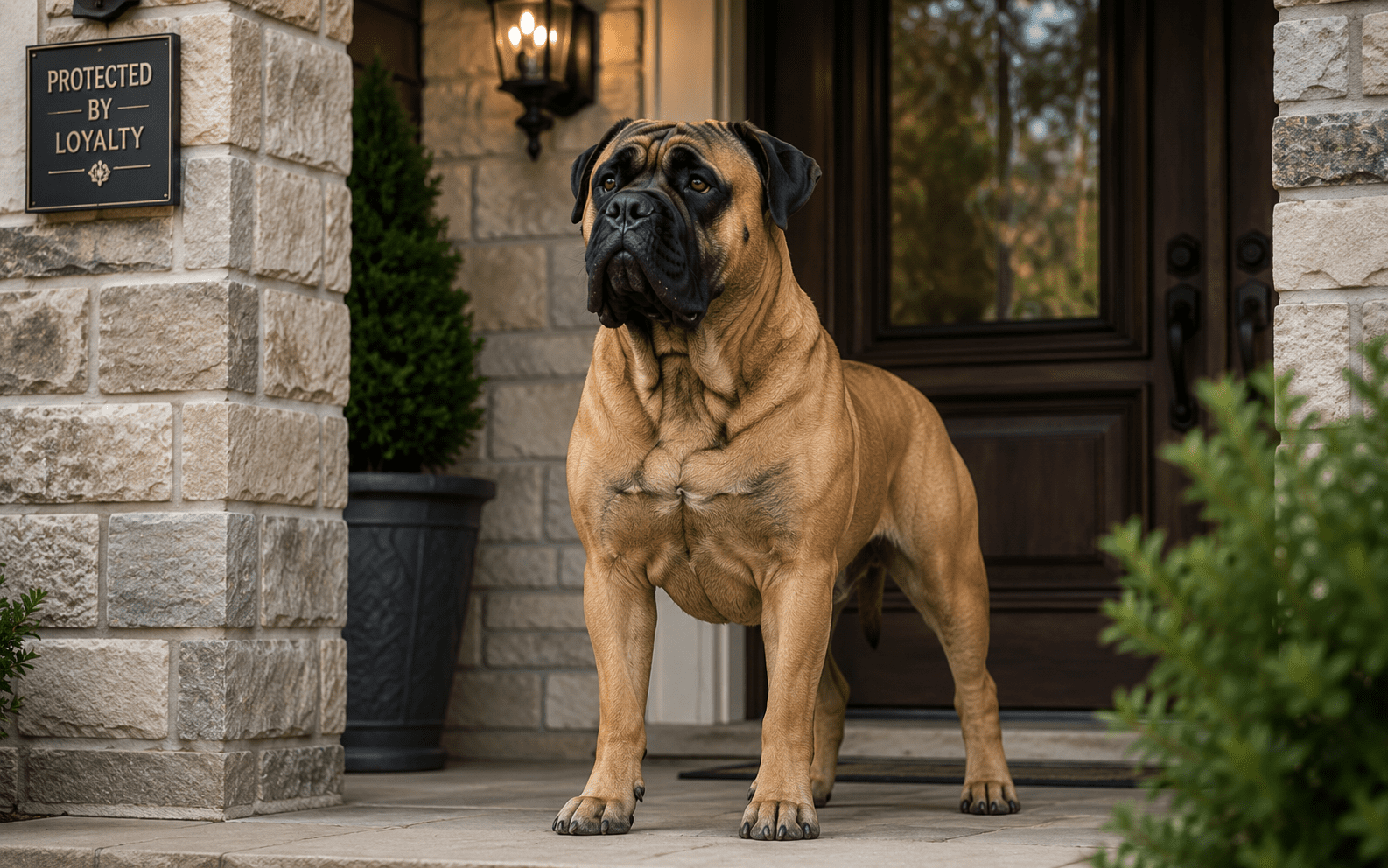
Their size adds another layer of difficulty to ordinary training exercises. A fully grown Bullmastiff can weigh well over a hundred pounds, so an untrained dog that pulls, jumps, or leans is genuinely hard to manage on a daily basis, especially around children, guests, or other animals. Add a slow maturity rate, with many dogs not settling into calm adult behavior until two or three years old, and owners face a much longer training window than they expect before things finally click into place.
Temperament plays a role too. Bullmastiffs are typically calm and even tempered around their own family, but that same calmness can translate into a low sense of urgency about responding to commands quickly. They are thinkers rather than reactors, which means repetitive drilling often produces less progress than short, varied sessions that keep the dog mentally engaged. Owners who expect the same quick obedience seen in herding or sporting breeds often feel discouraged early on, when in reality the Bullmastiff is simply built on a different timeline, and rushing that timeline rarely speeds anything up.
Bullmastiff Trainability Factors at a Glance
| Factor | Why It Matters | Training Impact |
| Guarding breed history | Independent decision making instincts | Needs calm leadership, not just repeated drills |
| Size and strength | Hard to physically manage once grown | Leash and impulse control must start in puppyhood |
| Slow maturity rate | Mentally settles around two to three years | Requires patience through a long adolescent stage |
| Low to moderate food drive | Some dogs are not motivated by treats alone | Calls for varied, high value rewards and play |
| Socialization window | Critical period runs eight to sixteen weeks | Early exposure prevents fear or guarding based reactivity |
How Do You Train a Bullmastiff, and Which Method Works Best?
The most effective way to train a Bullmastiff combines calm, consistent leadership with positive reinforcement rather than force. Harsh corrections or alpha style handling tend to make a Bullmastiff shut down, become avoidant, or in some cases push back physically, since the breed responds to fairness and predictable routine far better than pressure or intimidation.
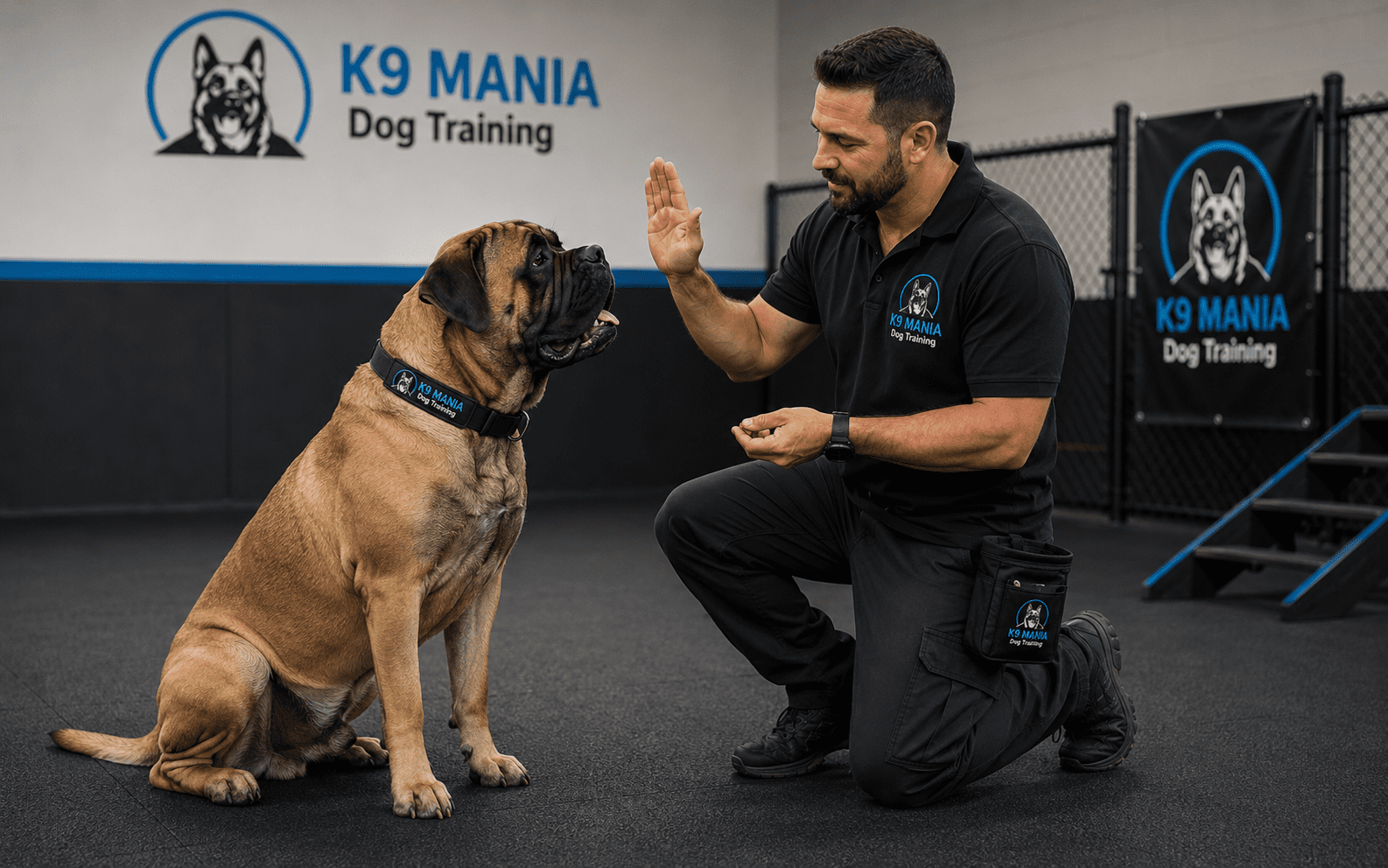
Which method works best really depends on your experience level and how much time you can dedicate each week. First time owners generally do best with a structured program guided by a professional trainer, since a hundred pound adolescent dog leaves very little room for trial and error once bad habits set in.
Experienced owners with a strong handle on positive reinforcement can often manage daily obedience work themselves, while still leaning on professional support for socialization milestones and any guarding related behavior that feels outside their comfort zone.
Households with children, frequent visitors, or other pets generally benefit from professional input earlier rather than later, simply because the margin for error shrinks as the dog grows.
Below are six core training priorities, broken down by why they matter, how to approach them, and which option fits different situations and households.
1. Why Early Socialization Comes First
Socialization between eight and sixteen weeks shapes how a Bullmastiff reacts to strangers, other animals, and new environments for the rest of its life. Skipping this stage often leads to a dog that treats every visitor like a potential threat rather than a welcome guest, which becomes a much harder habit to undo later in adulthood.
2. How to Build Basic Obedience Commands
Start with sit, stay, come, and a reliable release word in short, five minute sessions spread throughout the day. Keep training upbeat and end each session before your Bullmastiff loses interest, since long drilling sessions tend to backfire and reduce engagement with this breed over time.
3. Which Motivators Actually Work
Food works for some Bullmastiffs, but many respond better to praise, play, or access to something they genuinely want, like a walk or a favorite toy. Test a few reward types early in training so you know exactly what drives your individual dog’s behavior before building a full routine around it.
4. Why Leash and Impulse Control Matter Most
Loose leash walking and a solid wait command prevent the single biggest safety issue with this breed, which is sheer pulling power once the dog reaches full size. Practice impulse control daily with simple exercises like waiting at doorways, sitting before meals, and pausing before crossing thresholds.
5. How to Manage Guarding Instincts Safely
Controlled exposure to visitors, paired with a clear release cue, teaches a Bullmastiff the difference between a real threat and a normal guest arriving at the door. Never force interactions your dog is not ready for, since rushing this step often backfires and reinforces the exact wariness you are trying to reduce.
6. Which Behaviors Need the Most Patience
Counter surfing, leaning on people, and slow recall improvement are common in this breed and tend to fade with consistent, calm correction rather than frustration or repeated punishment. Expect gradual progress rather than overnight results, especially before the dog reaches two years of age.
Common Mistakes Bullmastiff Owners Make
Many training struggles with this breed come down to a handful of repeated mistakes rather than the dog itself being untrainable. Watch for these patterns in your own household routine before assuming your dog simply cannot learn, since most of these issues are fixable once they are identified clearly.
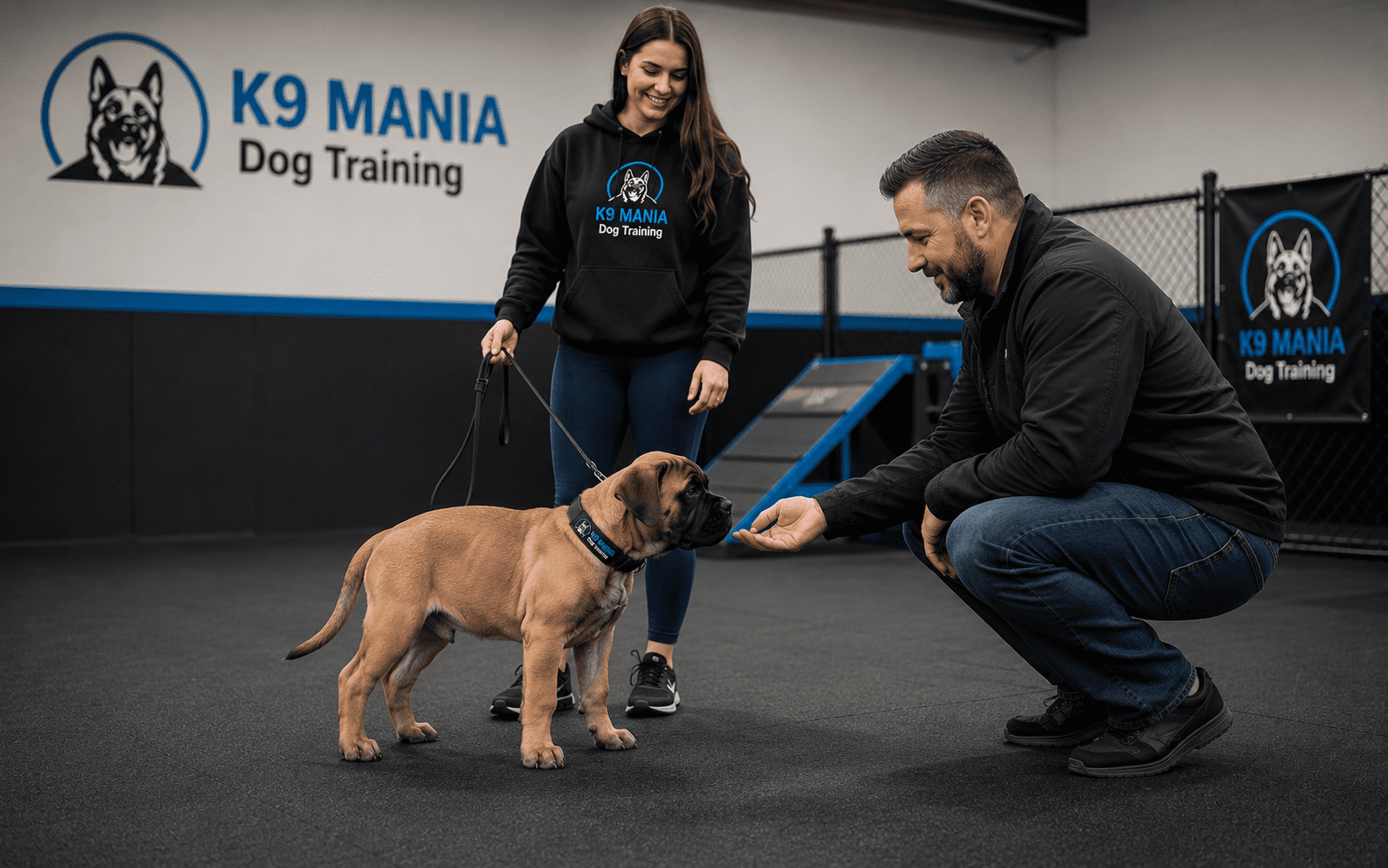
- Using harsh punishment or physical corrections, which damages trust with a naturally sensitive, protective breed and can increase defensive behavior over time.
- Skipping puppy socialization because the dog looks intimidating, then facing reactivity or fear based issues later in adolescence.
- Allowing inconsistent household rules, which confuses a breed that thrives on clear, predictable structure from every family member.
- Waiting too long to start leash and crate training before the dog reaches full adult size and strength.
- Underestimating daily mental and physical exercise needs, which leads to boredom driven misbehavior like chewing or excessive leaning.
Bullmastiff Training Timeline by Age
| Age Range | Developmental Stage | Training Focus |
| 8 to 16 weeks | Critical socialization window | Gentle exposure to people, pets, sounds, and handling |
| 4 to 8 months | Rapid growth, teething | Crate training, basic commands, bite inhibition |
| 8 to 18 months | Adolescent testing phase | Consistent boundaries, leash manners, impulse control |
| 18 to 36 months | Mental maturity settling in | Reinforcing reliability around guests and in public |
Many owners notice real progress once daily routines stay consistent across the whole household, which is exactly the structure our board and train Long Island program is built around for large, independent breeds like this one.
Consistency between every family member, not just the primary trainer, tends to be the single biggest factor in how quickly a Bullmastiff settles into reliable habits.
When Should You Seek Professional Help?
Some Bullmastiff behaviors call for more than a home training routine alone. If your dog shows aggression toward family members, guards food or space with growling and snapping, ignores basic commands despite weeks of consistent practice, or reacts fearfully to strangers and other dogs in public, professional guidance prevents small issues from becoming dangerous habits as the dog grows larger and stronger.
Owners often ask how hard are Bullmastiffs to train once their dog hits the adolescent stage and seems to forget everything it learned as a puppy, which is completely normal and usually responds well to structured support. Our board and train Long Island program gives this breed a focused, distraction free environment to rebuild reliability, while in home dog training Long Island works directly in your space to fix specific household issues like jumping, door manners, or resource guarding. For owners who want hands on coaching alongside their dog rather than handing training off entirely, private dog training Long Island builds skills you can keep practicing and reinforcing long after sessions end.
The Real Answer on Training a Bullmastiff
So, how hard are Bullmastiffs to train? They are a genuine commitment, not an easy breed, but they are far from untrainable. Their stubbornness comes from intelligence and independence, not defiance for its own sake, and that combination responds beautifully to patient, positive, consistent leadership over time.
At K9 Mania Dog Training, we are Long Island’s leading board and train program, backed by the best dog behaviorist on Long Island. Whatever challenge your Bullmastiff is bringing into your home, trust our team to help you build a calm, confident, well mannered companion you can count on for years to come.
Read Related Articles
Frequently Asked Questions
Are Bullmastiffs hard to train?
Bullmastiffs are moderately to highly challenging to train due to their independent nature, slow maturity, and sheer physical size, though consistent positive reinforcement and structured daily routines produce excellent results over time for most committed families.
Are Bullmastiffs good dogs for beginners?
Bullmastiffs can work for first time owners who are genuinely committed to structured training and professional support, but their size, strength, and independent streak make them considerably harder to manage than typical beginner friendly breeds without guidance.
How do you discipline a Bullmastiff?
Discipline should rely on calm corrections, removing attention for unwanted behavior, and consistent boundaries rather than physical punishment, since harsh handling tends to damage trust with this naturally sensitive, protective breed over time.
What not to do with a Bullmastiff puppy?
Avoid skipping early socialization, using physical punishment, allowing jumping or mouthing that seems harmless as a puppy, and inconsistent household rules, since all of these create much larger problems once the dog reaches full adult size and strength.
What is the downside of Bullmastiffs?
The main downsides include a long maturity period before calm behavior sets in, heavy drooling and shedding, significant size that requires careful daily management, and a stubborn streak that demands patient, consistent training from every household member involved.
Do Bullmastiffs need daily walks?
Yes, Bullmastiffs need daily walks along with regular mental stimulation, though their overall exercise needs are moderate compared to high energy working breeds, and shorter, structured walks generally work better than intense or prolonged exertion for this breed.