How to train a dachshund comes down to short, reward-based sessions that work with their independent personality instead of against it. Most dachshunds learn basic commands and house manners within a few weeks when owners stay consistent and patient. This small hound breed is smart, food motivated, and famously stubborn, so the right method matters more than the number of hours you put in.
From potty training struggles to a stubborn streak that rivals much larger breeds, dachshunds challenge first time owners in ways that surprise people. In this guide, we will break down why dachshunds act this way, how to train one step by step, and which methods actually work for this independent little hound.
Quick Insights:
- Dachshunds are intelligent but independent, which can look like stubbornness during training.
- Short sessions of 5 to 10 minutes work better than long ones for this breed.
- Potty training often takes longer with dachshunds because of their small bladders and den instincts.
- Leash pulling and barking are common issues tied to their hound and terrier ancestry.
- Crate training supports both house training and the breed’s natural love of small, enclosed spaces.
“Need hands on help with a hard headed dachshund? Our board and train Long Island program builds lasting structure fast, even with stubborn small breeds that ignore commands at home.”
Why Are Dachshunds Hard To Train?
Dachshunds were bred to hunt badgers underground, often working far from their handler and making decisions on their own. That hunting history is the main reason this breed can seem so difficult to train today.
This independent streak means a dachshund does not always look to you for direction the way a retriever or shepherd might. They think for themselves, which is useful underground chasing prey but frustrating during a basic sit command.
Several traits add to the challenge:
- Strong prey drive that pulls their focus toward smells, squirrels, and movement
- A stubborn personality that resists repetition without a clear reward
- Small dog syndrome, where owners unintentionally let behavior slide because the dog is tiny
- Sensitivity to harsh correction, which can shut a dachshund down or create fear
None of this means a dachshund cannot be trained well. It means the approach has to respect how the breed thinks rather than fight against it.
There is also a physical piece owners often overlook. Dachshunds are prone to back problems because of their long spine and short legs, so jumping off furniture or repeated stair climbing can affect both their health and their willingness to follow certain commands. A trainer who understands this breed factors that into how exercises and commands are taught, not just whether the dog listens.
How Do You Train A Dachshund At Home?
Understanding how to train a dachshund starts with knowing why they think independently, then building a routine around food motivation, short sessions, and predictable consequences.
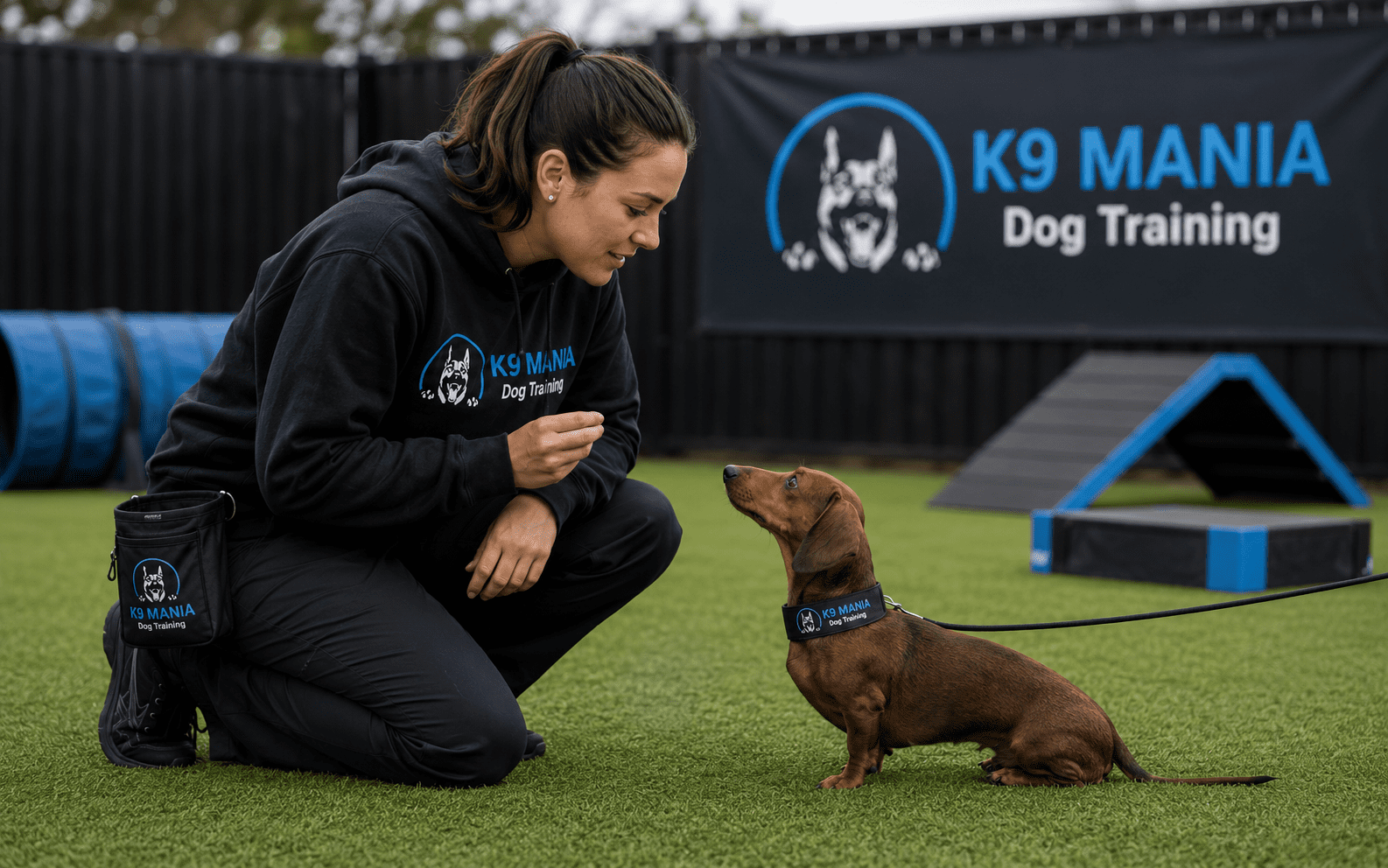
Begin every session with high value treats and a quiet space free of distractions. Dachshunds lose interest fast, so five minutes of focused work beats thirty minutes of a bored, wandering dog.
Keep a consistent schedule for potty breaks, meals, and training sessions. Dachshunds thrive on routine, and unpredictability is one of the biggest reasons house training drags on longer than expected.
Reward the behavior you want the instant it happens. Timing matters more with this breed than with many others, since a delayed reward can confuse a dog that is already easily distracted.
“If your schedule makes daily practice difficult, an in-home dog training Long Island program lets a professional work directly in your space, where most dachshund bad habits actually start.”
Which Training Method Works Best For A Dachshund?
Reward-based, positive reinforcement training is the method that works best for dachshunds, and it is not particularly close. This breed shuts down or becomes defensive under harsh, dominance-based handling far more often than confident breeds like Labradors or German Shepherds.
Clicker training pairs well with their food drive and gives a clear, consistent marker for correct behavior. Many owners see faster results with a clicker than with verbal praise alone, since the sound removes any guesswork about timing.
Dominance-based methods, including forced submission or heavy physical correction, tend to backfire with dachshunds. Their sensitivity and stubbornness combine into either shutdown behavior or, in some cases, defensive snapping.
Balanced training, which mixes clear boundaries with reward-based motivation, works for owners who already have some experience. First time owners generally see better results sticking with pure positive reinforcement until basic obedience is solid.
Step By Step Dachshund Training Plan
This step-by-step approach to how to train a dachshund covers crate training, commands, socialization, and the behavior issues that come up most often with this breed.
1. Start With Crate And Potty Training
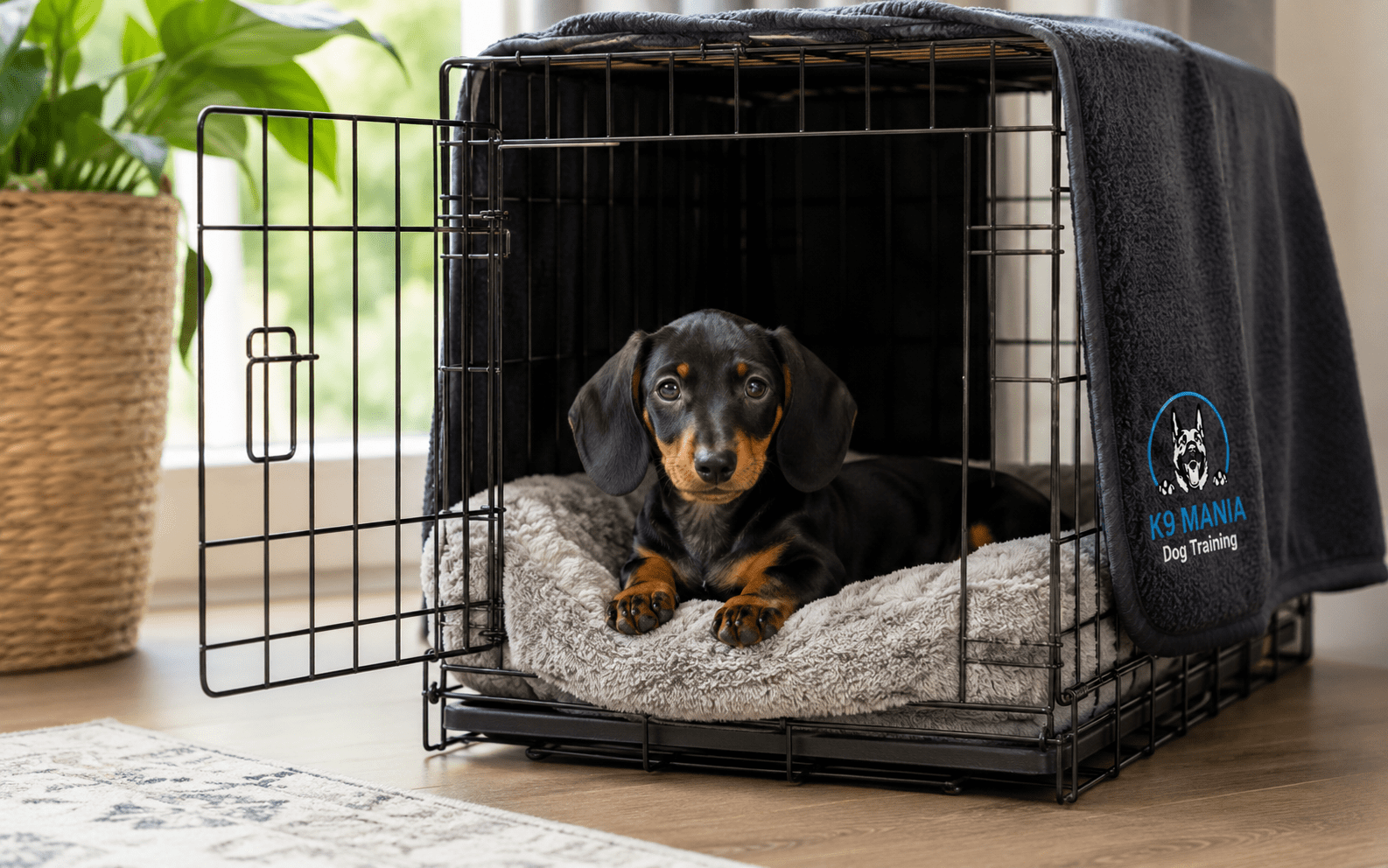
Introduce the crate as a safe den rather than a punishment. Dachshunds naturally gravitate toward small, enclosed spaces, which makes crate training easier than with many other breeds once trust is built.
Take your puppy out on a fixed schedule, including first thing in the morning, after meals, and right before bed. Praise and reward immediately after they go outside, not after they walk back indoors.
Watch for sniffing, circling, or sudden stillness as signs they need to go. Catching these cues early prevents accidents and speeds up the entire potty training timeline.
2. Teach Basic Commands With Short Sessions
Start with sit, stay, and come using small, soft treats your dachshund cannot resist. Keep each session under ten minutes to match their attention span and energy for repetition.
Practice in different rooms before moving outside, since a command learned in the kitchen does not automatically transfer to the backyard. Generalizing commands across locations takes more reps with this breed than people expect.
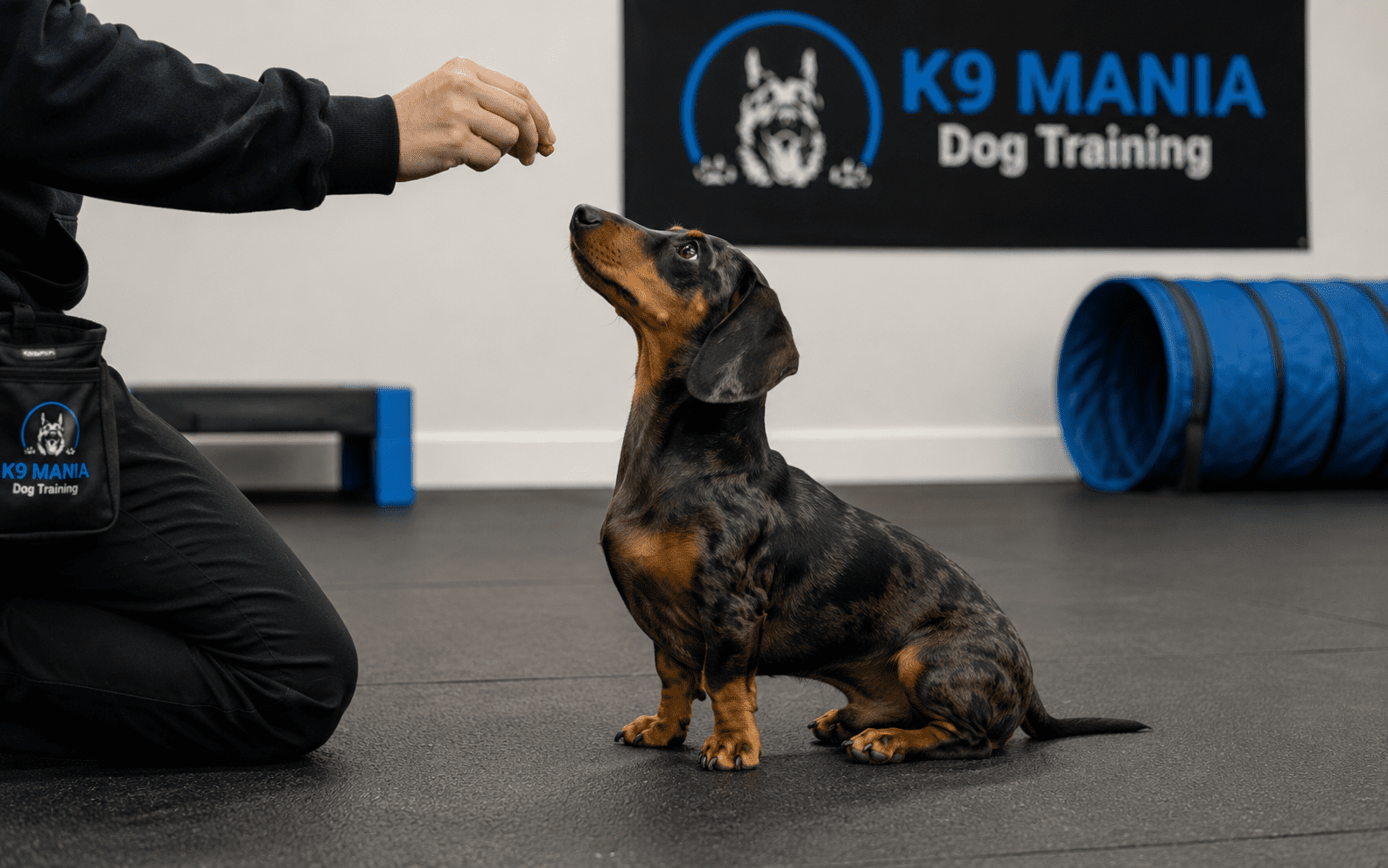
End every session on a success, even a small one, so your dog associates training with winning rather than frustration.
3. Socialize Early And Often
Expose your dachshund puppy to new people, dogs, sounds, and surfaces between 8 and 16 weeks whenever possible. Early, positive exposure reduces the suspicious or reactive behavior this breed can develop toward strangers.
Keep early interactions calm and short rather than overwhelming. A few good five-minute exposures beat one long, stressful outing that teaches your dog to associate new situations with anxiety.
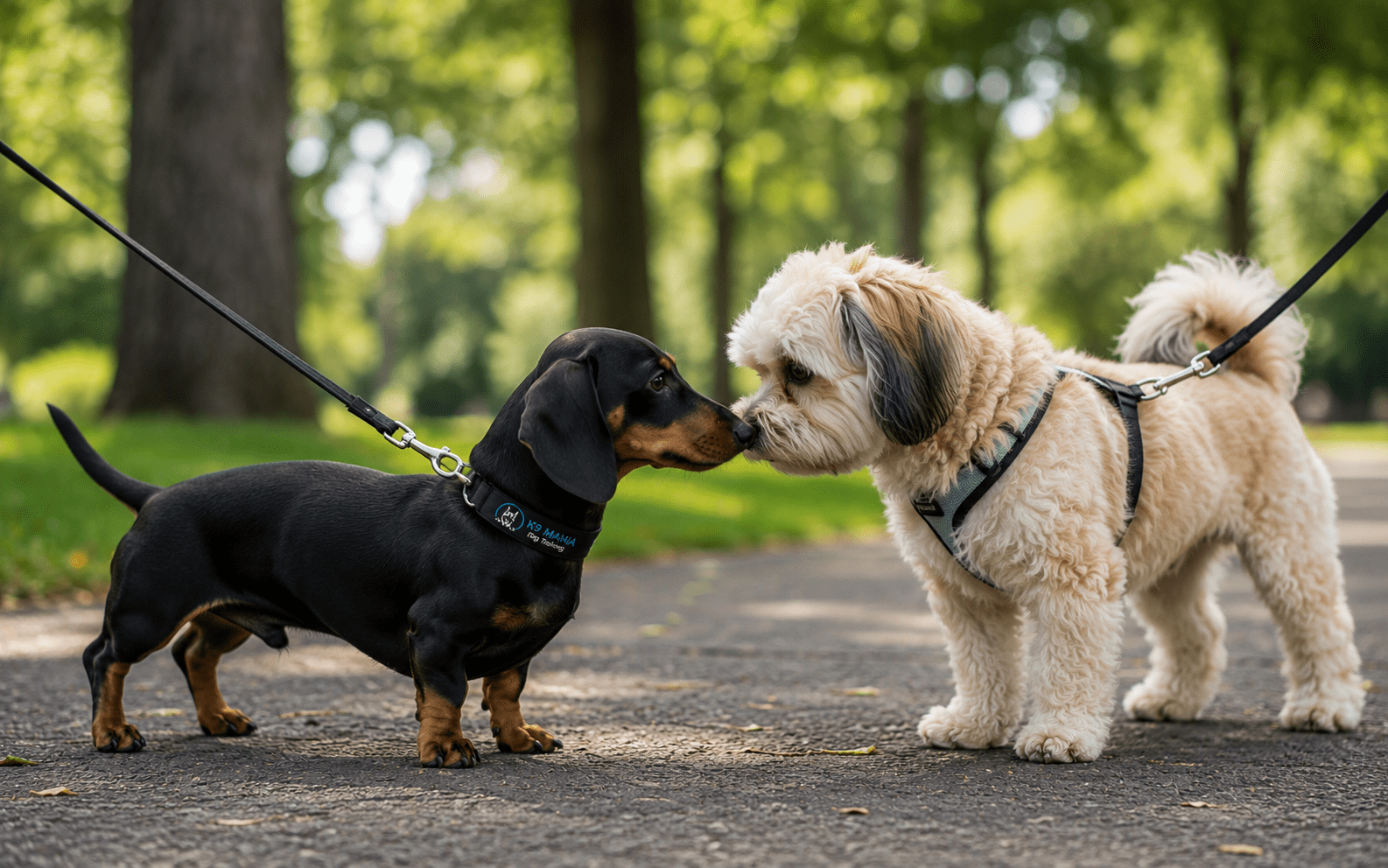
Adult dachshunds with little prior socialization can still improve, though it takes more repetition and a slower pace. Pairing new experiences with treats and a calm tone helps an older dog reframe situations that once felt threatening.
4. Address Barking And Digging Early
Dachshunds bark to alert, to demand attention, and simply because they hear or smell something interesting. Left unaddressed, this habit becomes a default response to nearly everything.
Redirect barking with a trained “quiet” cue paired with a reward for silence, not for stopping mid-bark. If barking has already become a daily struggle, our guide on how to train a dog to stop barking breaks down the process in more detail.
Digging is similarly instinctive, tied to their badger-hunting roots. Giving your dachshund a designated digging spot, such as a sandbox, channels the instinct instead of fighting it directly.
5. Manage Leash Pulling And Prey Drive
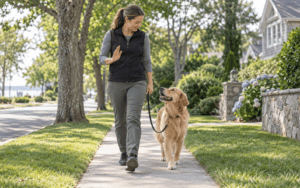
A dachshund chasing a scent or a squirrel will pull hard for a small dog, and their stubborn streak makes them slow to give up once locked onto something. Loose-leash walking needs to be taught deliberately rather than assumed.
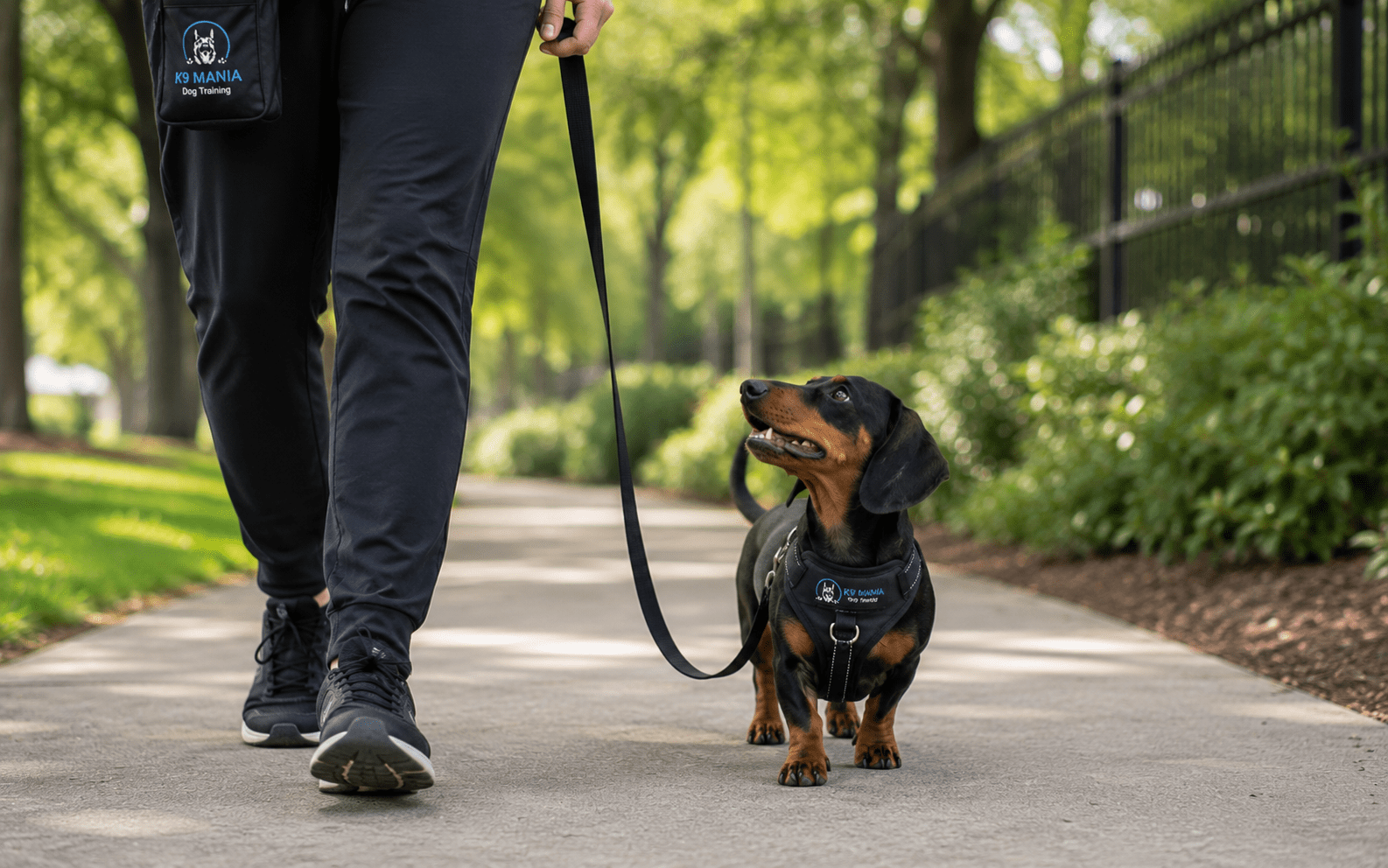
Stop walking the moment the leash tightens, and only move forward once your dog returns to your side. This consistency, repeated daily, teaches that pulling gets them nowhere, literally.
“For owners who want one-on-one help with leash reactivity or prey drive, our private dog training Long Island sessions focus on real-world distractions like squirrels, joggers, and other dogs.”
A front-clip harness can also reduce pulling pressure on a dachshund’s sensitive back and neck, working alongside the stop-and-reset method rather than replacing it.
6. Stay Consistent Through The Stubborn Stage
Most dachshunds hit a noticeable stubborn phase between four and eight months old, similar to a toddler testing limits. Commands they knew well suddenly seem forgotten.
This stage is normal and temporary, but it is also where many owners give up too early or get inconsistent with rules. If your dachshund is testing every boundary right now, our article on how to train a stubborn dog offers strategies that apply directly to this phase.
Holding the line on rules and rewards during this period, without resorting to harsh correction, is what separates a well-mannered adult dog from a lifelong escape artist.
Common Mistakes When Training A Dachshund
- Letting “small dog syndrome” excuse jumping, growling, or pulling because the dog is tiny
- Training in long sessions that exceed the breed’s attention span and patience
- Using harsh corrections that trigger fear or defensive behavior instead of compliance
- Being inconsistent with potty schedules, which extends house training by months
- Skipping early socialization because the puppy seems naturally calm or shy
- Giving up during the four to eight month stubborn stage instead of staying consistent

Dachshund Training Milestones By Age
| Age | Focus Area | What To Expect |
| 8 to 12 weeks | Crate and potty training | Frequent accidents are normal while bladder control develops |
| 3 to 6 months | Basic commands and socialization | Quick learning paired with short attention spans |
| 4 to 8 months | Boundary testing and impulse control | A noticeable stubborn phase with regression in known commands |
| 6 to 12 months | Leash manners and prey drive management | Better focus, though scent distractions remain strong |
| 1 year and up | Reinforcement and advanced skills | Most behavior issues stabilize with continued consistency |
Common Dachshund Behavior Issues And Fixes
| Behavior | Likely Cause | Training Fix |
| Excessive barking | Alert instinct or boredom | Teach a “quiet” cue and reward calm silence |
| Digging | Badger-hunting instinct | Provide a designated digging area |
| Leash pulling | Prey drive or excitement | Stop and reset technique on every pull |
| Resistance to commands | Stubborn streak or boredom | Shorter, higher-value reward sessions |
| House training setbacks | Small bladder or inconsistent schedule | Fixed potty schedule with immediate praise |
Choosing The Right Path For Your Dachshund
Learning how to train a dachshund takes patience, but the payoff is a loyal, confident companion who knows the rules. K9 Mania Dog Training is Long Island’s leading board and train program, home to the best dog behaviorist on Long Island, and we have helped countless families turn a stubborn dachshund into a well-mannered family member. Whether you are dealing with barking, leash pulling, or a puppy testing every limit, our team has the experience to help. Visit K9 Mania Dog Training today and let us help you build the well-trained dachshund you have been hoping for.
Frequently Asked Questions
Are Dachshunds easy to train?
Dachshunds are intelligent and food motivated, but their independent streak makes them more challenging than breeds bred to work closely with humans. They are not difficult to train so much as they require a different approach, built around short sessions, strong rewards, and patience through their stubborn phases.
How do you discipline a Dachshund puppy?
Discipline for a dachshund puppy should mean removing rewards or attention for unwanted behavior, not physical correction or yelling. Interrupt the behavior calmly, redirect to an acceptable activity, and reward the moment they comply. Harsh discipline tends to create fear or defensiveness rather than better behavior in this breed.
Should Dachshunds sleep in a crate?
Yes, most dachshunds do well sleeping in a crate, especially during puppyhood and house training. Their natural instinct to seek small, den-like spaces makes a crate feel secure rather than confining once they are properly introduced to it. A crate also prevents nighttime accidents and unsupervised chewing.
What are the behavior issues with Dachshunds?
Common dachshund behavior issues include excessive barking, digging, leash pulling, resource guarding, and stubborn resistance to commands. Many of these stem from their hunting background and strong prey drive rather than poor temperament. Consistent training and early socialization address most of these issues effectively.
What not to do with a Dachshund?
Avoid harsh physical corrections, yelling, or dominance-based handling, since dachshunds tend to respond with fear or defensiveness rather than improved behavior. Do not skip socialization, allow jumping or growling because of their size, or expect long training sessions to hold their attention. Inconsistency is one of the fastest ways to undo progress with this breed.
Are Dachshunds hard to potty train?
Dachshunds can take longer to potty train than some breeds due to their small bladders and stubborn streak, but they are not inherently harder to train than other small dogs. A fixed schedule, crate training, and immediate praise for outdoor success typically bring most dachshunds to reliable house training within a few months.