Knowing how to train a Boxer puppy comes down to early socialization, consistent crate routines, and short, reward-based obedience sessions started the day you bring them home. Because Boxers stay puppy-like both physically and mentally for nearly three years, owners need patience, structure, and daily exercise to stop jumping, chewing, and other high-energy habits from becoming permanent.
Boxers are smart, athletic, and deeply loyal, but that same energy and intelligence can make training feel overwhelming if you do not start early. From the moment your puppy comes home, every interaction teaches them something, whether you mean it to or not.
In this guide, we will cover why Boxer puppies present unique training challenges, how long the process realistically takes, which training option fits your lifestyle best, and the exact steps that build a calm, well mannered adult dog.
Quick Insights:
- Boxer puppies need socialization, crate training, and basic obedience starting as early as 8 weeks old.
- Boxers mature slowly, often staying playful and mouthy until 2 to 3 years of age.
- Short, frequent training sessions work better than long ones for this breed’s attention span.
- Daily physical and mental exercise prevents most destructive or hyperactive behaviors.
- Professional guidance speeds up results, especially for jumping, leash pulling, and mouthing.
“Raising a Boxer puppy takes structure and consistency from day one. Our board and train Long Island program gives your puppy focused, hands on training in a safe, professional environment.”
Why Are Boxer Puppies So Hard to Train?
Boxer puppies are not difficult to train because they lack intelligence, the opposite is usually true. They are high energy, food motivated, and deeply people oriented, which means they get bored and impulsive without clear direction.
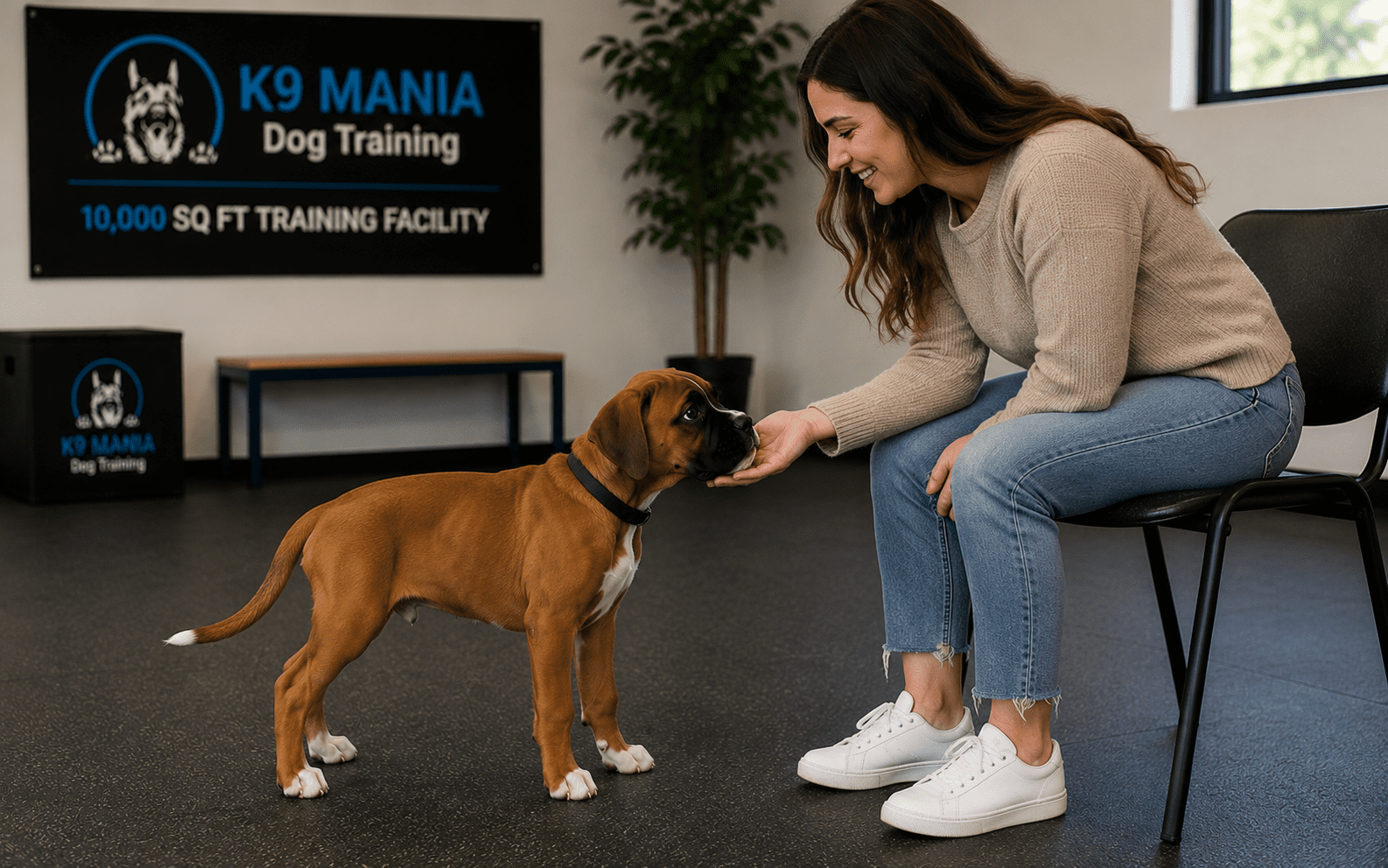
Several traits make this breed uniquely challenging during the puppy stage:
- High physical energy that turns into jumping, counter surfing, or zoomies if it is not burned off.
- Strong mouthing and play biting that lingers longer than in many other breeds.
- Slow physical and mental maturity, with many Boxers still acting like puppies well into their second or third year.
- Sensitivity to harsh corrections, which can shut a Boxer down or trigger stubborn pushback instead of cooperation.
- High intelligence that leads to boredom and problem solving, including counter surfing and escaping yards, when there is not enough structure.
Understanding these traits is the first step toward a training plan that actually works for your puppy’s personality, not against it.
How Long Does It Take to Train a Boxer Puppy?
Most Boxer puppies learn basic commands such as sit, stay, and come within 2 to 4 weeks of consistent daily practice. Reliable house manners, calm greetings, and solid leash skills typically take 4 to 6 months, since this breed needs repetition and maturity before impulse control fully develops.
Full off leash reliability and complete impulse control around distractions can take a full year or longer for many Boxers. The realistic timeline for how to train a Boxer puppy depends heavily on how consistent your training is, how much exercise your puppy gets, and which training approach you choose to follow.
Which Boxer Puppy Training Option Is Best for Your Dog?
There is no single right answer, the best option depends on your schedule, experience level, and how severe your puppy’s specific challenges are. Busy households often see faster results with hands on professional support, while confident owners with more free time can succeed with guided home programs.
| Training Option | Best For | Typical Duration | Owner Involvement |
| Board and Train | Busy owners, severe jumping or mouthing | 2 to 4 weeks | Low during training, follow up coaching after |
| In-Home Training | Owners who want guidance in their own space | 4 to 8 weeks | High, trainer coaches you directly |
| Private Training | Targeted issues, flexible scheduling | Ongoing sessions | Moderate to high |
If your Boxer puppy struggles with jumping, mouthing, or hyperactivity in a way that feels unmanageable, our board and train Long Island program immerses your puppy in daily structured training. Owners who prefer to learn alongside their puppy often choose in home dog training Long Island, while those with specific behavior goals benefit from private dog training Long Island sessions tailored to their puppy’s pace.
Boxer Puppy Training Steps That Actually Work
Once you understand your puppy’s needs and have chosen a training path, these core steps build the foundation for lifelong good behavior.
1. Start Socialization Immediately
Expose your Boxer puppy to new people, dogs, sounds, and environments as early and as often as possible, especially during the critical window between 8 and 16 weeks. Positive, low pressure exposure now prevents fear based reactivity and aggression later.
Keep early interactions short and rewarding. A few calm minutes with a new person or a quiet new environment teaches more than a long, overwhelming outing.
2. Crate Train for Structure and Safety
Introduce the crate as a calm, positive space using treats and short sessions rather than forcing your puppy inside. A properly crate trained Boxer settles faster, chews less, and house trains more reliably.
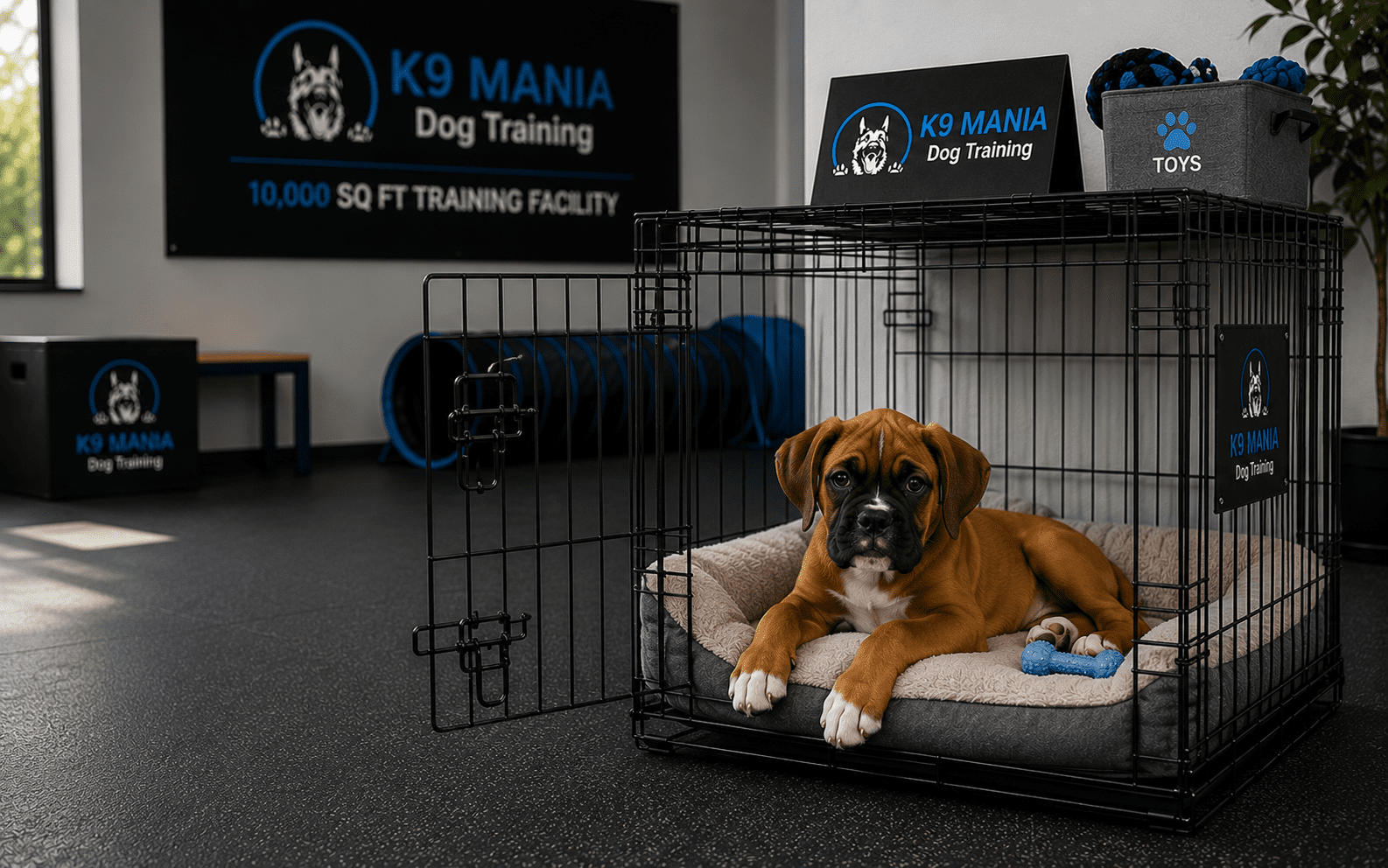
Keep the crate near family activity at first so your puppy does not associate it with isolation. Gradually increase the time spent inside as your puppy grows comfortable.
3. Teach Basic Obedience Commands
Begin with sit, stay, come, and down using short five to ten minute sessions multiple times a day. Boxers respond best to positive reinforcement, so reward generously with treats, praise, or play.
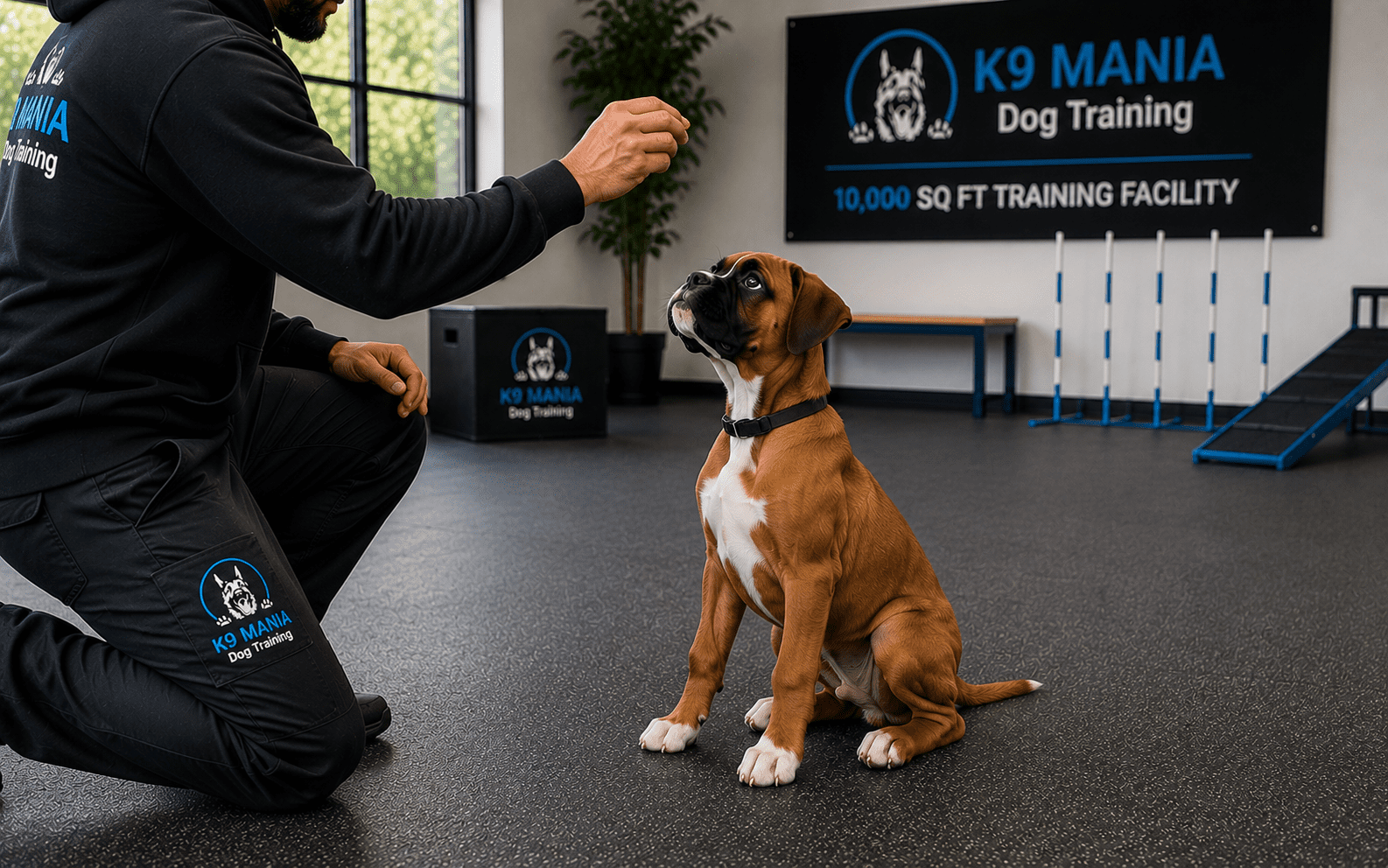
Keep sessions upbeat and end before your puppy loses interest. This keeps training something your Boxer looks forward to rather than dreads.
4. Manage Mouthing and Jumping
Redirect mouthing onto an appropriate chew toy the moment it starts, and avoid roughhousing that encourages biting hands or clothing. For jumping, turn away and ignore the behavior, then reward calm greetings with attention.
Consistency from every family member matters here. Mixed signals slow progress significantly with this breed.
5. Leash Train for Control
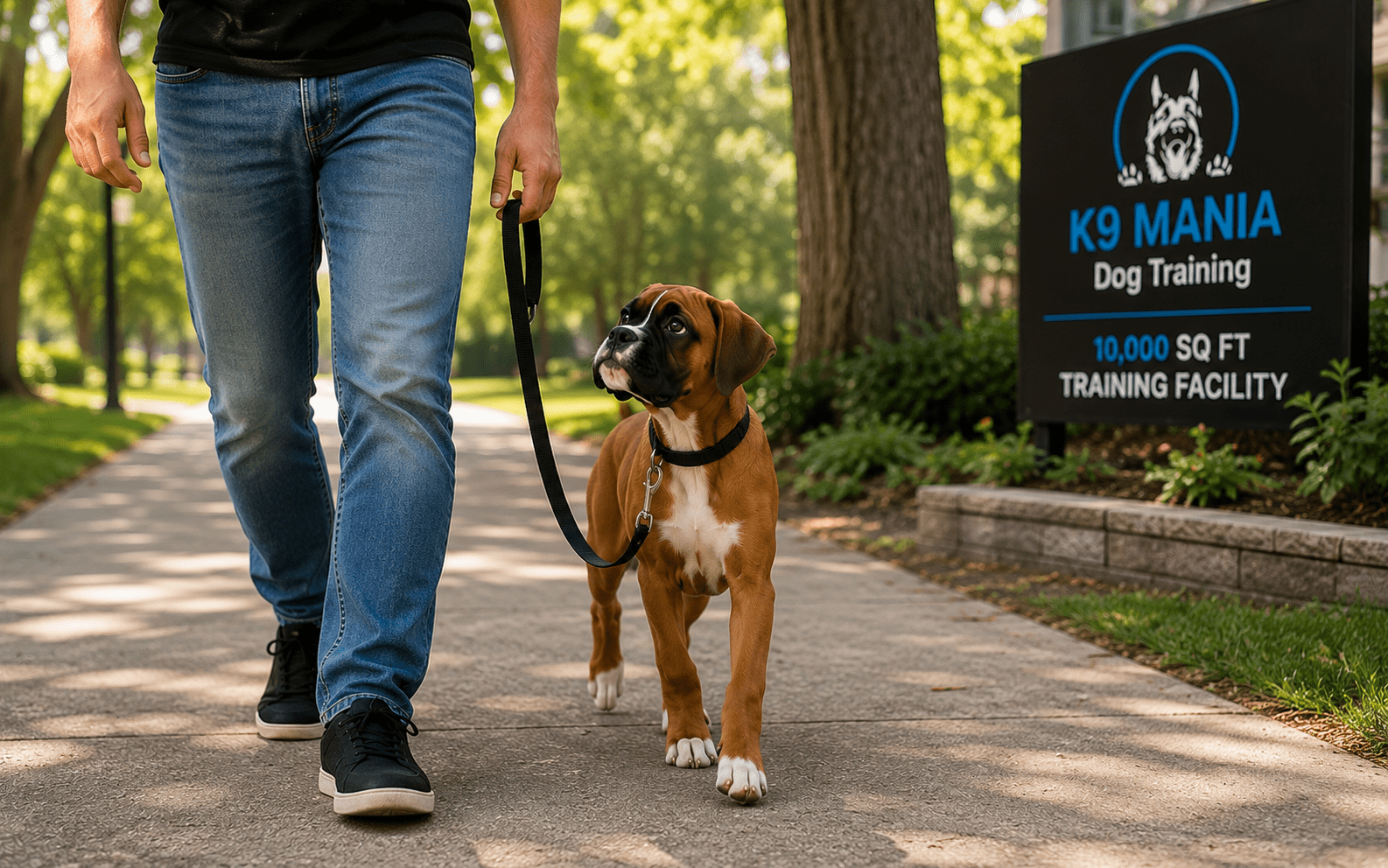
Practice loose leash walking in low distraction areas before moving to busier environments. Stop walking the moment your puppy pulls, then reward forward movement when the leash relaxes.
Boxers are strong and athletic, so leash manners established early prevent frustrating pulling habits as they grow into their full adult strength.
6. Provide Daily Mental and Physical Exercise
A tired Boxer puppy is a well behaved Boxer puppy. Combine structured walks, fetch, and puzzle toys to satisfy both their body and their mind throughout the day.
If your puppy seems unusually restless, destructive, or difficult to settle despite regular exercise, our guide on how to train a hyperactive dog covers additional strategies for high energy breeds like the Boxer.
Common Training Mistakes to Avoid With a Boxer Puppy
Even motivated owners run into setbacks. Avoiding these common mistakes keeps your training plan on track:
- Skipping early socialization, which can lead to fear or reactivity later in life.
- Using harsh corrections, which often backfires and increases stubbornness or anxiety in this sensitive breed.
- Allowing inconsistent rules between family members, which confuses your puppy and slows progress.
- Under exercising a high energy breed, which fuels jumping, chewing, and other unwanted outlets for energy.
- Expecting adult level impulse control too soon, when Boxers genuinely need extra time to mature mentally.
If your puppy already shows signs of significant hyperactivity or difficulty calming down, reviewing train a hyperactive dog alongside your Boxer specific plan can help close those gaps faster.
Boxer Puppy Training Milestones by Age
Use this general timeline to set realistic expectations as your puppy grows. Every dog progresses differently, so treat these ranges as a guide rather than a strict deadline.
| Age Range | Training Focus | What to Expect |
| 8 to 12 weeks | Socialization, crate introduction, name recognition | Short attention span, frequent house training accidents |
| 3 to 6 months | Basic commands, leash introduction, bite inhibition | Improving focus, ongoing mouthing and energy bursts |
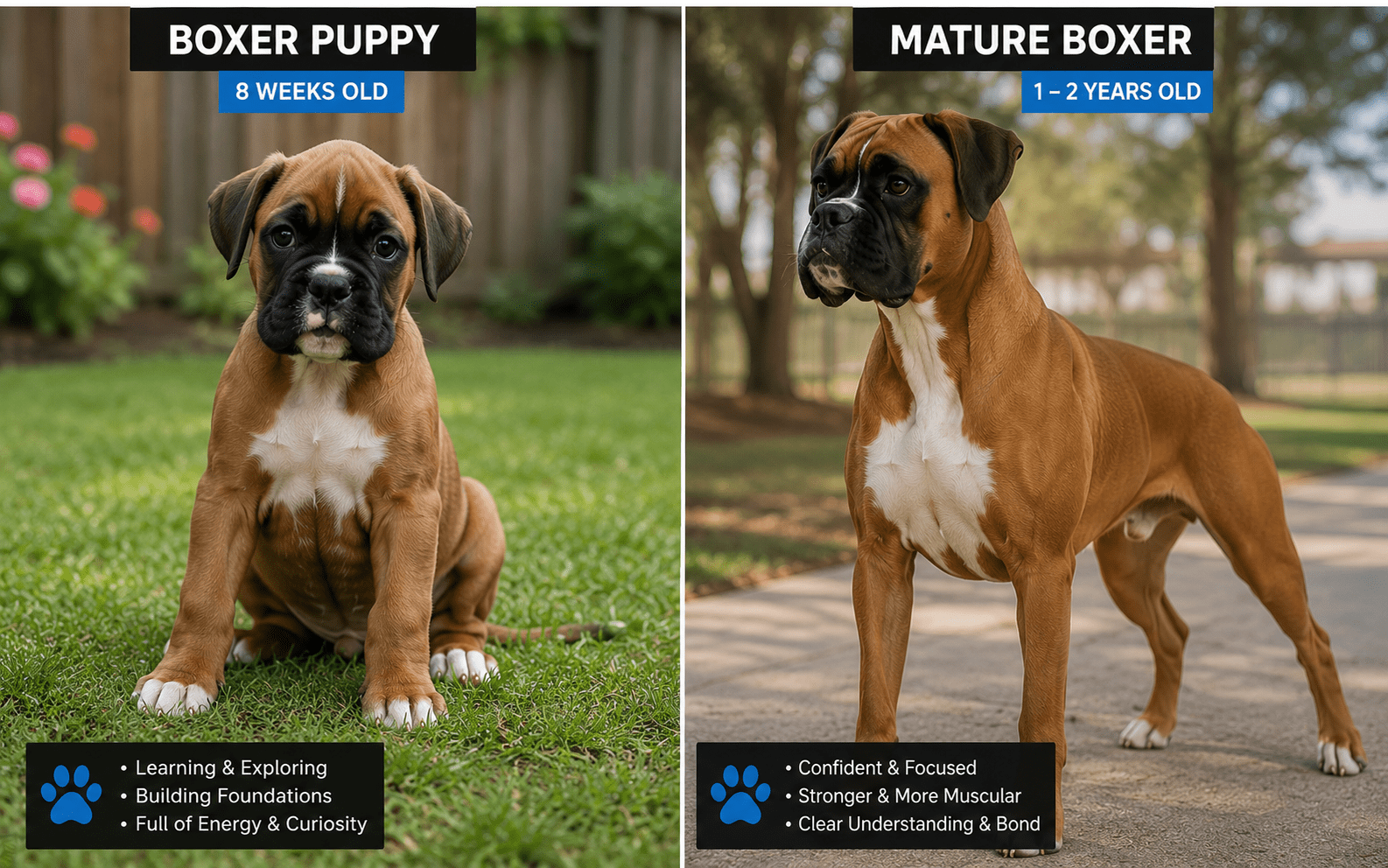
| 6 to 12 months | Loose leash walking, impulse control, manners around guests | Stronger body, occasional regression during adolescence |
| 1 to 3 years | Off leash reliability, advanced commands, calm settling | Continued maturing, gradual decrease in puppy behaviors |
Choosing the right breed for your household in the first place also matters for long term success. If you are still deciding whether a Boxer fits your lifestyle, our guide on the best dog breed for my lifestyle can help you weigh energy level, space, and time commitment before you commit.
Your Long Island Partner for a Well Trained Boxer
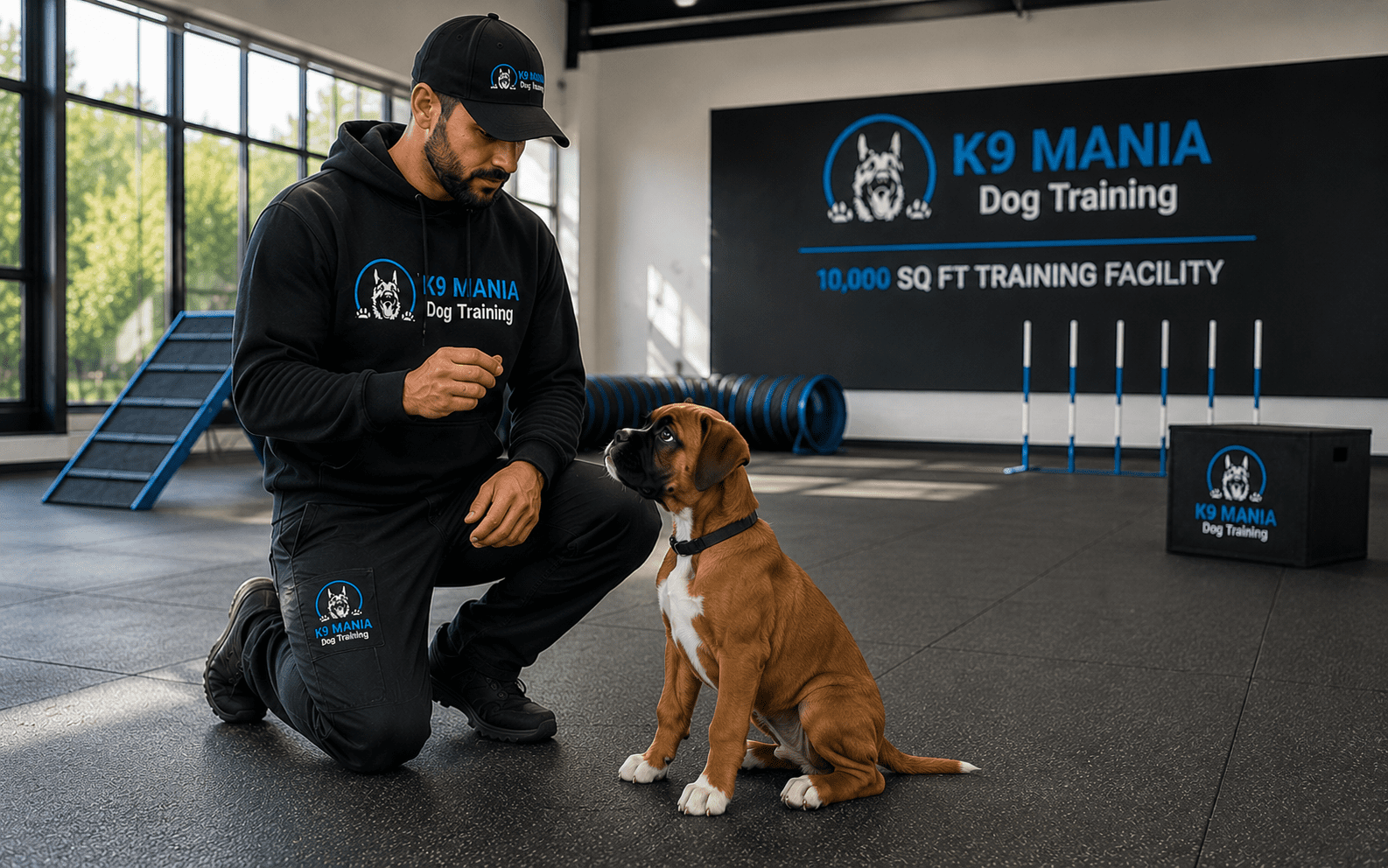
Learning how to train a Boxer puppy takes patience, consistency, and the right support system, and that is exactly what K9 Mania Dog Training provides. As Long Island’s leading board and train program, backed by a certified dog behaviorist on staff, we help families turn high energy Boxer puppies into calm, confident, well mannered companions. Whatever behavior challenges you are facing, from jumping and mouthing to leash pulling or hyperactivity, our team has the experience to help.
Visit k9maniadogtraining.com today to explore our programs and let Long Island’s most trusted dog training experts guide your Boxer puppy’s training journey from day one.
Read Related Articles
How To Train A Dachshund: A Complete Step-by-Step Guide
Siberian Husky Training: Proven Techniques
Frequently Asked Questions
Boxer puppies are intelligent and trainable, but their high energy and slow maturity mean owners often have questions about timelines, discipline, and daily management.
Is a Boxer dog easy to train?
Boxers are intelligent and eager to please, which makes them trainable, but their high energy and slow maturity mean they require more patience than some breeds. Consistent, reward based training works far better than harsh corrections with this breed. Most owners see solid progress within a few months of regular practice. Professional guidance can speed up results considerably.
How to discipline a Boxer dog?
Discipline a Boxer dog using redirection, ignoring unwanted behavior, and rewarding the response you actually want, rather than yelling or physical correction. Boxers are sensitive and can become fearful or stubborn when handled harshly. Removing attention immediately after jumping or mouthing teaches the lesson more effectively. Consistency across the household matters more than the intensity of any single correction.
How to tire out a Boxer dog?
Tire out a Boxer dog with a combination of structured exercise, such as brisk walks or jogging, and mentally engaging activities like puzzle toys, training games, or scent work. Physical activity alone often is not enough for this breed’s intelligence level. Aim for at least sixty to ninety minutes of combined physical and mental stimulation daily. A properly tired Boxer settles faster and causes far less mischief at home.
What is the best training for a Boxer?
The best training for a Boxer combines positive reinforcement, early socialization, and consistent daily structure tailored to the dog’s energy and intelligence. Some owners succeed with home based training, while others benefit more from a structured board and train program. The right choice depends on the severity of the behavior and how much time the owner can dedicate. A certified trainer can help identify the most effective path for your specific dog.
Can Boxers be left alone for 8 hours?
Adult Boxers can typically handle being alone for around 8 hours if they have had adequate exercise and a comfortable space, but puppies cannot manage that long without a bathroom break. Boxer puppies generally need a break every 2 to 4 hours depending on age and bladder control. Leaving a puppy alone too long can lead to accidents, anxiety, or destructive behavior. Crate training and a consistent routine make extended alone time more manageable as the puppy grows.
Can a Boxer be self-taught?
Boxers can learn some basic manners informally through daily routine and consistent household rules, but structured training produces far more reliable results. Without intentional training, their intelligence and energy often turn into self-taught habits like jumping, counter surfing, or pulling on leash. Most owners find that even a short period of guided training prevents these habits from forming in the first place. Professional support is especially helpful for households with children, frequent guests, or multiple pets.