Do dogs have a sense of time? Yes, dogs have a sense of time, but they experience it differently than humans do through pattern recognition, circadian rhythms, and environmental cues rather than understanding hours or minutes. While your dog can’t read a clock, they know when it’s time for dinner, when you usually come home, and how long you’ve been gone.
You’ve probably noticed your dog waiting by the door right before you arrive home from work, or getting excited exactly when it’s mealtime. These behaviors aren’t just coincidence. Your dog has developed ways to track time that work perfectly for their needs, even without understanding what a calendar or watch means.
In this guide, we’ll break down how dogs perceive time, what signs show they’re tracking it, and how you can use this knowledge to improve training and reduce anxiety in your pet.
What Science Tells Us About Dogs and Time Perception
Research into canine cognition has revealed fascinating insights about how dogs experience the passage of time. Scientists have studied everything from brain activity to behavioral patterns to understand this unique ability.
How Dogs Process Time Differently Than Humans
Dogs don’t think about time the way you do. They can’t plan for next Tuesday or remember last Thursday by date. Instead, they live much more in the present moment while still having the ability to recognize patterns and anticipate events.
Studies show that dogs can distinguish between different lengths of time, especially when it involves their owners. In one experiment, dogs showed stronger reactions when their owners were gone for two hours compared to 30 minutes. The longer the absence, the more enthusiastic the greeting.
Your dog’s brain processes time through associative memory. They link specific events with certain feelings or outcomes. When the sun hits a particular spot in the house, dinner usually follows. When you put on your work shoes, you leave. These connections help them navigate their day.
The part of a dog’s brain that handles memory and learning, the hippocampus, plays a big role in this. It helps them remember sequences of events and predict what comes next based on past experiences.
The Role of Circadian Rhythms in Dogs
Like humans, dogs have internal biological clocks called circadian rhythms. These 24-hour cycles regulate sleep, hunger, body temperature, and hormone levels. Your dog’s circadian rhythm is why they get sleepy around the same time each night or hungry at regular meal times.

Light exposure is the primary driver of these rhythms. As daylight fades, your dog’s body starts producing melatonin, making them drowsy. In the morning, light suppresses melatonin and signals it’s time to wake up.
This internal clock explains why dogs adjust their behavior throughout the day even without external cues. A dog kept in a room with no windows will still show patterns of activity and rest that roughly follow a 24-hour cycle.
Research has found that dogs with consistent daily routines have more stable circadian rhythms. This leads to better overall health, improved behavior, and less stress. When you maintain regular feeding, walking, and sleeping schedules, you’re supporting your dog’s natural biological clock.
Signs Your Dog Can Tell Time
Your dog shows you every day that they’re tracking time, even if you haven’t noticed all the signals. These behaviors prove they have a strong sense of when things should happen.
Daily Routine Recognition
Dogs are creatures of habit. They pick up on your daily patterns faster than you might realize. If you leave for work at 7 AM every weekday, your dog will start showing pre-departure behaviors around 6:45 AM.
You might notice your dog positioning themselves near the door before walk time, even if you haven’t grabbed the leash yet. They’ve learned the sequence of events that leads to a walk and can predict when it’s coming.
Many dogs know the difference between weekdays and weekends. They’ll behave differently on Saturday morning because your routine changes. This isn’t magic; they’re reading subtle cues in your behavior, the household activity level, and even the amount of time you spend getting ready.
Dogs also recognize seasonal patterns. They might get more excited in fall because that’s when their favorite park activities happen, or they know winter means shorter walks.
Separation Anxiety and Time Awareness
Separation anxiety proves that do dogs have a sense of time in a powerful way. Dogs with this condition show the most distress during the first 30 minutes after you leave. If they had no time perception, their anxiety would be constant, but research shows it peaks early and then often decreases.
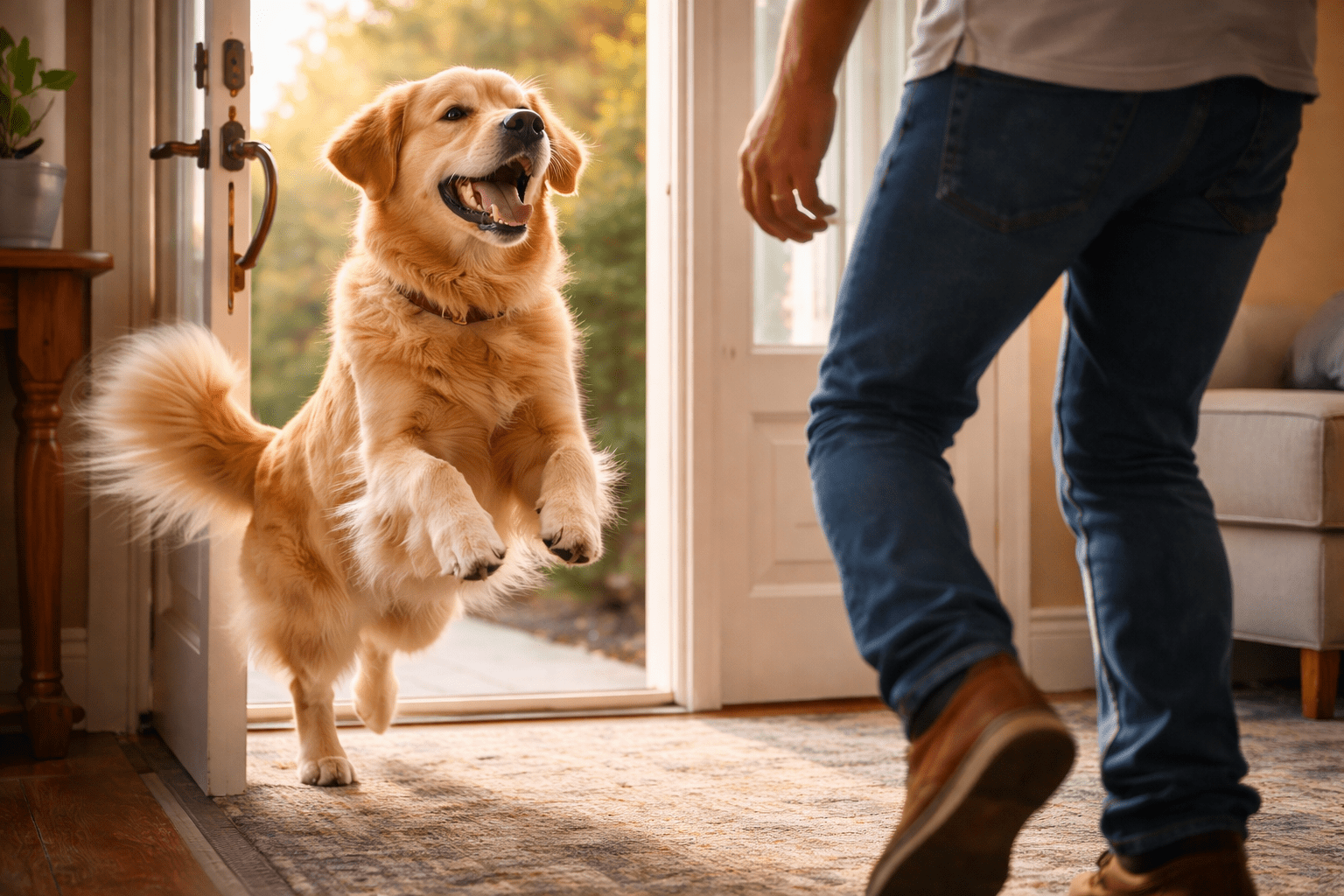
Your dog’s greeting behavior also changes based on how long you’ve been gone. A five-minute trip to the mailbox gets a different reaction than an eight-hour workday. They’re not just happy to see you; they’re responding to the length of your absence.
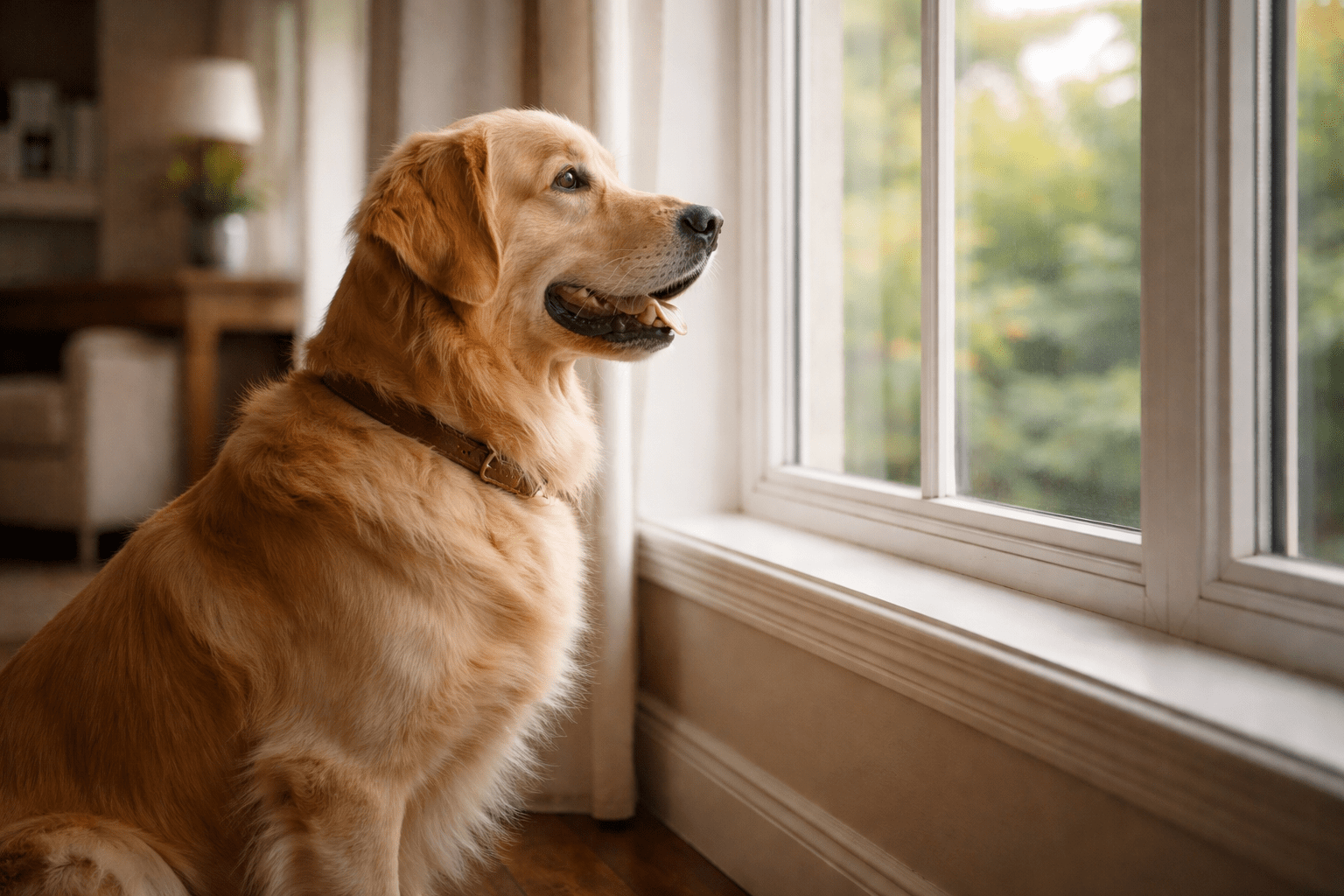
Some dogs even seem to know when you’re about to return. They’ll move to the door or window minutes before you arrive, even when you come home at irregular times. Scientists believe they might use a combination of learned patterns and scent degradation to estimate time.
If your dog struggles with separation anxiety, understanding their time perception can help. Consistent routines and gradual desensitization work well because they align with how dogs naturally process time. Consider professional help through private dog training to address these issues effectively.
Meal Time Anticipation
Few things demonstrate time awareness better than a dog who knows exactly when dinner should arrive. Even if you vary the exact minute, most dogs start showing interest in their food bowl around the usual mealtime.
This anticipation isn’t just hunger. Dogs fed twice daily at set times will show excitement at both feeding times, not continuously throughout the day. They’ve internalized the schedule and expect food at specific intervals.
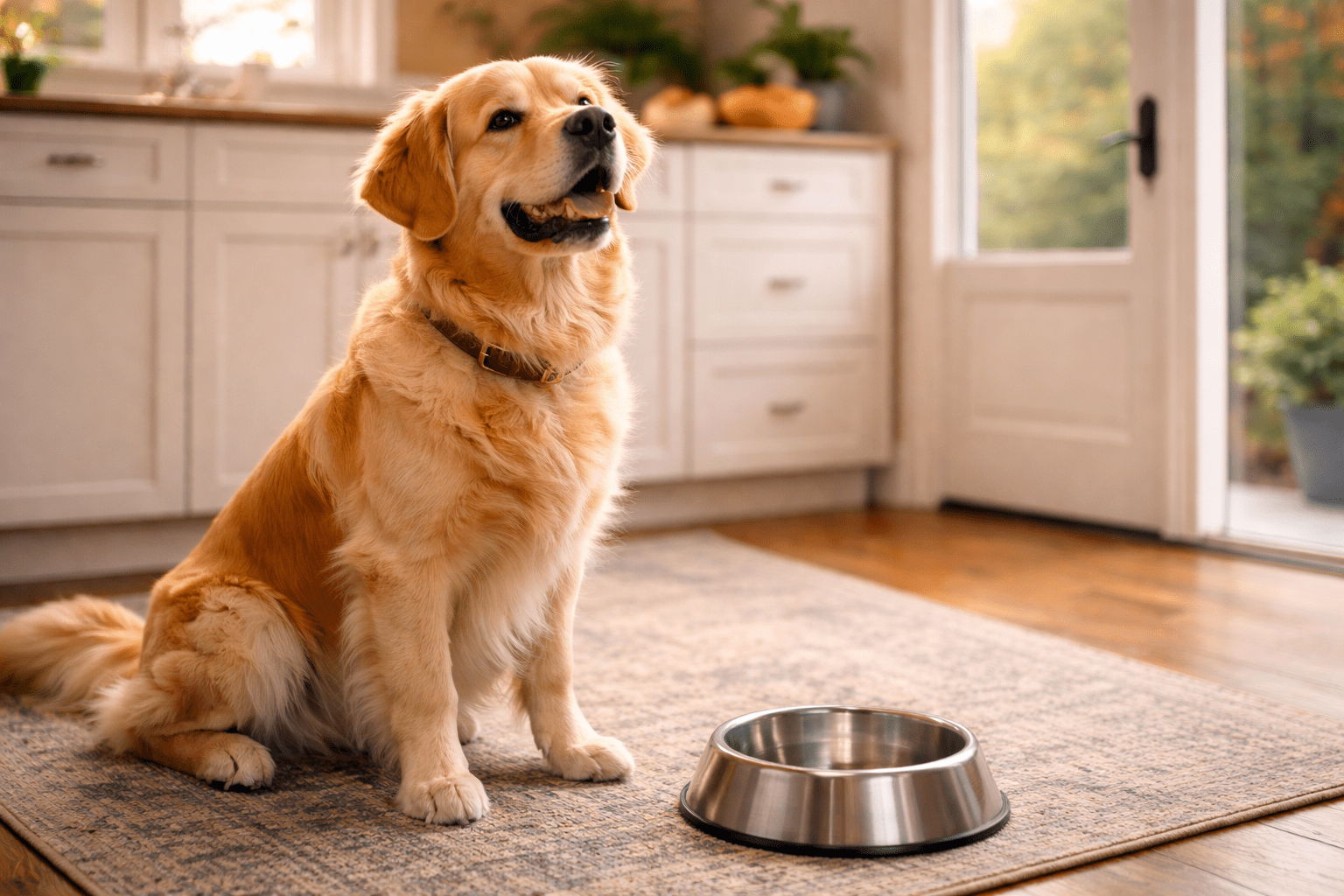
Some dogs take this further by reminding their owners when mealtime passes. They’ll stare, whine, or bring their bowl if dinner is late. This shows they have a clear expectation of when something should happen.
The reliability of meal time behaviors makes it a great anchor for other training. When you feed at consistent times, it creates a framework your dog can understand and predict.
How Dogs Measure Time Without Clocks
Since dogs can’t check their phones or look at a watch, they use other methods to track the passage of time. These natural timekeepers work remarkably well for their needs.
Environmental Cues and Light Changes
Light is one of the most powerful time signals for dogs. They notice when the sun rises, when shadows move across the floor, and when daylight fades. These changes tell them what part of the day it is.
Your dog might nap in a sunny spot that only gets direct light at certain hours. When that light appears, they know it’s nap time. When the evening light comes through the window, they expect dinner soon.
Indoor lighting patterns matter too. If you turn on certain lights in the evening, your dog learns to associate those lights with nighttime routines. The brightness and color temperature of light affects their circadian rhythm and helps them orient in time.
Temperature changes throughout the day also serve as time markers. Dogs feel the cooler morning air, the warm afternoon, and the evening chill. These subtle shifts help them gauge where they are in the daily cycle.
Sound patterns work similarly. Morning bird songs, afternoon traffic noise, and evening quiet all signal different times of day. Dogs with good hearing pick up on these audio cues and use them to track time.
Scent and Memory Markers
One of the most interesting theories about how dogs tell time involves their incredible sense of smell. Researchers suggest that dogs might use the fading of scents to estimate how long you’ve been gone.
Here’s how it works: Your scent is strongest right after you leave the house. As hours pass, your scent gradually fades. Your dog, with their powerful nose, might recognize these different scent levels and associate them with different lengths of time.
This explains why some dogs seem to know when you’re about to return home. Your scent has faded to a certain level that they’ve learned means “owner comes back soon.” They position themselves at the door in anticipation.
Memory also plays a crucial role. Dogs remember sequences of events and use those memories to predict the future. If walk time always comes after you finish your morning coffee, they’ll learn to watch for you heading to the coffee maker.
Episodic-like memory in dogs allows them to recall specific events and when they happened in relation to other events. They might not remember “last Tuesday,” but they remember “the time we went to the park after the rain” and can distinguish it from other park visits.
Body Signals and Biological Needs
Your dog’s own body gives them time cues. Their stomach tells them when it’s been several hours since eating. Their bladder signals when it’s been too long since their last bathroom break.
Energy levels fluctuate throughout the day in predictable patterns. Most dogs have a burst of energy in the morning, a midday lull, another active period in the evening, and then wind down for sleep. These natural rhythms help them track daily time.
Hormonal changes also follow daily patterns. Cortisol levels peak in the morning and decline through the day. This affects alertness and activity levels, creating a biological schedule your dog follows instinctively.
Understanding Time Perception in Different Situations
Dogs don’t perceive all time the same way. Context matters a lot in how they experience the passage of minutes and hours.
Short Absences vs Long Absences
When you leave for just a few minutes, your dog might not even register it as you being “gone.” They stay in the same mental state and barely react when you return. This shows they can distinguish very short time periods from longer ones.
Absences of 30 minutes to two hours trigger noticeable responses. Your dog recognizes you’ve been away and shows excitement when you return. Their greeting behavior at this length is enthusiastic but not extreme.
After four hours or more, the greeting intensity increases significantly. Studies show that reactions to four-hour absences are much stronger than two-hour ones. However, there’s less difference between four hours and eight hours, suggesting dogs might have a threshold for “long absence.”
Here’s how dogs typically respond to different absence lengths:
| Absence Length | Dog’s Likely Response | Behavioral Signs |
| Under 10 minutes | Minimal reaction | Slight tail wag, brief acknowledgment |
| 30 minutes to 2 hours | Moderate excitement | Active greeting, tail wagging, following you around |
| 2 to 4 hours | Strong excitement | Jumping, whining, intense tail wagging, bringing toys |
| 4+ hours | Very strong excitement (plateaus) | Extreme enthusiasm, possible accidents from excitement, sustained attention |
This table shows that dogs clearly distinguish between time periods, but their perception isn’t linear like ours. The jump from 10 minutes to 2 hours is significant, but the jump from 4 hours to 8 hours matters less to them.
Training Sessions and Time
Dogs have limited attention spans, and their time perception affects how long they can focus during training. Most dogs concentrate well for 5 to 15 minutes before their attention wanders.
This doesn’t mean they can’t learn during longer sessions, but their efficiency drops. They start making more mistakes, getting distracted, or showing stress signals. Experienced trainers break sessions into short bursts with breaks in between.
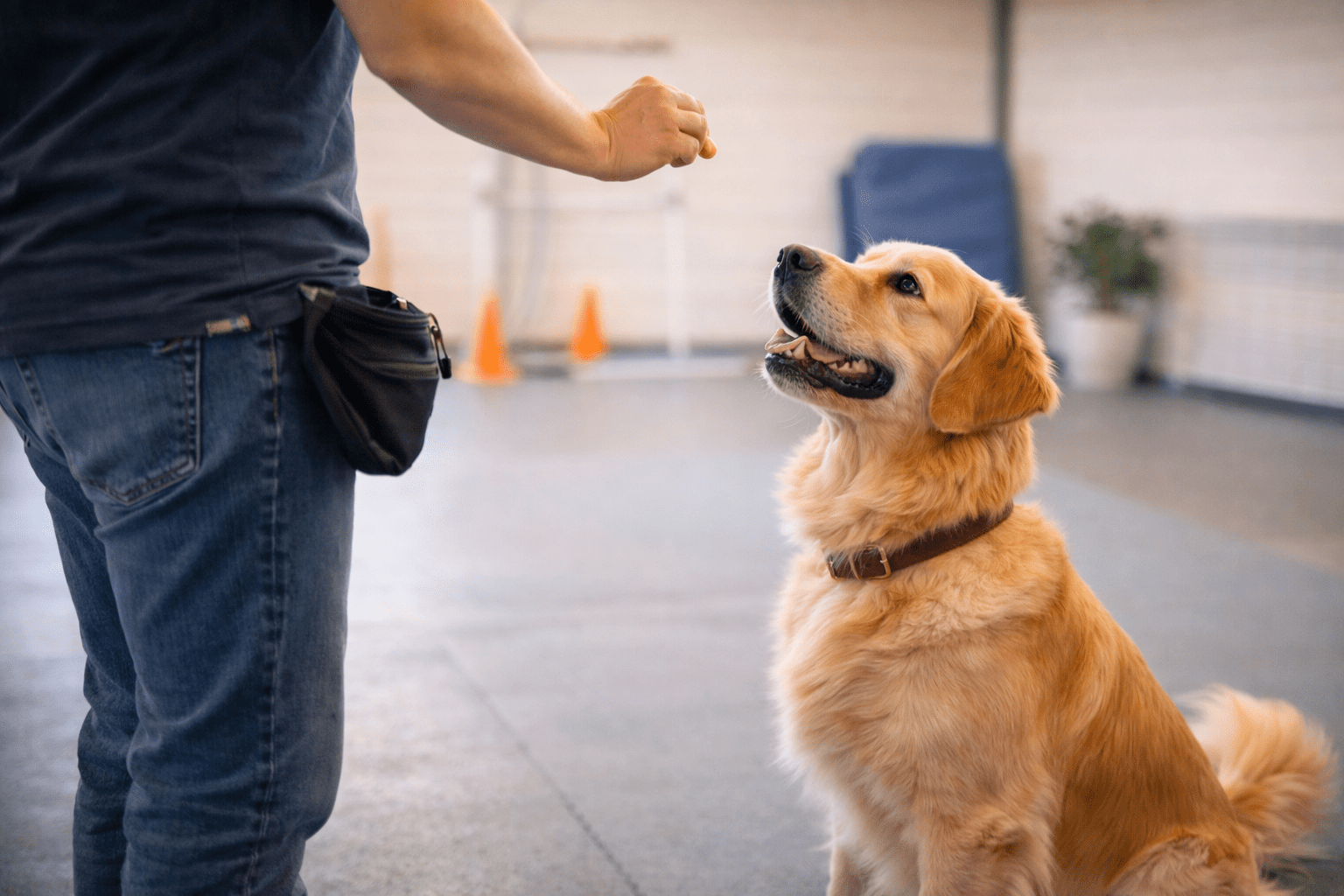
Your dog also remembers the timing of corrections and rewards. Research shows that rewards given within one second of a behavior are most effective. After three seconds, the connection weakens significantly. This shows dogs perceive very short time intervals quite differently.
The power of consistency in training becomes clear when you understand time perception. When you respond to behaviors at the same speed every time, your dog learns faster because the timing is predictable.
Dogs also track the duration of training sessions themselves. If you usually train for 10 minutes, they’ll start showing signs of ending around that mark. Keeping sessions consistent in length helps them know what to expect.
How to Use Your Dog’s Time Sense in Training
Once you understand how dogs perceive time, you can use this knowledge to train more effectively and create a more balanced, happy pet.
Creating Consistent Schedules
The single most important thing you can do is maintain regular daily routines. Feed your dog at the same times each day, walk at consistent hours, and keep bedtime predictable.
This consistency reduces anxiety because your dog knows what’s coming next. They don’t worry about when dinner will arrive or if they’ll get a walk today. The predictability creates a sense of security.
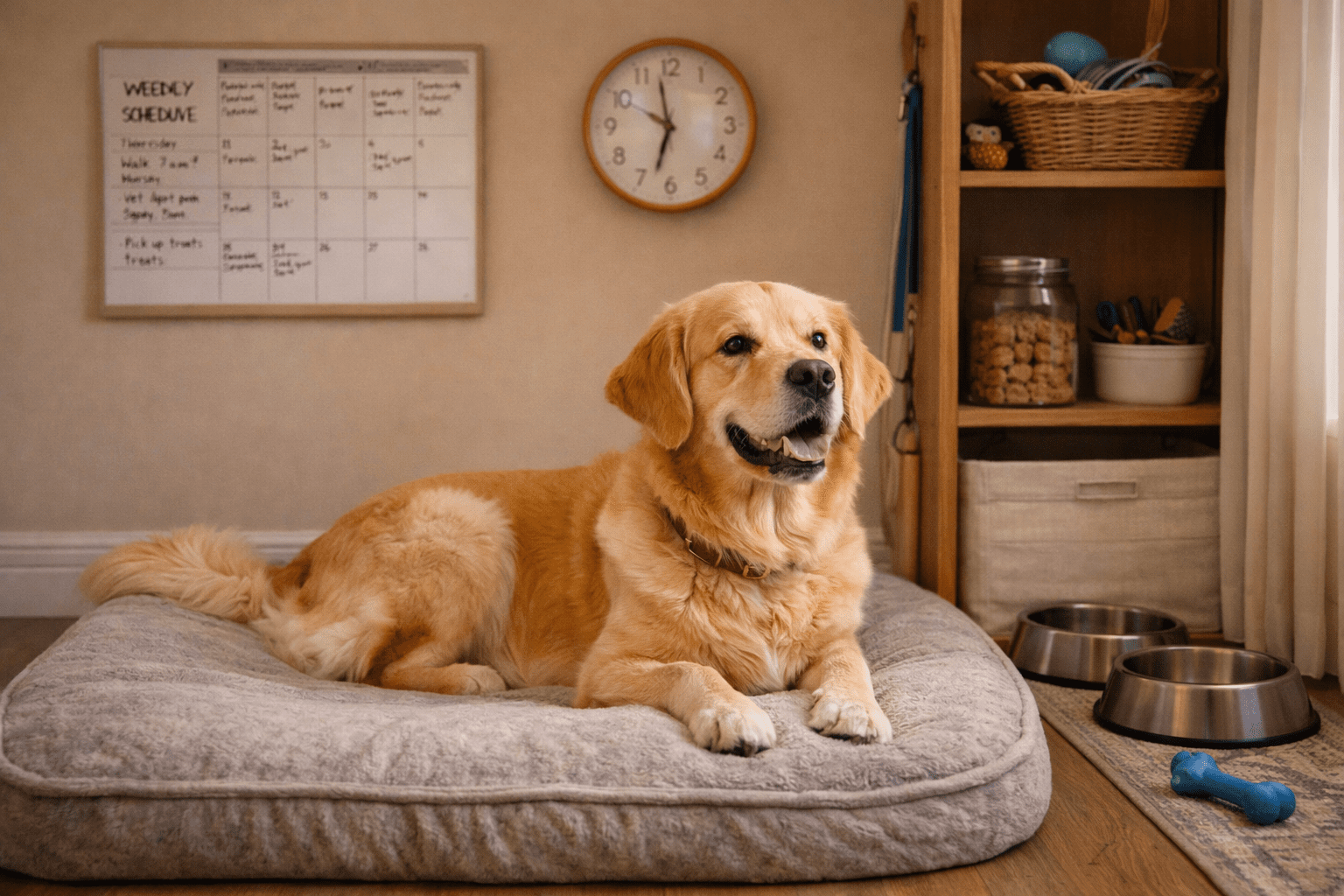
Start by mapping out your daily schedule and identifying anchor points for your dog. Most people choose:
- Morning wake-up and bathroom break
- Breakfast time
- Midday walk or play session
- Dinner time
- Evening walk
- Bedtime routine
Lock these times in and stick to them as closely as possible, even on weekends. Your dog’s internal clock will sync with this schedule within a week or two.
If you need to shift the schedule, do it gradually. Move meal times or walk times by 15 minutes every few days rather than making sudden changes. This respects your dog’s time perception and prevents stress.
For dogs with behavior issues, consistent schedules can be transformative. Many problems stem from unpredictability and the stress it creates. When you attend obedience dog training, trainers will emphasize routine as a foundation for all other training.
Using Time Patterns for Behavior Modification
You can use your dog’s natural time tracking to modify unwanted behaviors. If your dog gets destructive when left alone, create a gradual desensitization program based on time.
Start by leaving for just two minutes. Return before anxiety kicks in. Gradually increase to five minutes, then ten, then twenty. Your dog learns that departures are temporary and predictable.
The key is staying under the threshold where problem behaviors start. If your dog can handle 15 minutes fine but panics at 20, don’t jump straight to 30. Build up slowly in increments your dog can handle.
Timing also matters for reinforcement. When teaching new behaviors, immediate rewards work best. As your dog masters the behavior, you can gradually delay the reward, but start with instant feedback.
Here’s how to apply time-based training strategies:
| Training Goal | Time-Based Strategy | Expected Outcome |
| Reducing separation anxiety | Gradual departure duration increases (2 min → 5 min → 10 min) | Dog learns departures are temporary and predictable |
| Improving recall | Reward within 1 second of coming when called | Faster, more reliable response to recall command |
| House training | Bathroom breaks every 2-3 hours on schedule | Dog develops routine and holds bladder between breaks |
| Calm behavior | Mark and reward calm moments every 5 minutes, then extend intervals | Longer periods of settled behavior |
| Reducing begging | Ignore begging and feed meals at exact same times daily | Dog stops begging between meals, waits for scheduled feeding |
This table demonstrates how understanding time perception creates practical training applications. Each strategy works with your dog’s natural time sense rather than against it.
For complex behavioral issues or if you’re not seeing progress, professional guidance helps tremendously. Programs like board and train Long Island provide intensive, time-structured training that leverages these principles in a controlled environment.
Early dog socialization benefits also relate to time perception. Puppies who experience positive interactions on a predictable schedule develop better emotional regulation and time awareness. They learn that good things happen regularly, which reduces anxiety and improves behavior.
Your Dog’s Unique Relationship With Time
Understanding that do dogs have a sense of time changes how you interact with your pet daily. While they don’t count hours or mark calendars, dogs absolutely track time through biological rhythms, environmental cues, and learned patterns.
This knowledge gives you powerful tools for training, reducing anxiety, and creating a happier household. When you respect your dog’s time perception by maintaining consistent routines, you’re speaking their language. They feel more secure, behave better, and bond more strongly with you.
The next time your dog seems to magically know it’s dinner time or positions themselves by the door before you’ve even thought about leaving, remember they’re using their sophisticated time-tracking abilities. It’s not magic; it’s biology, learning, and an impressive adaptation to living in a human world.
If you’re wondering is board and train worth it for addressing time-related behavioral issues like separation anxiety or schedule disruptions, the answer often lies in how well the program incorporates consistent routines and time-based training strategies.
At K9 Mania Dog Training, we understand how dogs perceive time and use this knowledge in every training program we offer. As Long Island’s leading board and train provider, we create structured schedules that work with your dog’s natural time sense to achieve lasting behavioral changes. Whether your dog struggles with separation anxiety, needs obedience work, or requires specialized training, our time-tested methods and consistent routines deliver real results. Trust K9 Mania Dog Training to help your dog become the well-behaved companion you’ve always wanted.
You May Also Want to Read
- Why Do Dogs Put Their Paw on You? Understanding This Common Behavior
- Why Do Dogs Chase Their Tails?
- Do Dogs Get Embarrassed? Understanding Your Dog’s Emotions
- Why Do Dogs Eat Grass?
- 20 Common Dog Behavior Issues: Causes and How to Fix Them
Frequently Asked Questions
How long does 1 hour feel for a dog?
Dogs don’t experience one hour the same way humans do. While the exact perception is unknown, research suggests dogs live more in the present moment with less awareness of time passing. However, they can distinguish between different durations, so an hour likely feels different to them than five minutes, even if they don’t measure it in minutes. Their experience is more about pattern recognition and biological needs than clock time.
Do dogs know how long you’ve been gone?
Yes, dogs can tell how long you’ve been away, though not in exact hours. Studies show dogs react more strongly to four-hour absences than 30-minute ones, proving they distinguish between short and long departures. They likely use a combination of scent degradation, light changes, biological rhythms, and learned patterns to estimate duration. The longer you’re gone, up to a certain point, the more enthusiastic their greeting becomes.
How long does 10 minutes feel to a dog?
Ten minutes to a dog is a relatively short period that they can definitely perceive. For training purposes, 10 minutes is actually close to the ideal session length before dogs start losing focus. They experience this duration but don’t measure it in minutes; instead, they notice energy depletion, changes in their environment, and whether certain expected events have occurred. A 10-minute absence typically produces minimal reaction when you return.
How do you say “I love you” in dog language?
Dogs show love through body language and actions rather than words. You can communicate love by maintaining gentle eye contact, speaking in a calm and happy tone, giving belly rubs or ear scratches, spending quality time together, respecting their space when they need it, and providing consistent care and routines. Dogs also feel loved when you’re fully present during interactions, play with them regularly, and respond to their needs predictably.
How do dogs apologize?
Dogs show remorse through submissive body language including lowered head and ears, avoiding direct eye contact, tucking their tail, rolling onto their back, licking their lips, approaching slowly with a lowered body, or gentle pawing. However, what looks like an apology might actually be a response to your tone or body language rather than true guilt. Dogs do recognize when you’re upset and will try to appease you with these behaviors.
Do dogs know when we are sleeping?
Yes, dogs absolutely know when you’re sleeping. They recognize the changes in your breathing patterns, stillness, closed eyes, and the time of day. Many dogs adjust their behavior when you sleep, becoming quieter and more settled themselves. They also often sync their sleep schedules with yours due to social bonding. Some dogs will even guard their sleeping owners or position themselves nearby, showing they understand this vulnerable state and want to protect you.