To train a dog on an invisible fence, you work through four structured phases over 2 to 4 weeks, starting with boundary flags before the collar is ever activated. Most dogs who fail at containment systems don’t have a fence problem; they have a training gap.
The system itself is straightforward: a buried wire sends a signal to your dog’s receiver collar when they get too close to the boundary. They hear a warning tone first. If they keep moving toward the edge, the collar delivers a mild static correction. That part is automatic. What’s not automatic is teaching your dog what the boundary means before they ever experience that correction.
This post breaks down the exact steps to follow, what slows most people down, and how to know when professional support is the smarter move.
What the Invisible Fence System Actually Does
An invisible fence has three parts: a buried perimeter wire, a transmitter box, and a receiver collar your dog wears. When your dog walks into the correction zone near the wire, the collar first emits a warning beep. If they keep moving forward, a static correction follows.
The correction is designed to redirect attention, not cause pain. The goal is for your dog to associate the beep alone with backing away, so the static is rarely needed after the first week or two.
Two system types are commonly used:
- In-ground systems: A wire is physically buried along a custom boundary
- Wireless systems: A transmitter creates a circular signal field with no wire required
In-ground systems handle irregular yard shapes better and hold a more predictable boundary line. Wireless systems are easier to set up but lose precision near the edges. Training works the same way for both.
What to Set Up Before Training Starts
Rushing this part makes the whole process take longer. Before your first session, make sure you have:
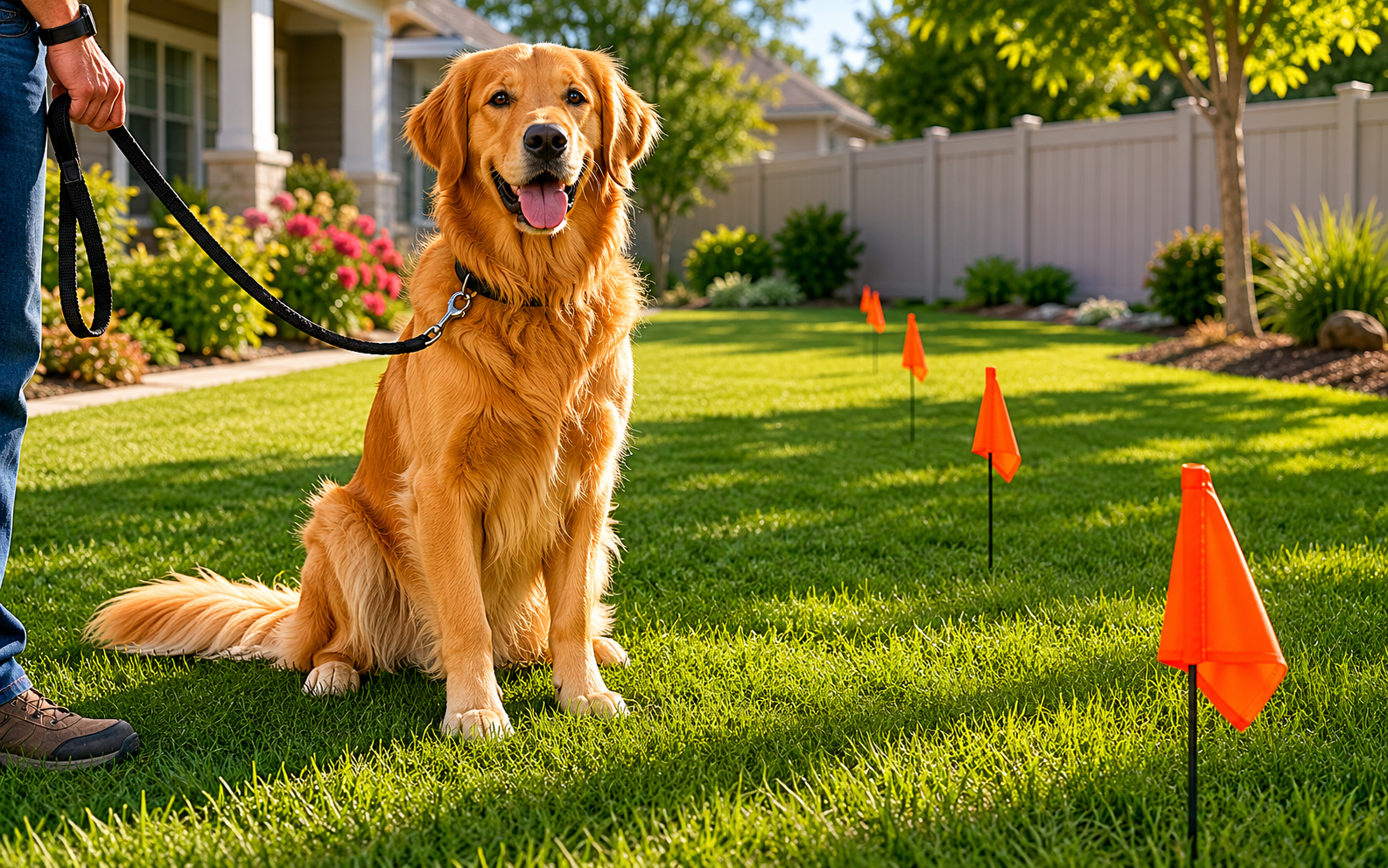
- Boundary flags placed every 10 feet around the perimeter
- Receiver collar fitted so the contact points touch skin directly
- A standard 6-foot leash
- High-value treats your dog actually gets excited about
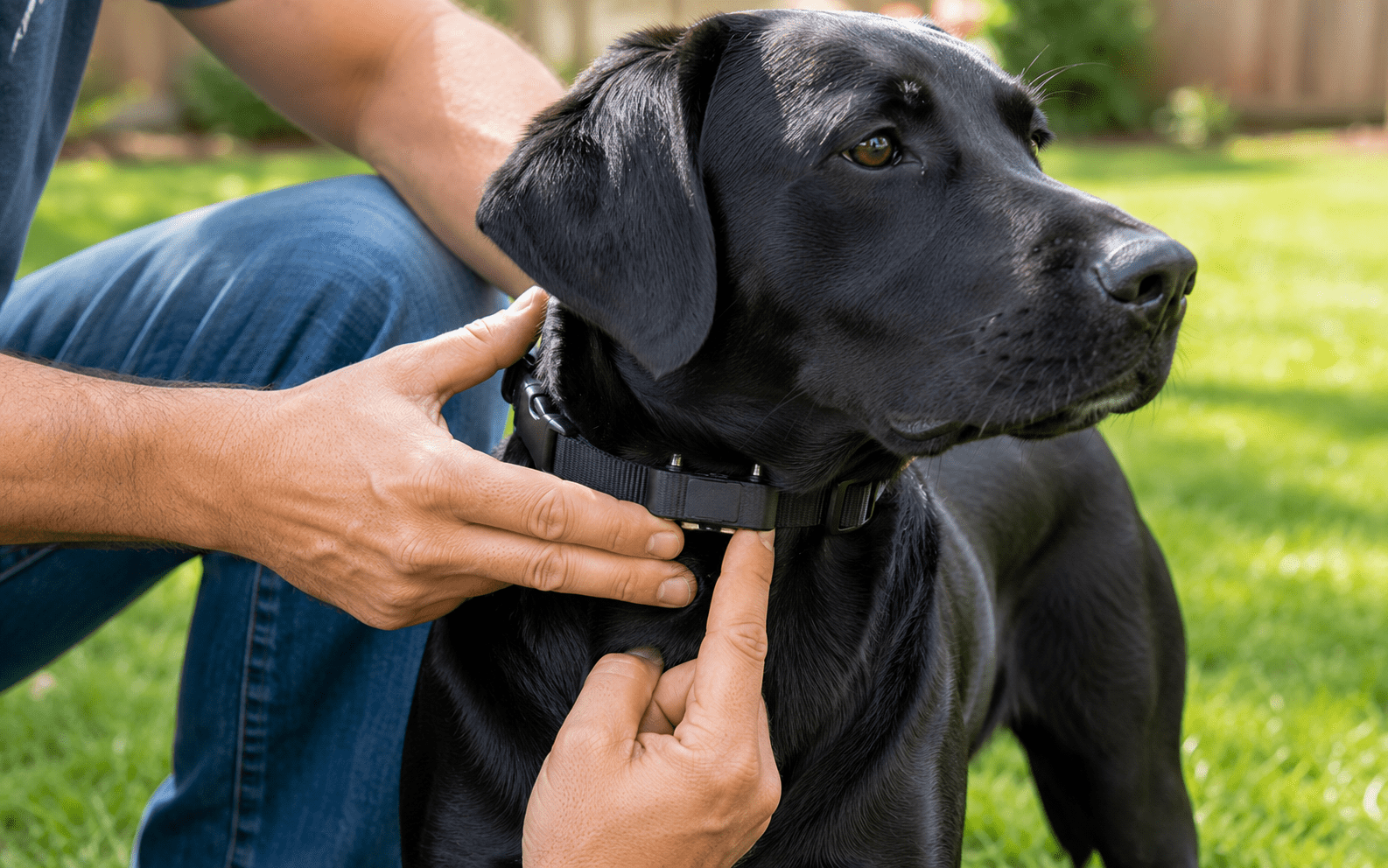
The two-finger test works for collar fit: slide two fingers under the contact points. If they’re not touching your dog’s neck, the correction won’t deliver consistently, which confuses the training signal entirely.
How to Train a Dog on an Invisible Fence, Phase by Phase
The most reliable approach to training your dog on an invisible fence follows four phases, each building on the last. Skip one and you’ll likely spend extra weeks fixing boundary testing later.
Phase 1: Flag Recognition (Days 1 to 5)
Walk your dog on a leash along the boundary line. The collar stays off. Let your dog approach the flags naturally. The moment they reach a flag, give a calm verbal marker like “boundary” or “no,” then guide them back toward the yard’s center. Reward them when they move away.
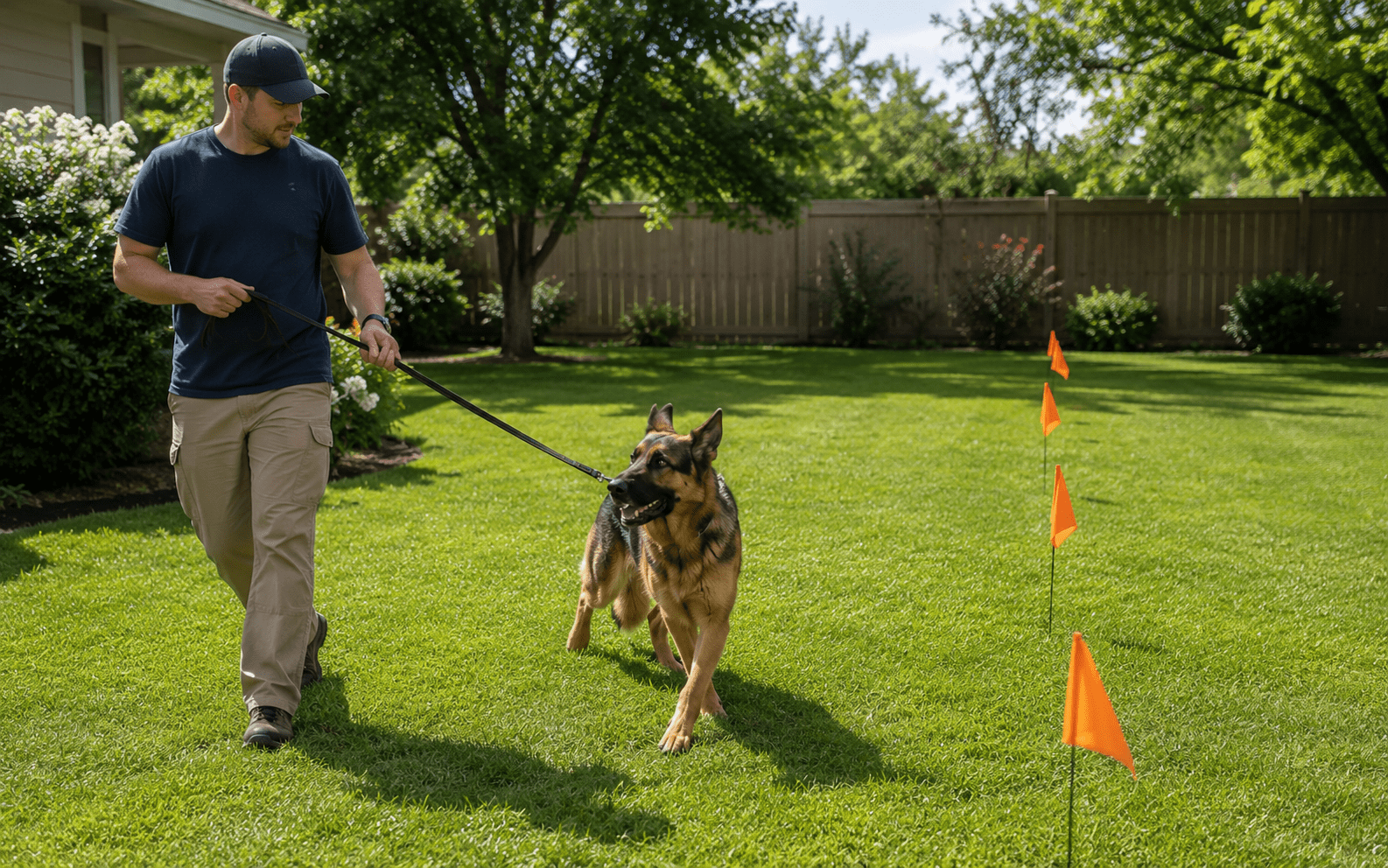
You’re not correcting here. You’re building pattern recognition. Your dog is learning that flags mean turn around, and moving back toward you means something good happens.
Dogs who already respond to recall have an easier time in this phase. If yours is inconsistent on coming back when called, work through how to teach a dog to come before relying on the fence system for containment.
Phase 2: Warning Tone Association (Days 5 to 10)
Turn the collar on. Walk your dog toward the boundary. When they hear the warning beep, immediately guide them back toward the center with your leash and reward the retreat.
If your dog crosses far enough to receive a static correction, stay neutral. Don’t over-comfort. Comforting right after a correction teaches your dog that the correction leads to something good, which muddies the message. Redirect calmly to the center and reward there instead.
Phase 3: Distraction Training (Days 10 to 16)
This is where the real test happens. Introduce distractions near the boundary: a toy thrown past the flags, a person walking on the other side, or another dog in the distance.
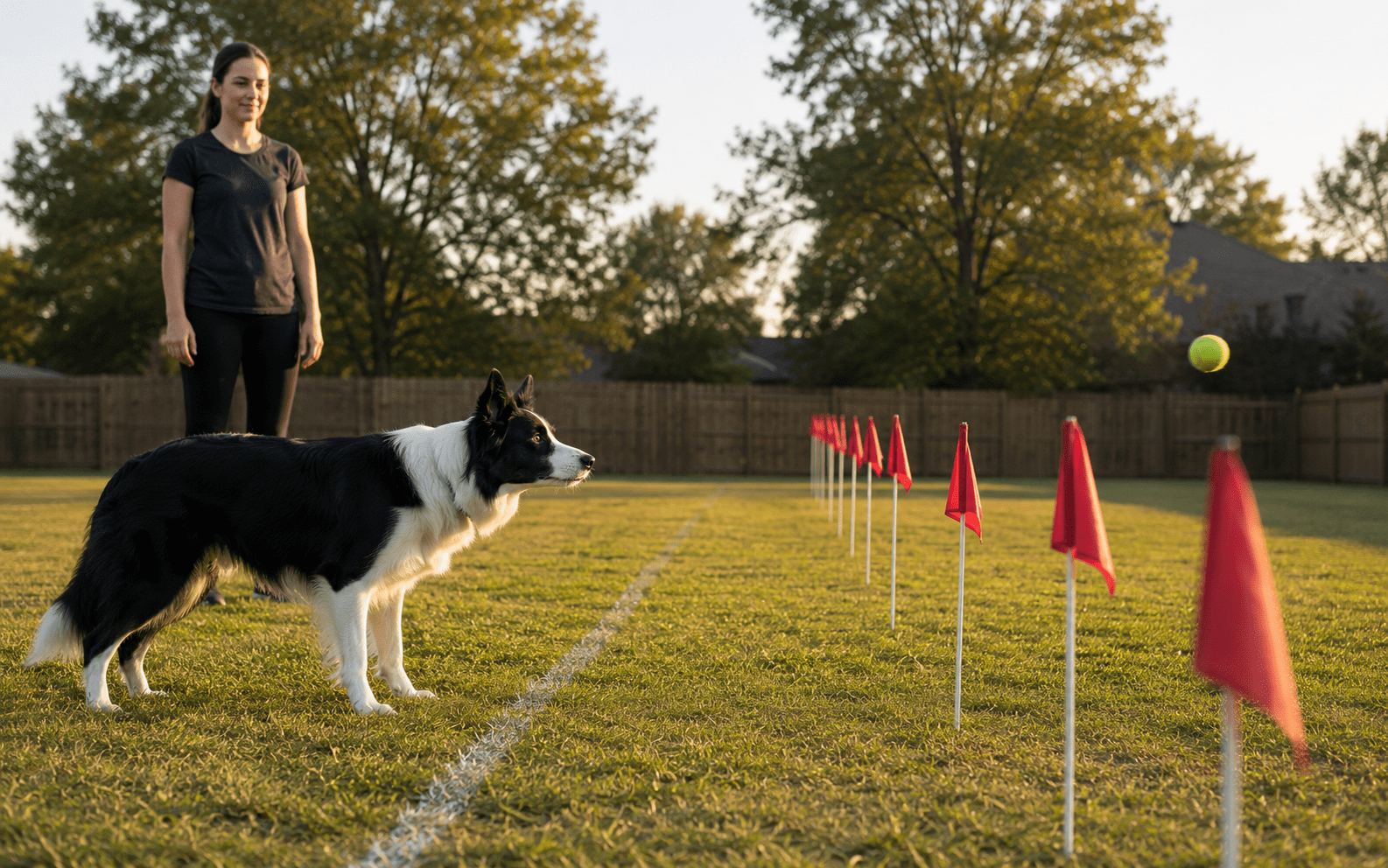
Your dog needs to hold the boundary even when something interesting is pulling at them. If they struggle here, it often connects directly to why dogs run away in the first place: high arousal, strong drive, or an exit habit that’s already formed. Short, focused sessions beat long unfocused ones every time during this phase.
Phase 4: Supervised Off-Leash Time (Days 16 to 21+)
Drop the leash. Let your dog explore freely while you watch from a distance. If they drift toward the boundary, let the collar handle it. Don’t chase them toward the flags or call them away the moment they approach; you want them to make the right choice on their own.
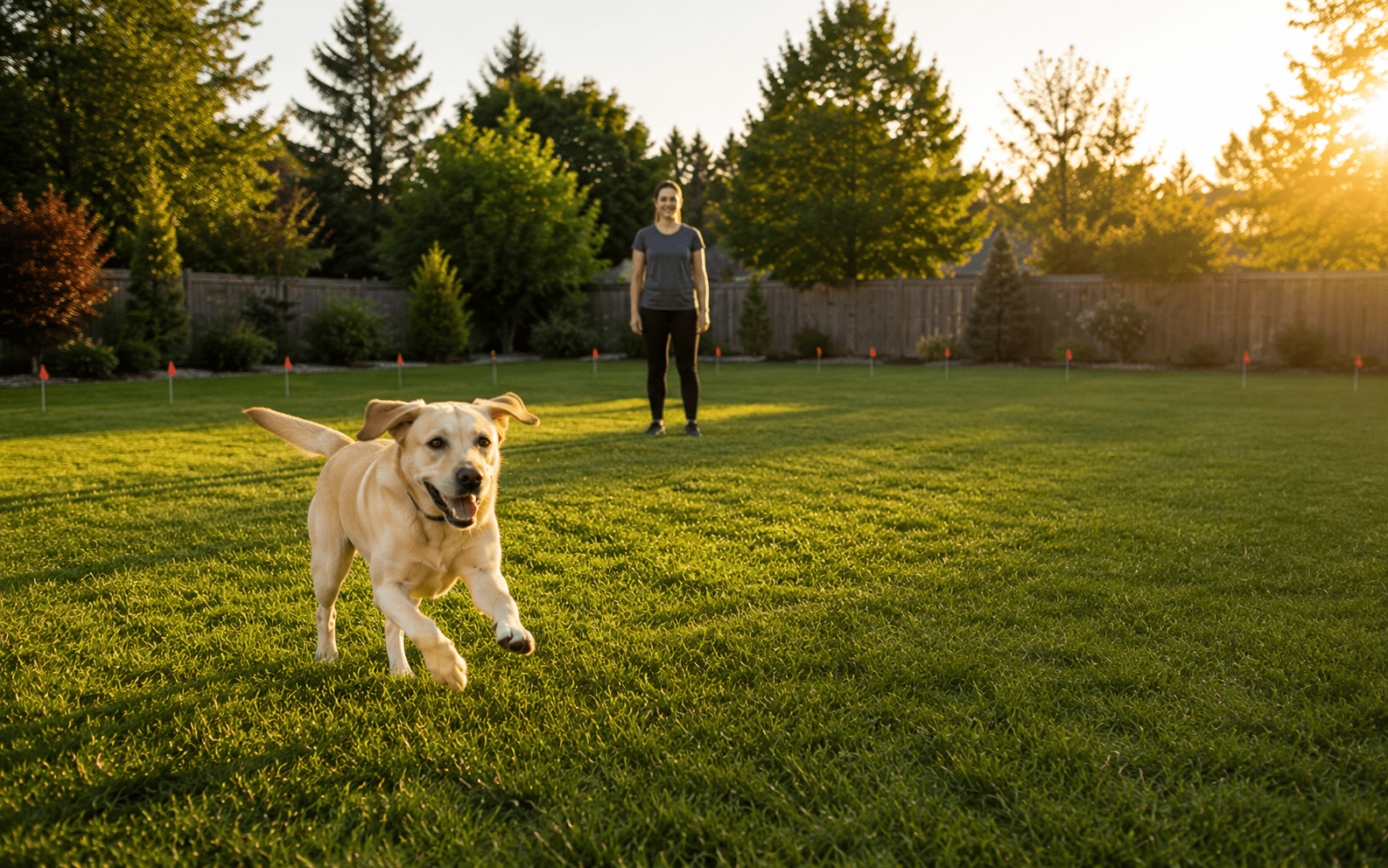
Extend unsupervised time gradually. A dog who stays reliably in the yard for one consistent week of supervised freedom is likely ready for brief unsupervised time, starting with 10 to 15 minutes.
Training Phase Breakdown
| Phase | Duration | Collar Active | Main Goal |
| Flag Recognition | Days 1 to 5 | No | Visual boundary understanding |
| Tone Association | Days 5 to 10 | Yes | Pairing beep with turning back |
| Distraction Training | Days 10 to 16 | Yes | Holding boundary under pressure |
| Supervised Freedom | Days 16 to 21+** | Yes | Off-leash reliability |
Common Mistakes That Slow Progress
Every shortcut you take when you train a dog on an invisible fence tends to show up later as a boundary-testing problem. These are the ones that cost the most time:
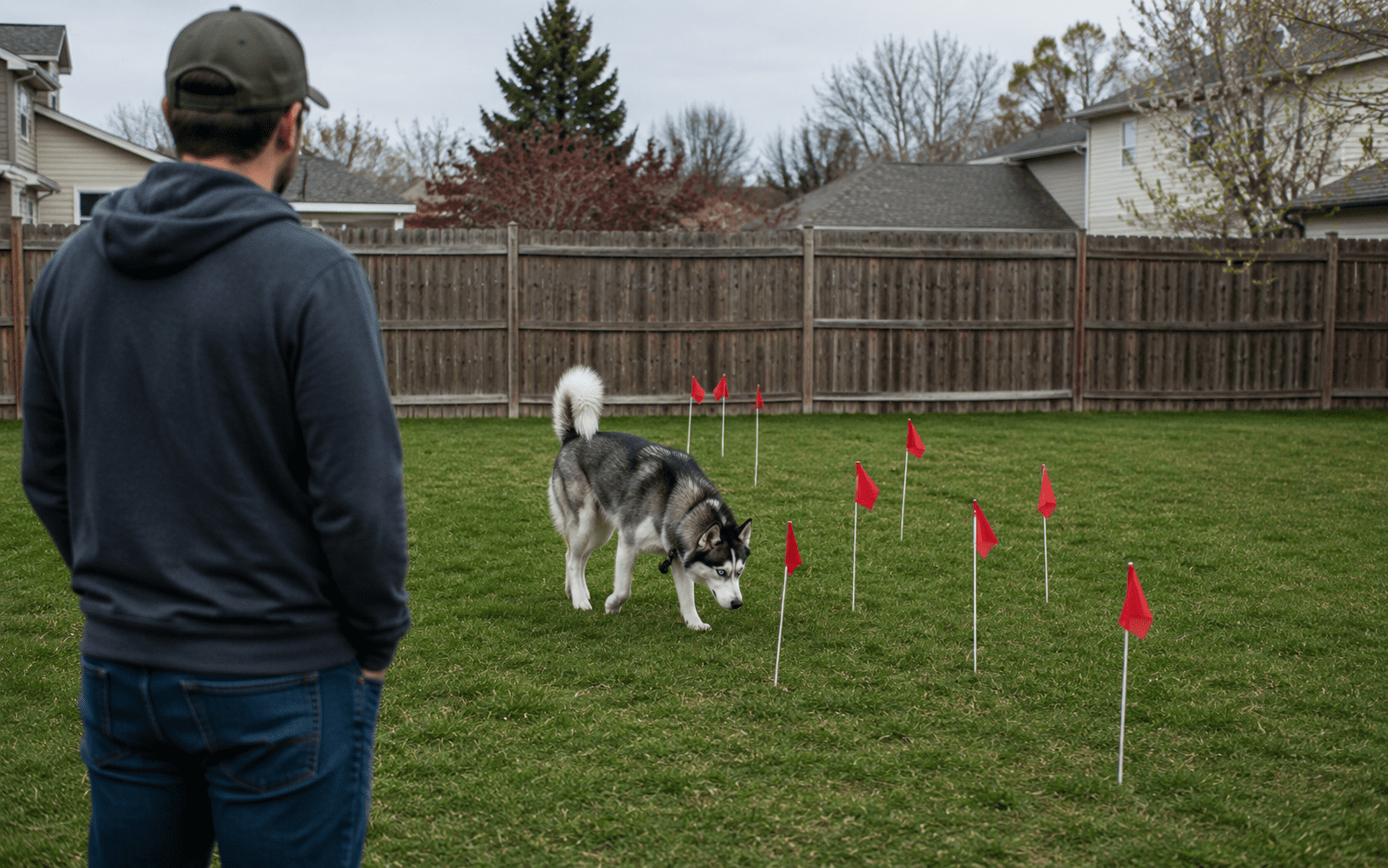
- Skipping the flag phase: Without visual markers, dogs have no way to predict where the correction zone starts
- Sessions longer than 15 minutes: Mental fatigue kills retention faster than almost anything else
- Removing flags before 30 days: Even if your dog seems solid, the flags reinforce the habit at a deeper level
- Inconsistent collar contact: Contact points need direct skin contact every single session
- No obedience foundation underneath: An invisible fence paired with zero obedience dog training leaves your dog untrained and frustrated at the boundary
Which Dogs Respond Best
Not every dog adapts to an invisible fence at the same pace. Temperament, drive level, and prior training history all affect how quickly and reliably a dog learns the system.
| Dog Type | Suitability | What to Watch For |
| Low to moderate drive dogs | High | Fastest learners; rarely test limits after Phase 3 |
| High prey drive breeds | Moderate | May push through correction mid-chase; needs extra distraction work |
| Anxious or fearful dogs | Low to moderate | Corrections can increase avoidance of the whole yard |
| Stubborn or independent breeds | Moderate | Take longer; consistency is everything |
| Senior dogs | Moderate | Can learn but need more repetition and lower correction settings |
If your dog falls on the harder end of this list, working with a private dog training Long Island trainer means someone can assess your dog directly and adjust the approach before small gaps become established habits.
When the Fence Alone Is Not Enough
Some dogs escape repeatedly despite following every training step correctly. Others become anxious near the boundary and stop using the yard at all. When either of those things happens, the fence system isn’t the problem. The dog needs more structured behavioral support.
In home dog training Long Island puts a trainer in your yard, working with your dog in the actual environment where the fence is installed. That real-world context matters more than most owners expect.
For dogs with serious boundary-breaking habits or no obedience foundation at all, a board and train Long Island program builds the behavioral baseline your dog needs before fence training will stick long term.
Keeping the Fence Working After Training
Training doesn’t end when the flags come down. Check your dog’s collar fit weekly. Walk the perimeter wire every few months to confirm the signal is still active. Replace collar batteries before they run low because an inconsistent correction is more confusing than no correction at all.
Walk your dog on a long line near the boundary every couple of months to confirm they’re still respecting it, especially after seasonal changes, a long trip, or any stretch of reduced supervision.
Train Your Dog on an Invisible Fence and Back It Up With Real Support
An invisible fence is a useful tool, but it works best when there’s a trained dog behind the collar. At K9 Mania Dog Training, we’re the leading board and train provider on Long Island, and our animal behaviorists know exactly what it takes to work through containment challenges, high-drive behavior, and boundary testing. Whatever your dog is struggling with, we can help. Trust us to build the foundation that keeps your dog safe, whether that’s through private sessions, in-home work, or our board and train program.
You May Also Want to Read
How to Teach Loose Leash Walking
How to Train a Blue Heeler Dog
Frequently Asked Questions
How long does it take to train a dog on an invisible fence?
Most dogs complete the training process in 2 to 4 weeks when sessions are consistent and phased correctly. High-drive or stubborn breeds may need 5 to 6 weeks. Rushing any phase adds time overall because dogs who skip steps tend to test the boundary more once close supervision is removed.
At what age can a dog be trained on an invisible fence?
Dogs can start invisible fence training as young as 6 months old. Younger puppies lack the attention span and impulse control the system requires. Starting too early often leads to fear responses rather than boundary learning, so waiting until at least 6 months gives you a much better foundation to work from.
Is 2 years old too late to train a dog?
No, 2 years old is not too late at all. Adult dogs often learn boundary rules steadily because they have better focus than puppies. The training phases stay the same regardless of age. The main difference is that adult dogs with established escape habits may need a few extra sessions to override the behavior they’ve already practiced and reinforced on their own.
What dogs do well with invisible fence?
Dogs with low to moderate drive and a solid obedience foundation tend to do best. Labrador Retrievers, Golden Retrievers, and similar companion breeds typically respond quickly. High-drive working breeds and sighthounds are more likely to push through a correction when their chase instinct fires, so they need heavier distraction training before unsupervised yard time is safe.
Can a dog get past an invisible fence?
Yes, a dog can get past an invisible fence, and it happens more often than people expect. Dogs in a high-arousal state, especially those chasing prey or another animal, sometimes push through the correction without slowing down. Pain tolerance, drive level, and gaps in the training process all affect whether containment holds consistently under real-world pressure.
What is the hardest thing to teach a dog?
Reliable recall in high-distraction environments is one of the hardest behaviors to build in any dog. It requires hundreds of repetitions across different settings before it becomes truly automatic. Other difficult behaviors include sustained impulse control, loose-leash walking, and staying calm around triggers like strangers or other dogs. These skills directly affect how well a dog respects a boundary system under pressure.