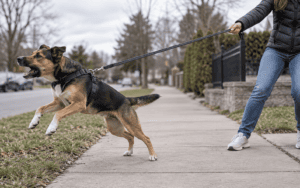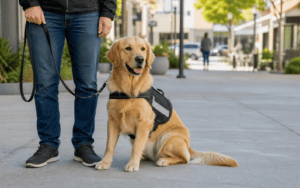
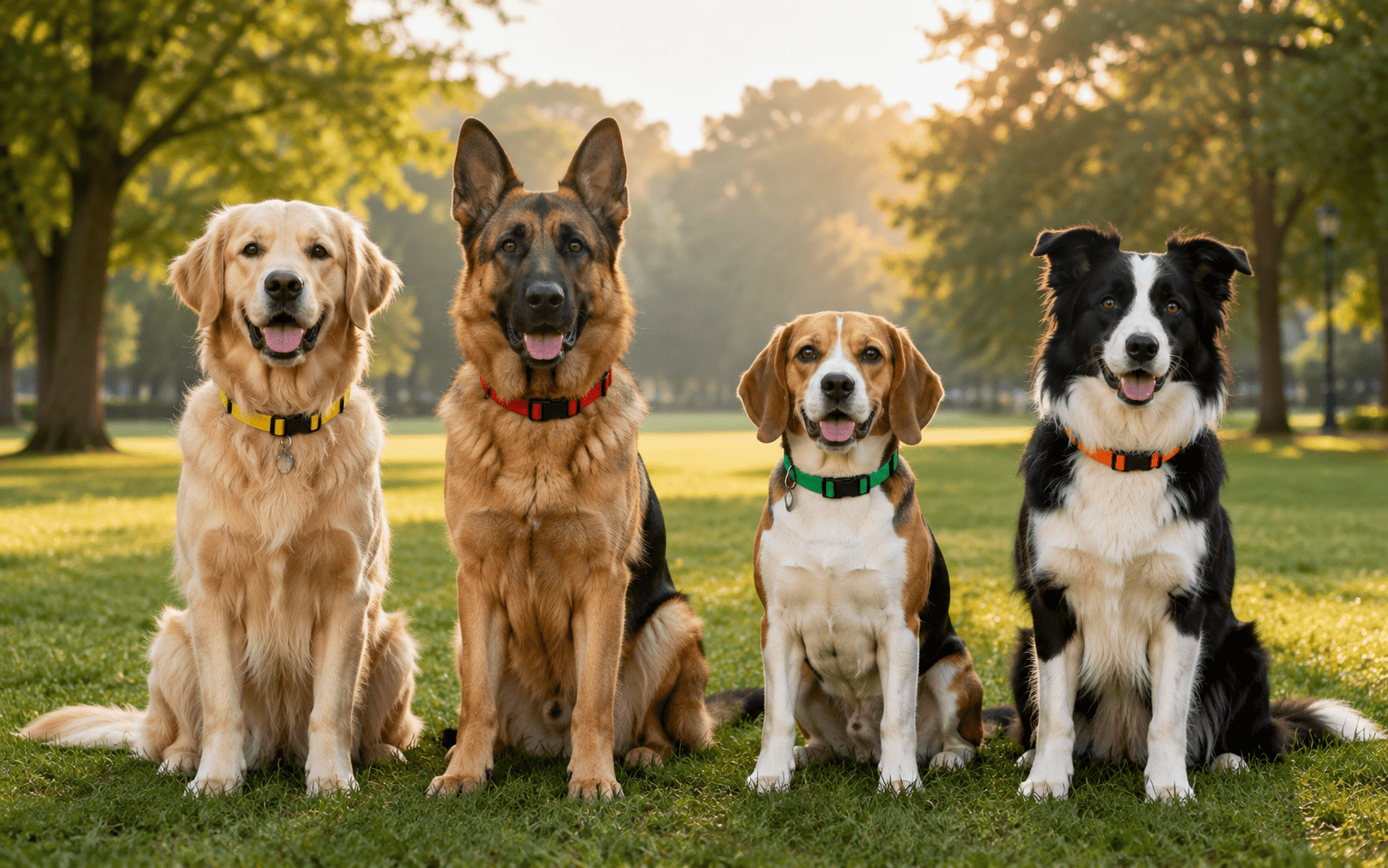
Dog collar color meaning is an unofficial visual code that warns people about a dog’s temperament, training status, or special needs before they get close. Yellow signals caution or anxiety, red means do not pet, green shows a friendly dog, orange warns of reactivity to other dogs, and white often marks a deaf or blind dog.
You may have walked past a dog with a bright yellow collar and wondered if it meant something. The short answer is yes. These color codes started with the Yellow Dog Project and have spread through trainers, shelters, and dog walkers as a quiet way to share important information.
Knowing what each color stands for helps you protect your dog, respect other dogs, and avoid stressful encounters at the park or on the sidewalk. Keep reading to learn the meaning behind each color and when to use them.
What Each Dog Collar Color Actually Tells You
A dog’s collar color can hint at personality traits, training stage, or warnings about how strangers should act around the dog. The system is not legally required, but it is widely used in the dog community as a fast way to share information at a glance.
The most well known starting point is the Yellow Dog Project, an awareness campaign launched in 2012. It encouraged owners of dogs needing space to tie a yellow ribbon or use a yellow item to alert others.
Since then, the color system has expanded. Trainers, rescue groups, and service organizations now use a wider range of colors to send specific signals. Here is why these visual signals matter:
- They reduce surprise interactions between strangers and dogs.
- They give shy or recovering dogs space to feel safe.
- They help children learn which dogs should not be petted.
- They support owners actively working through behavior issues.
If your dog has a behavior issue that needs work before public outings feel safe, a structured program like board and train Long Island can help build the foundation your dog needs before relying on a color alone.
The Yellow Collar Code Explained
A yellow collar, leash, or ribbon means the dog needs space. It does not always mean the dog is aggressive. It often means the dog is anxious, recovering from surgery, in training, or just uncomfortable with strangers.
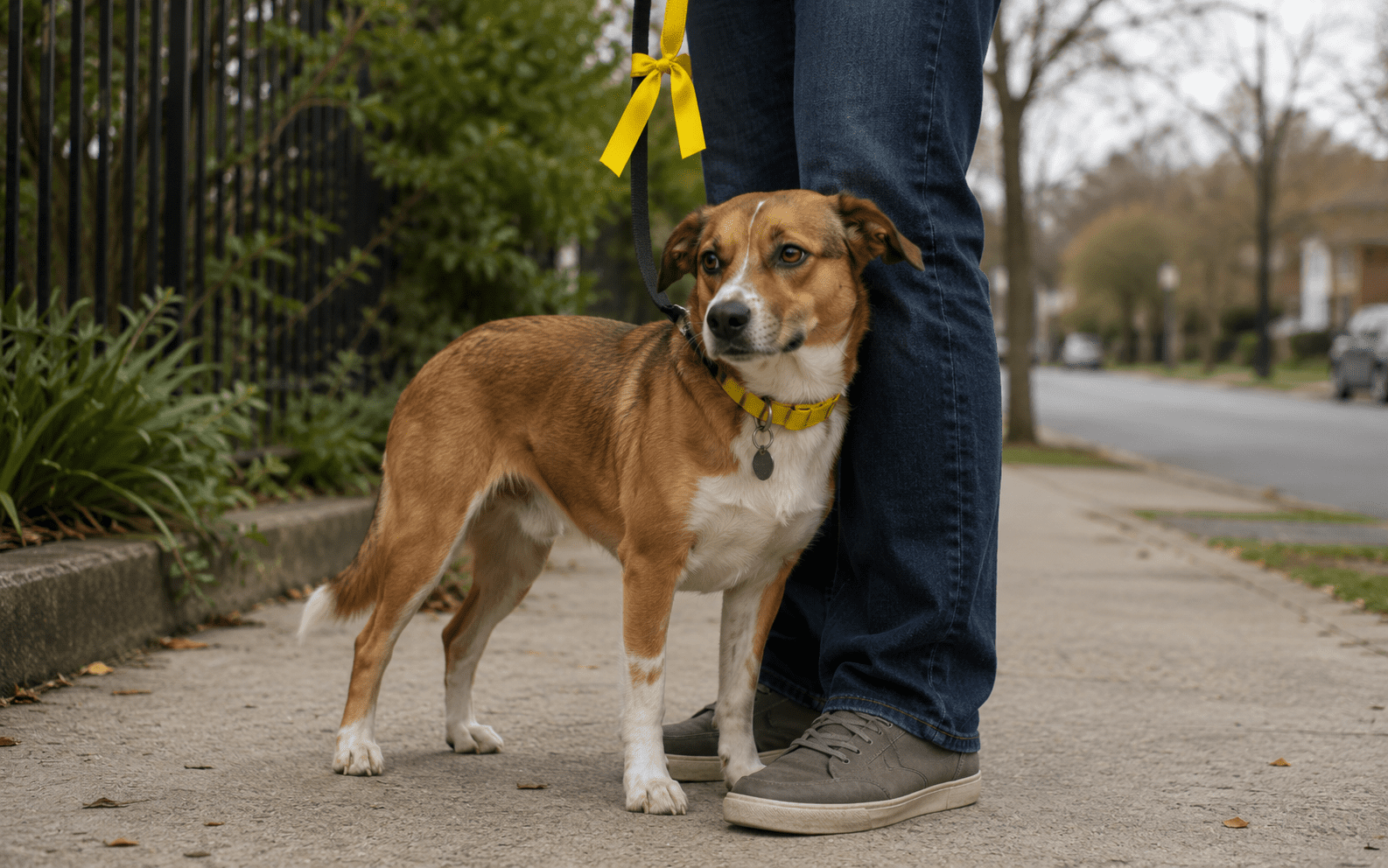
You might see yellow on:
- Rescue dogs adjusting to a new home.
- Dogs in pain or healing.
- Dogs in active training programs.
- Senior dogs who get overwhelmed easily.
If you see a yellow collar, keep your distance and ask before approaching. Owners using yellow are usually grateful when others respect the signal.
Red Collars and the Do Not Pet Warning
A red collar usually means do not pet. The dog may have a bite history, fear issues, or simply not enjoy contact with strangers.
Red is also used by some service dog handlers to keep people from interrupting working dogs. Either way, the message is the same. Look but do not touch, and do not let your own dog charge up either.
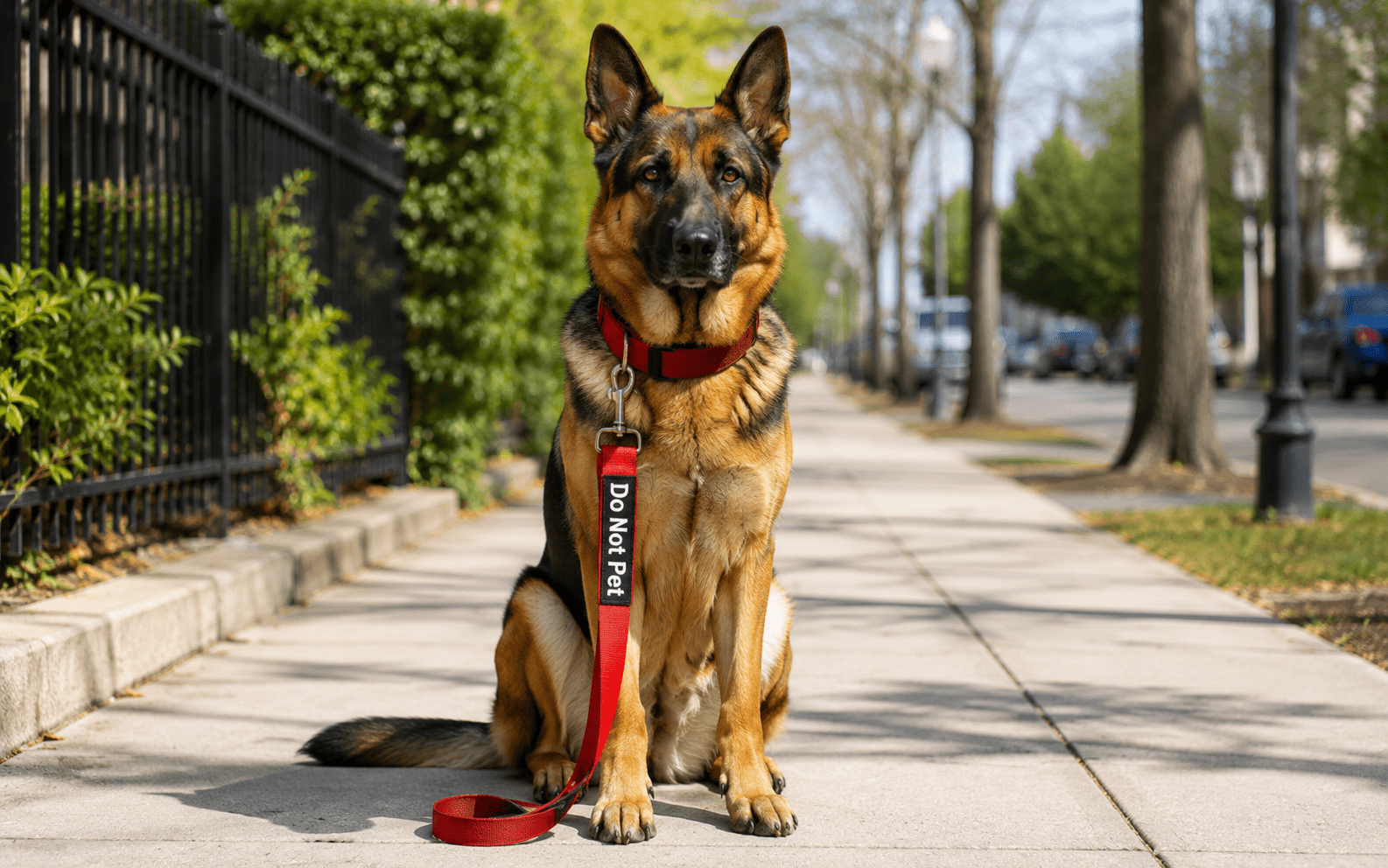
This color is a strong warning. If a dog wearing red also shows tense body language, stiff posture, or a hard stare, give even more space. Learning to read dog body language signals makes color codes far more useful, since you can pair what you see on the collar with what the dog is showing through its body.
Green Collars Signal a Friendly Dog
Green collars mean the dog is friendly and open to meeting people and other dogs. You can usually approach with permission, but you should still ask the owner first.
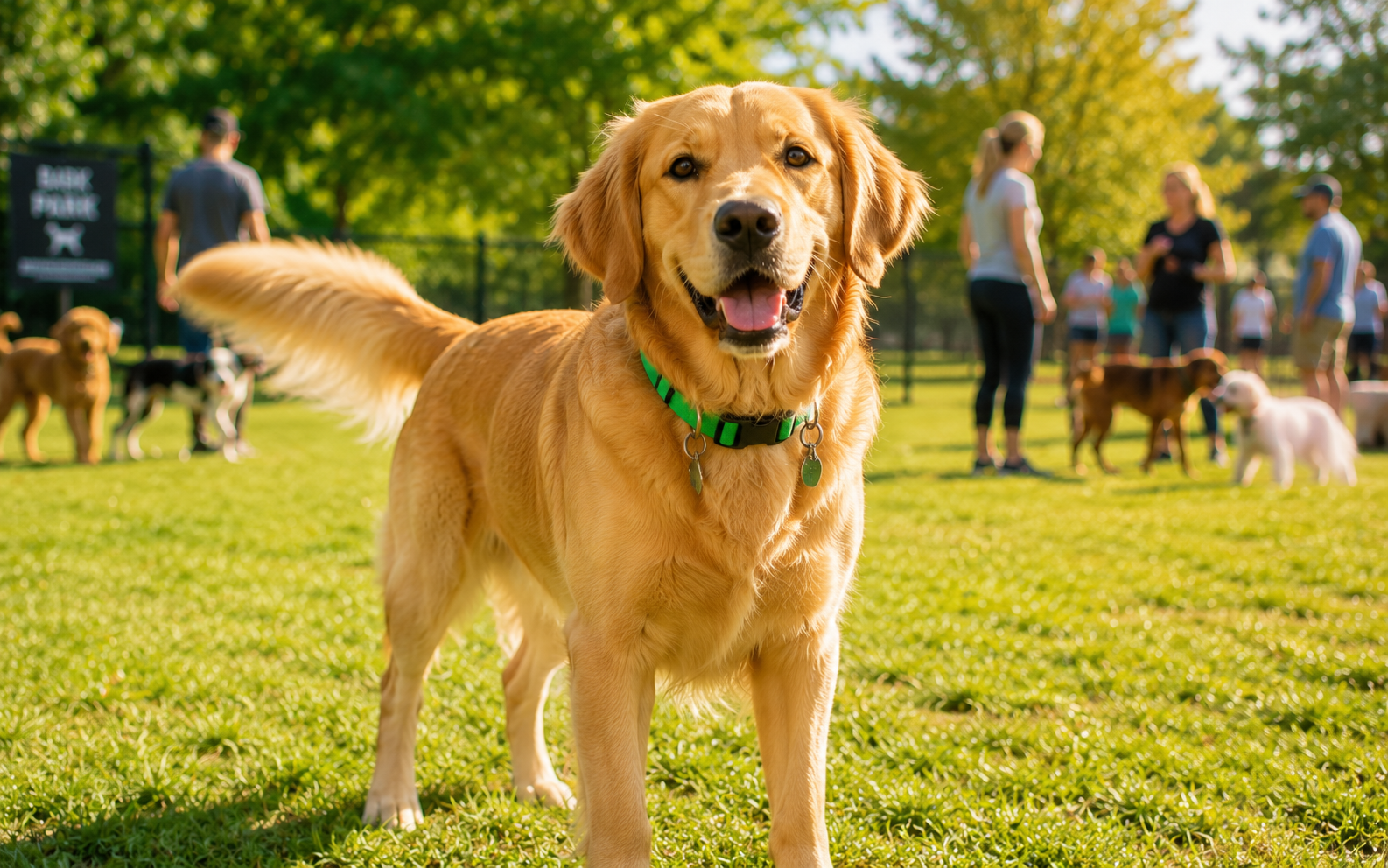
Green is most common at:
- Dog parks.
- Adoption events.
- Pet expos and group meetups.
Even with a friendly dog, manners still apply. Pause, ask, and let the dog come to you instead of crowding it. Even friendly dogs can have off days.
Orange, Purple, and White Collars Explained
These colors carry specific meanings that fewer people recognize, but they are becoming more common. Knowing them helps you spot less obvious risks.
| Color | Common Meaning | What You Should Do |
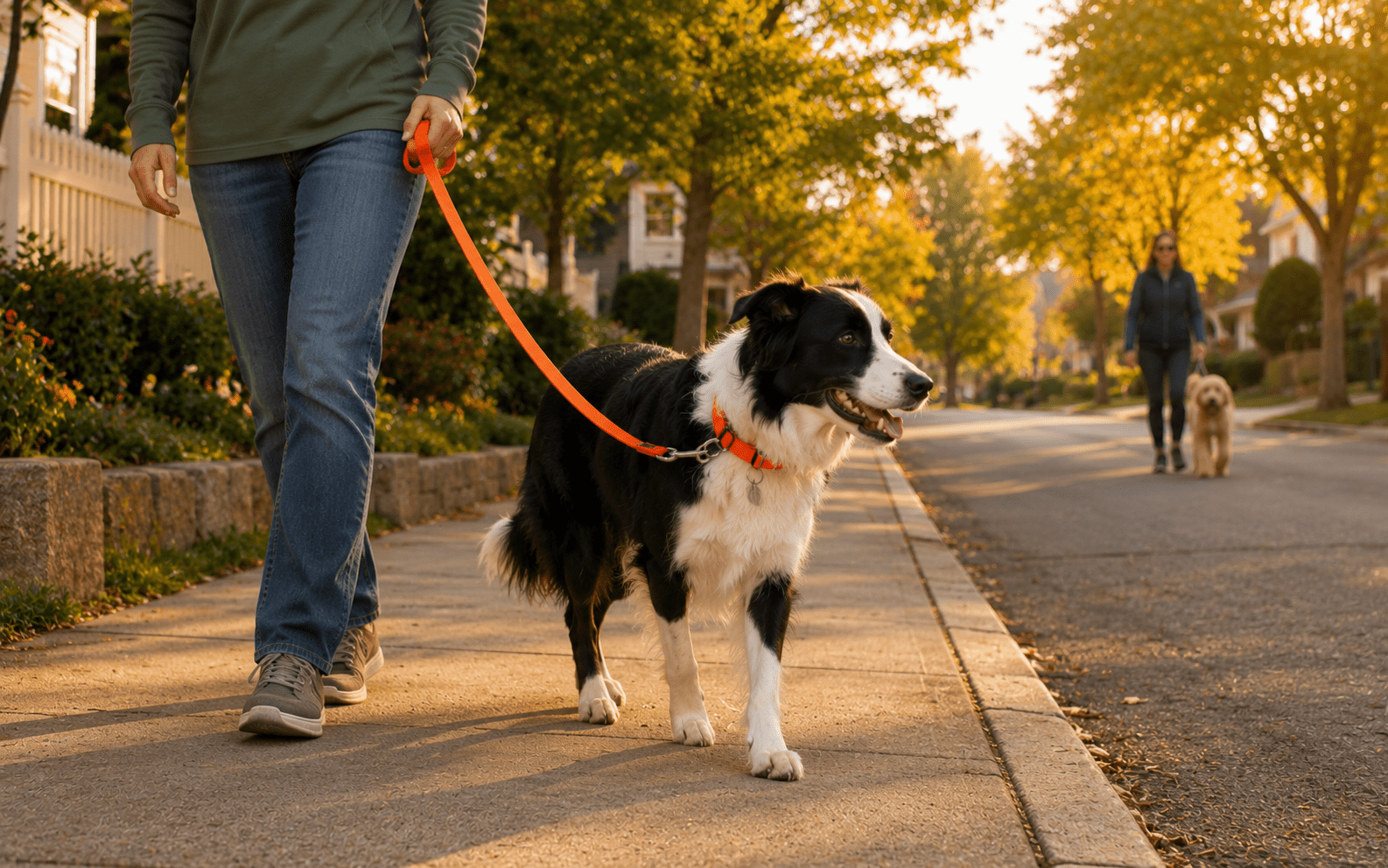
| Orange | Friendly with people, not good with other dogs | Keep your dog at a distance |
| Purple | Do not feed (allergies or medical diet) | Skip treats or food sharing |
| White | Deaf or blind | Move slowly and let the dog sense you |
| Pink | Often a style choice, no formal meaning | Read body language instead |
| Black | No standard meaning, very common | Watch for other cues |
Orange matters most if you walk your dog in busy areas. A dog reactive to other dogs is not the same as one that is aggressive toward people. The behavior may look alike from a distance, but the trigger and the training plan are very different. If you are unsure where your dog falls on that line, our breakdown of reactive vs aggressive dog walks through the differences.
How Dog Collar Color Meaning Compares to Body Language
Colors give a fast warning, but body language gives the full picture. The two work best together, since a collar shows the owner’s choice while the body shows how the dog actually feels in that moment.
| Color Signal | Matching Body Language | Mismatch to Watch For |
| Yellow (needs space) | Tail tucked, looking away, slow movement | Loose body could mean a calm day |
| Red (do not pet) | Hard stare, stiff posture, closed mouth | Soft body still means keep distance |
| Green (friendly) | Loose body, soft eyes, full body wag | Sudden stiffness means stop and check in |
| Orange (dog reactive) | Calm with people, tense around other dogs | Lunging at people means the color may be wrong |
| White (deaf or blind) | May startle, slow to react to sound or sight | None, but approach gently regardless |
If a dog’s behavior does not match its collar, trust the behavior. Dogs change day to day, and a collar is only as accurate as the owner’s last read.
Things to Know Before Using a Color Coded Collar
Before you switch your dog’s collar to send a signal, keep these points in mind:
- The system is not official. Not everyone recognizes it, especially in smaller towns.
- It is not a substitute for training. A red collar will not stop a determined stranger or off leash dog.
- Use it with a leash. Color codes work best with a secure leash and an aware handler.
- Be consistent. Switching colors weekly confuses people who walk the same routes you do.
- Add a tag or vest. A simple “do not pet” patch reinforces the color message.
If your dog needs help with public manners or struggles around strangers, structured help in your own home often works better than busy facility training. Programs like in home dog training Long Island let your dog learn in the environment where the issues actually happen.
Choosing the Right Color for Your Dog’s Situation
Picking the right color comes down to knowing your dog and being honest about their needs. Dog collar color meaning works best when the color truly reflects how your dog acts in real situations, not how you hope they will act.
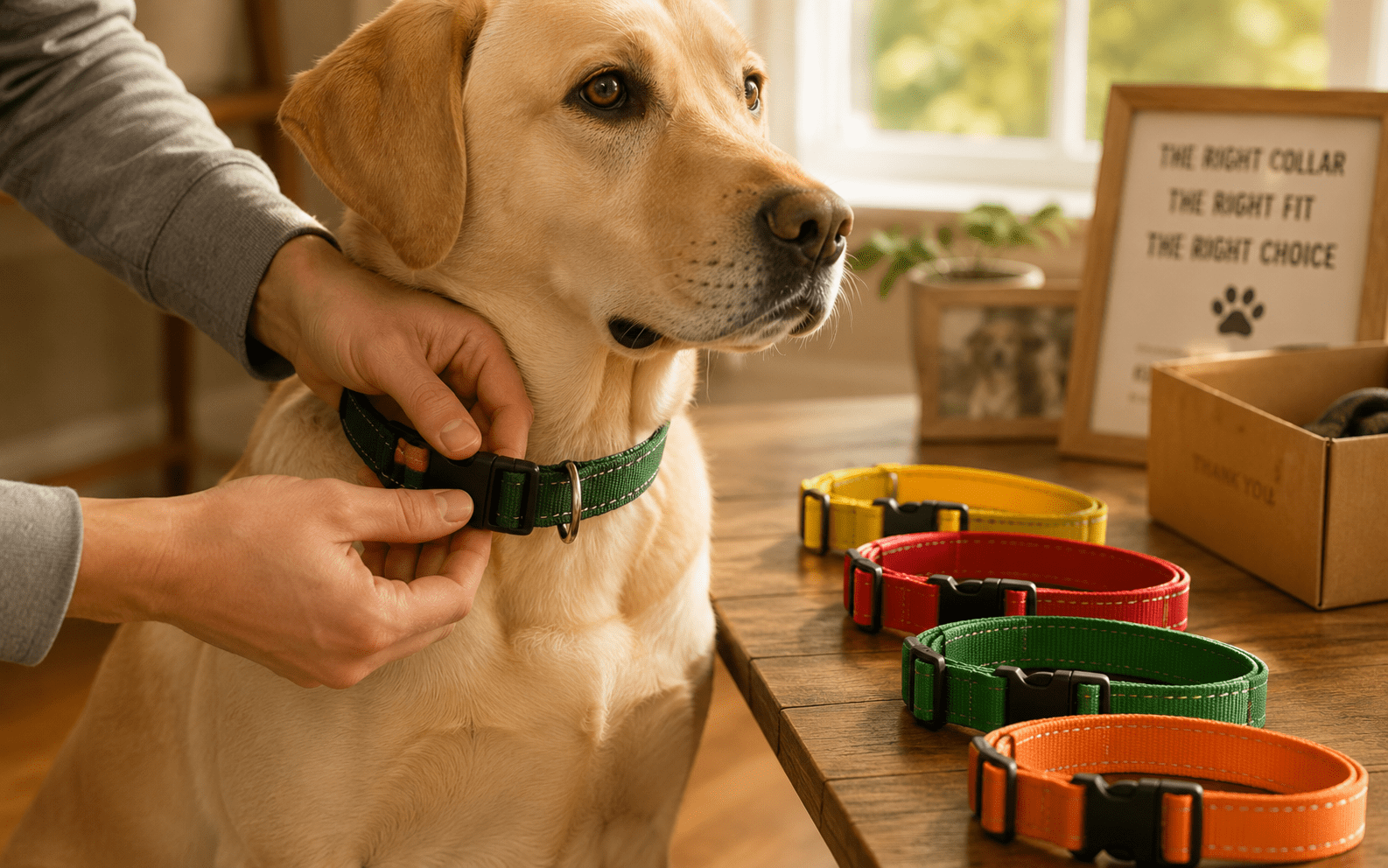
Ask yourself these questions:
- Does my dog get nervous around strangers?
- Has my dog snapped, growled, or bitten before?
- Is my dog still healing or in training?
- Does my dog react to other dogs but love people?
- Does my dog have a hearing or vision issue?
Your answers point to the right color. If more than one color fits, pick the one that protects your dog the most. Yellow and red are usually safer defaults than green for dogs in any kind of recovery or training stage.
You can also stack signals. A red collar with a “do not pet” patch sends a much clearer message than either alone. In busy parks, this combo helps strangers slow down before they reach you.
For dogs working through complex issues like fear or reactivity, color coding works much better when paired with hands on training. One on one work in your home or neighborhood with private dog training Long Island gives your dog the real skills to back up the warning the collar sends.
Color coding also helps with introductions. If you are bringing home a second dog, the right setup can ease the early days. Our guide on how to introduce dogs to each other walks through the steps that work best.
Final Thoughts on Dog Collar Color Meaning
Understanding dog collar color meaning helps you respect other dogs, protect your own, and avoid the kind of public mishaps that can set training back. Yellow, red, green, orange, purple, and white each carry a message worth knowing, and pairing them with strong body language reading makes you a far safer handler in any setting.
If your dog struggles with behavior issues that no collar color can fix, K9 Mania Dog Training is here to help. As the leading board and train provider on Long Island, our team includes some of the best animal behaviorists for dogs in the region. We work with dogs of every age, breed, and challenge level, from fear and reactivity to serious aggression. Trust K9 Mania Dog Training to deliver real, lasting change. Visit our site and start your dog’s journey to becoming the calm, confident companion you have always wanted.
You May Also Want to Read
How to Get Your Dog’s Attention When Distracted
Do Dogs Have Object Permanence?
How Do Dogs Communicate With Each Other
How to Stop a Dog from Marking in the House
Frequently Asked Questions
Does the color of a dog collar mean anything?
Yes, dog collar colors often carry unofficial meanings used to warn or inform strangers. Yellow signals a dog needs space, red means do not pet, green shows a friendly dog, and other colors mark special needs. While not legally required, the system is widely used by trainers and owners across the country.
What does putting a yellow collar on a dog mean?
A yellow collar means the dog needs space and should not be approached without permission. It is part of the Yellow Dog Project, started to protect dogs that are anxious, healing, in training, or just uncomfortable with strangers. It does not always mean the dog is aggressive.
What does a dog wearing a blue collar mean?
Blue collars usually have no formal meaning and are often just a style choice. Some service organizations use blue to mark working dogs in training. If you see a blue vest with a patch, treat the dog as a working animal and avoid trying to interact with it.
What color dog collar is best?
The best color depends on your dog’s personality, training stage, and daily needs. For nervous or recovering dogs, yellow works well. For dogs that should never be petted, red is clearer. For social dogs, green sends a welcoming signal. Always match the color to real behavior.
What color calms dogs down the most?
Blue and violet shades are believed to have the calmest effect on dogs based on canine color vision research. Dogs see fewer colors than humans, but blue stands out clearly to them. Many trainers use blue toys, beds, and mats to create a soothing setting for anxious or reactive dogs.
Do dogs prefer blue or green?
Dogs see blue and yellow most clearly, so they tend to respond more to blue than green. Green often looks grayish or muted to dogs because of their dichromatic vision. If you want your dog to focus on a toy or visual signal, blue is usually the more visible and engaging choice.