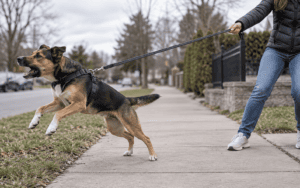

Do dogs have object permanence? Yes, and research confirms dogs can mentally track hidden objects and understand things still exist even when they can no longer see them. This cognitive ability shows up in how your dog plays, how they respond when you leave, and how they engage with training every single day.
📌 Things to Know
- Dogs have object permanence, though not at the same level as adult humans
- Most dogs develop this ability reliably by around 8 weeks of age
- Object permanence is directly tied to separation anxiety and door-waiting behavior
- You can test your dog’s object permanence at home with simple hiding games
- Training quality and early socialization both influence how well this skill develops
What Object Permanence Is and Why It Matters for Dogs
Object permanence is the understanding that something continues to exist even when you can no longer see, hear, or sense it. Developmental psychologist Jean Piaget first studied this in human infants. Babies younger than 8 months typically don’t have it. Hide a toy under a blanket and they act like it simply stopped existing.
Dogs work differently. Toss a ball behind the couch and your dog doesn’t forget about it. They go looking. That’s object permanence in action, and it tells you something important about how your dog’s brain processes the world.
This matters beyond being interesting science. It has real practical value for understanding separation anxiety, improving your training approach, and knowing why your dog behaves the way they do when you step out of sight.
What the Research Actually Shows
Studies on canine cognition confirm that dogs do have object permanence, and at a fairly developed level. Research using displacement tasks, where an object is visibly moved from one location to another, shows dogs can track those movements and search the correct location.
Dogs perform well on visible displacement tasks. They can follow an object being moved and know where it ended up. They also show some ability with invisible displacement, where the object is hidden without them watching the movement directly.
One notable finding is that dogs rely heavily on human social cues during these tests. If you point toward where a treat is hidden, your dog will follow that cue. This isn’t a weakness in cognition. It reflects how deeply dogs have co-evolved with humans over thousands of years. This same cue-following tendency connects to how dogs know their name, since both abilities involve reading human communication and acting on it.
How Dogs Stack Up Against Other Animals
Human children typically reach full object permanence around 18 to 24 months. Dogs land somewhere between the level of a 6 to 12 month old human infant for this specific cognitive task. That said, dogs aren’t simply lesser versions of humans. They process the world through scent, sound, and social signals in ways humans can’t match.
| Species | Object Permanence Level | Primary Cue Used | Notable Strength |
| Human Infant (18+ months) | Full, including invisible displacement | Visual | Abstract reasoning |
| Dog | Strong visible, partial invisible | Social and visual | Human cue-following |
| Cat | Moderate, often ignores social cues | Visual | Independent problem-solving |
| Chimpanzee | Strong, including invisible displacement | Visual | Tool use and sequential planning |
How Object Permanence Shows Up in Your Dog’s Daily Life
This cognitive ability appears in everyday behavior more than most owners realize. It shapes how your dog plays, handles your absence, and responds to training cues.
Why Dogs Wait at the Door or Follow You Room to Room
Your dog knows you still exist when you walk out of sight. That’s object permanence at work. They’re not confused about whether you’re still there. They know you are, and that’s precisely why many dogs follow you from room to room or post up outside the closed bathroom door.
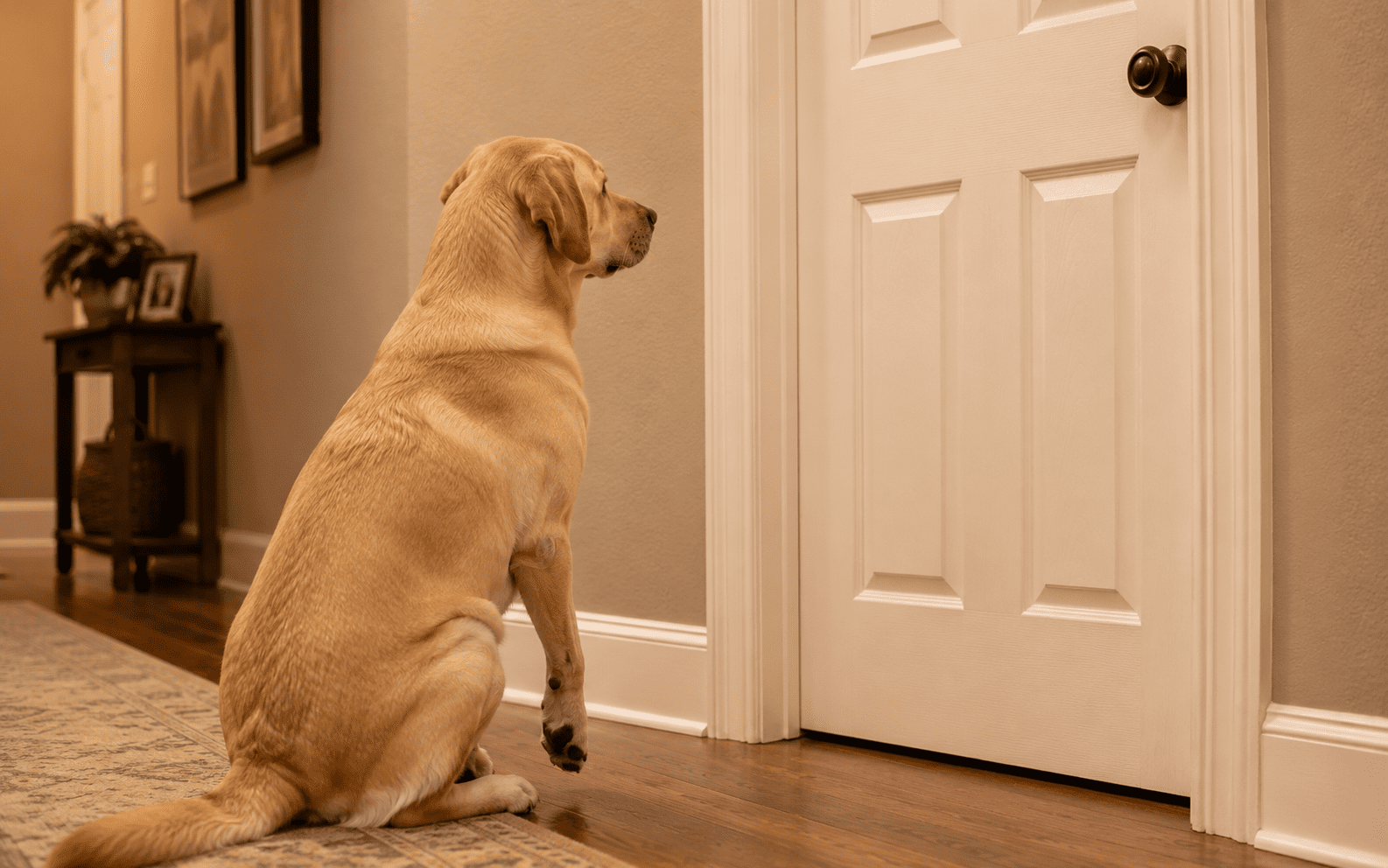
This awareness is also part of why separation anxiety can develop. Your dog knows you’ve left. They understand you’re somewhere out there, and they can’t follow. The anxiety isn’t about confusion. It’s about knowing you exist and not being able to reach you.
Pairing this with an understanding of do dogs have a sense of time helps explain a lot about how dogs experience your absence beyond just your disappearance from view.
Play, Hiding Games, and Problem Solving
Object permanence also drives how your dog engages with toys and games. When you hide a treat under a cup and your dog searches until they find it, that’s this cognitive ability working in real time. When their favorite toy rolls under the couch and they nudge at it or look to you for help, they’re combining memory and reasoning together.
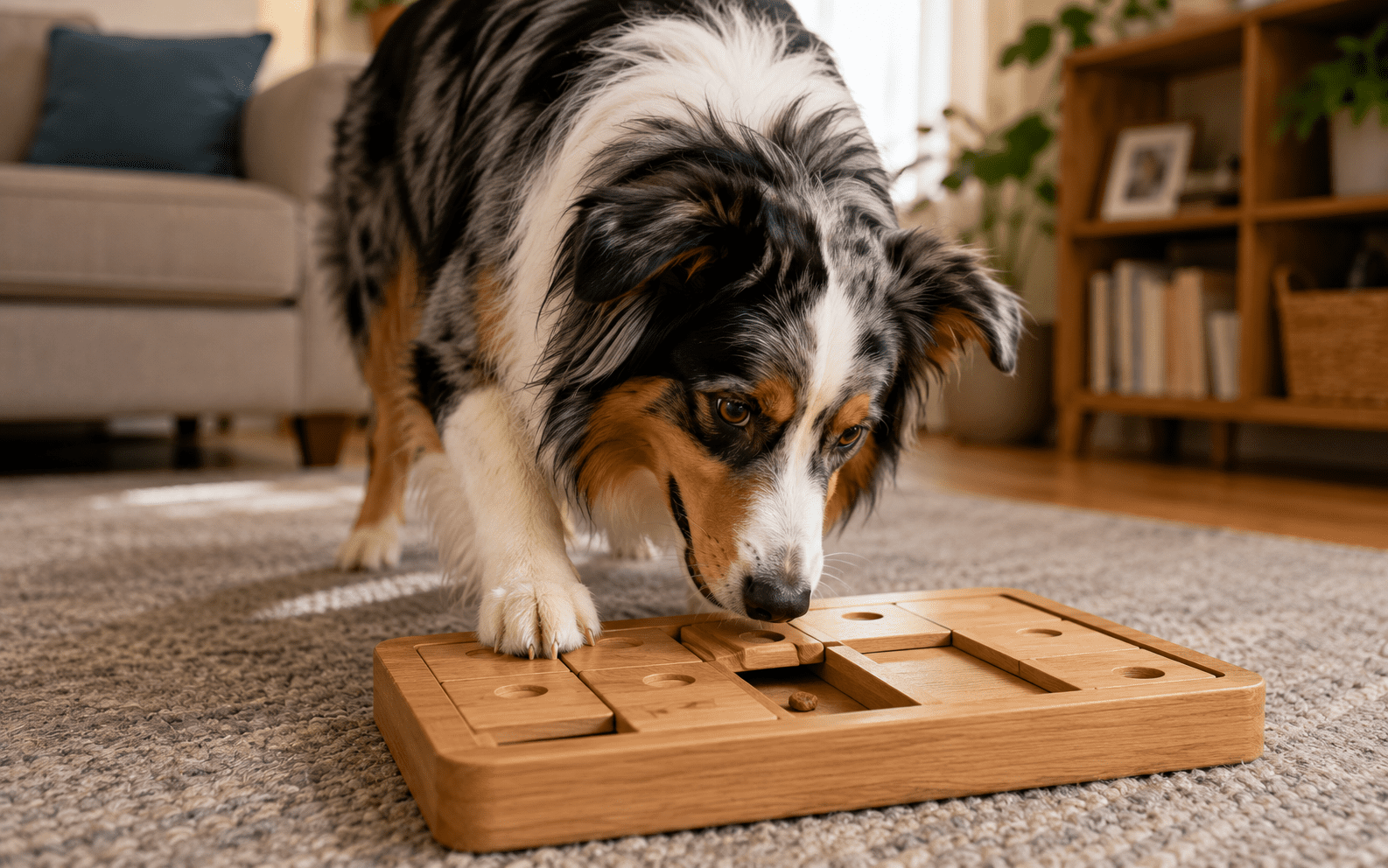
Dogs also remember locations where rewards were found, sometimes hours later. Encouraging this through nose work games, puzzle feeders, and treat hiding activities keeps your dog mentally engaged in a way that supports healthy cognitive development. For a structured approach to building focus and engagement through training, in home dog training Long Island works on exactly these behavioral foundations inside your dog’s own environment.
How to Test Your Dog’s Object Permanence
You don’t need a research lab to see this in action. These simple tests work at home using treats or your dog’s favorite toy.
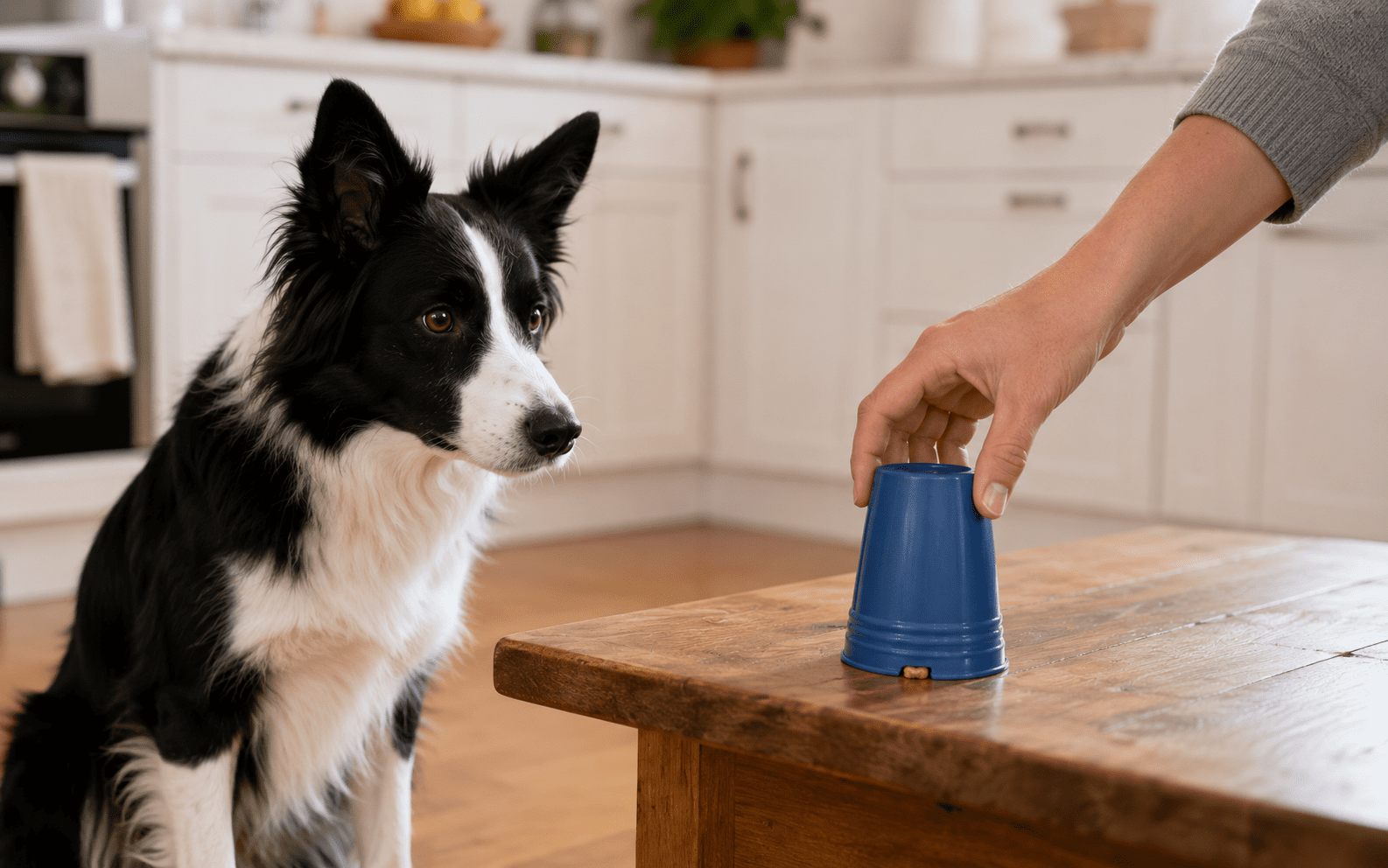
Visible Displacement Test Let your dog watch you hide a treat under one of three cups. Slowly shuffle the cups, then let them choose. A dog with solid object permanence will track the movement and pick the correct cup.
Invisible Displacement Test Place a treat in your closed hand. Slide your fist under a cup and leave the treat inside without your dog watching you drop it. Remove your hand. If your dog searches under the cup rather than at your fist, they’re tracking the object without direct visual confirmation.
What the Results Tell You
- Goes straight to the correct location: strong visible and invisible tracking
- Searches several locations in order: good tracking with less precision
- Looks to you for guidance: heavy cue-following, which is also a form of social intelligence
Most dogs pass the basic version easily. The invisible displacement version shows you how much your dog reasons beyond what they directly observe.
The Six Stages of Object Permanence
Piaget mapped out six developmental stages. Dogs are generally believed to reach stages 4 and 5, with some evidence of stage 6 behavior in certain individuals.
| Stage | Age in Human Infants | Key Behavior | Seen in Dogs? |
| Stage 1 | 0 to 1 month | No object tracking | Not applicable |
| Stage 2 | 1 to 4 months | Briefly follows moving objects | Yes, basic level |
| Stage 3 | 4 to 8 months | Searches where object was last seen | Yes |
| Stage 4 | 8 to 12 months | Searches correctly after visible hiding | Yes, consistently |
| Stage 5 | 12 to 18 months | Tracks visible displacement sequences | Yes, with some limits |
| Stage 6 | 18 to 24 months | Full invisible displacement understanding | Partial, varies by dog |
What Affects a Dog’s Object Permanence Ability
Not every dog performs the same on these tasks. Several factors play a role in how well a dog tracks and reasons about hidden objects.
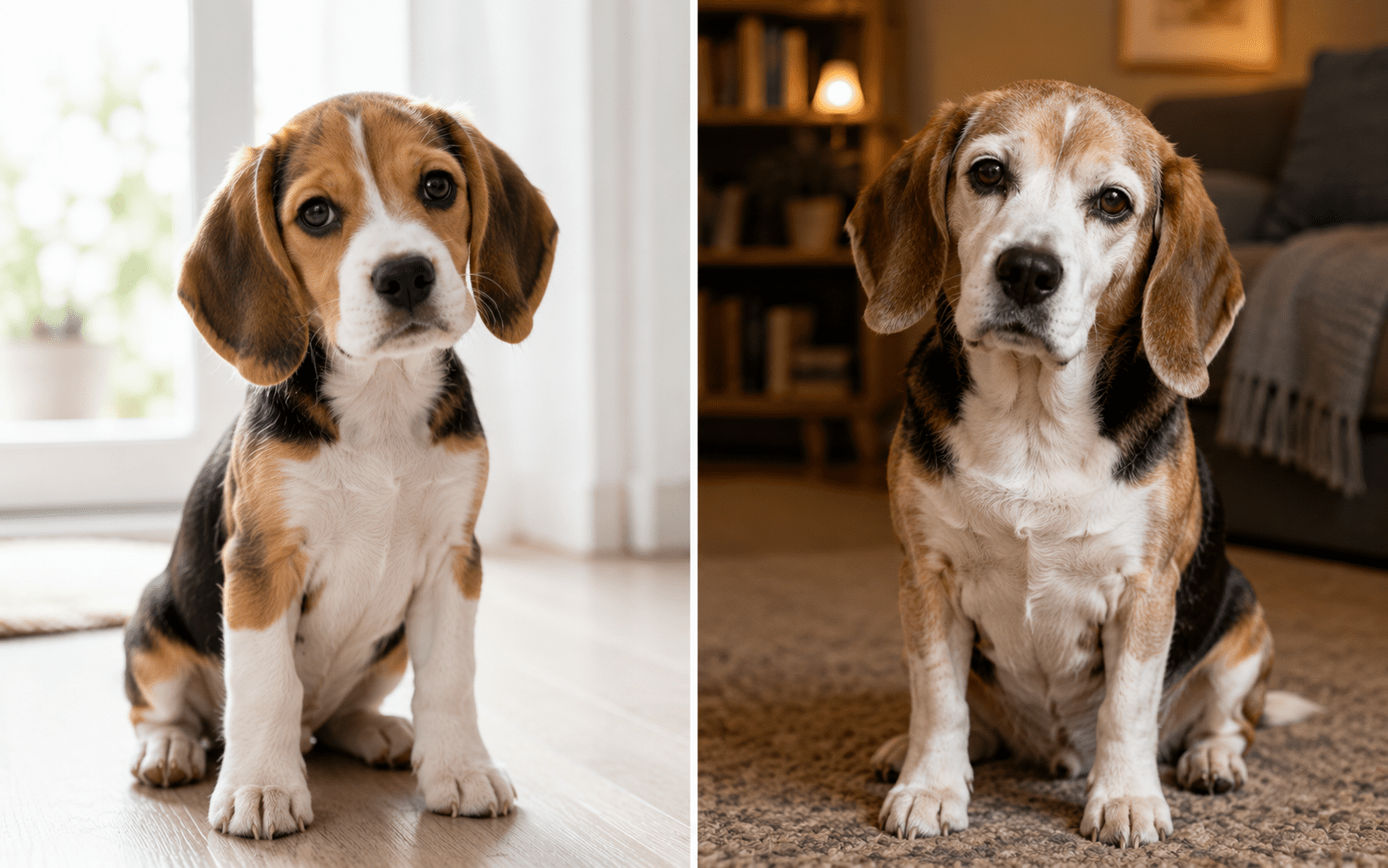
Age: Puppies develop this ability across their first months. Most show reliable performance by 8 weeks, with continued improvement through early puppyhood. Senior dogs may show some decline as cognitive function changes with age.
Breed: Working and herding breeds often perform better on displacement tasks, which likely reflects generations of selective breeding for cognitive collaboration with humans.
Training history: Dogs with consistent, positive training tend to be more attentive during these tasks and follow human cues more reliably, which directly boosts performance. For dogs that seem distracted or disengaged, private dog training Long Island can build the focus and responsiveness that supports better cognitive engagement overall.
Socialization: Dogs raised with varied environments and rich social experiences generally show stronger flexibility across cognitive tasks. Early exposure to different people, places, and situations matters more than most owners expect.
What This Means for Training Your Dog
Understanding that your dog has this cognitive awareness changes how you think about training in genuinely useful ways.
Your dog remembers where things are and what happened in specific locations. If something stressful occurred near a certain area in the yard, your dog may avoid it later because they connect that spot to the experience. Location matters more in dog training than most people realize.
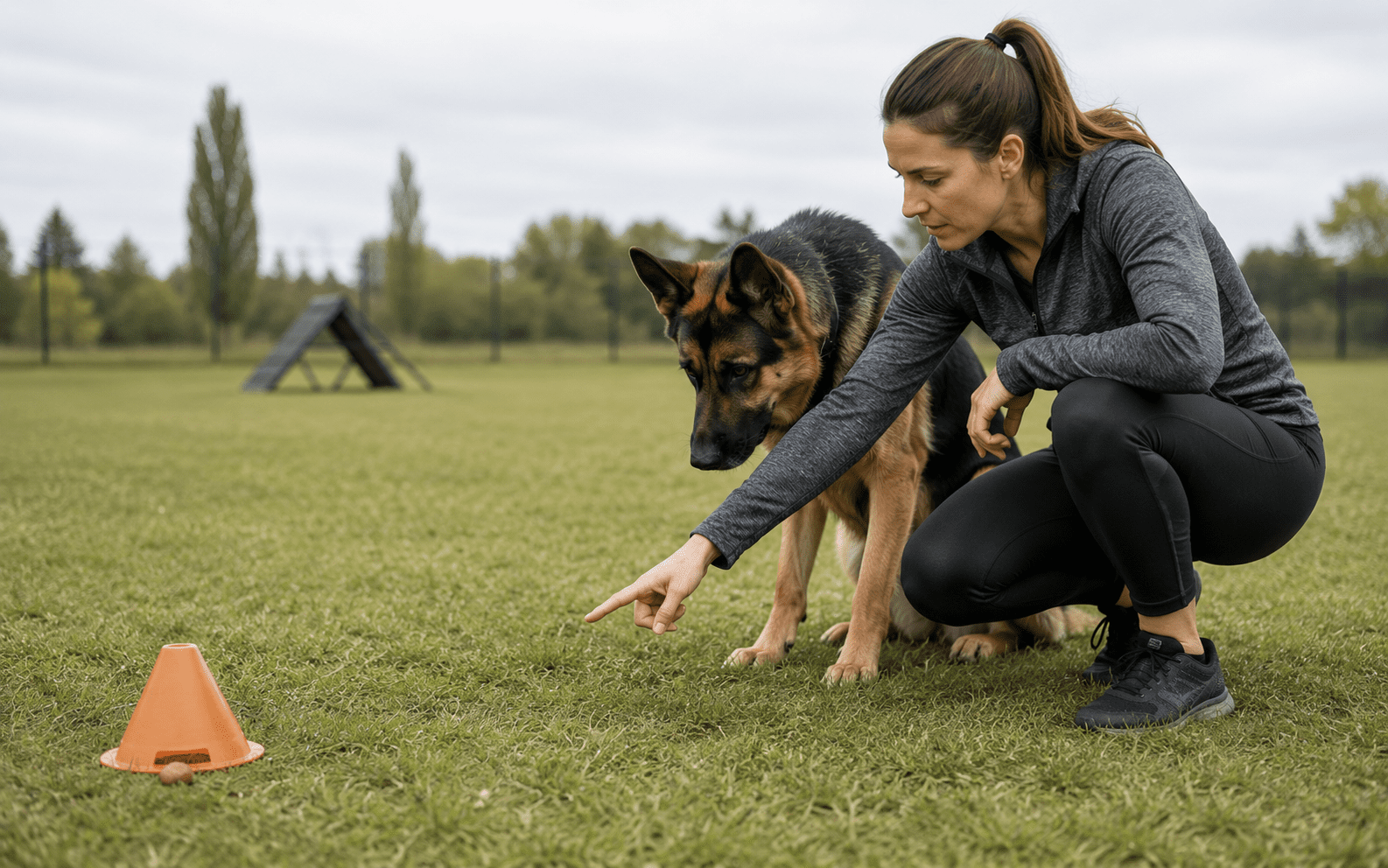
Your dog also tracks your social cues heavily. Pointing, eye contact, and body language are active tools your dog uses to navigate tasks and environments. Using them intentionally during training, rather than relying on verbal commands alone, makes a measurable difference in how quickly your dog learns.
Because out of sight doesn’t mean out of mind for your dog, building positive associations with your departure and practicing structured independence directly work with this cognitive reality rather than against it. For dogs with serious behavioral patterns tied to this, board and train Long Island provides the consistent, structured environment where lasting behavioral change actually happens.
If your dog reacts strongly to certain people or situations even after time apart, reading about do dogs hold grudges pairs well with this topic, since memory and emotion work together to shape a lot of behavior.
Yes, Your Dog Knows You’re Still There: The Real Answer to Do Dogs Have Object Permanence
Dogs are more cognitively aware than their reputation sometimes suggests. They track hidden objects, follow human social cues, and understand that things still exist when they can’t see them. This shapes how they play, how they handle being alone, and how they respond to training every day.
At K9 Mania Dog Training, we’re the leading board and train on Long Island, backed by experienced animal behaviorists who understand how your dog actually thinks and learns. Whether your dog struggles with separation anxiety, attention issues, or behavior problems you haven’t been able to crack, we build training programs grounded in real canine science. Whatever the challenge, we can help. Trust K9 Mania Dog Training to get you and your dog the results you’re looking for.
You May Also Want to Read
How to Get Your Dog’s Attention When Distracted
Frequently Asked Questions About Do Dogs Have Object Permanence
Do dogs get object permanence?
Yes, dogs have object permanence. Research shows they can track hidden objects and understand those things still exist when out of sight. They perform strongest on visible displacement tasks and show some ability with more complex invisible displacement scenarios, placing them cognitively similar to a 6 to 12 month old human infant for this specific skill.
How does object permanence affect dogs?
It shapes how dogs play, handle separation, and respond to training. Dogs know you still exist when you leave the room, which contributes to separation anxiety in some dogs. It also drives problem-solving behavior like searching under furniture for toys and remembering where treats were hidden during games or training sessions.
How can you test a dog’s object permanence?
Hide a treat under a cup while your dog watches, then let them search. For a harder version, conceal the treat in your closed fist, slide it under a cup, leave the treat there, and remove your hand. If your dog searches under the cup rather than at your fist, they’re tracking the object using invisible displacement reasoning.
What causes problems with object permanence?
Limited socialization, inconsistent training, and age-related cognitive decline can all affect it. Puppies develop this ability over their first months of life. Senior dogs may show regression as the brain changes with age. Dogs raised in under-stimulating environments with little human interaction often show weaker engagement on object permanence tasks compared to well-socialized dogs.
At what age do dogs understand object permanence?
Most dogs show reliable object permanence by around 8 weeks of age. The ability strengthens through early puppyhood as their brain continues to develop. By a few months old, most dogs consistently track and search for hidden objects with good accuracy. Some decline can occur in senior dogs as part of broader cognitive aging changes over time.
What are the six stages of object permanence?
Piaget’s six stages describe how this ability develops from birth through toddlerhood in humans. Dogs are generally believed to reach stages 4 and 5, meaning they reliably track visible displacement and show some capacity for sequential hiding tasks. Stage 6, which involves full invisible displacement reasoning, appears only partially and varies across individual dogs.