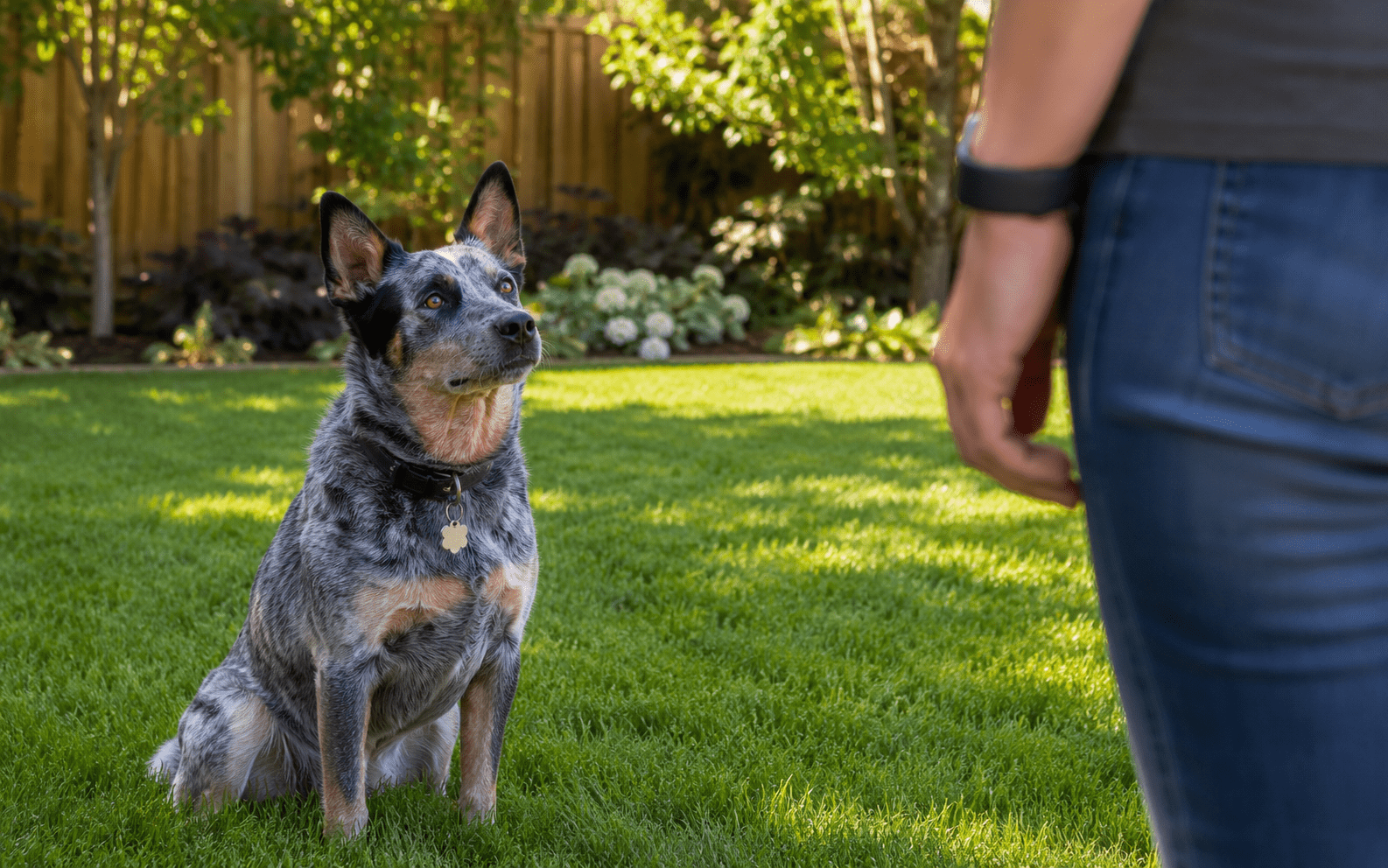
Australian Cattle Dogs are one of the most intelligent, energetic, and driven breeds you will ever own, which means training them is both rewarding and demanding. Knowing how to train a cattle dog comes down to consistency, mental stimulation, and channeling their natural herding instincts into structured, purposeful behavior.
Key Takeaways
- Australian Cattle Dogs need both physical exercise and mental challenges to remain focused and well-behaved.
- Positive reinforcement works best, but firm, consistent boundaries are equally important for this breed.
- Early socialization and obedience foundations prevent the most common behavioral problems in cattle dogs.
- Their herding instincts are hardwired, so redirecting those impulses rather than suppressing them produces better results.
- Short, frequent training sessions outperform long, infrequent ones for this breed’s attention span and energy levels.
- Professional support, whether in-home or structured, can fast-track progress significantly when you hit a wall.
Why Cattle Dogs Are Different From Other Breeds
If you have ever tried to train a Labrador and then switched to an Australian Cattle Dog, you already know the difference is significant. Cattle dogs were selectively bred for generations to work independently, make quick decisions, and keep moving for hours at a stretch. That intelligence is a double-edged sword. It means they learn fast, but it also means they get bored just as quickly, and a bored cattle dog will find its own entertainment, often at the expense of your furniture, your ankles, or your sanity.
According to the American Kennel Club, the Australian Cattle Dog ranks among the top breeds in working intelligence, meaning they can learn a new command in fewer than five repetitions. Compare that to the average dog, which takes 25 to 40 repetitions. That speed of learning puts a serious responsibility on you as the owner. If your dog picks up undesirable habits, they cement just as quickly as good ones.
This is also a breed that bonds intensely with one person or family. They are not easily distracted by strangers in the way that social breeds like Golden Retrievers are. That loyalty is a training advantage, because your praise and approval carry tremendous weight with them. But it also means they can develop protective behaviors if not socialized properly from an early age.
For owners wondering about how other working breeds compare in terms of trainability, checking out research on most trainable dog breeds provides useful context for where cattle dogs fit in the broader spectrum.
Building the Foundation: Obedience Before Everything Else
Before you address herding behavior, nipping, or advanced commands, you need a solid obedience foundation. These are the non-negotiables your cattle dog should learn in the first few months:
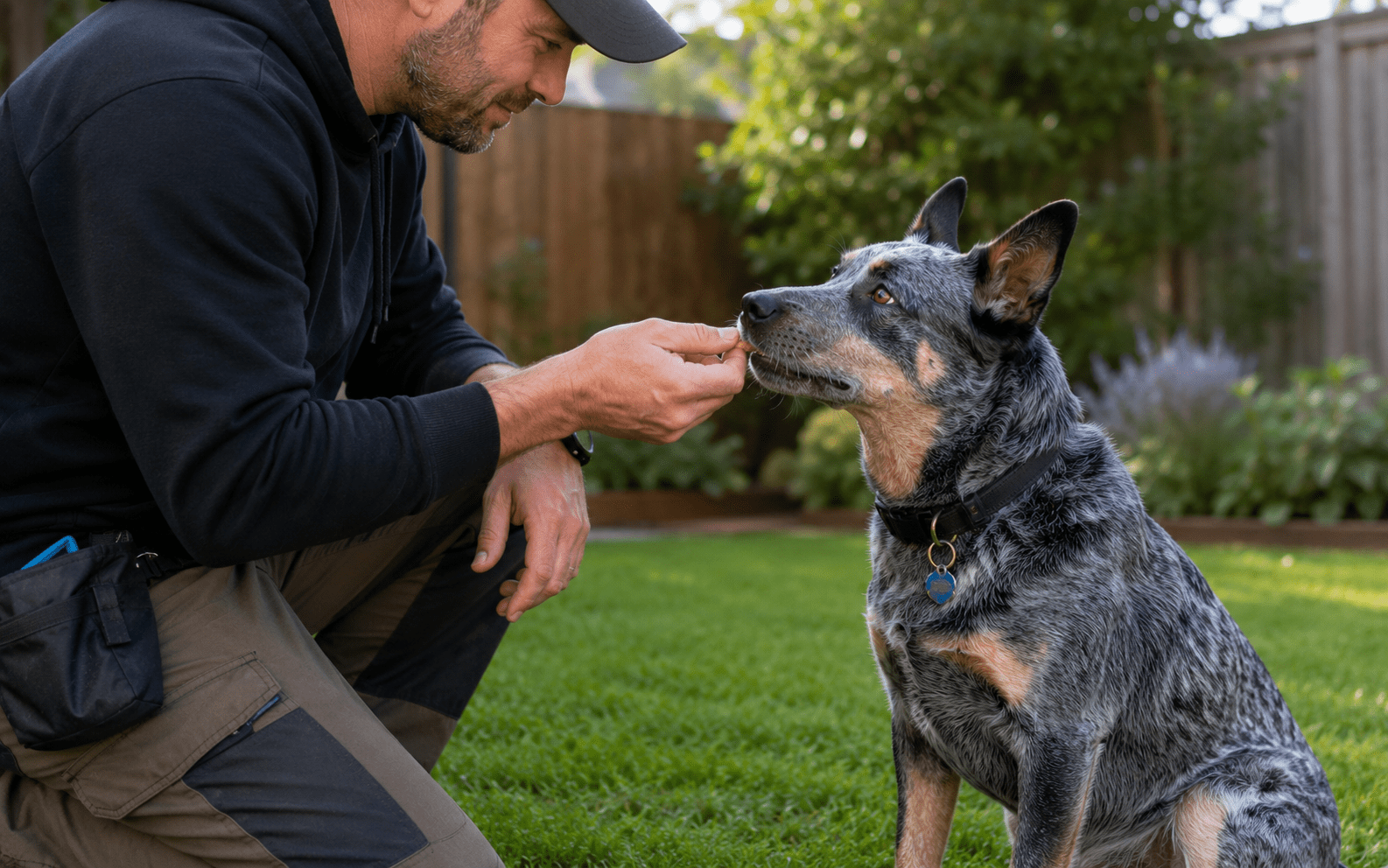
- Sit: Teaches impulse control and gets their attention on you.
- Stay: Critical for managing a dog that naturally wants to move and chase.
- Come (recall): Potentially life-saving, especially for a dog with high prey and herding drive.
- Leave it: Essential for redirecting their fixation on people, animals, or objects.
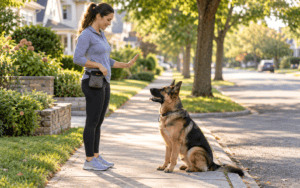
- Heel: Keeps them calm and structured on walks instead of pulling toward everything that moves.
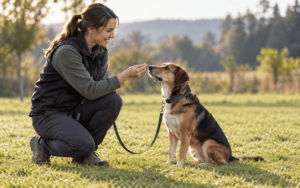
Start each session when your dog is slightly hungry, since food motivation runs high in this breed. Keep sessions to 10 to 15 minutes maximum. Cattle dogs hit a mental saturation point quickly, and pushing past it results in frustration and regression rather than progress. Three short sessions per day will yield better results than one long 45-minute block.
Reward timing is everything. The marker, whether a clicker or a verbal “yes,” must land within half a second of the desired behavior. Cattle dogs are precise thinkers. A delayed reward creates confusion about exactly which action earned the treat.
Enrolling in structured obedience dog training early in your dog’s life gives them a formal framework that carries over into every other aspect of their behavior.
Managing Herding Instincts Without Suppressing Them
Nipping at heels is the number one complaint cattle dog owners bring to trainers. It is not aggression. It is instinct. Your cattle dog is doing exactly what thousands of years of breeding designed them to do: move livestock by nudging and nipping at the heels. The problem is that your kids, your guests, and your other pets are not cattle.
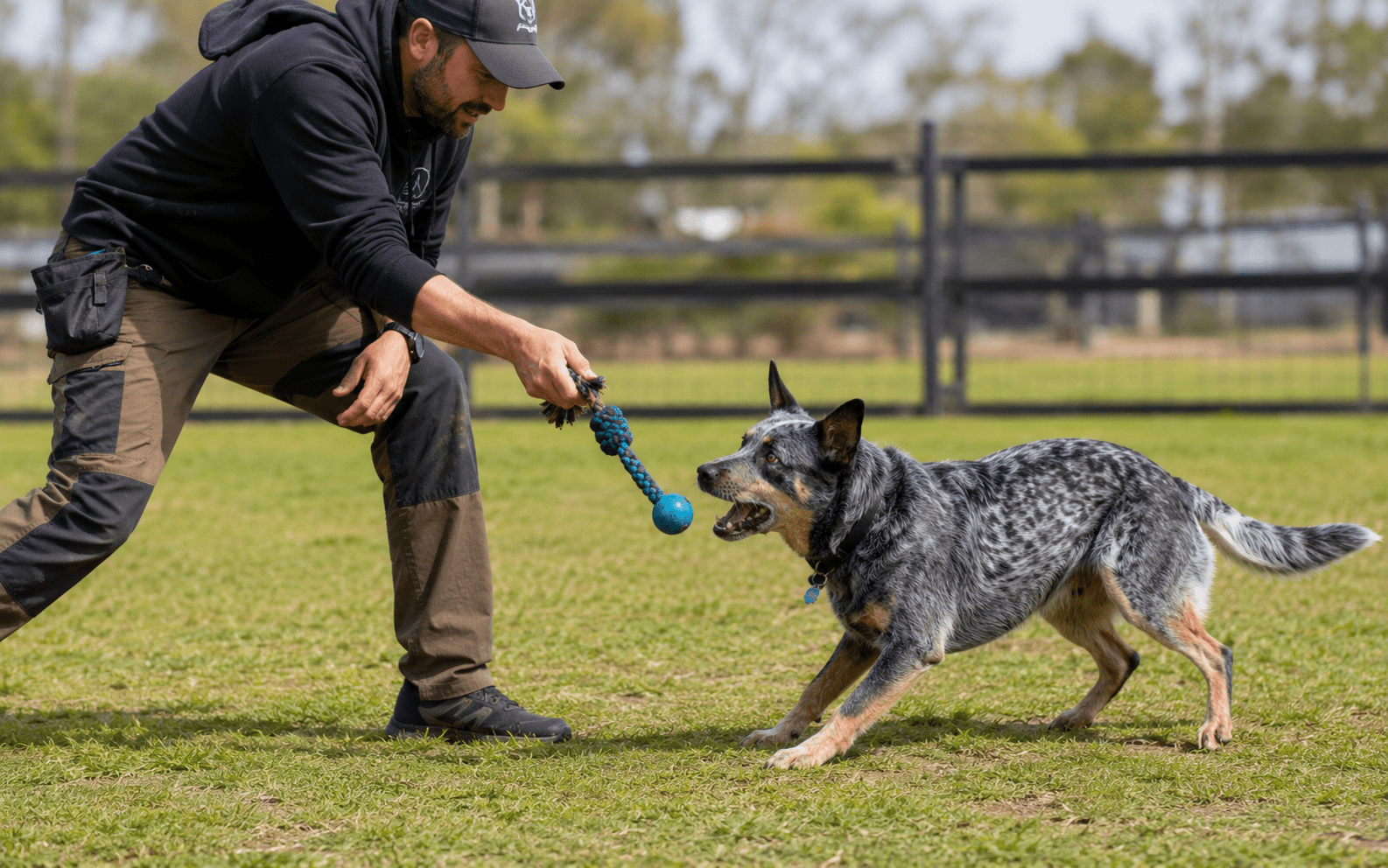
The most effective approach is not punishment. Punishing a hardwired behavior increases anxiety and often makes it worse. Instead, redirect. The moment your dog begins to fixate or circle, interrupt the behavior with a sharp “leave it” and immediately offer an alternative, such as a toy, a tug game, or a heel command. You are not removing the instinct. You are giving it a different outlet.
Structured herding classes exist across the United States and are a legitimate option if your dog’s herding drive is very intense. Many cattle dog owners find that giving their dog an actual herding outlet, whether with sheep, ducks, or even specialized herding balls, dramatically reduces inappropriate herding behavior at home.
For those with a Blue Heeler specifically, the resource on how to train a blue heeler dog goes deeper into the breed-specific nuances that distinguish Blue Heelers from other cattle dog varieties.
Socialization: The Window You Cannot Afford to Miss
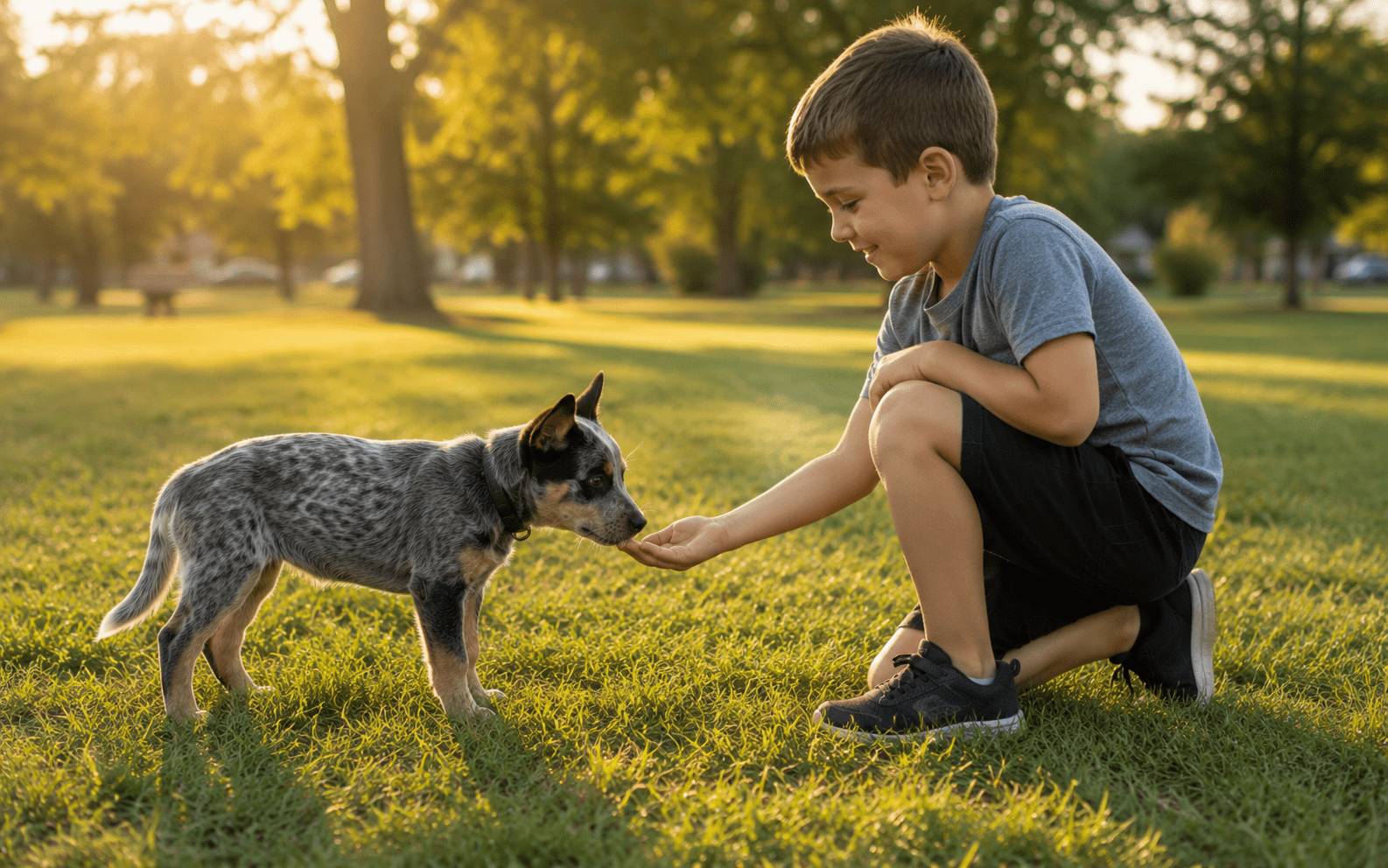
The socialization window for dogs runs from roughly 3 weeks to 16 weeks of age. During this period, every positive exposure your puppy has to new people, animals, surfaces, sounds, and environments reduces the likelihood of fear-based reactivity later in life. Cattle dogs that miss adequate socialization during this window frequently develop:
- Reactivity toward strangers or unfamiliar dogs
- Territorial behavior around the home
- Excessive barking at movement and vehicles
- Difficulty settling in new environments
If you adopted an adult cattle dog who missed early socialization, the situation is manageable but requires more patience and a slower desensitization approach. The goal shifts from prevention to rehabilitation.
Training Methods That Work Best for This Breed
Not every training methodology translates equally across breeds. Here is a breakdown of the most common approaches and how they perform with cattle dogs specifically:
| Training Method | Effectiveness for Cattle Dogs | Notes |
| Positive Reinforcement | Very High | Matches their intelligence and responsiveness |
| Clicker Training | High | Precise marker timing suits their fast learning |
| E-collar (with professional guidance) | Moderate to High | Useful for off-leash recall, must be introduced correctly |
| Purely Compulsive/Aversive | Low | Increases anxiety and shuts down the dog |
| Marker + Toy Reward | High | Works especially well for drive-heavy individuals |
| Group Classes | Moderate | Good for socialization, but may need supplemental work |
The takeaway is clear: cattle dogs respond best to methods that respect their intelligence and drive rather than suppress it. Harsh corrections create a dog that shuts down mentally, which defeats the entire purpose of working with such a responsive breed.
If you are making slow progress or dealing with specific behavioral challenges, private dog training long island offers one-on-one work that addresses your dog’s exact issues rather than following a generic group curriculum.
Exercise Requirements That Directly Affect Trainability
You cannot train a cattle dog that has not burned energy. A dog that receives 20 minutes of leash walking per day is a dog that will struggle to focus in any training session. The general recommendation for this breed is 60 to 90 minutes of vigorous activity daily, split into at least two sessions.
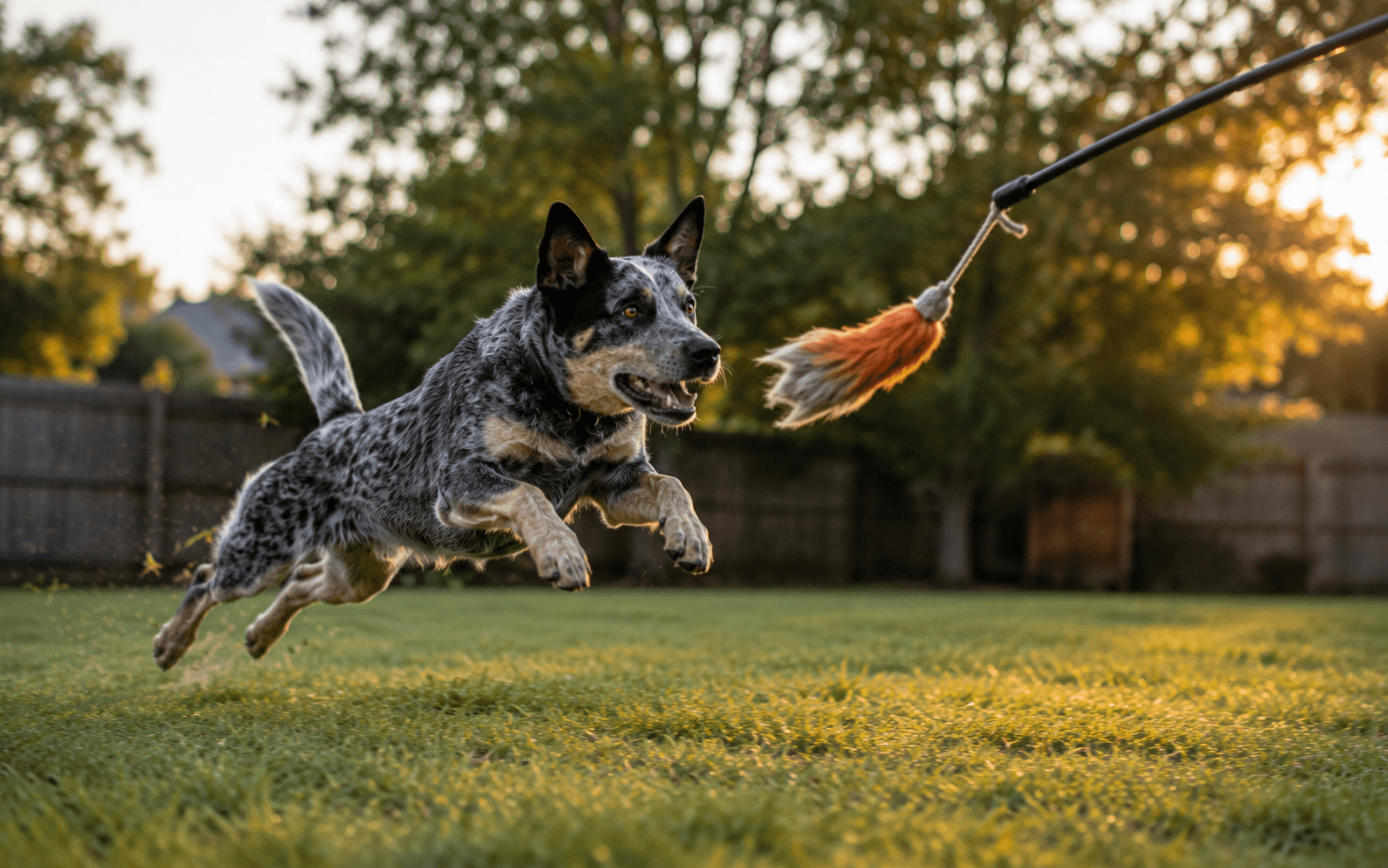
Effective exercise options include:
- Fetch with a structured retrieve: Burns physical energy while building impulse control.
- Agility: Combines physical output with mental problem-solving.
- Flirt pole: High-intensity, low-impact option for days when long runs are not possible.
- Scent work or nose work: Burns mental energy faster than most physical exercise.
- Off-leash trail running: Ideal for rural or suburban owners with safe access.
The cattle dog that gets adequate daily exercise is exponentially easier to train, and understanding the importance of regular exercise for your dogs physical and mental health demonstrates why this is absolutely foundational. Their focus improves, their reactivity decreases, and their willingness to settle indoors becomes genuine rather than forced.
When to Bring in Professional Help
There is no shame in admitting that knowing how to train a cattle dog from a book or a video only takes you so far. Some dogs have behavioral histories, trauma, or extreme drive levels that genuinely benefit from professional intervention. Recognizing that point early saves months of frustration and prevents reinforced bad habits from deepening.
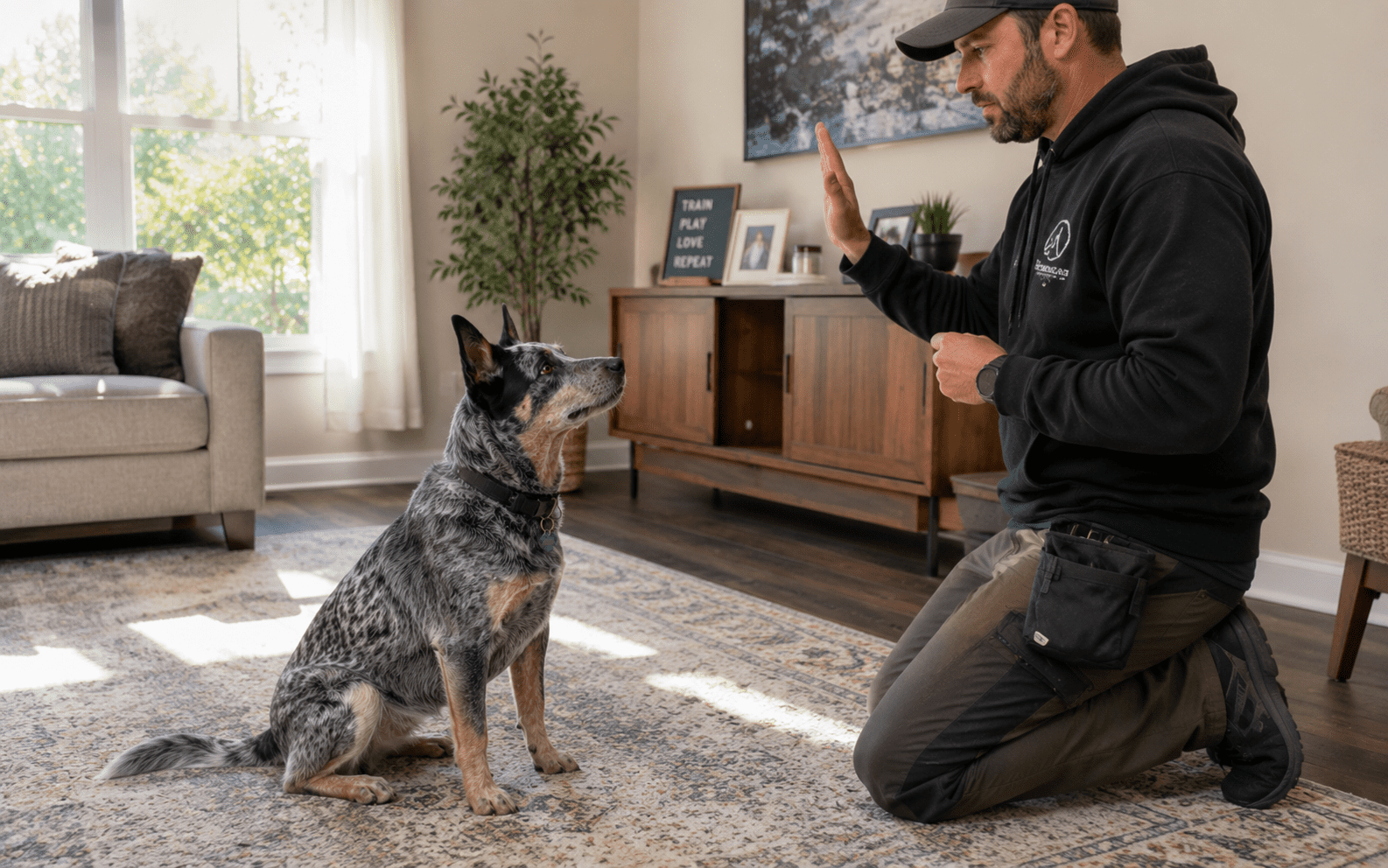
For owners who prefer structured immersive training, board and train long island provides an intensive residential option where your dog receives consistent, expert-led training throughout the day.
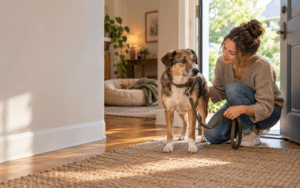
For owners who want to stay involved in every step of the process, in home dog training long island brings a professional trainer directly into your environment, which is particularly valuable for cattle dogs since many of their behavioral challenges appear specifically in the home context.
Things to Know
- Cattle dogs reach full maturity around 2 to 3 years of age, meaning adolescent behavior can persist longer than you expect.
- They are “velcro dogs” that prefer to be near their owner constantly, which can lead to separation anxiety if independence is not trained early.
- Mental fatigue is as valuable as physical fatigue for this breed. A 20-minute training session can calm them more effectively than a 30-minute run.
- Cattle dogs often test boundaries repeatedly, especially during adolescence. Consistency from every family member is non-negotiable.
- They are naturally suspicious of strangers, so controlled introductions with positive associations matter throughout their life, not just as puppies.
- Some cattle dogs are mouthy into adulthood if bite inhibition was not properly established as a puppy.
Ready to Transform Your Cattle Dog’s Behavior?
Don’t wait to address your Cattle Dog’s behavior challenges. Schedule a professional training consultation this week, whether that’s an in-home session, a board and train program, or private one-on-one work, and commit to a specific date rather than a vague future plan. The longer you wait, the more entrenched these habits become. When it comes to trusted, results-driven training, K9 Mania Dog Training is Long Island’s leading board and train program, home to the area’s best dog behaviorists. Whatever behavior issue you’re facing, we can help. Visit K9 Mania Dog Training today and give your Cattle Dog the next decade it deserves.
Frequently Asked Questions
At what age should I start training my cattle dog?
The best time to start training a cattle dog is as early as 8 weeks of age.
Puppies are absorbing information constantly from the moment they arrive home, and early training takes advantage of the socialization window and shapes behavior before bad habits form. Basic commands, crate training, and leash manners can all begin in the first week you bring your puppy home.
How do I stop my cattle dog from nipping at people’s heels?
Redirect the behavior immediately and consistently using a “leave it” command followed by an alternative activity.
Punishment rarely works for instinct-driven behavior and can increase anxiety. Instead, interrupt the fixation early, before it escalates, and redirect into a toy, tug, or structured command. Consistency across all family members is essential because cattle dogs will test every individual separately.
Are cattle dogs good for first-time dog owners?
Cattle dogs can work for first-time owners, but they require significantly more commitment than average breeds.
Their high intelligence, energy, and drive mean that a casual approach to training and exercise leads to serious behavioral problems. First-time owners who research the breed thoroughly and commit to professional support from the start have success, but those expecting a low-maintenance companion typically struggle.
How long does it take to fully train a cattle dog?
Basic obedience can be established within 8 to 12 weeks, but ongoing reinforcement is a lifelong commitment with this breed.
Cattle dogs are intelligent enough to learn commands quickly, but they also probe boundaries consistently throughout their lives. Treating training as a one-time project rather than an ongoing practice is the most common mistake owners make with this breed.
Can cattle dogs live in an apartment or urban setting?
Cattle dogs can adapt to urban settings if their exercise and mental stimulation needs are met without compromise.
Living in a city or apartment does not automatically disqualify you from owning a cattle dog, but it significantly raises the daily commitment required. Without a yard, you must be intentional about providing structured exercise, enrichment, and training every single day to keep the dog balanced and manageable.
Read Related Articles
How Hard Are Bullmastiffs to Train
The Bottom Line on How to Train a Cattle Dog
Knowing how to train a cattle dog is ultimately about respecting what the breed was built to do and providing structured outlets for that drive. These dogs do not respond well to neglect, inconsistency, or under-stimulation. They thrive with owners who are engaged, patient, and willing to put in daily work.
The tools are available to you: sound puppy training techniques, professional support options, and a breed that is genuinely eager to work with you once trust is established. Start with the obedience fundamentals, prioritize socialization early, match their exercise needs daily, and bring in professional help the moment you feel out of your depth. Your cattle dog has the potential to be an exceptional companion.