If you want to know how to teach a dog to heel, the process starts with guiding your dog into position beside your leg using a treat, marking the moment they hold it correctly, and rewarding consistently until the behavior becomes automatic. With short daily sessions, a clear cue word, and gradual increases in distance and distraction, most dogs build a reliable heel within a few weeks.
Heel is one of the most practical skills you can give your dog. It creates real control on walks and builds the kind of attention that makes almost everything else easier to manage.
Things to Know
Before you start, keep these basics in mind:
- “Heel” means your dog’s shoulder lines up beside your left leg (or whichever side you pick, just stay consistent)
- High-value treats like small pieces of chicken, cheese, or hot dog work better than dry kibble when you are building a new behavior
- Keep sessions between 5 and 10 minutes to hold your dog’s attention
- Marking the right moment with “yes” or a clicker tells your dog exactly what earned the reward
- Your dog should be succeeding roughly 80 percent of the time before you increase difficulty
- Proofing the behavior in new environments always comes after it is solid at home
📌 Heel and leash manners go hand in hand. If your dog is already pulling, read how to stop leash pulling in dogs before adding heel work on top of it.
What Heel Actually Means
A lot of owners use “heel” and “walk nicely” like they mean the same thing. They do not.
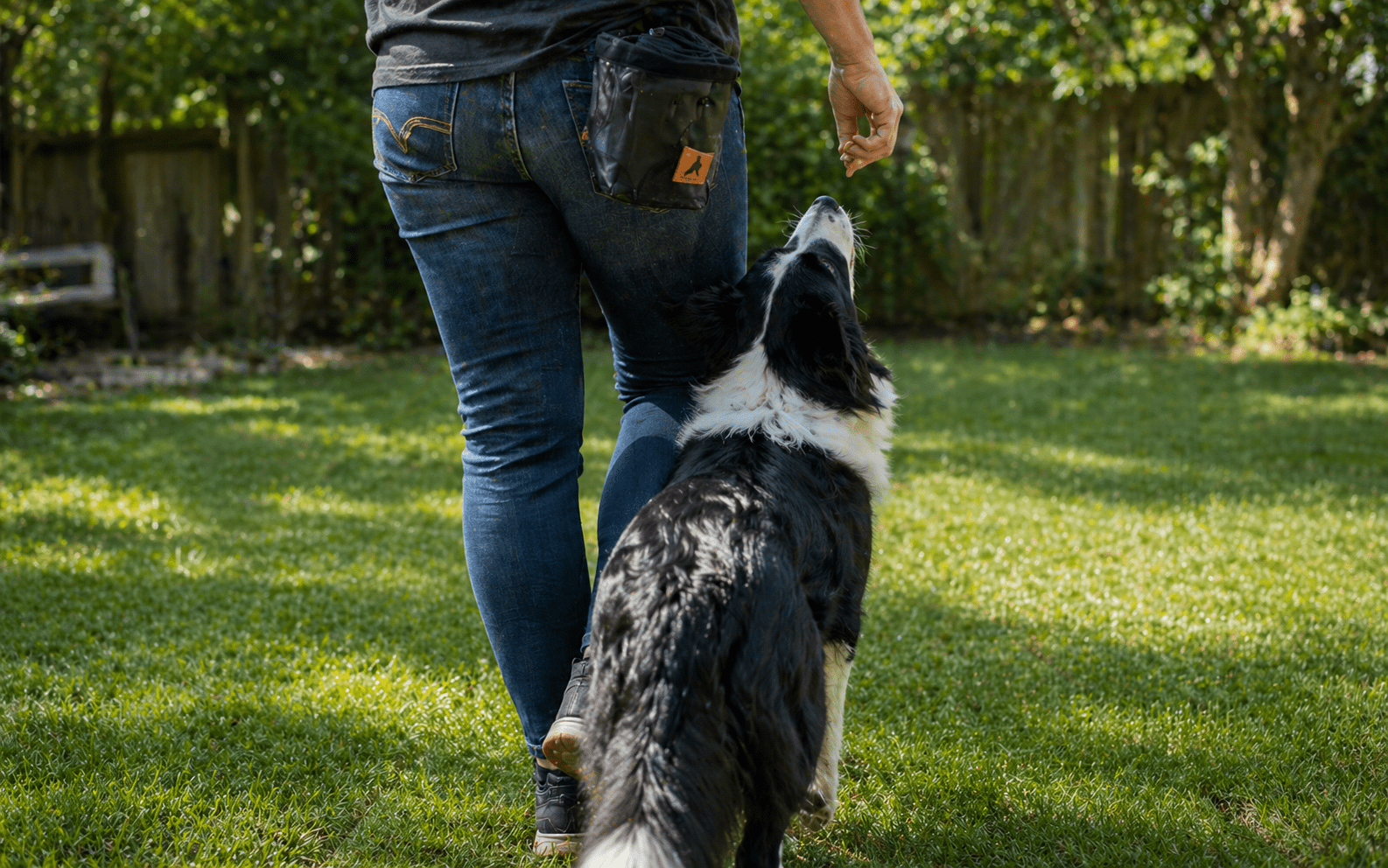
Walking nicely means your dog is not dragging you. Heel is more specific. When you command a dog to heel, you are asking your dog to walk right beside you, match your pace, keep their shoulder at your leg, and check in with you as you move.
It is an active, focused position, not just a general looseness on the leash. Your dog is paying attention to you, not sniffing the ground or fixating on something across the street.
This distinction shapes how you train and what you reward. You are building an exact behavior with a clear picture of what right looks like.
📌 Want to understand what full leash control looks like from the ground up? Read how to train dog to walk on leash for the foundational steps that set heel training up for success.
Why Heel Training Is Worth the Effort
Heel is not just a competition skill. There are solid practical reasons to invest time in it:
- It gives you real control near traffic, in crowds, and around other animals
- It builds impulse control that carries into other behaviors
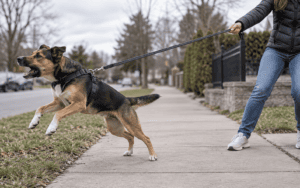
- It reduces pulling, lunging, and reactive responses because your dog is focused on you
- It makes your dog easier to handle at the vet, the groomer, or anywhere space is limited
- It strengthens the communication and trust between you and your dog
Dogs that know how to heel tend to be calmer overall. The structure gives them something clear to do, and that reduces the anxiety and frustration that often drives bad leash behavior.
📌 Heel fits into a bigger picture of obedience. Take a look at these essential dog training commands to see where it belongs alongside the other skills every dog should have.
How to Teach a Dog to Heel: Step by Step
Here is the full process broken into stages you can work through one at a time.
Step 1: Build Focus Before You Add Movement
Your dog cannot hold heel position if they are not paying attention to you. Before adding any movement, spend a few reps just building eye contact.
Stand still, hold a treat near your face, and wait for your dog to look at you. Mark it the moment they do and reward. Repeat until it happens quickly and reliably. This step is not optional. It is the foundation that everything else depends on.
Step 2: Lure Into Position
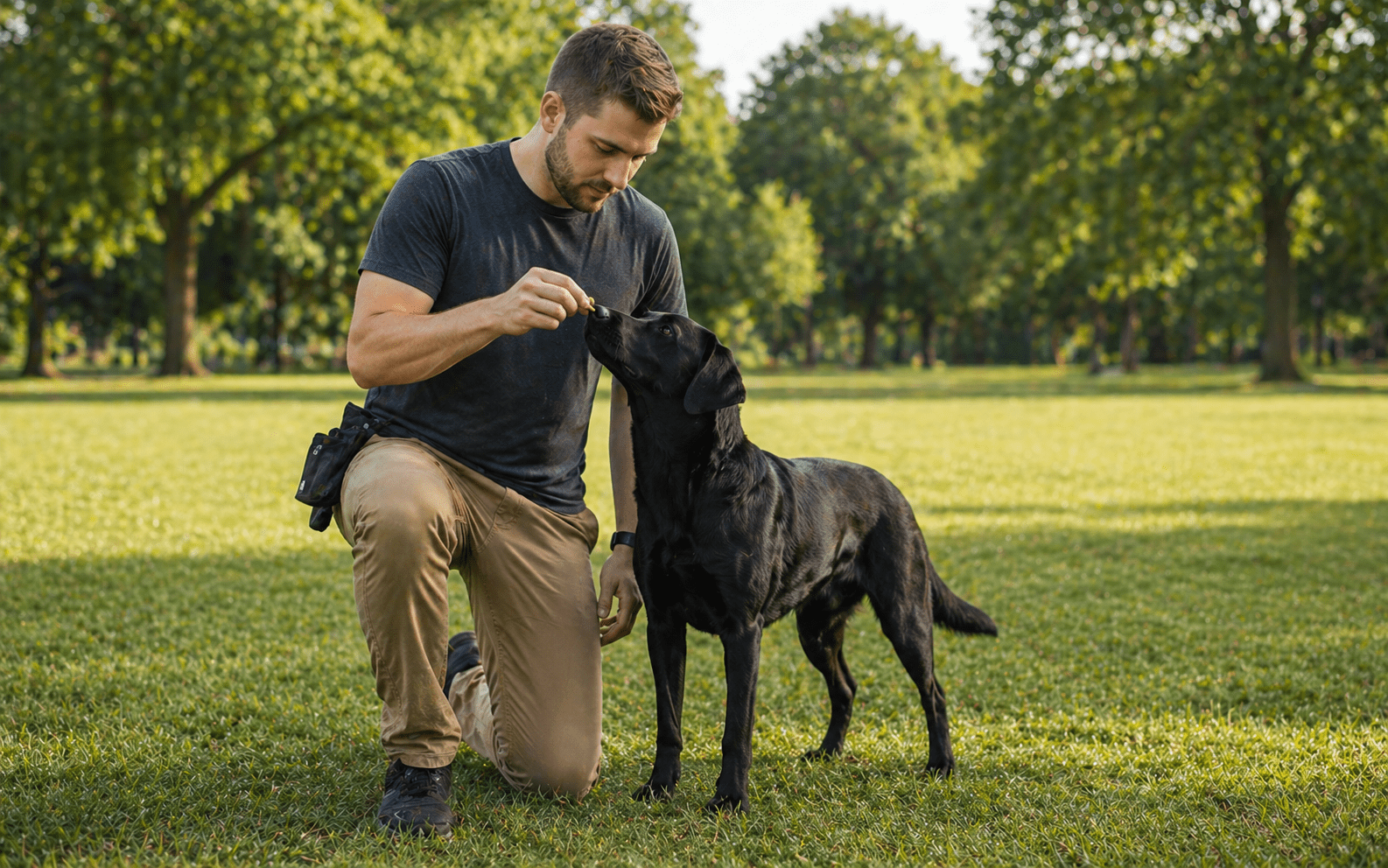
Hold a treat in your left hand at your dog’s nose level. Guide them to your left side with their shoulder lined up beside your leg. Let them follow the treat into position.
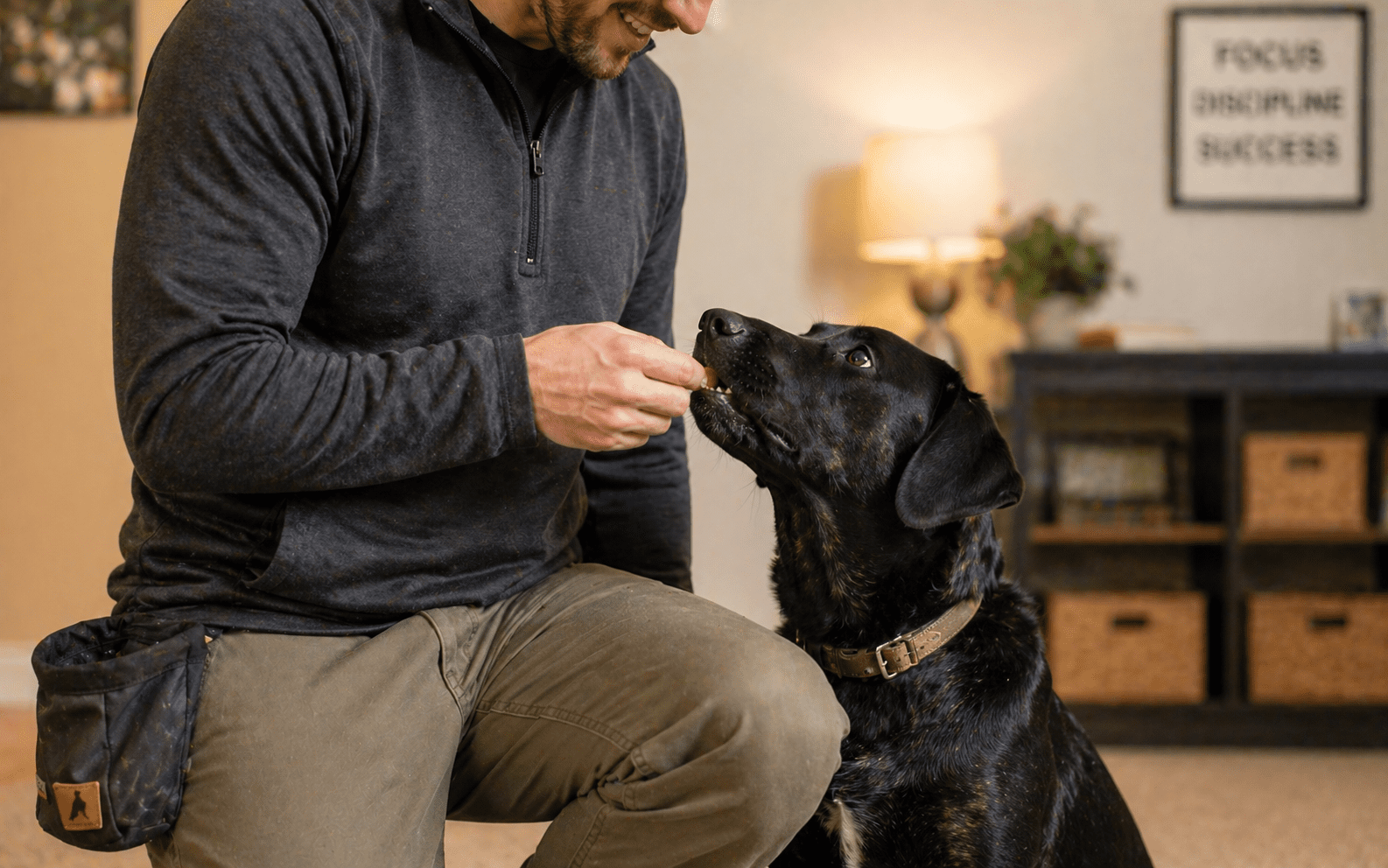
Once they arrive, do not hand over the treat immediately. Hold the position for a second or two, then mark and reward. You want your dog learning that being in that specific spot is what earns it.
Step 3: Mark and Reward Precisely
Timing matters more than most owners realize. The mark has to happen the instant your dog is in the correct position, not after they have already started moving away from it.
Use a word like “yes” or a clicker. Practice this on its own so your timing is sharp before you ask for longer duration.
Step 4: Add Movement Gradually
Once your dog holds position while you are both standing still, take one step forward. If they stay with you, mark and reward right away.
Build from one step to three, then five, then ten. Add steps only when your dog is holding position consistently at the current level. If they drift, stop, reset, and lure them back before you keep going.
Step 5: Add the Cue Word
Once your dog is reliably following the lure into position, say “heel” right before you begin moving. Say it once, calmly, and give it a moment to land. Over time, your dog connects the word to the action and starts responding to the cue itself.
Step 6: Fade the Lure
Use an empty hand in the same guiding motion and reward from your pocket or other hand after your dog responds correctly. This is how you get a dog that heels because they understand what is expected, not just because they can smell something.
The Best Luring Technique
Luring works fastest when you get a few details right.
Hold the treat between your thumb and fingers, not in a fist. You want your dog to smell it and track it, not grab at it.
Keep it at nose level. Too high and your dog will jump or sit. Too low and they lose interest.
Move smoothly. Jerky or fast movements make your dog lose the position and start chasing instead of following.
Luring mistakes to avoid:
- Giving the treat before the dog is actually in position
- Holding the treat too high and causing the dog to jump or sit
- Moving too fast before the dog understands the position
- Keeping the food visible too long without fading the lure
📌 Luring is one of several dog training techniques that work well together. Knowing when to use which approach speeds up your results.
Training Methods Side by Side
Different dogs respond to different approaches. Here is how the most common methods compare:
| Method | Best For | Main Challenge |
| Lure and Reward | Beginners, puppies, food-motivated dogs | Fading the food lure takes patience |
| Clicker Training | Precise timing, fast learners | Requires good coordination |
| Leash Pressure | Low food drive dogs | Needs experienced handling |
| Shaping | Confident, independent thinkers | Slower progress in early stages |
For most owners starting out, lure and reward paired with a marker gives your dog the fastest, clearest feedback on what they are doing right.
How to Handle a Stubborn Dog
If your dog is ignoring you, drifting, or refusing to engage, here is where to look first.
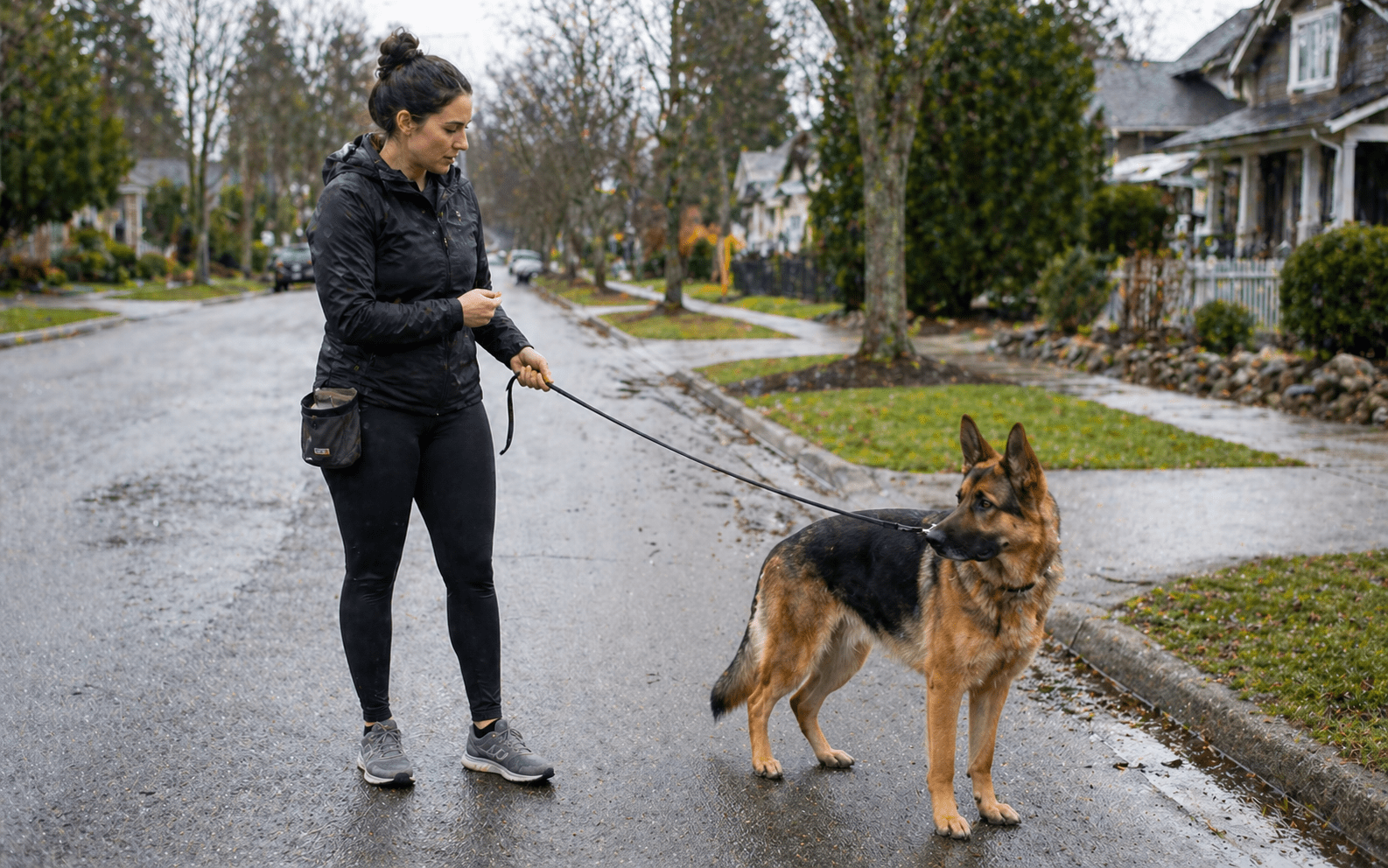
Upgrade your treats. A dog that does not care about what you are offering has no reason to work. Switch to something they genuinely get excited about.
Shorten your sessions. A dog that mentally checks out after two minutes is telling you the session is too long. Stop before they quit, not after.
Lower the distraction level. If you are practicing on a busy sidewalk before your dog can heel in your living room, you are skipping steps. Go back somewhere quiet and rebuild.
Slow down between steps. Jumping to longer distances or harder environments before the behavior is solid is the most common reason progress stalls.
If you are working through how to teach a dog to heel with a dog that has been resistant for a while, getting a trainer involved will get you unstuck far faster than troubleshooting on your own. Private dog training Long Island gives you hands-on, personalized help for exactly this kind of situation.
Common Problems and How to Fix Them
Most heel problems come down to moving through the steps too fast or practicing in an environment that is too hard too soon:
| Problem | Likely Cause | Fix |
| Dog forges ahead | Too much freedom too soon | Reward more often, shorten the distance |
| Dog lags behind | Anxious or uncomfortable | Slow your pace, use higher-value treats |
| Dog keeps looking away | High distraction, low engagement | Return to a quieter setting |
| Dog only heels with treat visible | Lure not faded properly | Use empty hand motion, reward from pocket |
| Dog breaks position at stops | Stopping not trained separately | Practice stops and reward the held position |
Proofing Heel in the Real World
Once your dog heels well at home, test it in more challenging places. This is called proofing, and it is what makes the behavior reliable everywhere, not just in your living room.

Work through locations from easiest to hardest:
- Indoors with no distractions
- Backyard or quiet parking lot
- Calm neighborhood street
- Busy sidewalk or area with other dogs
At each level, reward more often than you think you need to. Your dog is processing new information. Give them a clear reason to keep focusing on you.
For faster progress in a structured setting, board and train Long Island puts your dog in full-time training across many environments every day, which accelerates proofing significantly.
If you want expert support right at home where real distractions already exist, in home dog training Long Island brings a trainer directly to you.
Now That You Know How to Teach a Dog to Heel, Here Is Your Next Move
Teaching your dog to heel takes consistency, the right technique, and a willingness to work through the steps at your dog’s pace. K9 Mania Dog Training is Long Island’s leading board and train facility, and we are ready to help with every dog behavior challenge you face, including heel training. Whether your dog is just starting out or has been struggling with leash manners for years, our experienced trainers know how to get real results. We offer board and train programs, private sessions, and in-home training to fit your dog’s needs and your schedule. Do not let another frustrating walk go by. Visit K9 Mania Dog Training and let us help you build the dog you always wanted.
You May Also Want to Read
Frequently Asked Questions: How to Teach a Dog to Heel
What is the best way to train a dog to heel?
The lure-and-reward method is the most effective starting point for most dogs. Hold a treat at nose level, guide your dog into position beside your leg, and reward when they hold it correctly. Pair this with a clear marker word and short sessions. It gives your dog fast, clear feedback and builds the behavior without confusion.
What is the best “luring” technique?
Hold the treat between your fingers at your dog’s nose level and guide them into position with a smooth, steady motion. Avoid holding it too high, which causes jumping or sitting, or too tight in your fist, which makes it hard for your dog to track. Once the behavior is solid, fade the food and reward from your pocket instead.
How do you teach a stubborn dog to heel?
Start in the lowest-distraction environment possible and use treats your dog genuinely gets excited about. Most stubborn dogs disengage because the reward is not motivating enough or the training environment is too hard too soon. Shorten sessions, upgrade your treats, and build the behavior somewhere quiet before moving outside.
What is the point of teaching a dog to heel?
Heel gives you real control on walks and builds focus and impulse control that transfers into other behaviors. It is not just for competition. A dog that walks in heel position is easier to manage near traffic, around other dogs, and in any tight space. It also reduces pulling and reactive behavior because your dog is checking in with you.
Why won’t my dog walk to heel?
Usually because the behavior was not built in a low-distraction environment first. Dogs that skip the quiet indoor and backyard stages fall apart outside because the skill was never fully learned. Other common reasons include sessions that run too long, treats that are not motivating, and moving through the training steps before the dog is ready.
What does it mean when you command a dog to heel?
You are asking your dog to walk beside you with their shoulder at your leg, matching your pace and staying focused on you. It is different from loose-leash walking. Heel is an active, structured position that requires real attention from your dog and is trained through clear steps, consistent rewards, and gradual increases in difficulty.