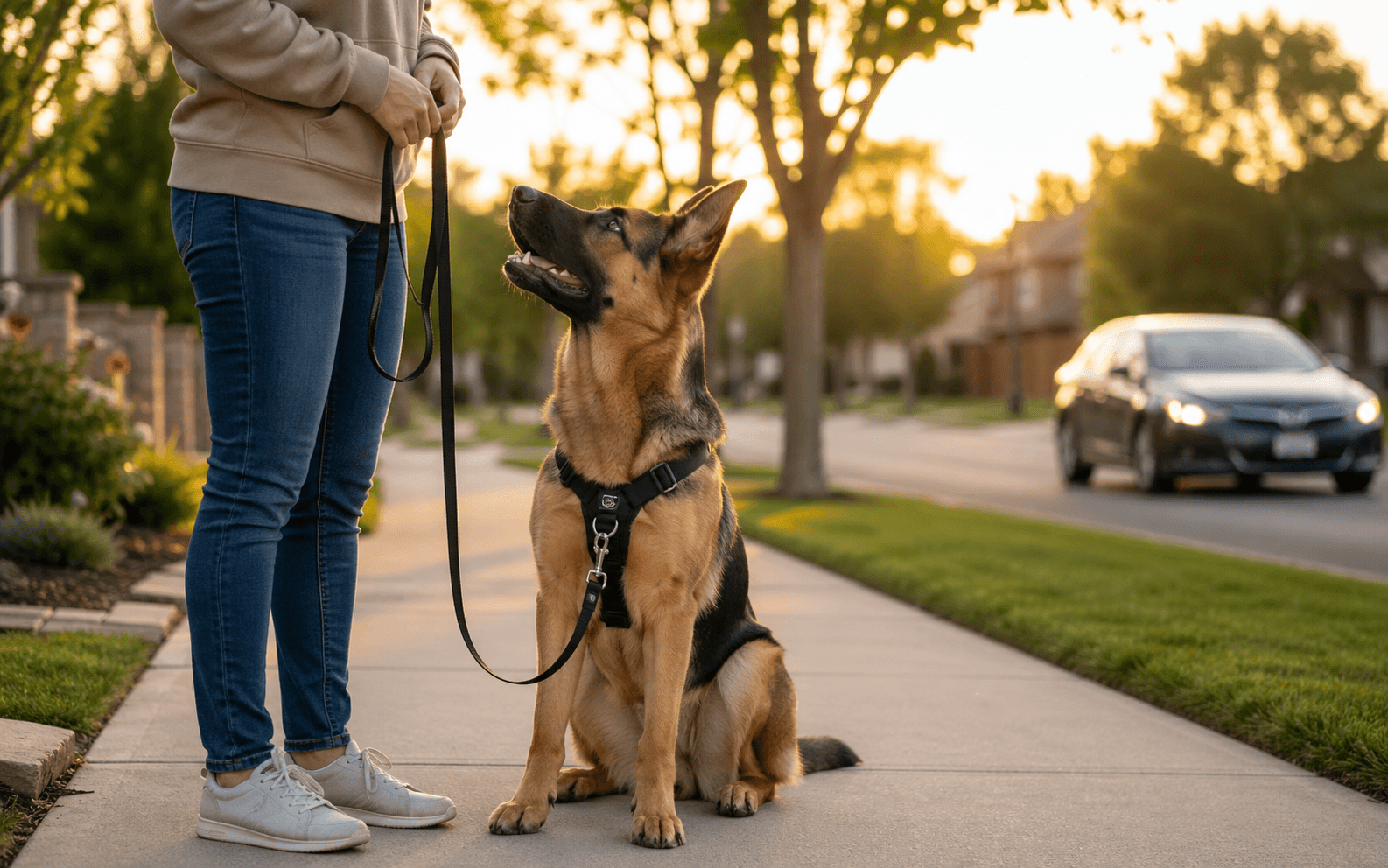
To stop a dog from chasing cars, you need to manage their environment, build a strong recall, and reward calm behavior near moving vehicles every single time. Most dogs chase because of natural prey drive, so the goal is to redirect that drive into focused obedience instead of dangerous lunging.
Car chasing is one of the riskiest habits a dog can develop because it puts them directly in the path of moving traffic and often catches owners off guard. The good news is that with the right plan and steady practice, you can teach almost any dog to ignore cars and stay safely by your side.
Whether your pup is a young Labrador full of energy or an older shepherd that suddenly fixates on tires, the steps below will help you take back control. Keep reading to learn what triggers the chase, what tools work best, and how to build calm focus that actually lasts.
What Makes Dogs Want to Chase Cars
Most dogs do not chase cars to be naughty. They chase because of instinct, excitement, or fear. Understanding the cause helps you choose the right training method instead of guessing your way through it.
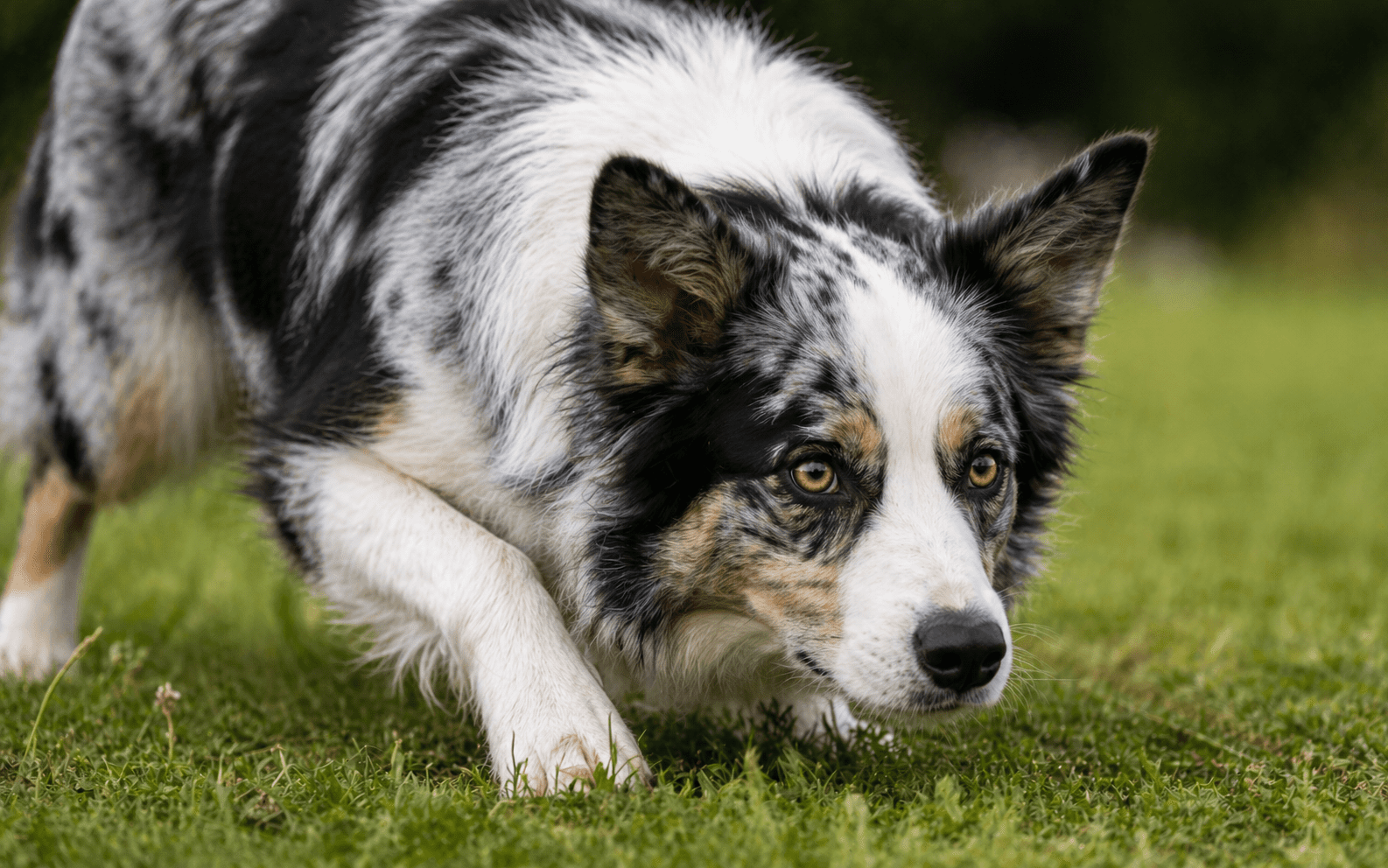
Common reasons include:
- Strong prey drive in dogs that triggers chasing of fast moving objects
- Boredom or pent up energy with no healthy outlet
- Fear or reactivity toward loud engines and tires
- Lack of exposure to traffic during early puppy socialization
- Reinforced behavior from past chases that felt rewarding
Once you spot the trigger, you can match the training to the dog and skip methods that will never address the real issue.
The Core Training Steps That Actually Work
Stopping car chasing takes more than yelling “no” from the sidewalk. You need a layered plan that builds focus, control, and trust over weeks of practice.
Build a Reliable Recall First
A solid recall is your safety net. If your dog ever slips off leash near a road, recall is what brings them back before something terrible happens.
Start in a quiet yard with no distractions and reward every successful return with high value treats. Slowly add distance, then mild distractions like toys or other people. For a full breakdown, check out our guide on how to teach dog to come reliably even with distractions present.
Use Distance to Stay Under Threshold
Every dog has a distance where they notice a car but do not yet react. Trainers call that the threshold.
Train at that distance first, never closer. Stand far enough from a road that your dog can see traffic but still take treats and follow cues. Once they stay calm there, move 5 to 10 feet closer over several short sessions.
Reward Calm Behavior Around Moving Vehicles
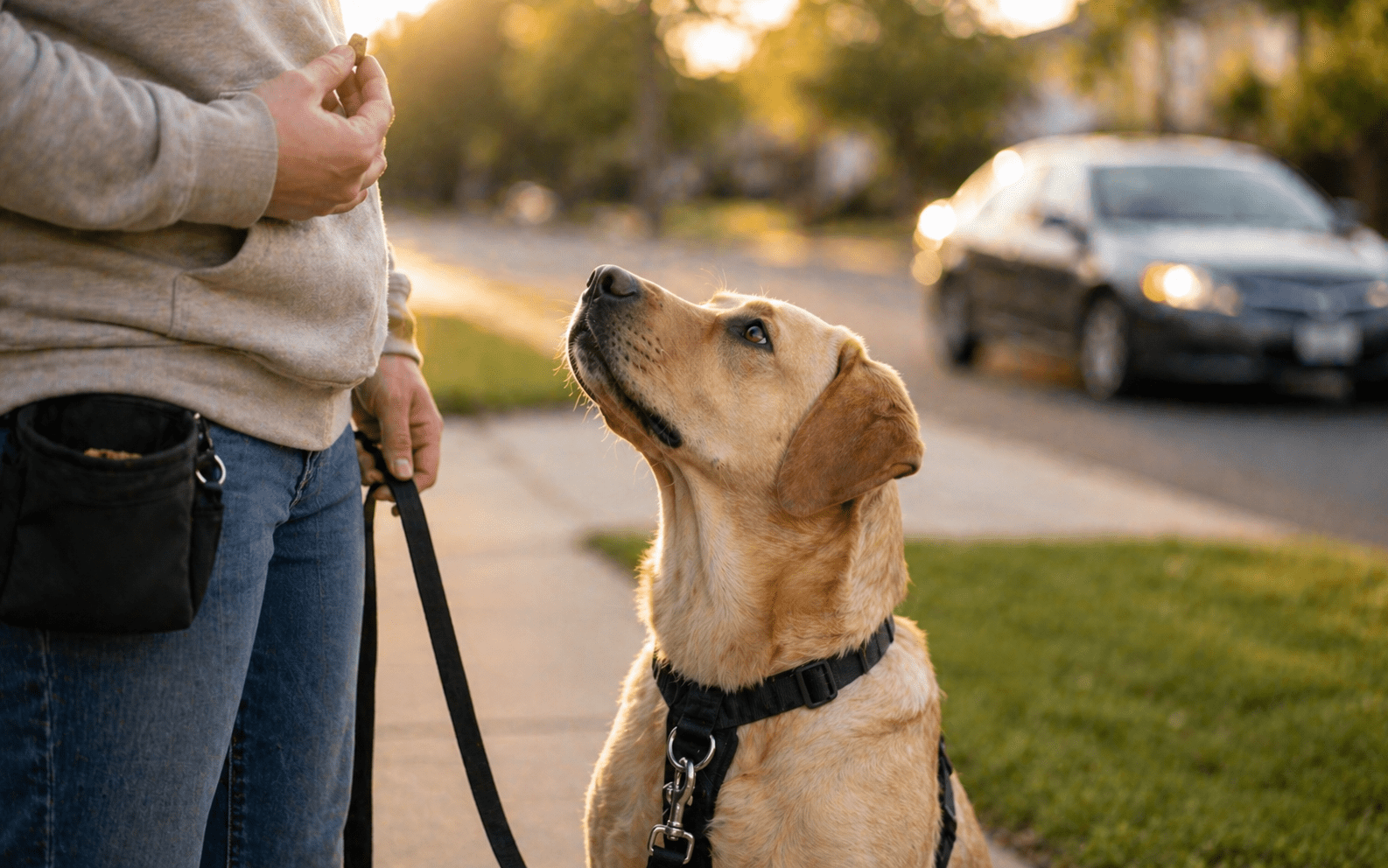
Catch your dog being calm and pay them well for it. If a car passes and they look at you instead of lunging, treat fast.
This is called “look at that” training, and it teaches dogs that cars predict good things from you, not chase opportunities to act on.
📌 Practical tip: Use real chicken, cheese, or hot dog pieces during early roadside work. Boring kibble will rarely beat the thrill of a moving car for a driven dog.
Best Tools and Methods to Stop Car Chasing
Different dogs respond to different tools. Here is a quick comparison of the most common options owners reach for.
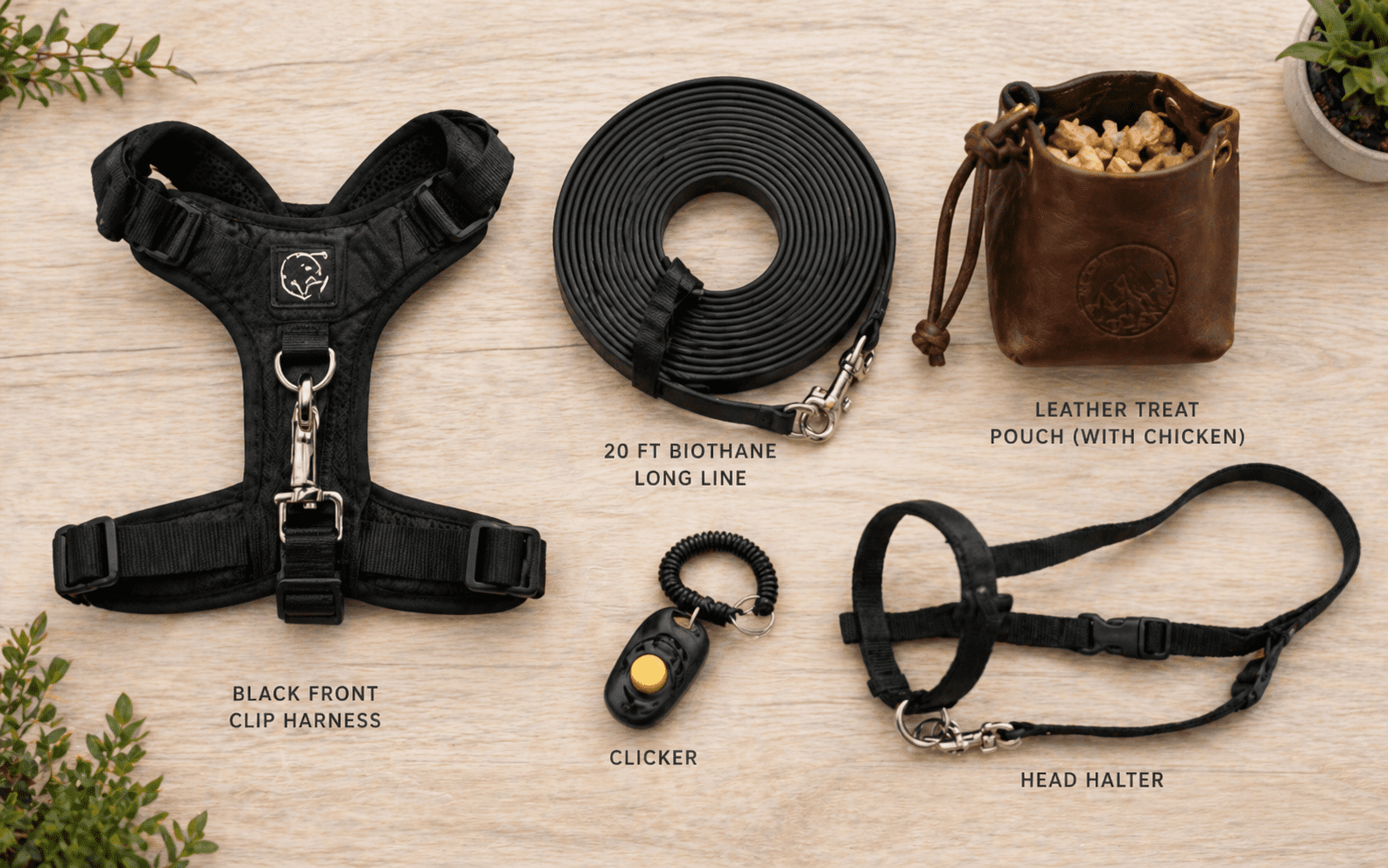
| Tool or Method | Best For | Pros | Cons |
| Long line leash (15 to 30 ft) | Building recall safely | Allows freedom while keeping control | Can tangle if not managed |
| Front clip harness | Reducing pulling and lunging | Redirects forward motion gently | Not a fix on its own |
| Treat pouch with high value rewards | Daily reinforcement | Builds positive association fast | Requires consistent timing |
| Clicker | Marking calm behavior | Very precise communication | Needs charging up first |
| Head halter | Strong pullers and large breeds | Gives gentle head control | Some dogs need time to adjust |
The best setup is usually a long line, a front clip harness, and a loaded treat pouch. Most owners find this combination gives them control without leaning on harsh corrections that can backfire.
Why Reactive Dogs Need a Different Approach
If your dog barks, growls, or lunges at cars, the chase may actually be rooted in fear or frustration, not just prey drive. These dogs need a slower plan focused on calming the nervous system before adding obedience cues.
Working with a reactive dog means starting much farther from traffic, keeping sessions short, and avoiding too many cars at once. For more on this, read our guide on how to train reactive dog on leash using positive methods that build trust.
📌 Practical tip: Walk during off peak traffic hours like early morning or late evening when first starting out. A quiet street with one car every few minutes is far easier to train on than a busy intersection.
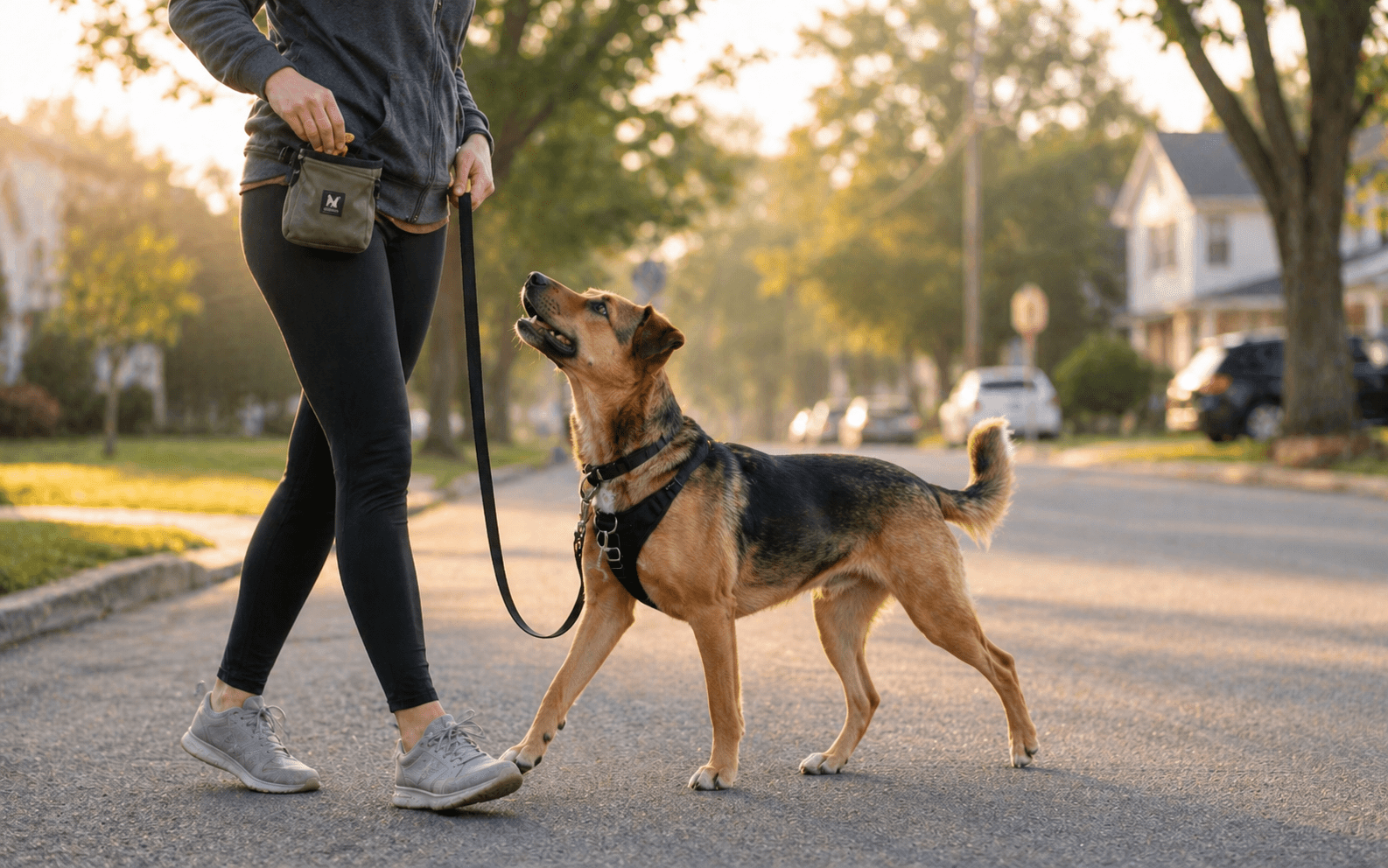
Things to Know Before You Start Training
Before your first session, keep these key points in mind so you avoid setbacks and stay safe.
- Never let your dog off leash near a road until recall is rock solid
- Punishing the chase often makes anxiety worse and slows progress
- Consistency from every family member matters more than fancy tools
- Tired dogs train better, so add daily exercise and mental enrichment
- Progress is rarely a straight line, and bad days are completely normal
- Small wins like a calm glance toward a car deserve big rewards
- Always keep your dog on the side of you that is farthest from the road
These small mindset shifts make the difference between a dog that improves in weeks and one that struggles for months on end.
How to Stop a Dog from Chasing Cars Safely Outdoors
Real world training is where most owners get stuck. The yard feels manageable, but the sidewalk feels chaotic. This step by step plan helps you bridge that gap with confidence.
| Step | What You Do | Goal |
| 1. Start at a distance | Sit 30 plus feet from a quiet road | Dog notices cars but stays calm |
| 2. Reward attention | Pay every time your dog looks at you | Build voluntary check ins |
| 3. Add a verbal cue | Say “watch me” before each car passes | Replace chase with eye contact |
| 4. Decrease distance | Move 5 feet closer per successful session | Build tolerance gradually |
| 5. Practice on walks | Use short, structured walks near roads | Generalize the new skill |
| 6. Proof the behavior | Train near busier streets and bike paths | Test under real conditions |
Move at your dog’s pace, not the calendar’s. If you push too fast and they react, just go back one step and try again the next day.
📌 Practical tip: Keep early sessions to 5 or 10 minutes max. Short and successful beats long and frustrating every single time.
When to Get Professional Help
Some dogs need more than home training, especially if the chase is intense, sudden, or paired with aggression. A qualified trainer can spot patterns you may miss and give you a plan tailored to your dog.
Consider professional help if:
- Your dog has already had a close call with a vehicle
- The behavior keeps getting worse despite weeks of consistent work
- You feel unsafe walking your dog near roads
- Multiple dogs in your home are copying the chase
Options include board and train Long Island programs that immerse your dog in structured learning, in home dog training Long Island sessions that work where the problem actually happens, or private dog training Long Island lessons for one on one coaching.
What Research Says About Chase Behavior in Dogs
Chase behavior is part of what scientists call the predatory motor pattern, a sequence that includes orient, eye, stalk, chase, and grab. Chasing is hardwired into many breeds, especially herders, sighthounds, and terriers, which is why training works best when it redirects the drive rather than tries to erase it.
Studies on canine behavior also show that early socialization to traffic and consistent positive reinforcement reduce the long term risk of chronic chasing. This backs up what professional trainers see in real world practice every day.
Putting It All Together: How to Stop a Dog from Chasing Cars for Good
Learning how to stop a dog from chasing cars is not about quick fixes. It is about building a calmer, more focused dog through daily practice, smart tools, and patient handling. When you understand the cause, train under threshold, and reward the right choices, even strong chasers can learn to walk past traffic without flinching.
If you have been struggling and want expert support, K9 Mania Dog Training is the leading board and train provider on Long Island. Our team specializes in helping dogs of every breed and background overcome serious behavior issues like car chasing, leash reactivity, and prey driven lunging.
Whether your dog needs board and train, in home sessions, or private lessons, we tailor every program to your goals. Trust K9 Mania Dog Training to give you a safer, calmer, and more confident dog. Visit our website to start your dog’s transformation today.
Explore Related Articles
Why Do Dogs Run Away – Learn the common reasons dogs run away, including curiosity, fear, boredom, and lack of proper recall training.
How to Train a Hyperactive Dog – Discover effective ways to manage high-energy dogs through structured exercise, mental stimulation, and consistent training routines.
Playing Tug of War with Dog – Understand how structured tug play can improve obedience, build impulse control, and strengthen your bond with your dog.
FAQs About How to Stop a Dog from Chasing Cars
How do I get my dog to quit chasing cars?
Start by managing the environment so chasing is impossible, then build a strong recall and reward calm behavior near roads. Use a long line, high value treats, and gradual exposure at safe distances. Consistency over several weeks is what finally locks in the new habit for life.
Will a shock collar stop a dog from chasing cars?
Shock collars may suppress the chase short term but often create fear, anxiety, or redirected aggression. Most professional trainers prefer positive reinforcement, management tools, and recall training because they fix the root cause. Punishment based methods can also damage your bond and make reactive dogs worse over time.
How do I stop my dog from lunging at cars?
Lunging is usually fueled by fear or frustration, not just excitement. Move farther from the road until your dog can stay under threshold, then reward every calm look at you. Tools like front clip harnesses help you keep control while you slowly build new emotional responses to passing traffic.
What causes a dog to chase cars?
Most car chasing comes from prey drive, which is the natural instinct to follow fast moving objects. Other causes include boredom, fear of traffic noise, lack of early socialization, or learned excitement from past chases. Identifying the main cause helps you pick the right training plan from the start.
How to teach a dog to stay away from cars?
Teach a reliable “leave it” cue at home first, then practice it on quiet streets with light traffic. Keep your dog on a short leash near roads and reward every time they choose to ignore a passing car. Distance, calm energy, and steady rewards build lasting safety habits.
Do dogs grow out of car anxiety?
Some puppies do settle as they mature, but most dogs do not simply outgrow car anxiety on their own. Without training, the fear or excitement often gets stronger over time. Early intervention with desensitization, counter conditioning, and structured walks gives your dog the best chance at lifelong calm.