
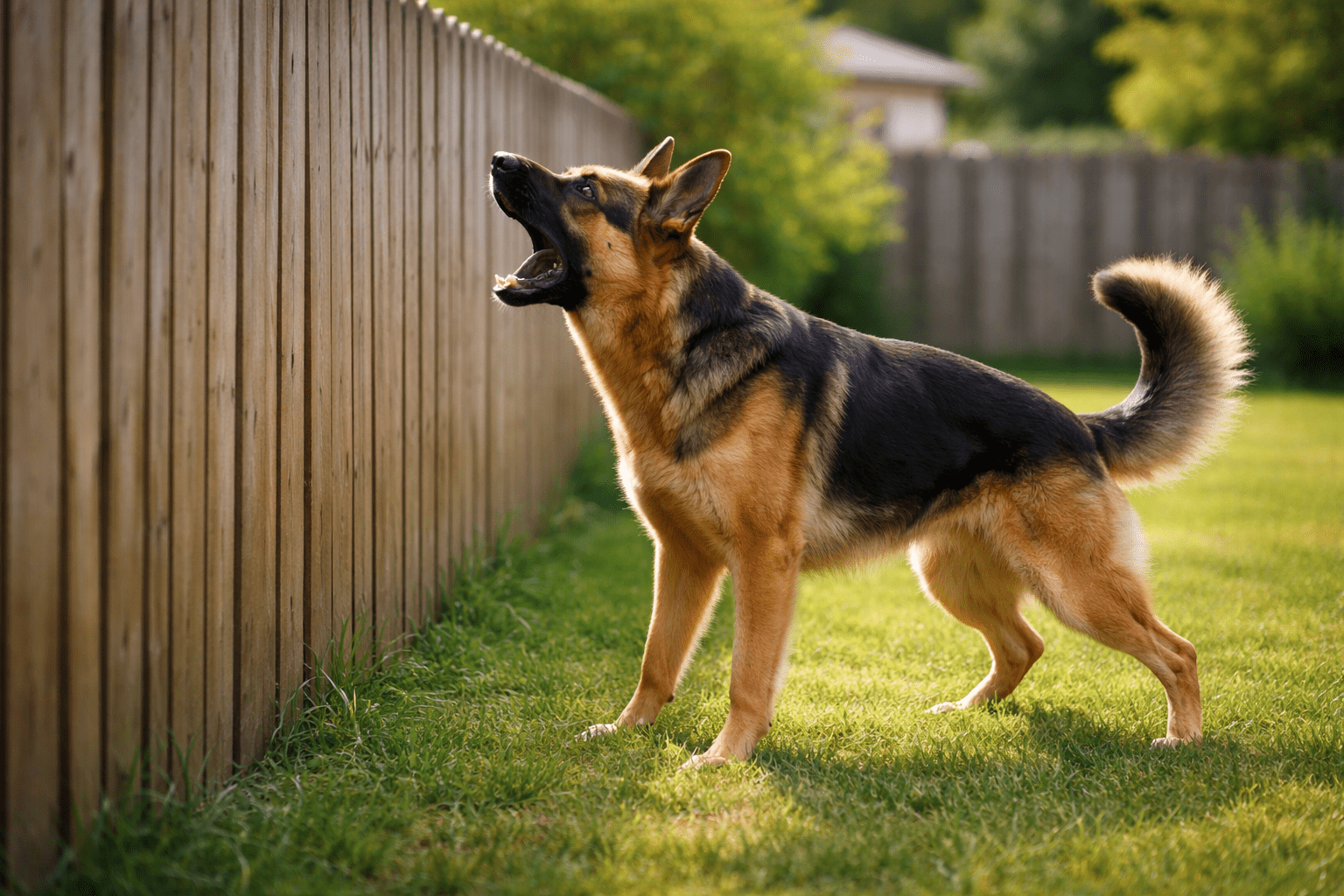
Barrier aggression in dogs occurs when your dog lunges, barks, or growls aggressively when separated from a trigger by a fence, leash, window, or gate. This frustration-based behavior happens because your dog can see but cannot reach what they want to investigate, greet, or chase.
You have probably seen this if your dog goes wild at the window when someone walks by, or if your normally friendly pup transforms into a snarling mess when another dog passes on the other side of your yard fence. This reactive behavior is more common than you might think, and the good news is that it can be managed and improved with the right approach.
In this guide, we will break down what causes barrier aggression, how to spot the warning signs, and what you can do to help your dog feel calmer and more confident. Whether your dog acts out at the front window, on leash walks, or behind your backyard fence, you will find practical solutions here.
Struggling with reactive behavior? Our board and train Long Island program helps dogs overcome aggression and build better responses.
What Is Barrier Aggression in Dogs
Barrier aggression is a specific type of reactivity where your dog becomes agitated, aggressive, or overly excited when they encounter a stimulus they cannot directly access. The barrier creates frustration, which your dog expresses through barking, lunging, growling, or even biting at the barrier itself.
This behavior is different from other forms of aggression because the physical separation plays a key role. Many dogs who display barrier aggression are actually friendly when they meet the same triggers without a barrier present. The fence, leash, or window changes everything.
Common Barriers That Trigger This Behavior
Several types of barriers can set off this reaction in your dog:
- Fences: Your dog runs along the fence line barking and growling at passing dogs, people, or delivery trucks
- Windows: Your dog barks frantically at people walking on the sidewalk or cars driving by
- Leashes: Your dog pulls, lunges, or barks at other dogs during walks, but might be fine at the dog park off leash
- Gates: Your dog becomes defensive or aggressive when someone approaches a baby gate or closed door in your home
- Car windows: Your dog reacts aggressively to other dogs or people while riding in the car
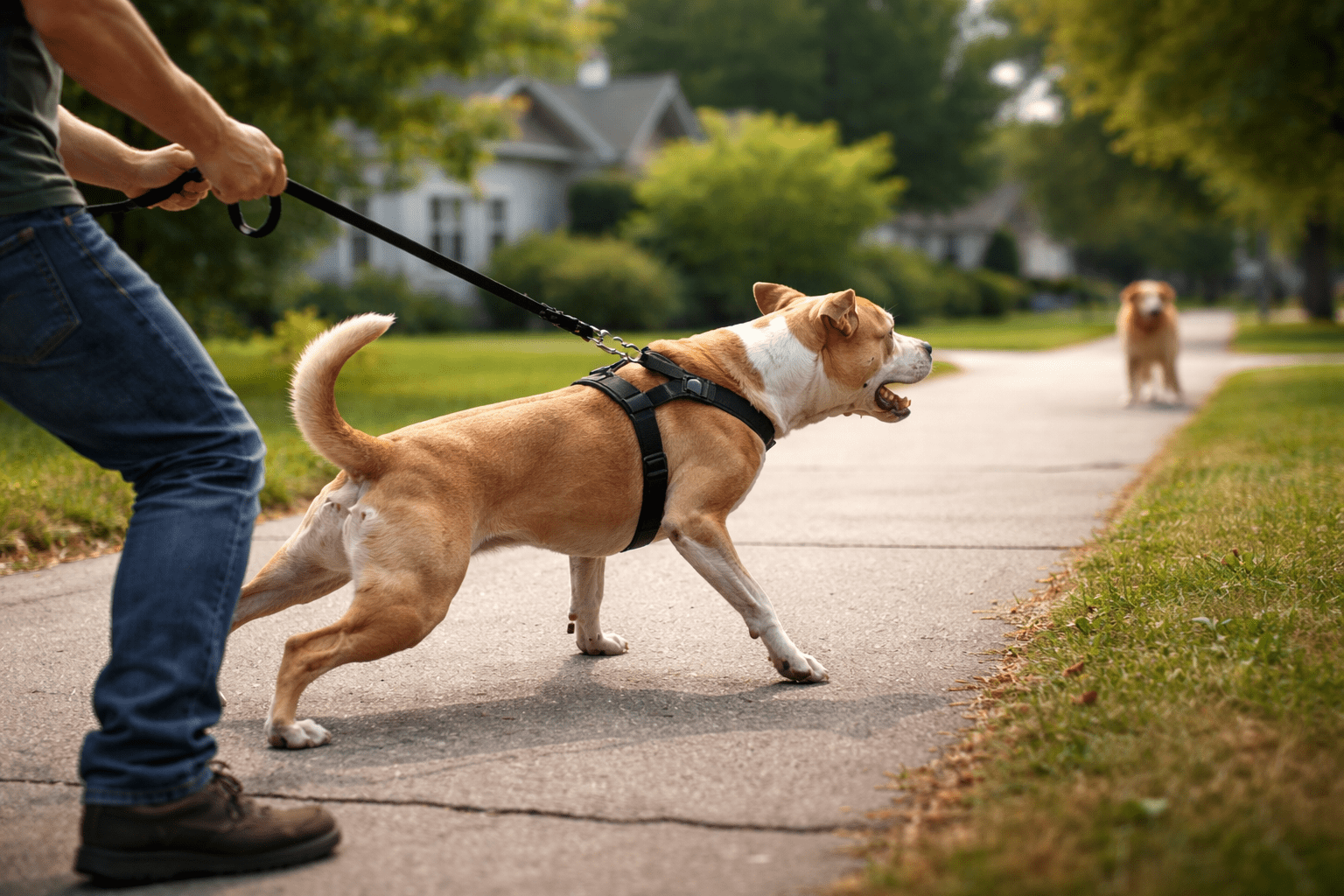
The common thread is physical restriction combined with visual access to a trigger.
How It Differs From Other Types of Aggression
Barrier aggression shares some similarities with fear aggression in dogs and territorial aggression in dogs, but there are important differences.
Unlike fear aggression, where your dog tries to escape or avoid the threat, barrier aggression involves your dog actively engaging with the trigger. Your dog is not trying to get away, they are trying to get closer or drive the stimulus away.
Territorial aggression focuses on protecting a specific space or resource. Barrier aggression can happen anywhere there is a physical restriction, not just on your dog’s home turf.
The key difference is the role of frustration. Your dog wants access to something, whether to investigate, play, chase, or confront, and the barrier stops them. That frustration fuels the aggressive display.
What Triggers Barrier Aggression
Understanding what sets off your dog’s barrier aggression helps you manage and prevent episodes. Triggers vary between individual dogs, but several common patterns emerge.

Visual Stimuli Behind Barriers
The most obvious triggers are things your dog can see but cannot reach:
- Other dogs: Passing dogs are the number one trigger for most barrier-reactive dogs
- People: Joggers, delivery workers, children playing, or neighbors walking by
- Vehicles: Cars, trucks, bikes, skateboards, or motorcycles
- Wildlife: Squirrels, birds, cats, or deer visible through windows or fences
- Movement: Anything that moves quickly or unpredictably can trigger a reaction
Your dog’s prey drive, social interests, or protective instincts combine with the frustration of being blocked. The result is an explosive reaction that looks and sounds aggressive.
Environmental and Situational Factors
Certain situations make barrier aggression worse:
- High arousal environments: Busy streets, dog parks, or neighborhoods with lots of activity increase reactivity
- Lack of mental stimulation: Bored dogs fixate more on outside triggers and have less impulse control
- Previous reinforcement: If barking and lunging have successfully made triggers go away in the past, your dog learns that aggression works
- Poor socialization: Dogs who were not properly exposed to different people, dogs, and environments as puppies are more likely to be reactive
- Confinement stress: Being restricted for long periods without adequate exercise or enrichment increases frustration
Time of day matters too. If the mail carrier arrives at the same time daily, your dog may start anticipating and reacting before anyone even approaches.
Physical and Emotional States
Your dog’s internal state affects how they respond to triggers:
| Physical State | Impact on Barrier Aggression |
| High energy levels | More reactive, harder to redirect, less impulse control |
| Tired or exercised | Calmer responses, easier to manage, better focus |
| Hungry or thirsty | Increased irritability and lower tolerance |
| Pain or discomfort | More defensive reactions, lower threshold for aggression |
| Emotional State | Impact on Barrier Aggression |
| Anxious or stressed | Overreacts to minor triggers, harder to calm down |
| Confident and relaxed | Better impulse control, less reactive overall |
| Frustrated or bored | Fixates on triggers, aggressive displays are more intense |
| Fearful or uncertain | May combine barrier aggression with fear responses |
A dog who is already anxious about something else will have a much lower threshold for reacting to triggers behind barriers.
Causes of Barrier Aggression in Dogs
Barrier aggression develops from a combination of genetic predisposition, learning history, and environmental factors. No single cause creates this behavior, but several key elements contribute.
Frustration and Lack of Control
The core emotion driving barrier aggression is frustration. Your dog sees something they want to interact with but cannot access it. This creates a state of arousal that has no outlet.
Think of it like being stuck in traffic when you are late for an important appointment. The inability to move forward creates stress and irritation. For dogs, this frustration gets expressed through aggressive displays.
Over time, this frustrated arousal becomes a learned pattern. Your dog’s brain associates the sight of triggers with the feeling of being blocked, and the aggressive response becomes automatic.
Genetics and Breed Tendencies
Some breeds are more prone to barrier aggression than others. Dogs bred for guarding, herding, or protection work often have stronger territorial instincts and higher arousal around moving triggers.
Breeds that commonly show barrier aggression include:
- German Shepherds
- Belgian Malinois
- Australian Shepherds
- Border Collies
- Terrier breeds
- Rottweilers
- Doberman Pinschers
This does not mean mixed breeds or other breeds cannot develop barrier aggression. Any dog can learn this behavior, but certain genetic backgrounds make it more likely.
Early Experiences and Socialization
Your dog’s puppyhood experiences shape how they respond to the world. Puppies who were not properly socialized to different people, dogs, and environments between 3 and 14 weeks of age are more likely to develop reactivity issues.
If your dog had limited positive exposure to other dogs, they may not know how to communicate appropriately. The fence or leash adds extra stress to an already challenging social situation.
Traumatic experiences also play a role. A dog who was attacked through a fence or had a scary encounter while on leash may develop barrier aggression as a defensive response.
Inadvertent Reinforcement
You might be accidentally teaching your dog that barrier aggression works. If your dog barks and lunges at a passing dog, and that dog goes away, your dog learns that aggressive displays make threats disappear.
Even negative attention can reinforce the behavior. Yelling at your dog to stop barking gives them attention and engagement, which some dogs find rewarding.
The more your dog practices barrier aggression, the stronger the habit becomes. Each episode strengthens the neural pathways that trigger the reaction.
Need expert help with aggression issues? Explore our board and train aggressive dogs program for intensive behavioral modification.
How to Treat Barrier Aggression in Dogs
Treating barrier aggression takes patience, consistency, and the right training approach. You cannot fix this overnight, but you can make significant improvements with dedicated effort.

Management Strategies to Prevent Rehearsal
The first step is stopping your dog from practicing the aggressive behavior. Every time your dog reacts, the pattern gets stronger.
Block visual access: Cover windows with frosting film or curtains so your dog cannot see triggers. Move furniture away from windows where your dog watches the street.
Create distance: If your dog reacts to dogs on walks, cross the street or turn around before your dog reaches threshold. More distance means less arousal.
Remove triggers when possible: If the mail carrier sets off your dog, consider moving your mailbox away from the house or asking for delivery at a different time.
Redirect before reactions start: Give your dog something else to do before they notice the trigger. Practice attention games or ask for simple commands.
Management is not a cure, but it prevents the behavior from getting worse while you work on training.
Counter-Conditioning and Desensitization
This training approach changes how your dog feels about triggers. Instead of frustration and arousal, you create positive associations.
Start far enough away that your dog notices the trigger but does not react. At this distance, give your dog high-value treats continuously while the trigger is visible. When the trigger disappears, treats stop.
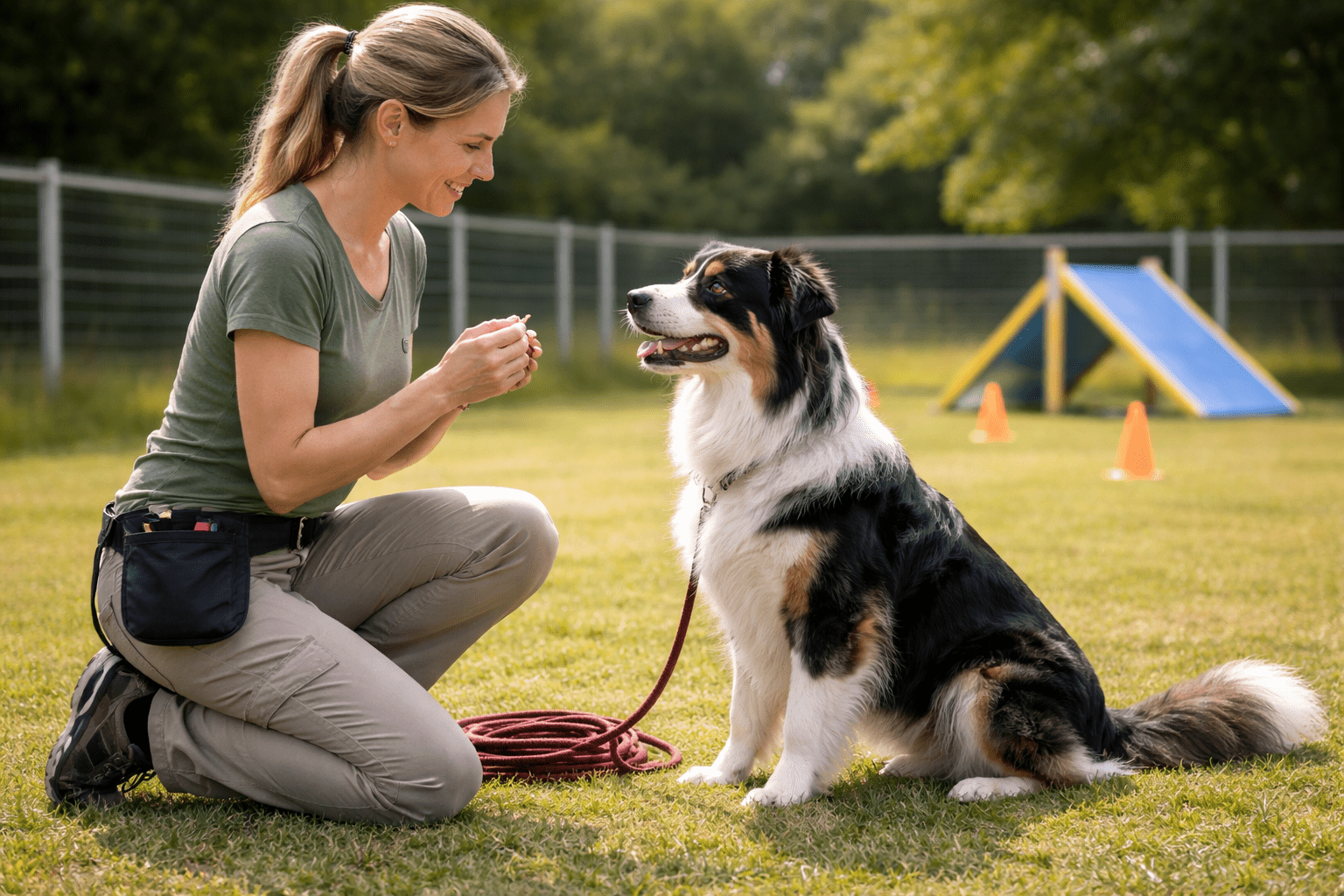
Your dog learns that the appearance of other dogs, people, or whatever triggers them predicts good things. Over many repetitions, the emotional response shifts from frustrated aggression to calm anticipation.
Gradually decrease the distance as your dog stays calm. This process can take weeks or months depending on how severe the barrier aggression is.
Teaching Alternative Behaviors
Give your dog a different job when triggers appear. Common alternative behaviors include:
- Look at me: Teach your dog to make eye contact on cue, then reward them for checking in when distractions are present
- Go to place: Train your dog to go to a mat or bed when the doorbell rings instead of charging the door
- Find it: Scatter treats on the ground to redirect your dog’s focus away from the window or fence
- Touch: Teach a hand target that you can use to move your dog away from triggers
These behaviors give your dog something productive to do with their arousal energy instead of directing it at the trigger.
Professional Training Support
Some cases of barrier aggression are too severe or complex for DIY training. Consider professional help if:
- Your dog has bitten or attempted to bite through barriers
- The aggression is getting worse despite your efforts
- You feel unsafe managing your dog around triggers
- Your dog shows aggression in multiple contexts beyond barriers
- You are not seeing progress after several weeks of training
A qualified trainer can assess your specific situation and create a customized behavior modification plan. Professional dog obedience training addresses the underlying issues driving the reactive behavior.
Prevention Tips for Barrier Aggression
Preventing barrier aggression is easier than fixing it. If you have a puppy or a new dog, these strategies help avoid developing the problem.
Proper Socialization From Puppyhood
Expose your puppy to different people, dogs, animals, and environments during the critical socialization period. Positive experiences with variety teach your puppy that the world is safe and interesting, not threatening.
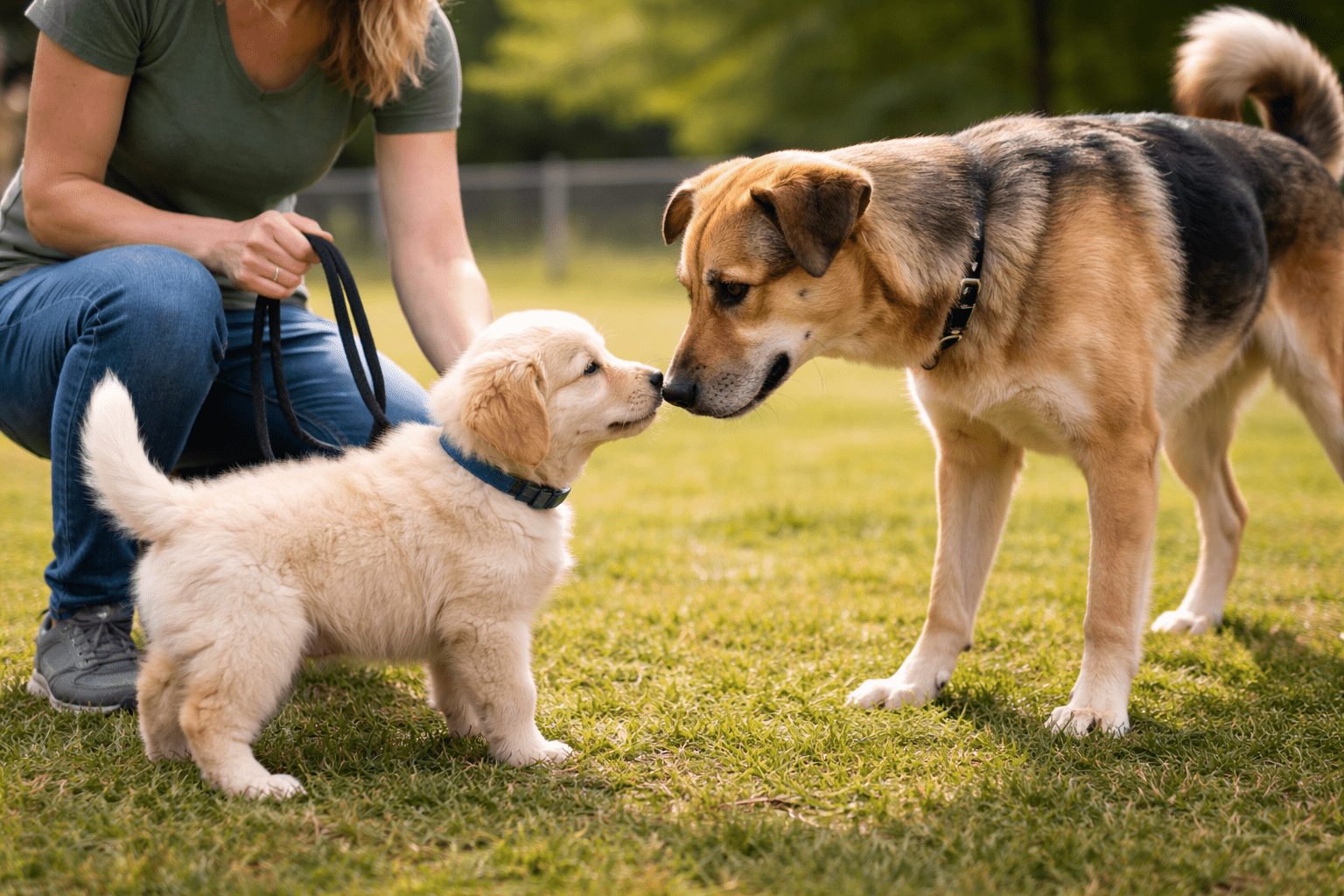
Practice greeting other dogs calmly on leash. Let your puppy meet friendly dogs in controlled settings. Avoid dog parks during the critical fear period (8 to 11 weeks) when negative experiences have outsized impact.
Managing Your Dog’s Environment
Set up your home and yard to minimize triggers. Plant tall shrubs along fence lines to block your dog’s view of the street. Use privacy fencing instead of chain link.
Create a designated area away from windows where your dog spends time. Exercise your dog before leaving them alone so they are more likely to rest instead of watching for triggers.
Building Impulse Control
Teach your dog to control their excitement and arousal. Practice waiting at doors, sitting for meals, and leaving treats alone until released. These exercises build the mental muscles your dog needs to resist reacting to triggers.
Play structured games that require your dog to stop and think. Tug with rules, retrieve with releases, and hide-and-seek all build impulse control while strengthening your bond.
Looking for comprehensive behavior support? Our dog boarding camp Long Island includes training to address reactive behaviors.
Breaking Down Barrier Aggression for Lasting Results
Barrier aggression does not have to control your life or limit your dog’s experiences. The key is addressing the underlying frustration and arousal, not just suppressing the aggressive display. When you change how your dog feels about triggers, the behavior naturally improves.
Every dog progresses at different rates. Some improve quickly with basic management and training, while others need intensive professional help. Consistent work and celebrating small improvements make the difference.
At K9 Mania Dog Training, we are the leading board and train on Long Island, specializing in all types of aggression and behavioral issues. Whether your dog struggles with barrier aggression, leash reactivity, or other concerning behaviors, our expert trainers can help. We understand that every dog is unique, and we create customized training plans that address the root causes of reactive behavior. Trust K9 Mania to transform your dog’s responses and give you both a calmer, happier life together.
Explore Related Articles
- How to Train a Reactive Dog on Leash
- How to Stop Territorial Barking
- Reactive Dog Training: Simple Steps
You May Also Want to Read
- How to Teach a Dog to Swim: Complete Training Guide
- Muzzle Training for Dogs: A Complete Guide for Safety and Success
- Possessive Aggression in Dogs: What It Is and How to Fix It
- Fear Aggression in Dogs: What It Is and How to Help Your Anxious Dog
Frequently Asked Questions
What triggers barrier aggression?
Barrier aggression is triggered when your dog can see but cannot access a stimulus like other dogs, people, vehicles, or animals. The physical barrier creates frustration that gets expressed through barking, lunging, and aggressive displays. Common triggers include dogs walking past fences, people approaching windows, or other animals visible from inside a car. The intensity of the reaction depends on your dog’s arousal level, the value of the trigger, and how much practice your dog has had with the behavior.
Is barrier aggression learned or innate?
Barrier aggression develops from a combination of genetic predisposition and learned experiences. Some dogs are born with higher prey drive, territorial instincts, or arousal levels that make them more prone to this behavior. However, the specific aggressive response is learned through repeated exposure and reinforcement. Your dog learns that barking and lunging happens when barriers block access to triggers, and if these displays successfully make triggers go away, the behavior becomes stronger over time.
When to seek professional help for barrier aggression?
You should seek professional help if your dog’s barrier aggression is escalating, if your dog has attempted to bite through barriers, or if you feel unsafe managing the behavior. Other signs that professional training is needed include aggression in multiple contexts beyond barriers, lack of progress after several weeks of home training, or if the behavior is severely impacting your quality of life. A qualified trainer can assess the situation and create a behavior modification plan tailored to your dog’s specific triggers and history.
What are the causes of barrier aggression in dogs?
The primary causes of barrier aggression include frustration from restricted access to triggers, lack of proper socialization during puppyhood, genetic breed tendencies toward guarding or chasing, and inadvertent reinforcement of aggressive displays. Dogs who were not exposed to various people, dogs, and environments during the critical socialization period are more likely to develop reactivity issues. Additionally, traumatic experiences like being attacked through a fence can create defensive barrier aggression that persists even after the original threat is gone.
How do you treat barrier aggression in dogs?
Treatment involves management to prevent rehearsal of the behavior, counter-conditioning to change your dog’s emotional response to triggers, and teaching alternative behaviors your dog can perform instead of reacting aggressively. Start by blocking visual access to triggers and creating distance during walks. Use high-value treats to create positive associations with trigger appearance. Teach your dog to look at you, go to a mat, or perform other calm behaviors when triggers are present. Consistency and patience are essential, as changing emotional responses takes time.
How does barrier aggression differ from other types of aggression?
Barrier aggression is unique because the physical restriction plays a central role in triggering the behavior. Unlike fear aggression where dogs try to escape threats, barrier-aggressive dogs actively engage with triggers and often show no aggression when the same triggers are accessible without barriers. It differs from territorial aggression because it can occur anywhere there is a physical restriction, not just in spaces your dog considers theirs. The core emotion is frustration rather than fear or resource guarding, though these can overlap in complex cases.