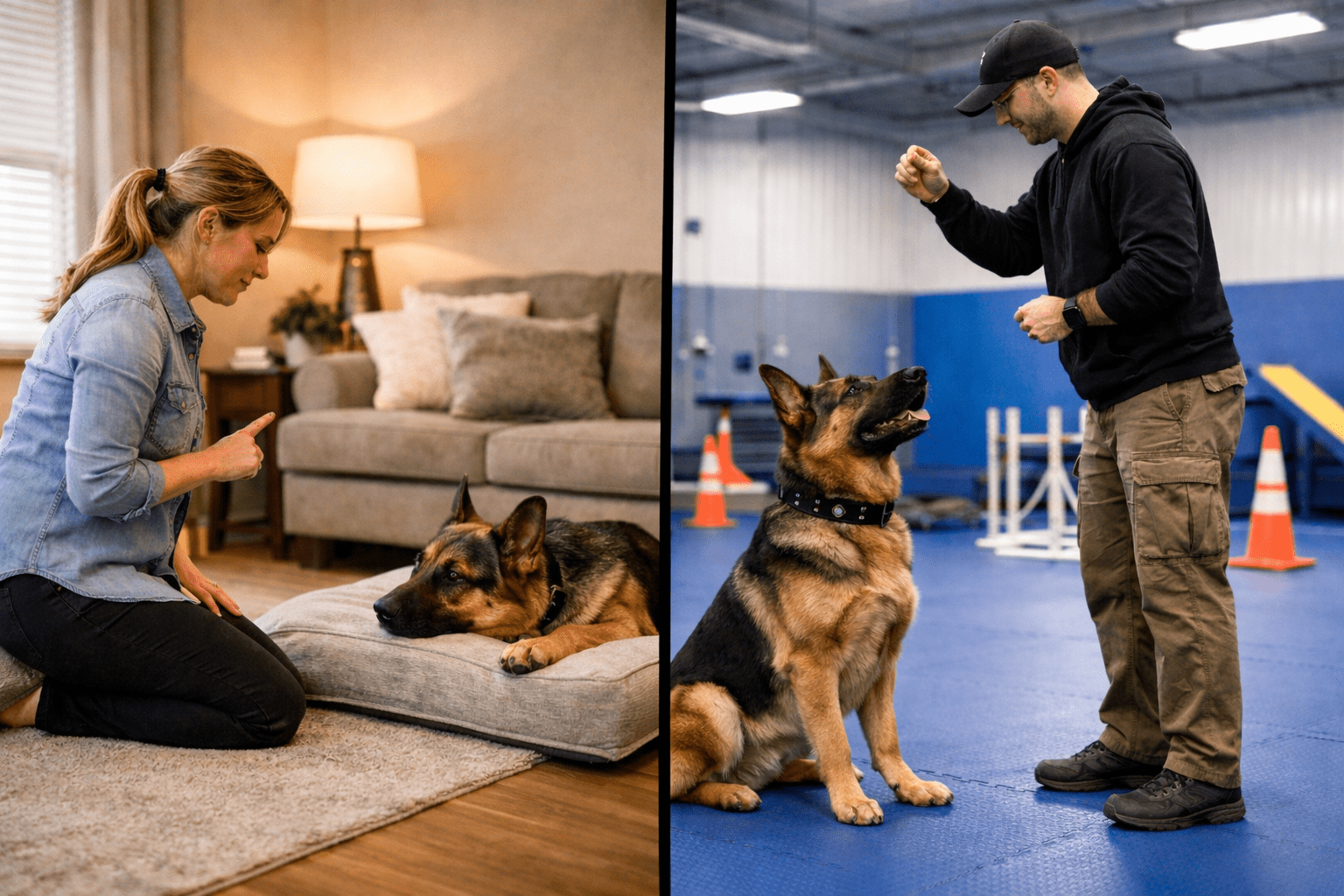
When deciding between board and train vs private lessons for aggressive dogs, the right choice depends on your dog’s specific behavior issues, your schedule, and how involved you want to be in the training process. Board and train programs provide intensive, immersive training in a controlled environment, while private lessons allow you to work directly with a trainer and practice techniques at home where problem behaviors often happen.
Both training approaches can successfully address aggression, but they work in very different ways. Board and train removes your dog from triggering situations and builds new habits through repetition and consistency. Private lessons keep your dog at home and teach both you and your pet new skills together, which can lead to stronger long-term results when you stay committed to practice.
Understanding how each method handles aggression will help you make the best decision for your dog’s needs and your family’s situation.
Ready to address your dog’s aggression with expert guidance? Explore our board and train programs designed specifically for behavioral challenges.
Common Types of Dog Aggression
Aggression in dogs shows up in many forms, and recognizing what type your dog displays is the first step toward choosing the right training method. Dogs can show aggression for different reasons, and each type needs a specific approach:
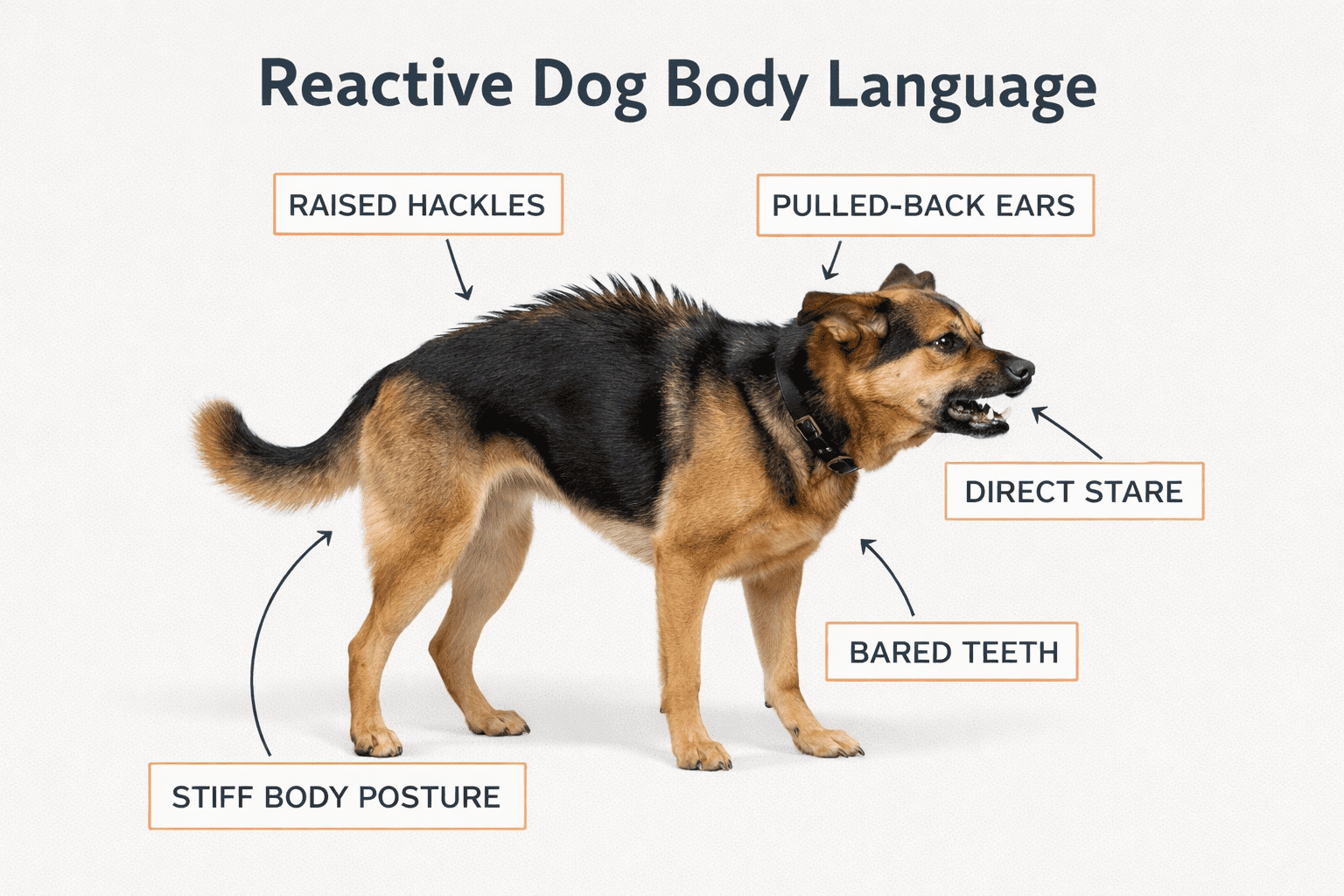
- Fear-based aggression: Your dog may snap, growl, or bite when scared or cornered. This often happens at the vet, during grooming, or when meeting new people.
- Resource guarding: Some dogs become aggressive when protecting food, toys, or even their favorite person. You might see this when approaching their bowl or trying to take something away.
- Territorial aggression: Dogs may bark, lunge, or bite when strangers approach your home, car, or yard. This behavior comes from a protective instinct.
- Leash reactivity: On walks, your dog might lunge, bark, or pull aggressively toward other dogs or people. This can stem from fear, frustration, or lack of socialization.
- Redirected aggression: When your dog can’t reach the target of their frustration (like a dog on the other side of a fence), they may redirect that energy toward you or another pet nearby.
Understanding which type of aggression your dog displays helps trainers create a targeted plan. Some behaviors respond better to environmental management, while others need hands-on behavior modification.
Why Professional Training Matters
Aggressive behavior rarely improves on its own and often gets worse without intervention. Professional trainers understand dog body language, stress signals, and the underlying causes of aggression.
Working with an expert keeps everyone safe during the training process. Trainers know how to set up controlled scenarios where your dog can learn without putting anyone at risk.
They also teach you how to read warning signs and prevent aggressive episodes before they escalate. This knowledge is valuable whether you choose board and train or private lessons.
Professional guidance also prevents common mistakes that can accidentally reinforce aggressive behavior. Many well-meaning owners unknowingly reward the wrong behaviors or use techniques that increase fear and reactivity.
What is Board and Train for Aggressive Dogs?
Board and train programs take your dog out of their home environment for an intensive training period, typically lasting two to four weeks.
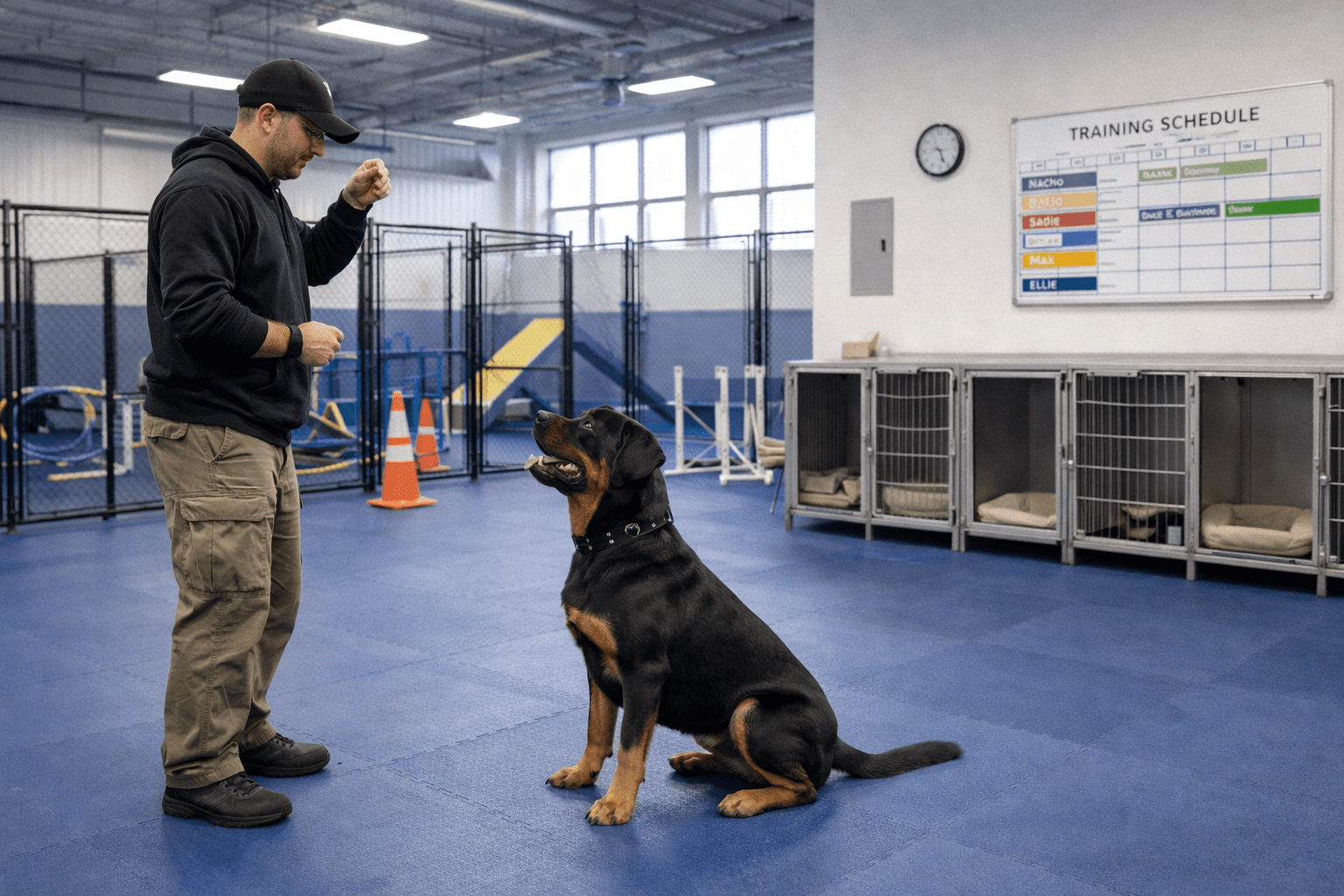
How Board and Train Programs Work
During a board and train program, your dog lives at the training facility or with the trainer. They receive daily training sessions focused on addressing specific aggressive behaviors.
Trainers work on obedience foundations like sit, stay, and recall, which create structure and build your dog’s confidence. They also tackle aggression triggers through controlled exposure and positive reinforcement or balanced training methods.
Your dog practices new behaviors in various settings within the facility. This repetition in a controlled environment helps solidify good habits before returning home.
Most programs include follow-up sessions where trainers teach you how to maintain the progress. You’ll learn the commands, handling techniques, and consistency your dog needs to continue improving.
Benefits of Board and Train for Agressive Dogs
Board and train offers several advantages for dogs with serious aggression issues:
- Intensive training: Your dog receives focused attention multiple times daily, which speeds up learning and behavior change.
- Professional handling: Experienced trainers know how to safely work with aggressive dogs and can read subtle warning signs you might miss.
- Controlled environment: Removing your dog from home eliminates familiar triggers and allows trainers to introduce new behaviors without distractions.
- Quick results: The immersive nature of board and train often produces noticeable changes in two to four weeks.
- Break from stress: If your dog’s aggression creates tension at home, board and train gives everyone a break while professional work happens.
For detailed information about this approach, check out our guide on aggressive dog board and train programs.
Potential Drawbacks
Board and train isn’t perfect for every situation. Here are some considerations:
- Cost: These programs typically range from $2,000 to $5,000 or more, depending on length and location.
- Transfer of skills: Your dog learns behaviors with the trainer, but you’ll need to practice consistently to maintain results at home.
- Separation anxiety: Some dogs struggle with being away from their family, which can add stress during training.
- Limited owner involvement: You won’t see the day-to-day training process, which means you might not understand the techniques as deeply as you would with private lessons.
What Are Private Lessons for Aggressive Dogs?
Private lessons bring a professional trainer to your home or another location to work with you and your dog together.
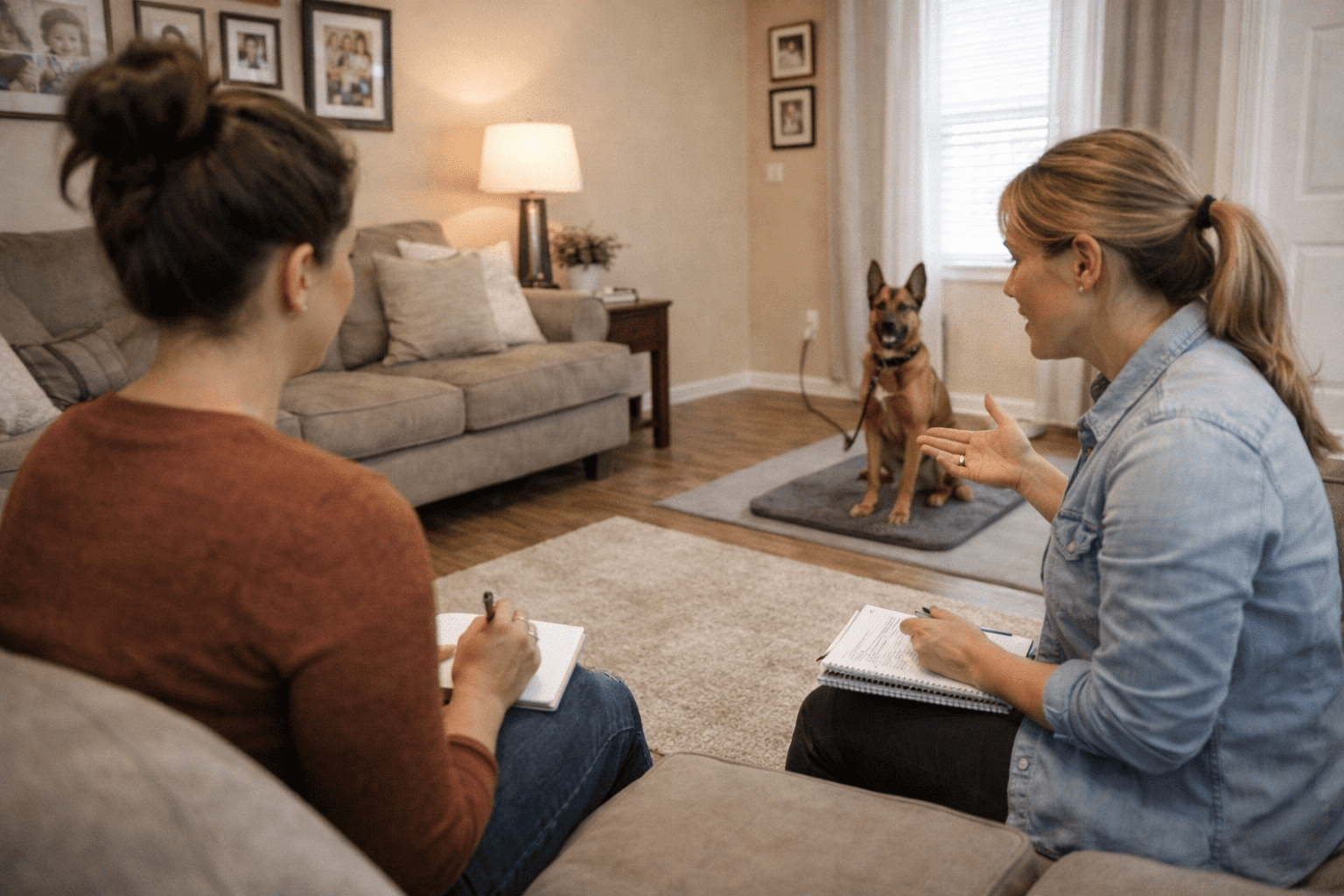
How Private Lessons Works
A trainer visits your home for sessions typically lasting 60 to 90 minutes. During these appointments, they observe your dog’s behavior in their natural environment and identify specific triggers.
The trainer teaches you handling techniques, body language cues, and training exercises. You practice these skills with your dog while the trainer provides feedback and adjustments.
Between sessions, you implement what you learned through daily practice. This homework is essential for progress, as behavior change requires consistent repetition.
Most private lesson packages include four to eight sessions spread over several weeks or months. The trainer adjusts the plan based on your dog’s progress and any new challenges that arise.
Benefits of Private Lessons for Aggressive Dogs
Private lessons offer unique advantages for addressing aggression:
- Personalized attention: Training happens in your home where problem behaviors typically occur, making it directly relevant to your situation.
- Owner education: You learn exactly how to handle your dog, which builds your confidence and strengthens your relationship.
- Immediate application: You practice new techniques right away in real-world situations, which helps transfer skills more effectively.
- Flexible scheduling: Sessions can be scheduled around your availability and spaced out to give you time to practice.
- Cost-effective: Private lessons generally cost $100 to $200 per session, making them more affordable than board and train for many families.
Our private dog training services focus on teaching both you and your dog, creating lasting behavior change through hands-on coaching.
Potential Challenges
Private lessons require commitment and effort from you:
- Time commitment: You need to practice daily between sessions, which can be challenging with a busy schedule.
- Slower progress: Because training happens once or twice weekly, behavior change may take longer than with intensive board and train.
- Home distractions: Training in your environment means dealing with real-life triggers, which can be stressful for both you and your dog.
- Owner skill level: Success depends partly on your ability to implement techniques correctly and consistently.
Board and Train vs Private Lessons: Detailed Comparison
Both training methods can effectively address aggression, but they suit different situations and learning styles. Here’s how they compare across key factors:
| Factor | Board and Train | Private Lessons |
| Training Duration | 2-4 weeks intensive training | 4-8 sessions over 2-4 months |
| Cost | $2,000-$5,000+ total | $800-$1,600 total ($100-$200 per session) |
| Owner Involvement | Minimal during training, follow-up sessions after | High involvement every session |
| Learning Environment | Controlled facility setting | Home and real-world environments |
| Speed of Results | Faster initial results (2-4 weeks) | Gradual progress over several months |
| Skill Transfer | Requires practice to transfer trainer’s work | Direct transfer as you learn alongside your dog |
| Best For | Severe aggression, busy owners, quick results needed | Moderate aggression, hands-on owners, budget-conscious |
When to Choose Board and Train for Aggressive Dogs
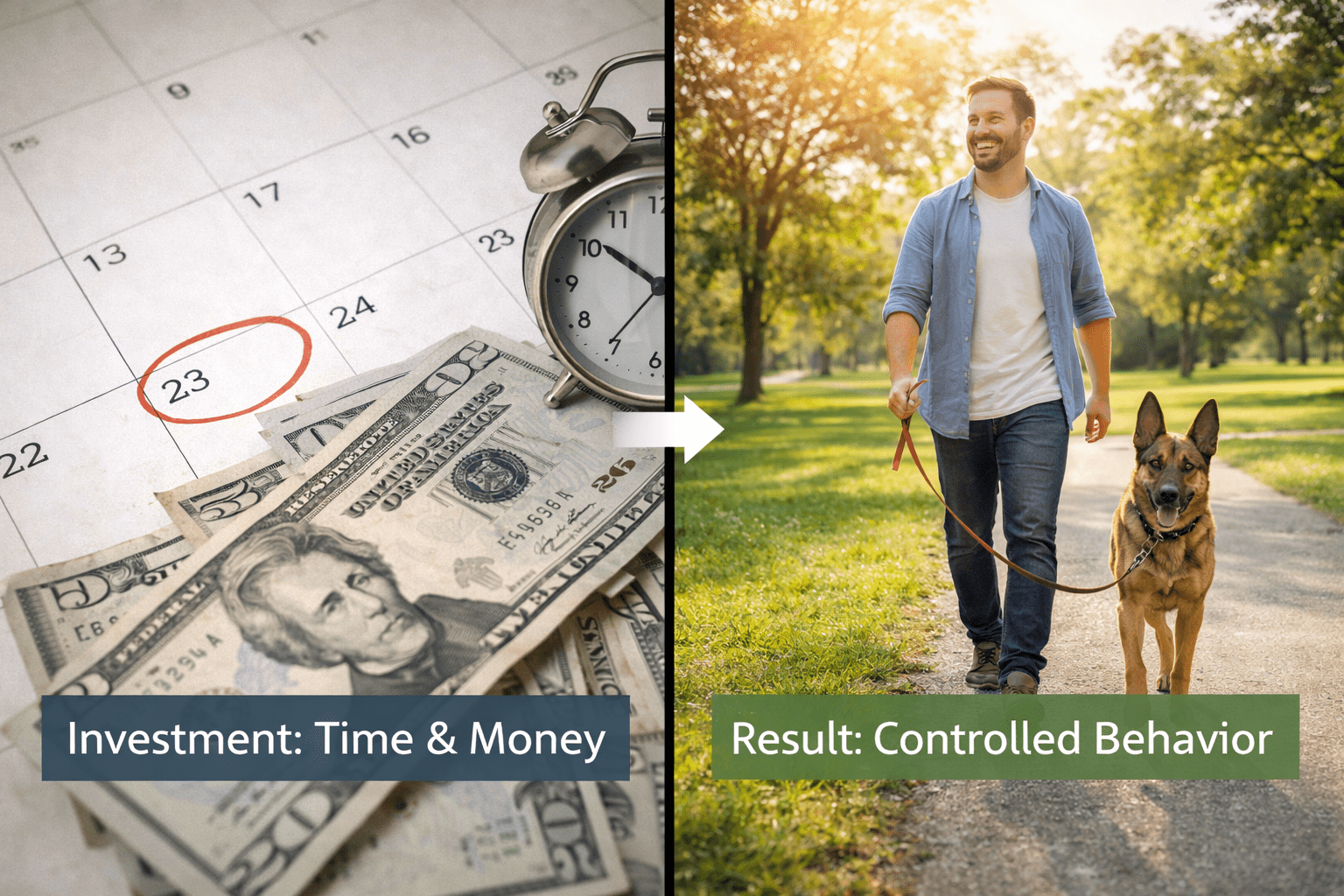
Board and train works best in these situations:
- Severe aggression: If your dog has bitten someone or shows dangerous behavior that puts people or other pets at risk, intensive professional intervention may be necessary.
- Limited time: When you can’t commit to weekly training sessions and daily practice due to work or family obligations, board and train provides concentrated help.
- Multiple behavior issues: Dogs with aggression combined with other problems like separation anxiety or house training issues benefit from comprehensive, daily training.
- Failed previous training: If you’ve tried private lessons or group classes without success, board and train offers a fresh start in a new environment.
- Need for safety: When practicing at home feels unsafe due to your dog’s unpredictability, board and train removes that risk during the learning phase.
When to Choose Private Lessons for Aggressive Dogs
Private lessons are ideal when:
- Moderate aggression: Your dog shows reactive behavior but hasn’t escalated to biting or causing injury. Issues like leash reactivity, barrier frustration, or mild resource guarding often respond well to private lessons.
- You want hands-on learning: If you prefer to understand the training process and be actively involved in your dog’s progress, private lessons teach you valuable skills.
- Budget constraints: When board and train costs are prohibitive, private lessons provide professional guidance at a more accessible price point.
- Home-specific triggers: If aggression happens primarily in your home or neighborhood, training in those environments directly addresses the problem context.
- Strong bond with your dog: Dogs who are deeply attached to their owners may struggle with separation during board and train. Private lessons keep your bond intact while making progress.
Dealing with specific aggressive behaviors? Learn effective techniques to stop food aggression with dogs in our detailed behavior guide.
Combining Both Training Methods
You don’t have to choose just one approach. Many owners find success combining board and train with private lessons for optimal results.
Hybrid Training Approach
Start with board and train to address the most dangerous behaviors and build a foundation of obedience. Your dog learns basic commands and impulse control in a structured setting.
After board and train, continue with private lessons to reinforce those skills in your home environment. The trainer helps you maintain progress and troubleshoot any regression.
This combination gives you the fast results of board and train plus the owner education and real-world practice of private lessons. It’s especially effective for severe aggression cases that need immediate intervention but long-term management.
Maintenance and Long-Term Success
Regardless of which training method you choose, ongoing maintenance is essential for lasting results:
- Daily practice: Spend 10-15 minutes daily reinforcing commands and practicing calm behavior around triggers.
- Consistency: Everyone in your household should use the same commands and rules to avoid confusing your dog.
- Environmental management: Set your dog up for success by controlling exposure to triggers, especially in early stages of training.
- Follow-up sessions: Schedule periodic check-ins with your trainer to address new challenges and prevent regression.
Aggression management is often a lifelong commitment. Even after successful training, your dog may need continued guidance and structure to maintain good behavior.
For dogs dealing with anxiety during grooming or vet visits, our resource on grooming aggressive dogs provides helpful management strategies.
Making Your Decision
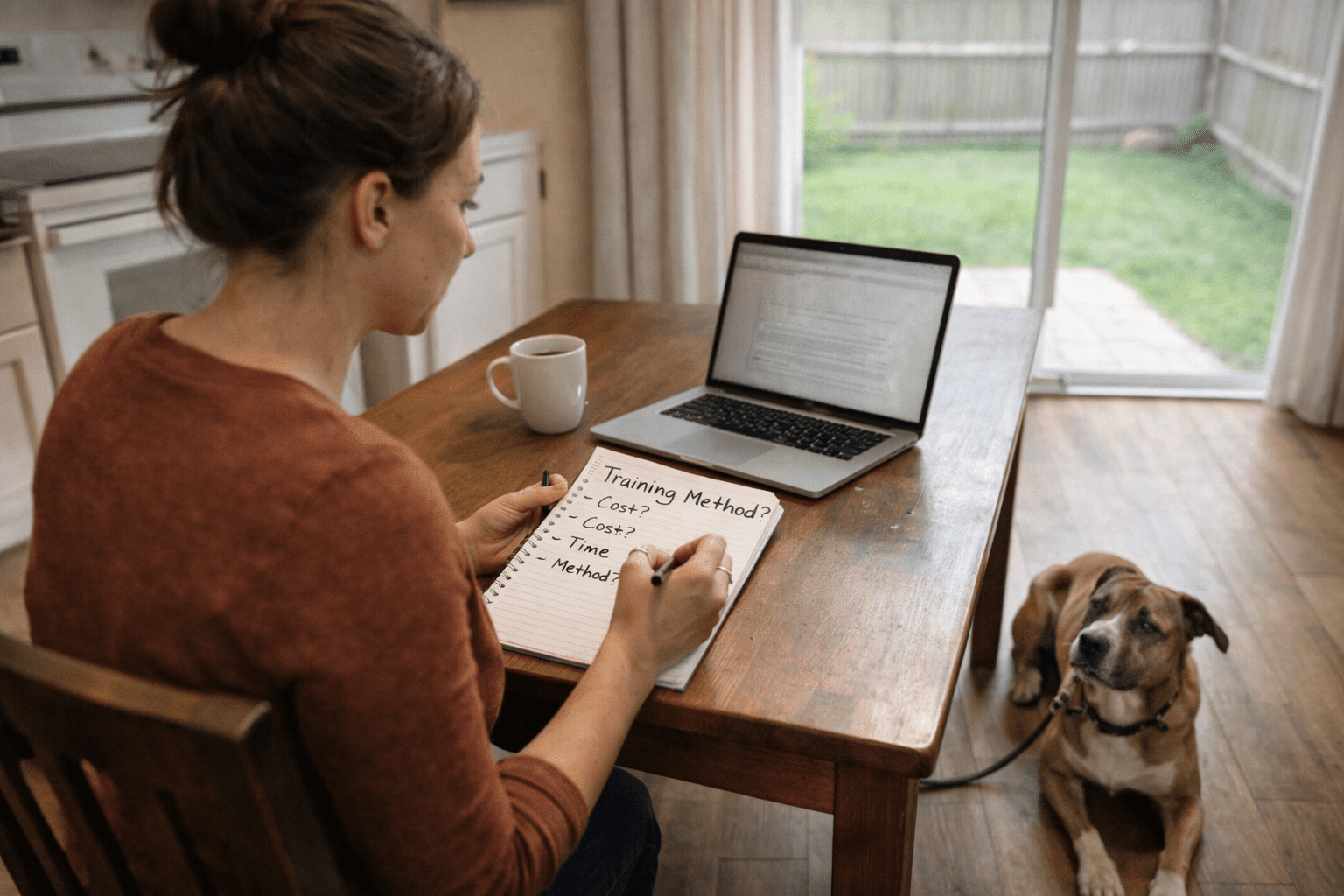
Choosing between training methods requires honest assessment of your situation, resources, and goals.
Questions to Ask Yourself
Consider these questions when making your decision:
- How severe is my dog’s aggression? Has anyone been injured?
- How much time can I realistically dedicate to training each day?
- What is my training budget?
- Do I feel safe practicing techniques at home?
- Does my dog have separation anxiety or attachment issues?
- Do I want to be actively involved in the training process?
- Are there specific environments where the aggression happens?
Your answers will point you toward the method that best fits your needs. There’s no universally correct choice, only what works for your unique situation.
Looking for a fresh start with a trained companion? Our dog adoption program connects you with dogs who have completed professional training.
Choosing the Right Path for Your Aggressive Dog
Both board and train and private lessons can successfully address aggressive behavior when matched to your dog’s needs and your family’s situation. Board and train provides intensive, accelerated progress in a controlled environment, while private lessons offer practical coaching, owner involvement, and a more budget-friendly path.
The right choice depends on aggression severity, available time, training goals, and budget. Some dogs benefit from immediate immersion, while others improve through steady, guided practice at home. Many families combine both approaches for stronger, lasting results. What matters most is taking action early. With professional support, patience, and consistency, most aggressive dogs can learn safer, calmer behavior. At K9 Mania Dog Training, a professional dog training in Long Island, we’re here to help you succeed.
Visit our website to learn more about our proven training programs designed specifically for aggressive dogs.
You May Also Want to Read
Grooming Aggressive Dogs: Safe Techniques and Professional Tips
How to Stop Food Aggression with Dogs Safely
Board and Train for Aggressive Dogs: Complete Guide
Frequently Asked Questions
What is the best training method for aggressive dogs?
The best training method depends on the severity of aggression and the dog’s individual triggers. Balanced training that combines positive reinforcement with clear boundaries works well for most aggressive dogs. This approach teaches dogs what to do instead of just correcting unwanted behavior. Working with a professional trainer who can assess your specific situation is essential for determining the most effective method.
Can an aggressive dog be boarded?
Yes, aggressive dogs can be boarded at specialized training facilities that have experience with behavioral issues. These facilities have safety protocols, secure containment, and trained staff who know how to handle reactive dogs. However, not all boarding kennels accept aggressive dogs, so you’ll need to find a facility specifically equipped for behavior cases. Always disclose your dog’s aggression history to ensure everyone’s safety.
What is the best treatment for aggressive behavior in dogs?
The best treatment combines professional training with behavior modification and sometimes medication when recommended by a veterinarian. Treatment should address the underlying cause of aggression, whether it’s fear, anxiety, or lack of socialization. Effective programs teach dogs coping skills, build confidence, and establish clear communication between dog and owner. Consistency and patience are required for lasting results.
What are the cons of board and train?
Board and train programs can be expensive, typically costing several thousand dollars. Dogs learn behaviors with the trainer, which means skills don’t automatically transfer to owners without follow-up practice. Some dogs experience stress from being away from their family. Additionally, you miss seeing the training process firsthand, so you may not understand techniques as thoroughly as with private lessons where you’re actively involved.
Is board and train stressful for dogs?
Board and train can be stressful initially as dogs adjust to a new environment and routine. However, reputable programs use gradual introduction, positive reinforcement, and plenty of downtime to minimize stress. Many dogs actually thrive with the structure and consistency provided. The stress level depends on your dog’s temperament, the facility’s quality, and the trainer’s skill in reading and responding to stress signals.
How to discipline a dog for being aggressive?
Never physically punish an aggressive dog, as this typically makes behavior worse by increasing fear and reactivity. Instead, interrupt aggressive behavior with a calm verbal cue, then redirect your dog to an appropriate behavior and reward compliance. Prevention is the most effective discipline by managing the environment to avoid triggers while your dog is learning. Focus on teaching what you want the dog to do rather than punishing what you don’t want.