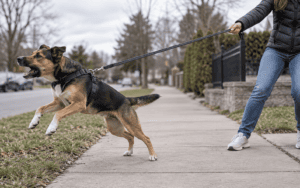
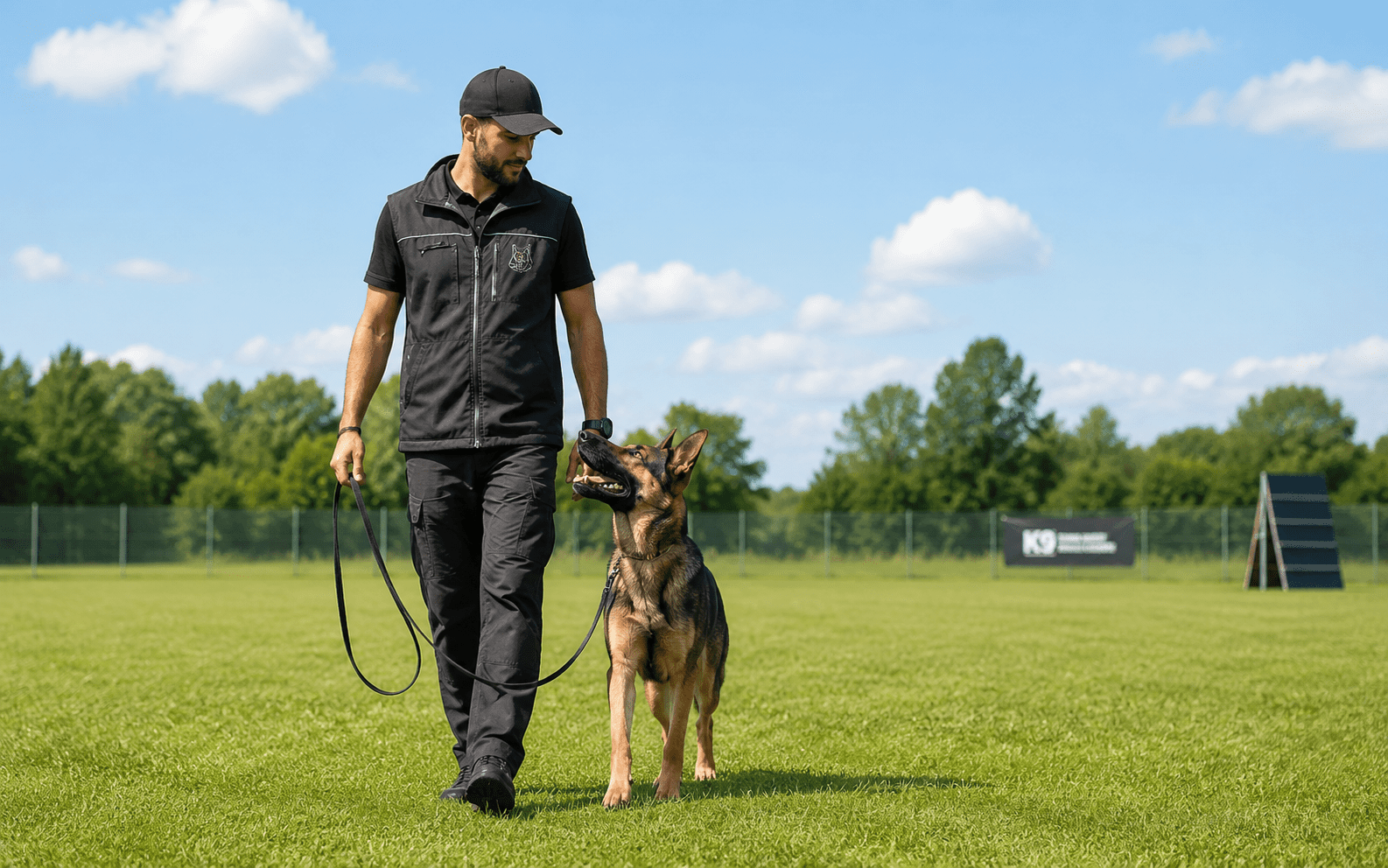
Balanced dog training is a method that uses both positive reinforcement and appropriate corrections to teach dogs clear expectations and reliable behavior. It gives dogs the full picture, rewarding what they do right and addressing what they do wrong, so they understand boundaries in the real world.
Unlike approaches that rely on rewards alone, balanced training works across a wider range of behaviors, temperaments, and real-life distractions. If you’ve been trying one method and not seeing results, understanding what balanced dog training is and how it compares to other approaches could change everything for you and your dog.
What Balanced Dog Training Actually Means
Balanced dog training is exactly what it sounds like: a balanced approach. Trainers who use this method pull from the full range of learning theory, applying positive reinforcement to mark and reward correct behavior while also using fair, well-timed corrections when a dog makes the wrong choice.
The term comes from the four quadrants of operant conditioning: positive reinforcement, negative reinforcement, positive punishment, and negative punishment. A balanced trainer does not limit themselves to one quadrant. They use what works best for the dog in front of them at that moment.
This matters because dogs are not all the same. A soft, eager-to-please breed may respond well to reward-only training in a controlled environment. But a high-drive protection dog, a deeply anxious rescue, or a dog with established aggressive habits often needs more than a treat to change behavior reliably.
📌 Not sure which training approach fits your dog’s needs? Read about the best dog training methods to see how they compare side by side.
How Balanced Dog Training Works in Practice
The foundation of balanced dog training is clear communication. Dogs do not naturally understand human rules. They need to be taught what earns a reward and what results in a consequence, consistently and clearly, so they can make the right choice on their own.
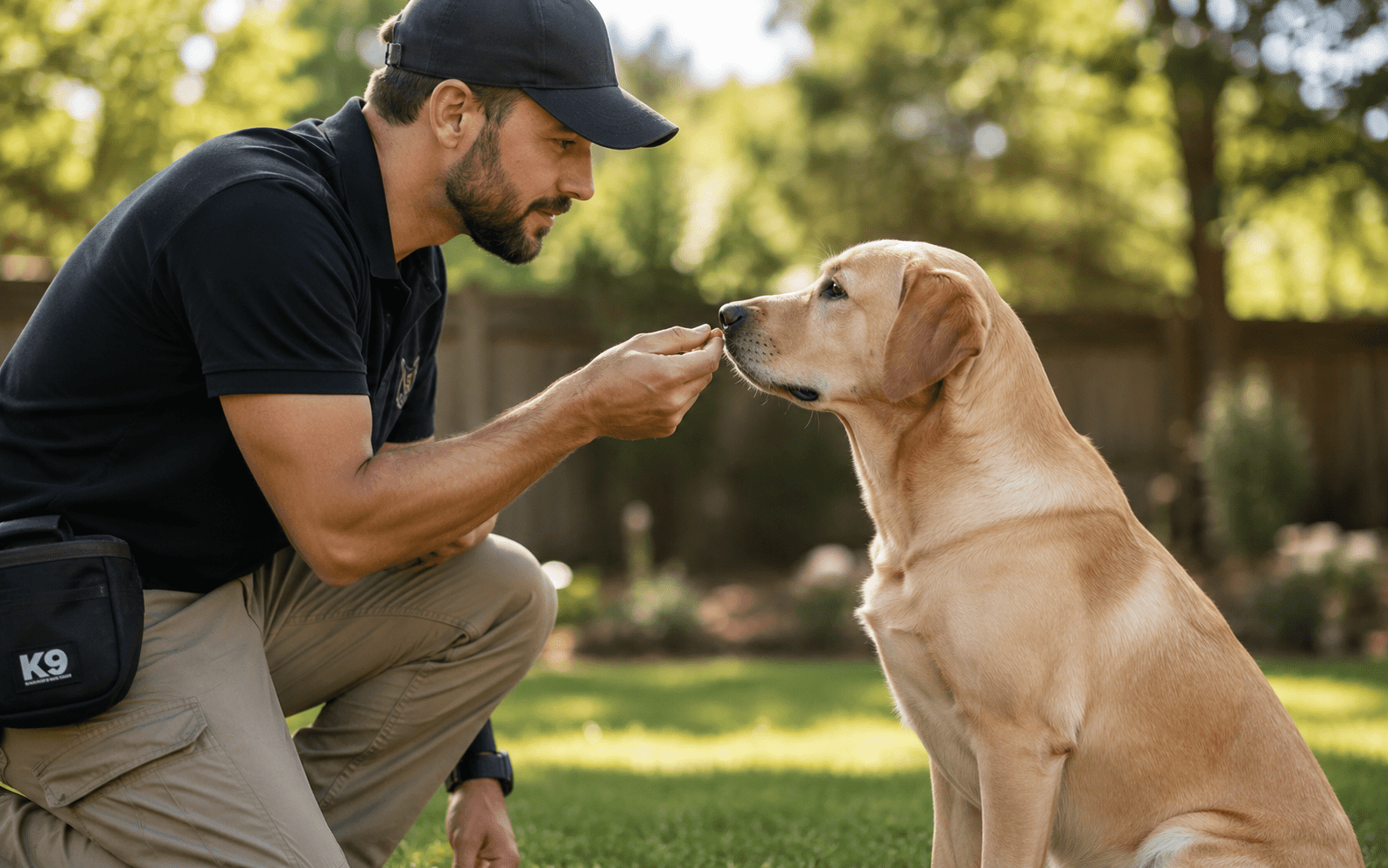
A typical balanced training session works in layers:
First, the dog learns the behavior. A trainer uses positive reinforcement, treats, praise, play, or drive rewards to teach the dog what the command means. The dog gets every opportunity to succeed.
Then, the expectation is raised. Once the dog understands what is being asked, a correction is introduced if the dog chooses not to comply. The correction is not harsh. It is well-timed, appropriate to the dog, and followed immediately by the opportunity to succeed and earn a reward.
Finally, the behavior becomes reliable. Because the dog understands both the reward and the consequence, the behavior holds up under real-world conditions: distractions, distance, off leash, around other dogs, in a busy street.
This is the part that matters most to most dog owners. A sit that only works in the kitchen with a treat in your hand is not really a sit. Balanced training builds behavior that holds.
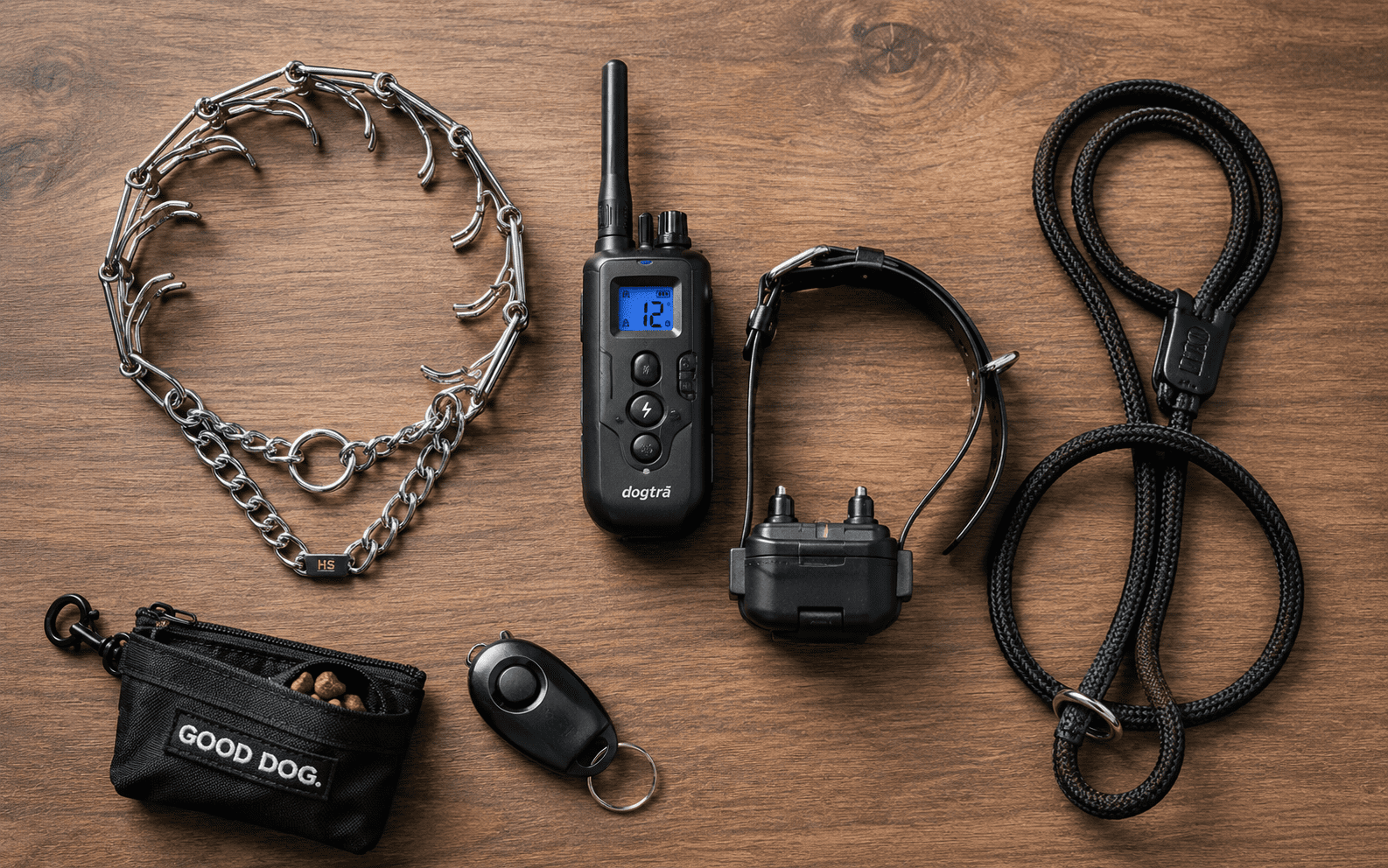
Common Tools Used in Balanced Training
| Tool | Purpose | When It’s Used |
| Treats and food rewards | Mark and reinforce correct behavior | Teaching new commands, rewarding compliance |
| Praise and play | Build drive and positive association | Reinforcing effort and engagement |
| Prong collar | Provides clear leash communication | Leash manners, redirect reactivity |
| E-collar (remote collar) | Allows correction at distance | Off-leash reliability, recall, distractions |
| Slip lead | Lightweight control tool | Basic guidance and positioning |
These tools are not shortcuts. In the hands of a skilled trainer, each one is used precisely and fairly. In untrained hands, any tool can cause harm, which is exactly why professional guidance matters.
📌 If you’re working through a dog behavior issue, private dog training Long Island gives you hands-on guidance tailored to your dog’s specific needs.
Balanced Training vs. Other Training Methods
Understanding what balanced dog training is becomes clearer when you see how it sits among the other main approaches.
| Training Method | Uses Rewards | Uses Corrections | Works Off Leash | Best For |
| Balanced Training | Yes | Yes (fair and timed) | Yes | Most dogs and behavior issues |
| Positive Only (R+) | Yes | No | Situational | Puppies, basic obedience, soft breeds |
| Dominance-Based | Minimal | Yes (often harsh) | Sometimes | Not recommended |
| Clicker Training | Yes | No | Situational | Trick training, shaping behaviors |
Positive-only training works well for many dogs and many situations. The honest limitation is that it can fail under high distraction or with deeply ingrained behaviors. If a dog is charging at another dog mid-run, no treat in your pocket stops that without a clear consequence already built into the training.
Dominance-based methods on the other end go too far in the other direction. Fear and physical force do not build trust, and they do not teach the dog anything about what it should do instead.
Balanced training sits between these extremes. It builds a relationship built on trust and clear communication, where the dog knows exactly what earns good things and what does not.
Why Balanced Dog Training Works for Difficult Behavior
For dogs dealing with aggression, reactivity, resource guarding, or severe anxiety, balanced dog training is often the most effective path forward. Here is why:
Reward-only training asks the dog to make a different choice, but does not always give the dog a clear reason to stop the problem behavior mid-moment. A correction delivered correctly tells the dog immediately that the current behavior is not acceptable, which creates the opening for the trainer to redirect and reward the right behavior in that same moment.
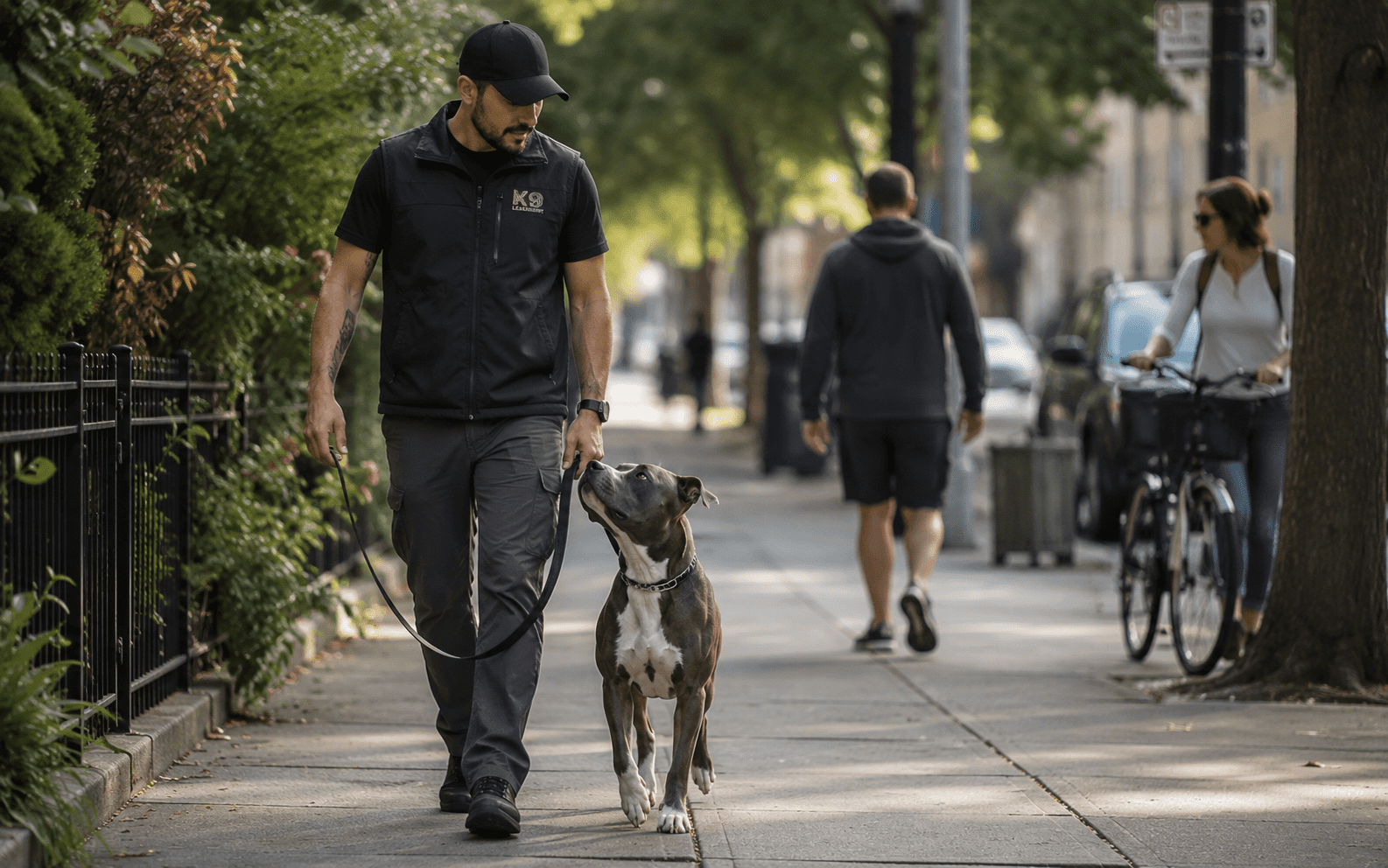
This combination of clear communication is what breaks through behaviors that have been reinforced for months or years. It does not replace kindness. It adds clarity.
Dogs that have gone through balanced training programs frequently show:
- Improved focus on the owner in distracting environments
- Reliable off-leash recall
- Calmer responses to triggers that previously caused reactivity
- Better ability to settle in public spaces and around other dogs
📌 For dogs with more serious behavior challenges, board and train Long Island provides intensive, daily work with professional trainers in a structured environment.
Is Balanced Dog Training Right for Your Dog
Balanced training works across a wide range of dogs, but how it is applied changes based on the individual. A 10-week-old puppy and a 4-year-old dog with a bite history are not trained the same way, even within the same method.
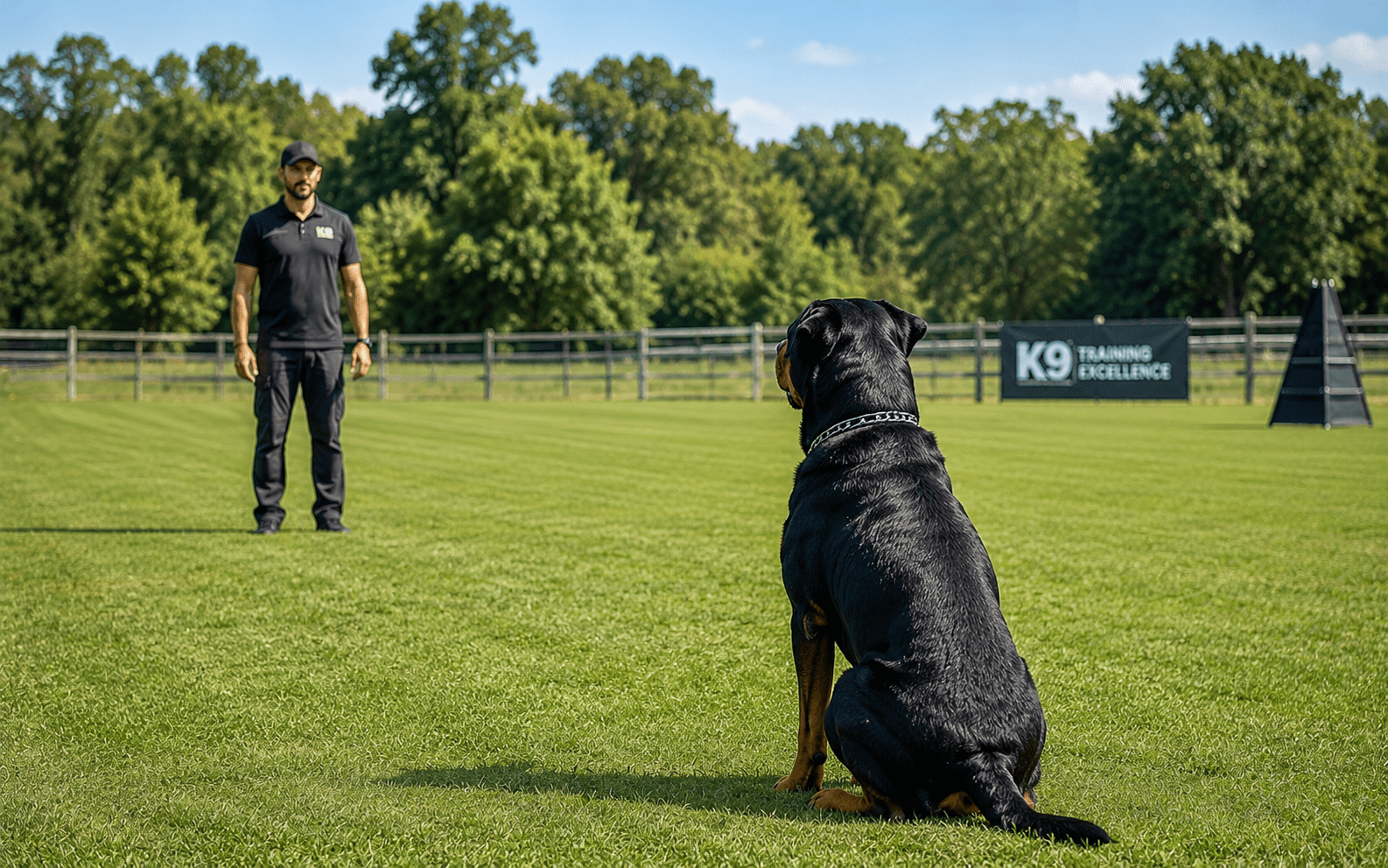
Your dog may be a strong candidate for balanced training if:
- Reward-only training has stopped producing results
- Your dog is highly distracted or easily overstimulated
- You are dealing with aggression, reactivity, or leash pulling that has not responded to other approaches
- You need off-leash reliability in real-world environments
- Your dog’s breed has strong working or protection drives
If you are unsure where to start, having a professional assess your dog first gives you a clear picture of what approach and tools are right for that specific animal.
📌 Learn how to find the right fit by reading about how to choose the right dog trainer before committing to a program.
What to Look for in a Balanced Dog Trainer
Not everyone who calls themselves a balanced trainer has the same skill level. Because balanced training involves corrections, poor timing or poor judgment can do more harm than good. When evaluating a trainer, look for:
- Clear explanation of how and why each tool is used
- Willingness to start with positive reinforcement before adding corrections
- Transparent process with no guarantees that sound too good to be true
- Experience working with your dog’s specific breed or behavior issue
- References, reviews, and before-and-after examples of real client dogs
A skilled balanced trainer should be able to explain exactly what they are doing and why at every step. If a trainer cannot explain their reasoning, that is a red flag.
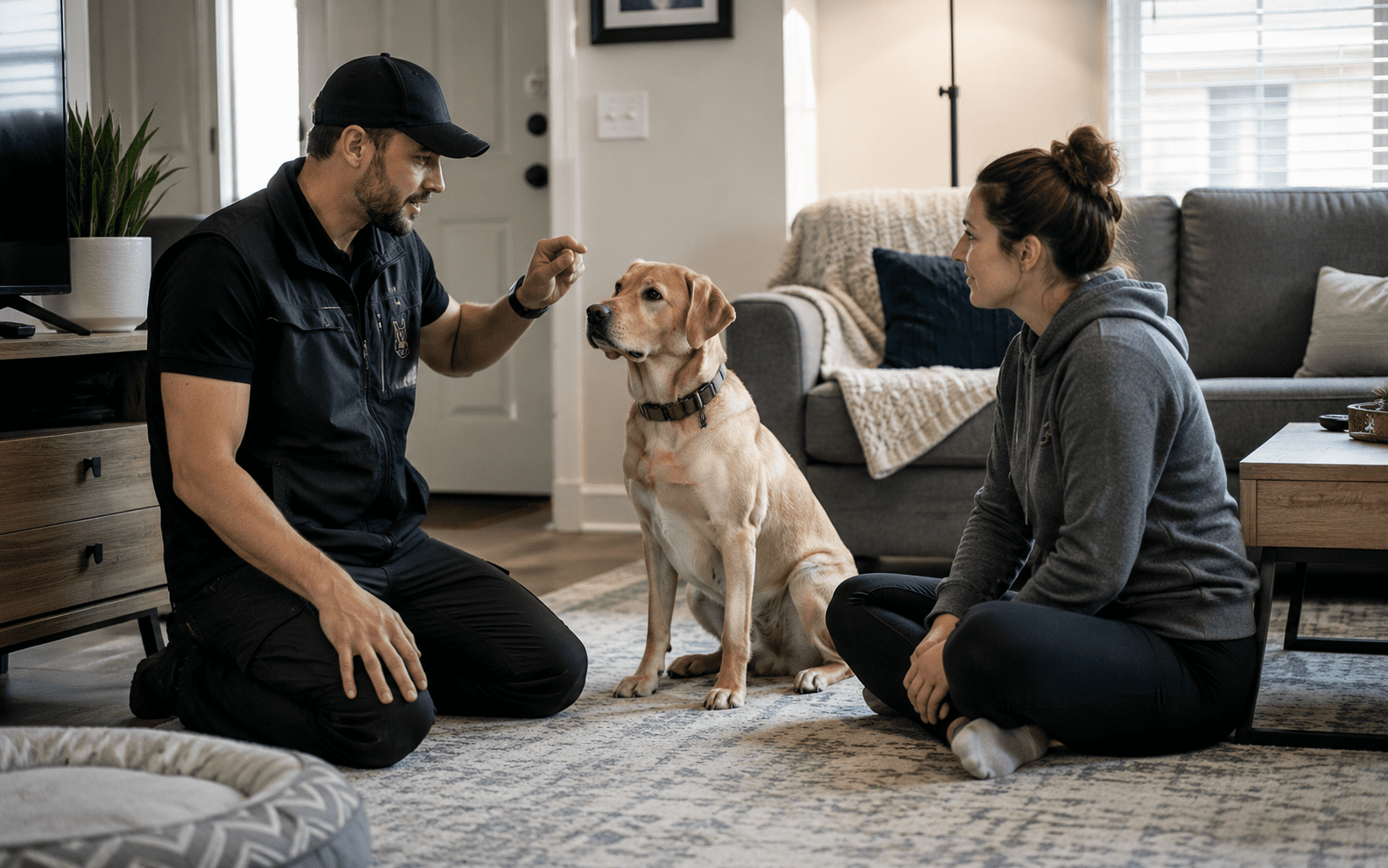
In home dog training Long Island is another strong option, as it lets a trainer assess your dog in the exact environment where most problem behaviors show up, giving them better data to work with from day one.
What Balanced Dog Training Looks Like in the Real World
Here is a straightforward example. Say your dog pulls hard on the leash every time it sees another dog. A reward-only approach would ask you to reward your dog for looking at you instead of the trigger. That works for some dogs.
With what is balanced dog training in real practice, the trainer would teach the dog the heel command using rewards first. Once the dog knows what heel means, a leash correction is used the moment the dog begins to drift toward the trigger. The dog is then immediately brought back into position and rewarded. Over multiple sessions, the dog learns that staying in position earns good things and lunging creates an uncomfortable result. The behavior changes because both sides of the equation are clear.
The Real Answer to What Balanced Dog Training Delivers
Balanced dog training is not about being harsh. It is about being complete. Dogs communicate with each other using both rewards and corrections every single day. Balanced training speaks that same language in a structured, humane, and consistent way.
When done right, it produces dogs that are confident, calm, and genuinely well-behaved, not just treat-dependent in controlled situations.
At K9 Mania Dog Training, we are the leading board and train provider on Long Island and home to some of the best animal behaviorists for dogs in the region. Whether your dog is dealing with aggression, reactivity, leash issues, or simply needs solid foundational obedience, we have a program built for it. Trust K9 Mania to guide you through every behavior challenge with proven, balanced methods that get real results. Reach out today and let us help.
You May Also Want to Read
How to Crate Train an Adult Dog
Frequently Asked Questions About Balanced Dog Training
What is balanced training for dogs?
Balanced dog training uses both positive reinforcement and fair corrections to teach dogs clear expectations. It draws from the full spectrum of learning theory rather than limiting to rewards alone. The goal is reliable, real-world behavior built on clear communication between dog and owner.
What is an example of balanced dog training?
A trainer rewards a dog for sitting on command, then applies a leash correction if the dog breaks the sit and ignores a verbal reminder. The dog is immediately given the chance to succeed again and rewarded when it does. This teaches the dog that compliance earns good things and non-compliance has a clear, consistent consequence.
Is balanced training good for dogs?
Yes, when applied correctly by a skilled trainer, balanced training is effective and humane. It works for a wide range of breeds, ages, and behavior problems. The key is proper timing, appropriate tool selection, and starting with reward-based teaching before introducing corrections.
What’s the hardest breed of dog to train?
Breeds like Chow Chows, Afghan Hounds, Basenjis, and Caucasian Shepherds are commonly considered the most difficult to train due to their independence, strong guarding instincts, or low motivation to please. High-drive working breeds like Belgian Malinois are also challenging without experienced handling.
Does balanced training really work?
Yes, balanced training consistently produces reliable obedience in real-world environments, including off-leash situations and high-distraction settings. Many dogs that did not respond to reward-only methods show significant improvement once fair corrections are added to clarify expectations and consequences.
What is the most popular dog training method?
Positive reinforcement is currently the most widely promoted dog training method, particularly in casual and puppy training settings. Balanced training is the most commonly used method among professional trainers and behaviorists working with serious behavior problems, working dogs, and protection breeds.