Board and train programs give your dog intensive, professional instruction in a structured environment, producing faster and more lasting results than weekly lessons alone. For Long Island dog owners who want real obedience without the guesswork, this approach is one of the most effective options available.
Key Takeaways
- Board and train programs work by immersing your dog in a structured training environment around the clock, accelerating the learning process significantly.
- Long Island dog owners benefit from working with trainers who understand local environments, parks, neighborhoods, and distractions.
- The program is ideal for dogs with behavior problems, reactive tendencies, or owners who have limited time for daily training sessions.
- Transitioning your dog home successfully requires a proper handoff process with your trainer, which reputable programs always include.
- Choosing between board and train, private lessons, or in-home training depends on your dog’s temperament, your schedule, and your specific goals.
- Starting with a clear understanding of what commands your dog will learn helps set realistic expectations before enrollment.
What Board and Train Actually Means for Your Dog
When most Long Island dog owners hear “board and train,” they picture something like doggy daycare with a few commands sprinkled in. The reality is far more disciplined and results-driven than that. Your dog lives with a professional trainer or in a structured facility for a defined period, typically two to four weeks, and receives multiple dedicated training sessions every single day.
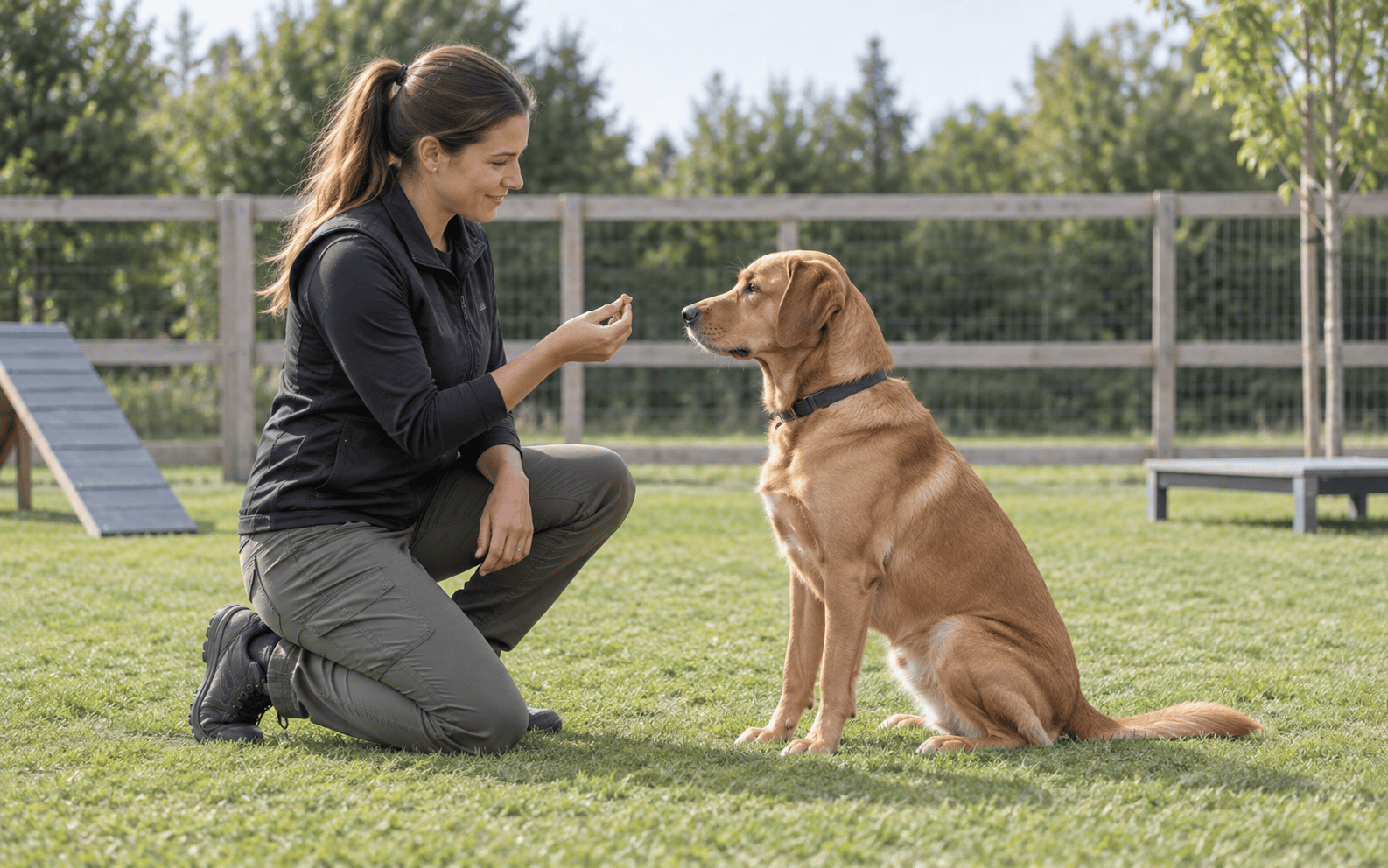
This constant repetition is exactly why board and train programs produce results so much faster than once-a-week group classes. Dogs learn through consistent reinforcement. When a skilled trainer controls the environment, the rewards, and the rules from morning to night, the dog’s behavior patterns shift quickly. There is no gap between lessons where confusion creeps back in.
For Long Island residents, this matters even more because of the environment your dog lives in. Suburban neighborhoods here come packed with distractions: squirrels, cyclists, kids on scooters, delivery trucks, and other dogs. A good board and train program on Long Island exposes your dog to realistic scenarios and trains them to respond correctly despite those distractions, not in a controlled vacuum that doesn’t reflect real life.
The best dog training methods to improve your pets obedience combine clear communication, consistent reward structures, and realistic distraction exposure — and that is precisely what a structured board and train program delivers.
Which Dogs Benefit Most From Board and Train Programs
Not every dog needs a board and train program, but many dogs on Long Island are enrolled for very good reasons. Understanding whether your dog fits the profile helps you invest your time and money wisely.
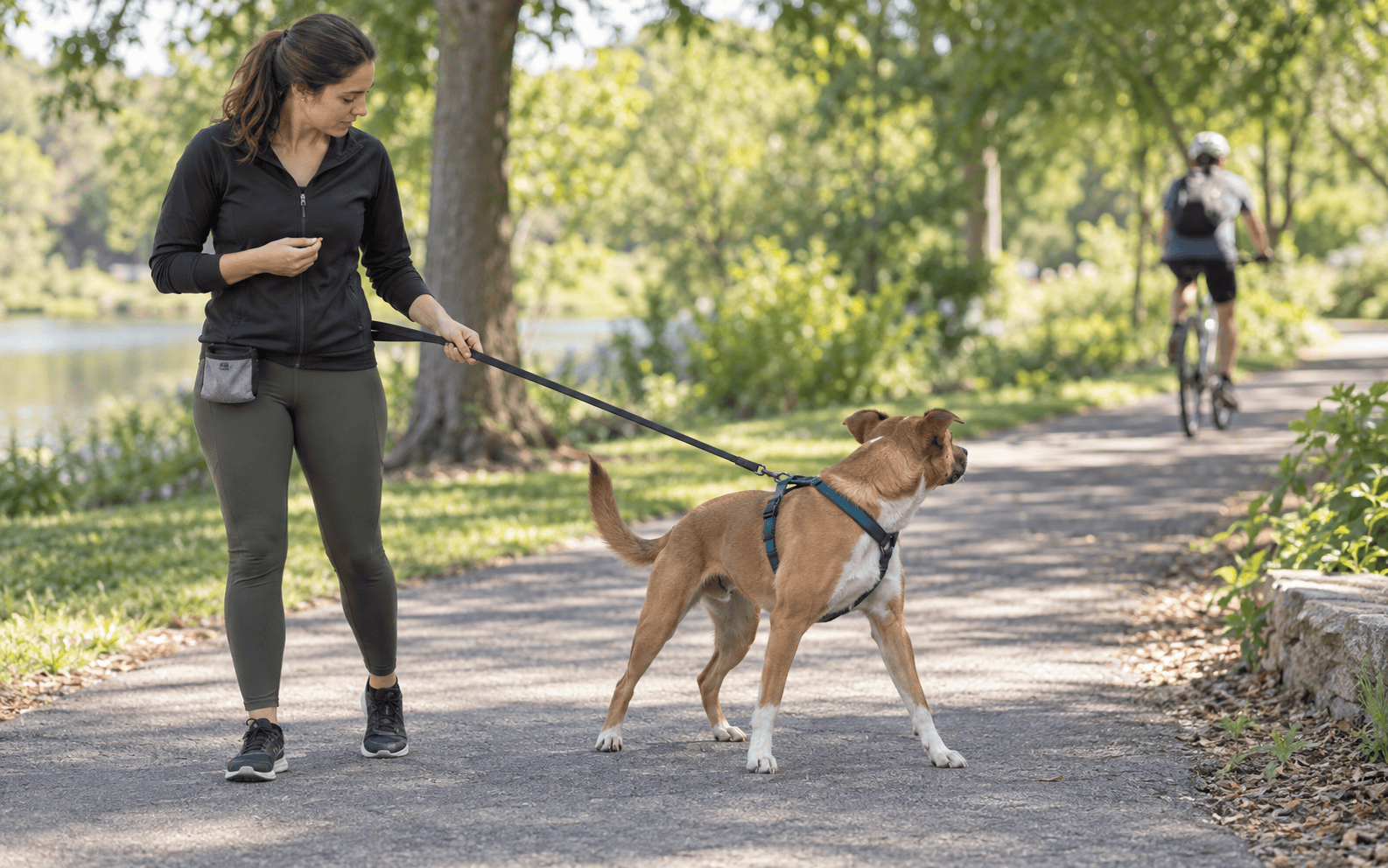
Dogs that tend to benefit most:
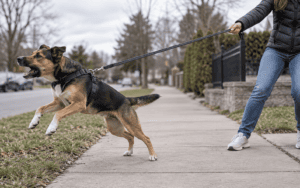
- Reactive dogs that lunge, bark, or pull aggressively toward other dogs or people
- Puppies that are starting to develop stubborn or dominant habits before they become deeply ingrained
- Adult dogs with no formal training background who have developed frustrating behaviors over years
- Dogs whose owners have genuinely tried and struggled to make progress with at-home techniques
- Busy households where consistent daily training practice simply cannot happen due to work, kids, or schedules
If your dog falls into any of these categories, a board and train program is worth serious consideration. Owners who work long hours in New York City and commute through Long Island, for example, often find that they want a trained dog but do not have two to three hours per day to dedicate to consistent practice. Board and train fills that gap directly.
If you have a young puppy and are still in the foundational phase, it is also worth reviewing the best ways to train a puppy before deciding whether a board and train program or a puppy-specific curriculum is the right starting point for your situation.
The Dog Training Tips That Make Board and Train Programs Work
Even the best facility in the world cannot produce lasting results without a few core principles in place. These dog training tips are what distinguish a program that changes your dog’s behavior for life from one that produces temporary compliance.
- Clarity before corrections
Every command your dog is expected to follow must first be taught with absolute clarity. Before any correction is introduced, the dog needs to understand exactly what is being asked. Reputable trainers on Long Island spend the first phase of any program purely on building understanding and drive before adding pressure.
- Real-world proofing
Commands practiced only in quiet environments do not transfer to real life. A dog that sits perfectly in a backyard but ignores you at the dog park has not been proofed. Good board and train programs deliberately introduce increasing levels of distraction as the dog’s reliability improves. This is non-negotiable for Long Island dogs that will encounter busy streets, beaches, and crowded parks.

- The handler transition
This is arguably the most critical phase of any board and train program and the one most commonly skipped by lower-quality providers. When you pick your dog up, you should receive thorough one-on-one instruction on exactly how your dog was trained, what cues were used, and how to maintain the behavior at home. Without this, the results tend to fade within weeks.
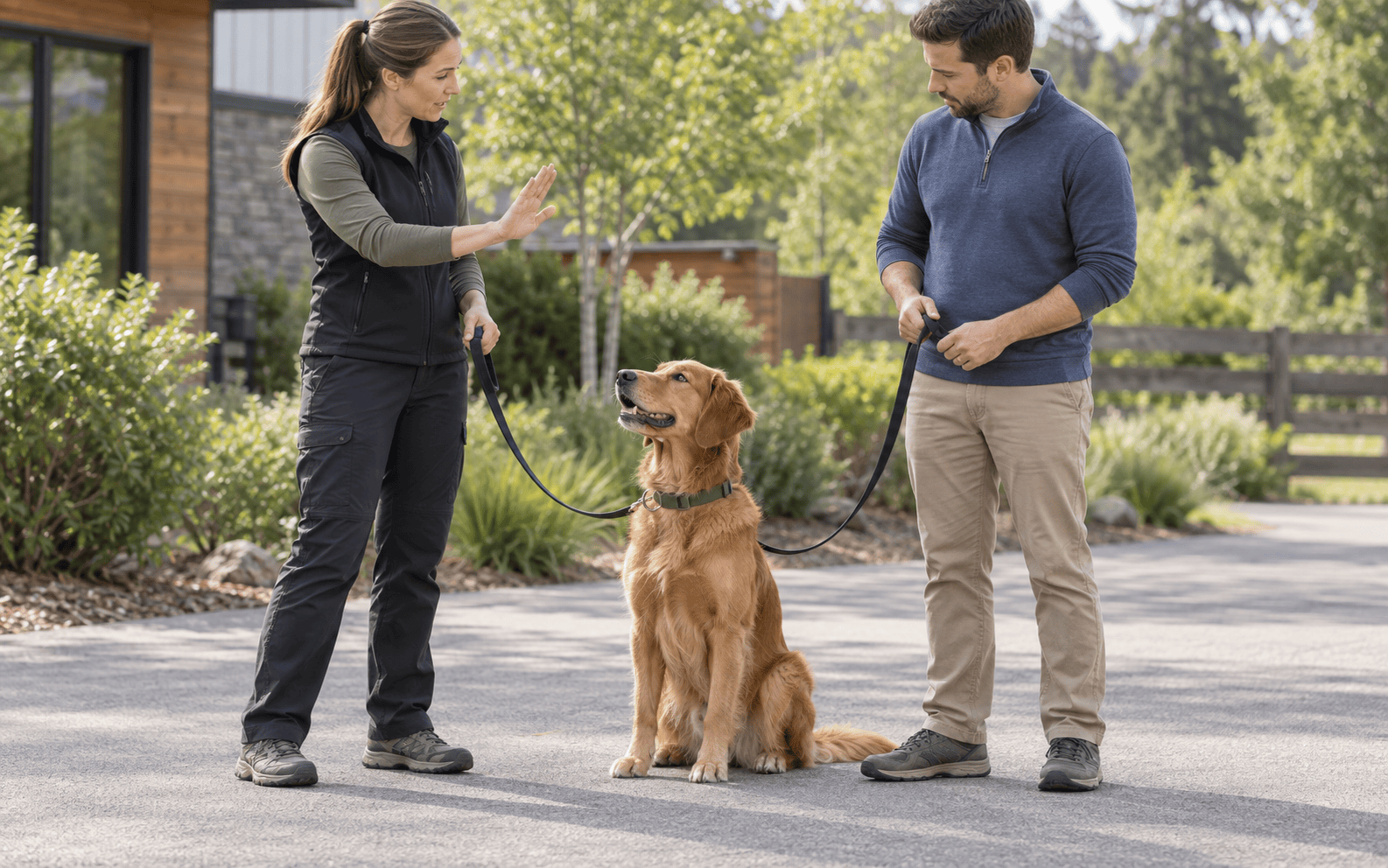
Before your dog’s program begins, it helps to study the top 10 essential dog commands every owner must know so that when your trainer hands your dog back to you, the vocabulary and expectations already make sense.
- Consistency at home after the program
Your dog’s trainer cannot follow you home, but the rules absolutely must. Board and train programs equip owners with a clear structure to maintain. If the dog sleeps in the bed, gets fed from the table, and pulls on leash the day after pickup, regression will happen. The program gives you the foundation; your daily habits protect it.
In-Home Training vs. Private Lessons vs. Board and Train: A Side-by-Side Look
Choosing the right program type for your dog is one of the most common questions Long Island dog owners have. Here is a direct comparison to help you think it through clearly.
| Training Format | Best For | Time Commitment from Owner | Speed of Results |
| Board and Train | Busy owners, dogs with behavioral issues, fast results | Low during program, consistent maintenance after | Fastest |
| In-Home Training | Dogs that struggle in new environments | High, owner present for every session | Moderate |
| Private Lessons | Motivated owners, mild behavior issues | High, owner trains alongside dog weekly | Moderate to slow |
| Group Classes | Socialization, basic manners, budget-conscious owners | Moderate | Slowest |
For Long Island dog owners whose dogs have anxiety, reactivity, or ingrained behavioral patterns, in-home training is often a powerful complement to or alternative for board and train. A trainer visiting your home works specifically within the environment where the problem behaviors occur, so if that sounds like the right approach for your dog, you can learn more about in home dog training long island as a focused option.
For owners who want a more personalized, one-on-one format without the residential component, private dog training long island sessions offer flexibility alongside professional guidance.
What to Look for in a Long Island Board and Train Program
Not every board and train program is built the same way, and Long Island dog owners deserve to know exactly what separates a trustworthy program from one that takes your money and returns a temporarily compliant dog.
Questions to ask before enrolling:
- Where does my dog sleep and live during the program? Is it a home environment or a kennel?
- How many training sessions per day will my dog receive, and for how long?
- What training methods are used? Are they balanced, positive reinforcement-based, or purely aversive?
- What does the pickup and handoff session look like? Will I receive hands-on instruction?
- Can I see video updates of my dog during the program?
- What happens if my dog is not progressing as expected?
- Is there any follow-up support after the program ends?
A reputable program will answer every one of these questions without hesitation. If a trainer becomes evasive when you ask about daily structure or methodology, treat that as a red flag.
For Long Island residents specifically, it is also worth confirming that the program trains your dog in environments similar to what your dog will encounter at home, and you can explore the specifics of what a structured board and train long island program looks like, including what the daily schedule involves and how the handoff process is handled.
How to Maintain Results After Your Dog Comes Home
The board and train program is the beginning of your dog’s new behavioral foundation, not the finish line. The dog training tips your trainer gives you at pickup are not optional guidelines. They are the blueprint for keeping your investment intact.
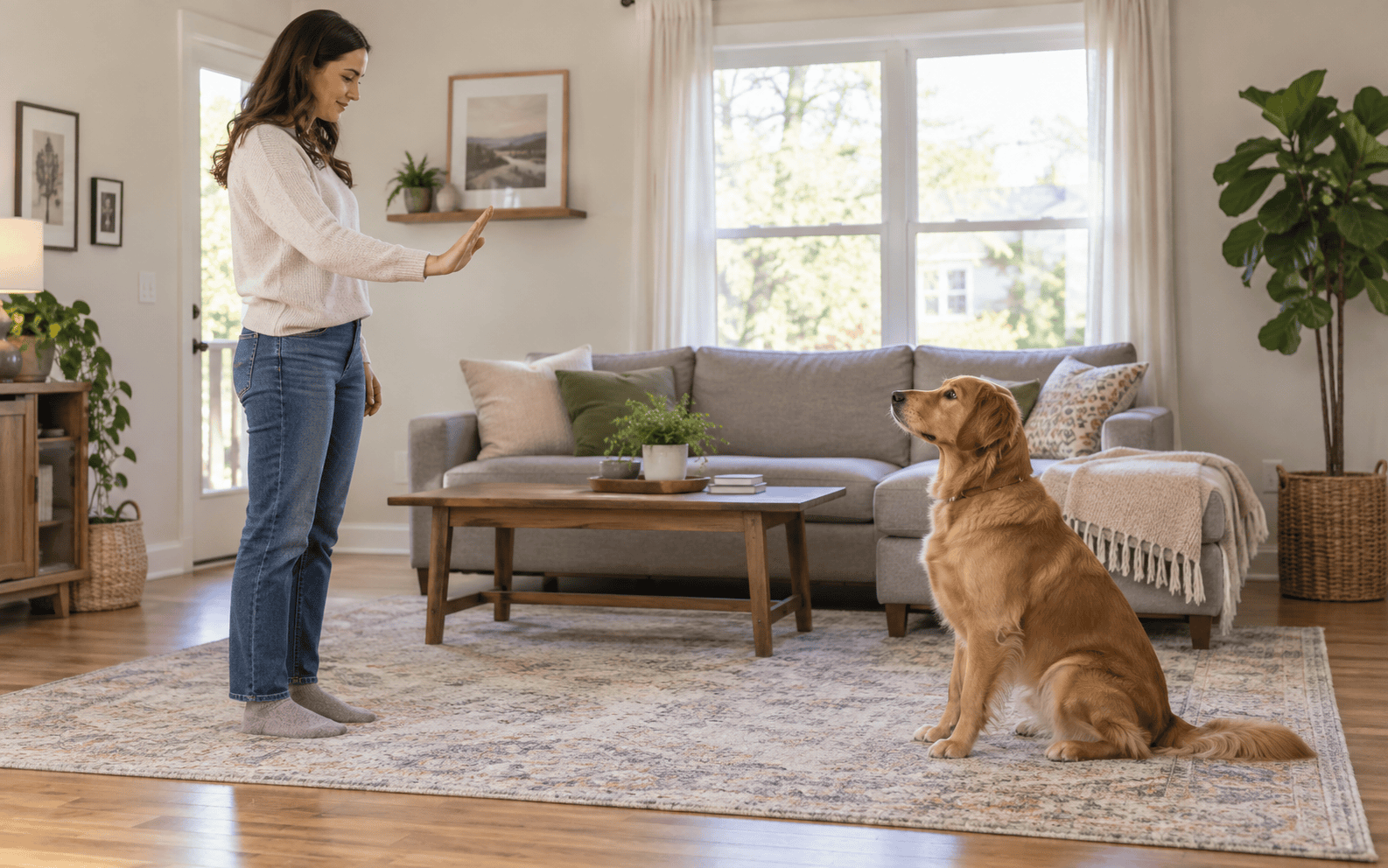
Here is what consistent maintenance looks like in practice:
- Practice your dog’s commands for at least 10 to 15 minutes every single day, not just when you remember to.
- Use the same verbal cues and hand signals your trainer used. Changing the language confuses the dog and erodes reliability.
- Enforce every command. If you ask your dog to sit and walk away before the dog complies, you are training non-compliance.
- Maintain structure around meals, doorways, and walks. The dog that pushes through doors and jumps for food is testing boundaries in every other area too.
- Schedule a follow-up session with your trainer at four to six weeks post-program. This is where small regressions get corrected before they become habits again.
The Long Island environment is rich with stimulation, from the beaches at Jones Beach State Park to the busy shopping centers in Nassau and Suffolk County. Proofing your dog’s commands in those real-life settings after the program ends is what produces a dog you can take anywhere confidently.
Why Long Island Dog Owners Choose Board and Train Over Other Options
The decision ultimately comes down to this: how quickly do you need results, and how much daily training time can you realistically commit to? For a large portion of Long Island dog owners, the answer is that they need significant behavioral change and do not have the bandwidth to produce it through weekly lessons alone.
Board and train programs compress months of potential progress into weeks. They remove the variable of inconsistent owner practice. And when paired with a thorough handoff and genuine follow-up support, they produce dogs that are calmer, safer, and genuinely enjoyable to live with.
The dog training tips outlined throughout this page apply whether you are choosing a board and train program, working one-on-one with a private trainer, or building skills through in-home sessions. The principles of clarity, consistency, proofing, and realistic maintenance are universal. But the speed and depth that a structured residential program delivers is genuinely difficult to replicate through any other format.
Take the First Step Toward a Calmer, Better-Behaved Dog on Long Island
If you have been living with a dog that pulls, jumps, barks, or simply ignores you, a board and train program on Long Island is your clearest path to lasting change. Every week you wait is another week of reinforced bad habits that become harder to undo. Reach out to a qualified Long Island trainer today, describe your dog’s specific behaviors, and ask for a program assessment so you can start with a clear plan and a realistic timeline.
You May Also Want to Read
Leash Aggression in Dogs
Trigger Stacking in Dogs
Why Does My Dog Lunge on a Leash?
Frequently Asked Questions
How long does a board and train program on Long Island typically last?
Most board and train programs on Long Island run between two and four weeks, depending on the dog’s age, temperament, and behavioral goals.
A younger dog with mild obedience gaps may progress well within a two-week window, while a reactive or older dog with deeply ingrained habits will likely need a full four weeks to build reliable, proofed behavior. Your trainer should assess your dog before enrollment and give you a realistic timeline rather than a one-size-fits-all answer. Always ask what specific outcomes are expected by the end of the program so you have a clear benchmark to measure against.
Will my dog forget the training once they come back home?
Your dog will not automatically forget the training, but results will fade if you do not maintain the structure and commands the trainer established during the program.
Dogs learn through repetition and consistent reinforcement. When the rules change at home, meaning different cues, no enforcement, or a return to old routines, the dog’s behavior gradually reverts to what gets rewarded in the new environment. A good board and train program includes a thorough owner handoff session and ideally some form of follow-up support to help you maintain the gains. Your daily consistency in the weeks after pickup is what determines how permanent the results are.
Is board and train right for a puppy, or should I wait until my dog is older?
Board and train can be appropriate for puppies, but the program content and structure should be specifically designed for a young dog’s developmental stage, not a scaled-down version of an adult dog program.
Puppies have shorter attention spans, higher social needs, and are still forming their foundational understanding of the world. A reputable Long Island trainer offering board and train for puppies will focus on socialization, foundational commands, crate training, and impulse control rather than the advanced obedience work suited to adult dogs. If your puppy is under five months old, discuss the timeline carefully with your trainer to ensure the program is developmentally appropriate and not overly demanding for that stage.
How much does a board and train program on Long Island cost?
Board and train programs on Long Island typically range from $1,500 to $4,500 or more, depending on the program length, the trainer’s credentials, and the level of behavior modification required.
Basic obedience programs for dogs without significant behavioral issues tend to sit at the lower end of that range, while programs addressing aggression, reactivity, or severe anxiety command higher rates due to the additional expertise and daily management required. It is worth viewing this as a long-term investment: a dog with solid obedience requires fewer veterinary visits related to stress or injury, causes less property damage, and creates a safer household. Always ask for a detailed breakdown of what the fee includes, especially whether the owner handoff session and any follow-up support are covered.
What is the difference between board and train and private dog training lessons on Long Island?
Board and train places your dog with a professional trainer full-time for intensive daily instruction, while private lessons involve weekly or bi-weekly sessions where you and your dog work with a trainer together.
The core distinction is immersion versus incremental practice. Board and train removes the variable of inconsistent owner practice during the learning phase, which is why it produces faster results for dogs with established problem behaviors. Private lessons, on the other hand, build the owner’s skills alongside the dog’s, which can be highly effective for motivated owners with mild to moderate behavioral concerns and the time to practice daily between sessions. Many Long Island dog owners use board and train as the foundation and then follow up with private lessons to sharpen their own handling skills and maintain the dog’s responsiveness over time.
The Bottom Line on Dog Training Tips for Long Island Dog Owners
The most effective dog training tips are not complicated: be consistent, be clear, proof your commands in real environments, and never stop reinforcing the behaviors you want. What changes when you add a professional board and train program to that equation is the speed and depth at which those principles get applied. Instead of hoping your dog absorbs a lesson once a week, a qualified Long Island trainer works with your dog every single day in a structured environment designed for exactly this purpose.
If your dog is struggling, your household is frustrated, and you are ready for a genuine solution rather than another round of half-results, a board and train program on Long Island is worth a serious look. Contact a reputable local DOG trainer, ask the right questions, and take the step that gets your dog to where you always imagined they could be.