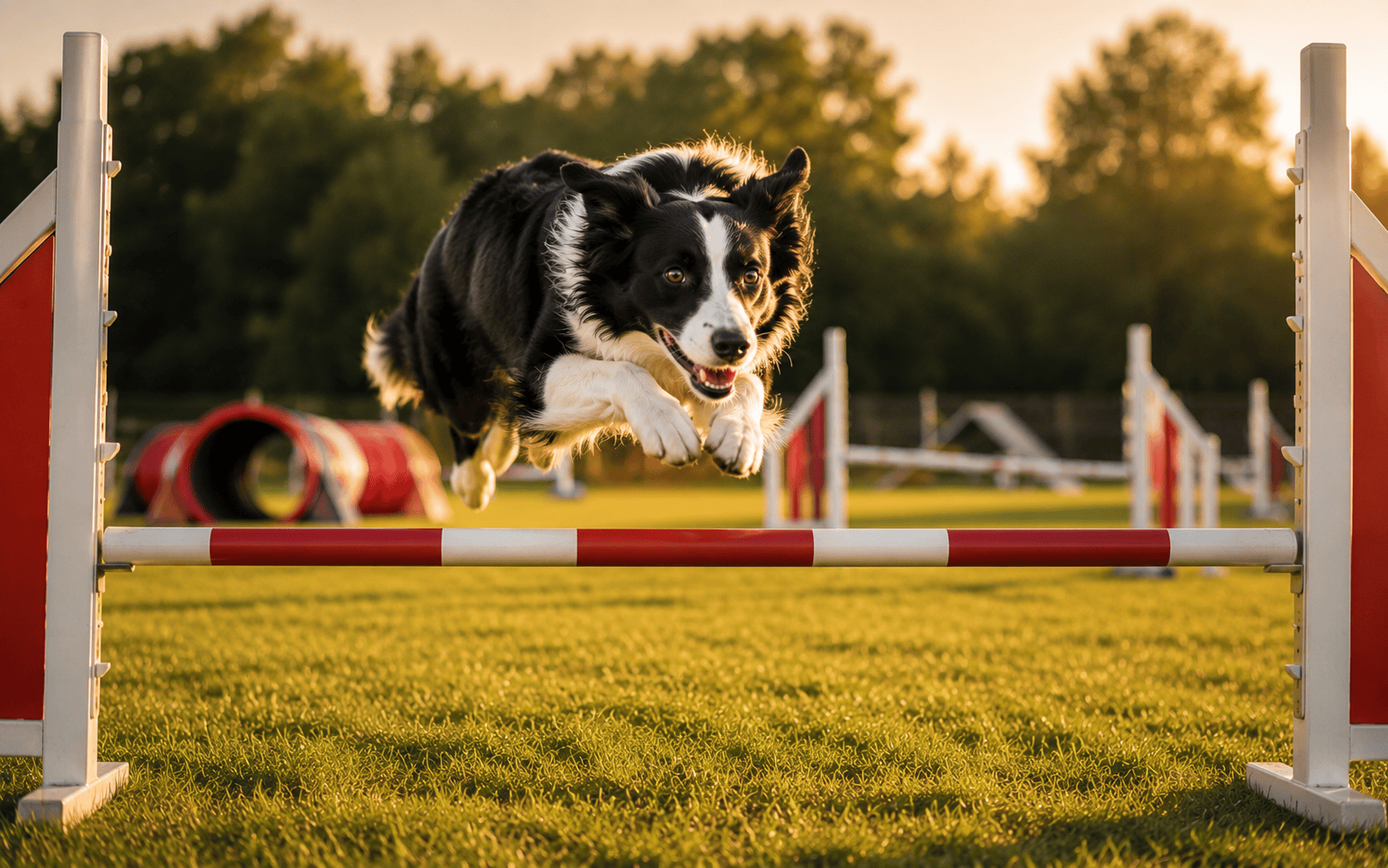
Agility is one of the most demanding dog sports in existence, requiring an athletic body, a sharp mind, and a deep bond between dog and handler. The best dog breeds for agility consistently share three traits: explosive speed, a strong work drive, and the ability to read and respond to their handler’s cues in real time.
Key Takeaways
- Border Collies, Australian Shepherds, and Shetland Sheepdogs dominate competitive agility circuits across the U.S.
- Physical build matters as much as temperament, with medium-sized dogs typically outperforming very large or very small breeds on standard courses.
- Drive and trainability are the two biggest predictors of agility success, more so than raw speed alone.
- You do not need a purebred or a competitive background to enjoy agility as a hobby sport with your dog.
- Early foundation training in focus, recall, and body awareness dramatically shortens the learning curve for agility courses.
- Professional training support, whether in home dog training long island or board-and-train, can accelerate your dog’s progress significantly.
What Makes a Dog Truly Built for Agility?
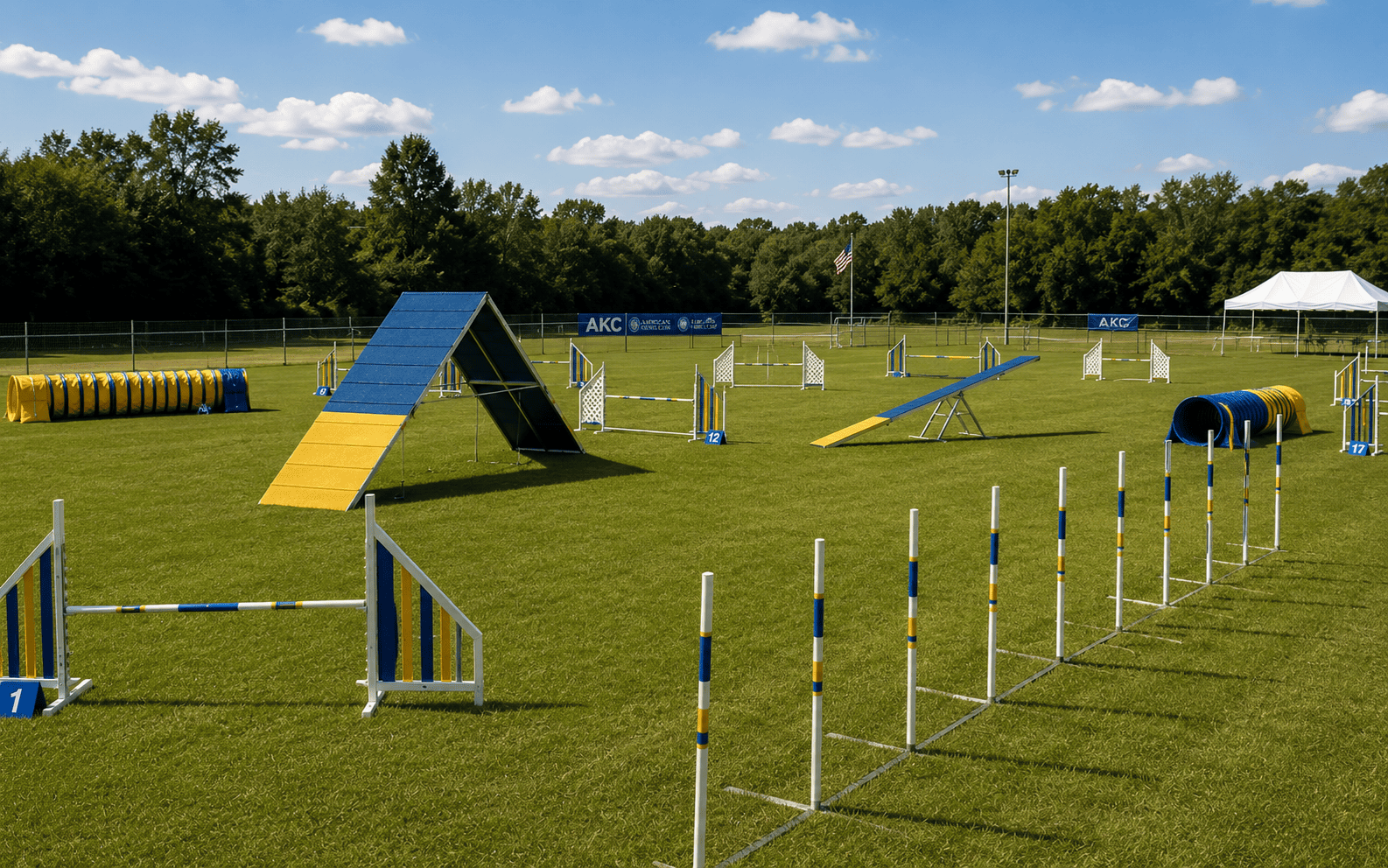
Before jumping straight into breed lists, it helps to understand what agility actually demands from a dog’s body and brain. A standard agility course in the United States, governed by organizations like the American Kennel Club (AKC) or the United States Dog Agility Association (USDAA), includes weave poles, tunnels, A-frames, seesaws, jumps, and pause tables. A dog must navigate all of these obstacles in the correct sequence, off-leash, while responding to a handler running alongside.
That combination puts pressure on several physical and behavioral traits simultaneously.
Physical requirements:
- A compact, balanced body with a low center of gravity
- Strong hindquarters for explosive jumping and quick direction changes
- Flexible spine and open shoulder angles for tight weave entries
- Cardiovascular endurance for courses lasting 30 to 60 seconds at sprint pace
Behavioral requirements:
- High focus and low distractibility in chaotic environments
- Strong handler orientation (the dog naturally watches you)
- Fast learning and a strong reinforcement history
- Drive to work without frequent breaks or motivation problems
The Top Breeds That Dominate Agility Competitions
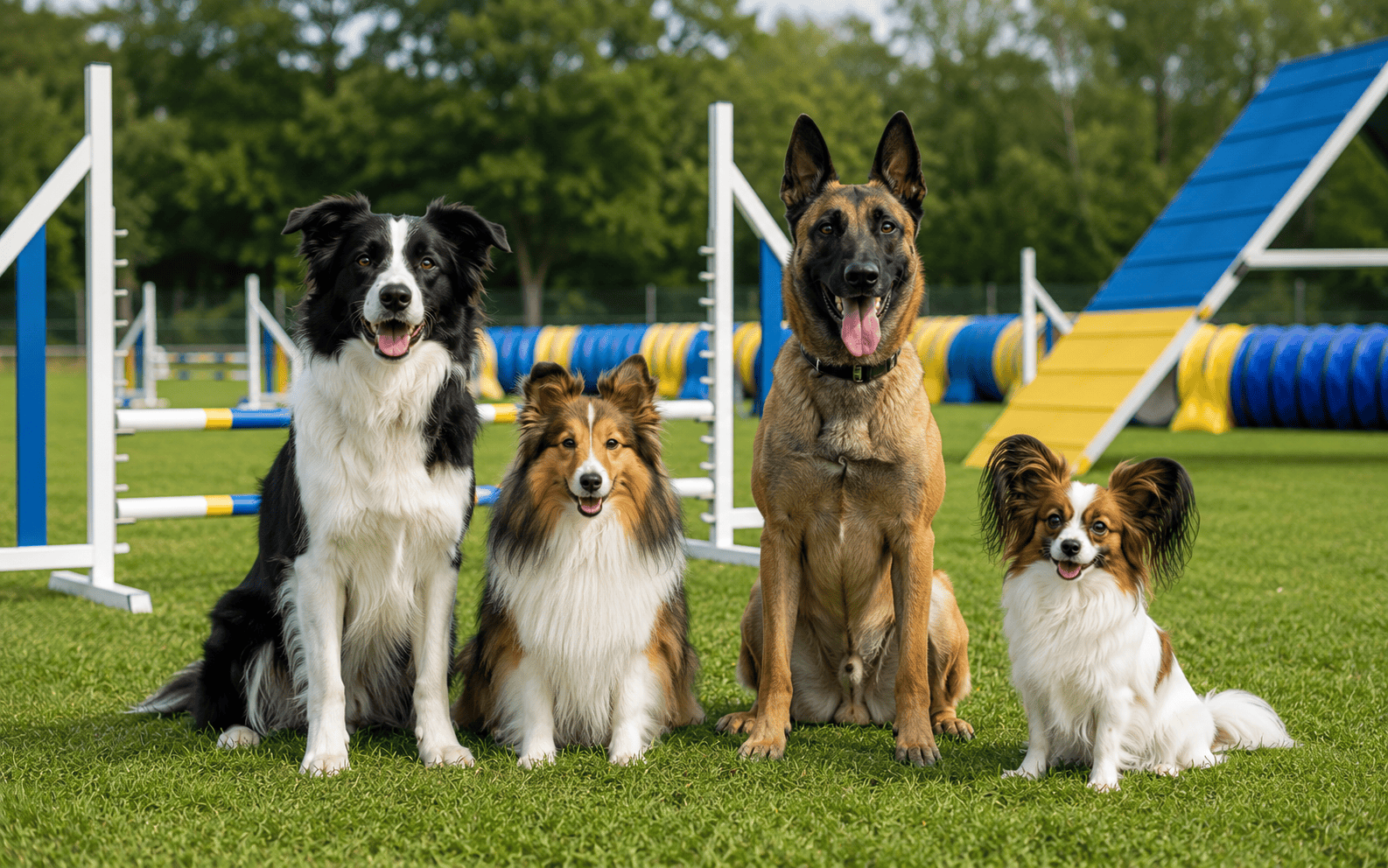
Border Collie
No conversation about agility is complete without the Border Collie at the top of the list. These dogs have won more national and international agility titles than any other breed, and for good reason. They combine a blistering top speed (some run over 30 mph), an almost obsessive desire to work, and an intelligence that lets them learn new sequences in just a few repetitions.
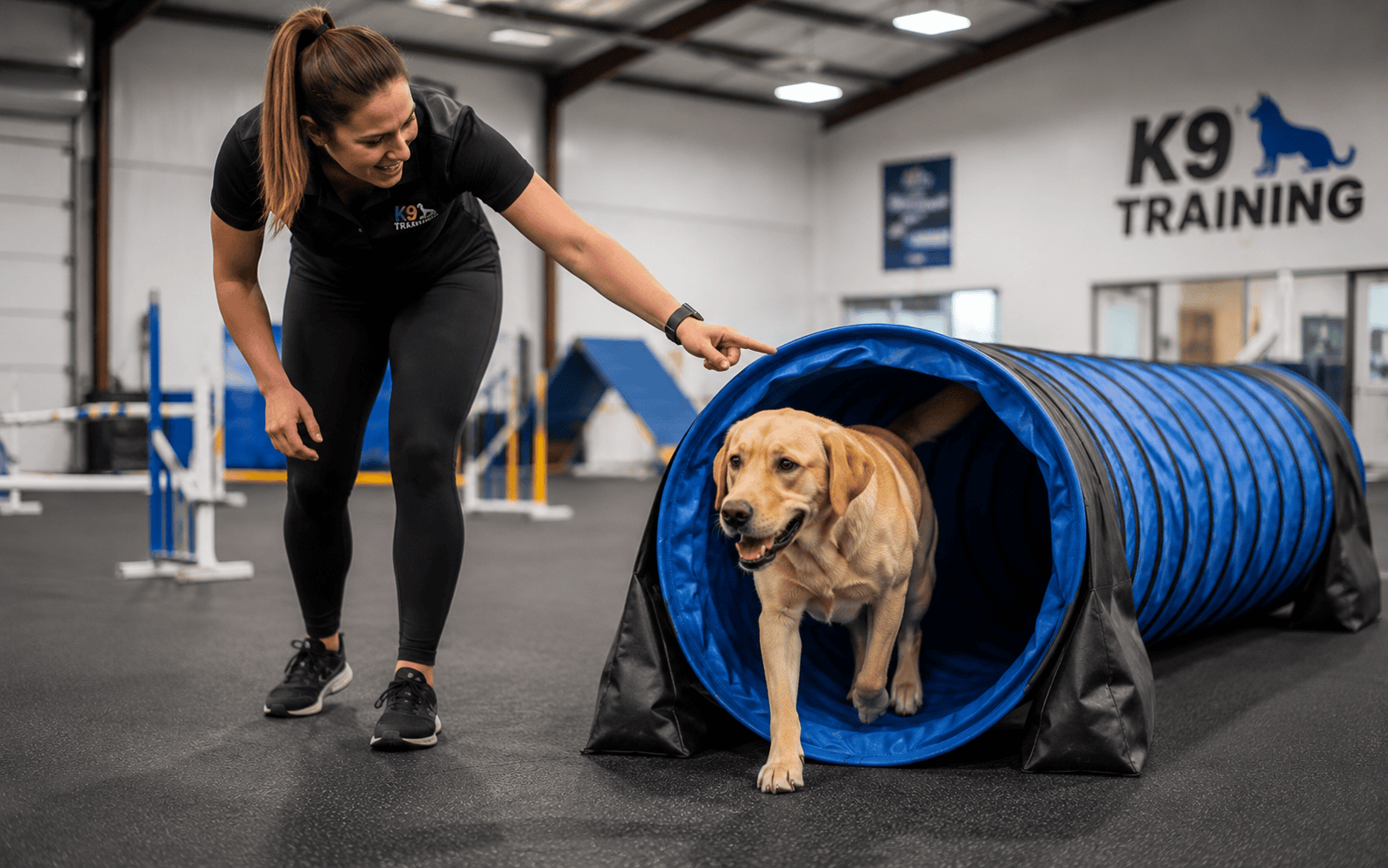
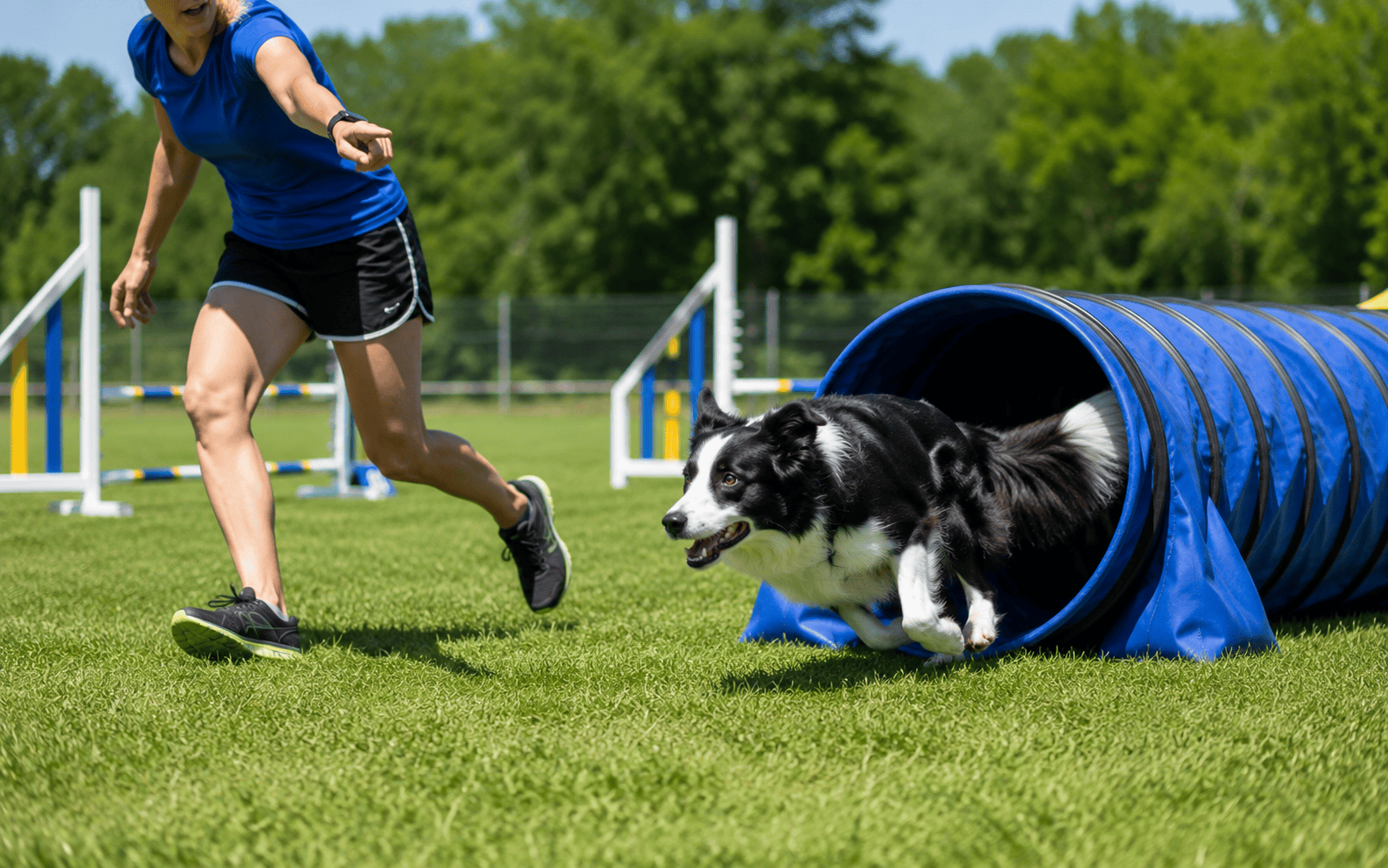
If you want to train a Border Collie for agility, their intensity requires just as much mental management as physical exercise, and how to train a border collie dog provides essential guidance for handlers who are inconsistent or unclear with their cues because these dogs pick up on every micro-signal their person gives.
Australian Shepherd
The Australian Shepherd is arguably the second most dominant breed in American agility rings. Aussies are slightly less obsessive than Border Collies, which actually makes them more accessible for handlers who are newer to the sport. They are athletic, biddable, and intensely loyal to their person. They thrive in environments that give them both physical output and problem-solving challenges.
Standard Aussies typically weigh between 40 and 65 lbs, placing them squarely in the performance sweet spot for most agility jump heights. Their double coat does require maintenance, but it does not negatively impact performance.
Shetland Sheepdog
The Sheltie punches well above its weight class in agility. These small dogs (15 to 25 lbs) are lightning-quick through weave poles and tight turns, and they have an exceptional ability to read handler body language, making them consistently ranked among the most trainable dog breeds in the herding group and they respond beautifully to positive reinforcement.
Their primary challenge in agility is environmental sensitivity. Shelties can shut down under pressure or in loud, crowded environments if they have not been properly socialized and conditioned to trial settings.
Belgian Malinois
The Malinois has surged in agility popularity over the last decade. These dogs are raw power in a 60-lb frame, and their drive is near-limitless. Experienced handlers who can match the Malinois’s intensity love them in agility because they maintain speed through an entire course without fading. Proper dog training for Belgian Malinois is essential, as they are not a beginner-friendly breed. A Malinois with insufficient stimulation and poor handling can quickly develop problem behaviors.
Jack Russell Terrier
In the small dog category, the Jack Russell Terrier is a serious competitor. They are fearless on the A-frame, fast through tunnels, and highly motivated, and pairing terrier energy with structured obedience dog training before introducing agility equipment pays off significantly in course performance. The challenge with terriers is their independent streak. They require a handler who knows how to keep training sessions engaging and rewarding without losing their attention to environmental distractions.
Papillon
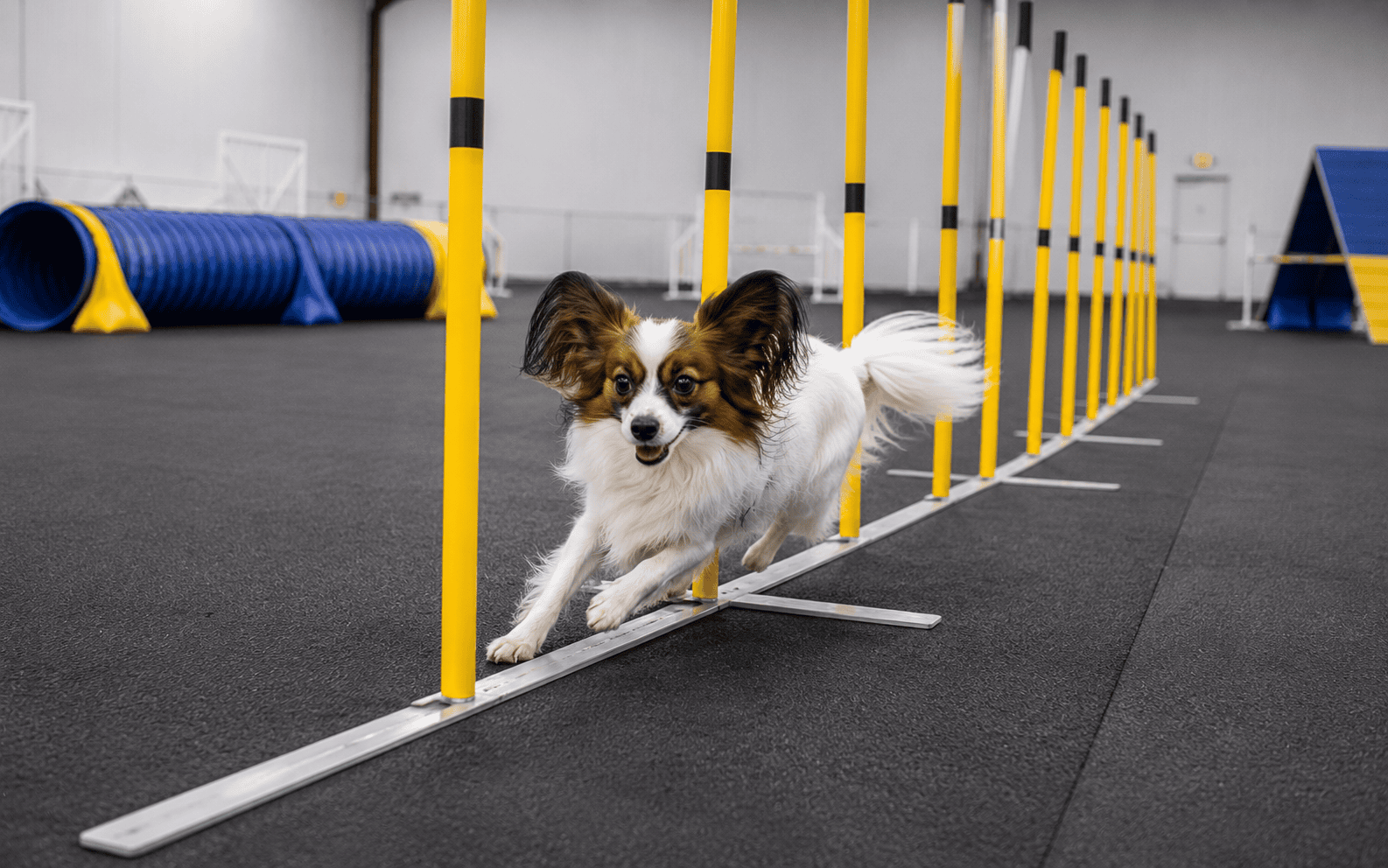
The Papillon is one of the most surprising success stories in American agility competition. Weighing in at just 7 to 10 lbs, these toy-sized dogs have won national championships against breeds five times their size. Their agility (literally) is remarkable, their handler focus is exceptional, and they are far tougher mentally than their appearance suggests.
Breeds That Are Often Overlooked (But Should Not Be)
Beyond the obvious contenders, several breeds perform surprisingly well in agility when given the right foundation training.
Golden Retriever: Highly trainable, motivated by food and play, and physically capable. They are not the fastest, but many Goldens compete successfully at local and regional levels. Their enthusiasm keeps training fun for newer handlers.
Standard Poodle: Poodles are athletic, intelligent, and extremely responsive to training. Their coats require upkeep, but their performance in agility is genuinely impressive. The Standard Poodle’s stride and turning ability rival many herding breeds.
Whippet: In straight-line speed, the Whippet may be faster than a Border Collie. On curved and tight sequences, their naturally independent personality creates more handling challenges. With a skilled handler, however, a well-trained Whippet on an agility course is something to watch.
Rat Terrier: Another small breed with real grit and speed. Rat Terriers are focused, driven, and athletic. They tend to do well in venues that use a prey-drive-based training approach.
Breed Comparison: Key Agility Metrics
| Breed | Size | Speed | Trainability | Drive | Best For |
| Border Collie | Medium | 5/5 | 5/5 | 5/5 | Competitive titles |
| Australian Shepherd | Medium | 4/5 | 5/5 | 4/5 | All levels |
| Shetland Sheepdog | Small | 4/5 | 5/5 | 4/5 | Small dog classes |
| Belgian Malinois | Medium-Large | 5/5 | 4/5 | 5/5 | Experienced handlers |
| Jack Russell Terrier | Small | 4/5 | 3/5 | 5/5 | Fun classes, small dog |
| Papillon | Toy | 3/5 | 5/5 | 4/5 | Toy/small dog classes |
| Golden Retriever | Large | 3/5 | 4/5 | 3/5 | Recreational agility |
| Standard Poodle | Large | 3/5 | 5/5 | 4/5 | All levels |
How to Start Training Your Dog for Agility
Regardless of breed, the foundation of agility success is built long before your dog ever sees a jump or a tunnel. Handlers who rush to equipment without building solid groundwork consistently produce dogs that are fast but sloppy, or slow but stressed.
Here is a practical starting sequence for beginners:
- Build focus and engagement first. Your dog should be able to maintain eye contact and responsiveness in mildly distracting environments before adding agility complexity.
- Train a strong recall. Off-leash agility means your dog has to come back to you under pressure. A reliable recall is non-negotiable.
- Introduce body awareness exercises. Cavaletti poles, balance discs, and platform work teach your dog where their feet are, reducing hesitation on obstacles like the seesaw.
- Shape obstacle behavior one piece at a time. Introduce tunnels, then jumps, then contact obstacles. Layer complexity slowly.
- Add handler motion gradually. Most dogs learn obstacles stationary before handlers start running alongside them.
If you want professional support while building that foundation, working with a trainer can make a significant difference, as board and train long island allows your dog to work with professional trainers daily, covering foundational skills in a condensed timeline. And if you prefer a tailored one-on-one approach at a training facility, private dog training long island gives you direct, personalized coaching specific to your dog’s breed, age, and current skill level.
Things to Know
- Mixed-breed dogs are eligible to compete in AKC agility through the Canine Partners program, so a purebred is not a requirement.
- Dogs under 12 months of age should not be trained on full-height jumps, as growth plates are still developing and injuries are a real risk.
- The USDAA splits competitors into height classes (8″, 12″, 16″, 22″, 26″) so small breeds are not at a disadvantage against large ones.
- High-drive dogs like Border Collies and Malinois can develop frustration or displacement behaviors if agility training is inconsistent or if sessions end poorly.
- Agility is physically demanding and dogs should receive basic fitness conditioning (swimming, leash walking, balance work) alongside sport-specific training.
- Course performance is roughly 70% handling skill and 30% dog breed, meaning your training decisions matter more than the breed you choose.
Ready to Put Your Dog on the Course?
Pick one foundational skill your dog is weakest in right now, whether that is focus, recall, or body awareness, and commit to working it for the next two weeks before introducing any agility equipment. Clarity in the foundation always produces faster results on the course than rushing to obstacles. If you want expert guidance to accelerate that process, reach out to a qualified trainer who understands sport dogs and can build a program specific to your dog’s breed and personality.
You May Also Read
Agility Dog Training: What It Is, How It Works
Benefits of Dog Agility Training
Frequently Asked Questions
Can any dog do agility, or only specific breeds?
Any healthy dog can participate in recreational agility regardless of breed or mix.
The AKC’s Canine Partners program allows mixed breeds to compete officially. That said, certain breeds consistently outperform others at high competitive levels due to physical and behavioral traits that are deeply ingrained through generations of selective breeding.
At what age can I start agility training with my puppy?
You can begin foundation work like focus, recall, and tunnel introductions as early as 8 to 10 weeks, but full obstacle training should wait until 12 to 18 months.
Growing joints and developing growth plates are vulnerable to repetitive impact stress. Low jumps and body awareness games are appropriate for puppies, but contact obstacles and full-height jumps should be introduced gradually as the dog matures physically.
Is agility good for high-energy dogs that are hard to manage at home?
Yes, agility is one of the most effective outlets for high-drive, high-energy dogs because it engages both their body and their brain simultaneously.
Dogs that are difficult to manage at home due to excess energy often transform dramatically once they have a structured athletic outlet. That said, agility should supplement obedience training, not replace it. A dog that does not have solid basic manners will be more difficult to handle in a competition environment.
How long does it typically take to train a dog for its first agility trial?
Most dogs with a solid foundation can enter their first novice-level trial within 12 to 18 months of starting agility-specific training.
The timeline varies based on the dog’s age, prior training history, handler experience, and consistency of practice. Dogs with strong obedience backgrounds and experienced handlers sometimes compete within 8 to 10 months.
What is the most common mistake beginners make when starting agility training?
The most common mistake is introducing obstacle equipment before the dog has a reliable recall and strong handler focus.
Without those two elements in place, dogs learn to run courses independently rather than as a team with their handler. This creates handling problems that are difficult to undo later and significantly limits performance potential at competitive levels.
The Bottom Line on Best Dog Breeds for Agility
The best dog breeds for agility are those that bring together physical capability, fast learning, and a genuine desire to work with their handler. Border Collies, Australian Shepherds, and Shelties lead the pack in American competition, but dozens of breeds and mixed-breed dogs find success in the sport at every level from backyard fun to national titles.
Your next step is straightforward: assess your dog’s current training foundation, identify the gaps, and start filling them one skill at a time. The course will be there when you are both ready.