Every time you open your front door, your dog treats it like a starting gun at a race. Door dashing prevention dog training is a structured approach to teaching your dog that doorways are boundaries to respect, not opportunities to escape, and it works for dogs of all ages and breeds.
Key Takeaways
- Door dashing is a dangerous behavior that puts your dog at serious risk of being hit by a car, getting lost, or encountering aggressive animals.
- Training relies on impulse control, threshold boundaries, and consistent repetition rather than punishment.
- Commands like “sit,” “stay,” and “place” are the foundation of reliable door manners.
- Every person in the household must follow the same rules, or the training will break down quickly.
- Professional training programs, including board and train long island and in-home options, dramatically speed up results.
- Starting early is ideal, but adult dogs can absolutely learn door-boundary rules with the right approach.
Why Door Dashing Is More Dangerous Than Most Owners Realize
A dog that bolts out the front door is not just being disobedient. It is putting itself in real danger. According to the American Humane Association, approximately 10 million pets are lost or stolen in the United States every year. A significant portion of those incidents begin with an open door and a split-second decision from an untrained dog.
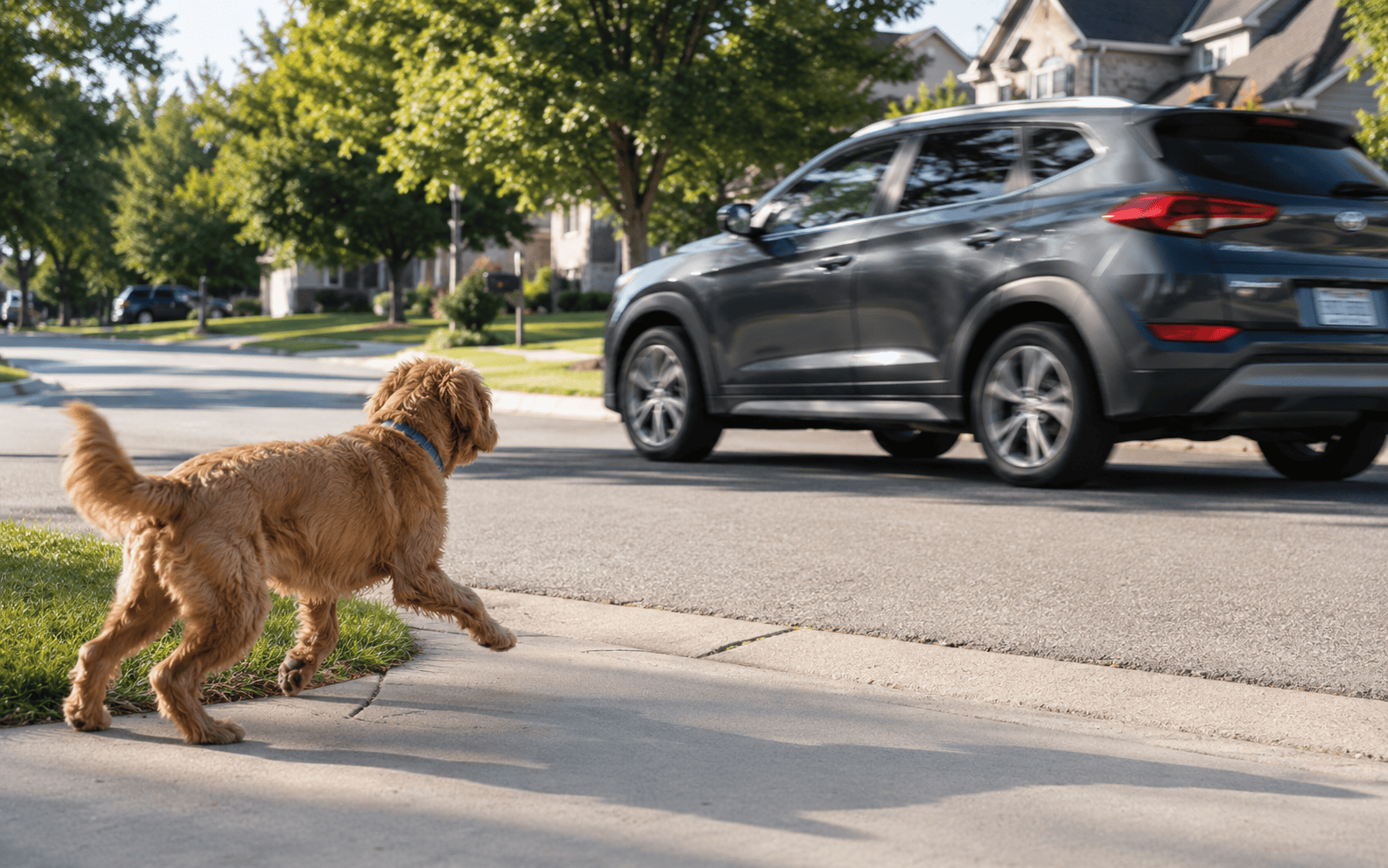
The risks stack up fast. A dog that dashes into a busy suburban street faces cars traveling at 25 to 45 mph. A dog that escapes in a rural area may encounter wildlife, ticks, or rough terrain. Even a “quick grab” situation where you catch your dog after a short chase can end badly if the dog panics and runs further.
What makes door dashing particularly tricky is that dogs who do it are often the friendliest, most energetic ones in the household, and understanding why do dogs run away can help you address the root motivation rather than just the surface behavior. They are not trying to escape because they are unhappy. They bolt because the outside world is exciting, and no one has taught them that the doorway has rules.
The Psychology Behind the Bolt: What Your Dog Is Actually Thinking
Dogs are opportunistic animals. When a door opens and no one stops them, they learn that bolting gets rewarded with freedom, smells, sights, and an adrenaline rush. That reward loop is powerful, and it strengthens every time the behavior goes unchecked.
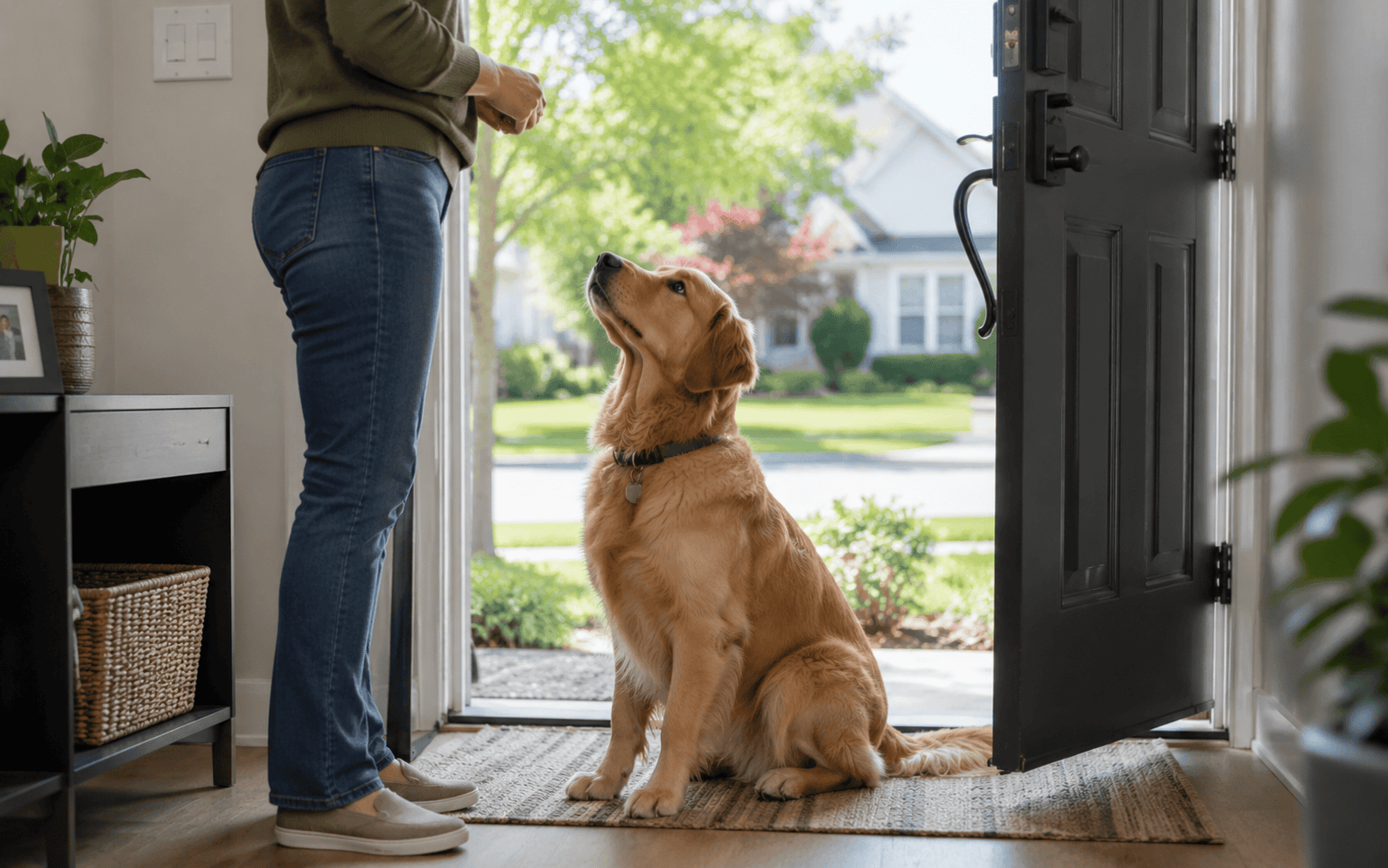
Door dashing is fundamentally an impulse control problem. Your dog sees an opportunity and acts on it before any reasoning kicks in. This is why verbal corrections after the fact do nothing. By the time you say “no,” your dog is already three houses down and has already been rewarded by the environment.
Impulse control training works by teaching your dog to pause and check in with you before acting, even in high-stimulation situations. It is similar to teaching a child to look both ways before crossing the street. The behavior has to be practiced repeatedly, in realistic conditions, until it becomes automatic.
Core Commands That Make Door Dashing Prevention Work
You cannot skip the basics. Reliable door manners are built on top of solid obedience commands. Reviewing the top 10 essential dog commands every owner must know gives you a clear picture of the skills your dog needs before you can expect consistent door behavior.
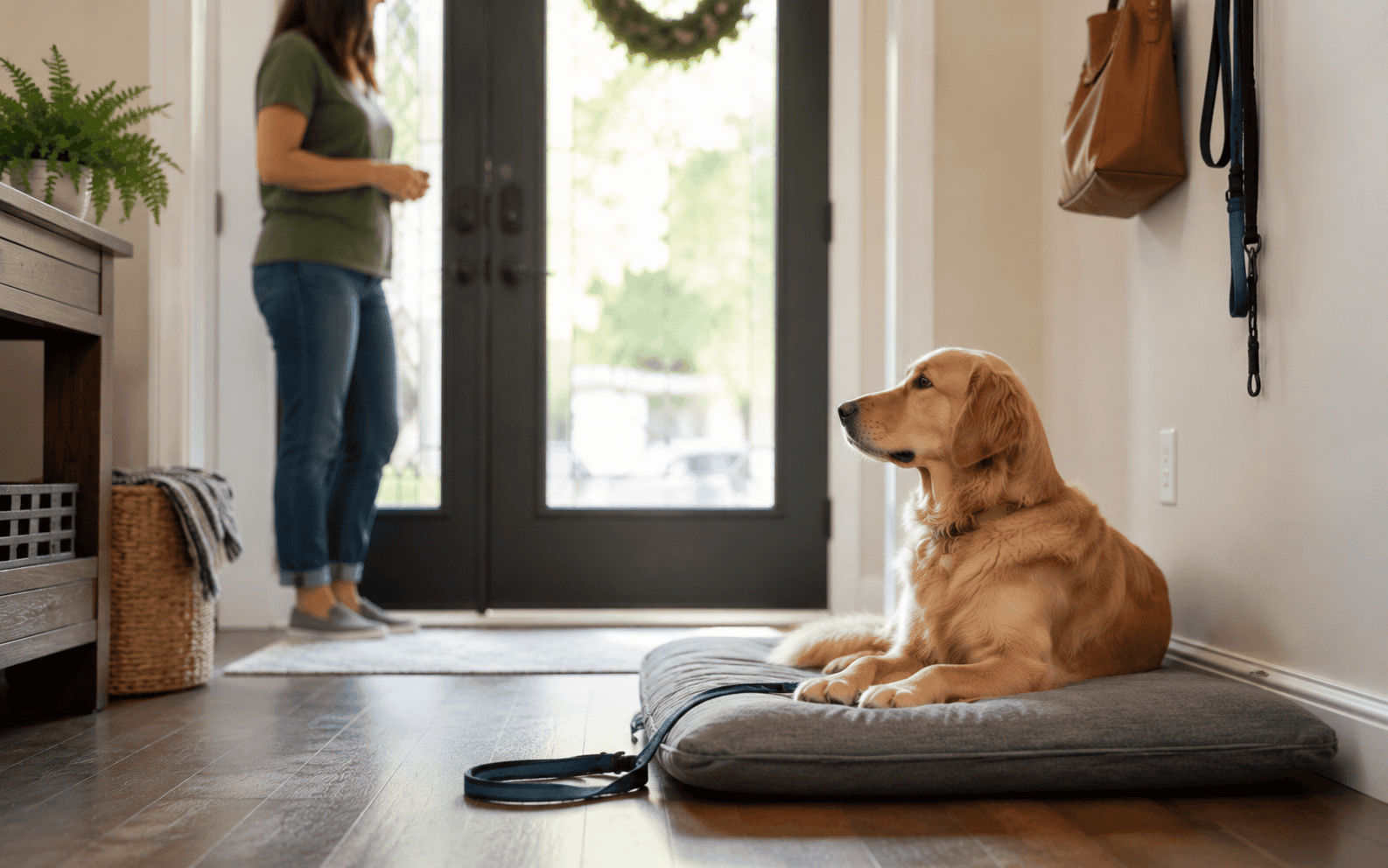
The three commands most directly tied to door dashing prevention dog training are:
“Sit” and “Stay”
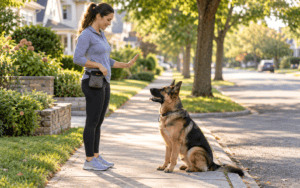
Your dog should be able to sit and hold a stay while you open a door fully, walk through it, and return before releasing them. If your dog breaks the stay the moment the door cracks open, the stay is not yet reliable enough for real-world door situations.
“Place”
Teaching your dog to go to a designated mat or bed on command is one of the most practical tools for door situations. When the doorbell rings or the door opens, your dog goes to its place and waits there. This removes the dog from the danger zone entirely.
“Wait”
Different from “stay,” the “wait” command means “pause and do not move forward yet.” It is especially useful for thresholds, car doors, and gates, and learning how to teach dog to come gives you another critical skill for recall if your dog does escape. It gives you a quick verbal cue that holds your dog in position without requiring a full sit-stay setup.
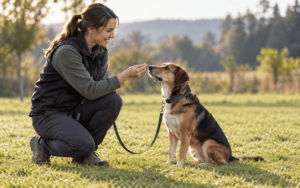
Pairing these with consistent obedience dog training creates a dog that listens in high-distraction environments, not just in the living room when everything is calm.
Step-by-Step Training Process for Door Boundaries
Here is a practical sequence for working through door dashing prevention at home:
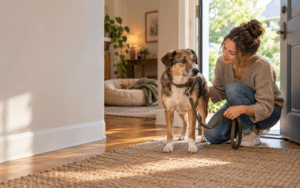
- Start with no distractions. Begin inside with the door closed. Ask your dog to sit at least 3 to 4 feet from the door. Reward the sit heavily.
- Introduce door movement gradually. Touch the door handle. Reward your dog for staying calm. Open the door one inch. Reward. Open it two inches. Reward. You are teaching your dog that the door opening is not a cue to move.
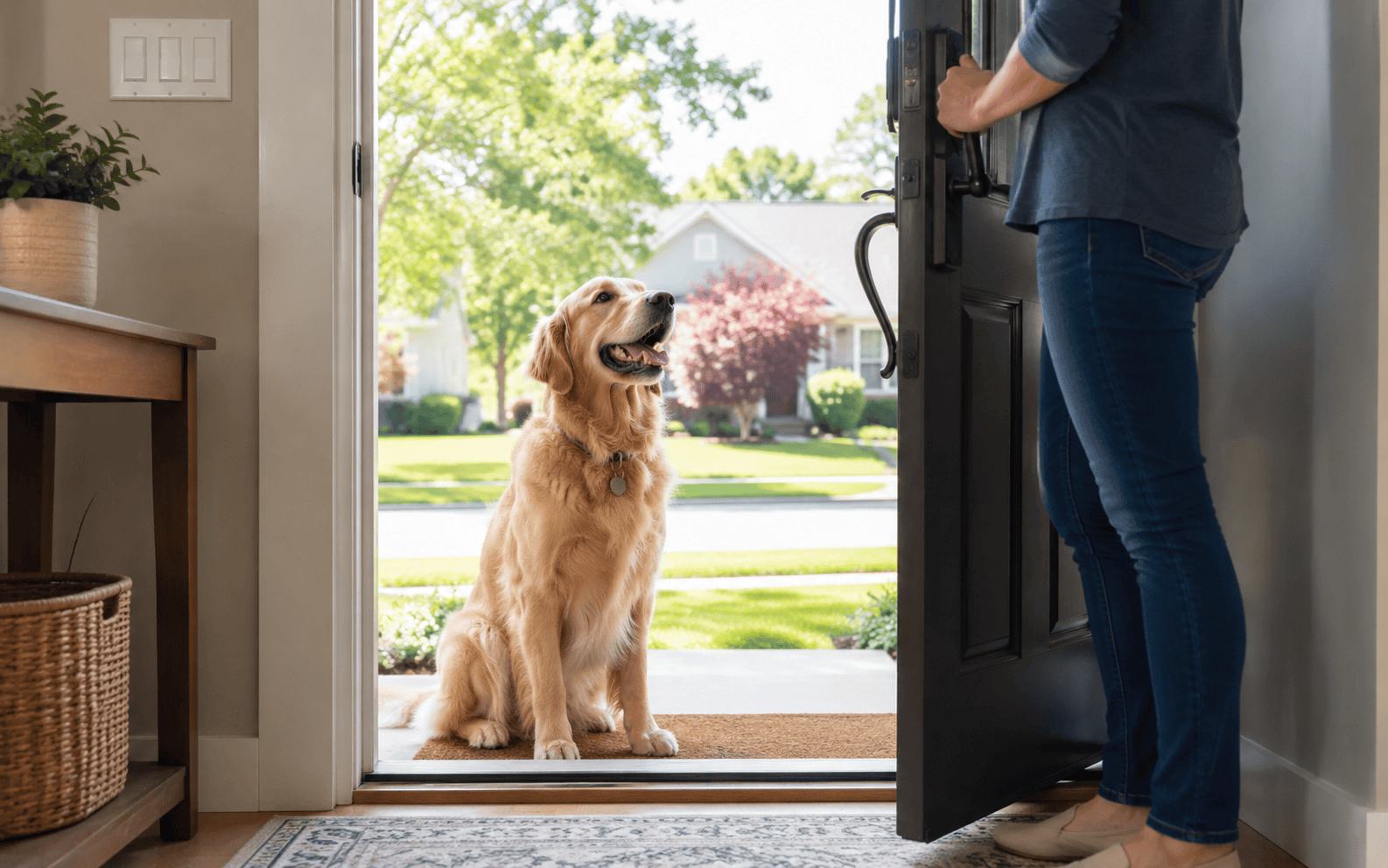
- Build the full open. Over multiple short sessions, work up to opening the door completely while your dog holds position. If your dog breaks, calmly close the door and start again. No scolding.
- Add the threshold crossing. Once your dog holds the stay with the door fully open, step one foot outside, then return and reward. Gradually extend how far you go before releasing your dog.
- Introduce real-world triggers. Ring the doorbell yourself, have a friend knock, or open the door while someone walks past. These distractions are what make training fall apart, so you need to practice with them.
- Generalize to every door. Do not assume your dog understands that the back door, garage door, and sliding glass door have the same rules. Each new doorway is a new training session.
Common Training Mistakes That Keep the Problem Going
Even owners who are actively trying to fix door dashing often make errors that slow or reverse progress.
| Mistake | Why It Fails | Better Approach |
| Grabbing the dog after a dash | Teaches the dog that escaping leads to a chasing game | Do not chase; turn away and call the dog back instead |
| Only training when the door is locked | Dog learns to behave only when there is no real option | Always train with a functional, openable door |
| Letting it slide “just this once” | Inconsistency signals the rule is optional | Every household member must enforce the same boundary |
| Using punishment after the escape | Dog associates the correction with returning, not dashing | Reward heavily every time your dog comes back to you |
| Skipping the “place” command | Dog has no alternative behavior to fall back on | Teach “place” before the doorbell ever rings |
One of the most overlooked issues is household consistency. If one family member lets the dog rush past them to get outside, that one allowance can unravel weeks of careful training. Every adult and older child in the home needs to follow the same protocol.
When to Bring in a Professional
Some dogs have deeply ingrained dashing habits. Others are reactive, high-drive breeds like Belgian Malinois or Siberian Huskies, where the pull toward the outside is intense. In those cases, professional help is not a shortcut. It is a smart call.
For families on Long Island, board and train long island programs offer an immersive environment where a dog lives with a trainer for a set period, typically two to four weeks, and works on impulse control and obedience in a controlled, consistent setting. Dogs often come back with dramatically improved door manners because they have been practicing the right behaviors hundreds of times a day.
If you prefer to work in your own space, in home dog training long island puts a trainer directly inside your home, working on the exact door that your dog bolts through. This is especially valuable because the training happens in the real environment where the problem occurs, not in a neutral facility.
For owners who want focused, one-on-one attention tailored to their dog’s specific history and temperament, private dog training long island sessions allow for a customized plan built around your lifestyle, your home setup, and your dog’s learning pace.
Things to Know
- Door dashing is not a breed-specific problem, but high-energy and working breeds tend to have stronger impulse toward bolting and may need more intensive training.
- A dog that is well-exercised and mentally stimulated is significantly less likely to bolt. A tired dog has less motivation to seek stimulation outside.
- Management tools like baby gates, X-pens, and tethers should be used during training to prevent practice of the unwanted behavior, but they are not a replacement for actual training.
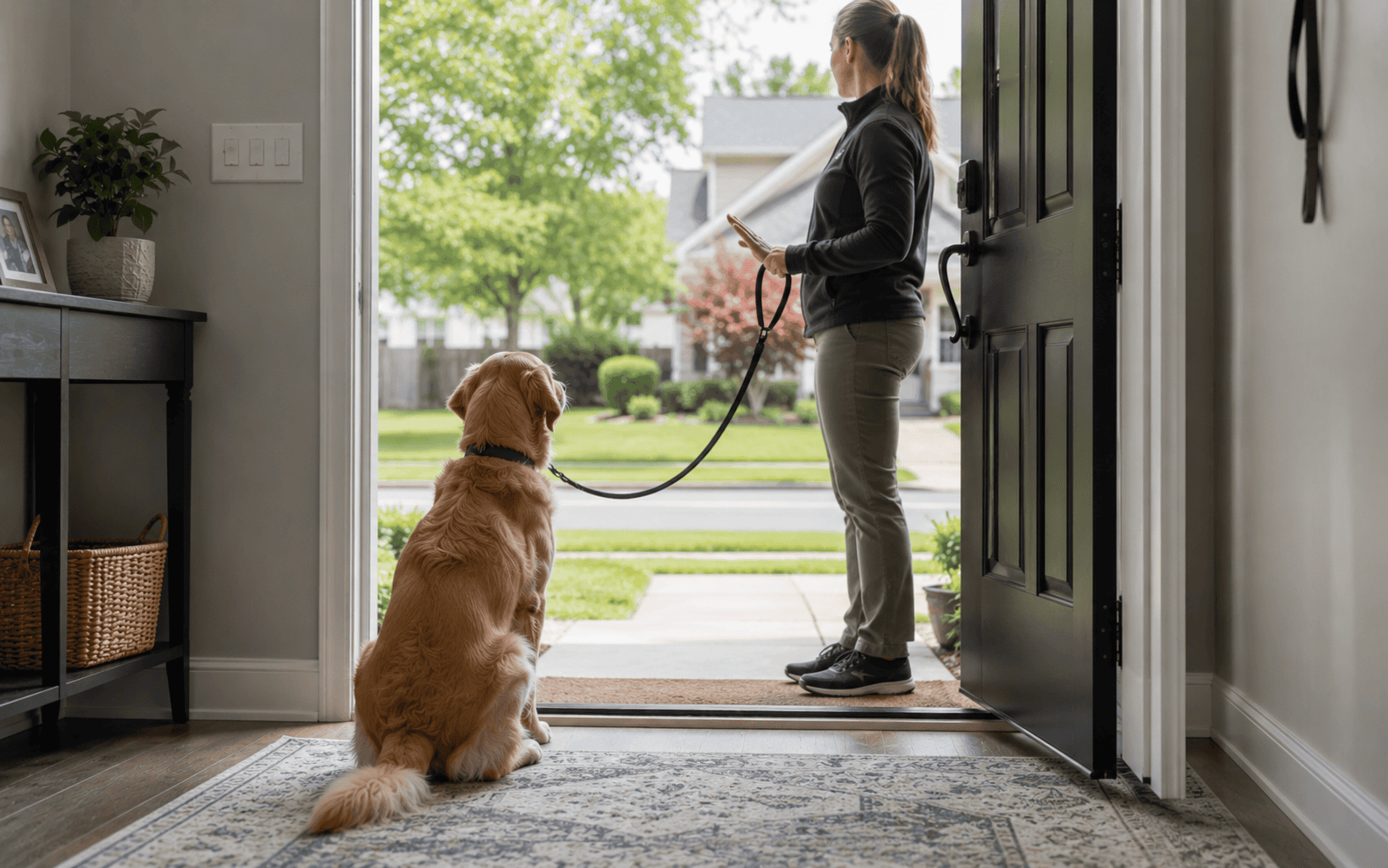
- The “umbilical cord” technique, where you keep your dog on a leash attached to you inside the house, can help you intercept and redirect dashing attempts before they happen.
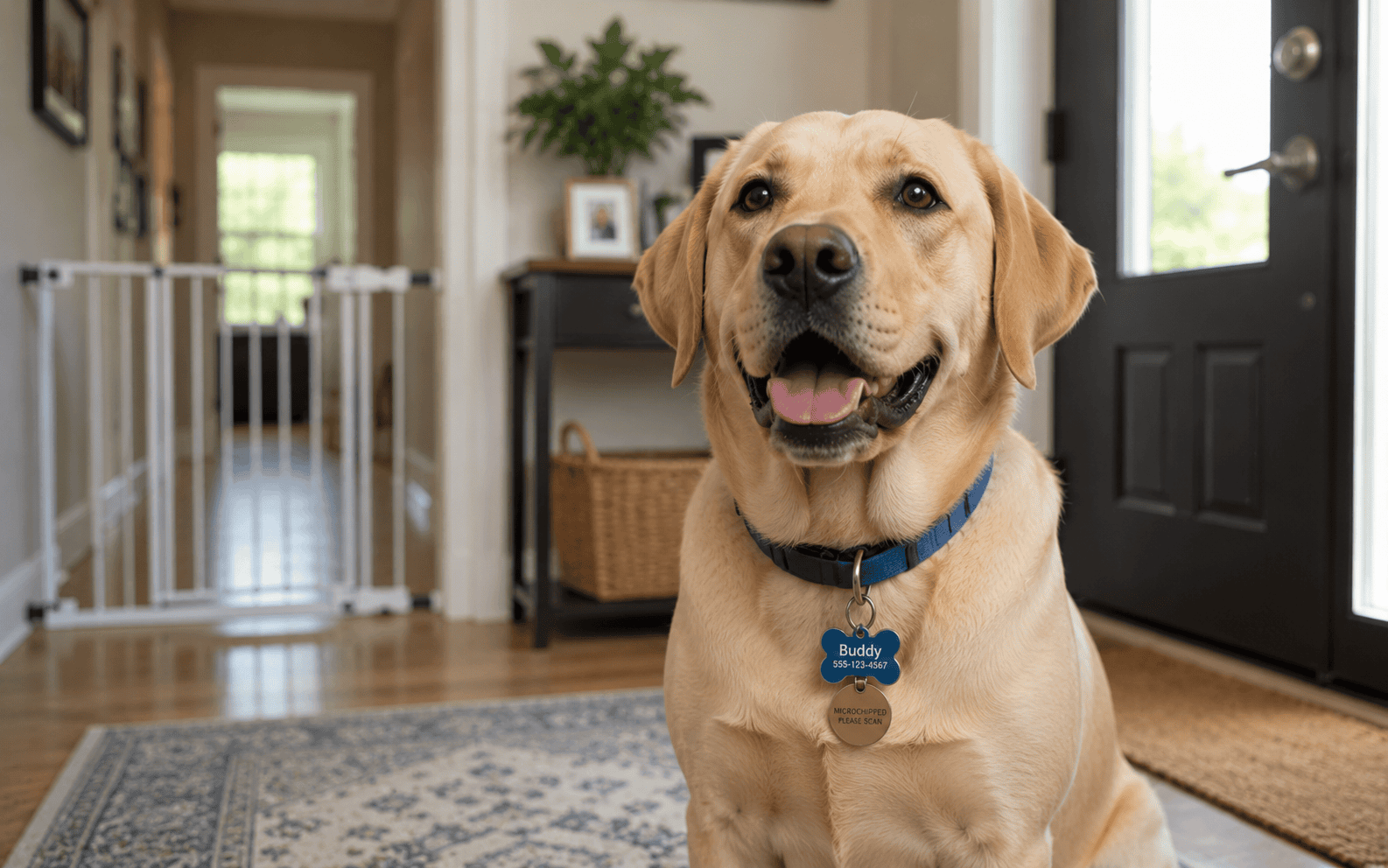
- Microchipping your dog and making sure tags are current is a critical backup measure even as you work on door dashing prevention dog training.
- Young puppies between 8 and 16 weeks are in a prime window to start door boundary habits, but dogs adopted as adults can learn this reliably with patience and consistency.
Ready to Lock Down That Front Door?
The single most effective next step you can take right now is to spend five minutes today practicing the “sit-stay” at your front door with no distractions. Do not open the door yet. Just work on your dog holding position while you touch the handle. That one small session starts building the neural pathway your dog needs to make better choices at the door.
If your dog’s dashing behavior is serious, if you have had close calls in traffic, or if basic training has not gained traction, reach out to a certified professional trainer who can assess your dog’s specific drives and build a targeted plan. The investment in training is significantly smaller than the cost of an emergency vet visit or the heartbreak of a lost dog.
You May Want to Read
Board and Train for Fearful Dogs: What to Expect
Impulse Control Training for Dogs: What Actually Works
Dog Bite Inhibition Training: How to Do It Right
Frequently Asked Questions
How long does it take to train a dog to stop door dashing?
Most dogs show meaningful improvement in door manners within two to four weeks of consistent daily training. The timeline depends on the dog’s age, how long the habit has been practiced, and how consistently every household member enforces the rules. High-drive dogs may take longer but can absolutely reach reliable behavior.
Can older dogs learn door dashing prevention dog training?
Yes, adult and senior dogs can learn door boundary rules effectively. The process may take more repetitions than it would with a puppy, and you may need to be more deliberate about breaking established habits, but age is not a barrier to learning. Many owners report faster results with adult dogs because they have longer attention spans than puppies.
Should I use a shock collar or punishment to stop door dashing?
Punishment-based tools are not recommended for door dashing and can make the problem worse. If a dog associates the door area with discomfort or fear, it may develop anxiety around the door, redirect that frustration onto people or other animals, or become unpredictable in its behavior. Positive reinforcement methods focused on rewarding the right behavior are safer and more durable.
My dog only dashes when guests arrive. Why does that happen?
The excitement of new people entering the home spikes your dog’s arousal level, which overrides any partial training that is in place. This is why training your dog to go to a “place” mat when the doorbell rings is so effective. It gives the dog a job to do when its arousal is highest, and it physically removes the dog from the doorway before guests walk in.
What if my dog bolts and runs away before I can catch them?
Never chase a dog that is running, as this triggers its prey drive and makes it run faster. Instead, turn and run in the opposite direction, open a car door if one is nearby, or drop to the ground. These behaviors often trigger curiosity that brings the dog back. Always reward your dog enthusiastically when it returns, even after a dash, so coming back to you is always a positive experience.
The Bottom Line on Door Dashing Prevention Dog Training
A dog that respects the front door is a safer, calmer dog, and a household that does not dread every grocery delivery or guest arrival is a much more relaxed one. Door dashing prevention dog training is not complicated, but it does require patience, repetition, and a commitment from everyone in the house to follow the same rules every single time.
Start with the basics today, be consistent, and do not hesitate to bring in professional support if the problem is serious. Your dog can learn this, and the payoff, a dog that waits at the door while you step outside to grab the mail, is worth every training session.