Board and train for fearful dogs is a residential training program where your dog stays with a professional dog trainer for an extended period to work through fear, anxiety, and avoidance behaviors. The structured environment, consistent exposure, and skilled handling can produce real progress for dogs that struggle to function in everyday life.
Key Takeaways
- Board and train works best for fearful dogs when the program uses positive reinforcement and systematic desensitization, not pressure-based methods.
- Not every fearful dog is a good candidate on day one. Some dogs need foundational work before they can handle an immersive program.
- Progress made during board and train must be transferred to you at home, or it will fade quickly.
- The trainer’s experience with fear-based behavior specifically matters far more than general dog training credentials.
- A reputable program will always schedule a follow-up session with you and your dog before the stay ends.
- Board and train is one option in a larger toolkit, not a standalone fix for deep-rooted fear.
Why Fearful Dogs Need a Different Training Approach
Fear in dogs is not stubbornness. It is a physiological stress response driven by the nervous system. When a dog is in a state of fear, the brain shifts resources away from learning and toward survival. Barking, trembling, hiding, lunging, and freezing are all fear responses, and attempting to train through them using corrections or flooding (forcing exposure) tends to make the problem significantly worse.
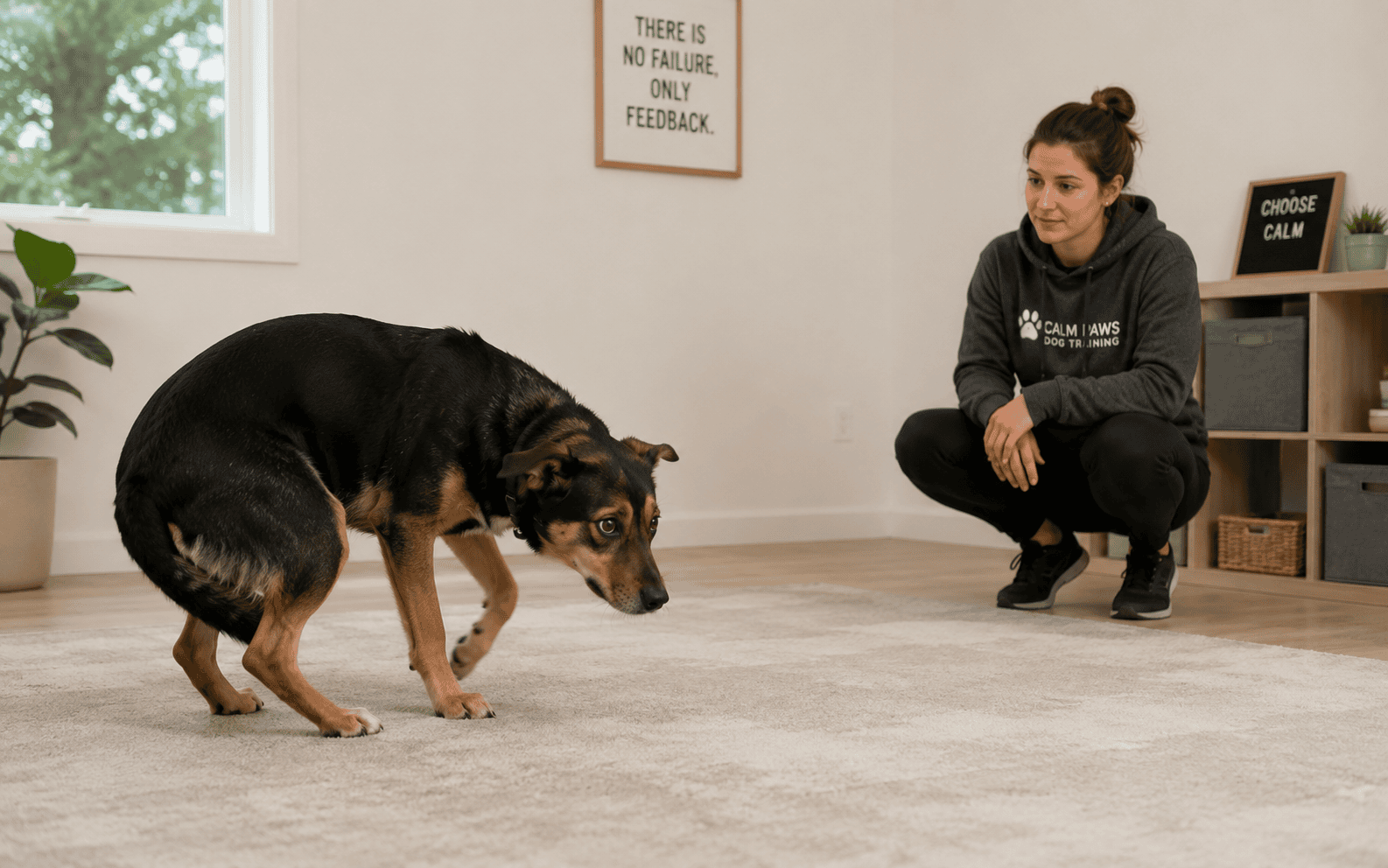
Fearful dogs need trainers who understand behavioral science and have specific experience with anxiety-driven behavior. The wrong approach, even from a well-meaning trainer, can deepen distrust, increase reactivity, and make a dog harder to help down the road.
This is why selecting a board and train program for fearful dogs requires more scrutiny than selecting one for a dog that simply needs to learn basic manners. You are not just looking for someone who can teach a sit. You are looking for someone who can read stress signals, apply desensitization and counter-conditioning protocols, and rebuild a dog’s relationship with the world at a pace the dog can handle.
Understanding how to help a fearful dog gain confidence is the foundation before any training format, including residential programs, can be properly evaluated.
How do you Train a Fearful Dog
A board and train program for fearful dogs typically runs between two and four weeks. During that time, your dog lives with or near the trainer full-time, which allows for many more repetitions of training than a once-weekly lesson could ever provide. Consistency across the entire day, not just during formal training sessions, is one of the biggest advantages of this format.
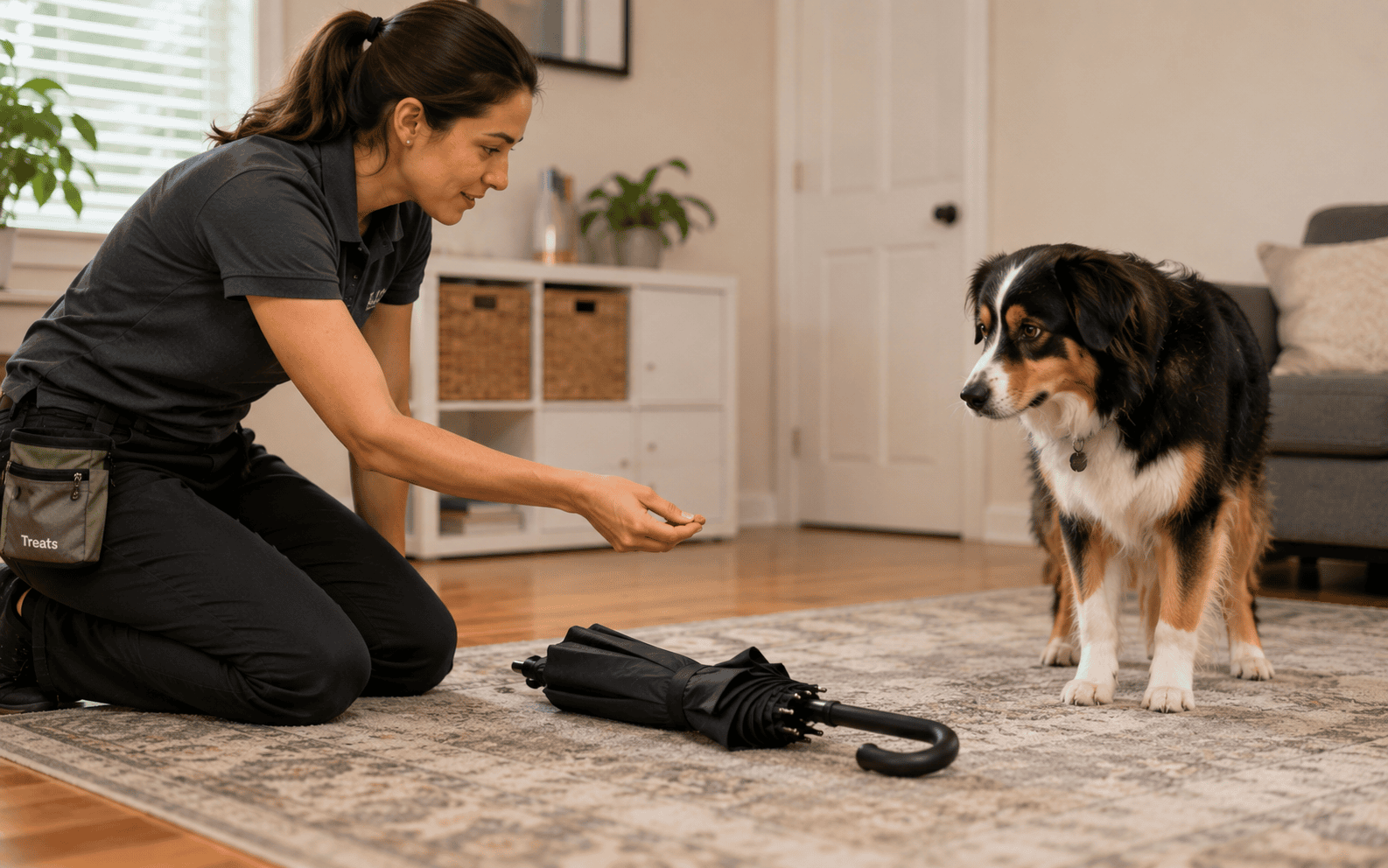
Here is a general breakdown of what a quality program looks like:
Week 1: Assessment and Settling
- The trainer observes the dog’s triggers, thresholds, and default responses.
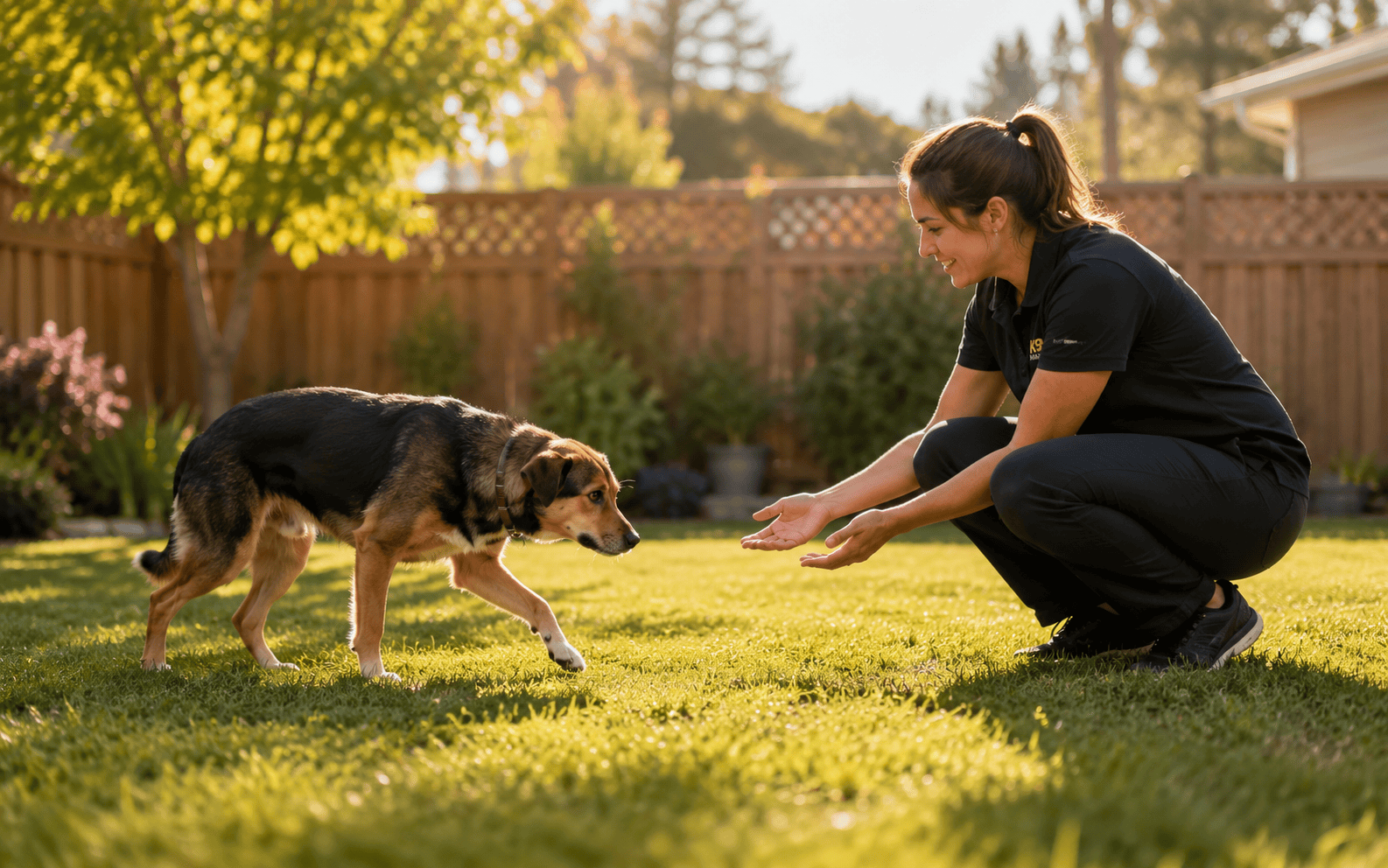
- No pressure is applied during this phase. The dog is simply allowed to exist in the new environment.
- Trust-building begins through routine, calm handling, and food-based rewards.
Week 2: Introducing Controlled Exposures
- Systematic desensitization begins at sub-threshold levels (meaning the dog can see or hear a trigger without reacting).
- Counter-conditioning pairs previously scary stimuli with high-value rewards.
- Basic obedience cues may begin here to give the dog confidence and predictability.
Week 3 and Beyond: Generalization
- Training moves into new environments with new distractions.
- The dog practices responding to cues and managing mild stress in real-world settings.
- The trainer begins preparing handoff materials and coaching notes for the owner.
Many trainers offering board and train long island programs build a structured daily schedule that mirrors what an owner should continue at home, making the transition smoother and more sustainable.
Is Board and Train Right for Your Fearful Dog?
Not every fearful dog should go straight into a residential program. Some dogs are so overwhelmed by novelty and change that being removed from their home environment could temporarily spike their anxiety and set progress back. Other dogs, particularly those with mild to moderate fear, do exceptionally well with the immersive structure a board and train provides.
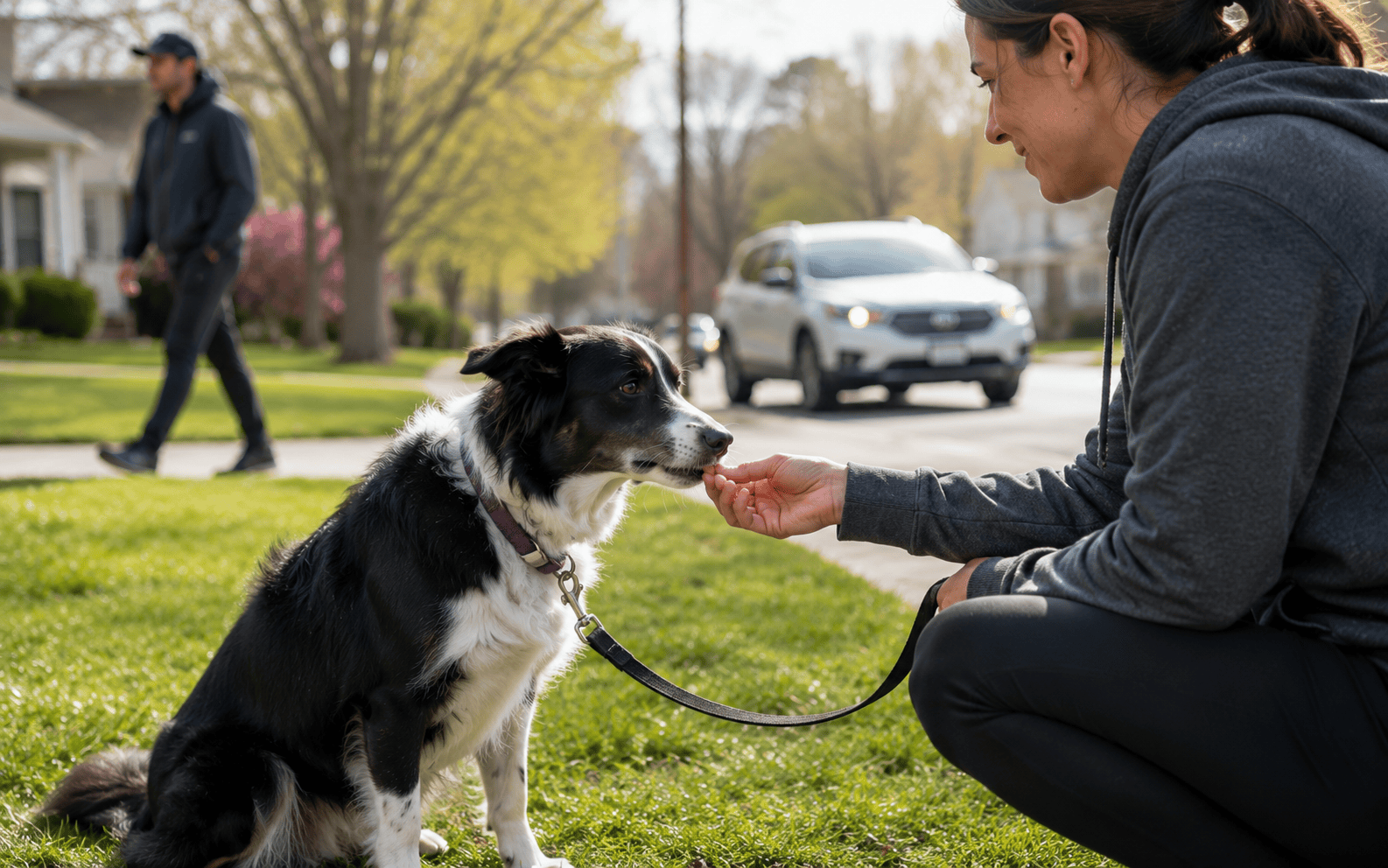
Signs Your Dog May Be a Good Candidate
- Your dog is food-motivated even in moderately stressful situations (this is critical for counter-conditioning to work).
- Your dog’s fear responses are triggered by specific stimuli like strangers, sounds, or novel environments, rather than being constant and pervasive.
- Your schedule makes it difficult to provide the daily repetition that fearful dog training requires.
- Your dog has shown some ability to recover after a stress event, rather than staying in an elevated state for hours.
Signs You Should Consider Other Options First
- Your dog shuts down completely with food in any new or stressful environment.
- Your dog has a history of extreme separation anxiety tied specifically to your presence.
- Your dog’s fear includes aggression with a bite history, which may require a specialist-level evaluation before any immersive program begins.
For dogs in the second category, alternatives like in home dog training long island can be a better starting point because the dog stays in a familiar environment while learning new skills.
| Factor | Board and Train | In-Home Training |
| Consistency of repetition | Very high | Moderate |
| Dog stays in comfort zone | No | Yes |
| Owner involvement during training | Low | High |
| Best for severe separation anxiety | Not ideal | Better fit |
| Speed of initial progress | Faster | Slower but steadier |
| Generalization to new environments | Built into program | Requires extra effort |
What to Look for in a Trainer Who Works With Fear
The trainer’s methodology is the single most important factor in a board and train for fearful dogs. You need to verify, before any money changes hands, that the trainer uses positive reinforcement and force-free methods. Aversive tools like prong collars, e-collars used as punishment, and alpha-based corrections are not appropriate for fearful dogs. They address the behavior by suppressing it, not by changing how the dog feels about the trigger. A dog that stops growling because it has learned growling leads to punishment is a dog that may skip the warning and bite instead.
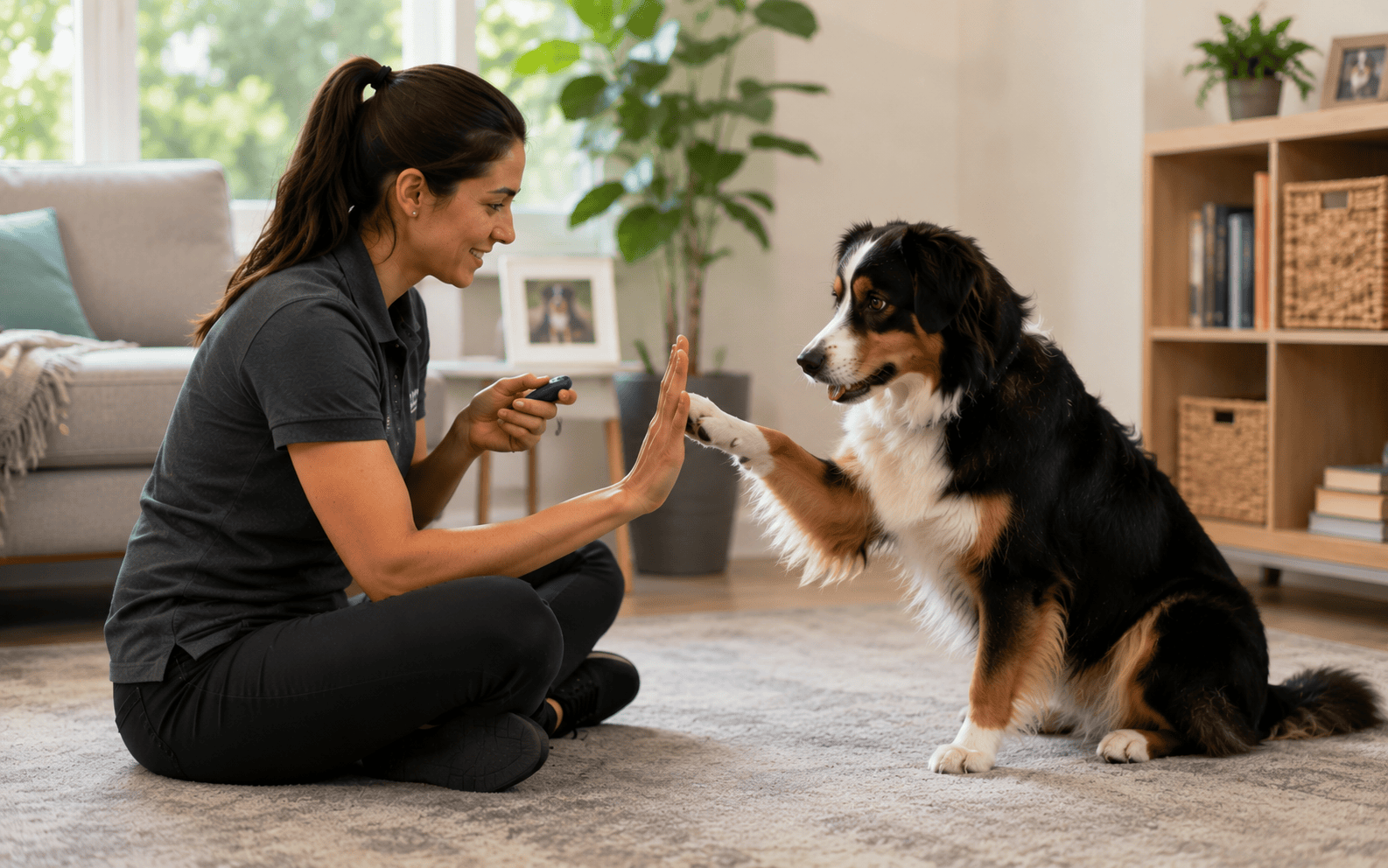
Questions to ask a prospective trainer include:
- What is your specific experience with fear and anxiety-based behavior?
- Can you describe the desensitization and counter-conditioning protocols you use?
- How will you handle a setback during the stay?
- What does the handoff process look like for the owner?
- Can I visit or receive video updates during my dog’s stay?
Also ask whether obedience dog training is incorporated into the program, because building a reliable set of cues gives fearful dogs a framework for navigating uncertainty. A dog that knows what to do in a stressful situation often feels safer than one that has no practiced responses to fall back on.
The Handoff: What Happens After Board and Train
This is the phase that most owners underestimate. The progress your dog makes during a residential program will not automatically transfer to your home environment. Dogs learn in context, meaning the behaviors they practice in one setting do not automatically generalize to a different one. When your dog comes home after three weeks of structured work, you will need to actively practice the same exercises in your own environment.
A quality program will include a thorough handoff session where you and the trainer work together with your dog. You will learn how to read your dog’s body language, how to cue behaviors correctly, how to manage situations before your dog hits threshold, and how to continue the desensitization protocols at home.
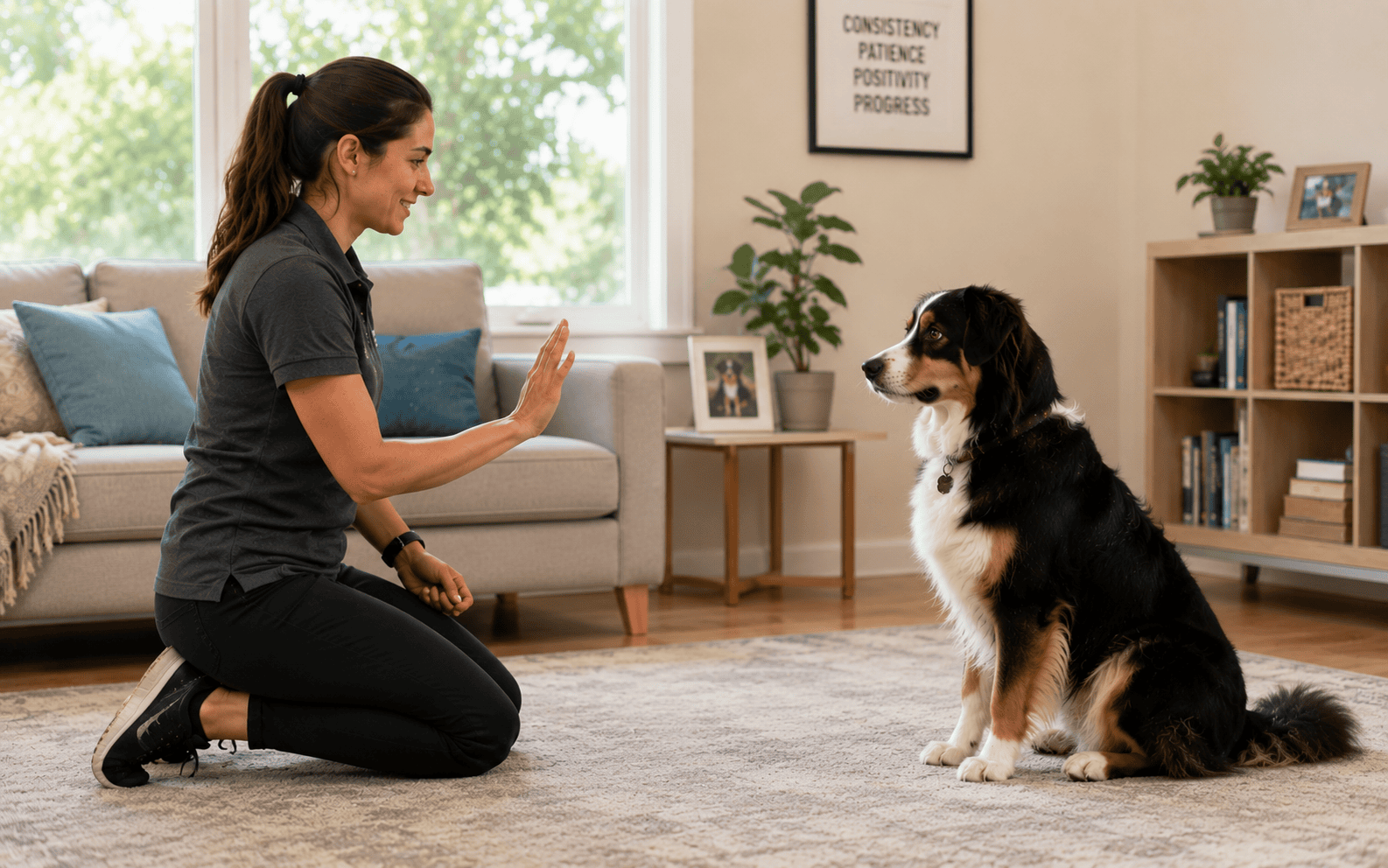
This is also where how to socialize a fearful dog becomes directly relevant. The social skills and exposure work started in the program need to continue in a structured way after your dog returns home, or the fear responses will gradually return.
Some owners benefit from scheduling follow-up sessions after the board and train ends, and considering whether is board and train worth it can be answered through private dog training long island sessions that are an ideal way to continue building on the foundation laid during the residential stay, with a trainer who can coach you directly in your own home environment.
Things to Know
- Fearful dogs often regress slightly when they first return home. This is normal and usually temporary, not a sign the program failed.
- The duration of a program matters less than the quality of the training and the owner’s follow-through afterward.
- Medication prescribed by a veterinarian or veterinary behaviorist can significantly improve a fearful dog’s ability to learn. Board and train alone is not a substitute for addressing clinical anxiety at the neurological level.
- Video updates during the stay are a reasonable request. Any trainer who refuses to provide updates or allow contact is a red flag.
- The best programs will turn you away if your dog is not a good fit, rather than take your money. This is a sign of integrity, not rejection.
- Progress with fearful dogs is measured in small increments. Celebrate each one, because they represent real neurological change.
Ready to Find the Right Fit for Your Fearful Dog?
Start by scheduling a consultation with a trainer who specializes in fear-based behavior before committing to any program. Bring a list of your dog’s specific triggers, any known history from the dog’s background, and honest observations about how your dog responds to food when stressed. The consultation itself will tell you a great deal about whether the trainer is the right fit, because a skilled trainer will ask you more questions than you ask them.
Read Related Articles
Are English Mastiffs Easy to Train?
Are Papillon Dogs Easy to Train
Frequently Asked Questions
Will my fearful dog be traumatized by being left with a stranger during board and train?
A well-run program is specifically designed to prevent this, with a slow acclimation process and no-pressure initial days.
The first days of a quality program focus entirely on allowing the dog to settle at its own pace. Trainers experienced in fear-based work know that pushing too fast causes harm, so the initial phase looks more like quiet cohabitation than active training.
How long does board and train for fearful dogs typically take?
Most programs run two to four weeks, though severely fearful dogs may benefit from longer stays.
The right duration depends on the dog’s baseline fear level, how quickly they form trust, and how many triggers need to be addressed. Some dogs make significant strides in two weeks. Others benefit from a month or more of structured work.
Can board and train cure my dog’s fear permanently?
Board and train can create lasting change in how your dog responds to triggers, but it requires consistent owner follow-through to maintain.
Fear responses are rooted in memory and emotional conditioning. The training works by building new, positive associations strong enough to compete with the old fear response. Maintaining those associations through continued practice is essential.
Is board and train safe for a dog with a bite history related to fear?
It can be, but it requires a trainer with specific experience in fear aggression and a thorough assessment before the stay begins.
Dogs who bite out of fear present higher-stakes situations where mistakes carry real consequences. A qualified trainer will want a detailed behavioral history and may recommend a veterinary behaviorist consultation alongside the training program.
What is the average cost of board and train for a fearful dog in the United States?
Prices typically range from $1,500 to $6,000 or more depending on program length, location, and trainer specialization.
Programs in high-cost-of-living areas like New York tend to sit at the upper end of that range. The higher cost of fear-specialist programs reflects the additional skill, time, and care required to do the work responsibly.
The Bottom Line on Board and Train for Fearful Dogs
Board and train for fearful dogs is one of the most powerful tools available for helping anxious, avoidant, or reactive dogs build new relationships with the world. When a dog trainer uses science-backed methods, the program is structured around the dog’s pace, and the owner commits to continuing the work after the stay ends, the results can be genuinely life-changing for both dog and family.
The key is choosing carefully. Ask hard questions, watch for red flags, and remember that your dog’s trust is the most valuable thing in the room during any session. Take the time to find a trainer who earns it, and the investment will pay off far beyond the weeks your dog spends away from home.