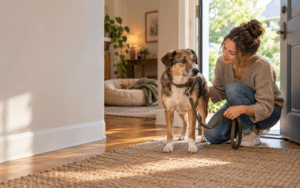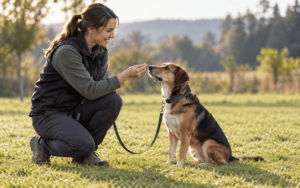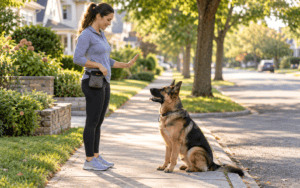
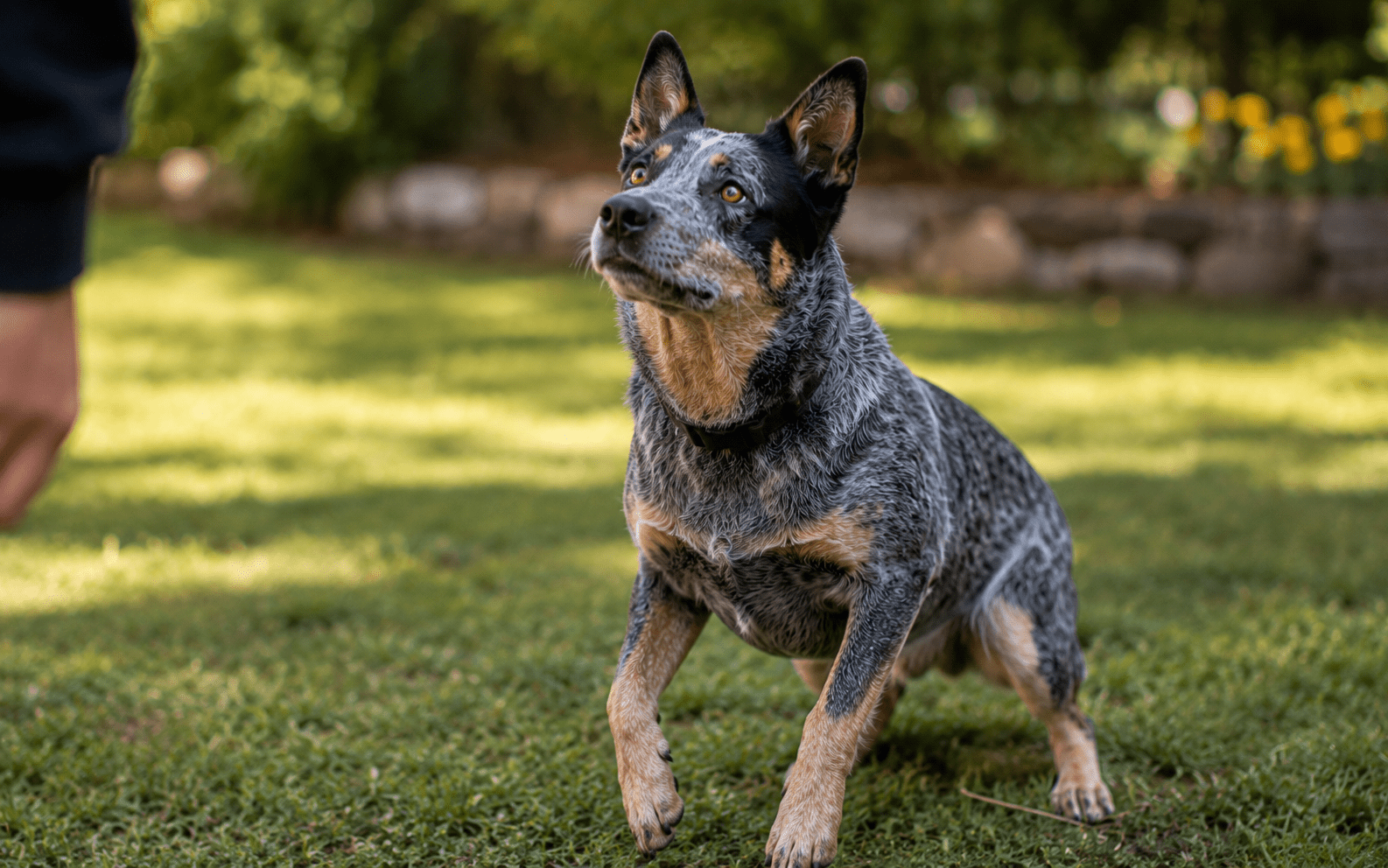
Training an Australian Shepherd requires consistent training, positive reinforcement, clear boundaries, and regular mental stimulation. As intelligent, high-energy working dogs, Australian Shepherds need more than physical exercise to stay calm, focused, and well-behaved. Australian Shepherds are one of the most intelligent and driven dog breeds in the world, which makes structured training both essential and highly rewarding. Knowing how to train an Australian Shepherd means channeling their natural energy, herding instinct, and sharp mind into productive behaviors before those traits create problems.
Key Takeaways
- Australian Shepherds need daily mental and physical stimulation or they will develop destructive habits.
- Positive reinforcement and consistency are the two most important factors in Aussie training.
- Their herding instinct and high prey drive require specific management through training, not suppression.
- Early socialization, starting before 16 weeks, is critical to preventing fear and aggression later in life.
- Short, frequent training sessions (10-15 minutes) outperform long, infrequent ones for this breed.
- Professional support, whether in-home or board-and-train, can accelerate progress significantly for challenging behaviors.
Why Australian Shepherds Require a Different Training Approach
Australian Shepherds were bred for a demanding job: managing livestock across rugged terrain for hours at a time. That working heritage means they are wired very differently from companion breeds like Golden Retrievers or Cavalier King Charles Spaniels. They think independently, they move constantly, and they need a clear purpose.
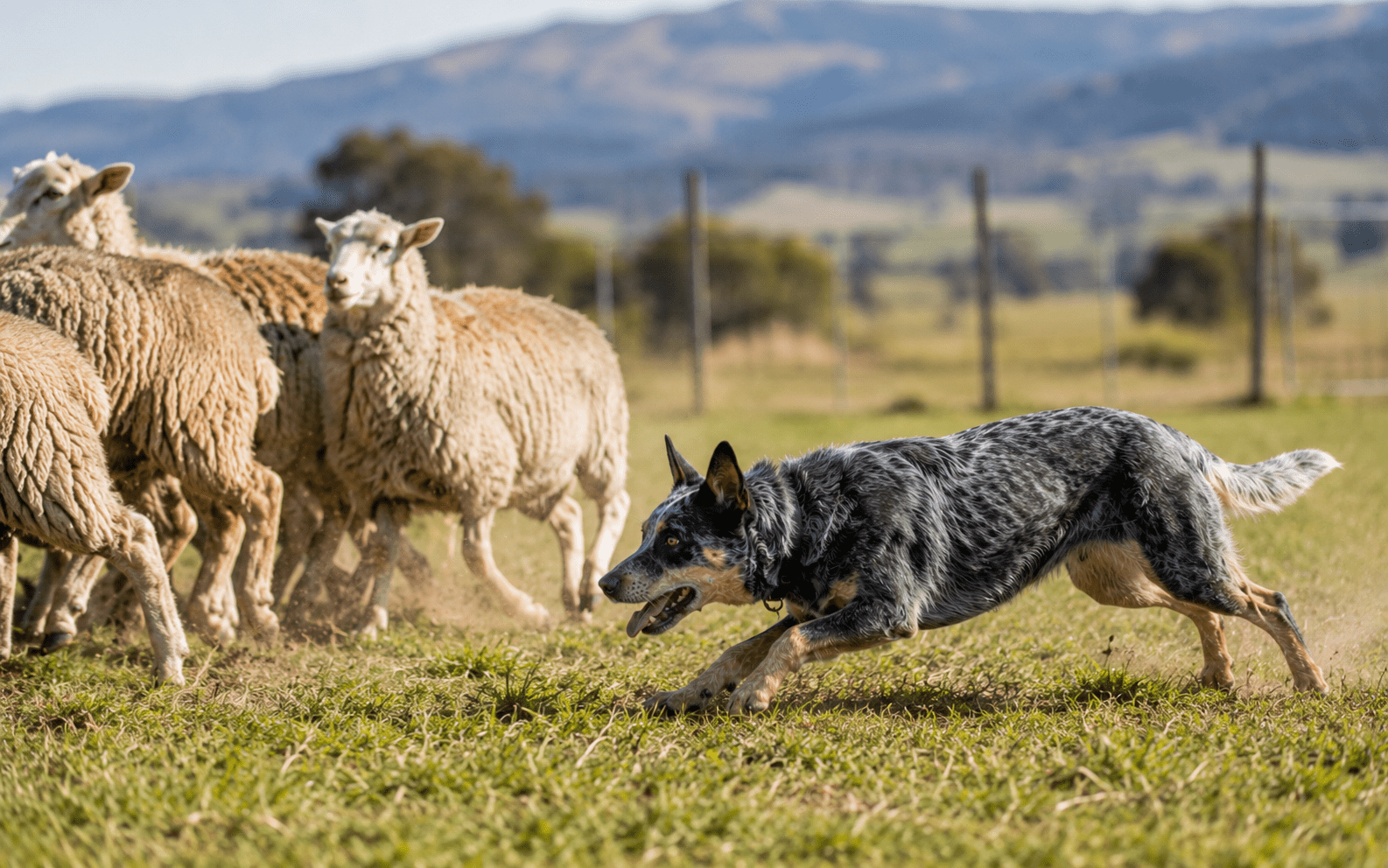
If you browse a resource on the most trainable dog breeds, you will find Aussies near the top of every list, and for good reason. Their intelligence is exceptional. The catch is that intelligence cuts both ways. A bored or under-stimulated Aussie will use that brain to figure out how to escape your yard, herd your children, or redecorate your furniture.
Their herding drive is also tied closely to prey drive. Understanding what is prey drive in dogs helps you recognize why your Aussie might fixate on bikes, joggers, or other pets. That fixation is not aggression. It is a deeply ingrained behavioral response, and training must address it directly rather than simply correcting the surface behavior.
Key differences between Aussies and average companion breeds:
- Higher energy output requiring 1.5 to 2 hours of daily activity
- Stronger desire to control movement, including people and other animals
- More sensitive to inconsistency in commands and handler energy
- Tendency to develop anxiety-based behaviors when under-stimulated
- Greater potential for resource guarding or herding-related nipping without early training
The Foundation: Timing, Consistency, and Positive Reinforcement
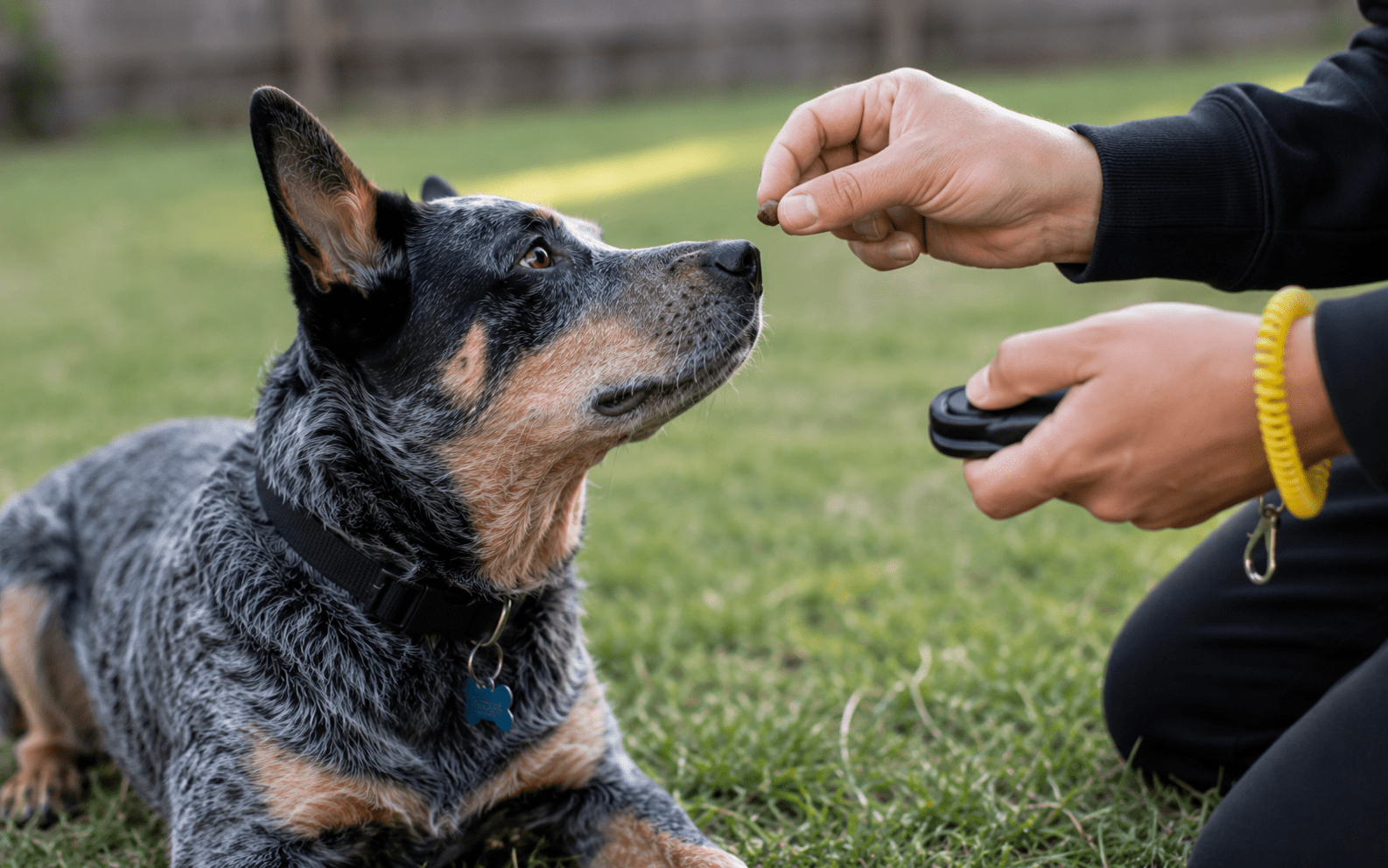
Before you teach a single command, you need to understand what actually drives behavior change in Australian Shepherds. These dogs respond exceptionally well to positive reinforcement, meaning you mark and reward the behavior you want immediately after it happens.
The three pillars of effective Aussie training:
- Timing: You have roughly 1-2 seconds after a behavior occurs to mark it with a reward or a verbal marker like “yes.” Anything slower creates confusion about what is being rewarded.
- Consistency: Every person in your household must use the same commands, the same rules, and the same expectations. An Aussie will exploit any inconsistency.
- Value: Use rewards that actually motivate your dog. For many Aussies, small pieces of high-value food like chicken or cheese outperform kibble. For others, a brief tug session is the ultimate reward.
Obedience dog training structured around these principles gives your Aussie a clear framework for understanding what you expect. Start with the core five: sit, down, stay, come, and leave it. These are not tricks. They are the building blocks of a dog that can be taken anywhere safely.
Training session structure that works for Aussies:
- Keep sessions to 10-15 minutes, two to three times per day
- End every session on a success, even if you need to make the last task easier
- Rotate between known behaviors and new ones to prevent boredom
- Use a release word like “free” or “okay” to clearly signal when the dog is done working
One common mistake new owners make is drilling the same command repeatedly in a single session. An Aussie that gets bored or frustrated will shut down, start offering random behaviors, or escalate into zoomies. Keep the energy moving forward.
Socialization and Impulse Control: The Early Work That Pays Off For Years
If you own a puppy, the socialization window between 3 and 16 weeks is the most important investment you will make in your dog’s entire life. During this period, your Aussie’s brain is actively forming associations about what is safe, what is threatening, and how to respond to novelty.
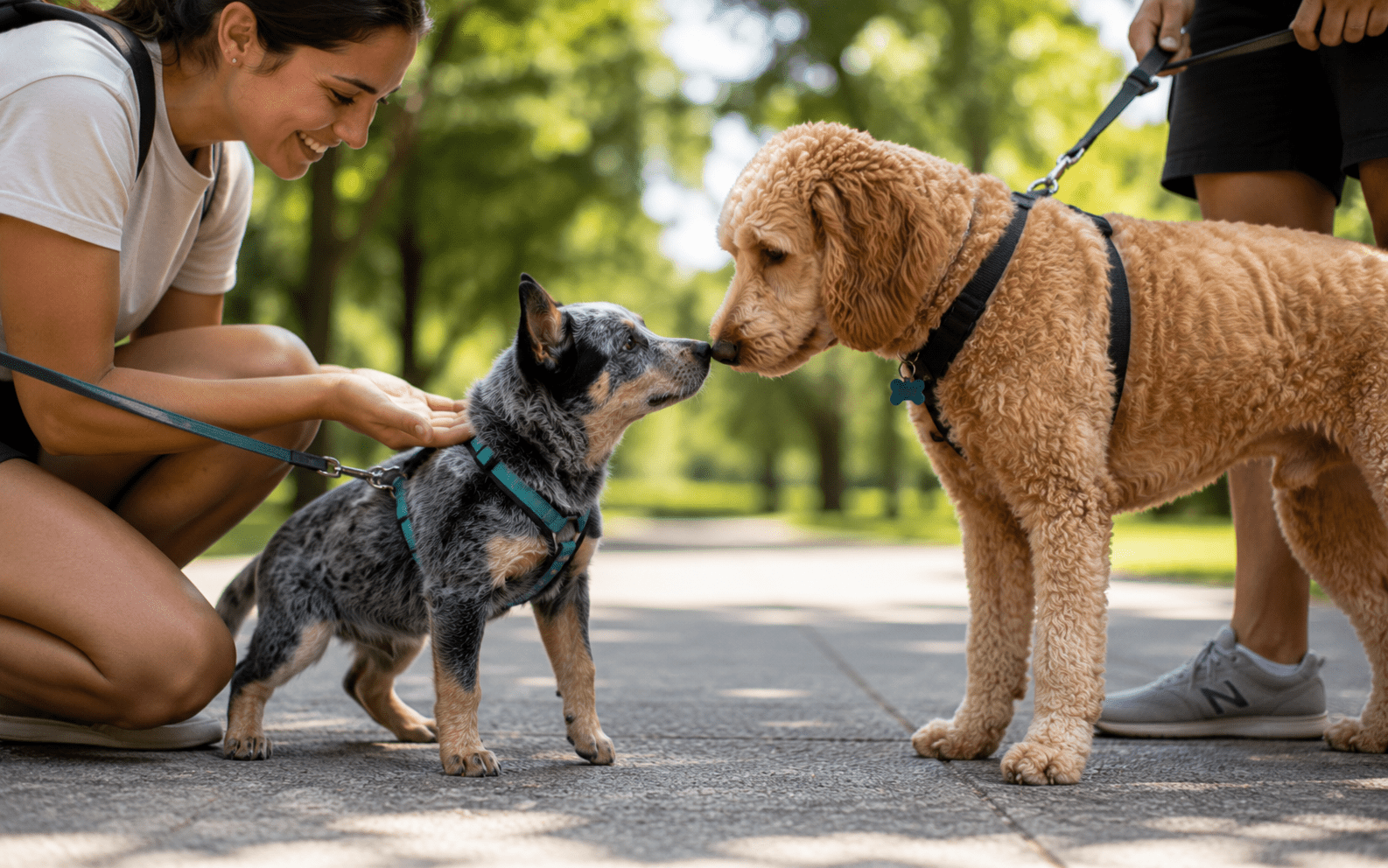
Proper socialization does not mean flooding your puppy with as many experiences as possible. It means carefully exposing them to different people, surfaces, sounds, animals, and environments while making sure each experience ends positively. One bad experience during this window can create a fear response that takes months of counter-conditioning to reverse.
Socialization checklist for Aussie puppies:
- Men, women, and children of varying ages and appearances
- Hats, umbrellas, strollers, wheelchairs, and bicycles
- Traffic sounds, construction noise, and crowd sounds
- Slippery floors, grates, stairs, and grass
- Other dogs of different sizes, energy levels, and play styles
- Veterinary handling: mouth, ears, paws, and body
Alongside socialization, impulse control training should begin immediately. Teach your Aussie to wait before eating, to sit before going through doors, and to look at you before reacting to distractions. These micro-habits build a dog that can regulate itself in high-stimulation environments.
Managing Herding Instinct and High-Energy Behaviors
The herding instinct in an Australian Shepherd is not a behavior you can eliminate. It is a genetic trait. Your goal as the owner is to redirect it appropriately and set up your environment so it does not cause problems.
Nipping at heels, circling people, and staring down other animals are all herding behaviors. If your Aussie is doing any of these, respond by immediately stopping movement, giving a calm “no,” and redirecting to an appropriate behavior like sit or a toy. Chasing and yelling typically amplify the behavior rather than stop it.
For high-energy dogs that are struggling with impulse control or have developed habits like jumping, door-dashing, or leash reactivity, professional help can make a significant difference in the timeline. Options like board and train long island programs immerse your dog in structured training daily, which can reshape stubborn patterns much faster than weekend sessions alone.
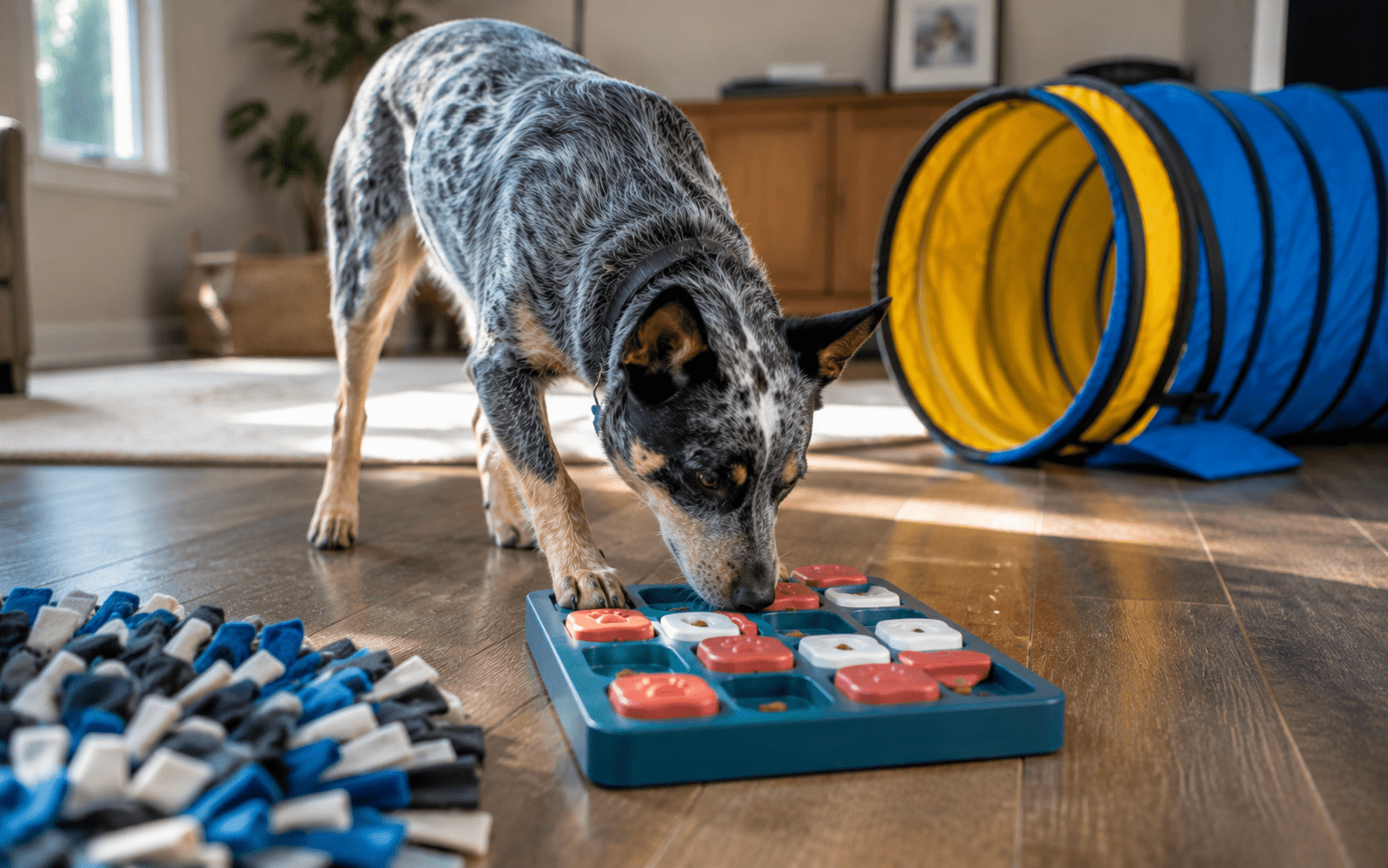
Mental stimulation is just as important as physical exercise for this breed. Consider:
- Puzzle feeders and sniff mats for daily meals
- Scent work or nose work games in the yard
- Agility foundation work like tunnels, jumps, and weave poles
- Herding sport classes if available in your area
- Fetch with rules, meaning the dog must sit and wait before each throw
A tired Aussie is a manageable Aussie, but the tiredness has to come from both physical and mental effort. Pure physical exercise without mental engagement often creates a dog that is fitter, not calmer, which is why learning how to calm a hyperactive dog is essential for Aussie owners.
Choosing the Right Training Format for Your Situation
Not every owner has the same schedule, experience level, or behavioral challenge to address. Fortunately, there are several training formats that work well for Aussies depending on your specific situation.
| Format | Best For | Typical Cost Range | Speed of Results |
| Board and Train | Deep-rooted behaviors, busy owners | $1,500 – $4,000+ | Fast (2-4 weeks) |
| In-Home Training | Real-life context, family involvement | $100 – $200 per session | Moderate |
| Private Lessons | Specific skill building, owner coaching | $75 – $150 per session | Moderate |
| Group Classes | Socialization + basic obedience | $150 – $300 per course | Slower |
| Self-Training | Motivated owners, mild behaviors | Low cost | Variable |
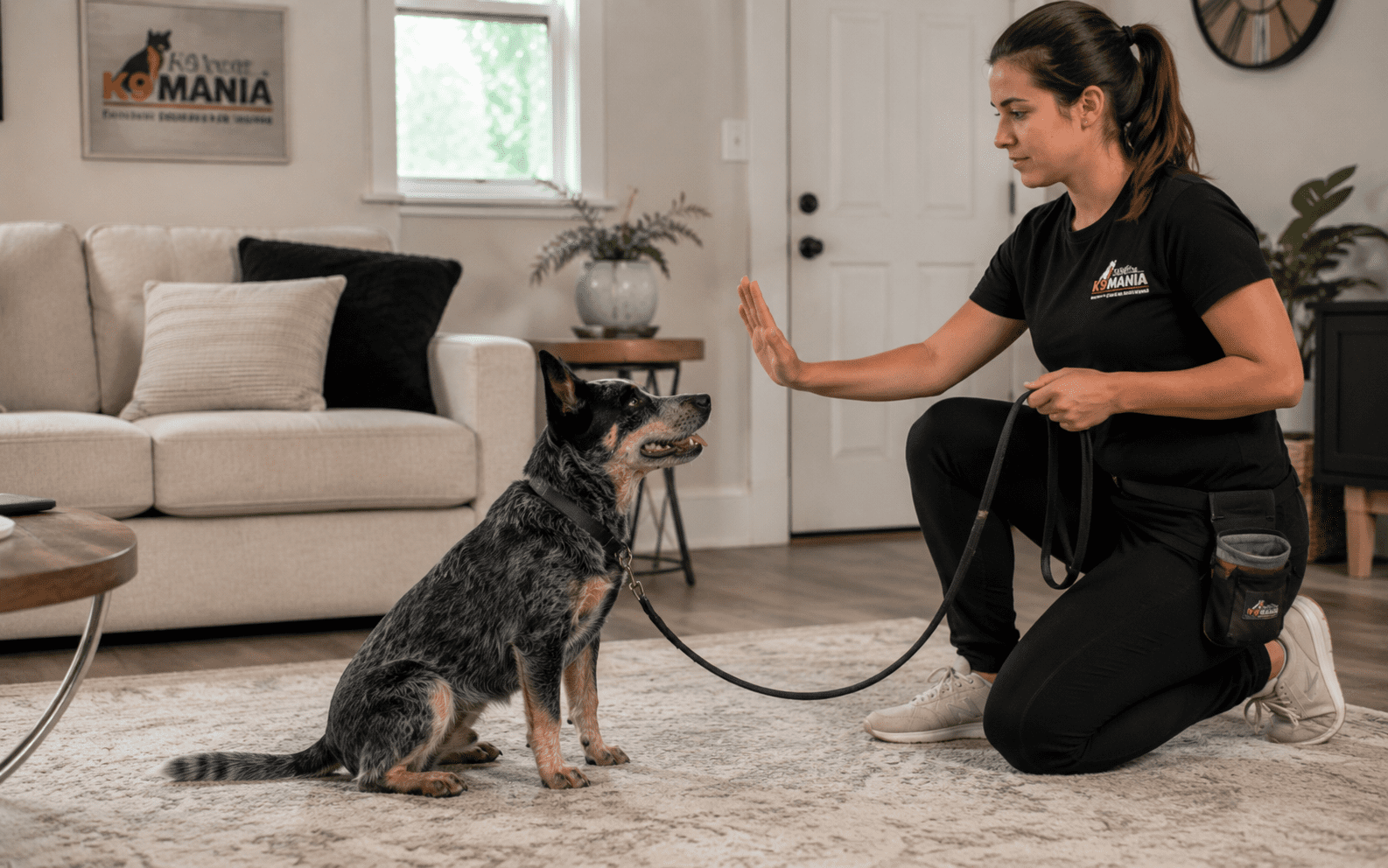
If your dog has specific behavioral concerns in your home environment, in home dog training long island allows a professional to observe your dog in the exact space where the behavior occurs. This context-specific approach is often more effective than working in a neutral training facility.
For owners who want focused, one-on-one coaching without removing the dog from the home, private dog training long island sessions let you build skills alongside your trainer, which means you understand the reasoning behind every technique you are using.
Things to Know
- Australian Shepherds can develop separation anxiety quickly if they are not gradually conditioned to alone time from puppyhood.
- The “double merle” color pattern (when two merle Aussies are bred together) is associated with deafness and vision problems, which can affect how training must be adapted.
- Aussies hit peak adolescence between 6 and 18 months, and many owners report that previously learned behaviors seem to disappear during this phase. Stay consistent.
- This breed does not do well with punishment-based training. Harsh corrections can cause fear, shutdown, or reactive behavior, especially in sensitive lines.
- Aussies are vocal dogs. Excessive barking is often a symptom of under-stimulation rather than a standalone behavior problem.
- If your Aussie is not improving after consistent effort, underlying health issues like thyroid imbalances or pain can sometimes influence behavior, so a vet check is worth scheduling.
Ready to Build a Reliable Aussie?
Take one concrete step today: schedule a professional evaluation with a certified trainer who has experience with working and herding breeds. This single session will give you a personalized roadmap, identify any behavioral concerns before they escalate, and help you understand your specific dog’s drive level, learning style, and triggers. Do not wait until a manageable challenge becomes a serious problem.
Frequently Asked Questions
Are Australian Shepherds easy to train?
Australian Shepherds are highly trainable, but they require an experienced, consistent handler and a structured approach.
They pick up commands quickly due to their intelligence, but that same intelligence means they get bored with repetitive drills and will test your boundaries regularly. Owners who stay consistent, keep sessions engaging, and use positive reinforcement typically see strong results within weeks.
What not to do with an Australian Shepherd?
Do not use punishment-based methods, allow prolonged boredom, or skip socialization with an Australian Shepherd.
These dogs are sensitive to harsh corrections and can become anxious or reactive when trained through fear. Equally important, leaving an Aussie without mental or physical stimulation for long periods will almost always lead to destructive, obsessive, or anxious behaviors that are harder to reverse.
How to raise a calm Australian Shepherd?
Raising a calm Aussie requires early socialization, daily mental stimulation, impulse control training, and clear, consistent rules from the start.
Calmness is not a default setting for this breed. It is a trained behavior. Dogs that receive structured outlets for their energy, like agility, herding sport, or advanced obedience, tend to be significantly more relaxed inside the home than those that only go on walks.
What are the cons of owning an Australian Shepherd?
The main drawbacks include their extremely high energy demands, tendency to herd children and pets, heavy shedding, and potential for anxiety when under-stimulated.
They are not well suited for apartment living or owners with limited time. They also require significant grooming maintenance and can develop behavioral problems quickly when their needs are not met. This is a working breed, not a passive companion dog.
Why is my Aussie so aggressive all of a sudden?
A sudden onset of aggression in an Aussie is often linked to pain, fear, resource guarding, or an environmental trigger that has crossed a tolerance threshold.
Have your vet rule out medical causes first, especially if the change in behavior appeared without an obvious environmental reason. If your dog is healthy, work with a professional trainer to identify the specific trigger and implement a behavior modification plan promptly, as aggression that goes unaddressed tends to escalate.
Read Related Articles
How Hard Are Bullmastiffs to Train
The Bottom Line on How to Train an Australian Shepherd
Knowing how to train an Australian Shepherd is less about memorizing commands and more about understanding the dog in front of you. These are brilliant, driven animals that thrive with structure, consistent leadership, and daily outlets for both their body and their brain. If you are hitting a wall or just want to start on the right foot, don’t leave it to chance.
K9 Mania Dog Training is Long Island’s leading board and train program, home to the area’s best dog behaviorists, and whatever issue you’re facing, we can help. Visit k9maniadogtraining.com today and give your Aussie the next decade it deserves.
If you are hitting a wall or just want to start on the right foot, connect with a qualified professional who can meet you and your dog where you are. The investment in early, structured training pays dividends every day for the next decade of your dog’s life.