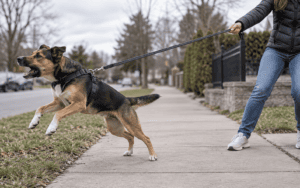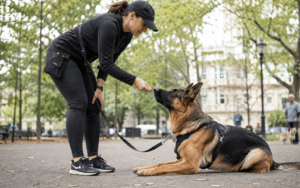
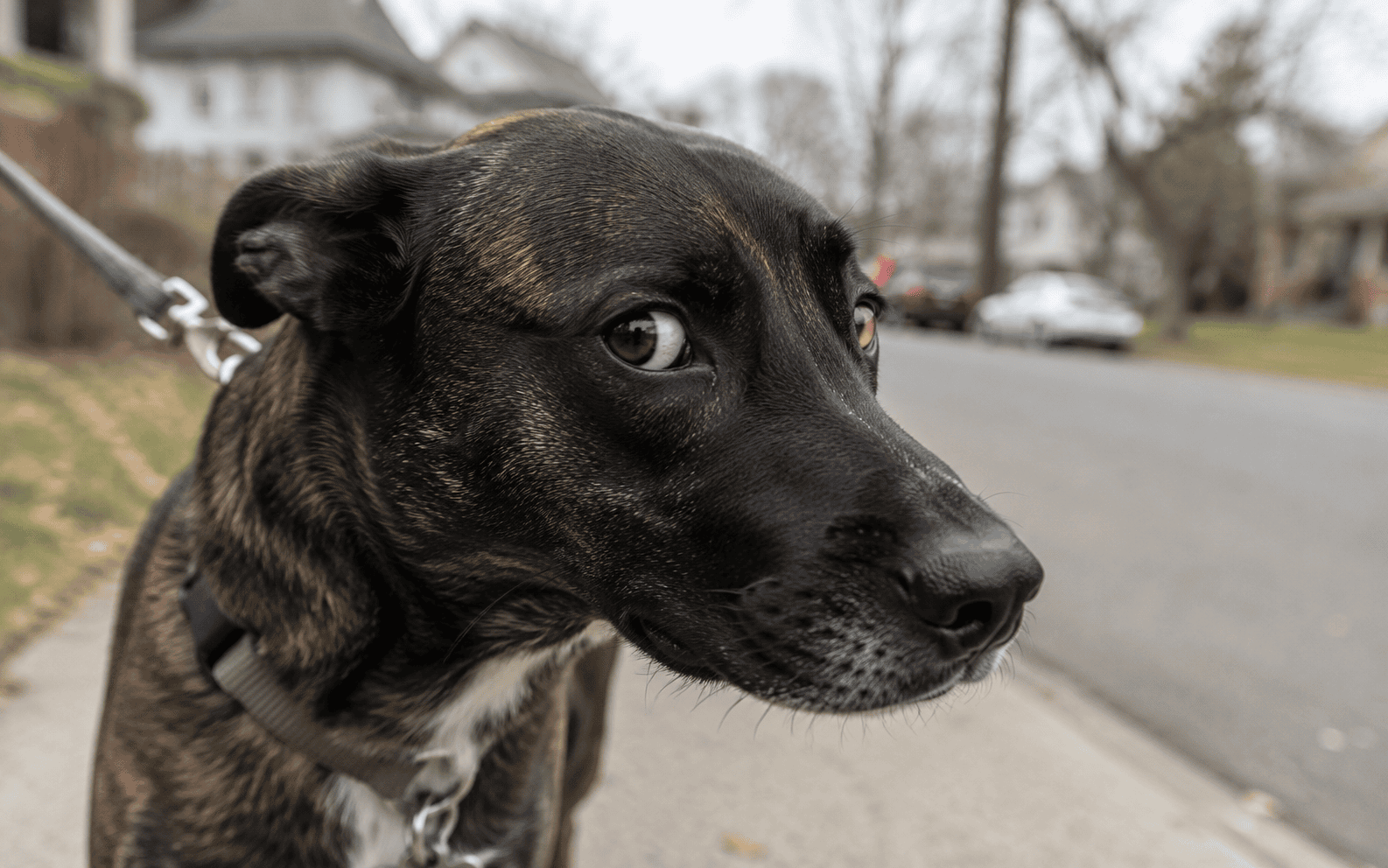
Trigger stacking in dogs happens when multiple stressors pile up faster than your dog can recover, pushing them past their threshold and causing an overreaction that seems to come out of nowhere. Understanding this concept can be the difference between a frustrated owner and one who finally makes sense of their dog’s seemingly unpredictable behavior.
You’ve probably experienced it: your dog was perfectly fine on Monday’s walk, but on Tuesday they lunged at a passing bicycle, barked nonstop at a neighbor, and then growled at a family member who reached for their collar. Nothing “that bad” happened. So what changed? The answer is almost always trigger stacking.
Key Takeaways
- Trigger stacking occurs when stressors accumulate faster than your dog can decompress, lowering their threshold for reactive behavior.
- Even small, everyday events like a car backfiring or a stranger glancing at your dog count as triggers.
- Recovery from a stress response can take 24 to 72 hours, meaning yesterday’s events can affect today’s behavior.
- Reading your dog’s body language early gives you the best chance of intervening before stacking becomes a crisis.
- Management strategies, consistent training, and professional support are the three pillars of addressing this issue.
- Any dog can experience trigger stacking, but reactive, anxious, or under-socialized dogs are the most vulnerable.
How Stress Accumulates in Your Dog’s Body
To understand trigger stacking, you need to understand how stress hormones work in dogs. When your dog perceives a threat, whether real or imagined, their body releases cortisol and adrenaline. These hormones prepare the body for fight, flight, or freeze. That’s useful when there’s a real predator nearby. The problem is that in the average suburban American backyard or neighborhood, these stress responses are triggered by much less serious things: the UPS truck, the neighbor’s cat, a kid on a skateboard.
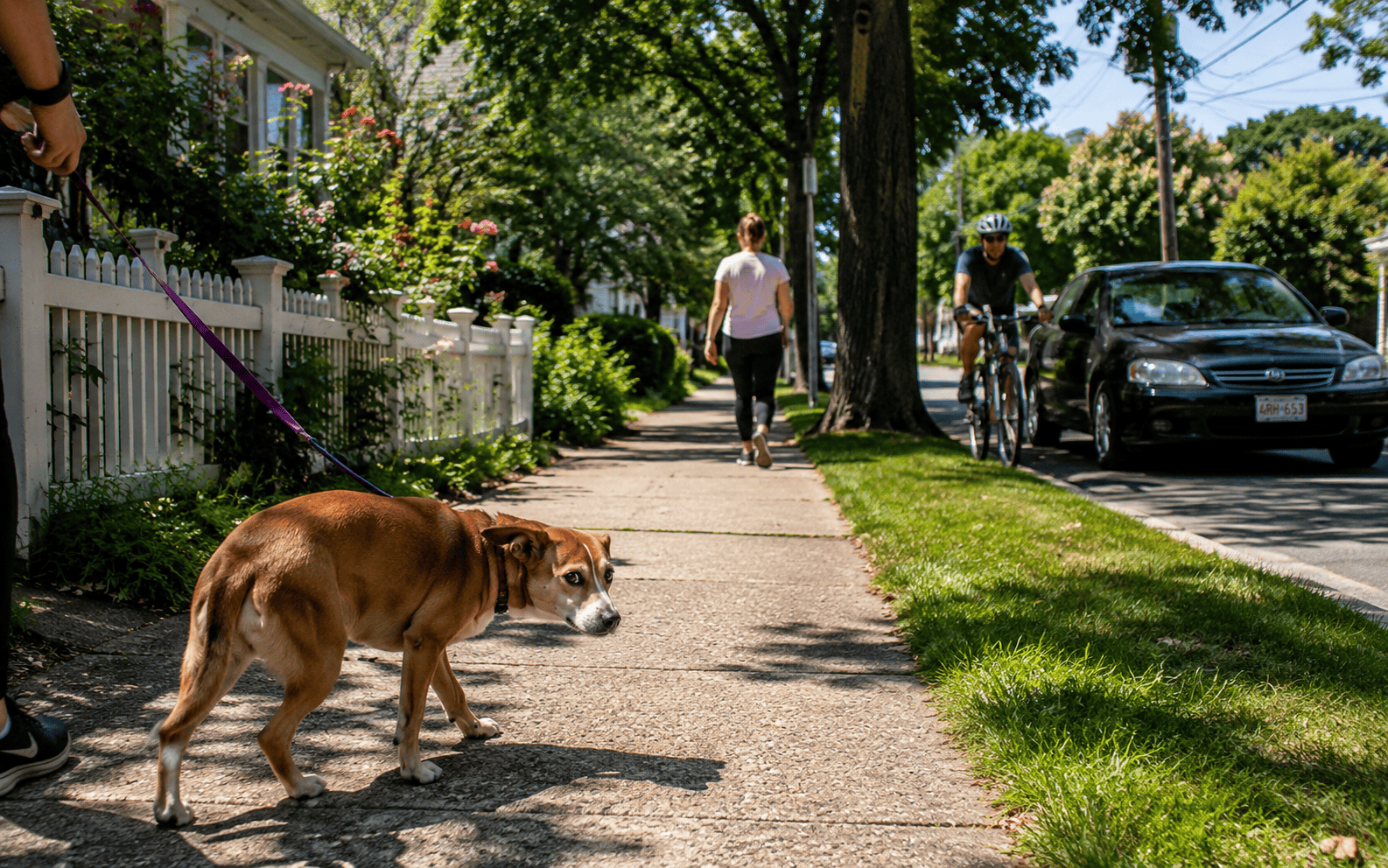
Here’s the critical detail most owners miss: stress hormones don’t disappear the moment the threat is gone. Cortisol can stay elevated in your dog’s bloodstream for 24 to 72 hours after a single stressful event. So if your dog has a tough morning, filled with a thunderstorm at 6 a.m., followed by a chaotic car ride, followed by a visit to the vet, by the time you take them for an afternoon walk, their stress hormones are already running high. It doesn’t take much to push them over the edge.
This is what triggers stacking looks like from the inside of your dog’s nervous system. The first trigger doesn’t cause a breakdown. The second trigger raises the stakes. By the third or fourth trigger, your dog has no buffer left.
The Triggers You Might Not Be Counting
One of the most common mistakes owners make is only recognizing the “big” triggers. The aggressive dog across the street. The thunderstorm. The fireworks on the Fourth of July. Those absolutely count, but so do dozens of smaller events that you’ve probably stopped noticing.
Common triggers that fly under the radar:
- A child running past your dog on the sidewalk
- Loud construction noise two blocks away
- A new smell on a fire hydrant (another dog’s scent can signal territory stress)
- A visitor arriving at the front door
- Rough play at the dog park that got a little too intense
- Your own elevated anxiety or rushed energy during a walk
- Changes to routine, such as a different feeding time or a new piece of furniture
None of these events would cause a well-rested, low-stress dog to react dramatically. But when several of them occur within the same morning, afternoon, or even the same week, you have a recipe for an outburst that looks completely disproportionate to whatever the final trigger actually was.
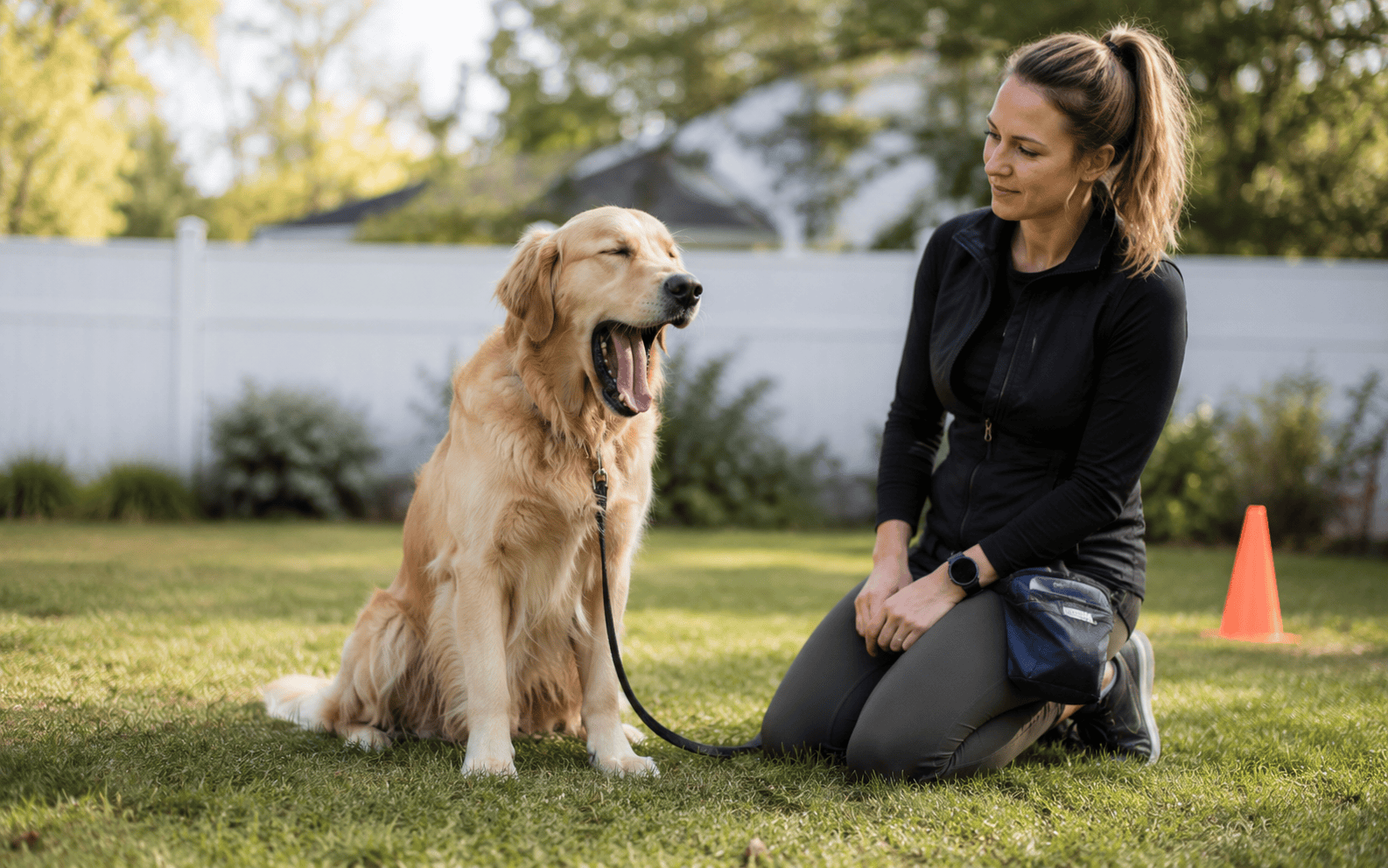
This is why learning to read dog body language is so important. Early signals like yawning, lip licking, panting without heat, whale eye, and a tucked tail are your dog telling you their stress bucket is getting full. Catching those signals early gives you time to remove your dog from the situation before the bucket overflows.
Threshold: The Line Your Dog Cannot Cross Safely
In dog training, the word “threshold” refers to the point at which your dog can no longer think clearly and simply reacts. Below threshold, your dog can take cues, accept food rewards, and make rational decisions. Above threshold, the emotional brain takes over completely and no amount of treats or commands will reach them.
Trigger stacking is dangerous because it artificially lowers your dog’s threshold. A dog who might normally pass a barking dog on the street without incident might, on a high-stress day, react explosively to a dog that’s barely visible across the parking lot. Their physical distance from the trigger hasn’t changed. Their emotional capacity to handle it has shrunk dramatically.
Understanding threshold helps you make smarter management decisions. On days when you know your dog has already been through a stressful event, you can choose a quieter walking route, skip the dog park, or opt for mental enrichment at home instead of an outing with unpredictable variables.
How Trigger Stacking Differs from a “Bad Dog”
If your dog has ever snapped, growled, or lunged in a situation where they’ve never done it before, your first instinct may have been confusion or even shame. But trigger stacking is not about your dog having bad character. It’s a physiological and psychological reality that applies to every dog, from the most laid-back Labrador to the most reactive rescue.
The dog who growled at your child after a long stressful day was not being aggressive toward your child specifically. That dog was at 99% capacity, and one more small event tipped the scale. This distinction matters enormously, both for your relationship with your dog and for choosing the right training approach.
That said, understanding the cause doesn’t mean accepting the behavior. A dog who has reached the point of snapping or growling needs a structured plan to reduce their overall stress load and build their resilience. That’s where professional training becomes essential.
For dogs living on Long Island, in home dog training long island is often the most effective starting point because a trainer can observe your dog’s actual environment, identify the specific triggers present in your household, and build a management and training plan around your real daily life.
Trigger Stacking Comparison: Managed vs. Unmanaged
| Scenario | Dog’s Stress Level | Likely Outcome |
| One trigger, well-rested dog | Low | Dog recovers quickly, no reaction |
| Two triggers, moderate rest | Moderate | Dog shows stress signals, may react slightly |
| Three or more triggers, poor rest | High | Dog likely reacts, may escalate |
| Multiple triggers across two days | Very High | Even minor stimuli cause overreaction |
| Managed environment, recovery time given | Low to Moderate | Dog stays below threshold, training works |
Practical Strategies to Reduce Trigger Stacking
Managing trigger stacking is a combination of prevention, recovery, and skill-building. You won’t be able to eliminate every stressor from your dog’s life, nor should you try to. Some exposure is necessary for a well-adjusted dog. The goal is to keep the cumulative stress load manageable.

Prevention strategies:
- Track your dog’s stress events in a simple journal or phone note to spot patterns.
- Plan high-stimulation activities (vet visits, dog parks, car trips) on different days rather than back to back.
- Give your dog a quiet, predictable space at home they can retreat to when they need to decompress.
- Avoid scheduling training sessions right after a stressful experience.
Recovery strategies:
- Allow 24 to 48 hours of low-stimulation time after a significant stress event.
- Use calm, sniff-focused walks rather than high-energy exercise during recovery periods.
- Practice passive enrichment like sniffing games, lick mats, and puzzle feeders to lower cortisol naturally.
Skill-building through training:
This is where structured training programs make the biggest difference. Obedience dog training gives your dog reliable behaviors to fall back on under stress, making it easier for them to stay below threshold in challenging situations. The stronger your dog’s foundational skills, the more mental buffer they have before hitting their limit.
The Role of Age, History, and Breed
Some dogs are wired to stack triggers faster than others. Herding breeds like Border Collies and Australian Shepherds are highly alert and can feel overstimulated in environments that a Basset Hound would barely notice. Dogs with a history of trauma, neglect, or under-socialization tend to have a lower baseline threshold even on good days.
Puppies deserve special mention here. Their nervous systems are still developing, which means their stress recovery time can be even longer than adult dogs. Starting puppies off with manageable exposures and appropriate socialization windows is one of the best investments you can make in their long-term emotional health. Puppy training long island programs that focus on building confidence and positive associations early can help establish a higher threshold before problematic patterns develop.
For dogs with serious reactivity tied to trigger stacking, more intensive intervention is sometimes the most efficient path forward. Board and train long island programs can immerse a dog in a structured training environment where triggers are carefully controlled and introduced at a pace the dog can handle, producing significant progress in a condensed timeframe.
Things to Know
- The 24- to 72-hour cortisol window means your dog’s bad behavior today may actually be a delayed response to yesterday’s events.
- A dog can appear completely calm between trigger exposures and still be physiologically stressed.
- Not all triggers are environmental. Your own stress, rushed energy, or tension on the leash can act as a trigger.
- Dogs who seem “fine” in one context may be white-knuckling through it. Suppressed stress still contributes to stacking.
- Medication prescribed by a veterinarian can help lower baseline anxiety in some dogs, making training more effective when stacking is severe.
- Private dog training long island allows a trainer to customize a program specifically around your dog’s unique trigger profile rather than using a one-size-fits-all approach.
Ready to Stop the Cycle of Reactivity and Overwhelm
If your dog has been reacting in ways that feel unpredictable or out of character, trigger stacking may be the missing piece of the puzzle. You don’t have to figure this out alone, and your dog doesn’t have to keep living at the edge of their limit.
K9 Mania Dog Training works with dogs exactly like yours throughout Long Island and surrounding areas. Whether your dog is a puppy who needs the right foundation, an adult dog with ingrained reactive patterns, or somewhere in between, there’s a program designed for your situation. Services include Board and Train Programs, Private Dog Training, Puppy Training, Obedience Training, and Behavior Modification. The right approach depends on your dog’s specific triggers, history, and lifestyle.
Contact K9 Mania Dog Training today to speak with a trainer and find the program that will give your dog the tools to stay calm, confident, and below threshold.
Frequently Asked Questions
How long does trigger stacking last in dogs?
The elevated stress hormones from trigger stacking can persist in your dog’s system for 24 to 72 hours after a triggering event.
This means that a stressful morning can still affect your dog’s behavior that evening or even the following day. Giving your dog dedicated decompression time and avoiding additional stressors during this window speeds up recovery significantly.
Can all dogs experience trigger stacking, or only reactive dogs?
Any dog can experience trigger stacking, though reactive, anxious, and under-socialized dogs tend to hit their threshold faster and with fewer triggers.
Even easygoing, well-trained dogs have a stress limit. The difference is that dogs with stronger coping skills and lower baseline anxiety have a much higher threshold, so it takes more stressors over a shorter period to push them into a reactive state.
What should I do when I notice my dog is already stressed during a walk?
The best immediate response is to increase distance from the trigger, stop asking your dog to perform commands, and redirect their attention with calm movement or a change of direction.
Trying to correct or redirect a dog who is already above threshold rarely works and can add to their stress. Getting distance first resets their nervous system enough to start functioning again. A short sniff break in a low-stimulation area can also help.
Is trigger stacking the same as generalized anxiety in dogs?
Trigger stacking is a specific pattern of cumulative stress responses, while generalized anxiety is a persistent state of worry that exists even without specific triggers.
They can overlap significantly. Dogs with generalized anxiety tend to stack triggers faster because their baseline stress level is already elevated. A veterinarian and a professional trainer working together often provide the most comprehensive support for dogs dealing with both issues.
How do I know if my dog’s behavior is due to trigger stacking or a medical issue?
Sudden behavioral changes always warrant a veterinary checkup first, since pain, hormonal shifts, and neurological issues can all mimic anxiety-based reactivity.
Once medical causes are ruled out, a pattern of behavior that appears worse on high-stimulation days or after stressful events strongly suggests trigger stacking. Keeping a detailed behavior log and sharing it with both your vet and trainer gives both professionals the clearest picture of what’s driving the behavior.
The Bottom Line on What Is Trigger Stacking in Dogs
What is trigger stacking in dogs, at its core, is a physiological reality that every dog owner should understand. Your dog is not “losing it” randomly. They are a living being with a nervous system that has limits, and when those limits are exceeded without enough recovery time, reactive behavior is the predictable result.
The good news is that trigger stacking is manageable. With better awareness of your dog’s triggers, smarter scheduling of stressful activities, dedicated recovery time, and consistent professional training, most dogs can significantly raise their threshold and live more comfortably in a world that sometimes feels overwhelming to them. Start by tracking your dog’s stress events this week, and consider reaching out to a certified trainer to build a plan tailored to your dog’s specific needs.