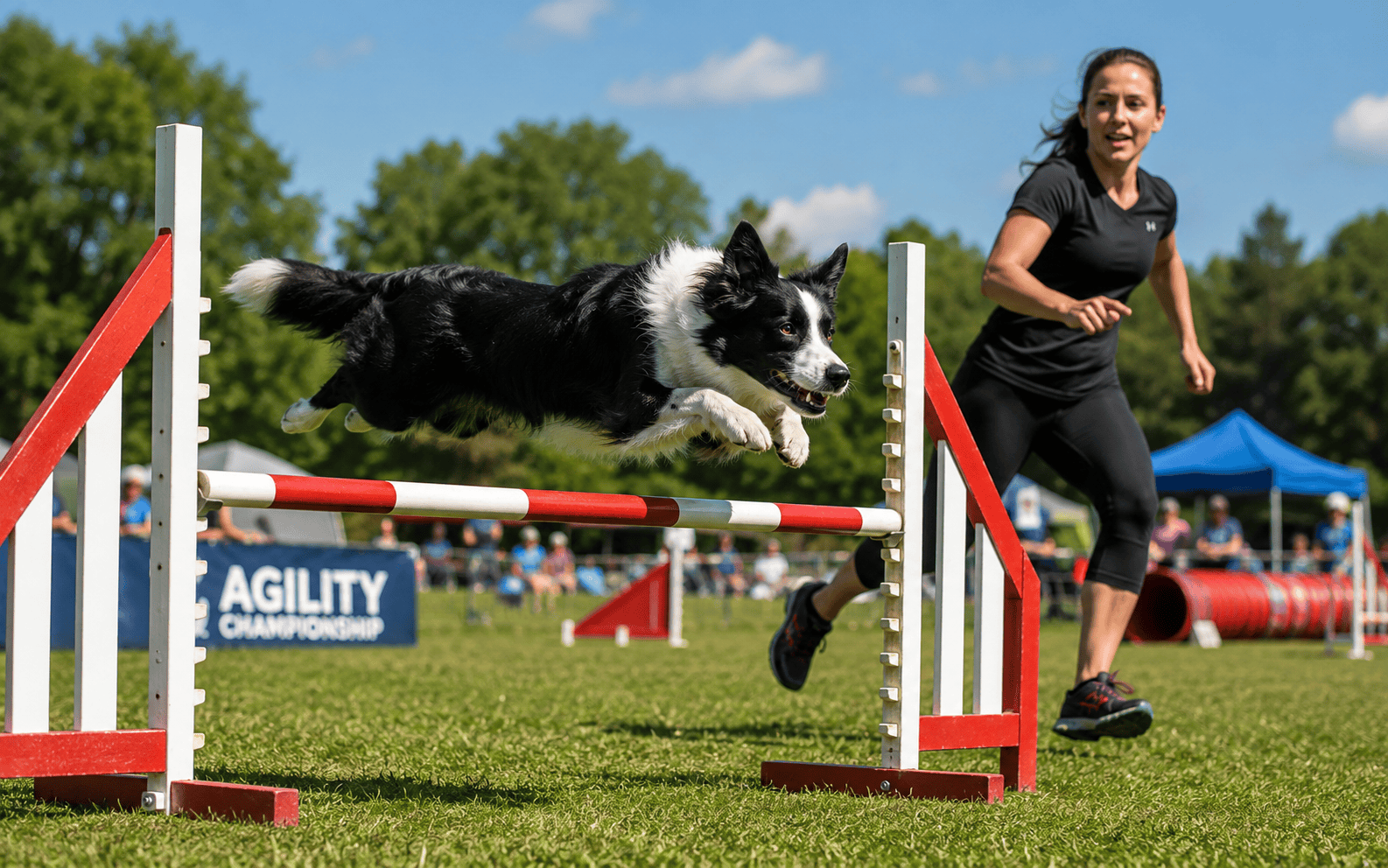
Agility dog training is a sport and skill-building discipline where dogs navigate a timed obstacle course under their handler’s direction. It develops physical coordination, mental sharpness, and a stronger bond between dog and owner, making it one of the most rewarding forms of canine enrichment available.
Key Takeaways
- Agility training is suitable for most dog breeds and ages, though puppies under 12 months should avoid high-impact jumps.
- The sport requires both physical conditioning for your dog and clear communication skills from you as the handler.
- Starting with foundational obedience and off-leash reliability is essential before introducing obstacle work.
- Agility builds real-world benefits including impulse control, focus, and confidence, even if you never compete.
- You do not need a large yard or expensive equipment to begin, though dedicated practice space helps.
What is Agility Dog Training Actually Involves
At its core, agility dog training is handler-directed obstacle navigation. Your dog moves through a sequence of equipment pieces, including tunnels, weave poles, A-frames, dog walks, teeter-totters, and jump bars, based entirely on your cues. The handler never touches the dog during a run. Instead, you use body language, hand signals, and verbal commands to guide your dog through the correct sequence as fast and accurately as possible.
There are two primary scoring elements in competition: time and faults. A fault occurs when a dog knocks a bar, skips an obstacle, or misses a contact zone (the painted areas at the base of certain obstacles that the dog must touch). A clean run with no faults and a fast time earns the highest marks.
Training for this sport happens in layers. First, your dog learns what each individual obstacle is and how to perform it correctly. Then, sequences of two or three obstacles are chained together. Eventually, full courses of 15 to 20 obstacles are practiced until the dog reads your motion fluently and responds with speed and precision.
One element new handlers consistently underestimate is how much the sport depends on your own movement and positioning. Agility is as much a human athletic challenge as it is a canine one. Your timing, footwork, and spatial awareness directly determine whether your dog takes the right obstacle or bypasses it entirely.
Why Obedience Comes Before Obstacle Work
No serious agility trainer skips the foundation phase, and that foundation is built on solid obedience. Before your dog learns to weave or climb an A-frame, they need reliable responses to basic commands like sit, stay, down, and come, especially at a distance and in distracting environments.
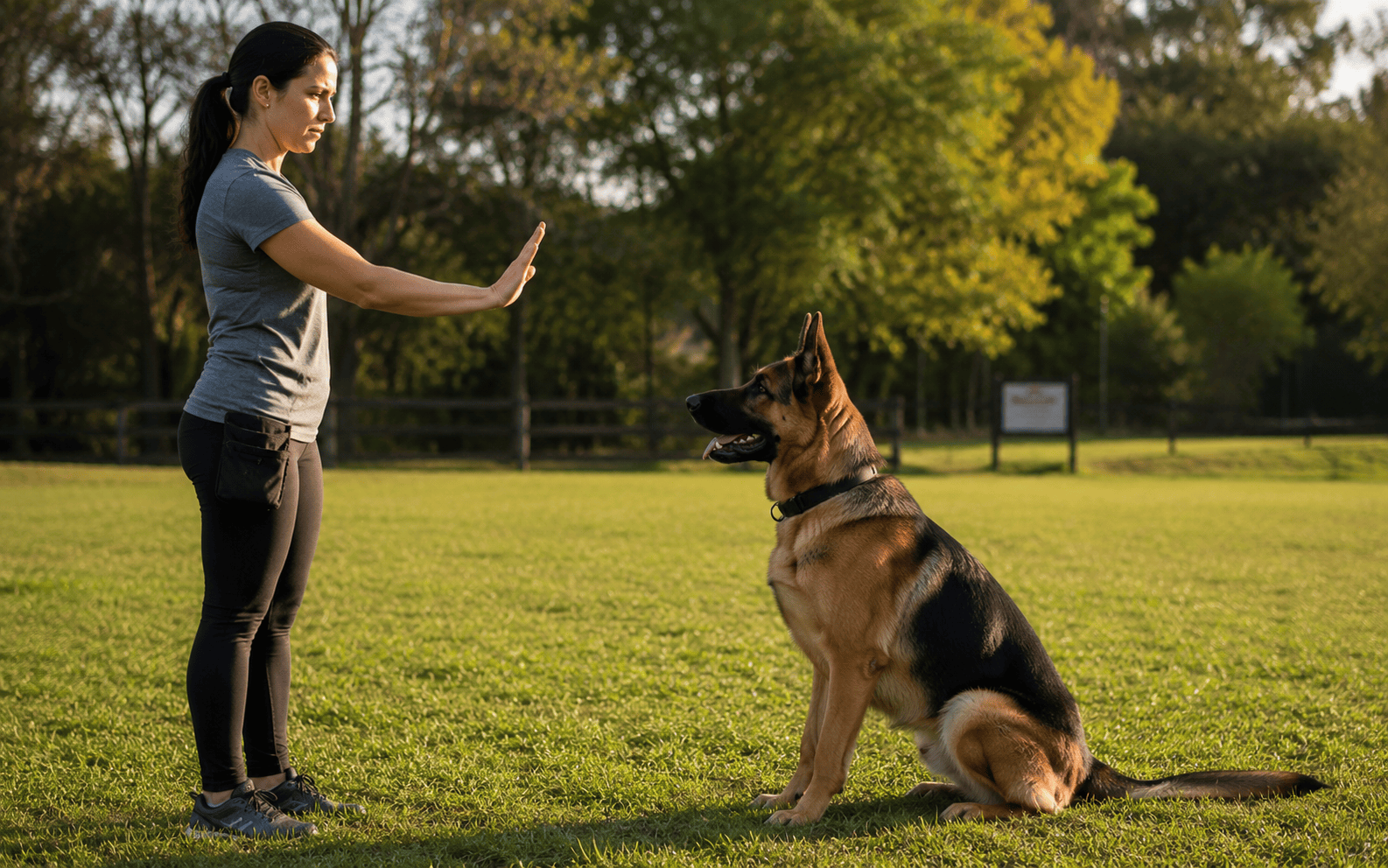
This is why obedience dog training is consistently recommended as the first step for anyone interested in pursuing agility work with their dog. Without a dog that listens under pressure, obstacle training becomes chaotic and, in some cases, unsafe.
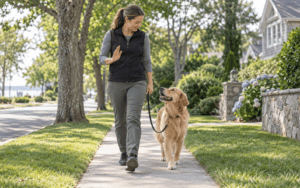
Off-leash reliability is particularly critical. In an agility ring, your dog is always off leash. If your dog does not have a solid recall or tends to wander, the entire training process stalls. Reviewing off leash dog training tips before enrolling in an agility class will save you significant frustration down the road.
The good news: the obedience skills developed during this phase transfer directly into agility training. A dog that holds a stay while you lead out to your starting position, or that turns sharply when called, has already developed the mental discipline the sport demands.
Which Dogs Are Best Suited for Agility
Almost any healthy dog can participate in agility at a recreational level, but certain breeds are naturally wired for the sport. Herding and working breeds dominate competitive agility because of their combination of drive, intelligence, and physical capability.
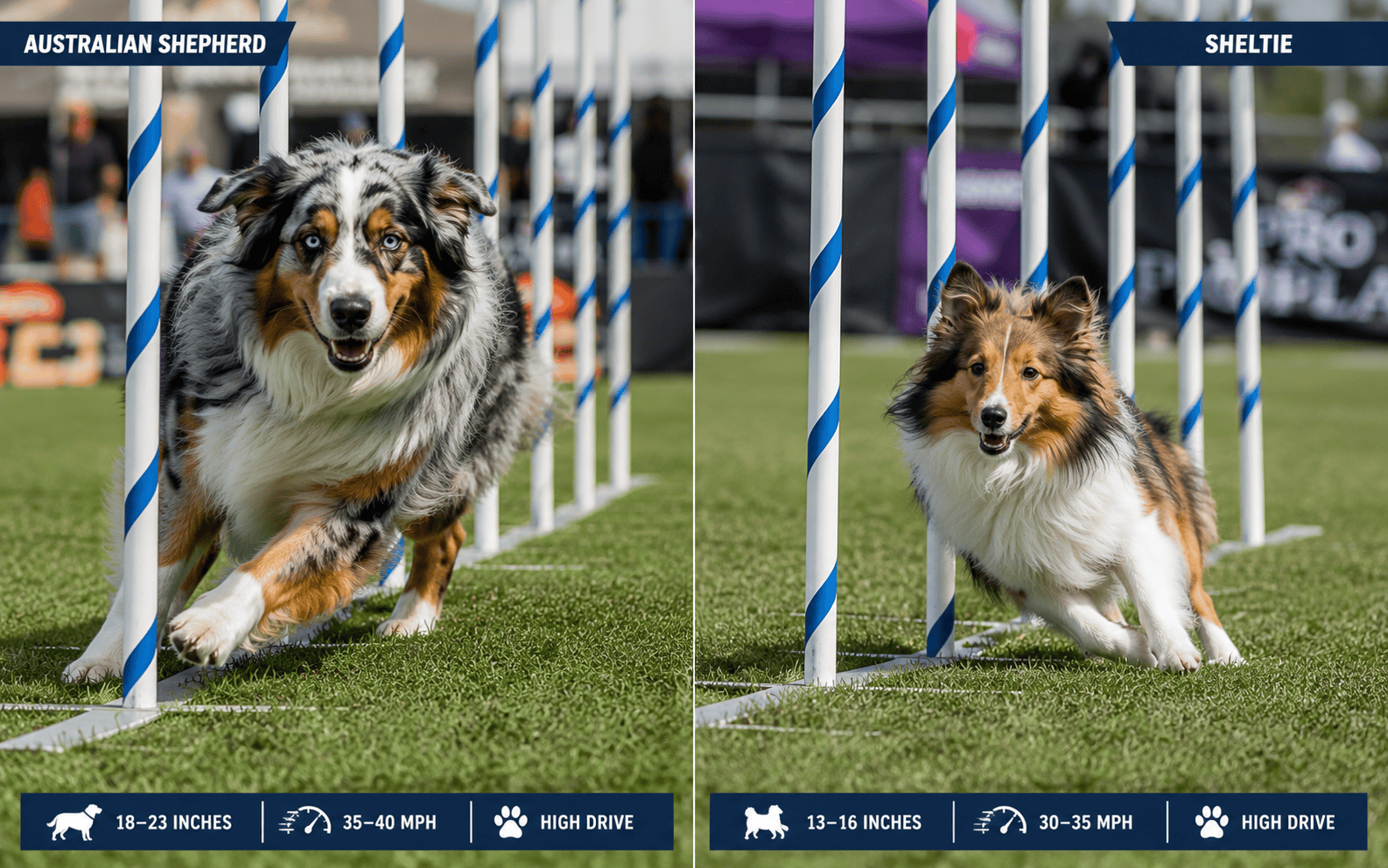
The most trainable dog breeds for agility include:
- Border Collie: The dominant breed in elite competition. Exceptional focus, speed, and handler sensitivity.
- Australian Shepherd: High energy, agile, and deeply motivated by work and reward.
- Shetland Sheepdog (Sheltie): Compact and fast, with an eagerness to please that makes obstacle learning quick.
- Golden Retriever: Enthusiastic and social, performs well in agility with consistent motivation.
- Jack Russell Terrier: Surprisingly dominant in smaller dog classes due to speed and tenacity.
- Mixed breeds: Fully eligible in AKC’s Preferred Agility and USDAA competitions, and often exceptional performers.
Larger breeds like German Shepherds, Belgian Malinois, and Labrador Retrievers also compete successfully. Brachycephalic breeds (dogs with flat faces, like Bulldogs and Pugs) may struggle with the respiratory demands of fast runs, though they can still enjoy low-intensity agility work.
Age matters too. The AKC requires dogs to be at least 15 months old to compete, and high-impact jumping should not be introduced until growth plates have closed, typically around 12 to 18 months depending on breed size. Senior dogs can continue participating at modified heights and paces.
| Dog Category | Agility Suitability | Notes |
| Herding breeds | Excellent | High drive, fast learners, top competitors |
| Sporting breeds | Very good | Motivated and athletic, may need focus work |
| Terriers | Good (smaller classes) | Fast but independently minded |
| Toy breeds | Good at recreational level | Compete in smaller height divisions |
| Brachycephalic breeds | Limited | May struggle with stamina |
| Mixed breeds | Excellent | Eligible in most organizations |
| Senior dogs | Modified participation | Lower jump heights, reduced intensity |
How Training Sessions Are Actually Structured
A productive agility session typically runs between 20 and 30 minutes. Dogs tire mentally before they tire physically, and overlong sessions lead to sloppy performance and loss of enthusiasm. Short, high-energy bursts with clear rewards are far more effective than marathon practices.
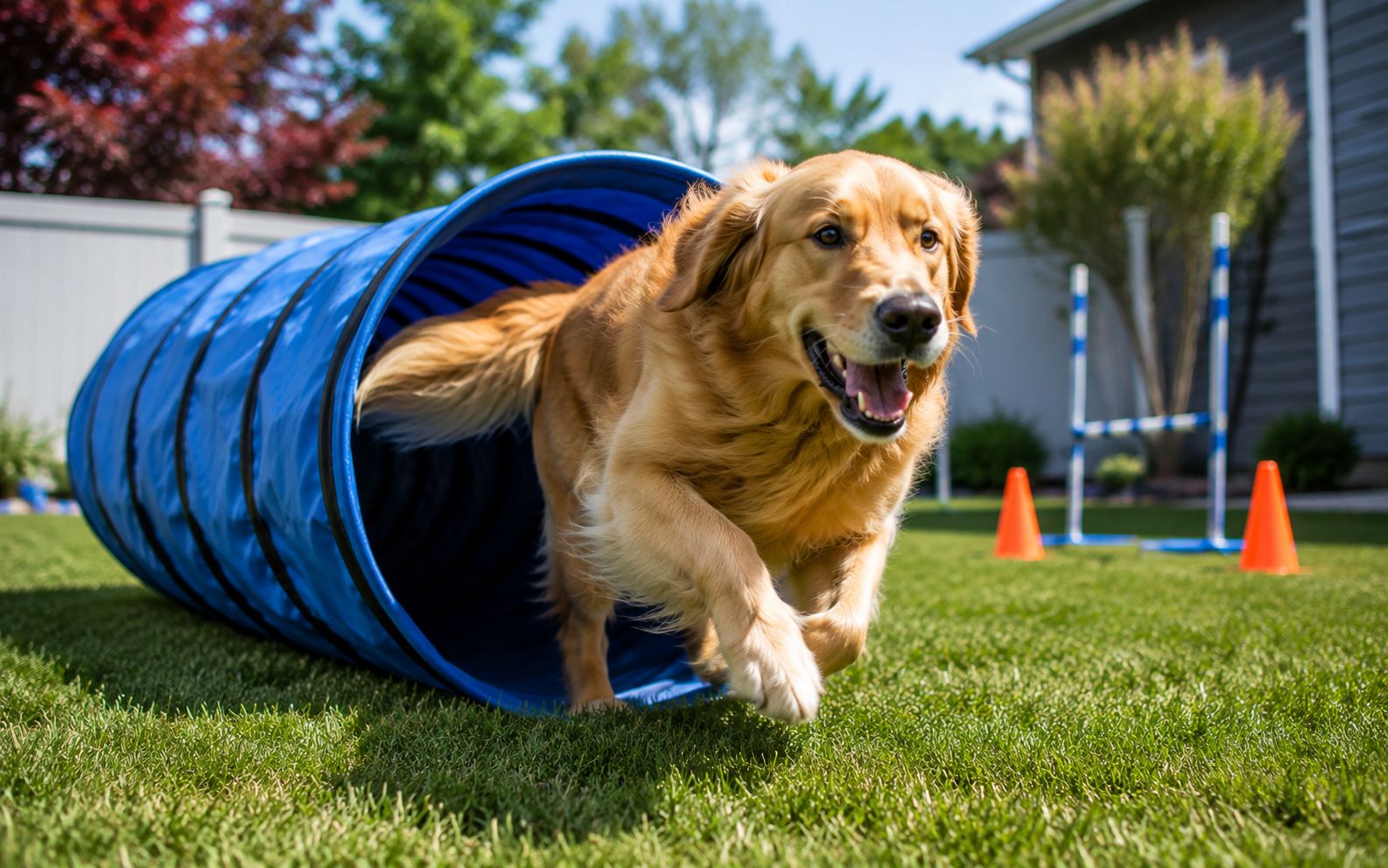
Sessions are usually structured like this:
- Warm-up: Light movement, stretching, and a quick review of a known skill to get your dog engaged and focused.
- Skill work: Introduction or reinforcement of a single obstacle or handling maneuver.
- Sequence practice: Connecting two to four obstacles in a flowing pattern.
- Play and reward: End every session with something your dog loves, whether that is tug, fetch, or a food jackpot.
Positive reinforcement is the standard methodology in modern agility. Treats, toys, and praise drive progress. Punishment-based approaches are counterproductive in this sport because agility demands a dog that is excited and confident, not cautious or anxious.
If you are working with a professional trainer for agility-specific development, formats like board and train long island can accelerate the foundation phase significantly, especially for handlers with limited daily training time. Immersive programs allow dogs to develop muscle memory and behavioral patterns faster than weekly group classes alone.
For handlers who want personalized guidance in their own space, in home dog training long island gives trainers the ability to work with your specific yard, equipment setup, and daily routine, making the training immediately practical rather than theoretical.
The Real-World Benefits Beyond Competition
Even if you never set foot in a competition ring, the skills developed through what is agility dog training transfer directly into daily life in ways most owners do not expect.
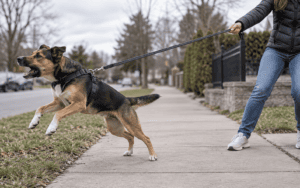
Impulse control. Dogs learn to wait for your cue before taking an obstacle. This same patience carries over to not bolting out the front door or lunging at other dogs on walks.
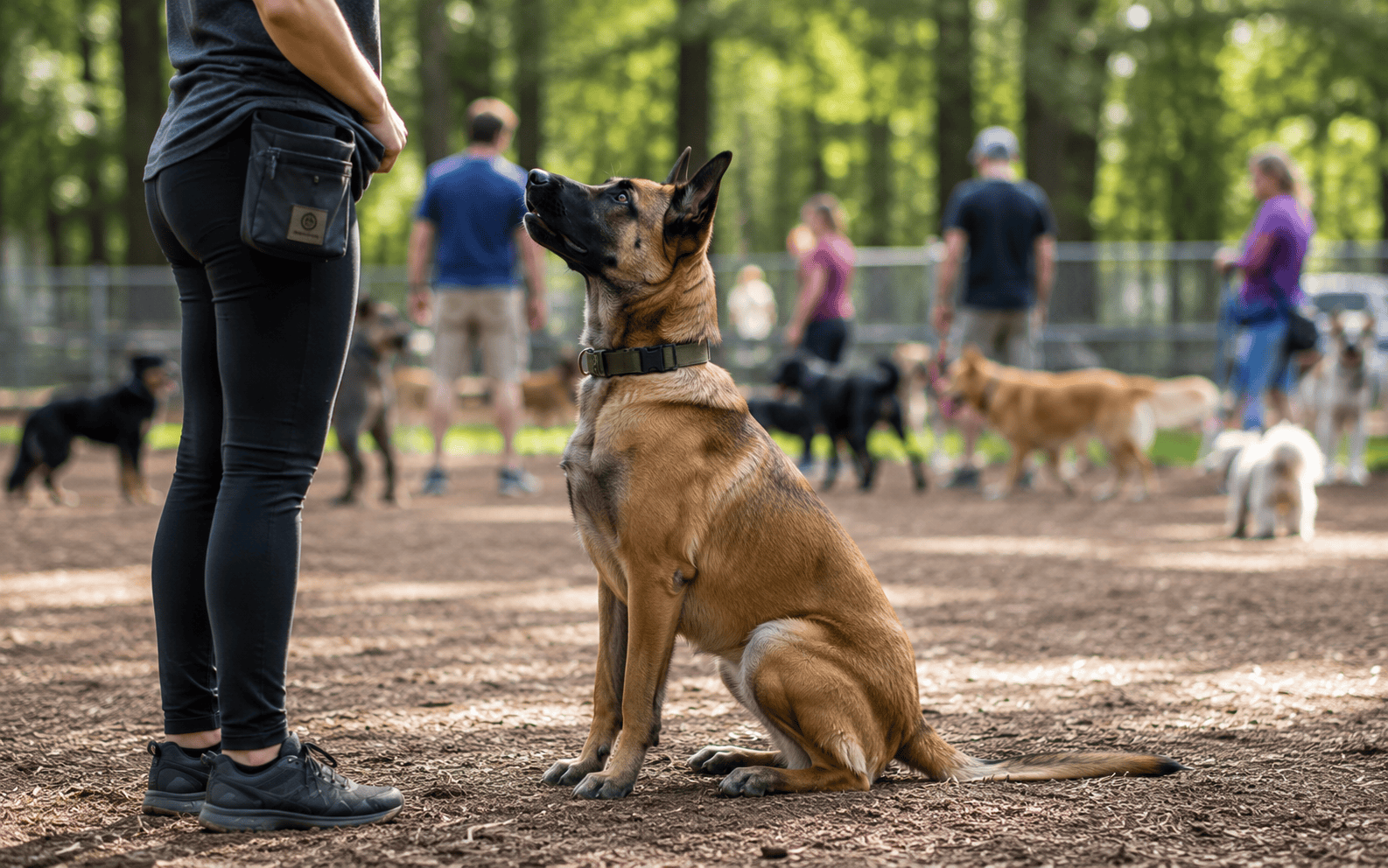
Focus under distraction. Agility venues are loud, crowded, and full of other dogs. Training your dog to stay locked onto you in that environment means street-level distractions become far less overwhelming.
Physical conditioning. The sport develops core strength, flexibility, and body awareness in dogs, which reduces injury risk in everyday activity and supports healthy aging.
Handler communication. Agility forces you to learn how to communicate with your body, not just your voice. This makes you a more effective trainer in every other context.
Stress reduction. Mental stimulation through structured work has been shown to reduce anxiety and destructive behaviors in dogs. A dog that gets regular agility practice is typically calmer at home.
For owners who want a more structured and individually tailored approach to achieving these outcomes, private dog training long island allows you to work one-on-one with a trainer who can assess your dog’s specific temperament and build a custom agility-readiness plan from the ground up.
Getting Started: What You Actually Need
You do not need a competition-grade course in your backyard to begin. Many handlers start with a single jump made from PVC pipe, a tunnel purchased for under $50, and a flat lawn. Before starting obstacle work, it’s worth making sure your dog has solid baseline social and obedience skills — the kind of foundation K9 Mania Dog Training builds into every program from day one.
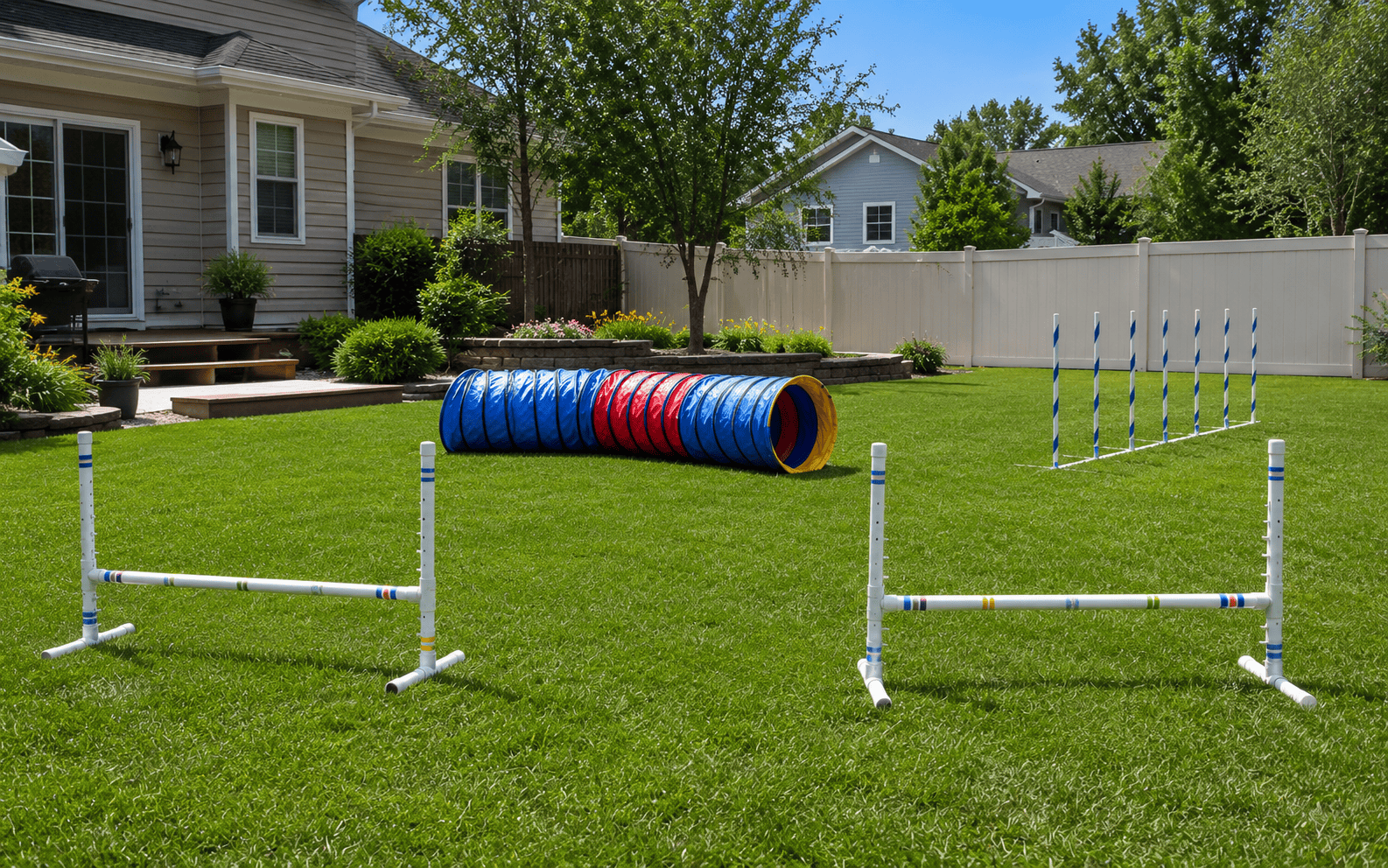
Here is what a realistic beginner setup looks like:
- Basic equipment: One or two jumps (set low), a tunnel, and a set of six weave poles.
- Training aids: A target stick or hand touch to shape obstacle entry, plus high-value treats or a tug toy.
- Space: A 30 x 40 foot area is sufficient for early sequencing work.
- Resources: K9 Mania Dog Training agility regulations, local club listings, and video coaching platforms.
K9 Mania Dog Training offers beginner foundation classes designed to build the core skills your dog needs before moving into obstacle work. Classes typically run six to eight weeks, giving your dog plenty of time to build confidence and consistency at a comfortable pace.
Things to Know
- Dogs with hip dysplasia, joint issues, or heart conditions should be cleared by a veterinarian before beginning agility work.
- You will likely need to train your dog to love obstacles before speed becomes a goal. Confidence always comes before fast.
- Weave poles are consistently the most difficult obstacle for dogs to learn and typically take the longest to master.
- Some dogs are naturally “handler focused” and pick up agility quickly; others are more environmentally driven and require more impulse control work first.
- Weather, footing (wet grass versus turf), and venue noise can all affect your dog’s performance, so training in varied conditions is essential.
Ready to Build Your Dog’s Agility Foundation?
Reach out to K9 Mania Dog Training this week to ask about beginner foundation classes. Commit to three to four short training sessions per week for the first month, focusing exclusively on obedience and one obstacle at a time. The progress you see in 30 days of consistent, structured work will tell you everything about whether agility is the right path for you and your dog.
You May Also Read
Off Leash Dog Training Tips for Long Island Dog Owners
Teaching a Dog to Settle on a Mat
Frequently Asked Questions
What age can a dog start agility training?
Dogs can begin light agility foundation work as early as eight weeks old, but high-impact obstacles like jumps should wait until growth plates close at 12 to 18 months.
Puppies can learn targeting, tunnel entry, and basic handler focus from a young age without physical risk. The K9 Mania Dog Training requires dogs to be at least 15 months old to enter official competitions, giving you time to build the foundation thoroughly before adding jump heights.
Do you need to compete to benefit from agility dog training?
No. The majority of agility participants train purely for the mental stimulation, physical fitness, and bonding benefits without ever entering a competition ring.
Recreational agility is increasingly popular in the U.S. because it addresses behavioral issues like hyperactivity and anxiety while building a stronger working relationship between dog and owner. Competition is entirely optional.
How long does it take to train a dog for agility?
Most dogs need six to twelve months of consistent training before they are ready to run a full course cleanly, though this varies by breed, age, and prior training history.
Dogs with solid obedience backgrounds often progress faster through the obstacle-learning phase. Dogs starting with no prior training typically need an additional two to three months of foundation work before obstacle introduction.
Is agility training expensive?
Entry-level agility training is relatively affordable, with beginner classes typically costing $150 to $300 for a six-to-eight-week session and basic starter equipment available for under $100.
Competition entry fees, travel to trials, and premium equipment add cost over time, but recreational participation can remain budget-friendly. Many clubs offer equipment use as part of class fees, which eliminates the need to purchase your own setup immediately.
Can small or older dogs do agility?
Yes. K9 Mania Dog Training offer height divisions tailored to smaller breeds, and senior dogs can participate at modified jump heights with appropriate veterinary clearance.
Small dogs often excel in agility because of their quick acceleration and tight turning radius. For older dogs, reduced jump heights and shorter course sequences preserve joint health while keeping the sport mentally engaging and enjoyable.
The Bottom Line on What Is Agility Dog Training
Agility dog training is one of the most complete forms of canine enrichment available, combining physical exercise, mental challenge, and genuine communication between you and your dog into a single activity. Whether your goal is a national championship or simply a more focused, confident dog, the investment in time and training pays off in ways that extend far beyond the obstacle course.
Start with obedience, build your dog’s confidence on individual obstacles, and progress at a pace that keeps training fun rather than stressful. The sport is accessible, scalable, and rewarding at every level, from your first tunnel introduction to your first clean run under the lights at a sanctioned trial.