
Dog training for rescue dogs is not the same as training a puppy from a breeder. Rescue dogs often carry behavioral baggage from neglect, abuse, or multiple rehoming situations, and that history shapes how they learn, trust, and respond to commands.
Key Takeaways
- Rescue dogs require a decompression period of at least two to four weeks before formal training begins.
- Positive reinforcement is the most effective and humane foundation for building trust with a traumatized dog.
- Crate training creates a safe, predictable space that helps anxious rescue dogs self-regulate.
- Consistency from every household member matters more than any single training session.
- Professional training, whether in-home, private, or board-and-train, can accelerate progress significantly.
- Setting realistic expectations protects both the dog and the owner from frustration and early surrender.
Why Rescue Dogs Learn Differently Than Other Dogs
When you bring a rescue dog home, you are not starting with a blank slate. You are working with an animal that has developed coping strategies, sometimes healthy ones and sometimes deeply ingrained fear responses, in order to survive whatever environment came before yours.
Research from the American Society for the Prevention of Cruelty to Animals (ASPCA) estimates that approximately 3.1 million dogs enter U.S. shelters every year. Many of those animals have experienced inconsistent handling, inadequate socialization during critical developmental windows, or outright trauma. Those experiences live in the dog’s nervous system long after the circumstances change.
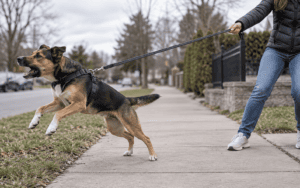
This matters for training because a rescue dog’s reactions are not always logical by typical standards. A dog that lunges at strangers may have been attacked. A dog that guards its food bowl obsessively may have gone hungry. A dog that shuts down during obedience drills may associate raised voices or fast hand movements with punishment. Understanding the “why” behind a behavior is the first step toward addressing it effectively.
The concept of “trigger stacking” is something every rescue dog owner should understand. This is when multiple small stressors layer on top of each other until the dog reaches its threshold and reacts. A dog that seems to “snap out of nowhere” was likely accumulating stress well before the visible reaction. Training programs for rescue dogs need to account for this reality.
For a deeper look at how rescue dogs typically adjust to their new environment, reading about rescue dog adjusting to new home will give you a solid foundation before you begin any formal training work.
The Decompression Phase: Why You Should Wait Before Training
Most new rescue dog owners make the same well-intentioned mistake: they begin training on day one. The impulse makes sense. You want to establish rules, build the relationship, and solve any problem behaviors as quickly as possible. But rushing into training before a dog has had time to decompress can backfire dramatically.

The “3-3-3 rule” is a widely referenced framework in the rescue dog community. It suggests that:
- After 3 days, a dog is still overwhelmed and shut down.
- After 3 weeks, a dog is starting to understand its routine and show its real personality.
- After 3 months, a dog feels at home and genuinely bonded.
Formal training is most effective once a dog has moved past the initial shock phase. During the first two to three weeks, focus on creating structure through routine rather than commands. Feed at consistent times. Walk at the same hours each day. Keep the household energy calm.
Crate training is an excellent way to give a rescue dog a safe, predictable retreat during this phase. If you are unsure where to start, a detailed breakdown of how to crate train a rescue dog covers the step-by-step process in a way that prioritizes the dog’s comfort over speed.
Core Training Principles That Work for Rescue Dogs
Once your dog has had time to settle, you can begin building a structured training program. The principles below are backed by behavioral science and specifically effective for dogs with difficult histories.
Use Positive Reinforcement as Your Foundation
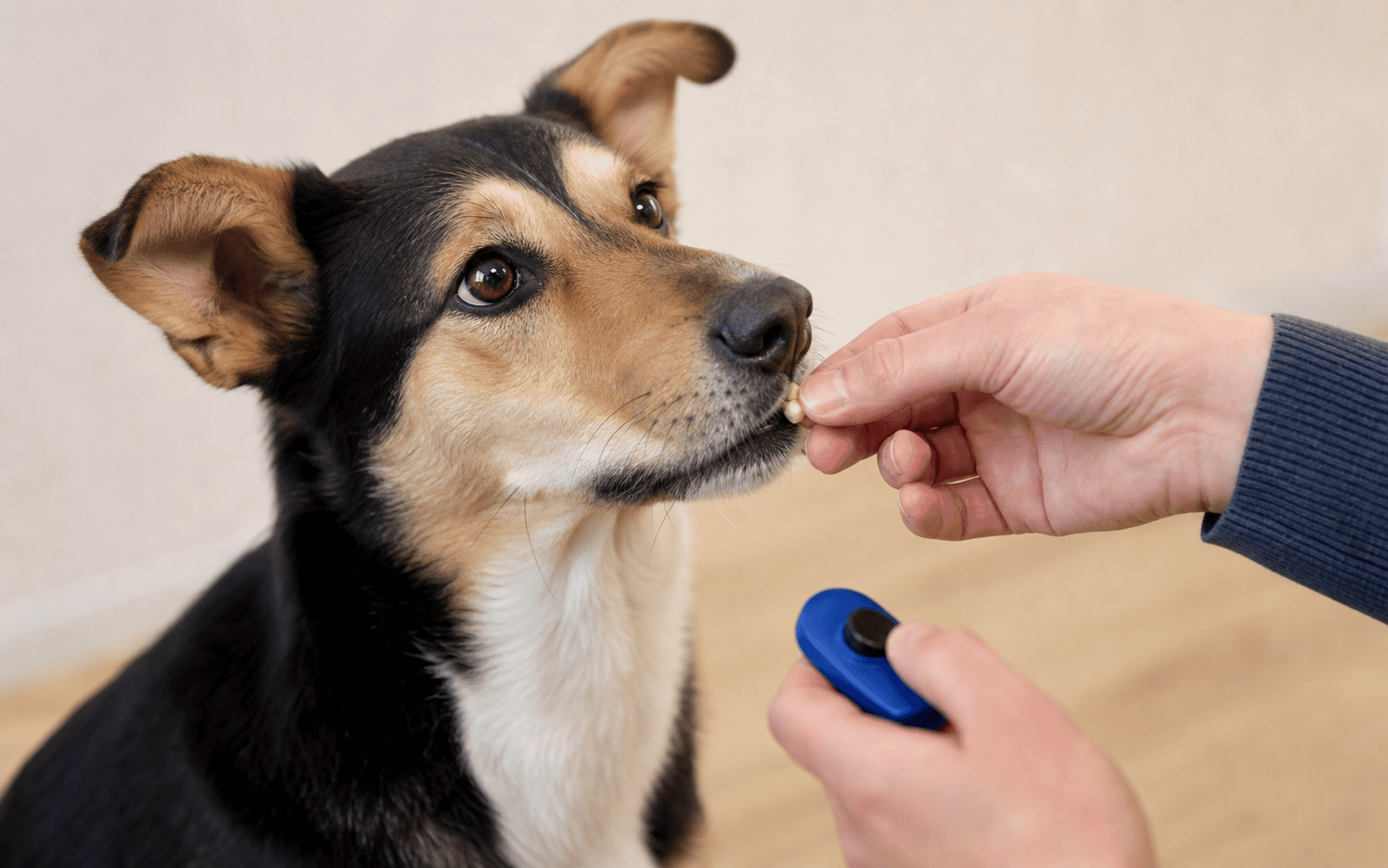
Positive reinforcement, rewarding the behavior you want rather than punishing the behavior you do not want, is the most widely supported method in modern animal behavior science. For rescue dogs specifically, punishment-based methods carry significant risks. A dog that has been hit, shocked, or choked in a past situation may react to those corrections with fear aggression or complete shutdown, neither of which moves training forward.
High-value food rewards, like small pieces of cooked chicken or commercial training treats, create strong motivation without pressure. Mark the exact moment of the correct behavior with a clicker or a consistent word like “yes,” then deliver the reward within two seconds. That timing precision is what builds understanding in the dog’s brain.
Build on Small Wins
Rescue dogs often lack confidence. Stacking small, achievable successes builds confidence alongside skill. Start with the simplest possible version of a behavior, like “sit” in a quiet room with no distractions, and only add complexity once the behavior is reliable in that environment.
Obedience dog training is the structured backbone of any effective program, with core commands like sit, stay, down, come, and leave it giving a dog a framework for understanding what you want, which in turn reduces anxiety because the dog knows how to succeed.
Manage the Environment
Training works best when you set the dog up to succeed. If your rescue dog reacts aggressively toward other dogs on walks, do not walk past the dog park during rush hour. Work at a distance that keeps the dog under threshold and practice attention exercises there. Gradually close the distance as the dog demonstrates comfort.
Management tools like baby gates, leashes, and visual barriers are not crutches. They are legitimate parts of a training plan that prevent the dog from practicing unwanted behaviors while you build new ones.
Things to Know

- Rescue dogs may show their true behavioral challenges only after the decompression phase ends, sometimes surprising owners who thought they had an “easy” dog.
- Some rescue dogs have never been on a leash before or have only experienced painful leash corrections, which means loose-leash walking may need to be taught entirely from scratch.
- Separation anxiety is significantly more common in rescue dogs than in owner-raised dogs, and it requires a specific desensitization protocol rather than standard obedience work.
- Breed history matters: a herding dog mix may nip at heels; a terrier may be reactive to small animals. Knowing the dog’s background informs your approach.
- Progress is rarely linear. A dog that performs perfectly for two weeks may regress after a stressful event like a thunderstorm or a household change.
- Not all professional trainers are equally qualified. Look for trainers who use science-based methods and hold credentials from organizations like the Certification Council for Professional Dog Trainers (CCPDT).
Choosing the Right Training Format for Your Rescue Dog
No single training format works best for every dog or every household. Understanding the differences between the available options helps you make the right call.

In-Home Training
Training in the home environment is highly effective for rescue dogs because it addresses behaviors where they actually occur. A dog that resource guards in the kitchen, pulls on the leash during neighborhood walks, or bolts out the front door can be worked with in the exact contexts that matter, and in home dog training long island is a practical option for owners who want professional guidance without the stress of transporting an anxious dog to a new location.
Private Training Sessions
One-on-one sessions allow a trainer to focus entirely on your dog’s specific history and behavioral profile. There is no group class pressure, no distraction from other dogs, and no one-size-fits-all curriculum, so private dog training long island gives rescue dog owners the kind of tailored plan that accounts for trauma history, reactivity, and individual learning pace.
Board and Train Programs
For owners dealing with significant behavioral issues or limited time, board and train programs offer intensive, immersive training in a professional environment. The dog lives with the trainer for a set number of weeks and works through a structured curriculum daily, and for complex cases, board and train long island can produce results that would take months to achieve through weekly sessions alone.
| Training Format | Best For | Average Duration | Location |
| In-Home Training | Context-specific behaviors, anxious dogs | 4-8 sessions | Your home |
| Private Sessions | Individualized plans, reactive dogs | Ongoing weekly | Training facility or home |
| Board and Train | Intensive cases, time-limited owners | 2-4 weeks | Trainer’s facility |
| Group Classes | Socialization, mild behavior issues | 6-8 weeks | Training facility |
Common Mistakes That Slow Down Progress
Even well-intentioned owners can unknowingly make dog training for rescue dogs harder than it needs to be. Here are the patterns that most frequently derail progress:
Moving too fast. Skipping the decompression phase or rushing through foundational skills produces surface-level compliance without genuine understanding. A dog that sits on command but has never learned to trust will fall apart under any real-world pressure.
Inconsistency across household members. If one person allows the dog on the couch and another corrects the dog for the same behavior, the dog cannot learn the rule. Consistency is not about being strict. It is about being clear.
Confusing fear with stubbornness. A dog that refuses to enter the basement or walks away from a training session is not being defiant. That dog is communicating discomfort. Forcing the situation damages trust and can trigger defensive aggression.
Skipping professional help. Dog training for rescue dogs, especially dogs with significant trauma, is a skill-intensive process. There is no shame in hiring a professional. In fact, early professional intervention almost always produces faster, more durable results than waiting until behavior problems become severe.
Ready to Build Real Trust With Your Rescue Dog?
The most important next step you can take right now is scheduling a professional assessment with a certified trainer who has specific experience working with rescue dogs. Do not wait for behaviors to escalate. A single consultation can help you identify where your dog is on the learning curve, which methods will work best given its history, and what realistic progress looks like over the next 30, 60, and 90 days. If you are located on Long Island, in-home, private, and board-and-train options are available to get you started with a structured plan built specifically for your dog.
You May Also Read
Dog Training Before Bringing Home a Puppy
Training Puppies vs. Adult Dogs
Frequently Asked Questions
How long does it take to train a rescue dog?
Most rescue dogs begin showing consistent improvement within 8 to 12 weeks of structured, positive-reinforcement-based training.
The timeline depends heavily on the dog’s history, age, and the severity of any behavioral issues. Some dogs make rapid progress in the first few weeks, while others, particularly those with significant trauma, may take six months or more to achieve full reliability.
Should I use punishment-based training with a rescue dog?
No. Punishment-based methods carry a high risk of increasing fear, anxiety, and aggression in dogs with traumatic histories.
Modern behavioral science consistently supports positive reinforcement as the most effective and humane method, particularly for dogs that have experienced neglect or abuse. Aversive methods can trigger defensive reactions that make behavior problems significantly worse.
Can an older rescue dog learn new behaviors?
Yes. The idea that “you can’t teach an old dog new tricks” is a myth with no scientific basis.
Older dogs may learn at a slightly slower pace, and they may need more patience during the initial trust-building phase, but they are fully capable of learning commands, house rules, and new social skills at any age.
What do I do if my rescue dog regresses after making progress?
Regression is normal and almost always temporary. Identify any recent changes in the dog’s environment or routine that may have triggered the setback.
Common triggers include new people in the home, a change in schedule, illness, or a frightening event like a thunderstorm. Return to an earlier, simpler version of the training exercises where the dog was previously succeeding and rebuild from there.
Is a board and train program right for a fearful rescue dog?
It depends on the program and the trainer. A high-quality board and train with a trauma-informed trainer can be extremely effective even for fearful dogs.
The key is choosing a trainer who uses force-free or low-stress methods and provides daily video updates and post-program support. Always tour the facility and ask detailed questions about how they handle fearful or reactive dogs before committing.
The Bottom Line on Dog Training for Rescue Dogs
Getting a rescue dog is one of the most rewarding decisions you can make, but it comes with real responsibilities and a learning curve that many new owners underestimate. The dogs that thrive are the ones whose owners invest in understanding, consistency, and when needed, professional support.
Your next action is straightforward: give your dog the decompression time it needs, build a routine, and reach out to a certified trainer who can meet you where you are, whether that is in your home, through private sessions, or through an intensive program. The relationship you build through this process is worth every bit of effort you put in.