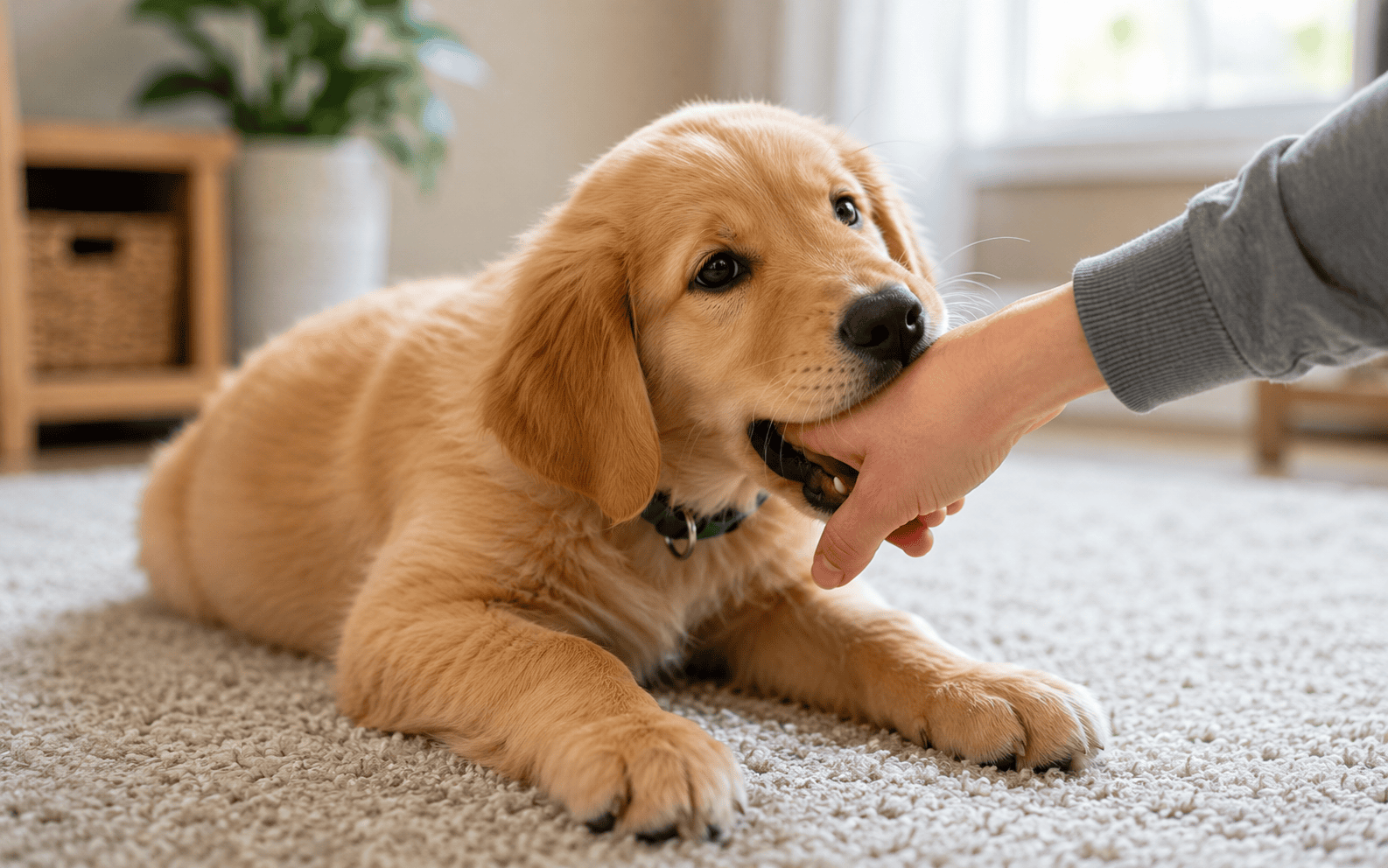
Dog bite inhibition training is the process of teaching a dog to control the force of its bite so it causes little or no harm. It is one of the most critical skills any dog can learn, and the earlier you start, the better the outcome for both your dog and everyone around it.
Key Takeaways
- Bite inhibition is about controlling jaw pressure, not eliminating all mouthing behavior.
- Puppies learn bite inhibition naturally through littermate play, but humans must reinforce it consistently.
- The window between 3 and 14 weeks is the most critical period for teaching this skill.
- Yelping, timeouts, and redirecting to toys are the three most effective techniques for puppies.
- Adult dogs can still learn bite inhibition, but it takes more time and consistency.
- Professional training is worth considering if biting persists past 6 months or escalates in intensity.
Why Bite Inhibition Is Not the Same as “No Biting”
Many dog owners make the same mistake: they try to teach their dog to never use its mouth at all. That goal sounds reasonable, but it actually creates a safety risk that most people do not anticipate. A dog that has been punished for every single bite, without ever learning to moderate pressure, still has the instinct to bite when frightened or in pain. When that moment comes, it has no learned scale between “nothing” and “full pressure.” The result can be a serious injury.
Bite inhibition works differently. The goal is to teach the dog that human skin is fragile and that any contact must be gentle. Ian Dunbar, one of the most respected veterinary behaviorists in the United States, has written extensively on this concept. His research shows that dogs who learn soft-mouth skills as puppies are far less likely to cause injury if they ever do bite as adults, because they have an ingrained habit of restraining force.
This distinction matters a lot in legal terms, too. In many states, including New York, dog owners are held strictly liable for bites that break skin. Teaching your dog to control its bite pressure is not just good manners. It is a practical layer of protection.
If you have ever wondered why is my puppy biting me, the short answer is that biting is completely normal puppy behavior. The longer answer involves understanding how to channel that behavior productively rather than suppress it entirely. In more serious bite-inhibition cases, our immersive board and train program builds on these fundamentals over 2-4 weeks.
When and How Puppies Learn Bite Inhibition Naturally
Before a puppy ever arrives in your home, it is already getting lessons. Between the ages of 3 and 8 weeks, puppies play-bite their littermates constantly. When one bites too hard, the other yelps and stops playing. That immediate feedback teaches the biting puppy that excessive force ends the fun. Mothers reinforce this lesson too, pulling away or giving a low growl when nursing bites get too sharp.

The problem is that most puppies leave their litters around 8 weeks. From that point forward, the responsibility for continuing this education falls entirely on you.
Here is what the natural learning window looks like in stages:
- 3-5 weeks: Puppies begin mouthing each other. Force is unlimited because there is no feedback yet.
- 5-8 weeks: Yelping and withdrawal from littermates teaches pain thresholds.
- 8-14 weeks: The most critical window for human-directed bite inhibition training.
- 14-18 weeks: Teething increases mouthing drive. Consistent redirection is essential.
- 6+ months: Adult teeth are in. Biting at this stage needs structured intervention.
Missing the window between 8 and 14 weeks does not mean you have lost all hope. It does mean the process will require more patience and probably more structured support.
The Core Techniques for Teaching Bite Inhibition
Dog bite inhibition training does not require expensive equipment or complicated protocols. What it requires is consistency, timing, and patience. These three techniques form the foundation of most effective programs.
The Yelp Method
When your puppy bites too hard, let out a sharp, high-pitched yelp, similar to what a littermate would do. Immediately go limp and turn away. Wait a few seconds, then resume interaction. If the puppy bites hard again, repeat the process. Over time, you are mimicking the exact feedback loop the puppy already understands from its litter.
This method works best with puppies under 14 weeks. Some puppies actually get more excited when they hear a yelp. If you notice that your puppy ramps up rather than backs off, switch to the timeout method instead.
The Timeout Method
Stand up calmly, say “ouch” or “too bad” in a flat voice, and leave the room for 30 to 60 seconds. Do not make a scene. Return and resume play. If the biting continues, repeat the timeout. You are teaching the puppy that hard biting removes the thing it wants most: your attention.
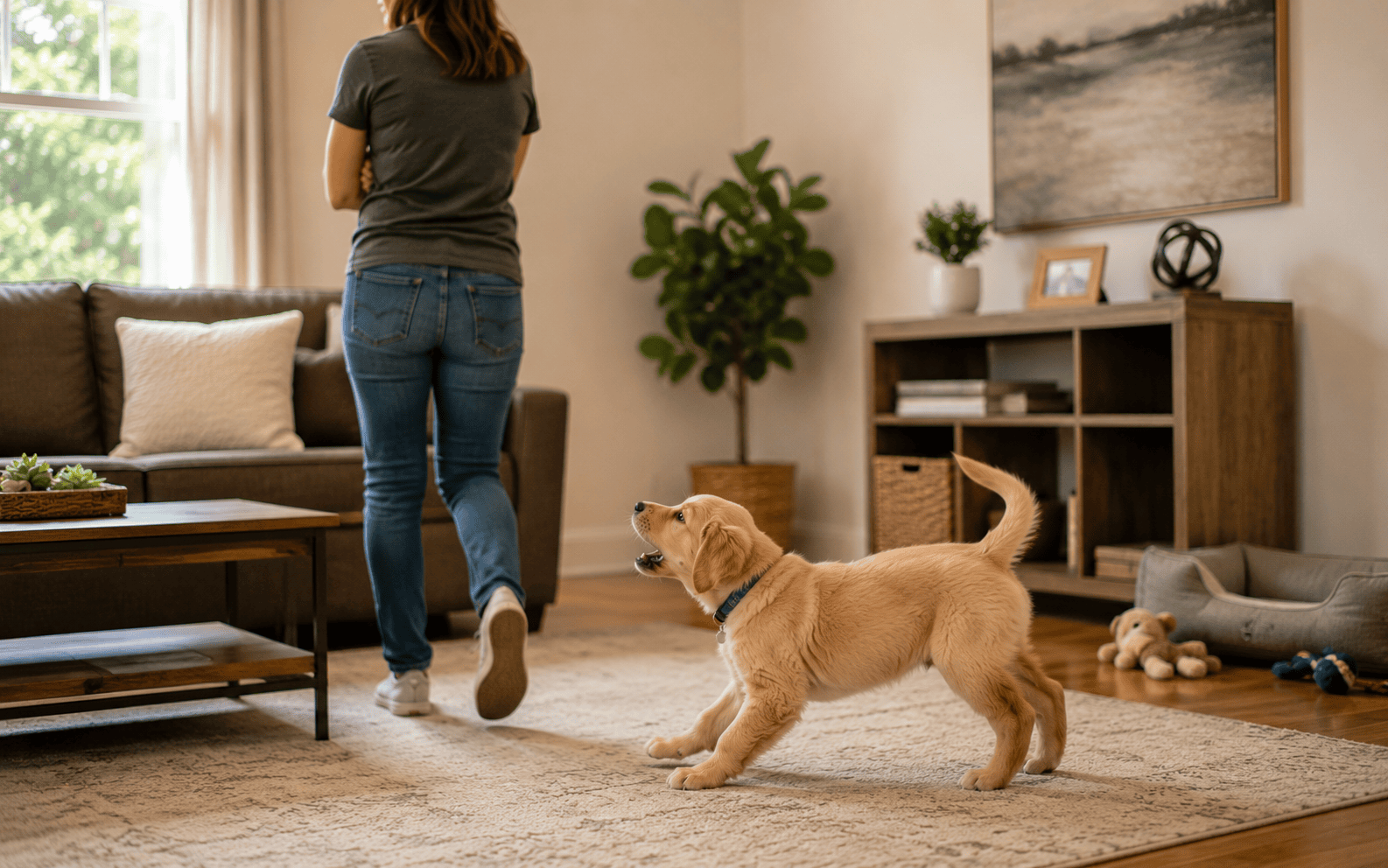
Timeouts are especially useful for puppies that treat your yelps as an invitation to play harder. They also work well for older puppies who have moved past the peak yelp-response window.
Redirecting to Toys
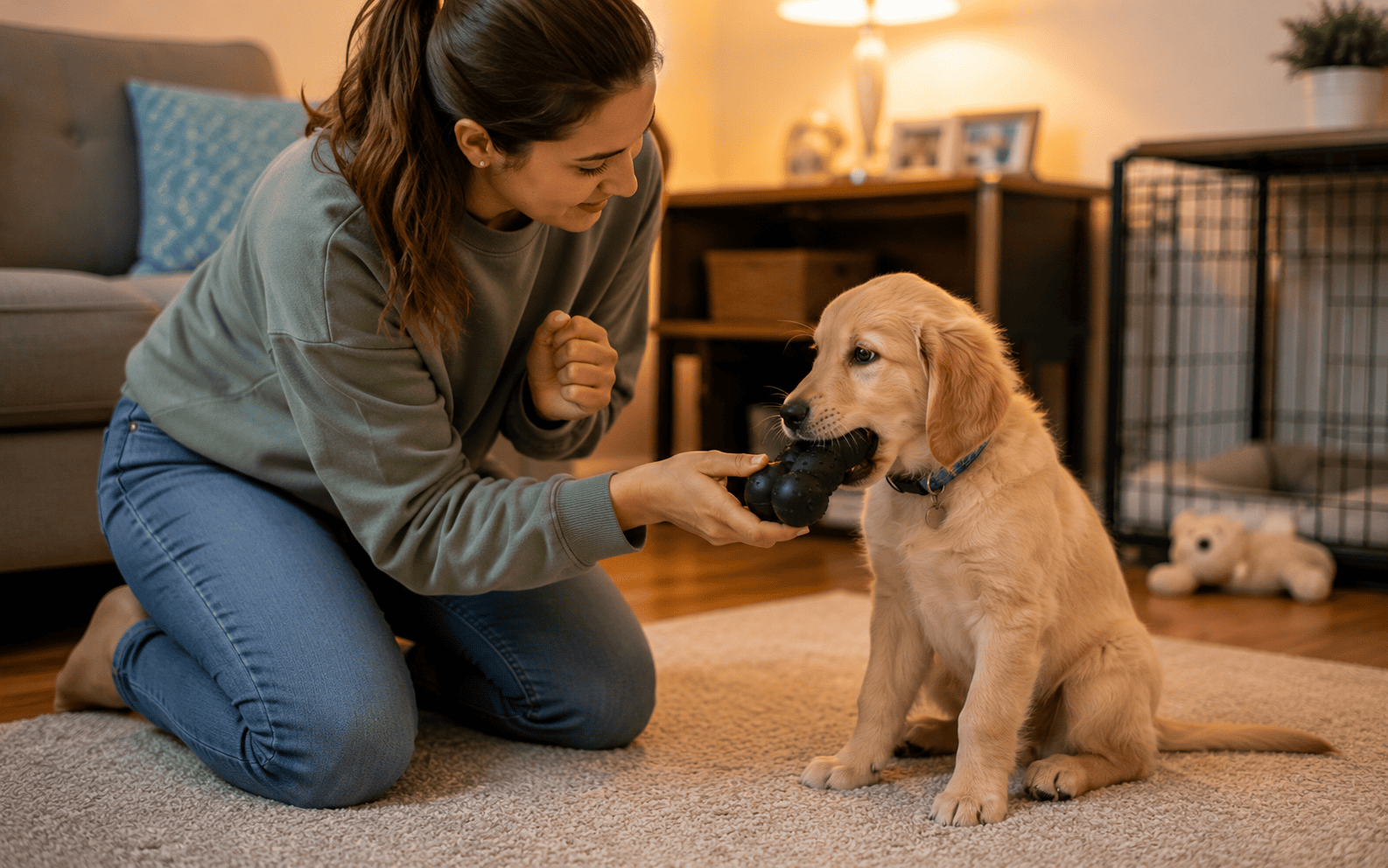
Keep a toy within reach at all times during play. The moment your puppy’s teeth make contact with your skin, redirect its mouth to the toy. Praise enthusiastically when the puppy takes the toy. You are not stopping the natural urge to mouth. You are teaching the puppy what is acceptable to mouth.
Redirection pairs well with both of the above methods. It gives the puppy something to do with its energy, which reduces frustration-based biting.
What to Avoid During Bite Inhibition Training
A few common reactions from owners actually make biting worse. Knowing what not to do is just as important as knowing the right techniques.
- Pulling your hand away sharply: This triggers prey drive and encourages harder biting.
- Scruff shaking or alpha rolls: These outdated physical corrections can increase anxiety and fear-based aggression.
- Yelling or hitting: Physical punishment may suppress behavior in the moment but does not teach the dog what to do instead, and it erodes trust.
- Inconsistency: If one family member allows rough play and another uses timeouts, the puppy learns nothing clear.
For a broader look at how early behavior patterns develop, reading up on managing puppy aggression a quick guide gives useful context on distinguishing normal puppy mouthing from early warning signs of genuine aggression.
Comparing Training Methods: A Practical Breakdown
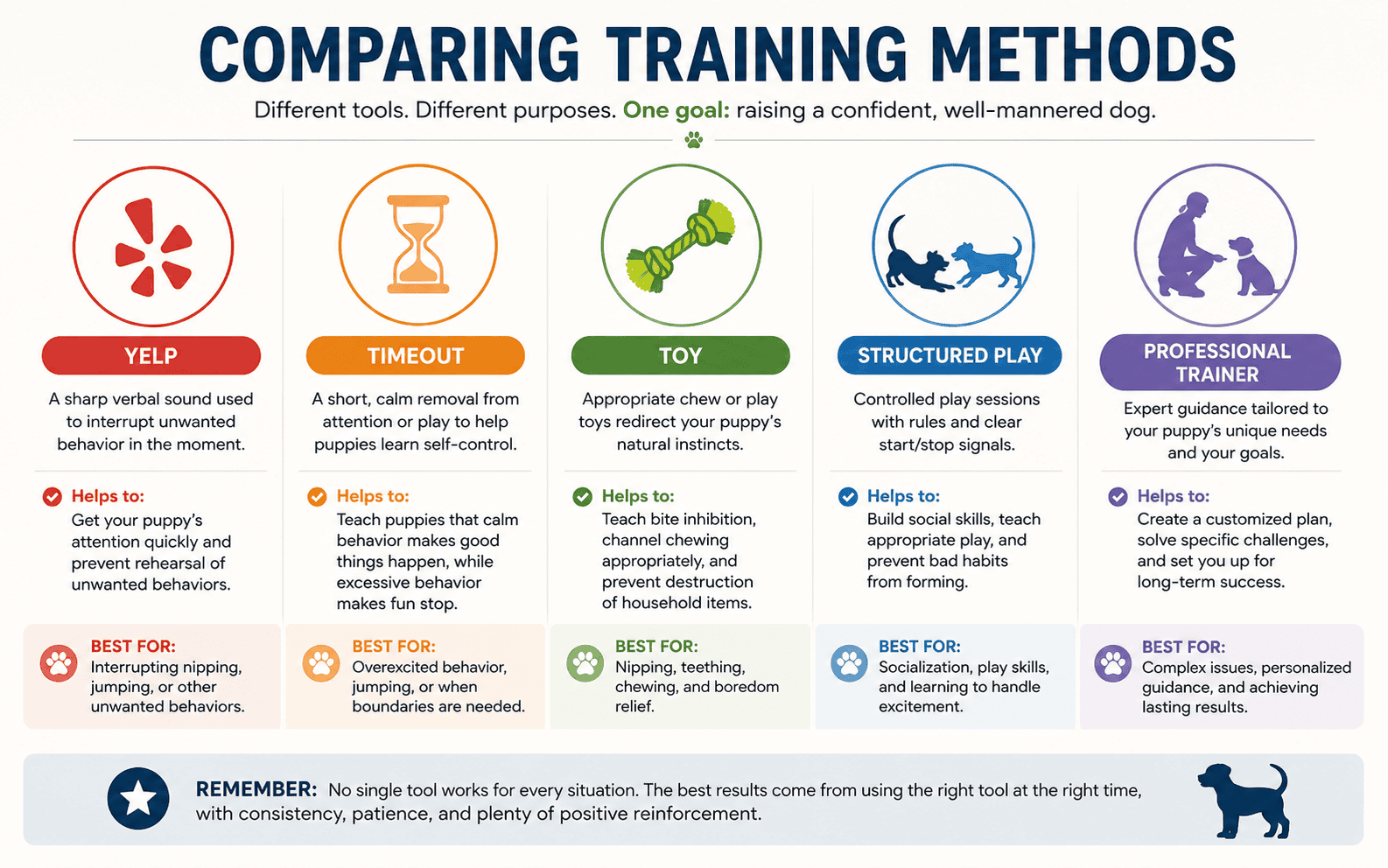
| Method | Best Age | Works Best When | Common Pitfall |
| Yelp and Withdraw | 8-14 weeks | Puppy responds to social cues | Some puppies escalate instead |
| Timeout | 10 weeks and up | Puppy is attention-motivated | Must be done calmly every time |
| Toy Redirection | All ages | Paired with other methods | Inconsistent toy access reduces effect |
| Structured Play Sessions | All ages | Building clear on/off signals | Requires owner discipline too |
| Professional Training | Any age, especially 6+ months | Biting is persistent or intense | Delayed start limits effectiveness |
Structured play sessions deserve a mention here. Short, controlled play sessions with a clear start and stop signal teach the dog that biting rules apply in all contexts, not just when you happen to react. Teaching a “done” or “all done” cue gives the dog a predictable signal that playtime is over, which reduces the frustration that often leads to harder biting.
When to Bring in a Professional
There is no shame in asking for help, and sometimes it is the smartest move you can make. If your puppy’s biting is drawing blood, escalating despite your efforts, or accompanied by growling, stiff posture, or resource guarding, those are signals that go beyond normal mouthing behavior.
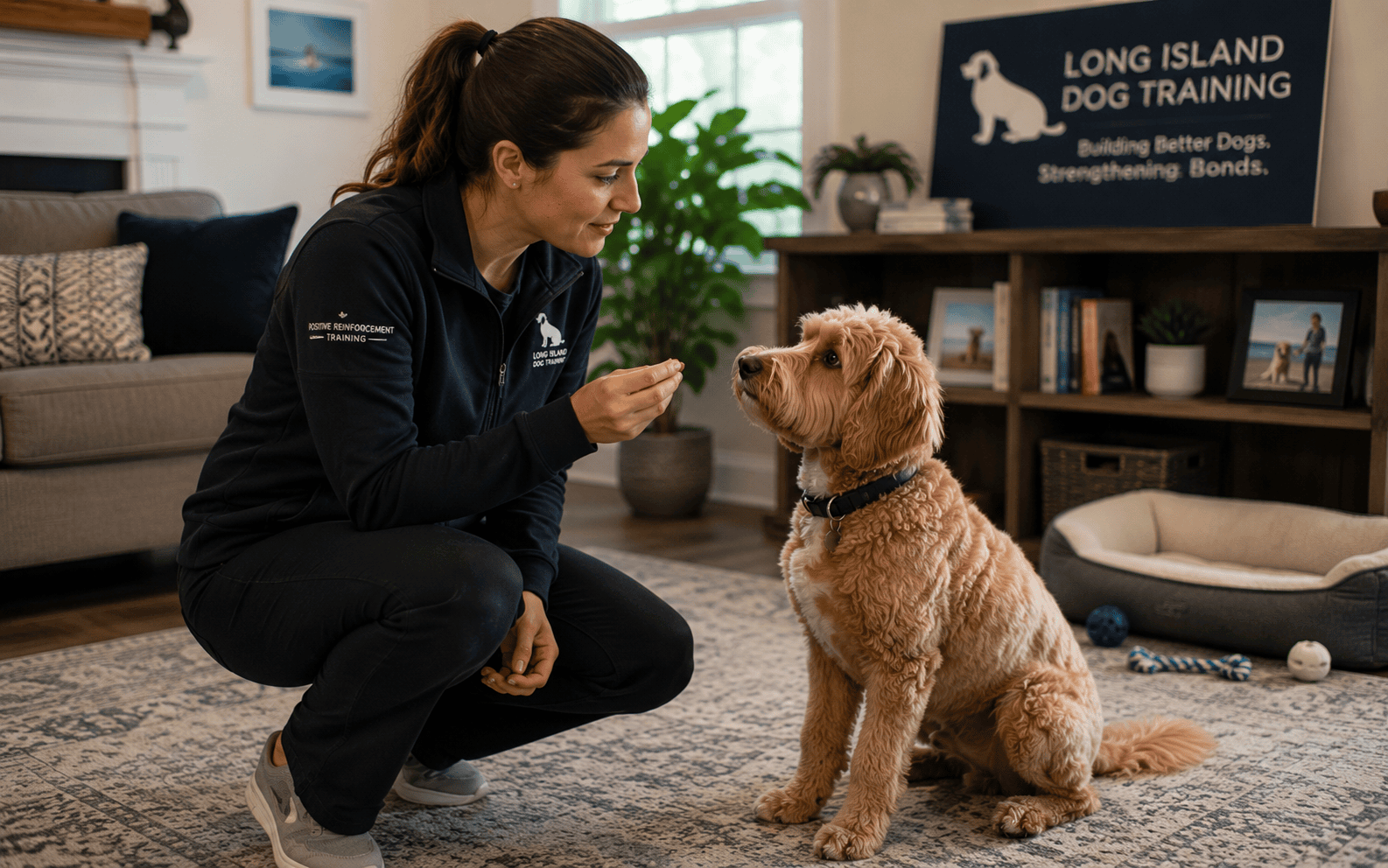
For owners who need hands-on support, board and train long island programs offer immersive training that addresses bite inhibition alongside foundational obedience skills. The structured environment and daily repetition can accelerate progress significantly, especially for dogs that have developed persistent mouthing habits.
If you prefer training that fits around your schedule, in home dog training long island brings a qualified trainer to your space. This is particularly effective because it addresses the behavior in the exact environment where it occurs most often.
For owners who want focused, one-on-one attention without the immersive commitment, private dog training long island sessions allow you to work at your own pace with a trainer dedicated entirely to your dog’s needs.
Whatever format you choose, look for a trainer who uses positive reinforcement methods and can clearly explain their approach to dog bite inhibition training. Avoid anyone who relies heavily on punishment or physical corrections, especially with puppies.
Pairing bite inhibition work with structured obedience dog training gives your dog a broader set of communication tools. A dog that understands “sit,” “leave it,” and “place” is a dog you can redirect before biting even starts.
Things to Know
- Bite inhibition is most effectively taught before 18 weeks, but it is never too late to start working on it.
- Some breeds, including herding and terrier breeds, have naturally higher mouthing drives and may need more intensive redirection.
- Teething puppies bite more because their gums are sore. Frozen chew toys can reduce this discomfort and lower biting frequency.
- Children in the household need to be taught how to respond to puppy biting too. Screaming and running away typically makes the behavior worse.
- A dog that only bites during specific triggers, like being touched on the paws or ears, may be showing pain-related sensitivity, not aggression.
- Any bite that breaks skin on an adult person should be evaluated by a professional trainer or behaviorist, regardless of the dog’s age, and considerations for muzzle training for dogs may be appropriate in severe cases.
Ready to Stop the Biting for Good?
If your dog’s biting has gone from playful to a real concern, the most effective next step is to schedule a consultation with a qualified trainer in your area. You do not need to wait until a bite becomes a serious incident. Start today by choosing one of the techniques above, applying it consistently for two weeks, and tracking whether the intensity of biting decreases. If you are not seeing improvement, reach out to a professional who can assess the behavior in person and build a plan tailored to your dog.
Read Related Articles
Board and Train for Fearful Dogs: What to Expect
Impulse Control Training for Dogs: What Actually Works
Frequently Asked Questions
At what age should dog bite inhibition training start?
Start as early as 8 weeks, as soon as the puppy comes home.
The window between 8 and 14 weeks is the most sensitive period for teaching bite pressure control. Even brief, consistent sessions during this time can have a lasting impact on how your dog uses its mouth throughout its life.
My puppy bites harder when I yelp. What should I do?
Switch to the timeout method immediately if yelping increases excitement.
Some puppies, particularly high-energy or terrier-type dogs, interpret a yelp as a play signal rather than pain feedback. A calm, wordless exit from the room is more effective for these dogs because it removes the reward without adding stimulation.
Can adult dogs learn bite inhibition if they missed early training?
Yes, adult dogs can learn bite inhibition, but progress is slower and requires more structure.
With adult dogs, the focus shifts to impulse control exercises, structured play rules, and consistent “leave it” training rather than pure pressure feedback. Professional support is strongly recommended for adult dogs with established biting patterns.
Is mouthing the same as aggression?
No, mouthing and aggression are different behaviors with different causes.
Mouthing is exploratory and play-driven. Aggression involves intent to harm, often accompanied by stiff body posture, growling, or fixed eye contact. A puppy that mouths your hand during play is normal. A dog that bites with no warning and holds on is showing a very different pattern.
How long does it take to see results from bite inhibition training?
Most puppies show measurable improvement within 2 to 4 weeks of consistent training.
The key word is consistent. Every family member must respond the same way, every time. Uneven enforcement extends the learning curve significantly and can confuse the puppy about what the actual rule is.
The Bottom Line on Dog Bite Inhibition Training
Teaching your dog to control its bite is one of the highest-value investments you can make in its long-term behavior and your family’s safety. The earlier you start, the more naturally the lesson takes hold. But even if you are starting with an older dog or catching up after missing the critical puppy window, progress is absolutely achievable with the right approach and enough repetition.
Pick one technique from this article, apply it every single day for the next two weeks, and involve every person in your household. If the behavior does not improve or if it escalates, bring in a professional. The sooner you act, the better the outcome for your dog and everyone who interacts with it.