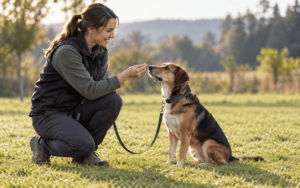
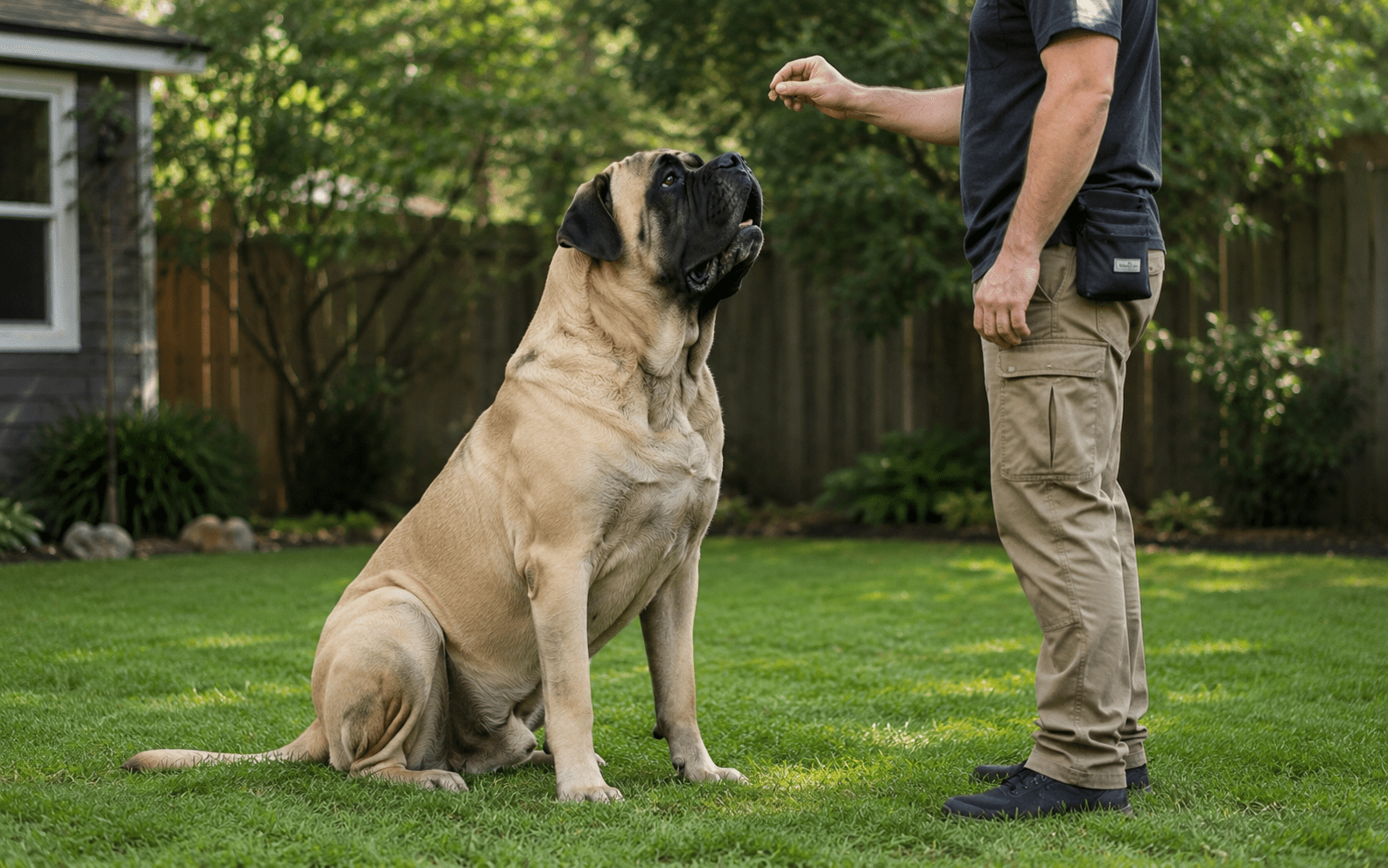
English Mastiffs are not the easiest breed to train, but they are far from impossible. With the right approach, consistent structure, and an understanding of their temperament, these giant dogs can become well-mannered, dependable companions.
Key Takeaways
- English Mastiffs are sensitive, people-oriented dogs that respond best to calm, positive reinforcement rather than harsh corrections.
- Early socialization and puppy training are critical for managing their adult size and strength.
- Stubbornness is a real trait in this breed, but it usually comes from boredom or a lack of clear boundaries, not defiance.
- Professional training support, especially during the first year, makes a significant difference in long-term behavior.
- Consistency between family members is just as important as any individual training session.
- Their intelligence means they can learn commands quickly, but their independence means they may choose not to listen unless properly motivated.
What Actually Makes English Mastiffs Challenging to Train
Understanding the honest answer to “are English mastiffs easy to train” starts with understanding the breed itself. Mastiffs are ancient working dogs, bred for guarding and protection rather than for following rapid commands on cue. That history shaped a dog that is deliberate, independent, and more likely to assess a situation before acting than to react instantly to instructions.
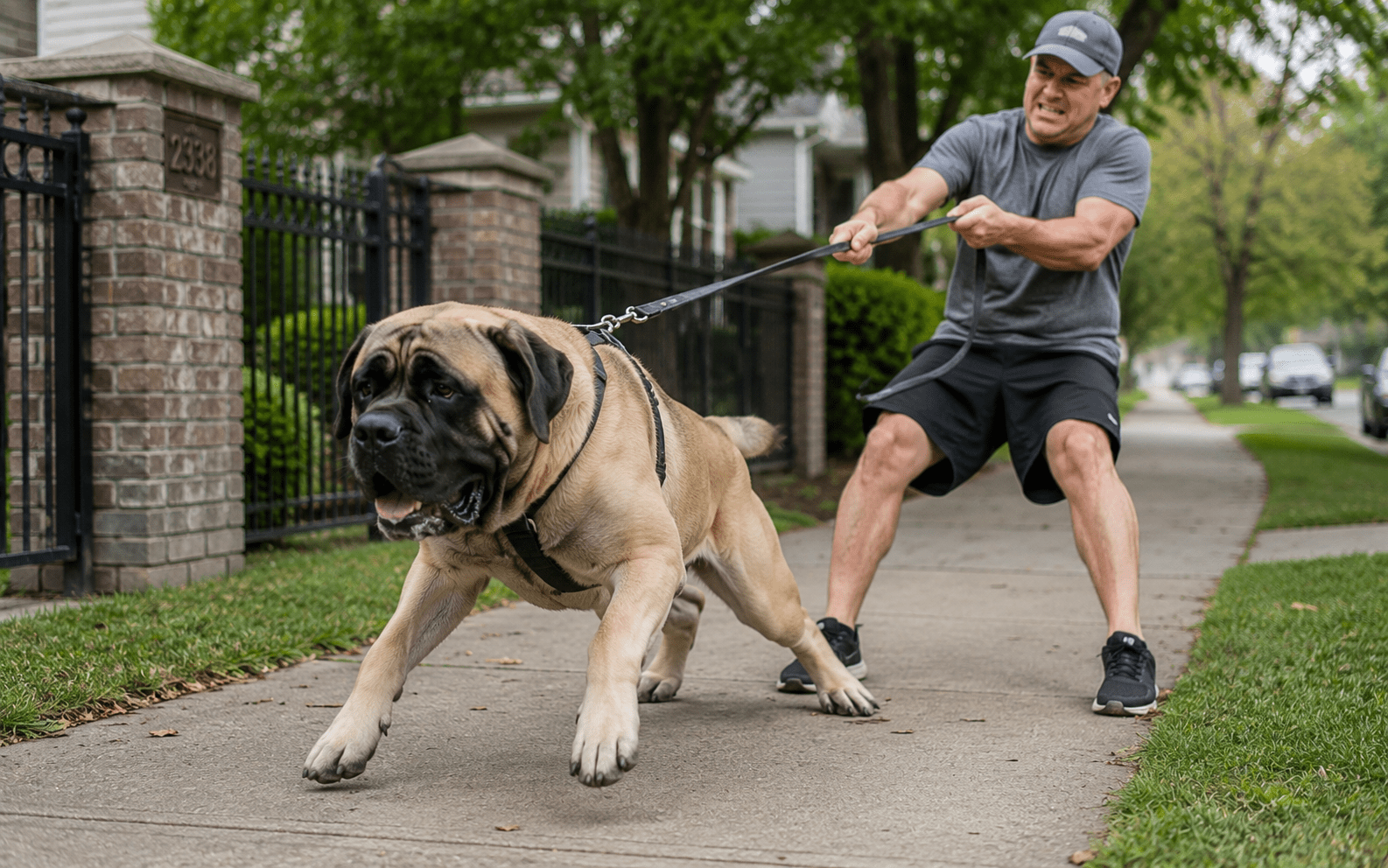
Here are the main challenges owners face:
- Size and strength: Even at six months old, an English Mastiff can weigh 80 to 100 lbs. Without early training, a dog this size can pull an adult off their feet, jump on guests, or destroy furniture with ease.
- Stubbornness: Mastiffs have a low-drive working style. They were not bred to run agility courses or fetch for hours. This can look like laziness or defiance, but it is really just their natural pace.
- Slow maturity: Mastiffs are mentally immature until age 2 to 3. Expecting adult-level focus from a young Mastiff usually leads to frustration on both sides.
- Sensitivity: Despite their size, these dogs are emotionally sensitive. Harsh corrections, yelling, or punishment-based methods often cause them to shut down entirely, making training much harder.
- Drool and distraction: It sounds minor, but environmental distractions affect Mastiffs significantly. Food-motivated training works well, but you have to manage the chaos that comes with a 180 lb dog zeroing in on a treat.
Comparing English Mastiffs to what most people consider most trainable dog breeds like Border Collies or German Shepherds reveals a significant contrast in drive and responsiveness. That does not mean Mastiffs are “dumb.” It means their motivation and communication style require a different strategy.
How the English Mastiff Temperament Shapes Training
The Mastiff’s personality is one of the most important factors in deciding how you train them. These dogs are deeply loyal, calm in most situations, and highly bonded to their families. They want to please the people they love, which is actually a strong foundation for training when used correctly.
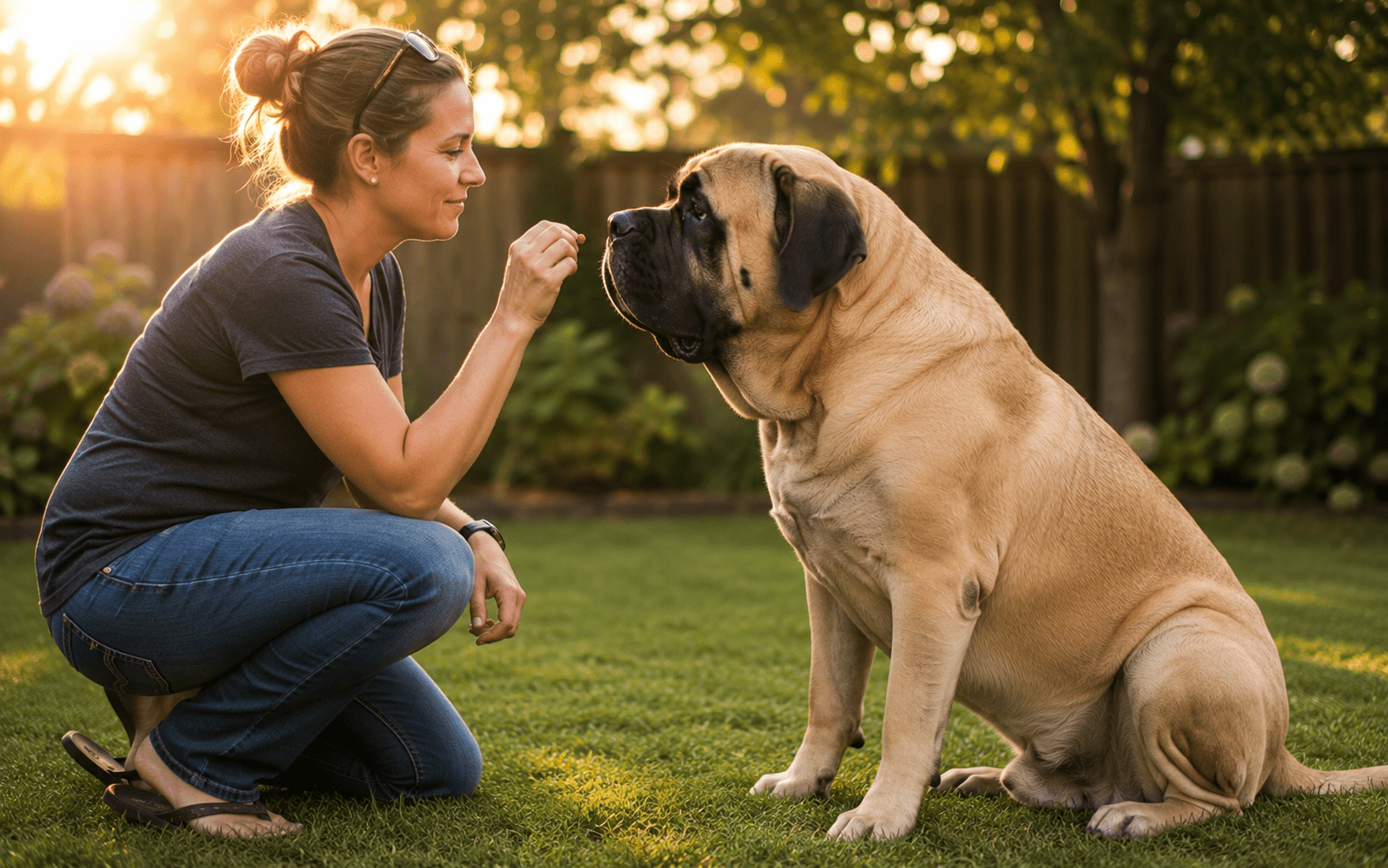
The key traits to work with, not against:
- Loyalty: Use the bond they have with you as motivation. Mastiffs respond well when training feels like quality time with their owner.
- Food drive: Most Mastiffs are highly food-motivated, especially as puppies. High-value treats like small pieces of chicken or cheese cut through distraction quickly.
- Low arousal threshold: Keep sessions calm and short. Mastiffs lose interest faster than high-drive breeds, so 10 to 15 minute sessions work better than 45-minute marathons.
- Need for predictability: Mastiffs thrive when rules are consistent. If the couch is off-limits, it needs to be off-limits every single time, for every family member.
The challenge is that their emotional sensitivity means you can damage your relationship with a Mastiff quickly if you train aggressively. Patience is not optional with this breed. It is the core ingredient.
Training Milestones by Age
Timing matters enormously with giant breeds. Here is a practical breakdown of what to focus on at each life stage:

| Age | Priority Focus | Key Notes |
| 8 to 12 weeks | Basic commands (sit, name recognition), socialization | The socialization window closes fast. Expose to people, sounds, and surfaces. |
| 3 to 6 months | Leash manners, crate training, no-jump rule | Start before they have the size to enforce bad habits. |
| 6 to 12 months | Recall, stay, impulse control | Mental maturity is low. Keep expectations realistic. |
| 1 to 2 years | Reinforcing foundations, public manners | Consistency matters more now than introducing new commands. |
| 2+ years | Advanced obedience, off-leash reliability | Many Mastiffs settle mentally around this age and become much more focused. |
Starting puppy training long island early with a Mastiff is one of the highest-leverage decisions you can make as an owner. The behaviors you establish in the first six months will shape this dog’s habits for the next decade.
Training Methods That Work Best for English Mastiffs
Not all training approaches work equally well with this breed. Here is a breakdown of the most effective methods and where they fit:
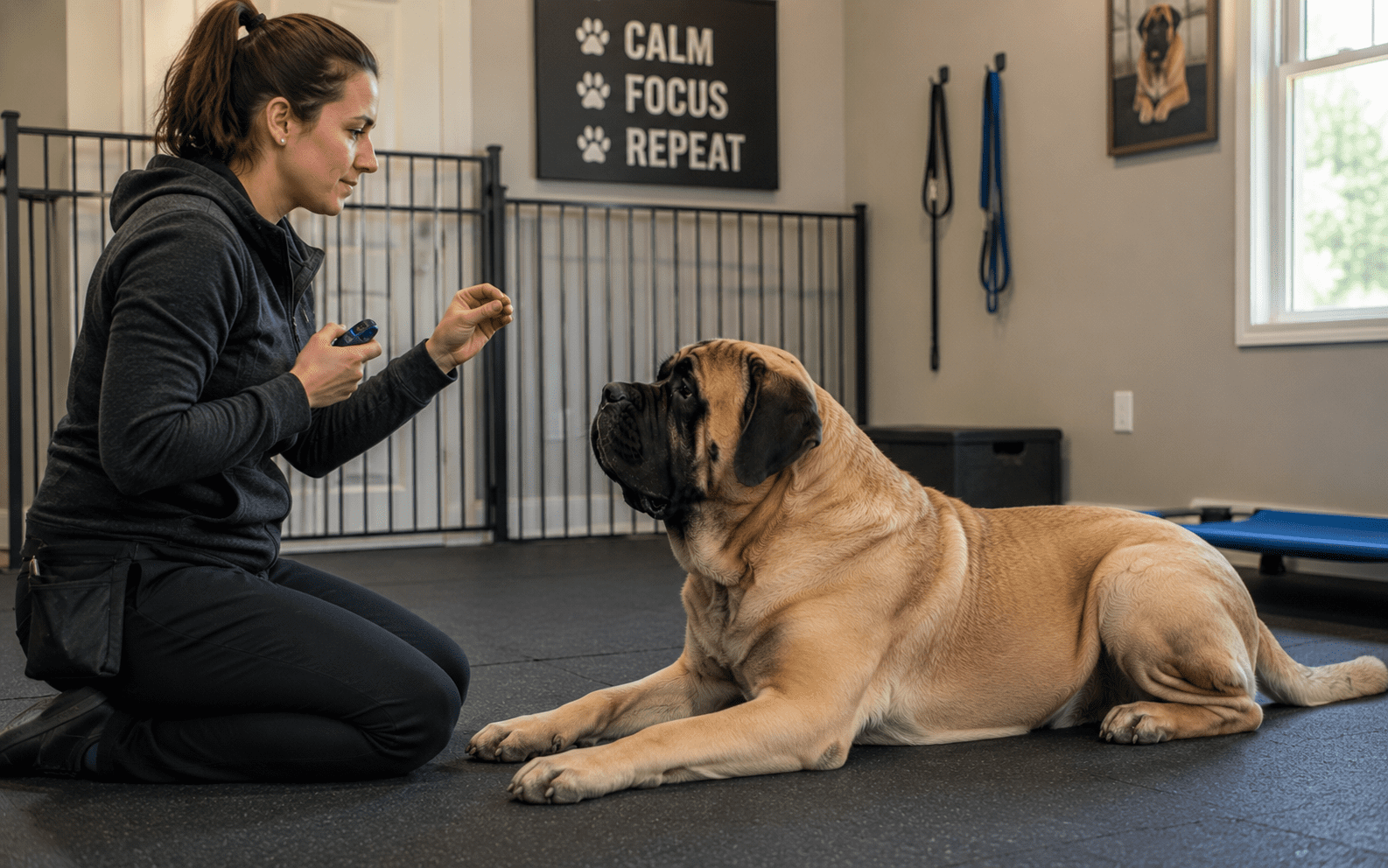
Positive Reinforcement
This is the gold standard for Mastiffs. Reward-based training uses food, praise, and play to reinforce desired behaviors. It builds trust and keeps the dog engaged without triggering the emotional shutdown that punishment-based methods often cause.
Marker Training
Using a clicker or a verbal marker like “yes” lets you communicate the exact moment your dog did the right thing. This precision helps a slower-processing breed like the Mastiff connect behavior to reward clearly.
Short, Repetitive Sessions
Work in 10 to 15 minute windows, twice a day. Mastiffs fade mentally faster than herding breeds, and ending on a successful note keeps them motivated for the next session.
Calm Energy From the Handler
Your own body language matters more than most owners realize. Mastiffs read emotional tension easily. If you are frustrated, they feel it. If you are calm and confident, they mirror that.
What does not work well:
- Alpha-roll or dominance-based corrections
- Repeating commands multiple times before enforcing them
- Training sessions right after meals (giant breeds and bloat risk make this important)
- Inconsistency between household members
Obedience dog training programs specifically designed around positive reinforcement give Mastiff owners the structure they need without creating resistance in the dog.
Professional Training Options and When to Use Them
Most Mastiff owners benefit significantly from professional guidance, especially in the first year. The question is which format makes the most sense for your schedule and your dog’s needs.
In-Home Training
Working with a trainer in your own environment is often ideal for Mastiffs because it addresses the specific behaviors happening in the spaces your dog actually lives. If your Mastiff jumps on guests at the front door or pulls toward the kitchen, in home dog training long island lets a trainer observe and correct those exact situations in real time.
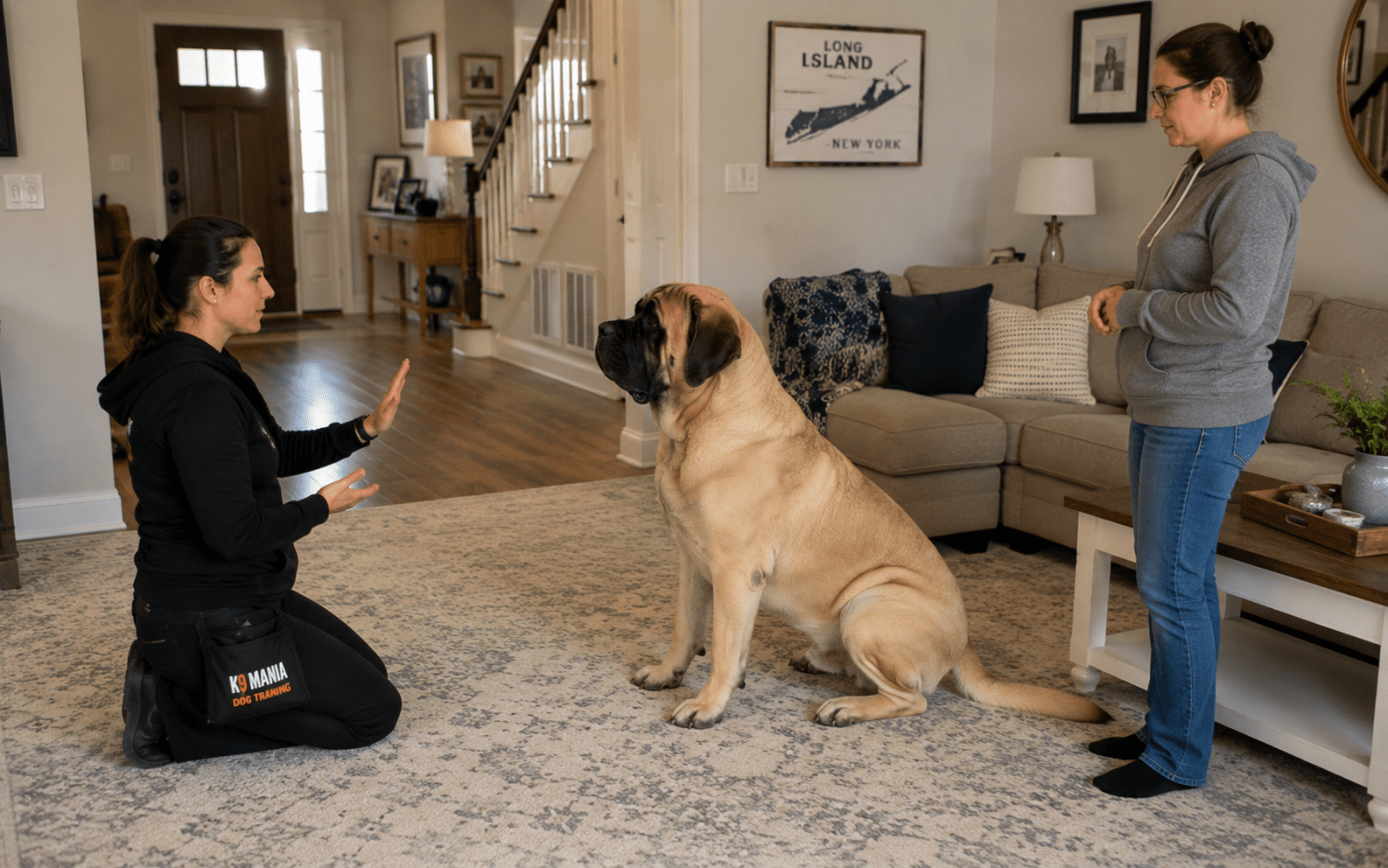
Private Training Sessions
One-on-one sessions give you personalized attention and let the trainer adjust their approach to your specific dog’s temperament. For owners who want to be hands-on and learn alongside their Mastiff, private dog training long island is an excellent option because you develop the skills to reinforce training between sessions.
Board and Train Programs
If your schedule is demanding or your Mastiff has developed serious behavioral problems, a board and train program places your dog with a professional trainer for an extended immersive period. Results can be dramatic, but you need to commit to maintaining the work after the dog returns home. Exploring board and train long island options can give you a clear picture of what this format involves and whether it fits your situation.
Factors to consider when choosing a format:
- How much time can you realistically commit each week?
- Has your Mastiff already developed problem behaviors that feel unmanageable?
- Do you have young children or elderly family members at home who need immediate safety improvements?
- Is your dog in the critical socialization window (under 16 weeks), where professional input has the highest possible return?
Things to Know
- English Mastiffs drool heavily during and after training. This is not a sign of stress. It just means you should keep towels nearby and expect treats to get messy quickly.
- Males tend to be more stubborn than females in this breed, though individual personality variation is wide.
- Never train a Mastiff immediately before or after meals due to the risk of bloat (gastric dilatation-volvulus), a life-threatening condition common in giant breeds.
- Mastiffs are not reliable off-leash in unsecured areas, even with solid obedience training. Their guarding instinct can override recall in high-stimulation environments.
- The teenage phase (6 to 18 months) is when most owners see the most frustrating behavior. This is the exact time to stay consistent, not give up.
- Understanding early dog socialization benefits your key to well behaved dogs is essential for exposing your Mastiff to children, strangers, bikes, loud vehicles, and different surfaces while they are young.
Addressing Behavioral Issues
Some Mastiff owners encounter specific challenges during training that require targeted strategies. Understanding territorial aggression in dogs how to manage it is particularly important for this breed, as their guarding heritage can manifest as protective behavior toward the home or family. Additionally, for owners wondering about other giant breeds, learning how hard are bullmastiffs to train can provide useful context and comparisons for understanding training difficulty across the mastiff family.
Ready to Build a Well-Behaved Mastiff?
The single most effective step you can take right now is to schedule a professional training consultation before your Mastiff reaches adolescence. Do not wait until a 150 lb dog is dragging you down the sidewalk or knocking guests over in the entryway. Connect with a trainer who has specific experience with giant breeds, discuss your goals, and get a structured plan in place within the first three months of ownership. That one decision will save you months of frustration and build a far stronger relationship with your dog.
Read Related Articles
How to Train an Australian Shepherd
Frequently Asked Questions
At what age should you start training an English Mastiff?
Start training your English Mastiff the day you bring them home, ideally at 8 weeks old. Waiting until your Mastiff is “bigger” or “older” is one of the most common mistakes giant breed owners make. Early training establishes expectations before the dog has the size and strength to enforce bad habits on their own.
How long does it take to train an English Mastiff?
Basic obedience can be established within a few weeks, but solid, reliable behavior takes 12 to 18 months of consistent reinforcement. Mastiffs mature slowly, and their behavior will fluctuate significantly during adolescence. Expect the process to feel uneven, with clear progress followed by regression before things stabilize.
Can English Mastiffs learn off-leash commands?
Yes, but off-leash reliability in open, uncontrolled environments is difficult to achieve with this breed and takes significant time to build. Even well-trained Mastiffs have strong territorial instincts that can override recall under certain conditions. Off-leash work should only be practiced in fully fenced areas until your trainer confirms the dog is ready.
Are male or female English Mastiffs easier to train?
Females are generally considered slightly more focused and less stubborn, though individual temperament matters far more than sex. Some male Mastiffs are incredibly eager to please, while some females are remarkably independent. Evaluate your specific dog rather than making decisions based purely on sex.
Do English Mastiffs do well with group training classes?
Group classes can work for basic socialization, but Mastiffs often benefit more from individual attention due to their size and sensitivity.
In a group setting, a large, reactive Mastiff can be difficult to manage safely, and the handler may not receive the focused coaching they need. Private or in-home sessions are usually more effective for this breed.
The Bottom Line on Are English Mastiffs Easy to Train
Are English Mastiffs easy to train? Not in the way that a Golden Retriever or a Labrador is. But with patience, positive reinforcement, and professional support when needed, they are absolutely trainable and can develop into calm, obedient, confident dogs. The breed rewards owners who invest time early, stay consistent across every interaction, and match their training style to the Mastiff’s natural pace.
The first year sets the foundation for the next decade. Start early, stay calm, and get professional guidance if you hit a wall. A well-trained English Mastiff is one of the most impressive and rewarding dogs you can own.
If your Mastiff is showing stubbornness, reactivity, leash pulling, aggression, or other behavior issues, K9 Mania Dog Training can help. As the leading board and train Long Island program with the best dog behaviorist in Long Island, we help dogs build better habits. Trust K9 Mania Dog Training to guide your dog forward.