
Knowing how to scent train a dog starts with one simple rule: let your dog use its nose the way nature intended. Scent training teaches your dog to find a specific odor on cue, and most dogs can start picking it up within just a few short sessions.
This kind of training taps into one of the strongest natural drives a dog has. Whether your dog is restless, easily distracted, or just bored during the day, nose work gives them a mental workout that other activities simply can’t match. From picking the right scent to building up difficulty over time, this guide covers every step so you can get started with confidence.
Things to Know Before You Start Scent Training
- Scent training works for almost every dog, regardless of breed, age, or background.
- You don’t need any special equipment to begin. A few small containers and a target scent is all it takes.
- Keep sessions short, especially early on. Five to ten minutes is plenty for most dogs.
- Always end on a success so your dog stays motivated and eager to work again.
- Nose work is one of the best ways to calm a hyperactive dog that struggles to settle during the day.
- If your dog has a strong prey drive, scent work gives that energy a focused and productive outlet.
What Is Scent Training and Why Does It Matter
Scent training, also called nose work or scent work, is the process of teaching your dog to locate a specific smell and communicate that they found it. At its core, it’s a structured way to let your dog do what dogs naturally do best.
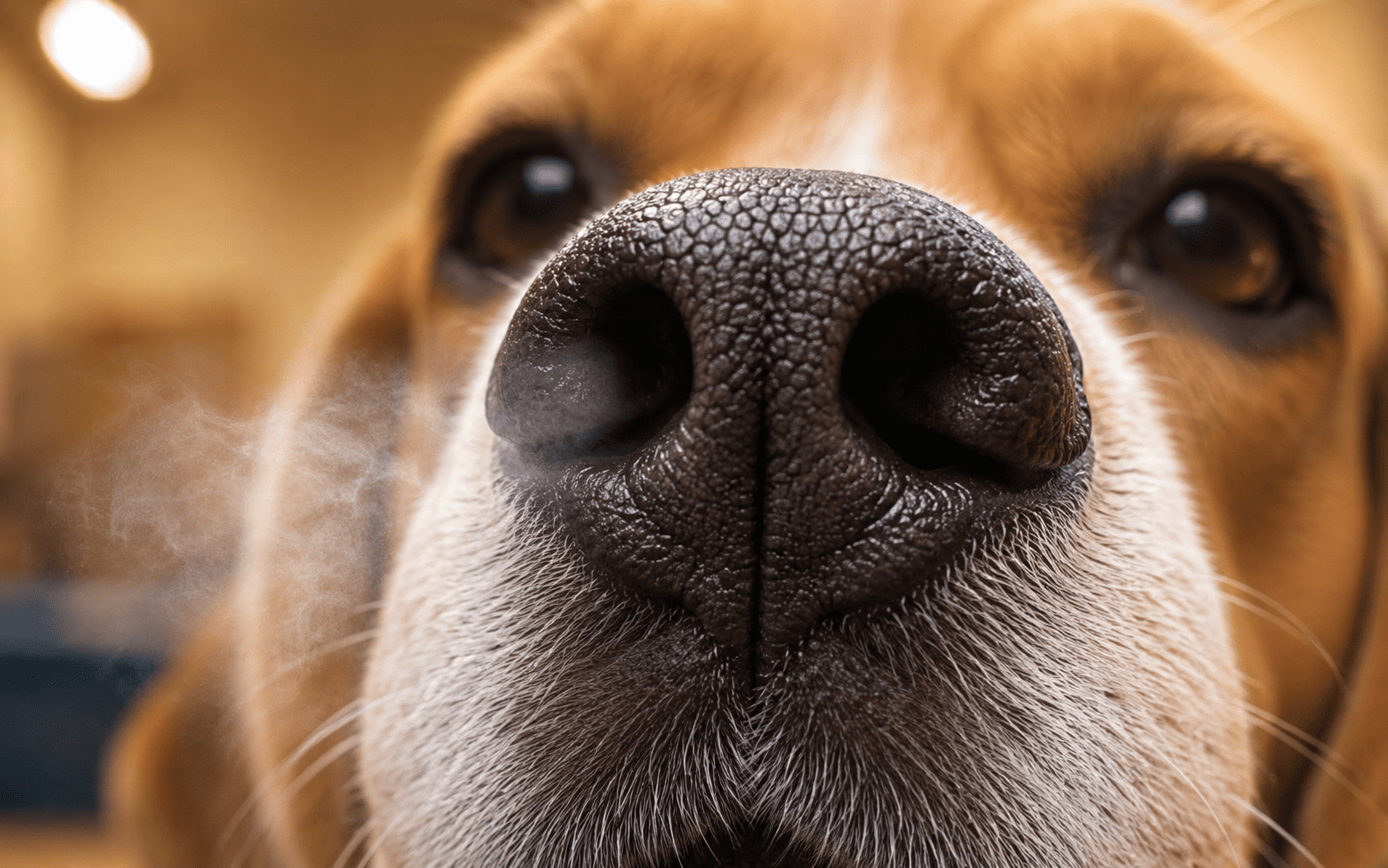
A dog’s nose contains around 300 million olfactory receptors compared to roughly 6 million in humans. That nose isn’t just impressive. It’s the main way dogs understand and interact with the world around them. When you give your dog a real job for that nose, everything else in training starts to click faster.
The Mental Benefits Are Real
Scent work is mentally exhausting in the best possible way. A 20-minute nose work session can tire out a dog far more than a long walk does. That mental fatigue reduces restlessness, impulsive behavior, and general anxiety throughout the rest of the day.
Dogs with regular mental stimulation are also easier to manage in other areas. If you’re already building a foundation with obedience dog training, adding nose work sessions alongside it sharpens focus and impulse control faster than repetition alone.
It Builds Confidence in Shy or Anxious Dogs
Scent work is unique because the dog leads the activity. There’s no direct command pressure to perform on the spot. The dog searches, finds the odor, and gets rewarded. That low-pressure format works especially well for shy, fearful, or rescue dogs that tend to shut down under traditional obedience training. It’s one of the few activities where the dog gets to be right almost every time when structured correctly.
How to Scent Train a Dog Step by Step
Learning how to scent train a dog follows a clear progression from first introduction to full independent searches. Here’s how to move through each stage without losing your dog’s motivation along the way.
Step 1: Choose Your Target Scent
The most widely used scents in nose work training are birch, anise, and clove. These are the same essential oils used in AKC nose work competitions, but you’re not locked into them for casual home training. Pick one scent and stay with it through the early learning phase. Switching scents too soon creates confusion and slows progress significantly.
Step 2: Introduce the Scent with a Reward
Place a small amount of your target scent on a cotton swab or inside a small metal tin. Let your dog sniff it, then immediately reward with a high-value treat. Repeat this several times so your dog starts pairing that specific smell with something worth finding. You’re not asking for anything formal yet. You’re just building a clear and positive association.
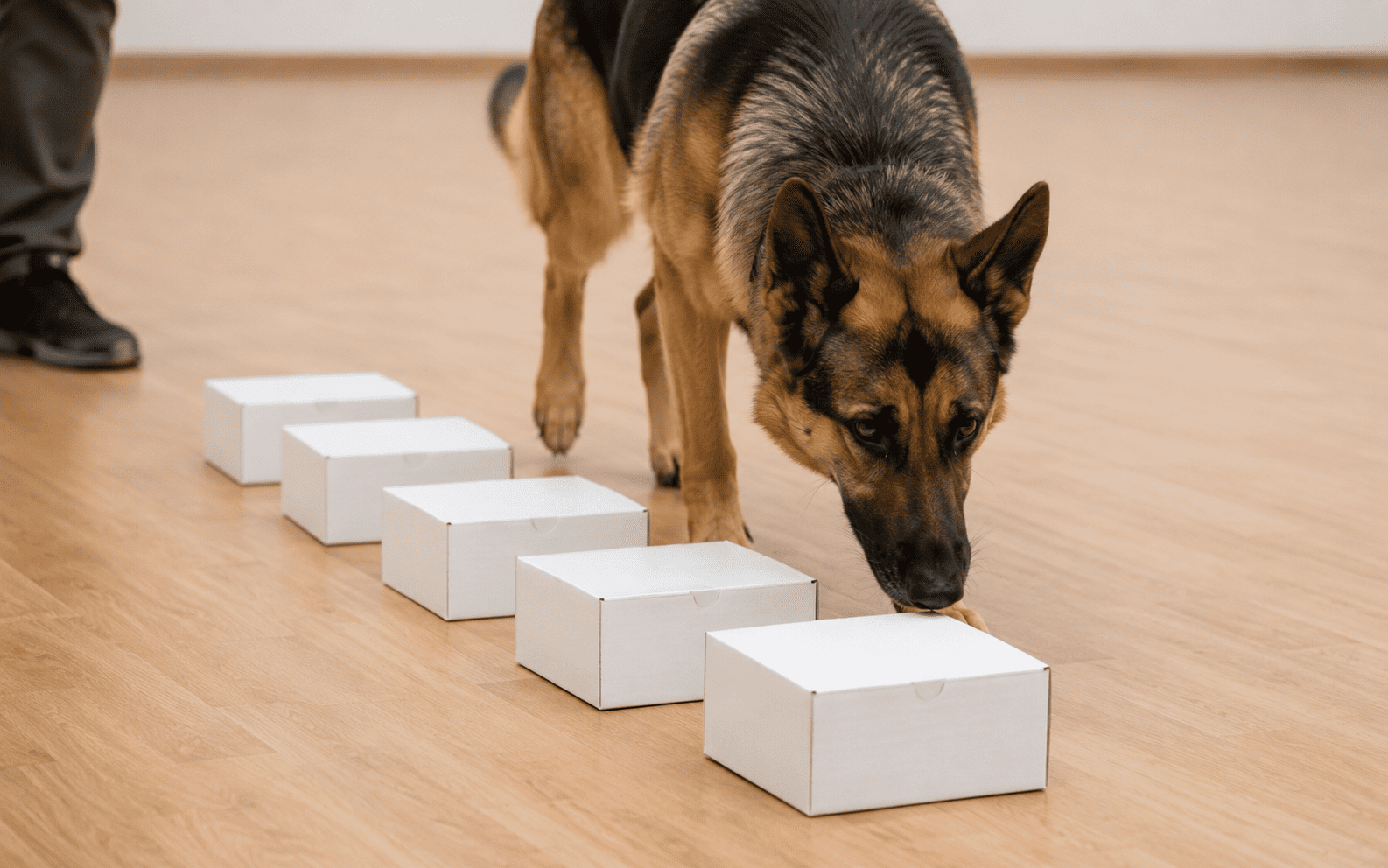
Step 3: Move to Simple Container Searches
Once your dog is consistently excited about the scent, place the tin inside one of three identical containers. Let your dog sniff around all three. The moment they pause at the right one or show obvious interest, mark it with a “yes” or clicker and reward right away.
Keep the correct container in an obvious spot at first. Success builds confidence and keeps the game going. If your dog isn’t finding it consistently, you’ve made it too hard too soon.
Step 4: Add a Cue Word and Increase Difficulty
Once your dog understands the concept, add a verbal cue like “search” or “find it” right before they begin. As their accuracy improves, make the task progressively harder by doing any of the following:
- Using more containers or boxes
- Moving the search to a new room or outdoors
- Placing the scent tin at different heights
- Adding mild distractions nearby
If your dog fails two searches in a row, scale back one level and rebuild from there. The goal is manageable challenge, not frustration.
| Training Stage | Setup | Goal | When to Move Forward |
| Introduction | Scent on swab, no search required | Dog shows interest in the odor | Dog actively seeks the reward smell |
| Simple Containers | 3 boxes, obvious placement | Dog identifies the correct container | 8 out of 10 correct finds |
| New Environments | Different rooms or outdoor areas | Dog generalizes the skill | Consistent finds in 2 or more locations |
| Blind Searches | Handler doesn’t know the location | Dog works fully independently | Reliable alert behavior is well established |
Best Scents to Use in Dog Scent Training
The scent you choose matters more than most beginners expect. You want a distinct odor that doesn’t naturally occur in your home so your dog can isolate it cleanly from the surrounding environment.

Essential Oils Most Commonly Used in Nose Work
Birch oil is the most widely recommended starting scent. It’s distinct without being overwhelming, and it’s used in formal AKC competition so your dog can transition easily if you ever want to compete later on.
Anise has a sharp licorice-like smell that dogs lock onto quickly. Clove offers a warm, spicy alternative that works well for more advanced search setups. Both are strong enough for your dog to detect even at very low concentrations, which matters as searches become more challenging.
Avoid using food smells as your target scent in formal training. Dogs are already drawn to food, which makes it harder to tell if they’re genuinely working the nose work exercise or simply following their appetite.
| Scent | Smell Profile | Best Use Case | Used in AKC Competition? |
| Birch | Light, woody | Beginners and competition prep | Yes |
| Anise | Strong, licorice-like | Fast learners and advanced searches | Yes |
| Clove | Warm, spicy | Advanced and multi-scent work | Yes |
| Lavender | Mild, floral | Dogs that benefit from a calming element | No |
| Cypress | Sharp, earthy | Outdoor and environmental searches | No |
Common Mistakes That Slow Things Down
Moving too fast. A lot of handlers want to make the search harder before the dog truly understands what they’re doing. This leads to confusion, a drop in motivation, and a dog that stops trying. Give each level plenty of repetitions before adding any new complexity.
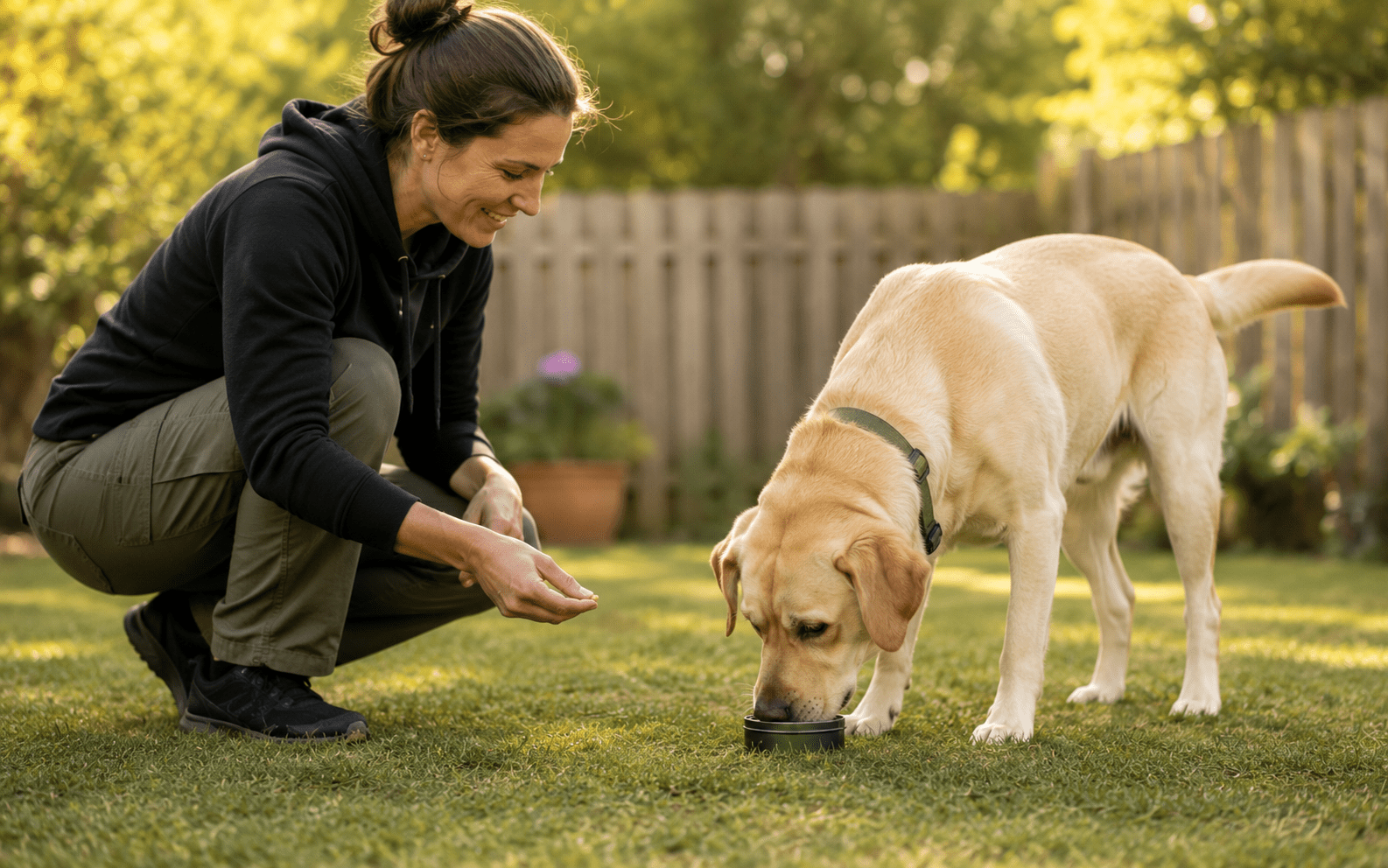
Rewarding at the wrong moment. Timing is everything in scent work. If you mark two seconds after your dog finds the correct container, they may connect the reward to the wrong behavior. You need to mark the exact moment they indicate the target scent.
Running sessions too long. Nose work is genuinely tiring. Sessions longer than 15 minutes often produce sloppy searching or dogs that mentally check out halfway through. Shorter, focused sessions build sharper and more reliable skills over time.
Using the same hiding spots repeatedly. Dogs are pattern learners. If the tin always ends up in the left corner of the room, your dog may stop searching and start guessing. Rotate placements every single session to keep the behavior honest.
When Working with a Professional Makes a Difference
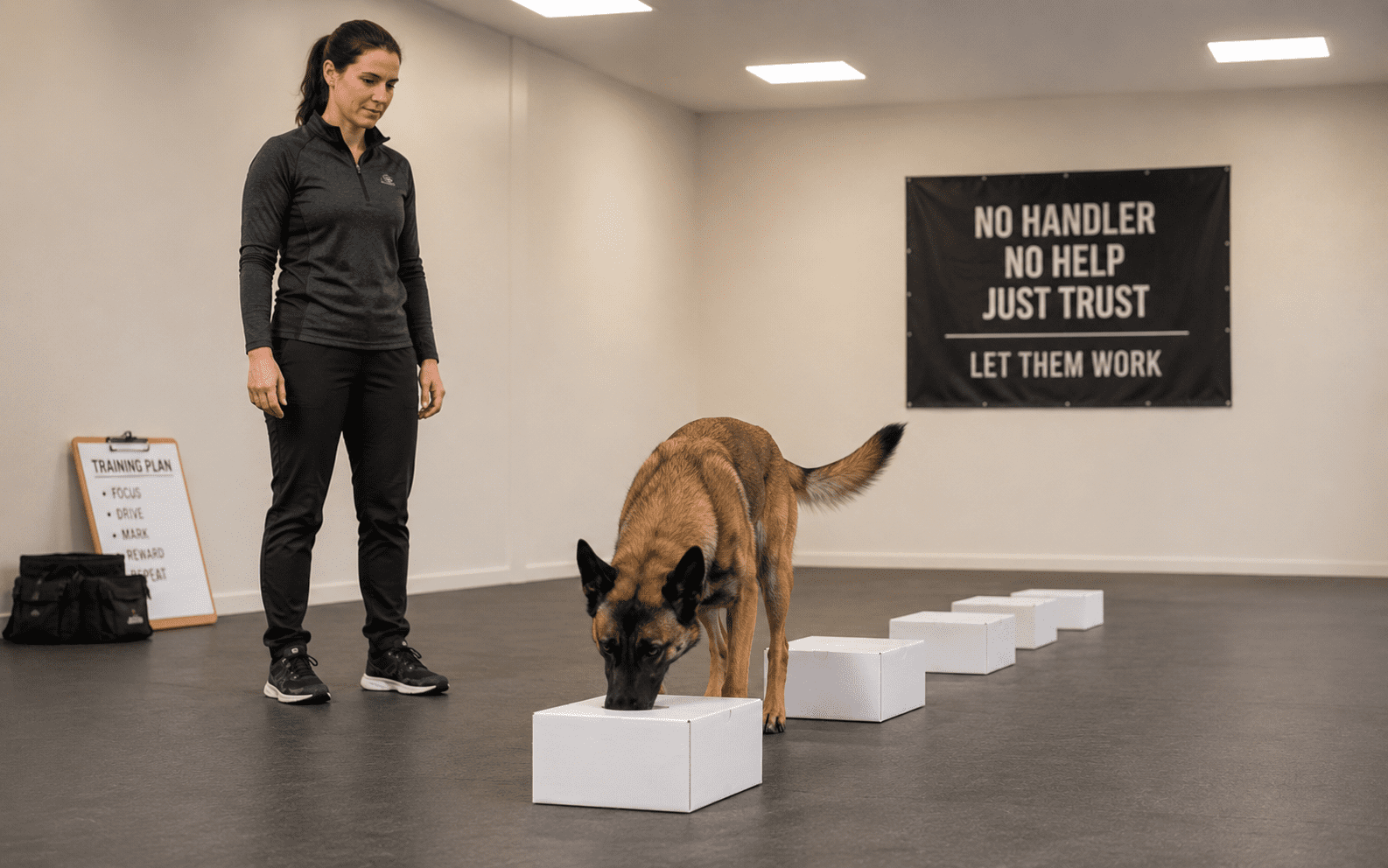
You can absolutely start scent training at home on your own. But if your dog has behavioral challenges that get in the way of learning, such as reactivity, anxiety, or difficulty focusing, working with a professional first gives you a much stronger starting point.
Private dog training Long Island allows a trainer to assess your dog’s current temperament and skill level before you build a nose work routine around it. For dogs dealing with more complex behavior challenges, a board and train Long Island program delivers the immersive structure that home training alone can’t always provide. The environment matters too. If you want a trainer to observe your dog in the actual space where scent work will happen, in home dog training Long Island puts professional guidance directly in your dog’s familiar surroundings.
For more ways to keep your dog mentally engaged between training sessions, check out these fun activities for dogs that pair well with a regular nose work routine.
Put That Nose to Work: Final Thoughts on Scent Training Your Dog
Understanding how to scent train a dog gives you a training tool that works with your dog’s natural instincts instead of fighting against them. Nose work builds focus, reduces problem behavior, and strengthens the communication between you and your dog in a way that feels more like a game than a lesson. Start simple, stay patient, and let the nose lead the way.
At K9 Mania Dog Training, we’re the leading board and train provider on Long Island, with experienced animal behaviorists who understand how dogs think and what drives them. Whether your dog needs foundational obedience, behavioral rehabilitation, or a more enriching daily routine, trust K9 Mania to help you get there. Whatever challenge you’re facing with your dog, we have the tools and experience to help. Visit K9 Mania Dog Training and let us guide you toward a dog you can be truly confident in.
Frequently Asked Questions About Scent Training a Dog
Can any dog be scent trained?
Yes, any dog can be scent trained. Scent ability is hardwired into every dog regardless of breed, age, or background. Even older dogs and rescues with limited training history can learn nose work with patience and the right introduction. The process simply needs to match the dog’s current confidence and focus level.
How do I start scent training my dog?
Start by pairing a target scent with a reward, then move into simple container searches once the dog shows interest. Let your dog sniff a chosen scent like birch oil on a cotton swab, then reward immediately. Once they associate the smell with something positive, introduce three containers with the scent hidden in one. Gradually increase difficulty as accuracy improves.
What is the best scent for dog scent training?
Birch oil is the most recommended starting scent for nose work training. It’s distinct, easy for dogs to isolate from their environment, and used in formal AKC competition. Anise and clove are solid alternatives. All three give your dog a clear target that doesn’t occur naturally in most home settings, which makes early learning much cleaner.
How do I teach my dog to seek scents?
Teach your dog to seek scents by first creating a reward association with the odor, then hiding it for them to locate. Start with direct scent-to-reward pairings so the smell becomes meaningful. Then hide the scent in a container and let your dog work it out. Add a verbal cue once they understand the concept and increase difficulty gradually as their accuracy builds.
What breed of dog is best for scent work?
Bloodhounds, Beagles, and German Shepherds are among the top breeds for scent work. Bloodhounds have more olfactory receptors than any other breed, making them the standard for tracking. Basset Hounds, Malinois, and Labrador Retrievers also perform exceptionally well. That said, drive and consistent training often matter more than breed in recreational nose work settings.
What dogs are usually not allowed in apartments?
Pit Bulls, Rottweilers, Dobermans, and German Shepherds are the breeds most commonly restricted in apartment buildings. Many landlords also restrict dogs over a certain weight threshold, regardless of breed. Breed restriction policies vary significantly by building, city, and state, so it’s always worth confirming the specific rules directly with the property manager before signing a lease.