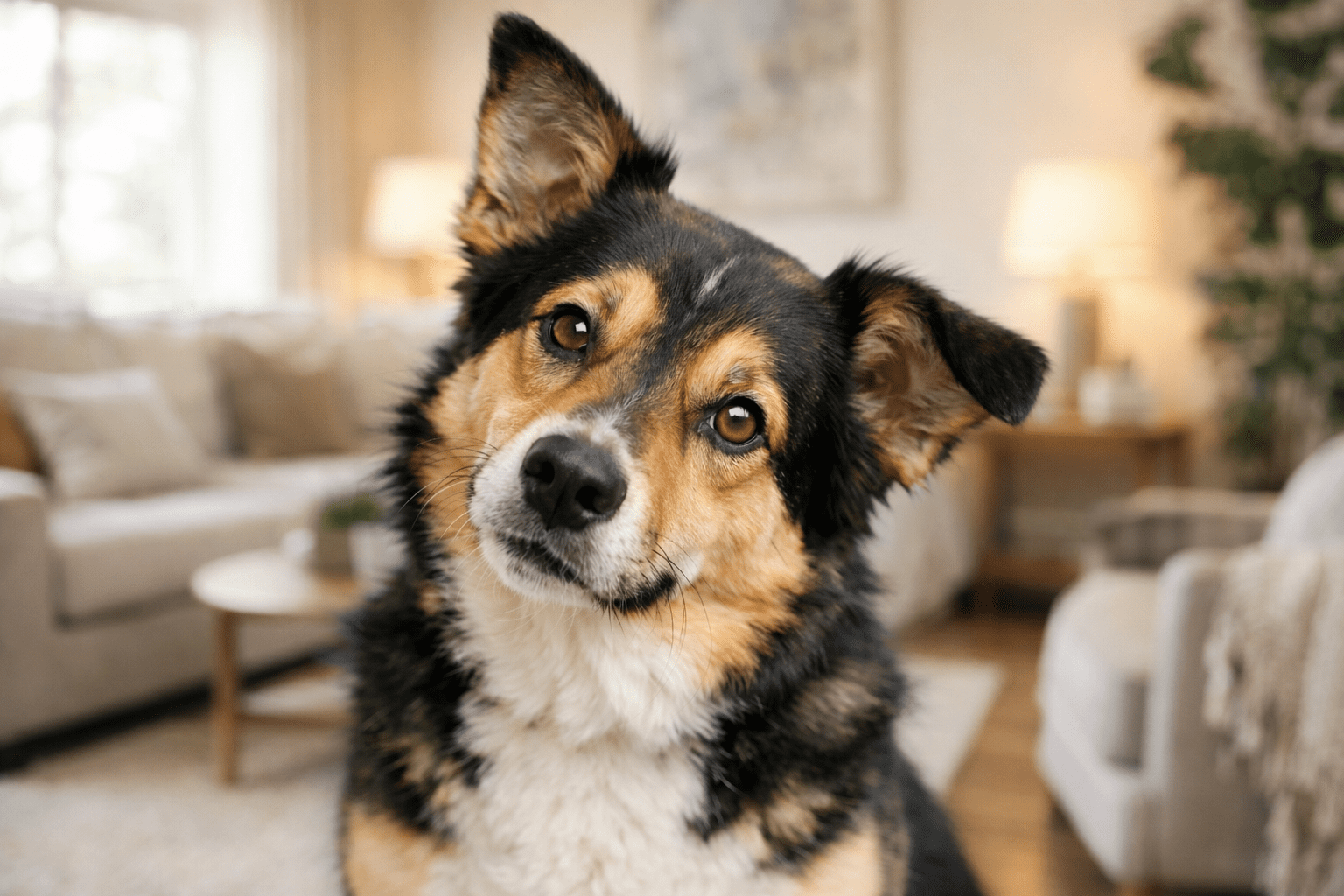
Why do dogs tilt their heads? Dogs tilt their heads to hear you better, see your face more clearly, and process what you’re saying. This adorable gesture helps them understand your words, tone, and emotions by adjusting their ear position and getting a clearer view of your facial expressions.
That signature head tilt your dog does when you talk to them is more than just cute. It’s a window into how dogs process information, communicate, and connect with us. Whether your pup tilts their head during training sessions, when they hear a new sound, or when you ask them a question, this behavior reveals fascinating things about canine intelligence and communication.
In this guide, we’ll explore the science behind head tilting, what it tells us about your dog’s cognitive abilities, and when this behavior might signal something worth watching. You’ll also learn how to use this natural response during training to build a stronger bond with your four-legged friend.
Build a deeper connection with your dog through professional guidance. Explore our board and train Long Island program for expert training support.
Why Dogs Tilt Their Heads
Dogs tilt their heads for several research-backed reasons that involve both their physical anatomy and cognitive processing. Understanding these mechanisms helps you appreciate how your dog experiences and interprets the world around them.
Improving Sound Localization and Hearing
Dogs hear differently than humans, and their ear structure plays a big role in why they tilt their heads. When a dog turns their head to one side, they’re adjusting the position of their ears to better pinpoint where a sound is coming from.
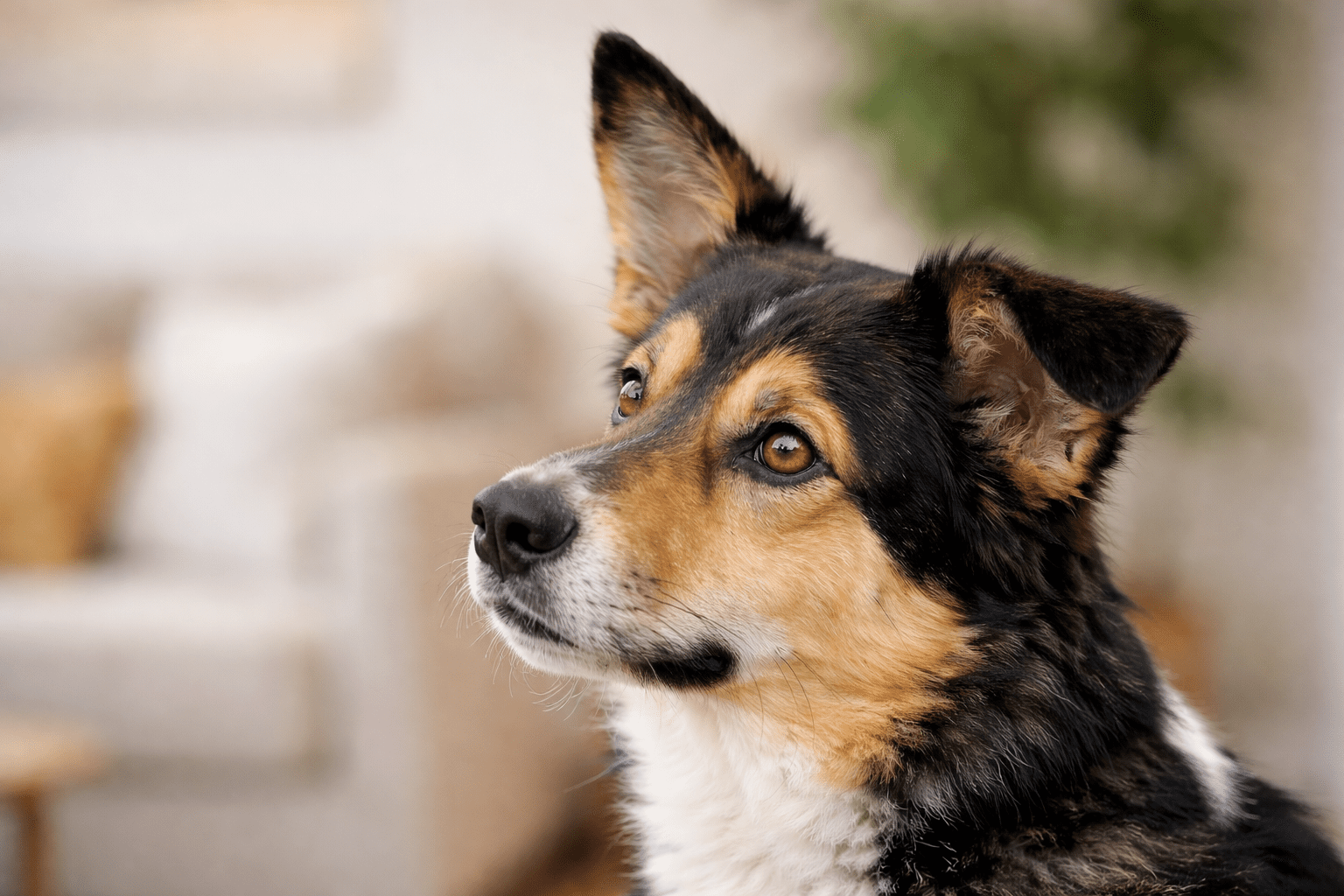
The shape and position of a dog’s ears can block or muffle sounds, especially those coming from certain angles. By tilting, they change the way sound waves reach each ear, which helps them figure out the exact location of what they’re hearing.
This is particularly true for dogs with floppy ears like Beagles or Basset Hounds. Their ear flaps can cover the ear canal and reduce sound clarity. A head tilt lifts or moves those flaps, allowing clearer sound to reach the inner ear.
Dogs also tilt their heads more often when they hear high-pitched sounds or unfamiliar noises. These sounds trigger curiosity and the need for more information, so they adjust their position to gather as much data as possible.
Getting a Better View of Your Face
Your dog’s muzzle can block part of their visual field, especially when looking straight at you. A 2021 study published in Animal Cognition found that dogs with longer muzzles tilt their heads more frequently than dogs with flatter faces.
When your dog tilts their head, they’re moving their nose out of the way to see your entire face more clearly. This gives them a better view of your mouth, eyes, and overall facial expressions, which are critical for understanding your emotions and intentions.
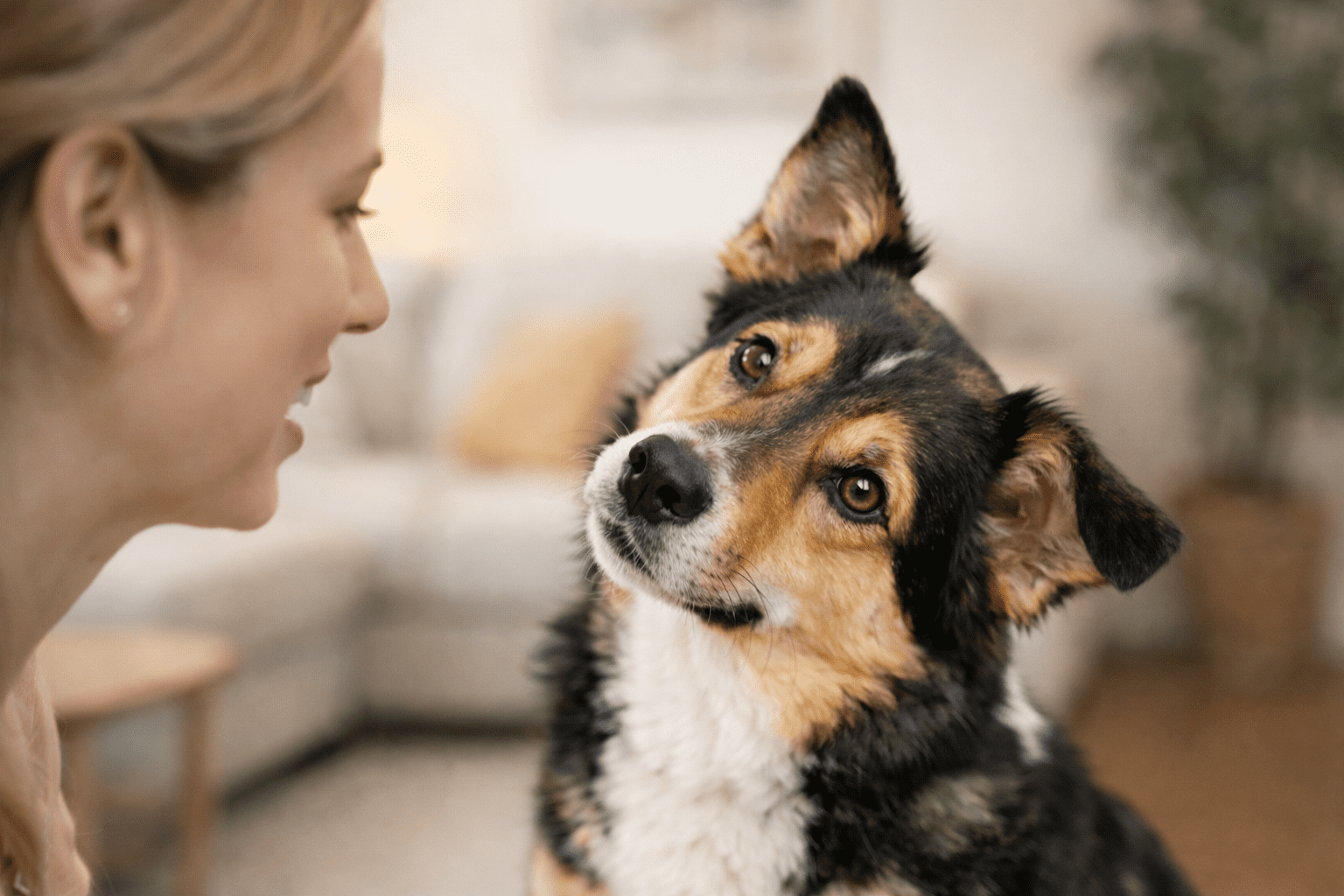
Dogs are incredibly skilled at reading human facial cues. They look for subtle changes in your expression to understand whether you’re happy, upset, or giving a command. The head tilt helps them gather this visual information more effectively.
This behavior becomes especially noticeable during conversations or training sessions. Your dog wants to see the full picture of what you’re communicating, not just hear your words.
Processing Language and Cognitive Engagement
Research from Hungary’s Eötvös Loránd University suggests that head tilting may be linked to a dog’s attempt to process and understand human speech. Dogs that are more responsive to human language and commands tend to tilt their heads more frequently.
When you speak to your dog in an engaging way, using different tones or asking questions, their brain works to decode both the meaning of your words and your emotional state. The head tilt might be a visible sign of this cognitive effort.
Dogs that have learned the names of objects, toys, or commands show more frequent head tilting when hearing those specific words. This suggests the behavior is connected to memory recall and language comprehension.
Some researchers believe the head tilt indicates your dog is actively listening and trying to match the sounds they hear with stored memories of what those sounds mean. It’s similar to how humans might lean in or tilt their heads when concentrating on understanding something complex.
Strengthen your dog’s listening skills and responsiveness. Check out our guide on top 5 dog training commands to build clear communication.
What Your Dog’s Head Tilt Reveals About Their Intelligence
Not all dogs tilt their heads with the same frequency or in the same situations. These differences can tell you interesting things about your dog’s cognitive abilities and personality.
Head Tilting and Problem-Solving Skills
Dogs that tilt their heads more often tend to score higher on problem-solving tasks and learning assessments. The head tilt shows active engagement with their environment and a desire to gather more information before responding.
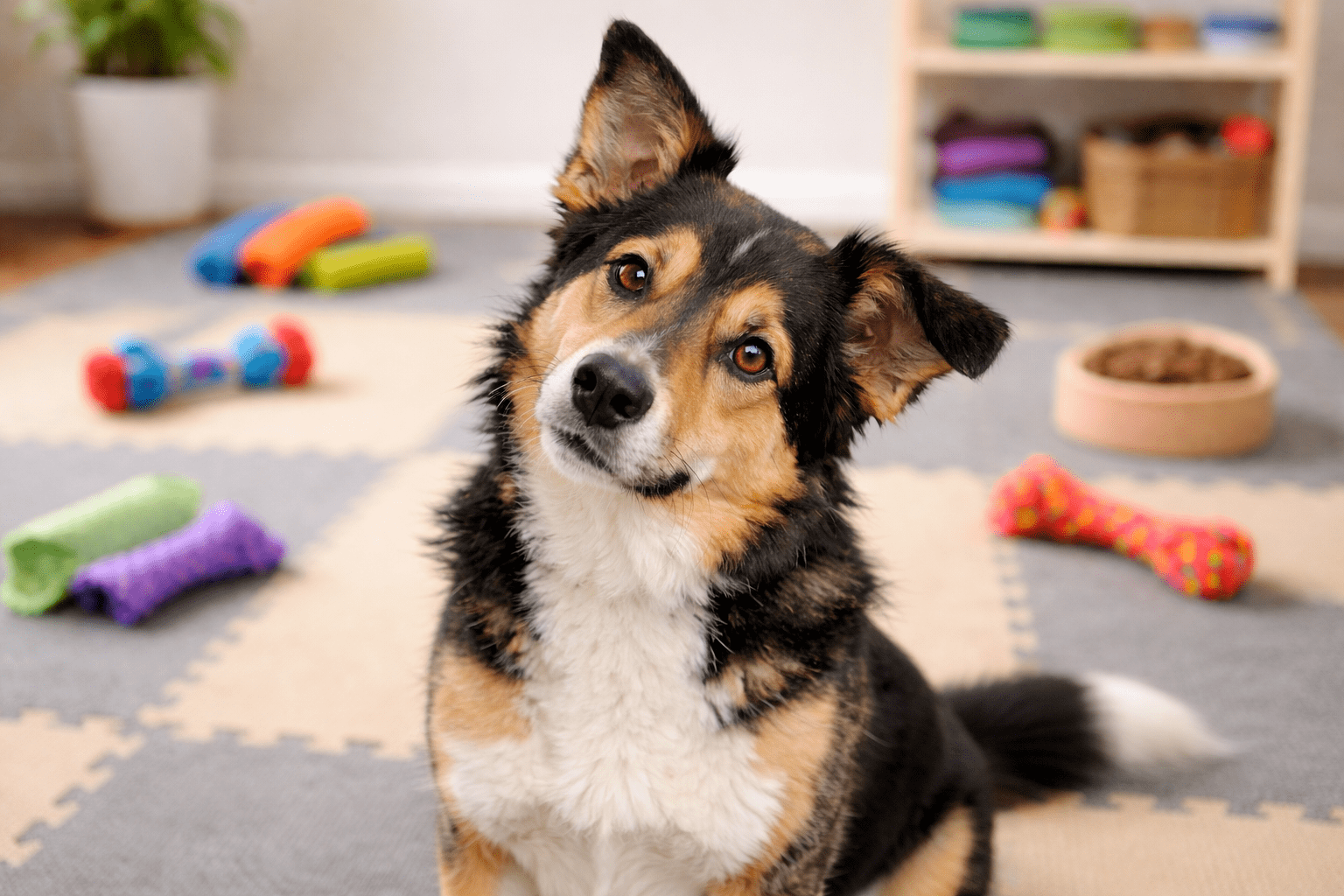
When faced with a puzzle, challenge, or unfamiliar situation, intelligent dogs will often tilt their heads as they work through the problem mentally. This physical response indicates they’re processing multiple pieces of information at once.
You might notice your dog tilts their head more when:
- You introduce a new toy or object
- They hear an unusual sound they can’t immediately identify
- You change your typical routine or environment
- You speak in a questioning or uncertain tone
- They’re learning a new command or trick
Gifted Word Learners and Head Tilting
A fascinating study identified a small group of dogs called “gifted word learners” who can memorize dozens or even hundreds of toy names. These exceptional dogs showed significantly more head tilting when hearing toy names compared to random words.
Border Collies, in particular, appear in many studies of gifted word learners. Their intense focus and head tilting when hearing specific words shows deep concentration and memory retrieval at work.
If your dog consistently tilts their head when you mention specific objects, places, or activities by name, this suggests they’ve formed strong mental associations with those words. They’re not just hearing sounds but accessing memories and meanings.
This doesn’t mean non-tilting dogs are less intelligent. Some dogs simply process information differently or show their engagement through other body language cues like ear movement, eye contact, or tail wagging.
Comparing Head Tilting Across Breeds and Personalities
Different breeds and individual personalities show varying levels of head tilting behavior:
| Breed/Type | Head Tilting Frequency | Why |
| Long-muzzled breeds (German Shepherds, Collies, Greyhounds) | High | Muzzle blocks more of their visual field, requiring more adjustment |
| Flat-faced breeds (Pugs, Bulldogs, Boston Terriers) | Low to Moderate | Shorter muzzles cause less visual obstruction |
| Working breeds (Border Collies, Australian Shepherds, Labs) | High | Bred for attentiveness and responsiveness to human cues |
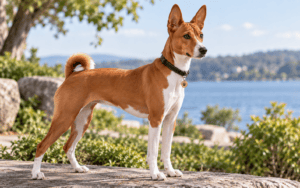
| Independent breeds (Huskies, Shiba Inus, Basenjis) | Low to Moderate | Less focused on human communication signals |
Beyond breed tendencies, individual personality plays a huge role. Dogs that are naturally curious, social, and eager to please tend to tilt their heads more often than aloof or independent dogs.
Learn more about understanding your dog’s unique personality and needs. Read our article on top things to teach dogs for customized training approaches.
Common Situations That Trigger Head Tilting
Understanding when and why your dog tilts their head helps you recognize patterns in their behavior and communication style.
During Conversations and Training Sessions
Dogs tilt their heads most often when humans are speaking directly to them. This behavior increases when you:
- Use a high-pitched or animated voice
- Ask them questions (“Do you want to go for a walk?”)
- Say words they recognize, especially names of toys, treats, or activities
- Give commands or instructions during training
Training sessions are prime head-tilting moments because your dog is actively listening and trying to understand what you want. The combination of your words, tone, body language, and the training context creates a complex communication puzzle your dog is working to solve.
You can actually encourage head tilting during training by varying your voice tone, using their favorite words, and maintaining eye contact. This engagement shows they’re mentally present and ready to learn.
In Response to New or Unusual Sounds
Dogs tilt their heads more when they hear unfamiliar or confusing sounds. This might include:
- Strange noises from electronics (doorbells on TV, phone ringtones)
- Animal sounds they don’t recognize
- Musical instruments or singing
- Sounds that seem to come from unexpected directions
- Noises with frequencies they don’t encounter often
When your dog hears something puzzling, the head tilt helps them gather more auditory information to determine if the sound is a threat, something interesting, or just background noise they can ignore.
When Reading Your Emotions and Body Language
Dogs are experts at reading human emotions, and head tilting often occurs when they’re trying to understand how you’re feeling. You might notice more head tilts when:
- You’re upset or crying
- Your body language doesn’t match your tone of voice
- You’re being playful or silly
- You’re showing mixed emotional signals
- You’re looking directly at them with an emotional expression
The head tilt in these moments shows empathy and concern. Your dog is gathering information to decide how to respond to your emotional state.
Develop consistent communication patterns with your dog. Discover why consistency in training creates better understanding and faster learning.
When Head Tilting Might Signal Health Concerns
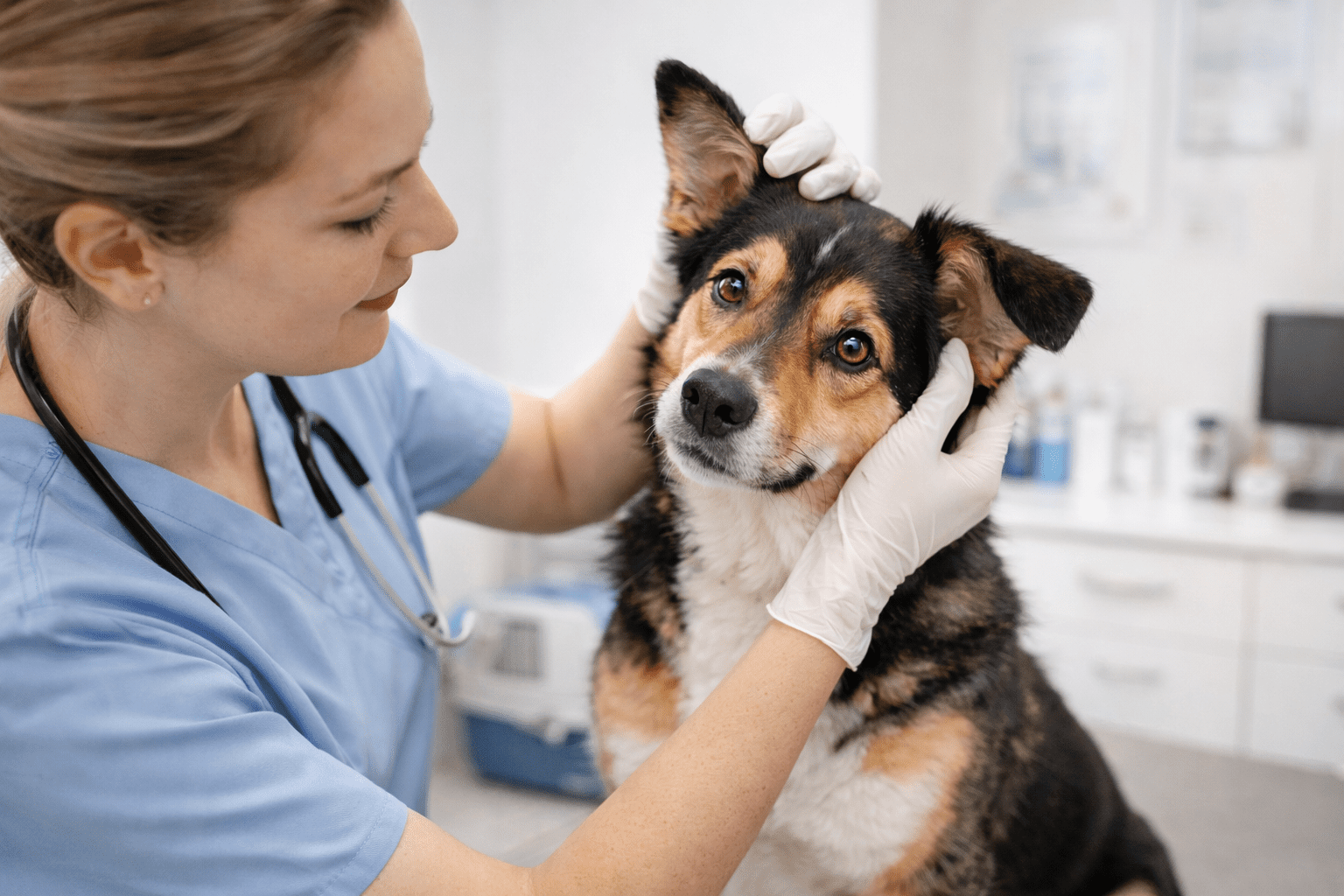
While head tilting is usually harmless and adorable, certain patterns or accompanying symptoms can indicate medical issues that need veterinary attention.
Normal vs. Concerning Head Tilting
Normal head tilting happens briefly in response to sounds, conversations, or interesting stimuli. Your dog’s head returns to a normal position quickly, and the behavior seems voluntary and controlled.
Concerning head tilting looks different:
- The head stays tilted for extended periods
- Your dog seems unable to hold their head straight
- The tilt appears involuntary or permanent
- One side is consistently favored
- The behavior started suddenly without an obvious trigger
Medical Conditions That Cause Persistent Head Tilting
Several health issues can cause abnormal head tilting:
| Condition | Symptoms Beyond Head Tilting | When to See a Vet |
| Ear infection | Scratching ears, discharge, odor, pain when touched, head shaking | Within 24-48 hours, sooner if severe pain |
| Vestibular disease | Loss of balance, circling, falling, rapid eye movement, nausea | Immediately, especially if sudden onset |
| Stroke | Confusion, weakness, loss of coordination, facial drooping | Emergency – seek immediate care |
| Brain tumor | Behavioral changes, seizures, vision problems, lethargy | As soon as abnormal signs appear |
| Ear mites or foreign objects | Intense itching, dark discharge, head shaking, pawing at ear | Within a few days of noticing symptoms |
Warning Signs to Watch For
Contact your veterinarian if head tilting is accompanied by:
- Loss of balance or stumbling
- Walking in circles
- Vomiting or nausea
- Reluctance to eat or drink
- Eye problems (rapid movement, unequal pupil size, vision loss)
- Discharge or odor from ears
- Pain when touching the head or ears
- Personality changes or confusion
- Seizures or tremors
Sudden onset of persistent head tilting, especially in older dogs, requires immediate veterinary evaluation. Vestibular disease and strokes can develop rapidly and need prompt treatment.
For occasional, responsive head tilting during normal activities, there’s no cause for concern. This is simply your dog engaging with the world around them in a completely healthy way.
Ensure your dog receives comprehensive care and training support. Learn about our private dog training Long Island services for personalized attention.
How to Use Head Tilting in Training and Bonding
You can actually leverage your dog’s natural head tilting response to improve training sessions and strengthen your relationship.
Encouraging Engagement During Training
Head tilting shows your dog is paying attention and processing information. You can encourage this engaged state by:
- Using varied voice tones and pitches during training
- Asking questions instead of just giving commands (“Where’s your toy?”)
- Introducing new words and concepts gradually
- Maintaining eye contact when speaking to your dog
- Using animated facial expressions that give them more visual information
When your dog tilts their head during training, it’s a signal they’re mentally present and ready to learn. This is the ideal time to introduce new commands or reinforce existing ones.
Building Stronger Communication
Understanding why dogs tilt their heads helps you become a better communicator. When you notice the head tilt, you know your dog is working to understand you. This is your cue to:
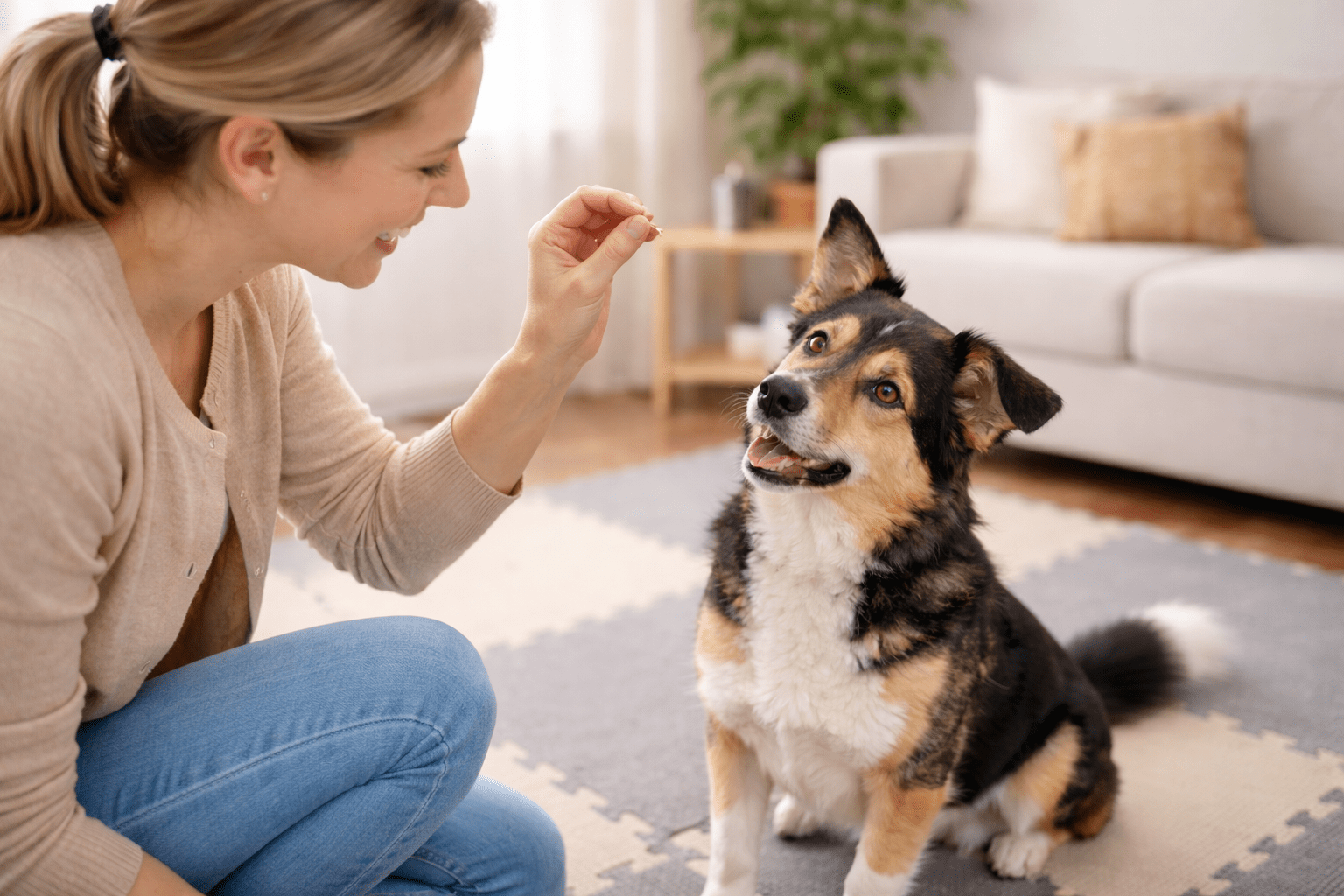
- Slow down and speak more clearly
- Break complex commands into smaller steps
- Provide additional visual cues with hand signals
- Repeat important words or phrases
- Reward their attention with praise or treats
Dogs that receive positive feedback when they show engagement (like head tilting) are more likely to continue displaying attentive behaviors during future interactions.
Recognizing Individual Communication Styles
Not every dog communicates the same way. Some dogs tilt their heads frequently, while others rarely do. Neither approach is wrong or better.
Learn your individual dog’s communication style by observing:
- When and how often they tilt their head
- What other body language they use to show attention (ear position, eye contact, body orientation)
- Which words or sounds trigger the strongest response
- How they indicate understanding versus confusion
This personalized understanding helps you adjust your training and communication approach to match your dog’s natural tendencies, leading to faster learning and a stronger bond.
Develop a customized training plan for your dog’s unique needs. Explore our obedience dog training options for professional support.
Final Thoughts on Why Dogs Tilt Their Heads
Why do dogs tilt their heads? The answer combines better hearing, clearer vision, cognitive processing, and a genuine desire to understand you. This charming behavior reveals your dog’s intelligence, attentiveness, and emotional connection to you.
Whether your dog tilts their head frequently or rarely, recognizing what triggers this response helps you become a better communicator and training partner. Pay attention to the contexts where tilting occurs, use it as a signal of engagement during training, and always watch for patterns that might indicate health concerns.
The head tilt is just one of many ways dogs bridge the communication gap between species. By understanding and responding to these signals, you create a deeper, more meaningful relationship with your canine companion.
At K9 Mania Dog Training, we’re the leading board and train Long Island experts who understand every aspect of dog communication and behavior. Whether you’re dealing with training challenges or want to strengthen your bond, we can help. Visit our website to learn how our proven methods create lasting results for dogs and their families.
You May Also Want to Read
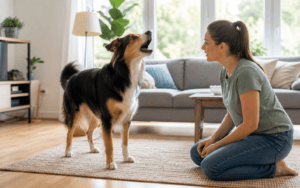
- Why Do Dogs Howl: Understanding Your Dog’s Vocal Behavior
- How to Stop Territorial Barking: Effective Training Methods That Work
- How to Calm a Panting Dog: Expert Techniques That Work
- Why Do Dogs Stare at Walls? Understanding This Unusual Behavior
Frequently Asked Questions
Why do dogs tilt their heads when you speak to them?
Dogs tilt their heads when you speak to them to better hear your voice and see your face clearly. This adjustment helps them process both your words and your facial expressions simultaneously, giving them more complete information about what you’re communicating. The head tilt improves sound localization and moves their muzzle out of their visual field.
Are dogs that tilt their head smart?
Dogs that frequently tilt their heads tend to show higher engagement with human communication and may have stronger language processing abilities. Studies on gifted word learners found these exceptional dogs tilted their heads significantly more when hearing familiar object names. However, dogs that don’t tilt their heads aren’t necessarily less intelligent—they may simply process information differently or show attention through other body language.
Why do dogs tilt their heads at humans?
Dogs tilt their heads at humans to better understand what we’re communicating. This behavior helps them gather more information through improved hearing and clearer visual access to our facial expressions. Dogs have learned that human faces contain important emotional and intentional cues, so they adjust their head position to see us more completely when we interact with them.
Do dogs tilt their head when confused?
Dogs often tilt their heads when trying to understand something unclear or unfamiliar. This might happen when they hear a new word, an unusual sound, or conflicting signals from your tone and body language. The head tilt shows they’re actively processing information and attempting to make sense of what they’re experiencing. It’s a sign of cognitive effort rather than simple confusion.
Do dogs forgive you for yelling at them?
Dogs don’t hold grudges the way humans do, but yelling can damage trust and create anxiety. Dogs live in the moment and will typically return to normal behavior once the stressful situation ends. However, repeated yelling can lead to fear-based behavioral problems and weakened bonds. Positive reinforcement training creates better results and maintains a healthy relationship without causing lasting emotional harm.
What is the hardest command to teach a dog?
The hardest commands typically involve impulse control and distance work, such as “stay” for extended periods, reliable recall in distracting environments, or “leave it” when facing strong temptations. These commands require dogs to override natural instincts and maintain focus despite competing motivations. Commands that involve complex sequences or working away from the handler also tend to be more challenging and require consistent, patient training over longer periods.