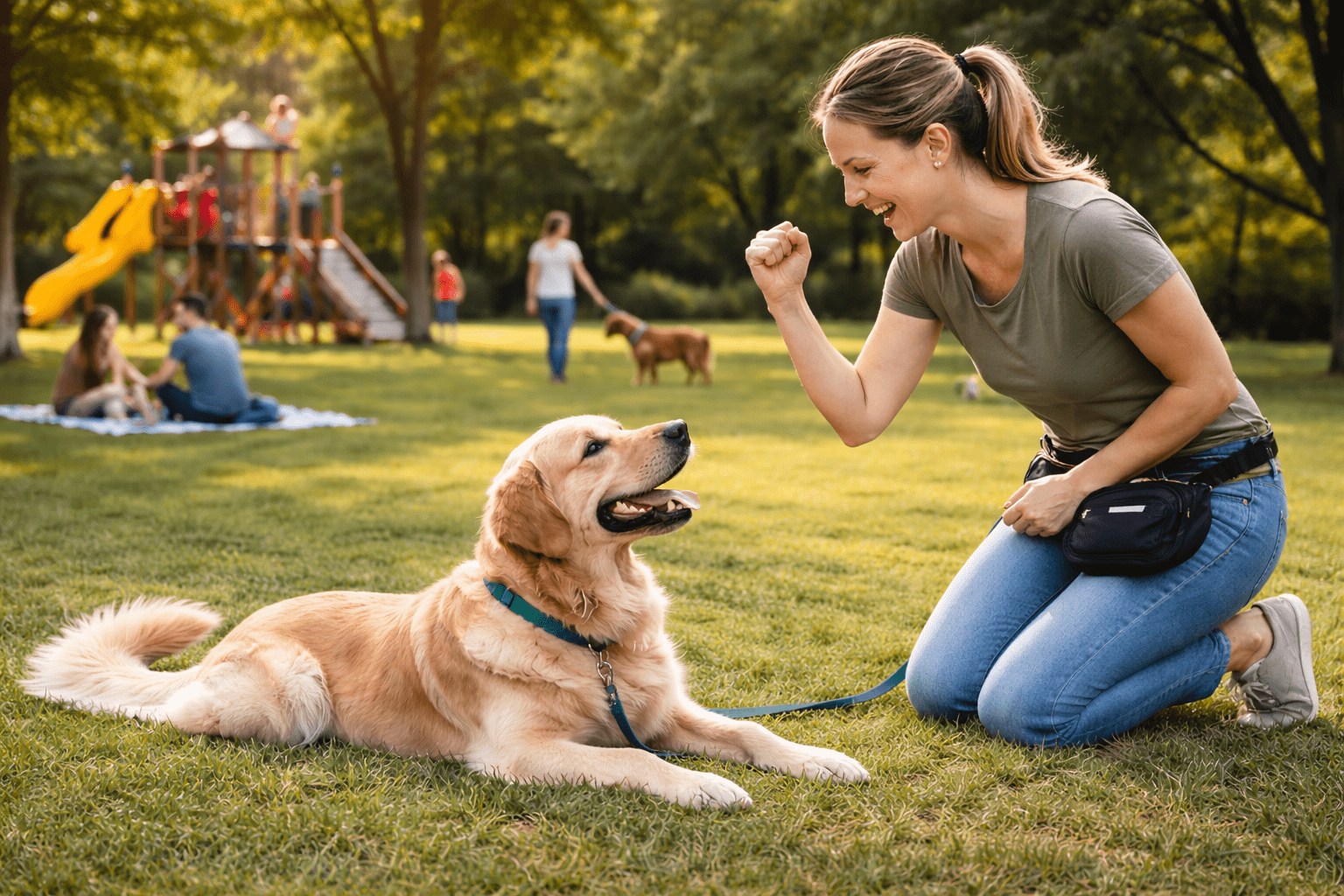
How to train a dog to lay down? Start with your dog in a sitting position, hold a treat near their nose, then slowly move it down to the floor between their paws while saying “down,” rewarding them the moment their belly touches the ground.
Teaching the “down” command is one of the most useful skills your dog can learn. It helps with impulse control, creates calm behavior in exciting situations, and serves as the foundation for advanced tricks and commands. Whether you have a puppy or an adult dog, this command is achievable with the right approach and consistent practice.
In this guide, we’ll walk you through proven techniques, common mistakes to avoid, and practical tips that make training easier for both you and your dog.
Master the basics first with our comprehensive obedience dog training program designed for dogs of all ages.
Why Teaching the Down Command Matters
The down command is more than just a trick. It’s a practical tool that improves your dog’s behavior in everyday situations and strengthens your bond through clear communication.
Builds Self-Control and Calmness
When your dog learns to lay down on command, they’re practicing patience and impulse control. This becomes especially helpful when guests arrive at your door, during vet visits, or when you need your dog to settle in public spaces.
Dogs who master this command tend to be calmer overall because they understand what’s expected of them. The down position naturally encourages relaxation, making it easier for anxious or high-energy dogs to settle.
Foundation for Advanced Training
The down command serves as a building block for more complex behaviors. Once your dog understands how to lay down reliably, you can teach:
- Stay (remaining in the down position)
- Roll over
- Play dead
- Crawling
- Distance commands
Many advanced training programs require a solid down command before moving forward. If you’re interested in taking your dog’s skills further, consider our online dog training courses that build on foundational commands.
Safety and Emergency Situations
In emergency situations, a reliable down command can prevent accidents or injuries. If your dog is running toward a busy street or approaching something dangerous, the down command can stop them in their tracks.
This command creates a safe “pause button” you can use whenever needed, giving you better control in unpredictable situations.
What You Need Before You Start Training
Setting yourself up for success starts with having the right tools and environment. Training goes much smoother when you eliminate distractions and gather everything you need ahead of time.
Essential Training Supplies
You don’t need fancy equipment, but these items make the process easier:
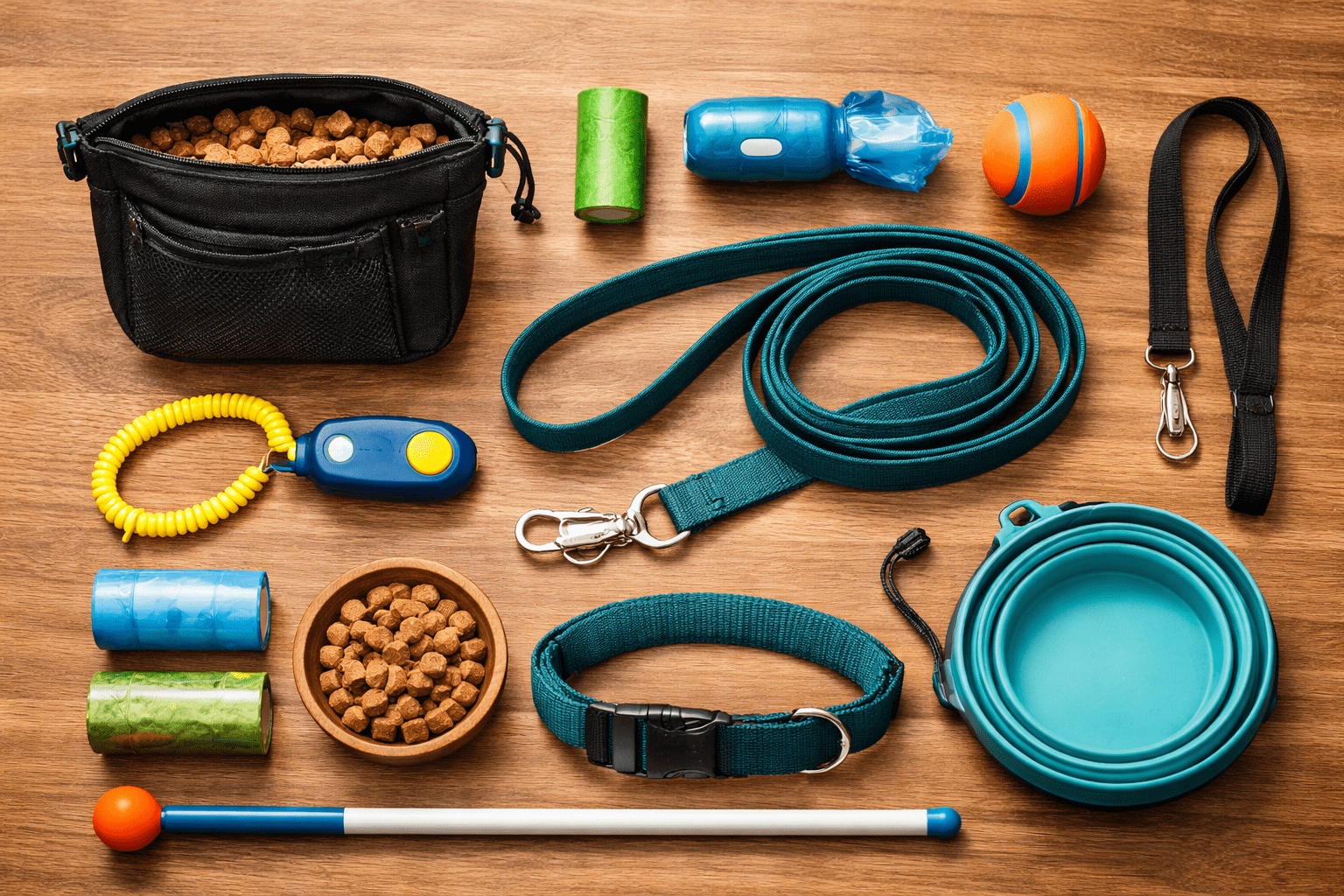
- High-value treats: Small, soft treats your dog loves (think tiny pieces of chicken, cheese, or commercial training treats)
- Quiet space: A room with minimal distractions where your dog can focus
- Patience: This is your most important tool—some dogs learn quickly, others need more time
- Clicker (optional): Helps mark the exact moment your dog does the right thing
The treats should be small enough that your dog can eat them quickly without getting too full during training sessions. You’ll be rewarding frequently at first, so keep portions tiny.
Timing Your Training Sessions
Dogs learn best in short, focused sessions rather than long, exhausting ones. Aim for:
- 5-10 minute sessions
- 2-3 sessions per day
- Training before meals when your dog is hungry and motivated
- Consistent daily practice rather than sporadic long sessions
Always end on a positive note, even if that means finishing with an easier command your dog already knows. This keeps your dog excited about training.
Step-by-Step: How to Train a Dog to Lay Down
Now let’s break down the actual training process into manageable steps. These methods work for most dogs, but remember that every dog learns at their own pace.
The Lure Method (Best for Beginners)
This is the most straightforward technique and works well for dogs who are food-motivated:
- Start with your dog sitting in front of you. If your dog doesn’t know “sit” yet, that’s okay—you can practice from a standing position too.
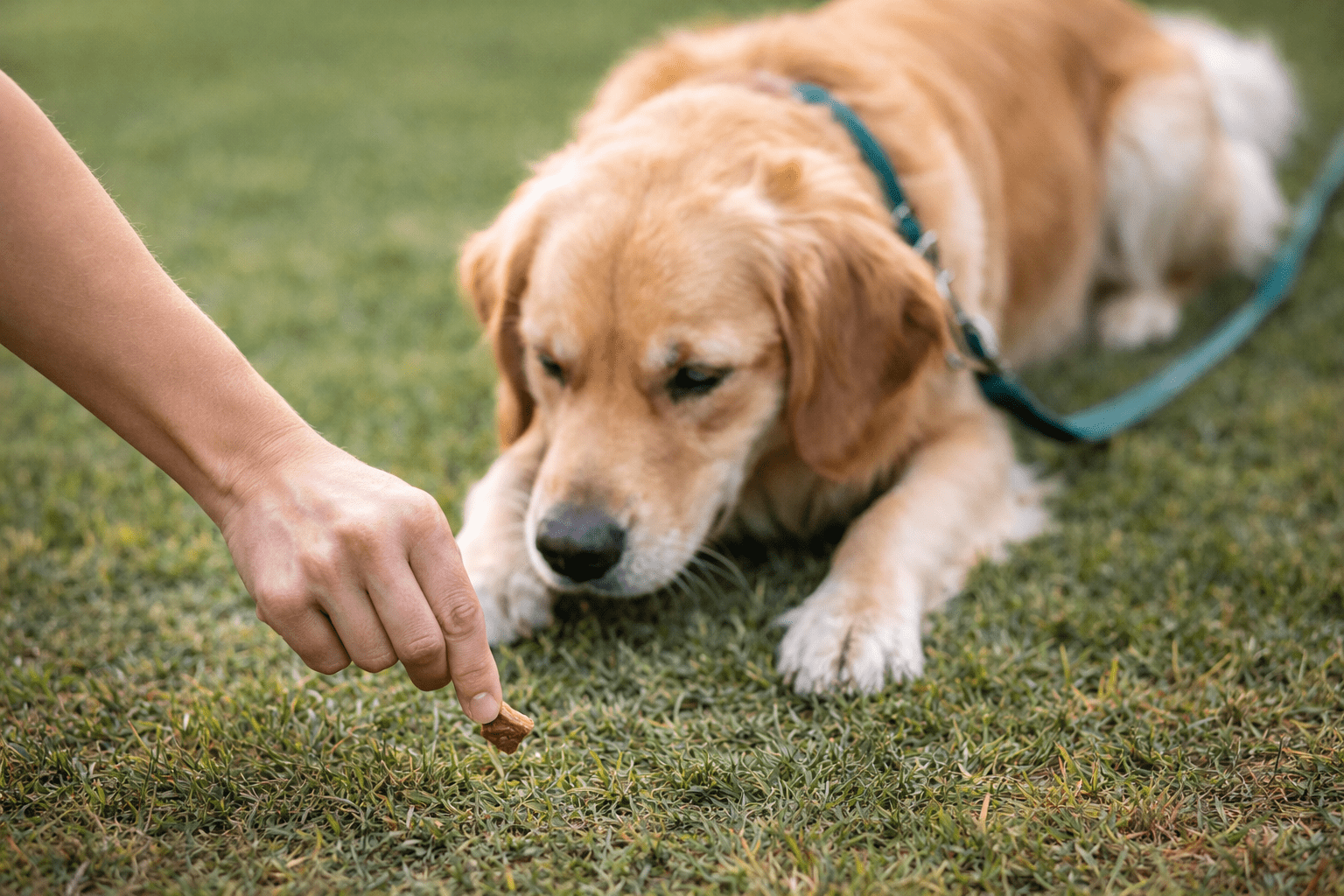
- Hold a treat at your dog’s nose level, letting them smell it but not take it.
- Slowly move the treat down to the floor between your dog’s front paws. Your hand should move in a smooth, straight line toward the ground.
- As your dog follows the treat, their body will naturally fold into a down position. The moment their elbows and belly touch the floor, say “down” in a clear, calm voice.
- Immediately give the treat and praise enthusiastically. Timing is everything—reward the instant they complete the action.
- Release your dog with a word like “okay” or “free” so they know the exercise is done.
Repeat this sequence 5-10 times per session. Most dogs catch on within a few days of consistent practice.
The Capture Method (For Independent Learners)
Some dogs respond better when they figure things out themselves rather than being lured. This method requires more patience but creates strong understanding:
- Watch your dog throughout the day and wait for them to lay down naturally.
- The instant they lay down, say “down” and immediately reward with a treat and praise.
- Repeat this every time you catch them laying down on their own.
- After several repetitions, start saying “down” just before they lay down to help them associate the word with the action.
- Gradually begin asking for the behavior instead of just waiting for it to happen.
This method takes longer but can be very effective for dogs who resist being physically guided or lured.
The Shaping Method (For Stubborn Dogs)
If your dog isn’t responding to the lure method, break the behavior into smaller steps and reward progress:
- Reward your dog for looking down at the treat on the floor.
- Next session, wait until they lower their head closer to the floor before rewarding.
- Then reward only when one elbow touches the ground.
- Finally, wait for both elbows and belly to reach the floor before giving the treat.
This gradual approach works for dogs who get frustrated or confused with the full motion all at once.
Struggling with training challenges? Check out our guide on effective dog training methods for more techniques that work.
Common Mistakes That Slow Down Progress
Even experienced dog owners make these errors when teaching the down command. Avoiding these pitfalls will save you time and frustration.
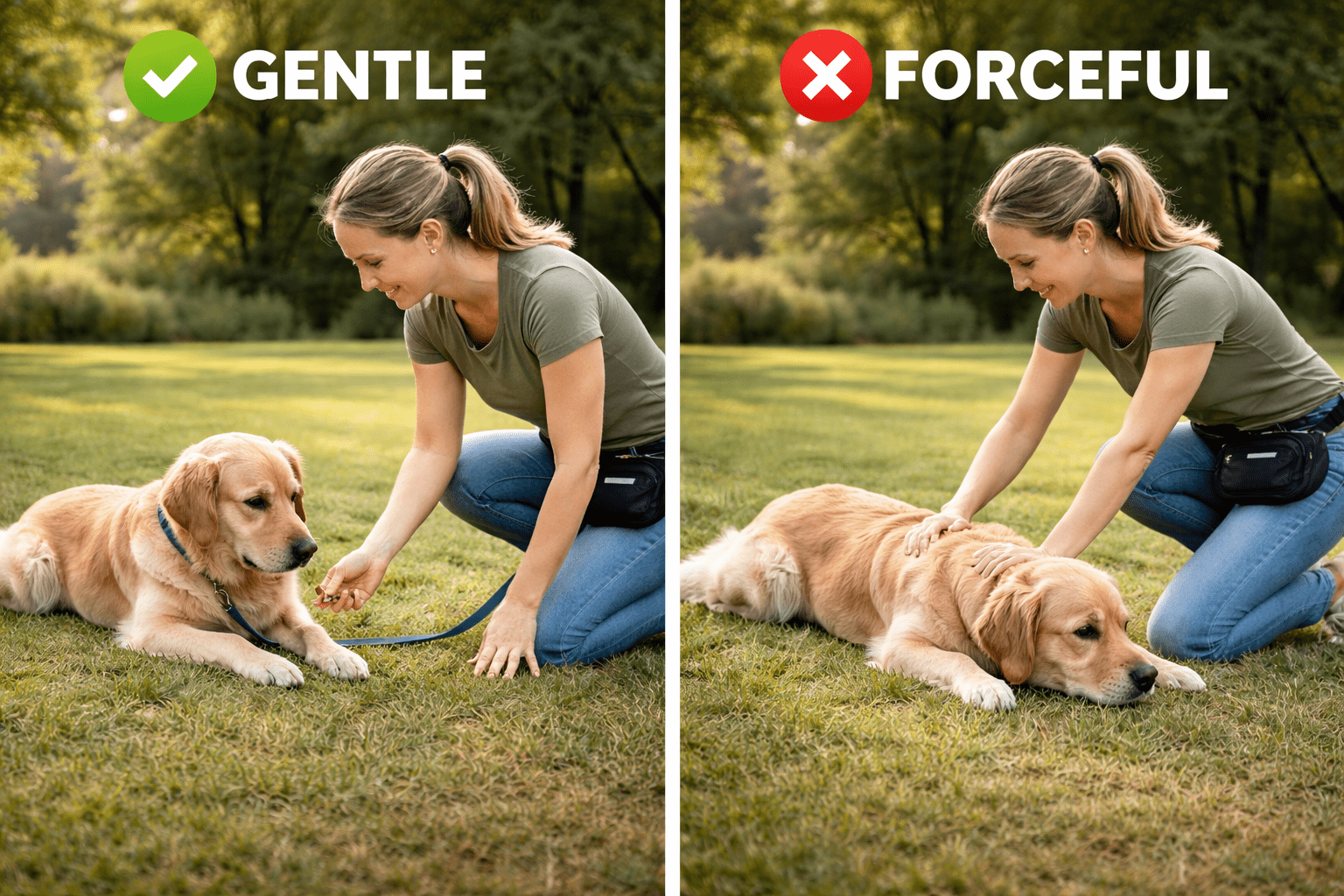
Pushing or Forcing Your Dog Down
Never physically push your dog into the down position. This can:
- Create fear or resistance around the command
- Damage trust between you and your dog
- Cause physical discomfort, especially in older dogs or certain breeds
- Make your dog less willing to participate in training
If your dog isn’t responding to the lure, try a different method or break the behavior into smaller steps. Forcing never builds understanding.
Moving the Lure Too Fast
When you move the treat quickly from your dog’s nose to the floor, they might just stand and follow it or get confused about what you want. Keep your hand movement slow and deliberate.
Watch your dog’s body. If they’re standing up or backing away, you’re probably moving too fast. The treat should guide them into position gradually.
Inconsistent Commands or Hand Signals
Using different words each time confuses your dog. Pick one command word—”down,” “lie down,” or “drop”—and stick with it. Everyone in your household should use the same word.
The same goes for hand signals. If you decide to add a hand signal (like pointing at the ground), use the exact same gesture every time.
Training When Your Dog Is Too Excited
A hyper, overstimulated dog can’t focus on learning new behaviors. If your dog is bouncing off the walls, take them for a walk first or play fetch to burn off excess energy.
The best training happens when your dog is calm but alert—not exhausted, not wired.
Expecting Too Much Too Soon
Dogs don’t learn commands in one session. It typically takes:
- 3-7 days for a dog to understand what you want
- 2-4 weeks for the behavior to become reliable
- Ongoing practice to maintain the skill
Celebrate small improvements. If your dog’s rear end dips closer to the floor today than yesterday, that’s progress worth rewarding.
Use the positive reinforcement training approach to build duration naturally without stress or force.
Comparing Training Methods: Which Works Best?
Different methods work better for different dogs. Here’s how the main approaches compare:
| Method | Best For | Learning Speed | Difficulty Level | Key Advantage |
| Lure Method | Food-motivated dogs, beginners | Fast (3-7 days) | Easy | Clear, immediate guidance |
| Capture Method | Independent thinkers, dogs who resist luring | Slow (1-3 weeks) | Medium | Builds strong association |
| Shaping Method | Stubborn dogs, complex behaviors | Medium (1-2 weeks) | Medium-Hard | Breaks down difficult steps |
| Physical Guidance | Not recommended | Variable | Easy but harmful | None—avoid this method |
Most trainers start with the lure method and switch to capture or shaping if the dog doesn’t respond well.
Training at Different Life Stages
The approach you use may vary depending on your dog’s age and experience level.
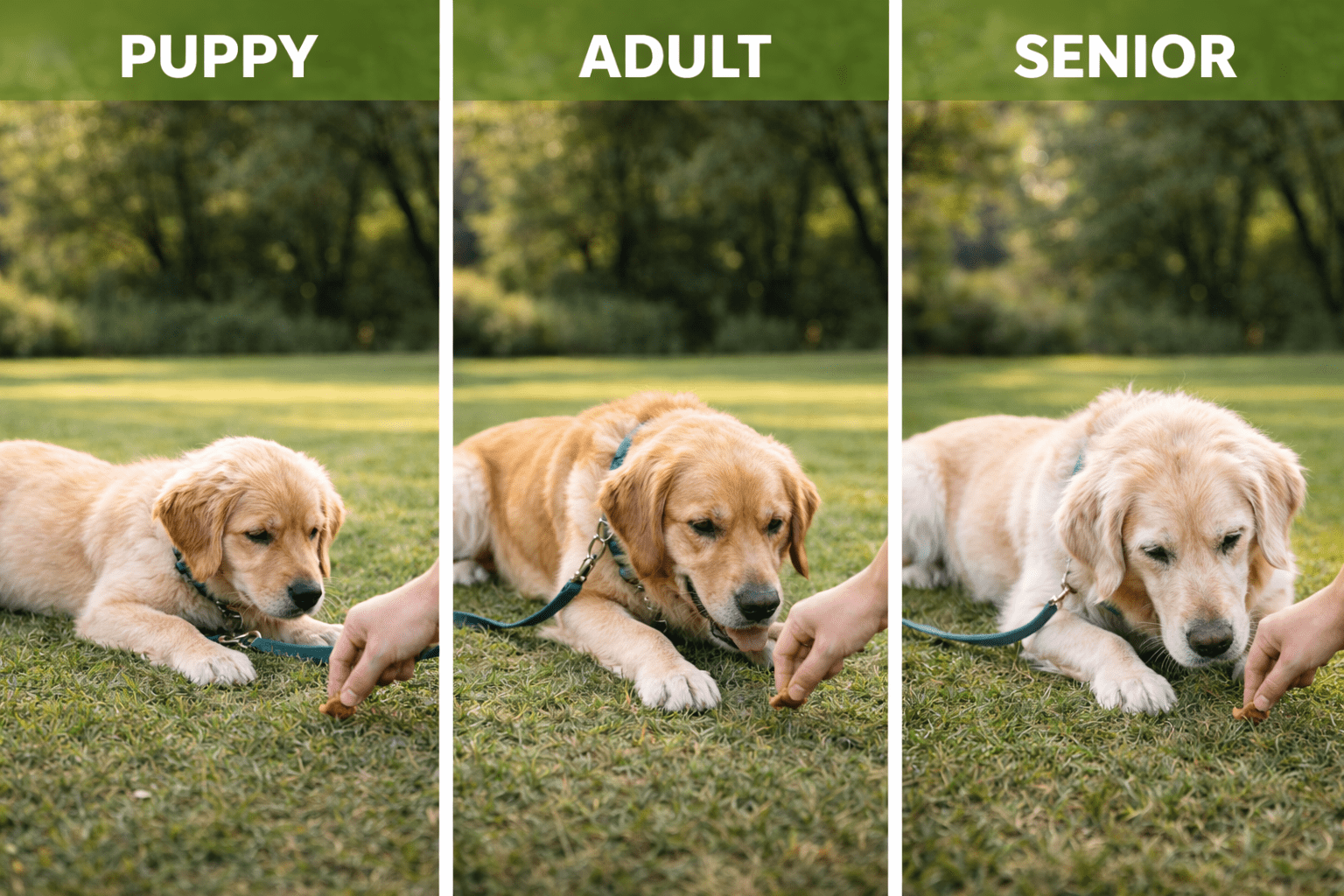
| Life Stage | Best Approach | Session Length | Special Considerations |
| Puppies (8-16 weeks) | Lure method with tiny treats | 3-5 minutes | Short attention span, frequent rewards, soft surfaces |
| Adolescents (4-12 months) | Any method | 5-10 minutes | May test boundaries, stay consistent |
| Adult Dogs (1-7 years) | Any method | 10-15 minutes | May have learned bad habits, be patient |
| Senior Dogs (7+ years) | Gentle lure or capture | 5-10 minutes | Check for arthritis or joint pain, use soft surfaces |
Puppies learn quickly but forget quickly, so practice daily. Adult dogs may take longer to learn new behaviors but retain them better once mastered.
For dogs who need more intensive training or have specific behavioral challenges, our dog boarding camp provides immersive training in a controlled environment.
Tips for Maintaining the Down Command Long-Term
Once your dog knows how to lay down on command, you need to maintain the skill through regular practice and reinforcement.
Practice Randomly Throughout the Day
Don’t just train during formal sessions. Ask for a down:
- Before meals
- Before going outside
- During TV commercials
- When someone comes to the door
- At random moments during walks
This keeps the command fresh and reinforces that your dog should respond no matter when you ask.
Refresh Training When Needed
If your dog starts getting slow or sloppy with the down command, go back to basics for a week. Use treats again, slow down your expectations, and rebuild the behavior. This is normal and happens to all dogs occasionally.
Keep It Positive
Never use the down command as punishment. If your dog misbehaves and you send them to “down and stay” as a consequence, they’ll start associating the command with negative feelings. Keep down fun, rewarding, and voluntary.
Use Variable Rewards
Sometimes give jackpots (several treats at once) for especially quick or enthusiastic downs. This keeps your dog guessing and motivated. Other times, just give praise. The unpredictability makes the behavior stronger.
How K9 Mania Dog Training Can Help You Succeed
Training a dog takes time, patience, and sometimes expert guidance. At K9 Mania Dog Training, we understand that every dog learns differently, and we’re here to help you overcome any training challenges. Whether you need help with basic commands like down, or you’re dealing with more complex behavioral issues, our experienced trainers provide personalized solutions that work.
From one-on-one sessions to comprehensive training programs, we’re committed to helping you build a strong, positive relationship with your dog. Let us support your training journey with proven methods and compassionate guidance. Visit K9 Mania Dog Training today to see how we can help.
Wrapping Up: Your Path to a Well-Trained Dog Who Lays Down on Command
Teaching how to train a dog to lay down is one of the most valuable investments in your dog’s behavior and your relationship. This command provides safety, control, and a foundation for advanced training while strengthening your bond.
Remember that consistency beats perfection. Short, frequent sessions work better than marathon practices. Celebrate small wins, adjust your approach when needed, and keep training positive.
Every dog can learn the down command with the right method and patience. Whether working with an eager puppy or stubborn adult, these techniques will help you succeed. Grab some treats, find a quiet spot, and start training today.
Looking for more training guidance? Learn how to train a dog to stop barking to address another common behavioral challenge.
You May Also Want to Read
Board and Train vs Private Lessons for Aggressive Dogs
Are Dalmatians Aggressive Dogs?
Positive Reinforcement Dog Training: A Complete Guide
Frequently Asked Questions
What is the hardest command to teach a dog?
The hardest command varies by dog, but “stay” with long duration and high distractions is often most challenging. Commands like “heel” (walking perfectly beside you) and reliable recall (“come” when called) in distracting environments also rank among the toughest. Down is actually one of the easier commands since it uses natural body positioning.
What are common mistakes when teaching lay down?
The most common mistakes include physically pushing your dog into position (which builds resistance), moving the lure treat too quickly, using inconsistent commands, rewarding incomplete attempts, and training when your dog is too excited or distracted. Patience and consistency are key—rushing the process usually backfires.
How long does it take to teach lay down?
Most dogs understand the basic down command within 3-7 days of consistent practice. However, achieving a reliable response in various locations with distractions typically takes 2-4 weeks. Older dogs or those with previous negative training experiences may need longer, while young puppies often learn faster but need more repetition to retain the skill.
What to do if a dog won’t lay down?
If your dog refuses to lay down, try a different training method (switch from lure to capture or shaping), check if the surface is uncomfortable, ensure treats are high-value enough, break the behavior into smaller steps, or practice when your dog is calmer. Some dogs resist going completely down at first—reward partial progress and gradually require more.
What words trigger dogs?
Common trigger words that excite dogs include “walk,” “treat,” “outside,” “dinner,” and “car.” These words create strong emotional responses because they’re consistently paired with enjoyable activities. When training, use calm, clear commands and avoid accidentally triggering excitement during focus work. Save exciting words for playtime, not training sessions.
What’s the most difficult dog to train?
Breeds bred for independent thinking (Afghan Hounds, Basenjis, Beagles) or strong-willed working dogs (Siberian Huskies, Akitas, Chow Chows) are often considered harder to train because they were developed to make decisions without human input. However, individual personality matters more than breed—any dog can be trained successfully with the right approach and consistency.