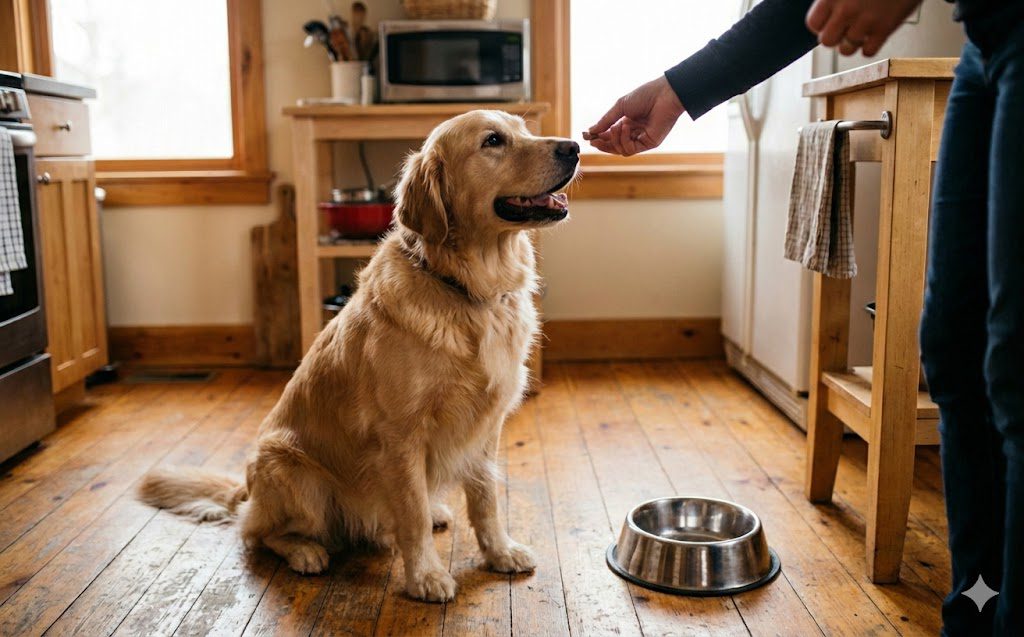
You can stop food aggression with dogs by using gradual desensitization training that teaches your dog to associate your presence near their food with positive experiences. The key is starting slowly with hand-feeding, then progressively working up to adding high-value treats to their bowl while they eat, which rewires their brain to see you as a source of good things rather than a threat.
The good news is that food aggression is highly treatable with the right approach. You don’t need to accept this behavior as permanent, and you definitely shouldn’t use punishment-based methods that can make things worse. Understanding why your dog acts this way and following proven training techniques can transform your dog’s relationship with food and restore peace to your home.
In this guide, we’ll walk you through the exact steps to address food aggression safely, show you what triggers to avoid, and help you decide when professional support might be the best path forward.
Need expert guidance for aggressive behavior? Our board and train program specializes in resource guarding and aggression issues.
What Is Food Aggression in Dogs
Food aggression, also called resource guarding, happens when a dog becomes defensive or threatening around food, treats, toys, or other items they consider valuable. This behavior can range from subtle tension to serious aggression, and it affects dogs of all breeds, ages, and backgrounds.
Understanding what food aggression looks like and why it develops helps you approach the problem with the right mindset. It’s not about dominance or your dog trying to be “alpha.” It’s a fear-based response rooted in survival instincts.
Signs Your Dog Has Food Aggression
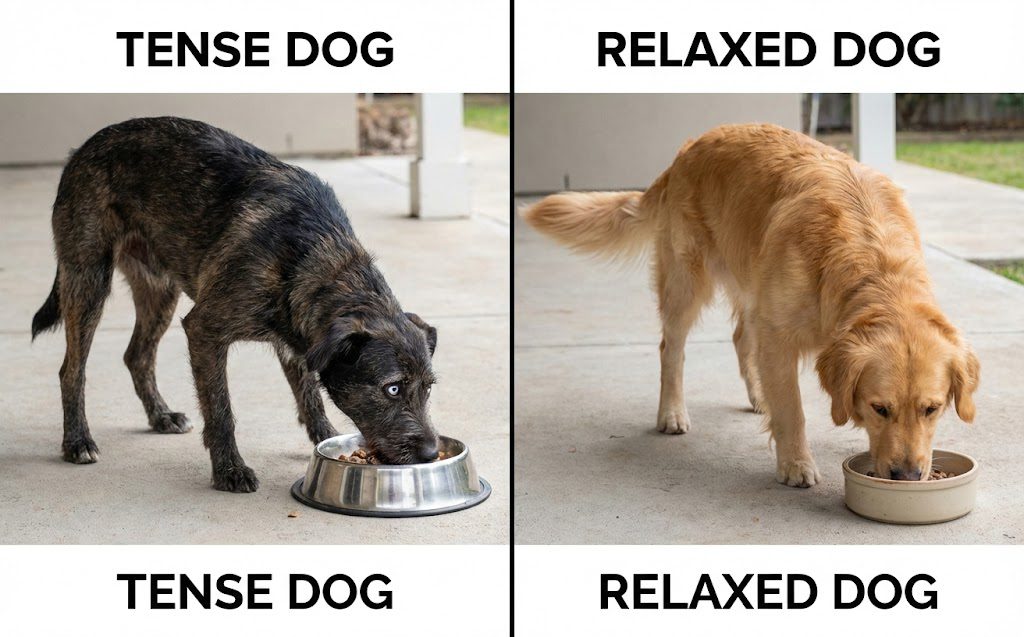
Food aggression shows up in different ways depending on the severity. Some dogs give subtle warnings, while others escalate quickly to more intense behaviors.
Watch for these warning signs during mealtimes or when your dog has something they value:
- Stiffening their body or freezing when you approach
- Eating faster when someone walks by their bowl
- Turning their head or body to block you from seeing their food
- Side-eye glances (showing the whites of their eyes)
- Low growling or rumbling sounds
- Curling their lips to show teeth
- Snapping or lunging toward people or other pets
- Biting when someone tries to take food or comes too close
These behaviors typically happen in a predictable order. A dog might start with body tension, then move to growling, then snapping if their earlier warnings are ignored. Some dogs skip the warning stages entirely, especially if they’ve been punished for growling in the past.
Why Dogs Develop Food Aggression
Food aggression isn’t about being mean or stubborn. It’s a natural instinct that gets triggered by specific experiences or circumstances.
Common causes include:
Early life experiences: Puppies from large litters often compete for limited food from their mother. If they had to fight for meals early on, they may carry that survival mindset into adulthood. Dogs from shelters or rescue situations might have experienced food scarcity, making them anxious about losing meals.
Genetic factors: Some breeds have stronger guarding instincts bred into them for working purposes. While any dog can develop food aggression, certain breeds are more predisposed to resource guarding behaviors.
Learned behavior: If a dog successfully guards food and gets to keep it, the behavior is reinforced. Over time, this pattern strengthens. Dogs also learn from watching other dogs guard resources.
Medical issues: Pain or discomfort can make dogs more defensive during eating. Dental problems, digestive issues, or arthritis might cause a dog to protect their food more aggressively because eating is already uncomfortable.
Inconsistent feeding schedules: Dogs who never know when their next meal is coming may become more anxious and protective around food.
How to Stop Food Aggression with Dogs
Fixing food aggression takes patience, consistency, and the right training approach. Rushing the process or using punishment can backfire and make your dog more defensive. The goal is to change how your dog feels about your presence during mealtimes, not just suppress their warning signals.
These step-by-step methods work best when you start at your dog’s current comfort level and move forward slowly.
Step-by-Step Training Methods
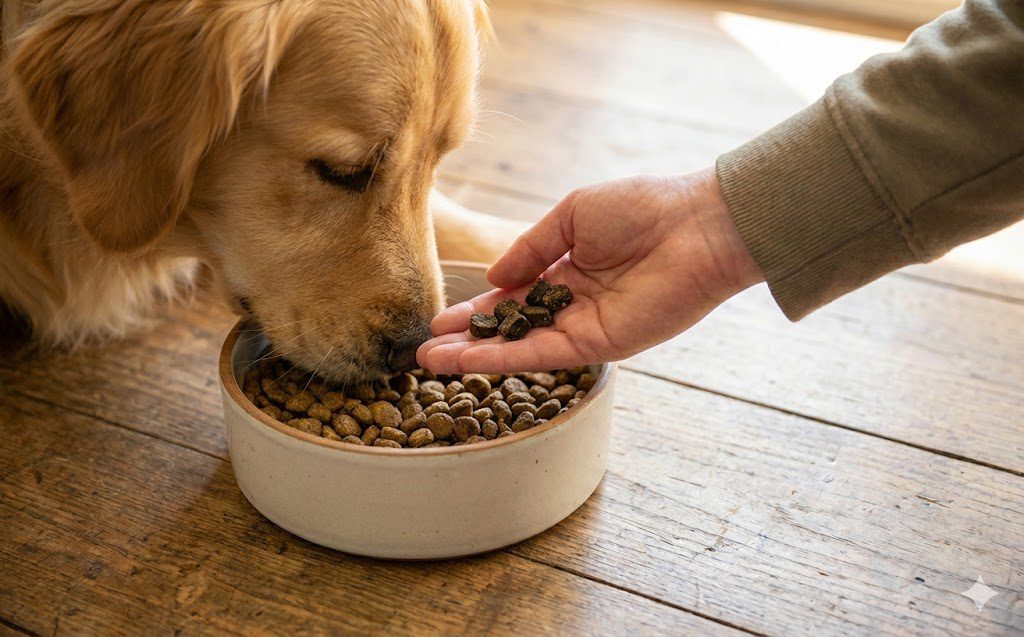
The foundation of stopping food aggression is teaching your dog that people near their food means good things happen, not that their meal is in danger.
Hand-feeding for trust building: Start by hand-feeding your dog their regular meals for several days. This creates a positive association between your hands and food. Sit with your dog and offer small amounts from your palm. This works especially well for puppies or dogs with mild food guarding.
The “trade up” technique: When your dog has something they’re guarding, offer them something even better in exchange. For example, if they’re protective over their kibble, approach with a piece of chicken. Drop the high-value treat near their bowl and walk away. This teaches them that your approach means bonus rewards, not theft.
Bowl approaching exercises: With your dog eating their meal, walk past at a distance where they stay relaxed (this might be 10 feet away initially). Each time you pass, toss a high-value treat into their bowl. Gradually decrease the distance over multiple training sessions as your dog stays comfortable.
The “add to the bowl” method: Start by placing a small amount of food in your dog’s bowl. As they finish, add more food by hand. This shows them that your presence means more food arrives, not that food disappears. Repeat this several times during each meal.
Work through these stages slowly. If your dog shows any tension, you’ve moved too fast and need to go back a step.
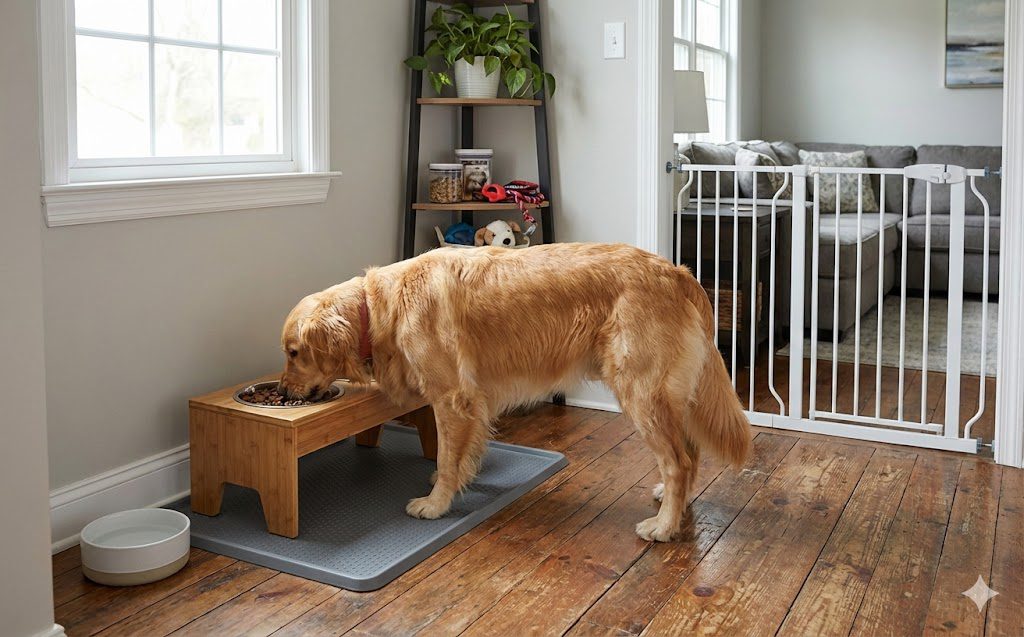
Desensitization Techniques
Desensitization means slowly exposing your dog to things that trigger their guarding behavior while keeping them under their stress threshold. This process rewires their emotional response over time.
Distance desensitization: Start training from a distance where your dog notices you but doesn’t react defensively. This might be across the room. Stand still while they eat, occasionally tossing treats their way. Over days or weeks, gradually move closer as long as they stay relaxed.
Duration desensitization: Begin by approaching for just a second, dropping a treat, and leaving. Slowly increase how long you stay near the bowl. Your dog learns you’re not there to steal their food.
Touch desensitization: Once your dog is comfortable with your presence, begin gently touching the bowl’s rim while they eat, immediately followed by dropping in a high-value treat. Progress to briefly touching their collar, then lightly petting them while eating. Never grab the bowl suddenly or try to take food away during training.
Here’s a progression table to guide your training timeline:
| Training Stage | What You Do | Dog’s Response Goal | Typical Duration |
| Initial Assessment | Observe from distance, note tension threshold | Dog eats normally, shows no stress | 1-3 days |
| Hand Feeding | Feed all meals by hand | Dog eagerly takes food from hand | 3-7 days |
| Distance Approaching | Walk past at safe distance, toss treats | Dog looks up happily, no stiffening | 1-2 weeks |
| Close Proximity | Stand near bowl, add high-value treats | Dog wags tail or stays relaxed | 2-4 weeks |
| Touch Desensitization | Touch bowl rim, then add treats | Dog continues eating calmly | 2-3 weeks |
Looking for comprehensive behavior solutions? Our professional dog training addresses food aggression and other behavioral challenges.
What Not to Do
Certain approaches seem logical but actually make food aggression worse. Avoid these common mistakes that can escalate the problem or damage your dog’s trust.
Never punish growling or warning signs: When dogs growl, they’re communicating discomfort. If you punish this warning, you don’t eliminate the aggressive feeling; you just remove the warning system. This creates a dog who “bites without warning” because they’ve learned that signaling doesn’t work.
Don’t use “alpha rolls” or dominance techniques: Forcing your dog on their back or using intimidation triggers more fear and defensiveness. Food aggression isn’t about dominance, so dominance-based corrections don’t address the root cause and often make things worse.
Avoid suddenly taking the bowl away: The outdated advice to “show them who’s boss” by removing their food mid-meal teaches your dog that you ARE a threat to their resources. This confirms their fears and increases aggressive responses.
Don’t let children approach a food-aggressive dog: Kids are at higher risk for bites because they’re at face level with dogs and may not recognize warning signs. Until the behavior is resolved, keep children away during feeding times.
Don’t add food to the bowl by reaching over your dog: Reaching over a dog’s head can feel threatening. Instead, approach from the side and add food at the edge of the bowl. Better yet, step away after adding food so your presence means food arrives, then space returns.
Here’s a comparison table of helpful versus harmful approaches:
| Situation | Do This (Helpful) | Don’t Do This (Harmful) |
| Dog growls at you near food | Step back, give them space, start training at greater distance | Scold them, take the bowl away, use physical punishment |
| Dog eats too fast | Use puzzle feeders, hand-feed portions, train “wait” command | Grab the bowl while they’re eating, hover over them anxiously |
| Multiple dogs compete at meals | Feed in separate rooms, use gates, stagger feeding times | Let them “work it out,” feed from one large shared bowl |
| You need to remove dangerous food | Trade for high-value treat, use “drop it” command if trained | Chase them, corner them, reach into their mouth |
| Building positive associations | Approach calmly, add treats to bowl, create distance as needed | Test them by pretending to take food, surprise them during meals |
Struggling with severe aggression? Our dog boarding camp provides intensive training in a controlled environment.
When to Seek Professional Help
While many cases of food aggression can be improved with consistent home training, some situations require expert intervention. Knowing when to bring in K9 Mania Dog Training can prevent injuries and get faster results.
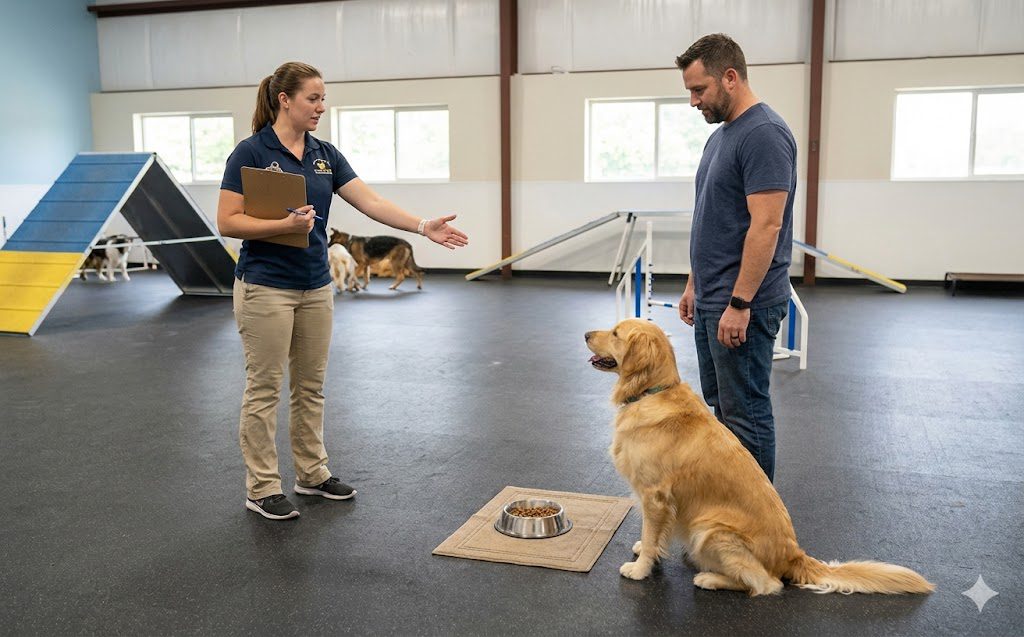
Consider contacting K9 Mania Dog Training if:
The aggression is severe: If your dog has already bitten someone, breaks skin during snaps, or shows extreme aggression (intense lunging, sustained barking, multiple bites), professional help is essential. These cases require specialized safety protocols and experience that most owners don’t have.
You feel unsafe: If you’re afraid of your dog or hesitant to work near them during meals, that’s a clear sign you need professional guidance. Training should never put you at risk of injury.
Multiple triggers exist: Dogs who guard food, toys, furniture, and other items have generalized resource guarding. This broader pattern is more complex to treat and benefits from professional assessment.
Children or vulnerable people are in the home: The risk is too high to handle severe food aggression without expert support when kids, elderly family members, or people with limited mobility live in the household.
Home training isn’t working: If you’ve been consistent with training for several weeks and see no improvement or notice the behavior worsening, you need K9 Mania Dog Training to evaluate what might be going wrong.
Your dog has a bite history: Dogs who have bitten before require careful management and training plans designed by someone experienced with aggressive behavior.
K9 Mania Dog Training specializes in aggression cases and can create a customized behavior modification plan, teach you proper safety protocols, and help you work through the problem more quickly. Our experienced trainers use proven, humane methods that address the root cause of food aggression while keeping your family safe. For more complex cases, explore our guide on behavior modification for dogs.
Sometimes medical issues or anxiety disorders contribute to aggression. K9 Mania Dog Training can help you understand whether additional veterinary support might benefit your dog’s specific situation. In some cases, medication combined with our training provides the best results for severe cases. Learn more about intensive options through our article on aggressive dog board and train.
Remember that seeking help isn’t a failure. It’s a responsible choice that protects your family and gives your dog the best chance at overcoming this behavior. Early intervention through managing puppy aggression techniques can also prevent food aggression from developing in young dogs. For more complex cases, explore our guide on behavior modification for dogs.
Veterinary behaviorists (veterinarians with specialized behavioral training) can also assess whether medical issues or anxiety disorders are contributing to the aggression. Sometimes medication in combination with training provides the best results for severe cases. Learn more about intensive options through our article on aggressive dog board and train.
Remember that seeking help isn’t a failure. It’s a responsible choice that protects your family and gives your dog the best chance at overcoming this behavior. Early intervention through managing puppy aggression techniques can also prevent food aggression from developing in young dogs.
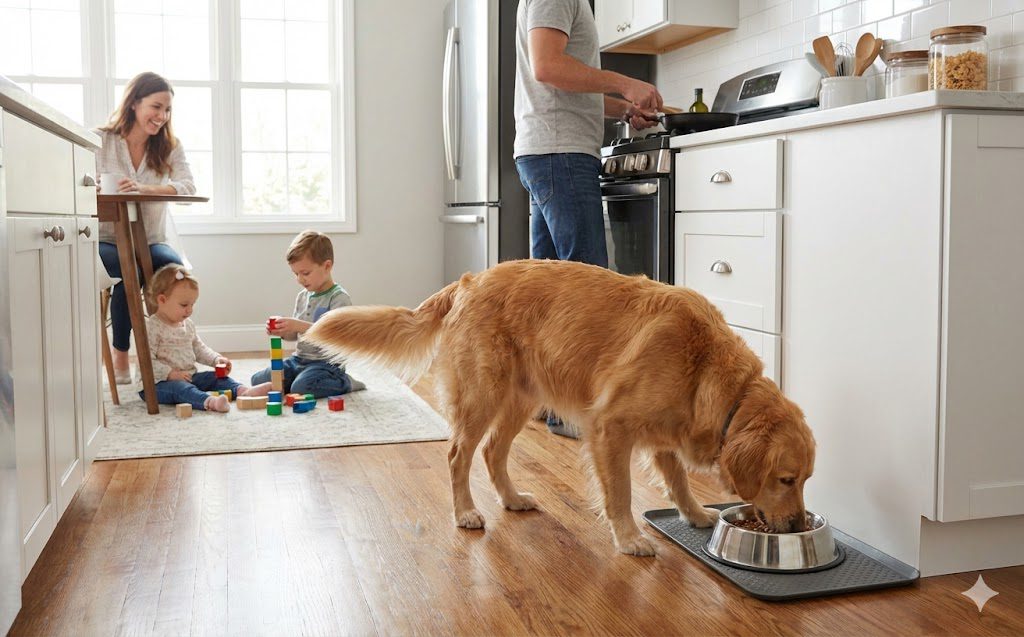
Closing Thoughts: How to Stop Food Aggression With Dogs the Right Way
Learning how to stop food aggression with dogs requires commitment, but the results are worth every bit of effort. You can transform your dog from a defensive, stressed eater into a relaxed companion who trusts you around their meals.
If you’re dealing with food aggression or any other challenging behaviors, you don’t have to handle it alone. At K9 Mania Dog Training, we specialize in transforming dogs with aggression issues, anxiety, and resource guarding problems. Our experienced trainers use proven, humane methods that get real results.
Don’t let food aggression control your household or put anyone at risk. Contact K9 Mania Dog Training today to schedule a consultation and build the confident, relaxed companion you deserve.
You May Also Want to Read
How To Train A Dog To Walk On A Leash
Things You Need to Know About Puppy Training
Frequently Asked Questions
How to break food aggression in dogs?
Breaking food aggression requires desensitization and counter-conditioning techniques. Start by hand-feeding your dog for several days to build trust, then gradually work up to standing near their bowl while they eat, tossing high-value treats as you approach. Practice the “add to the bowl” method where you place small amounts of food and add more as they finish, showing them your presence means more food arrives. Consistency is critical, with training sessions at every meal until your dog shows relaxed behavior around food.
Can food aggression be trained out of dogs?
Yes, food aggression can be trained out of most dogs with consistent effort and the right techniques. The behavior is learned and fear-based, which means it can be unlearned through positive training methods. Success rates are very high for mild to moderate cases when owners commit to daily training, while even severe cases typically show significant improvement with professional help. The earlier you address food aggression, the faster you’ll see results.
Does hand feeding help with food aggression?
Hand feeding is one of the most effective tools for reducing food aggression, especially in early training stages. When you hand-feed your dog, you become the direct source of all their food, creating powerful positive associations between your hands and eating. Hand-feed for at least 3-7 days as a foundation, during which your dog learns that your presence means food arrives, not that meals are threatened. Once your dog eagerly takes food from your hand without tension, transition back to bowl feeding while continuing other desensitization exercises.
Why does a dog suddenly become food aggressive?
Sudden onset of food aggression can happen due to medical issues like dental pain or digestive problems that make eating uncomfortable. Traumatic experiences, such as being approached aggressively by another pet during meals or having food taken away abruptly, can also trigger this behavior. Changes in household dynamics like a new pet, new baby, or moving to a new home can increase anxiety and trigger resource guarding. If your dog suddenly develops food aggression, schedule a veterinary checkup to rule out medical causes before beginning behavior modification.
What are the signs of food aggression?
Food aggression shows up through warning signals ranging from subtle to severe. Early signs include body stiffening when someone approaches, eating faster when people are nearby, and turning their body to block their bowl from view. More obvious signs include low growling, lip curling to show teeth, and raised hackles along their back. Severe signs include snapping at people who approach, lunging toward anyone near their food, and actual biting.
How do you fix sudden aggression in dogs?
Fixing sudden aggression starts with identifying the underlying cause through a veterinary examination to rule out medical issues like pain or hormonal imbalances. Once medical causes are ruled out, assess environmental or social changes that might have triggered the aggression. For food-related aggression, implement management strategies by feeding your dog in a quiet, separate space and begin counter-conditioning by pairing your presence with positive experiences using high-value treats. If the aggression is severe, involves biting, or doesn’t improve within a few weeks, contact K9 Mania Dog Training immediately for professional help.