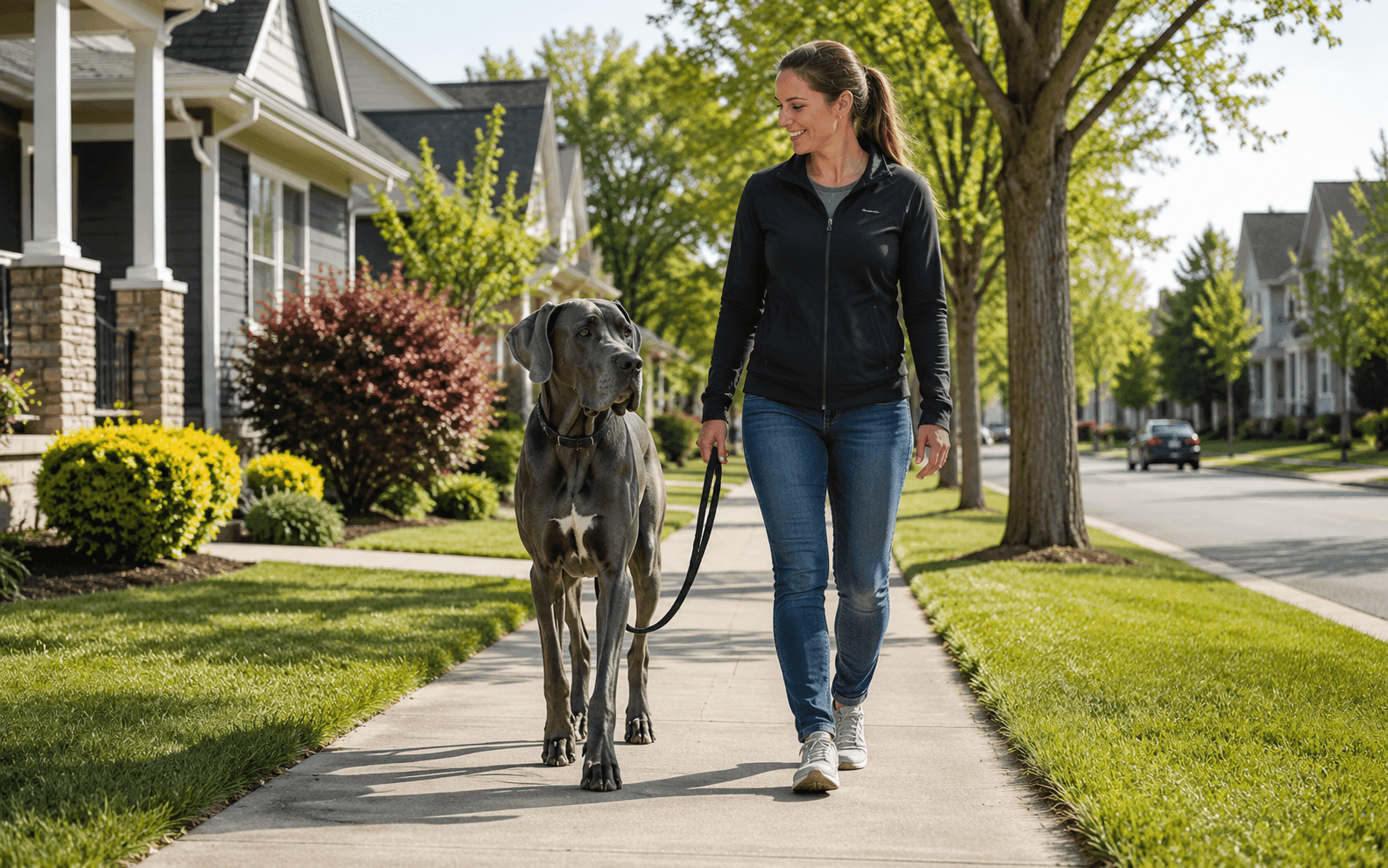
How to train a Great Dane starts with consistent obedience work, early socialization, and positive reinforcement applied during puppyhood. Because of their giant size and sensitive temperament, Great Danes respond best to firm but gentle guidance rather than harsh corrections.
Training a Great Dane is not the same as training a smaller breed. A 150-pound dog that jumps on guests, pulls on the leash, or ignores commands is not just a nuisance, it is a safety risk. Getting the foundation right early makes every interaction safer and more enjoyable for both you and your dog.
In this guide, you will find a step-by-step breakdown of how to train a Great Dane, which methods work best for this breed, and what common mistakes to avoid along the way.
Key Takeway:
- Great Danes are intelligent and trainable but can be stubborn without consistent leadership.
- Start basic obedience training as early as 8 weeks old.
- Positive reinforcement is the most effective training method for this breed.
- Socialization during puppyhood shapes their adult temperament.
- Giant breeds need low-impact exercise during bone development to prevent joint injury.
Struggling with your Great Dane’s size or behavior? Our board and train Long Island program delivers real results for large breed dogs.
Why Is Training a Great Dane Different From Other Breeds?
Great Danes carry a unique combination of giant size, high sensitivity, and moderate-to-high stubbornness that sets them apart from most other large breeds. Understanding what drives their behavior is the first step in knowing how to train a Great Dane effectively.
Size Creates High Stakes
A poorly trained 50-pound dog is inconvenient. A poorly trained Great Dane that stands nearly 3 feet at the shoulder and weighs 120 to 175 pounds is a liability. Behaviors like jumping, leash pulling, and door-dashing that might seem minor in smaller dogs can cause serious injuries in this breed.
This is why obedience training is not optional for Great Danes. It is a safety requirement.
Temperament and Sensitivity
Great Danes are affectionate, people-oriented dogs that bond deeply with their families. They are sensitive to tone of voice and do not respond well to punishment-based methods. Harsh corrections can cause them to shut down, become anxious, or develop fear-based behaviors.
At the same time, they can be independent thinkers. Without clear, consistent expectations, they will simply do whatever they want, which at their size becomes a problem quickly.
What This Means for Training
- Use high-value rewards like real meat or cheese for motivation.
- Keep training sessions short, around 10 to 15 minutes, to hold their attention.
- Be patient. Great Danes mature slowly and may not fully respond to commands until 18 to 24 months.
- Avoid repetitive drilling, which bores them and causes resistance.
Understanding early dog socialization benefits is especially critical for this breed, as a poorly socialized Great Dane can become a fearful or reactive adult.
How Do You Train a Great Dane Step by Step?
When learning how to train a Great Dane, following a structured progression matters. Skipping foundational steps leads to gaps in obedience that become harder to fix as the dog grows.
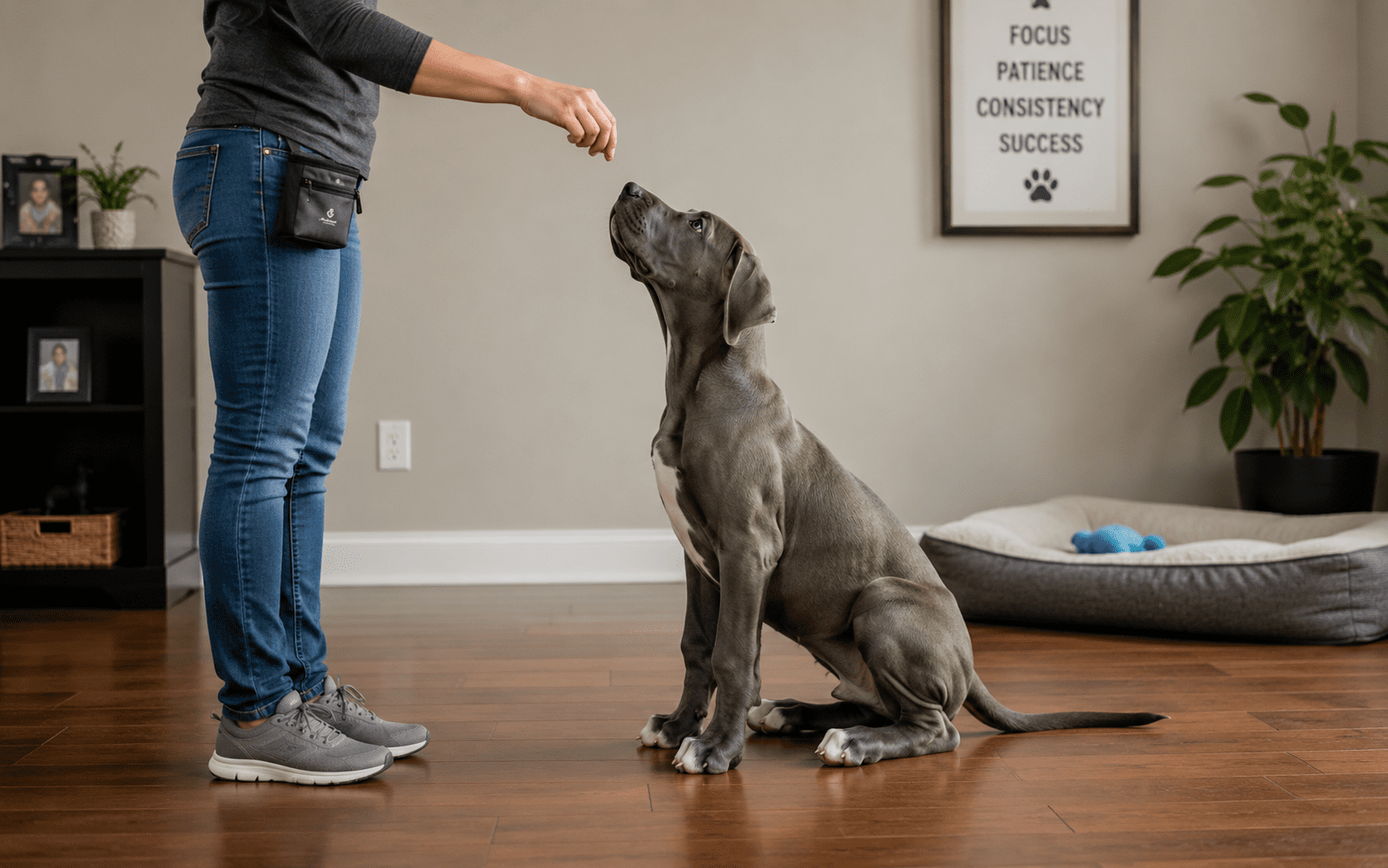
Step 1: Start With Basic Obedience Commands
Teach these four commands first, in this order:
- Sit — the starting point for all impulse control work.
- Stay — builds frustration tolerance and focus.
- Come — the most critical safety command for a giant breed.
- Leave it — essential for preventing dangerous scavenging.
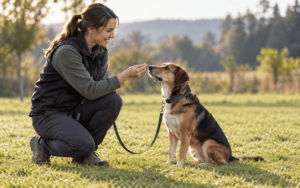
Use a lure-and-reward method. Hold a treat near the dog’s nose, guide them into position, and reward the moment they comply. Mark correct behavior with a clear word like “yes” or a clicker before delivering the treat.
Step 2: Address Leash Manners Early
Great Danes are strong enough to pull an adult off their feet within the first few months of life. Teaching leash manners before they reach full strength is far easier than correcting an established pulling habit.
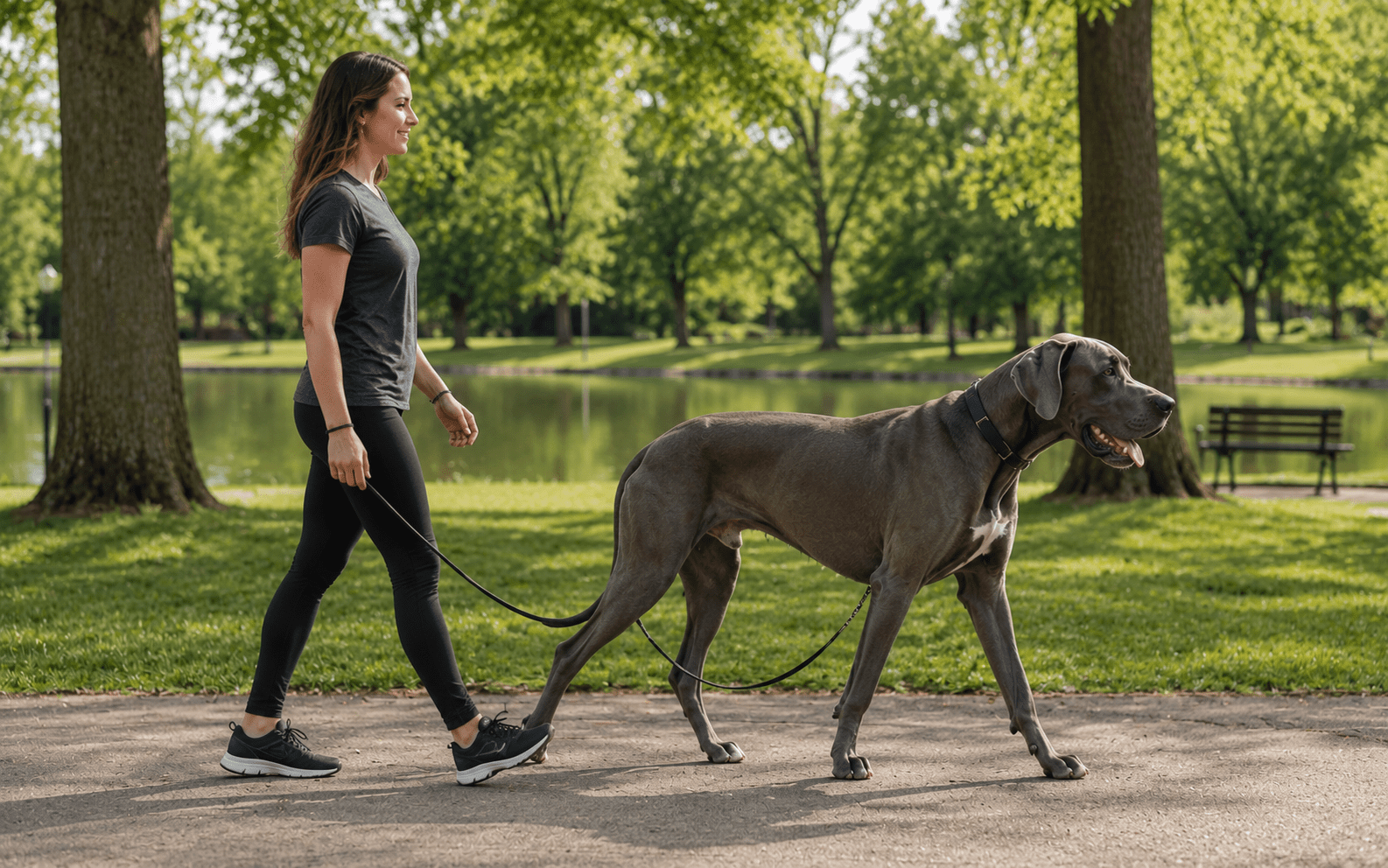
Stop walking every time the leash goes tight. Wait for the dog to release pressure, then resume. Reward loose-leash position frequently. For dogs already pulling, visit our guide on how to stop leash pulling in dogs for a full correction method.
Step 3: Socialize Consistently Through 16 Weeks
The socialization window closes around 16 weeks. During this time, expose your Great Dane puppy to:
- Different types of people (children, men, seniors, people in hats or uniforms)
- Other dogs of various sizes
- Car rides, elevators, stairs, and new surfaces
- Loud sounds in controlled settings
The goal is neutral, calm reactions, not excitement or fear. A well-socialized Great Dane puppy becomes a calm, confident adult.
Step 4: Work on Door and Greeting Manners
Because of their size, jumping and door-rushing are among the most dangerous habits a Great Dane can develop. Teach a solid “sit” at the door before any exits or entries. For jumping, turn away and withhold attention every time four paws are not on the floor.
Learn how to train a dog not to jump for a step-by-step approach to eliminating this behavior permanently.
Step 5: Build Duration and Distraction Tolerance
Once your Great Dane knows the basics, increase difficulty gradually. Practice in different locations, with distractions present, and for longer durations. A command only works if it holds in real-world situations, not just in the living room.
Great Dane Training Methods Compared
Not all training approaches work equally well for this breed. The table below breaks down the most common methods and how they fit the Great Dane’s temperament.
| Training Method | How It Works | Best For Great Danes? | Common Mistake |
| Positive Reinforcement | Rewards correct behavior with treats, praise, or play | Yes, highly effective | Under-rewarding or inconsistent timing |
| Correction-Based | Uses leash corrections or verbal disapproval for wrong behavior | Use sparingly, can cause shutdown | Being too harsh with sensitive dogs |
| Marker / Clicker Training | Marks exact moment of correct behavior before rewarding | Yes, excellent for precision | Not pairing the marker sound consistently |
| Lure and Reward | Uses food to guide dog into position | Yes, great for teaching new commands | Relying on lure too long without fading it |
| Dominance-Based | Attempts to assert “alpha” status through force | No, counterproductive for this breed | Increases anxiety and reduces trust |
Common Training Mistakes Great Dane Owners Make
Starting Too Late
Many owners wait until their Great Dane is 6 months or older to start training because the puppy seems manageable early on. By the time behavioral problems appear, the dog often weighs 80 or more pounds and habits are already set.
Skipping Mental Stimulation
Great Danes do not need extreme physical exercise, but they do need mental engagement. A bored Great Dane will find its own entertainment, usually through destructive behavior. Puzzle feeders, obedience work, and scent games help burn mental energy safely.
Over-Exercising During Growth
This is one of the most common mistakes with giant breeds. Great Dane bones and joints are not fully developed until 18 to 24 months. Forced running, long hikes, or repetitive jumping during this window increases the risk of developmental orthopedic conditions like panosteitis and hip dysplasia.
Stick to leash walks and free play on soft surfaces during puppyhood.
Inconsistent Rules Across the Household
If one family member allows the dog on the couch and another does not, the dog cannot learn what is expected. Every person in the household must follow the same rules and commands. Inconsistency is one of the leading causes of obedience failure in Great Danes.
Training Milestones by Age
| Age | Training Focus | What to Expect |
| 8 to 12 weeks | Sit, name recognition, crate intro | Short attention span, high reward-ability |
| 12 to 16 weeks | Stay, come, basic leash manners | Socialization window open, absorbs quickly |
| 4 to 6 months | Down, leave it, greeting manners | May test limits, needs consistent follow-through |
| 6 to 12 months | Distraction proofing, duration, off-leash recall | Adolescence sets in, may regress slightly |
| 12 to 24 months | Advanced obedience, public manners | Greater focus, approaching adult reliability |
When Professional Training Makes Sense
Some owners do very well training their Great Dane at home. Others find that an experienced professional can accelerate the process and help address specific behavior issues that are hard to resolve without guidance.
Consider professional help if your Great Dane is:
- Jumping on guests despite consistent correction
- Pulling so hard it is unsafe to walk them
- Showing anxiety, fear, or reactivity toward other dogs or people
- Resource guarding food or toys
- Struggling to respond to commands outside the home
Our in home dog training Long Island program brings expert instruction directly to your environment, which is where most behavior problems actually occur. For dogs that need faster, more intensive progress, private dog training Long Island offers focused one-on-one sessions built around your Great Dane’s specific needs.
How to Train a Great Dane: The Bottom Line
How to train a Great Dane comes down to starting early, staying consistent, and respecting the breed’s sensitive but strong-willed nature. At K9 Mania Dog Training, we are Long Island’s leading board and train program with the best animal behaviorist for dogs, and we understand exactly what it takes to raise a well-mannered giant breed. Whether your Great Dane is a puppy needing a foundation or an adult with problem behaviors, we have the expertise to help. Trust K9 Mania Dog Training to guide you every step of the way toward a calmer, safer, and more enjoyable life with your dog.
You May Also Want to Read:
- Early Dog Socialization Benefits: Your Key to Well-Behaved Dogs
- How to Train a Dog Not to Jump
- How to Stop Leash Pulling in Dogs
Frequently Asked Questions About How to Train a Great Dane
Are Great Danes easy to train?
Great Danes are moderately easy to train when you start early and use positive reinforcement consistently. They are intelligent and eager to please but can be sensitive and stubborn without clear leadership. Their giant size means any training gaps become high-risk problems quickly, so establishing obedience during puppyhood is essential.
What not to do with a Great Dane?
Avoid harsh corrections, punishment-based training, and inconsistent rules. Do not over-exercise a Great Dane under 18 months, as their skeletal system is still developing and joint damage can occur. Never allow jumping or leash pulling to go uncorrected simply because the dog is a puppy. Small bad habits become serious problems at full size.
How to stop a Great Dane from peeing in the house?
Establish a consistent bathroom schedule and take your dog outside first thing in the morning, after meals, after naps, and before bedtime. Reward outdoor elimination immediately with a treat and praise. Supervise closely indoors and use a crate when you cannot watch the dog. If accidents continue past 6 months despite a solid routine, consult a vet to rule out a medical cause.
How to discipline a Great Dane?
Discipline should never involve physical punishment or intimidation. The most effective correction is removing what the dog wants, whether that is attention, access, or freedom, when an unwanted behavior occurs. Redirect to an appropriate behavior and reward the correct response. Clear, calm leadership and consistent boundaries are more effective than any form of harsh correction with this sensitive breed.
What is the downside to owning a Great Dane?
Great Danes have a short lifespan, typically 7 to 10 years, and are prone to serious health conditions like bloat (gastric dilatation-volvulus), hip dysplasia, and heart disease. They are expensive to feed, medicate, and house. They also require more training effort than many owners anticipate given their size. The emotional and financial commitment is significant and should be considered carefully before ownership.
What are the top 5 hardest dogs to train?
The five breeds most commonly cited as the hardest to train are Afghan Hounds, Basset Hounds, Chow Chows, Bulldogs, and Bloodhounds. These breeds were developed for independence rather than handler responsiveness, which makes traditional obedience training more challenging. Great Danes are not on this list but do require a patient, experienced approach due to their size and sensitive temperament.