Training your dog is only half the battle — keeping those skills sharp over months and years is where real progress lives. How to maintain dog training comes down to consistent reinforcement, smart daily habits, and knowing when your dog needs a refresher.
Key Takeaways
- Consistency is the single most critical factor in keeping your dog’s training solid long after formal sessions end.
- Short, frequent practice sessions outperform long, infrequent ones for retaining learned behaviors.
- Real-world environments — parks, sidewalks, pet stores — are where training truly gets tested and strengthened.
- Every member of your household must use the same commands and reward system, or the dog will get confused.
- Board and Train programs on Long Island offer a structured reset when behavior starts slipping at home.
- Recognizing early signs of regression and addressing them quickly prevents small issues from becoming serious problems.
Why Dogs Lose Their Training Over Time
Dogs are not robots. They learn through repetition, reinforcement, and environmental exposure — and when any of those elements disappear, skills begin to fade. This is sometimes called behavioral extinction, and it happens faster than most owners expect.
The most common reason dogs lose their training is simply that owners stop practicing after the initial program ends. Think of it like a language you studied in school: stop using it, and you lose it. Your dog’s recall, leash manners, and impulse control all follow the same logic.
A few specific patterns tend to accelerate this regression:
- Inconsistent rules across household members. If one person allows jumping on the couch and another corrects it, the dog learns nothing reliable.
- Lack of daily reinforcement. Commands practiced only at “training time” and ignored the rest of the day to lose their reliability.
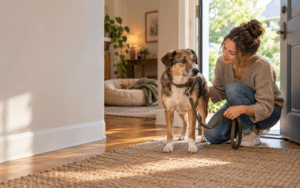
- New environments without preparation. A dog who sits perfectly in your kitchen may completely fall apart at a busy park without proper proofing.
- Age and boredom. Adolescent dogs, typically between 6 and 18 months, are especially prone to testing boundaries as their confidence grows.
Understanding the power of consistency in dog training and why it matters is essential before you can build a realistic maintenance plan. Without it, even the best initial training program will unravel within weeks.
Building a Daily Maintenance Routine
The most effective maintenance plan is one that fits naturally into your existing schedule. You do not need to carve out 45-minute training sessions every evening. In fact, shorter sessions — five to ten minutes, spread across the day — tend to produce better results than long, exhausting blocks.

Here is a practical daily framework:
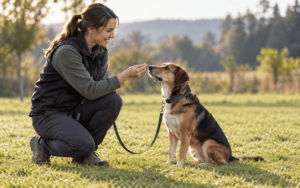
Morning (5 minutes): Before feeding your dog, run through five to seven basic commands — sit, stay, down, come, leave it. Feed only after a calm, controlled sit. This links obedience to the meal routine, which your dog already values highly.
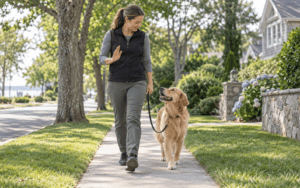
Mid-day or afternoon (5 minutes): Use a walk as a training opportunity. Practice loose-leash walking, automatic sits at curbs, and focus commands when distractions appear. A walk is not just exercise; it is a live training environment.
Evening (5 minutes): End the day with a short session that includes at least one command your dog finds challenging. Keep the tone positive. Finish on a success, not a correction.
For a broader look at what to work on each day, the resource on top things to teach your dog breaks down priority behaviors by stage of training.
The Role of Every Person in Your Household
One of the most overlooked aspects of how to maintain dog training is household alignment. Your dog cannot distinguish between “the rules your spouse enforces” and “the rules you enforce.” From the dog’s perspective, there is only one set of rules — or there is chaos.
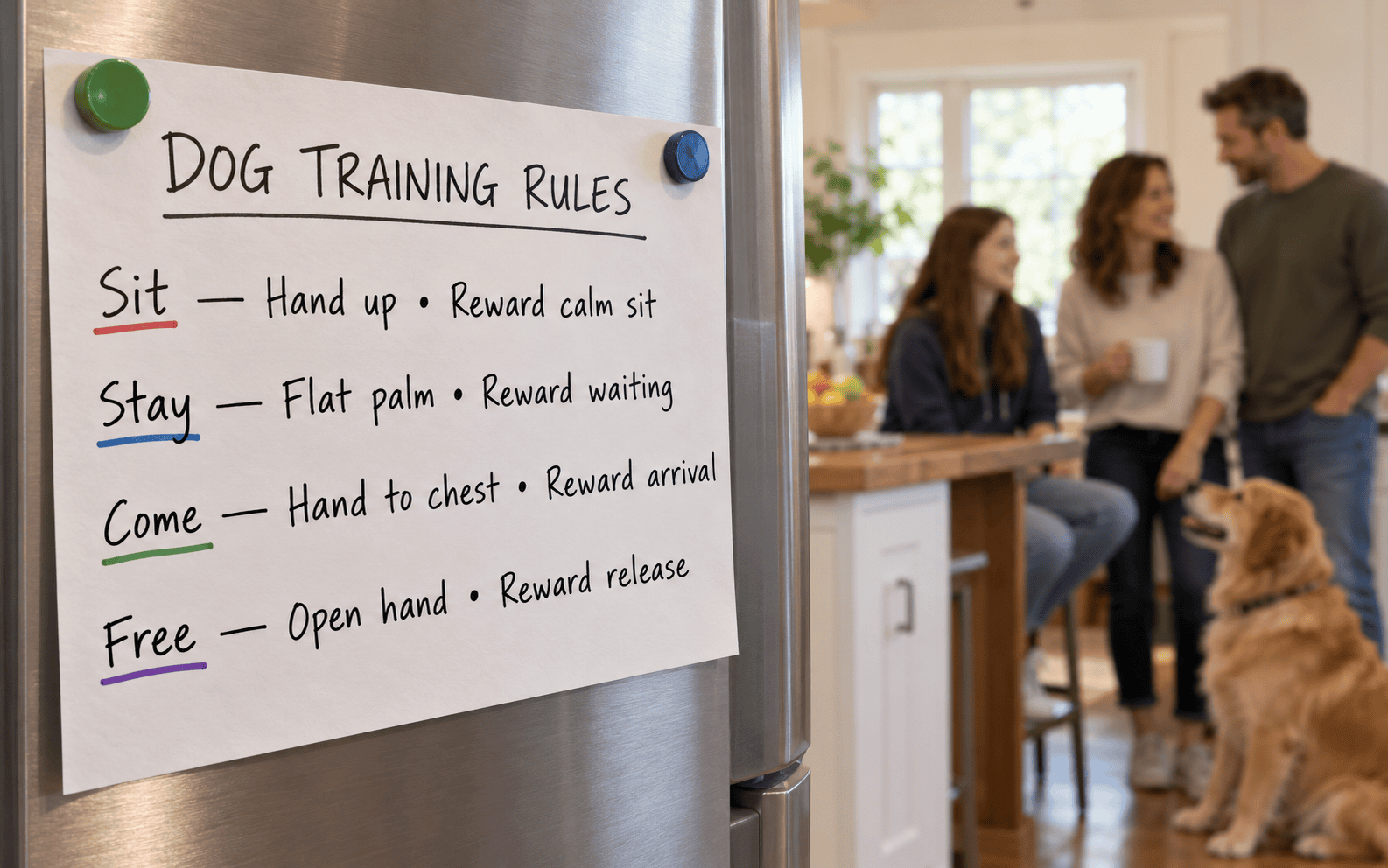
Every adult and older child in your home needs to use the same verbal cues, the same hand signals, and the same reward system. If your dog’s release word is “free,” that word should come from everyone, not just you. If your dog is not allowed to eat food dropped on the floor without permission, that rule has to hold with every person in the house.
A simple household training charter can help. Write down:
- The exact verbal cue for each command (not variations — one word per behavior)
- The hand signal that goes with each cue
- What counts as a correct response
- What the reward is and when it gets delivered
Post it on the fridge. It sounds basic, but it eliminates the single biggest source of post-training regression in family households.
Proofing Behaviors in New Environments
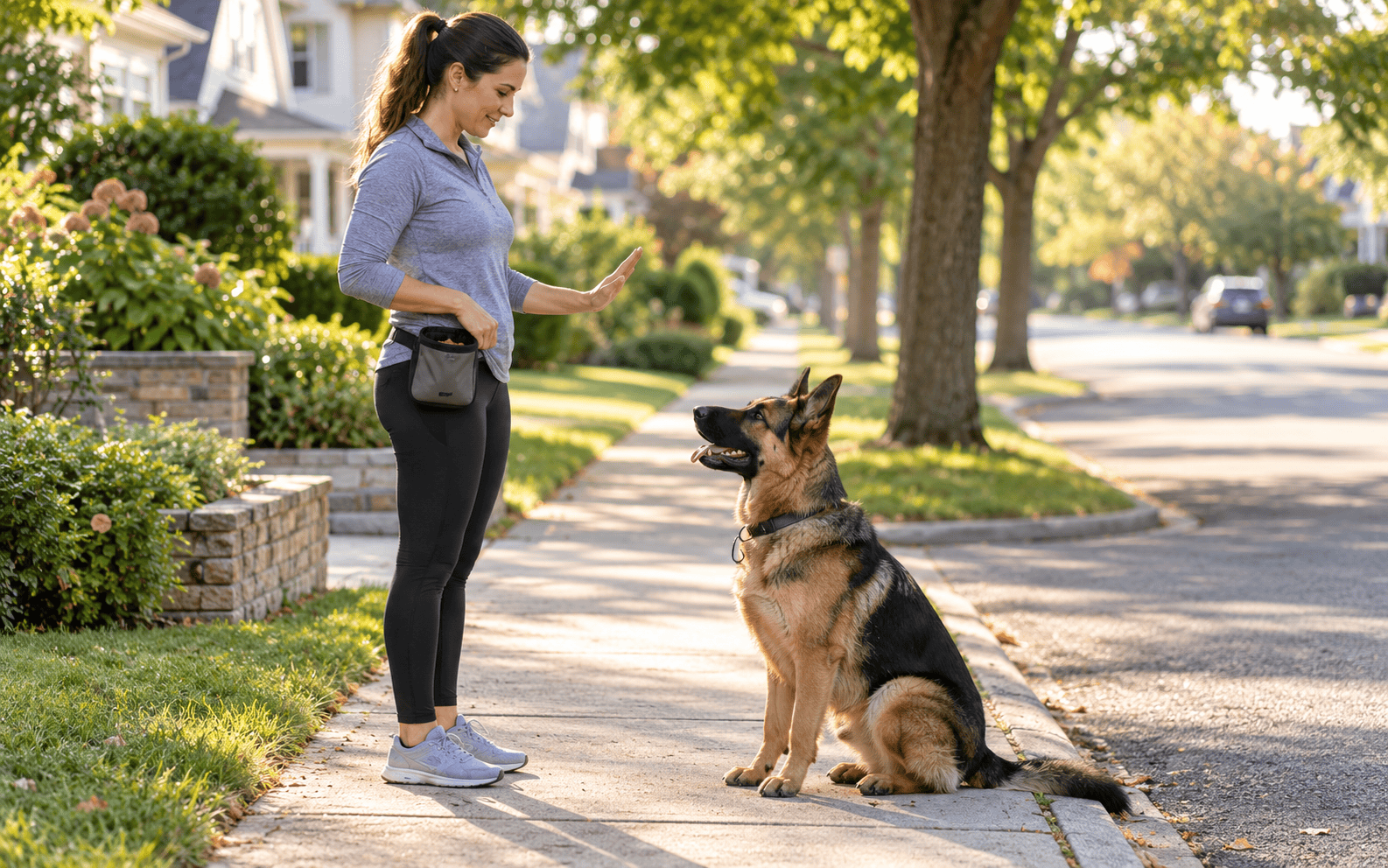
A command your dog knows perfectly at home is not yet a reliable command. True reliability requires something called proofing, which means practicing behaviors in increasingly distracting and unfamiliar environments until the dog responds correctly regardless of context.
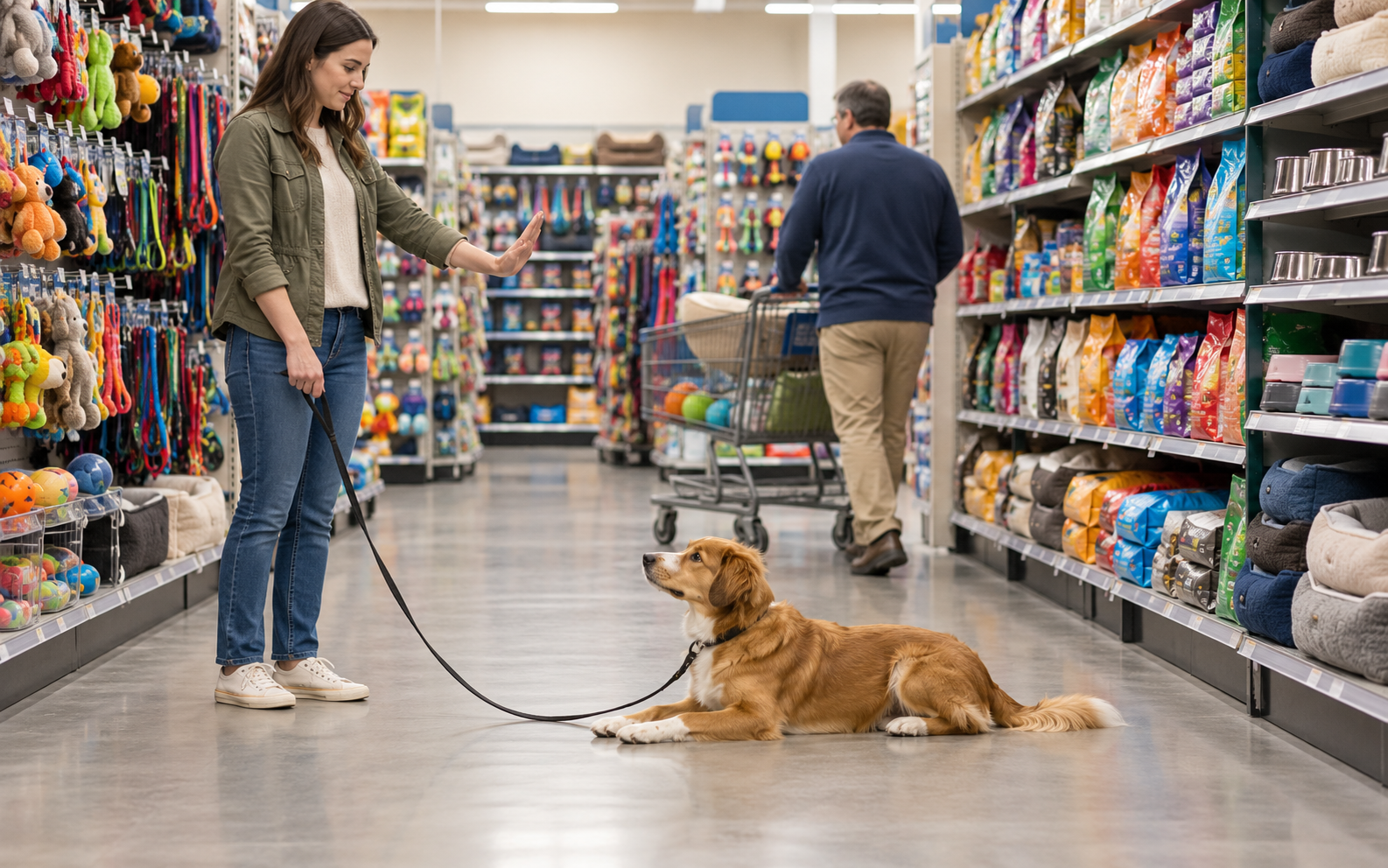
Common proofing locations for Long Island dog owners include:
- Pet-friendly stores like Petco or Home Depot, where carts, strangers, and smells compete for your dog’s attention
- Local parks and walking trails, particularly ones with other dogs or children nearby
- Parking lots, which test leash focus in a high-stimulus environment
- Friends’ or family members’ homes, where new smells and surfaces challenge a dog’s calm
Work in these locations systematically. Start with low distraction, high reward, and easy commands. As your dog succeeds, increase the difficulty gradually. If your dog is failing more than 30% of the time, the environment is too hard — back up a level.
For structured guidance on which behaviors to proof first, reviewing top 10 essential dog commands every owner must know will give you a solid starting checklist.
Spotting and Addressing Training Regression Early
Even with a solid maintenance routine, regression happens. The key is catching it early, before a minor slip becomes a stubborn habit.
Watch for these warning signs:
- Your dog hesitates before responding to commands it used to follow immediately
- Leash pulling returns after weeks of clean loose-leash walking
- Your dog ignores recall commands in the yard or at the park
- Resource guarding or jumping behaviors resurface after disappearing months ago
- Your dog breaks stays that were previously solid
When you notice regression, resist the urge to simply repeat the command louder or more often. That rarely works and can create frustration on both sides. Instead, return to the basics — go back to the foundation of the behavior, reward heavily for small successes, and rebuild the habit from a simpler version of the command.
If regression is widespread or your dog seems to have forgotten multiple behaviors simultaneously, it is often a signal that the training environment at home is not structured enough. This is exactly the situation where a Board and Train program makes the most practical sense.
| Warning Sign | Likely Cause | Recommended Response |
| Slow response to commands | Inconsistent reinforcement at home | Return to basics, reward heavily |
| Leash pulling returns | Lack of daily leash practice | Resume structured walk training |
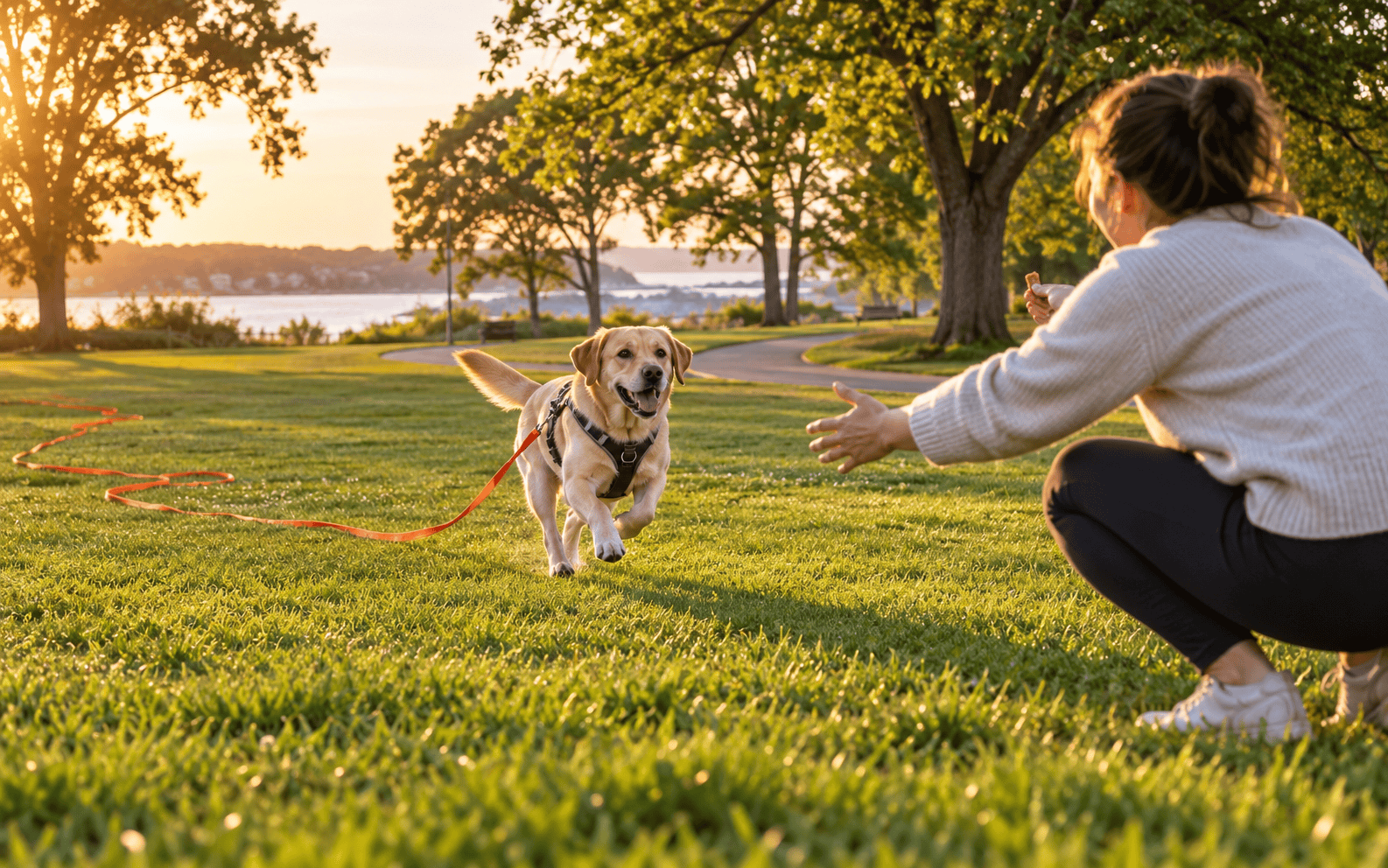
| Recall failure outdoors | Insufficient proofing in high-distraction areas | Rebuild recall on a long line in parks |
| Jumping/pawing resumes | Household members reinforcing the behavior | Align household rules immediately |
| Breaking stays | Skip in proofing duration/distance stages | Step back and rebuild stay from scratch |
When a Board and Train Program Is the Right Reset
Sometimes home-based maintenance simply is not enough. Life gets busy. Schedules change. A new baby, a move, or a change in the dog’s living environment can unravel months of careful work. When that happens, a Board and Train program offers a structured, intensive reset that is hard to replicate through weekend sessions at home.
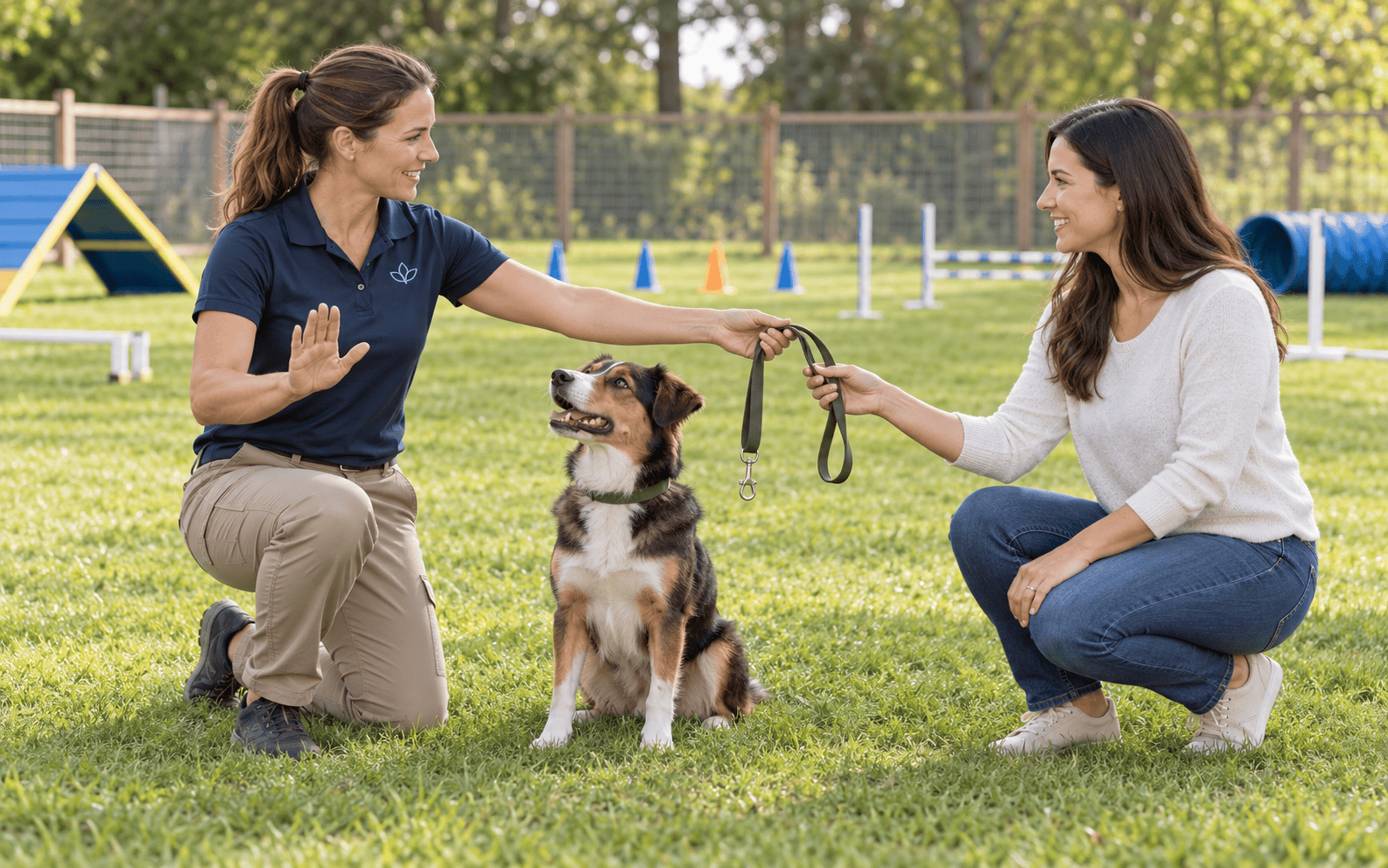
Long Island dog owners have access to professional Board and Train programs that take your dog for a set period — typically two to four weeks — and rebuild or reinforce all foundational behaviors in a controlled, distraction-rich environment. The dog lives with professional trainers around the clock, getting consistent practice, real-world proofing, and structured correction that most owners simply cannot provide on their own.
What makes Board and Train particularly effective is the handoff process. Reputable programs do not just hand your dog back and wish you luck. They include owner training sessions at the end of the program so you can learn to maintain the behaviors your dog has refreshed. The follow-up support is often as important as the program itself.
If you are weighing different approaches, the overview of effective ways to train your dog helps clarify which method suits your current situation best.
Practical Tools That Support Long-Term Maintenance
Beyond structured sessions, several tools and habits make day-to-day maintenance easier:
Treat pouches: Keeping treats accessible during walks removes the excuse of “I didn’t have anything to reward with.” Consistency of reward timing is everything.
Long lines (20-30 feet): These allow you to practice off-leash behaviors like recall and stay in outdoor settings while maintaining physical control. They are invaluable for proofing without risk.
Clicker or marker word: A consistent marker — either a click or a verbal “yes” — helps your dog pinpoint exactly which behavior earned the reward. This sharpens learning and speeds up maintenance sessions.
Training journals: Logging what you practiced, how your dog performed, and what needs work next session turns vague intentions into measurable progress. Even a simple notebook works.
Professional check-ins: Scheduling one or two professional sessions per quarter — even when things are going well — catches small issues before they grow. Think of it like a dental cleaning: prevention is cheaper than repair.
For a comprehensive collection of methods to build on, the curated list of dog training tips covers techniques that complement any maintenance plan.
Maintenance Across Your Dog’s Life Stages
Training needs shift as your dog ages. What works for a two-year-old dog will not look the same at eight years old, and understanding those shifts helps you adapt your approach rather than getting frustrated by perceived regression.
Adolescent dogs (6-18 months): Expect testing. Hormonal changes, increased independence, and social curiosity make this the hardest phase to maintain training through. Stay consistent, keep sessions short, and do not reduce structure even when the dog seems to “know better.”
Adult dogs (2-7 years): This is prime maintenance territory. Most dogs in this range are stable and reliable if given consistent daily practice. The risk here is complacency from the owner, not the dog.
Senior dogs (8+ years): Older dogs can absolutely maintain training, but physical limitations may affect what you ask of them. Adjust expectations around duration of sessions and physical demands — a 10-year-old Labrador may not hold a long down-stay as comfortably as it once did — but continue mental engagement through lighter commands and puzzle activities.
A Maintenance Schedule That Works in the Real World
Here is a sample weekly maintenance schedule that balances structure with realistic time demands:
| Day | Activity | Duration |
| Monday | Morning command review + structured walk | 10-15 min |
| Tuesday | Proofing session in new environment | 15-20 min |
| Wednesday | Rest day (still enforce household rules) | Ongoing |
| Thursday | Recall and stay practice in yard or park | 10-15 min |
| Friday | Trick or advanced command practice | 10 min |
| Saturday | Longer outing with real-world proofing | 20-30 min |
| Sunday | Review week’s progress, note regression areas | 10 min |
This schedule demands less than 90 minutes per week while covering every major maintenance category: command fluency, environmental proofing, recall reliability, and household rule enforcement.
The Bottom Line on How to Maintain Dog Training
How to maintain dog training is not a single action — it is a lifestyle built around daily reinforcement, household consistency, and the willingness to course-correct before small slips become serious problems. The dogs that stay well-trained for years are not necessarily the ones that went through the most intensive initial program. They are the ones whose owners built maintenance into everyday life.
Start with the basics: a short morning command review, a structured walk, and consistent rules across your home. Add environmental proofing when you can, track your dog’s progress honestly, and do not hesitate to bring in professional support when life gets in the way. Long Island dog owners have access to excellent Board and Train resources that can reset and reinforce training at any stage. Use them as part of a long-term strategy, not just a last resort.
You May Also Want to Read
How to Crate Train a Rescue Dog
Signs of a Poorly Socialized Dog
What Is the 7-7-7 Rule for Dogs?
Frequently Asked Questions
How often should I practice commands with my dog to maintain training?
Short, daily sessions of five to ten minutes are far more effective than occasional long sessions.
Dogs retain behaviors best through frequent repetition rather than infrequent marathon sessions. Aim for two to three brief practice windows spread throughout the day, and take advantage of natural routines like mealtimes and walks to reinforce commands without adding extra time to your schedule.
What are the most common reasons a dog’s training regresses after a program ends?
The most common causes are inconsistent enforcement at home, lack of daily practice, and household members using different rules or cues.
When training ends, the structure that produced reliable behavior disappears unless the owner intentionally replaces it. Dogs are highly sensitive to changes in routine, and even a few weeks of relaxed enforcement can unravel months of careful work. Rebuilding shared household rules and returning to daily reinforcement are the fastest fixes.
Can older dogs maintain their training as effectively as younger dogs?
Yes, older dogs can absolutely maintain trained behaviors, though the format of practice sessions may need to adjust as physical limitations appear.
Senior dogs often respond well to shorter, lower-impact sessions focused on mental engagement rather than physical demands. The key is continuing to engage them rather than assuming they no longer need practice. A ten-year-old dog that gets daily command reviews will almost always outperform a five-year-old dog whose training has been neglected for a year.
Is a Board and Train program worth it for a dog that has already been trained before?
Absolutely — Board and Train is one of the most efficient options for refreshing or resetting a dog that has experienced significant behavioral regression.
Rather than spending months trying to rebuild habits at home while managing a busy schedule, a Board and Train program delivers concentrated, around-the-clock reinforcement in a controlled environment. For Long Island dog owners dealing with a dog that has regressed across multiple behaviors, it is often the fastest path back to reliable obedience.
How do I know if my dog needs a professional refresher or if I can handle maintenance at home?
If your dog is showing regression in one or two specific behaviors, home-based maintenance is usually sufficient. If multiple behaviors have broken down simultaneously, a professional refresher is the smarter choice.
A helpful benchmark is the 30% rule: if your dog is failing to respond correctly more than 30% of the time across several commands in familiar environments, the issue is likely systemic rather than situational. At that point, trying to fix everything yourself without professional input tends to extend the problem rather than solve it. A qualified trainer can assess exactly where the gaps are and create a targeted plan using top 10 essential dog commands every owner must know.
Where to Go From Here With How to Maintain Dog Training
Maintaining your dog’s training is a long-term commitment, but it does not have to be complicated. The foundation is simple: practice daily, keep your household aligned, proof behaviors in real-world environments, and address regression the moment you spot it. Dogs that stay sharp for years are not outliers — they are the natural result of owners who treat training as an ongoing part of life rather than a one-time event.
If you are a Long Island dog owner and your dog’s behavior is starting to slide, do not wait for the problem to compound. Reach out to a reputable Board and Train program, schedule a professional check-in, and get back to building the well-behaved dog you know your pet can be. The investment you make in maintenance today saves you from a much larger one down the road.